China on Thursday sent a new marine satellite into orbit from the Jiuquan Satellite Launch Center in northwest China.
A Long March-4B rocket carrying the Haiyang-2E satellite took off at 07:46 (Beijing Time), sending the satellite into the planned orbit.
The launch was the 654th by the Long March rocket series.
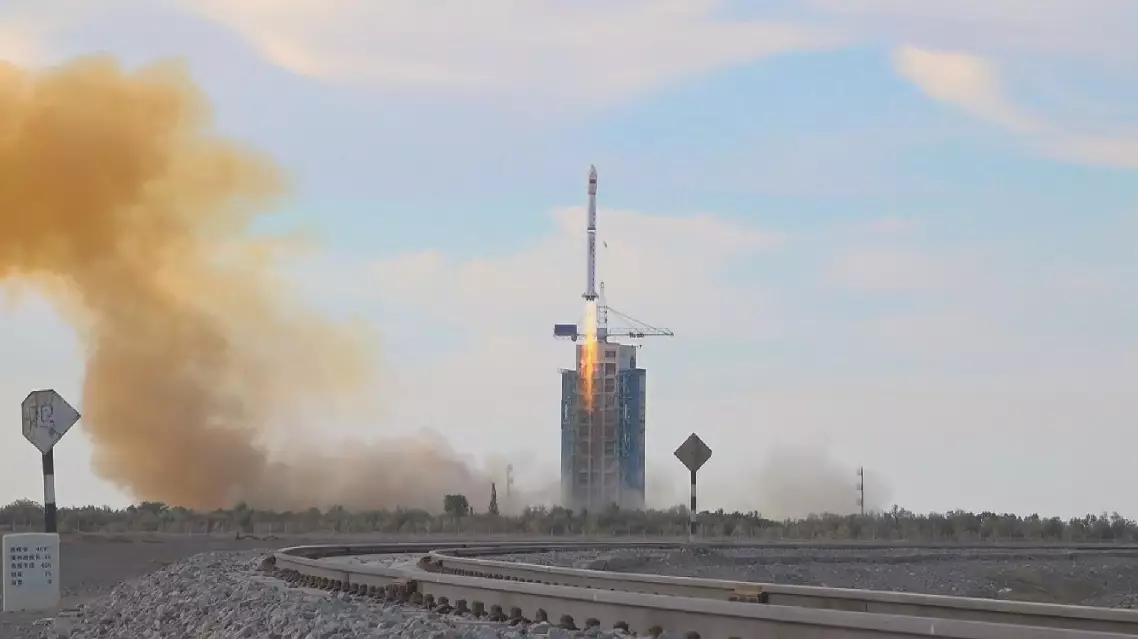
China launches new marine satellite
Many international institutions have observed that in the first half of this year, China's consumer market sustained steady performance, with service consumption exhibiting solid growth.
A report by leading international accounting firm KPMG points out that China's service consumption is at a critical stage of accelerated upgrading and structural transformation, showing an overall trend of strong policy support, continuous expansion in scale, and accelerated optimization of structure.
"This year marks the start of the 15th Five-Year Plan. From our observations, the focus of the entire consumer market has shifted from selling products to selling services. Specifically, I think there are three driving forces: First, digitalization has broken down the so-called requirement for consumers to be physically present. Second, there's the integration of various scenarios, for example, a concert ticket can stimulate tourism, accommodation, and catering. The third point is the change in market access. The relevant policies of the 15th Five-Year Plan have begun to be implemented one after another, this is about removing barriers," said Wu Xuchu, vice president of KPMG China.
The institution also observed that a major highlight of China's service consumption in the first half of this year was the rapid development of the instant retail format, which presents a combined development pattern of goods, services and intelligentization of the entire industrial chain, according to Wu.
"If someone buys cat food online and it arrives in 30 minutes, you know they might need pet grooming later. If they buy a home appliance on an instant delivery platform, they might need installation later. Once the data is integrated, it's possible to create more demand and discover more incremental growth," said Wu.
A recent report by the international consulting firm Kearney points out that Chinese consumers' decision-making logic is undergoing profound changes, as living standards continue to improve, consumption is gradually shifting towards emotional value, a sense of belonging, and self-identity.
Against this backdrop, China's IP derivative market is developing rapidly, becoming one of the most dynamic sub-sectors of cultural consumption, according to company officials.
"The IP economy has been a very important feature over the past two years, and it can be said to be a very explosive growth module. Our research shows that the domestic IP derivatives market size stood at approximately 500 billion yuan (73.59 billion U.S.dollars) in 2025 and will reach 750 billion yuan in 2028," said He Xiaoqing, president of Kearney Greater China.

Int'l firms bullish on China's vast, robust service consumption market