WASHINGTON (AP) — This World Cup has given U.S. soccer fans plenty to cheer about — even if a new survey shows most Americans are still on the sidelines.
New polling from Ipsos Sports, provided exclusively to The Associated Press, shows that the World Cup has excited soccer fans and piqued many Americans’ interest, even as the sport faces an uphill climb to reach mainstream popularity in the United States.
Click to Gallery
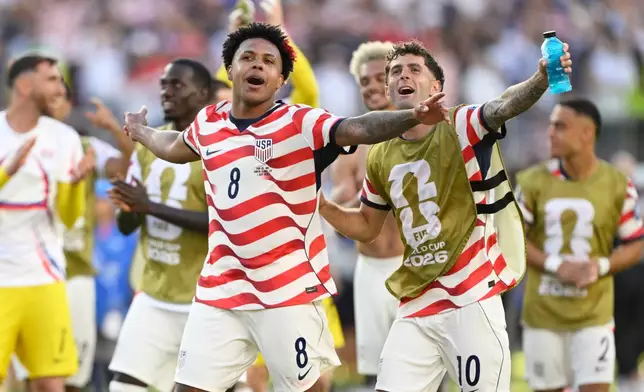
United States' Weston McKennie (8) and Christian Pulisic (10) celebrate winning the World Cup round of 32 soccer match between the United States and Bosnia in Santa Clara, Calif., near San Francisco, Wednesday, July 1, 2026. (AP Photo/Eakin Howard)
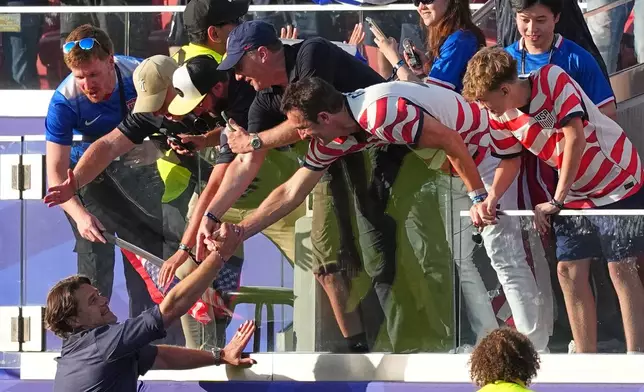
United States head coach Mauricio Pochettino, left, celebrates with supporters following the World Cup round of 32 soccer match between the United States and Bosnia in Santa Clara, Calif., near San Francisco, Wednesday, July 1, 2026. (AP Photo/Julio Cortez)
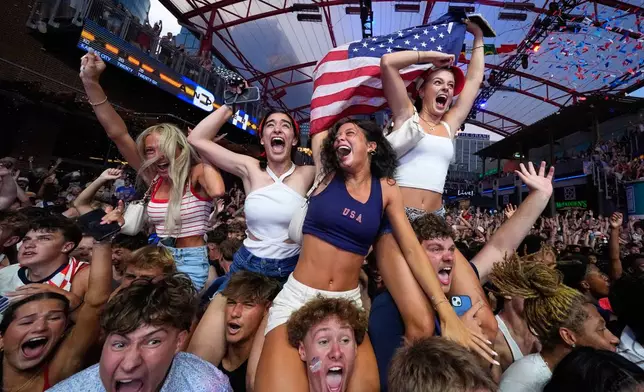
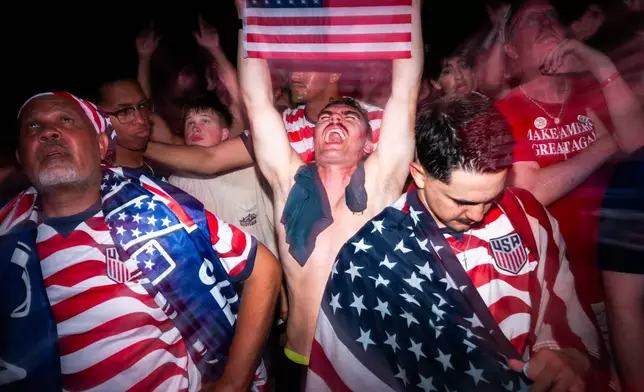
Fans celebrate after a United States goal during a watch party for a World Cup soccer match against Bosnia at the KC Live! entertainment district Wednesday, July 1, 2026, in Kansas City, Mo. (AP Photo/Charlie Riedel)
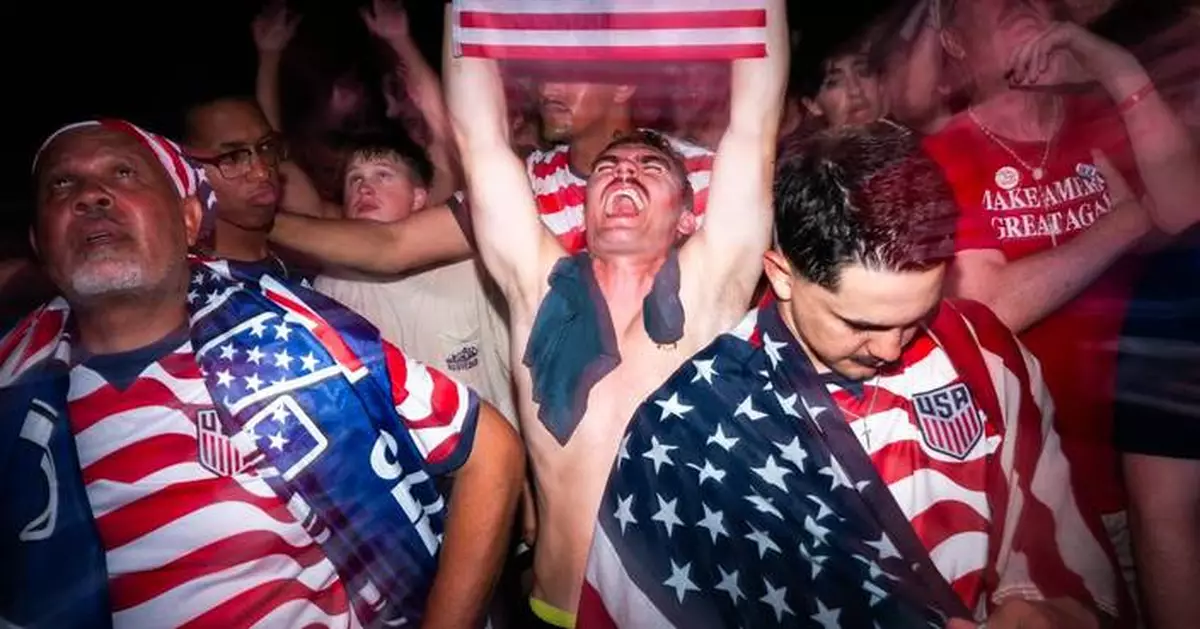
People attend a watch party for a World Cup soccer match between the United States and Bosnia Wednesday, July 1, 2026, in Washington, at the FIFA Fan Zone on the National Mall. (AP Photo/Allison Robbert)
Despite that challenge, many U.S. adults were excited about the United States making it to the knockout round of the World Cup. Most soccer fans in the U.S. have been pleased by the U.S. men’s national team performance, and the overwhelming majority are excited for the rest of the World Cup.
The poll was conducted June 26-28, after the United States advanced from the group stage but before they won against Bosnia-Herzegovina in the first knockout round.
About 6 in 10 soccer fans were “extremely” or “very” excited about the U.S. advancing to the knockout round, much higher than the 25% of Americans overall who said the same.
The United States has historically lost once they reached the knockout rounds. Before Wednesday, they had last won a knockout game in 2002.
Though this poll was conducted before the United States' victory against Bosnia-Herzegovina, fans were already giving the U.S. men’s team credit for having a strong showing in the group stage. Most soccer fans, 55%, said the U.S. team's performance was going “extremely well” or “very well.” One-quarter, roughly, believed it was going “somewhat well.”
Similarly, about half of soccer fans say the United States’ role in co-hosting the World Cup is going at least “very” well.
There's less enthusiasm for FIFA's role in managing the World Cup. Only about one-third of soccer fans in the U.S. say that's going “extremely” or “very” well. During the tournament, FIFA has faced criticism for enforcing mandated hydration breaks that some say ruin the momentum of games, as well as cooperating with travel restrictions and visa refusals against Iran.
The poll found Americans and soccer fans alike are about evenly split on whether they have a favorable or unfavorable opinion of FIFA. About 2 in 10 U.S. adults have a positive view of FIFA, while 25% have a negative one. Most Americans — 55% — don't have an opinion.
It’s not easy to get Americans to care about soccer, even with the World Cup in their backyard.
Only about 2 in 10 Americans consider themselves fans of international or U.S. soccer, far behind the share who root for professional football, basketball or baseball. And roughly one-third of U.S. adults say they have heard or read “a lot” about the World Cup, though most have heard at least “a little.”
Roughly 2 in 10 U.S. adults — 17% — say they are “extremely” or “very” excited about the rest of the World Cup. That’s up a smidge from Ipsos polling in May, but points to the challenge that comes with trying to turn America into a soccer nation.
Most Americans expect that the World Cup will increase other Americans’ interest in soccer, but relatively few say they have personally gotten more interested in the sport. About 6 in 10 U.S. adults think Americans in general will get more into soccer because of the World Cup, while 24% say they personally have.
Soccer fans are especially optimistic, though. About three-quarters of soccer fans in the U.S. expect this year’s World Cup will increase Americans’ general interest in soccer, compared to about half of non-soccer fans. And roughly half of soccer fans say the World Cup has increased their own interest in the sport, even if only 17% of non-fans say the same.
Outside of watching games, there are other ways for people to engage with the World Cup.
About 4 in 10 U.S. adults — including about half of soccer fans — say they have used social media to keep up with teams and players.
Roughly one-quarter of Americans have gone to a restaurant or bar to watch a game or plan to do so, and about 2 in 10 have gone to a World Cup watch party. About 2 in 10 U.S. adults — and 33% of soccer fans in the U.S. — say they have bought official merchandise like team jerseys, posters or scarves.
As sportsbooks note how World Cup betting has exceeded expectations amid the USMNT's success, about 1 in 10 Americans in the poll say they have placed an official bet on the games. About 5% say they have traded on game outcomes using a prediction market.
And with official and unofficial watch parties popping up in host cities across the United States, 8% say they have watched a game from a host city.
The Ipsos Sports poll of 1,027 adults was conducted June 26-28 using a sample drawn from the Ipsos probability-based KnowledgePanel. The margin of sampling error for adults overall is plus or minus 3.5 percentage points.
See more of AP’s World Cup coverage here
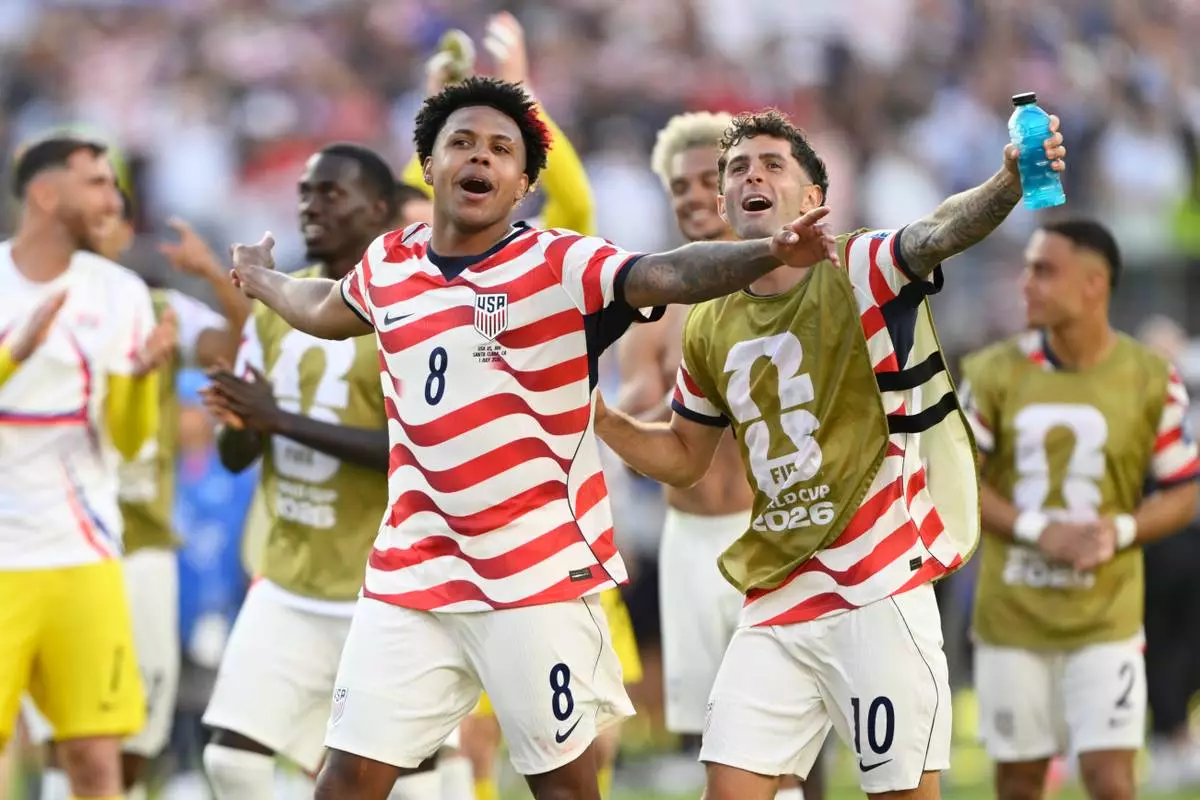
United States' Weston McKennie (8) and Christian Pulisic (10) celebrate winning the World Cup round of 32 soccer match between the United States and Bosnia in Santa Clara, Calif., near San Francisco, Wednesday, July 1, 2026. (AP Photo/Eakin Howard)
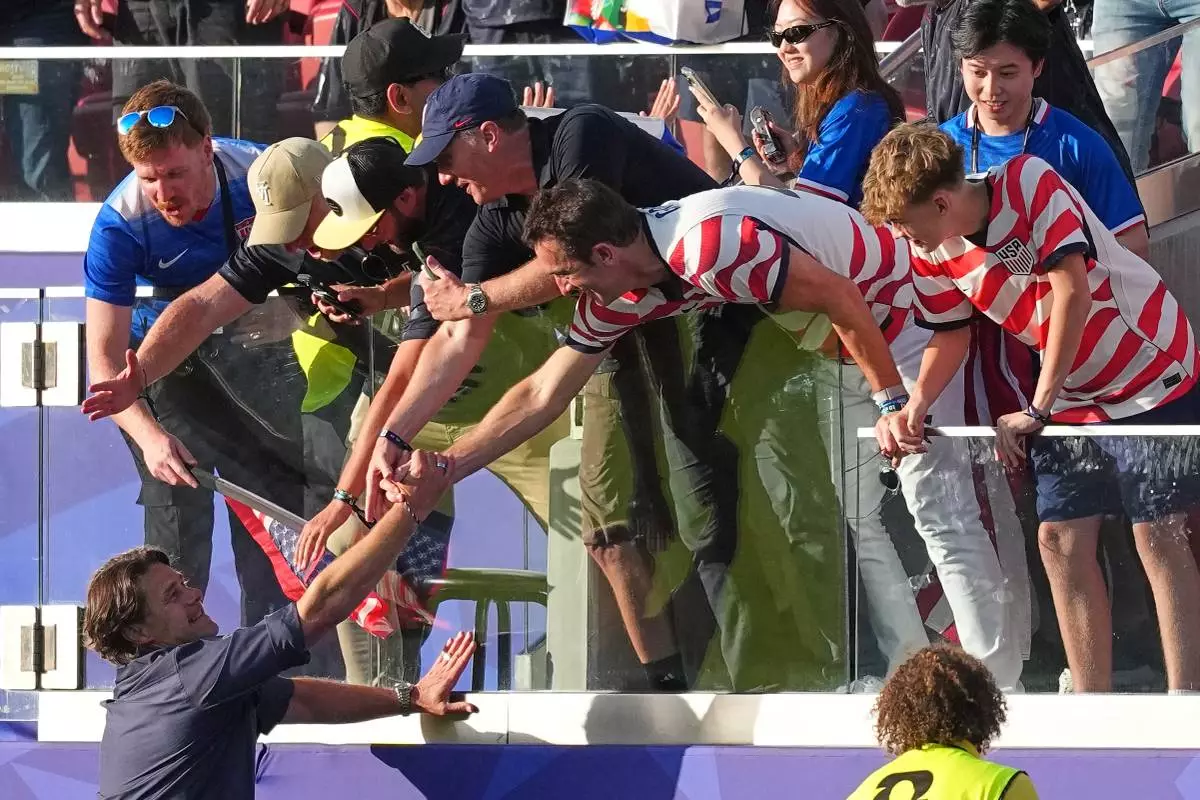
United States head coach Mauricio Pochettino, left, celebrates with supporters following the World Cup round of 32 soccer match between the United States and Bosnia in Santa Clara, Calif., near San Francisco, Wednesday, July 1, 2026. (AP Photo/Julio Cortez)
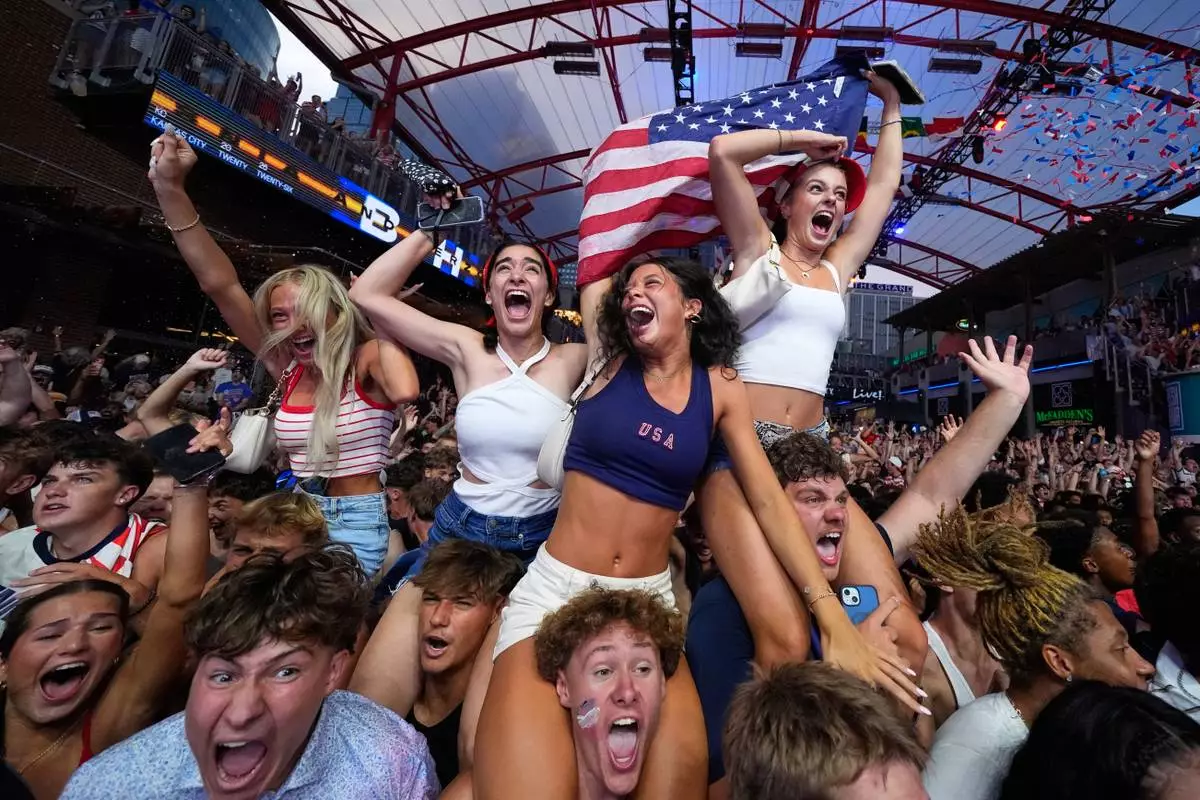
Fans celebrate after a United States goal during a watch party for a World Cup soccer match against Bosnia at the KC Live! entertainment district Wednesday, July 1, 2026, in Kansas City, Mo. (AP Photo/Charlie Riedel)
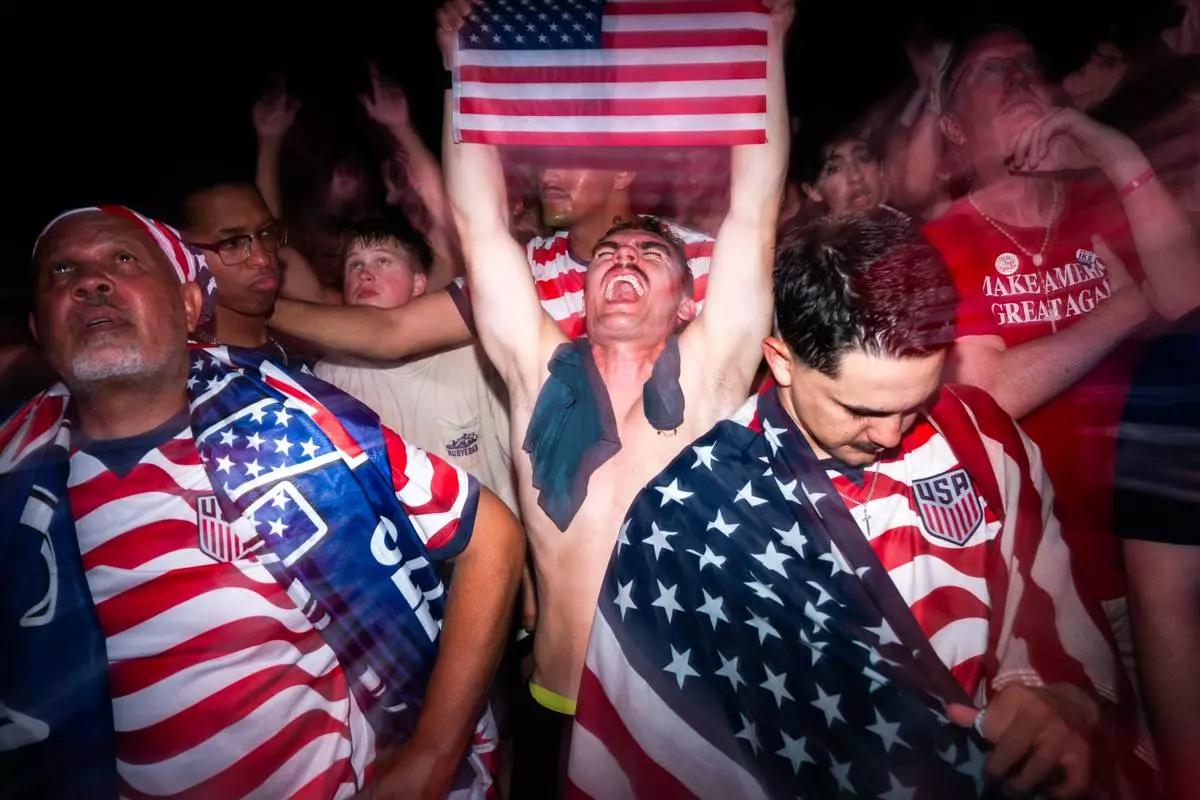
People attend a watch party for a World Cup soccer match between the United States and Bosnia Wednesday, July 1, 2026, in Washington, at the FIFA Fan Zone on the National Mall. (AP Photo/Allison Robbert)
VATICAN CITY (AP) — The Vatican responded aggressively Thursday to a traditionalist group that consecrated bishops without the pope’s consent, declaring the Society of St. Pius X had formally broken with the Catholic Church. It also excommunicated its bishops and priests, and warned its faithful that they too face the harshest sanctions in the church.
By declaring a schism and extending excommunications to potentially thousands of Catholics, the Vatican’s doctrine office went above and beyond the minimum sanctions foreseen by the church’s canon law to respond to the consecrations Wednesday of four new bishops.
The society, known by its acronym SSPX, celebrates the ancient Latin Mass and opposes the modernizing reforms of the Catholic Church, which it considers to be rife with heresies and errors. While a fringe movement on the Catholic right, the SSPX has been a thorn in the Vatican's side for five decades because it claims to be even more Catholic than the Holy See.
During a ritual-filled, five-hour Mass on Wednesday at its seminary in Econe, Switzerland, the SSPX consecrated four new bishops in direct defiance of Leo, who had urged the group to hold off for the sake of church unity. An estimated 15,500 people and their children attended, a sign that the SSPX has plenty of supporters who came from around the world knowing full well they were defying Rome.
The harshness of the response suggested that after trying to negotiate with the SSPX, the Vatican under Pope Leo XIV had had enough.
In a decree, the Vatican excommunicated the four new bishops and the two bishops who participated in the ceremony. It declared the consecrations a “schismatic act” and declared the society itself had created a schism, or intentional rupture with the Catholic Church.
It declared SSPX priests — who number about 750 — to be schismatic, and therefore excommunicated, and invalidated the sacraments of confession and marriage that they administer. The Vatican warned the faithful to stop going to the society’s Masses, declaring “those who adhere formally” to the society are considered themselves schismatic and excommunicated.
The Vatican has previously described “adherence” to the SSPX as including those Catholics who share in the schism by placing their loyalties to the society above the pope, and those who participate exclusively in SSPX Masses. As a result, Thursday's decree could potentially involve the excommunications of thousands of rank-and-file SSPX faithful.
The sanctions, especially those targeting the priests, the faithful and the sacraments they can receive, were particularly harsh and reversed concessions the Vatican had granted the SSPX in recent years as part of its outreach to bring the group back under Rome's wing.
The actions were announced just as one of the new bishops, Pascal Schreiber of Switzerland, was celebrating his first Mass as a bishop in Econe.
Marc-André Mabillard, media manager for the society, expressed shock at the severity of the sanctions and called them “unjust."
“For us, this excommunication extended to the faithful is brutal. It’s not what we expect from a father to whom we refer every day,” he told The Associated Press. “We are told, ‘You claim to have the truth.’ Fine. I’m just saying that we certainly have our flaws, but our main flaw today is having a leader who doesn’t want to communicate with us. And that’s terrible.”
The Vatican's doctrine chief, Cardinal Víctor Manuel Fernández, met in February with the SSPX superior, the Rev. Davide Pagliarani, and proposed a dialogue. But Pagliarani asked instead to meet with Leo, who declined but wrote a letter Tuesday begging the SSPX to call off the consecrations.
French Archbishop Marcel Lefebvre founded the SSPX in 1970 in opposition to the modernizing reforms of the Second Vatican Council. Among other things, the 1960s meetings known as Vatican II revolutionized the church’s relations with other Christians, Jews and people of other faiths and allowed Mass to be celebrated in the vernacular rather than Latin.
Lefebvre consecrated four bishops without papal consent in 1988. The Vatican promptly excommunicated Lefebvre and the four bishops and declared the consecrations a “schismatic act.”
Pope Benedict XVI in 2009 lifted the excommunications as part of his yearslong outreach to the group. But the SSPX today has no legal standing in the church and with Thursday’s decree is declared to be in schism.
The consecrations had posed a crisis for Leo because the American pope has stressed the need for church unity. He has reached out especially to the conservative and traditionalist wing of the church that was in many ways alienated during the Pope Francis pontificate.
The Vatican responded so aggressively in part because the group poses something of a threat by representing a parallel, ultra-Catholic, pre-Vatican II church that has grown in the decades since its original break from Rome. While representing a fraction of the 1.4-billion strong Catholic faithful, the SSPX now has six bishops, 751 priests, 264 seminarians, 145 religious brothers, 88 oblates and 250 religious sisters representing 50 nationalities, according to SSPX statistics.
In a note accompanying the decree, the Vatican said it was willing, “like a caring mother,” to welcome any SSPX faithful back into the fold. But it didn't create any specific Vatican entity to receive them, decreeing only that Vatican ambassadors around the world would establish procedures for local bishops to follow.
While the SSPX is out of communion with Rome, plenty of other Catholic traditionalists who love the Latin Mass remain in communion with the Holy See. They had been watching carefully to see how Leo's Vatican would respond to the SSPX consecrations and were surprised by the harshness of Thursday's sanctions.
Luigi Casalini, of the blog Messa in Latino, meaning Latin Mass, said the excommunication of the bishops was correct because canon law provides for it.
But the extension of the excommunications to SSPX priests and faithful was “an act of unusual severity,” he said, while saying the invalidation of SSPX sacraments was problematic.
“Above all, we find it hard to believe that, to date, no Vatican body has been established to manage potential defectors,” as was the case after the 1988 excommunications, Casalini told The Associated Press.
The SSPX has accused the church of being rife with errors, such as modernism and liberalism, and that only it is upholding the true faith of Christ. It has justified the consecrations, citing a “state of necessity” to minister to its faithful. Only two of the original four bishops consecrated in 1988 are alive, and the SSPX has said they simply are too old to minister to all the SSPX faithful.
One of the thousands of worshippers at Wednesday’s consecrations was Allison Isermann, a 24-year-old from St. Marys, Kansas, who grew up as a society member and strongly defended its teaching in opposition to Vatican II, specifically its openness to those of other faiths.
“It is actually very anti-Catholic and anti-charitable to affirm others and their beliefs when it is our duty and our mission to actually convert and sanctify the world and to restore all things in Christ,” she said.
Jamey Keaten contributed from Econe, Switzerland.
Associated Press religion coverage receives support through the AP’s collaboration with The Conversation US, with funding from Lilly Endowment Inc. The AP is solely responsible for this content.
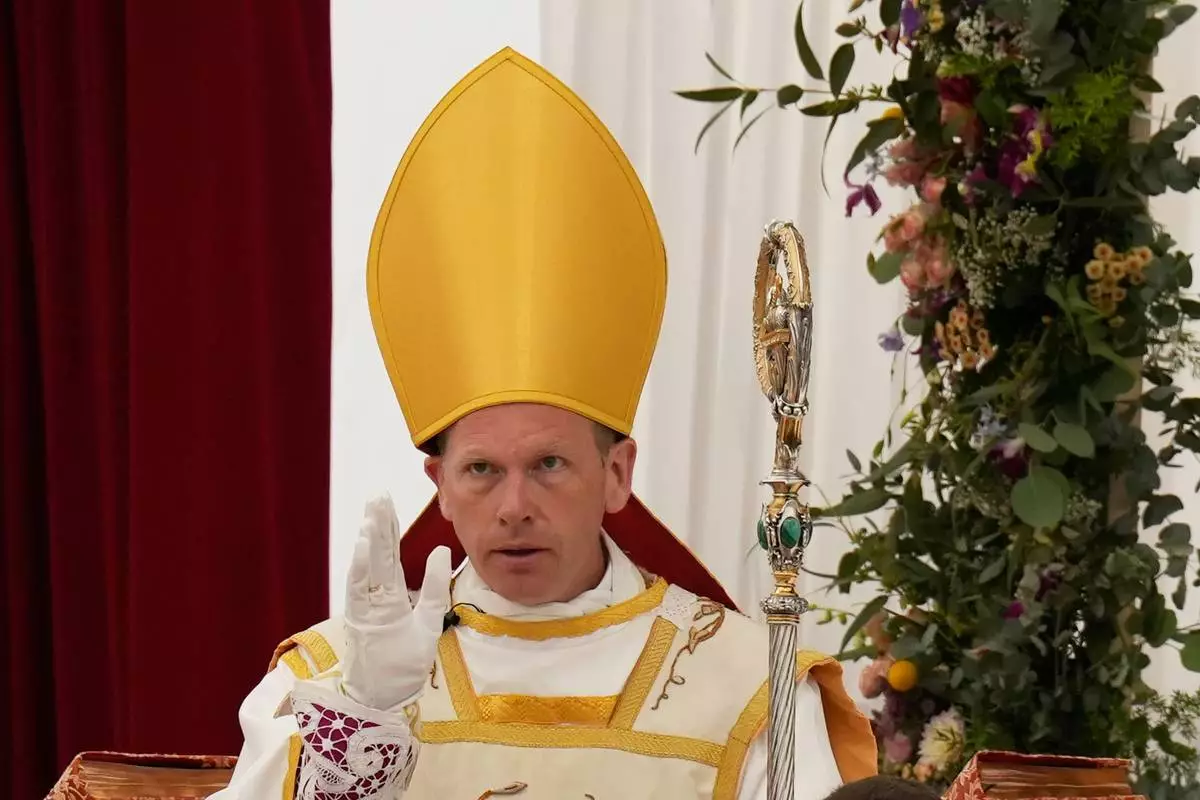
Newly consecrated Bishop Michael Goldade delivers his blessing at the end of his consecration ceremony in a tent set up outside the Society of St. Pius X seminary in Econe, Switzerland, Wednesday, July 1, 2026. (AP Photo/Baz Ratner)
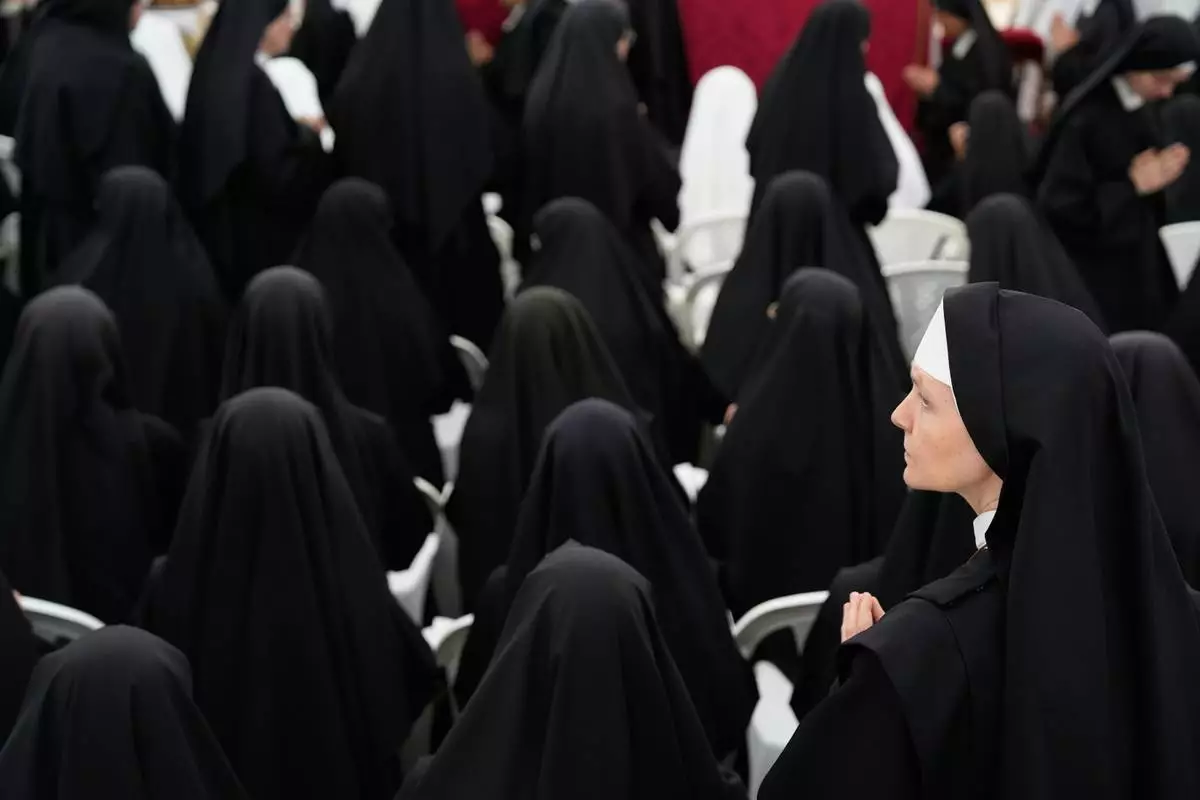
Nuns attend a consecration ceremony for four new bishops in a tent set up outside the Society of St. Pius X seminary, in Econe, Switzerland, Wednesday, July 1, 2026. (AP Photo/Baz Ratner)
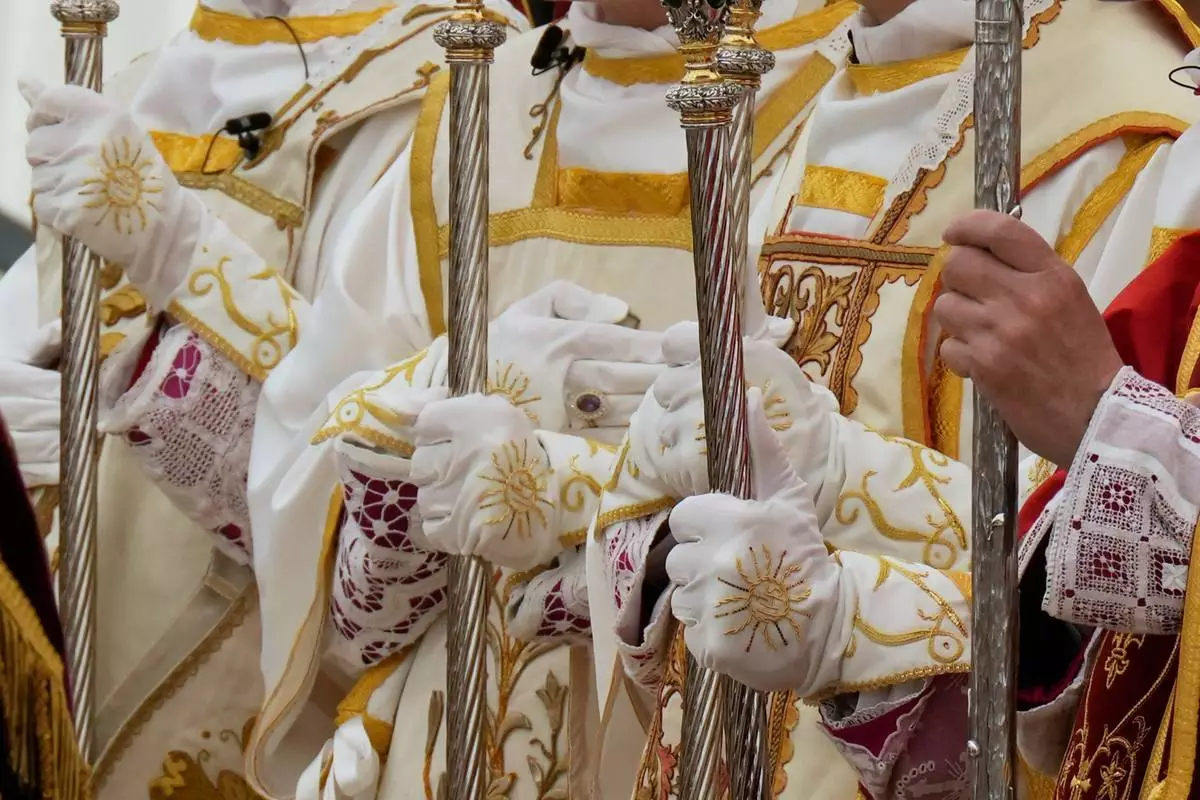
Newly consecrated Bishops, from left, Pascal Schreiber, Michael Goldade, Michel Poinsinet de Sivry and Marc Hanappier hold their pastoral staffs at the end of their consecration ceremony in a tent set up outside the Society of St. Pius X seminary in Econe, Switzerland, Wednesday, July 1, 2026. (AP Photo/Baz Ratner)
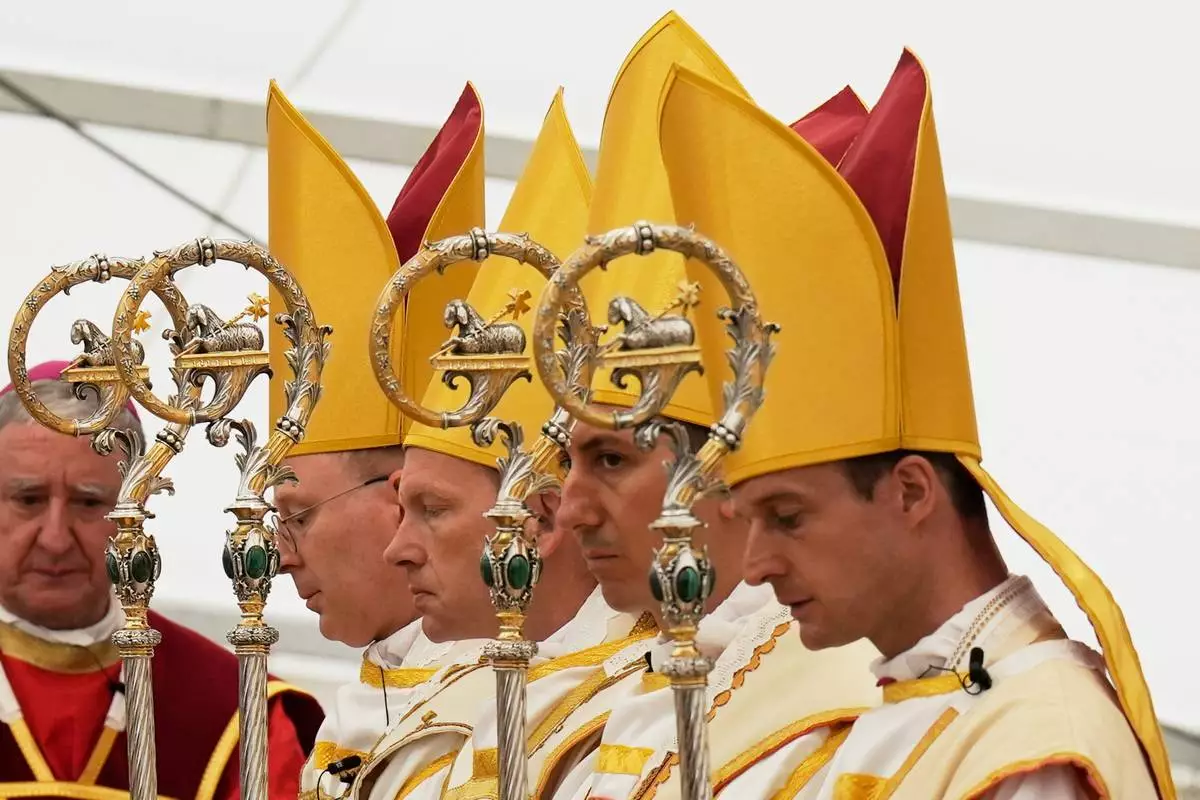
Newly consecrated Bishops, from left, Pascal Schreiber, Michael Goldade, Michel Poinsinet de Sivry and Marc Hanappier, wearing their miters and holding their pastoral staffs, pray at the end of their consecration ceremony in a tent set up outside the Society of St. Pius X seminary in Econe, Switzerland, Wednesday, July 1, 2026. (AP Photo/Baz Ratner)
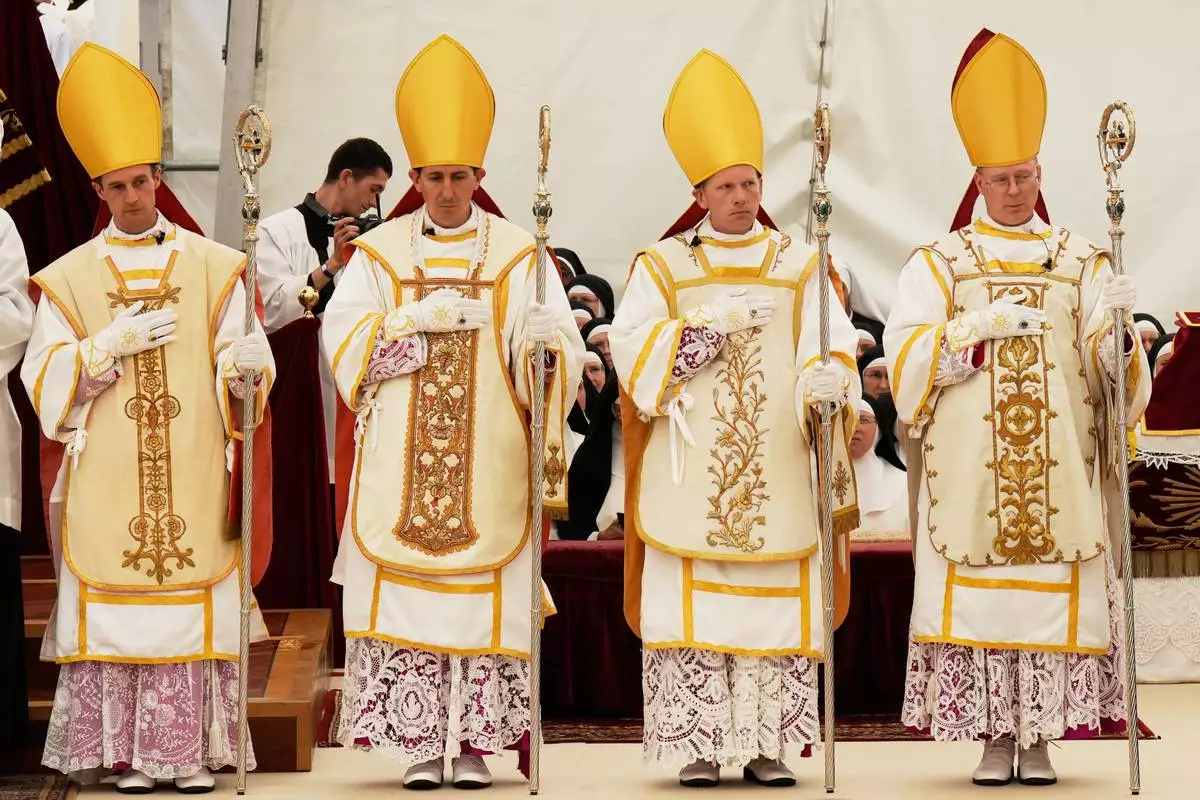
Newly consecrated Bishops, from left, Marc Hanappier, Michel Poinsinet de Sivry, Michael Goldade and Pascal Schreiber wearing their miters and holding their pastoral staffs, stand at the end of their consecration ceremony in a tent set up outside the Society of St. Pius X seminary in Econe, Switzerland, Wednesday, July 1, 2026. (AP Photo/Baz Ratner)