PRINCETON, N.J. & ESPOO, Finland--(BUSINESS WIRE)--Jul 2, 2026--
IQM Quantum Computers (Nasdaq: IQMX) (“IQM”, “IQM Quantum Computers” or the “Company”), a global leader in full-stack superconducting quantum computers, today became a publicly traded company following the completion of its business combination with Real Asset Acquisition Corp. (“RAAQ”).
This press release features multimedia. View the full release here: https://www.businesswire.com/news/home/20260702960460/en/
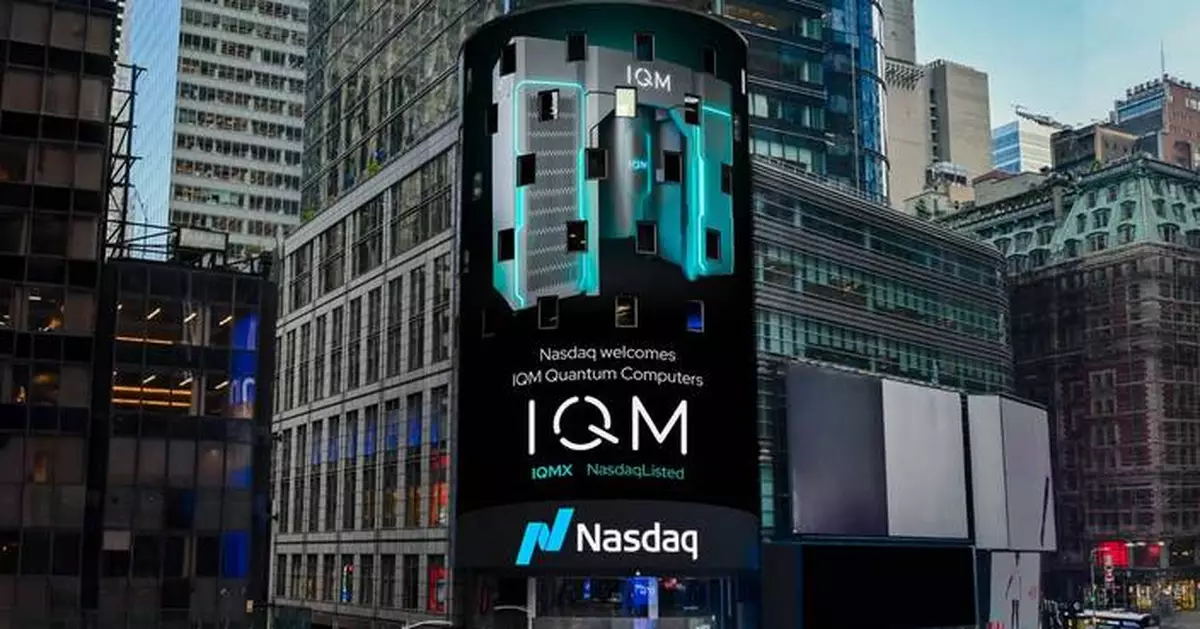
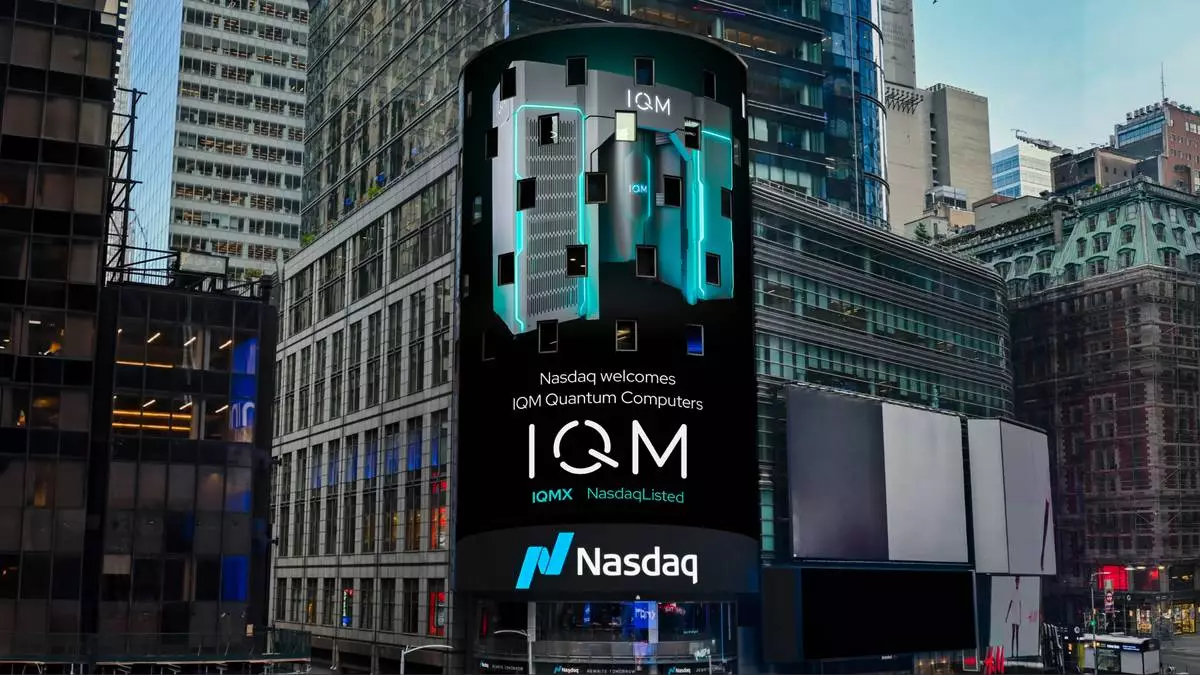
The company’s American Depositary Shares begin trading today on the Nasdaq Global Select Market under the ticker symbol “IQMX”. The listing marks a major milestone for IQM establishing the company as the first European quantum computing company listed on a major U.S. stock exchange. Due to the proceeds of the transaction, IQM maintains a strong pro forma cash position of EUR 337 million.
IQM enters the public markets with strong commercial momentum and a rapidly expanding global footprint — having sold 23 quantum computers worldwide, more than any other quantum manufacturer. Central to that leadership is its Production Quantum model: full-stack, open-architecture systems that customers own, operate, and build on.
The company has emerged as one of the world’s leading providers of full-stack superconducting quantum computers, delivering complete systems to enterprises, research institutions, universities, supercomputing centers, and national laboratories.
“Quantum computing is reaching an inflection point. Around the world, organizations are moving from exploration to implementation, investing in quantum infrastructure and building the capabilities that will define the next generation of computing,” said Jan Goetz, CEO and Co-Founder of IQM Quantum Computers. “IQM enters the public markets from a position of strength, with leading technology, a growing global customer base, and a clear strategy for scaling the commercial adoption of quantum computing. We are excited to begin this next chapter as a public company.”
The listing reflects IQM’s continued commitment to executing its technology roadmap and scaling its operations as a fully vertically integrated quantum computing company. That commitment is already delivering results across the world.
IQM´s technology approach focuses on high-performance quantum processors, hardware-efficient control systems, and advanced system engineering. The company recently announced a novel quantum error correction approach that significantly reduces the hardware requirements for fault-tolerant quantum computing. IQM´s quantum computers are operated by an open and modular software stack to empower a broad developer community and enable industrial use-cases.
Across the world, IQM’s quantum computers are operational at leading institutions and supercomputing centers, including CINECA in Italy, the Leibniz Supercomputing Center (LRZ) in Germany, and the Department of Energy’s Oak Ridge National Laboratory (ORNL) in the United States, establishing the company as the trusted partner for the world’s most demanding research and computing environments.
In addition, IQM is cementing its position at the heart of America’s quantum strategy with the opening of its first Quantum Technology Center in Maryland and a landmark installation at the Department of Energy’s Oak Ridge National Laboratory marking a decisive moment in its U.S. expansion.
IQM is also driving quantum adoption in Asia. The company secured the first enterprise quantum computer purchase in Japan, with Toyo Corporation acquiring an IQM system to accelerate industrial quantum computing applications and broaden access to quantum technologies for Japanese enterprises and research organizations.
IQM believes the quantum computing market is approaching a critical inflection point as governments, enterprises, and scientific institutions increase investments in next-generation computing capabilities to address challenges in materials science, optimization, artificial intelligence, cybersecurity, climate modeling, and drug discovery.
About IQM Quantum Computers
IQM Quantum Computers (Nasdaq: IQMX) is a global leader in superconducting quantum computers, delivering full-stack quantum systems and cloud platform access to enterprises, research institutions, universities, high-performance computing centers, and national laboratories worldwide. IQM’s on-premises deployment model gives customers direct ownership and control of their quantum infrastructure. Founded in 2018 and headquartered in Finland, with major operations in Munich, IQM employs over 400 people and operates across Europe, Asia, and North America. IQM is the first publicly listed European quantum company on Nasdaq Stock Market.
Forward-Looking Statements
This communication includes “forward-looking statements” within the meaning of the U.S. federal securities laws and “forward-looking information” within the meaning of applicable non-U.S. securities laws (collectively, “forward-looking statements”). Forward-looking statements may be identified by the use of words such as “estimate,” “plan,” “project,” “forecast,” “intend,” “will,” “expect,” “anticipate,” “believe,” “seek,” “target,” “continue,” “could,” “may,” “might,” “possible,” “potential,” “predict” or similar expressions that predict or indicate future events or trends or that are not statements of historical matters. These forward-looking statements are based upon current estimates and assumptions that, while considered reasonable by IQM and its management are inherently uncertain. These statements include: projections of market opportunity and market share; estimates of customer adoption rates and usage patterns; projections regarding the Company’s ability to commercialize new products and technologies; projections of development and commercialization costs and timelines; expectations regarding the Company’s ability to execute its business model and the expected financial benefits of such model; expectations regarding the Company’s ability to attract, retain and expand its customer base; the Company’s deployment of proceeds from capital raising transactions; the Company’s expectations concerning relationships with strategic partners, suppliers, governments, state-funded entities, regulatory bodies and other third parties; the Company’s ability to maintain, protect and enhance its intellectual property; future ventures or investments in companies, products, services or technologies; development of favorable regulations affecting the Company’s markets; the Company’s ability to commercialize its hardware and software; the expectation that the Company is building the sovereign infrastructure that allows quantum ecosystems to grow; and the potential for the Company to increase in value.
These forward-looking statements are provided for illustrative purposes only and are not intended to serve as, and must not be relied on as, a guarantee, an assurance, a prediction or a definitive statement of fact or probability. Actual events and circumstances are difficult or impossible to predict and will differ from assumptions, many of which are beyond the control of the Company.
These forward-looking statements are subject to known and unknown risks, uncertainties and assumptions that may cause the actual results of the Company, levels of activity, performance, or achievements to be materially different from any future results, levels of activity, performance or achievements expressed or implied by such statements. Such risks and uncertainties include: that the Company is pursuing an emerging technology, which faces significant technical challenges and may not achieve commercialization or market acceptance; the Company’s historical net losses and limited operating history; the Company’s expectations regarding future financial performance, capital requirements and unit economics; the Company’s use and reporting of business and operational metrics; the Company’s competitive landscape; the Company’s dependence on members of its senior management and its ability to attract and retain qualified personnel; the potential need for additional future financing; the Company’s concentration of revenue in contracts with government or state-funded entities; the Company’s ability to manage growth and expand its operations; potential future acquisitions or investments in companies, products, services or technologies; the Company’s reliance on strategic partners and other third parties; the Company’s ability to maintain, protect and defend its intellectual property rights; risks associated with privacy, data protection or cybersecurity incidents and related regulations; the use, rate of adoption and regulation of artificial intelligence and machine learning; uncertainty or changes with respect to laws and regulations; uncertainty or changes with respect to taxes, trade conditions and the macroeconomic environment; the Company’s ability to maintain internal control over financial reporting and operate as a public company; the outcome of any legal proceedings or government investigations that may be commenced against the Company; failure to realize the anticipated benefits of the Company’s recent business combination with RAAQ; the ability of the Company to issue equity or equity-linked securities in the future; and other factors described in the Company’s filings with the SEC ( www.sec.gov ). These forward-looking statements are based on certain assumptions, including that none of the risks identified above materialize; that there are no unforeseen changes to economic and market conditions, and that no significant events occur outside the ordinary course of business. Additional information concerning these and other factors that may impact such forward-looking statements can be found in filings and potential filings by the Company with the SEC, including under the heading “Risk Factors.” If any of these risks materialize or assumptions prove incorrect, actual results could differ materially from the results implied by these forward-looking statements. In addition, these statements reflect the expectations, plans and forecasts of the Company’s management as of the date of this communication; subsequent events and developments may cause their assessments to change. While the Company may elect to update these forward-looking statements at some point in the future, they specifically disclaim any obligation to do so, unless required by applicable securities laws. Accordingly, undue reliance should not be placed upon these statements.
In addition, statements that “we believe” and similar statements reflect our beliefs and opinions on the relevant subject. These statements are based upon information available to us as of the date of this communication, and while we believe such information forms a reasonable basis for such statements, such information may be limited or incomplete, and our statements should not be read to indicate that we have conducted an exhaustive inquiry into, or review of, all potentially available relevant information. These statements are inherently uncertain, and investors are cautioned not to unduly rely upon these statements.
IQM Quantum Computers Becomes First European Quantum Computing Company Listed on a Major U.S. Exchange