LONDON (AP) — Prime Minister Keir Starmer formally apologized Thursday for the British state's role in separating tens of thousands of unmarried mothers from their babies, a practice that lasted for decades until the 1970s.
He said in Parliament that “we are deeply and profoundly sorry” for what he called a “stain on our history.”
Click to Gallery
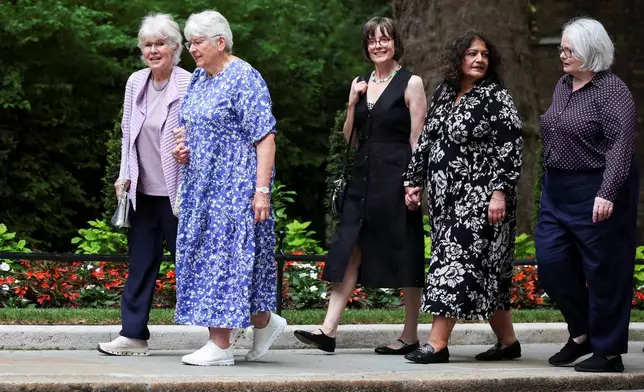
Campaigners arrive for a meeting with Britain's Prime Minister Keir Starmer at Downing Street, to discuss historical forced adoption, in London, Thursday July 2, 2026. (Isabel Infantes/Pool Photo via AP)
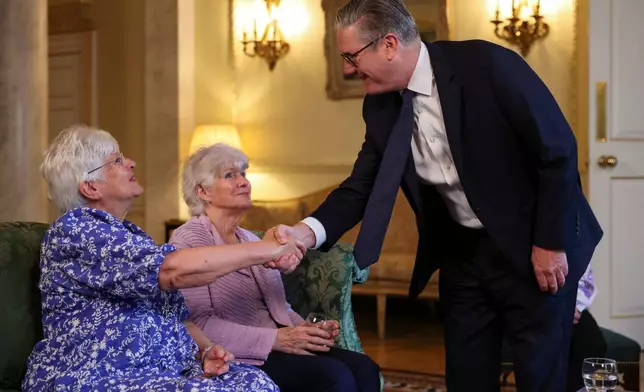
Britain's Prime Minister Keir Starmer meets with campaigners to discuss historical forced adoption, at Downing Street, in London, Thursday July 2, 2026. (Isabel Infantes/Pool Photo via AP)
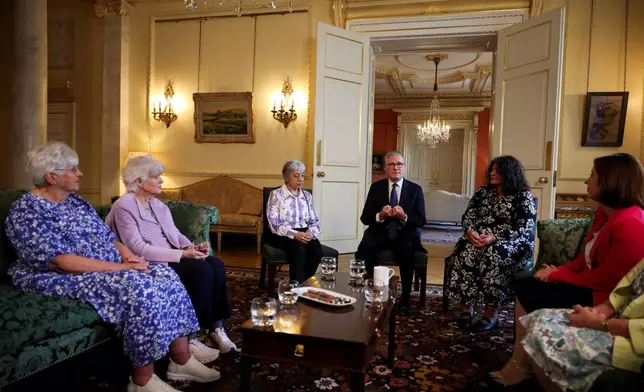
Britain's Prime Minister Keir Starmer, center, attends a meeting with campaigners to discuss historical forced adoption, at Downing Street, in London, Thursday July 2, 2026. (Isabel Infantes/Pool Photo via AP)
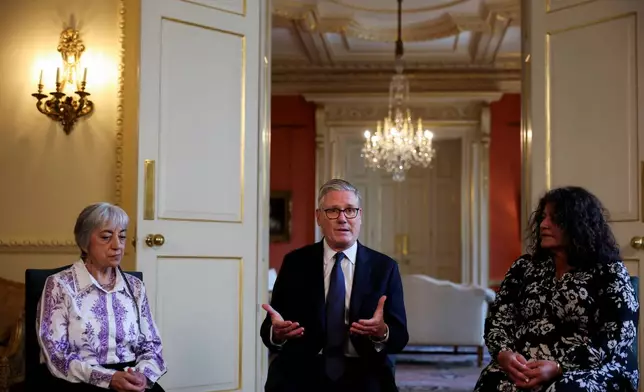
Britain's Prime Minister Keir Starmer, center, attends a meeting with campaigners to discuss historical forced adoption, at Downing Street, in London, Thursday July 2, 2026. (Isabel Infantes/Pool Photo via AP)
Britain's Prime Minister Keir Starmer speaks to the media outside 10 Downing Street to announce his resignation in London, Monday, June 22, 2026.(AP Photo/Thomas Krych)
An estimated 185,000 babies of unmarried mothers were adopted in England and Wales between 1949 and 1976. Campaigners have fought for years for acknowledgment that women were pressured, deceived and threatened into giving up their babies.
Starmer met Thursday with a group of campaigners, who watched from the public gallery of the House of Commons as he delivered the apology.
He said that women were “coerced, bullied or misled into feeling that they had no choice but to have their children taken away from them.”
“Children grew up believing they were unwanted” and mothers were told “their babies would be better off without them,” he said.
“To every one of those affected we say a deep and heartfelt sorry,” said Starmer, who is his final weeks as Britain’s leader.
Alongside the apology, he announced support for affected mothers and children, including better access to adoption records and mental health support.
Britain is one of several countries reckoning with the legacy of social norms, religious practices and government policies that heaped shame on unwed mothers, hid them away in institutions while pregnant and took their children to be adopted by married couples.
Ann Keen, a former U.K. health minister whose baby was taken for adoption in 1966 when she was 17, said the apology was part of “being released from my shame.”
“We need this apology, because we have always been accused of giving up our babies, and we didn’t give them up,” she told the BBC. “We’ve now got the opportunity to really put this wrong right.”
In 2022, Parliament’s Joint Committee on Human Rights said the British state should apologize for “the pain and suffering caused by public institutions and state employees that railroaded mothers into unwanted adoptions.”
The semiautonomous governments in Scotland and Wales issued apologies the following year, but the Conservative U.K. government at the time declined to follow suit, saying that “the state did not actively support these practices.”
But Starmer said forced adoptions were the result of "practices embedded within systems” across local government, religious institutions and the health and social care systems.
“The state bears responsibility for the systems it funded and legitimized which enabled these practices to occur,” he said.
The apology from Starmer’s Labour Party government comes two weeks after the Church of England said sorry for its role in forced adoptions.
Archbishop of Canterbury Sarah Mullally said that “we are profoundly sorry for the pain, trauma and stigma experienced — and still carried — by many people because of historical adoption practices in homes affiliated to the Church of England.”
In 2013, Australia’s then-Prime minister, Julia Gillard, delivered a landmark national apology for the country’s history of forced adoptions and the “lifelong legacy of pain and suffering” it had caused.
Ireland has been reckoning with the legacy of mother-and-baby homes run by the Catholic Church, in which tens of thousands of women were housed in often degrading conditions. An inquiry found in 2021 that 9,000 children had died in 18 mother-and-baby homes during the 20th century.
Prime Minister Micheál Martin apologized for the “profound and generational wrong” visited upon mothers and their babies who ended up in the institutions.
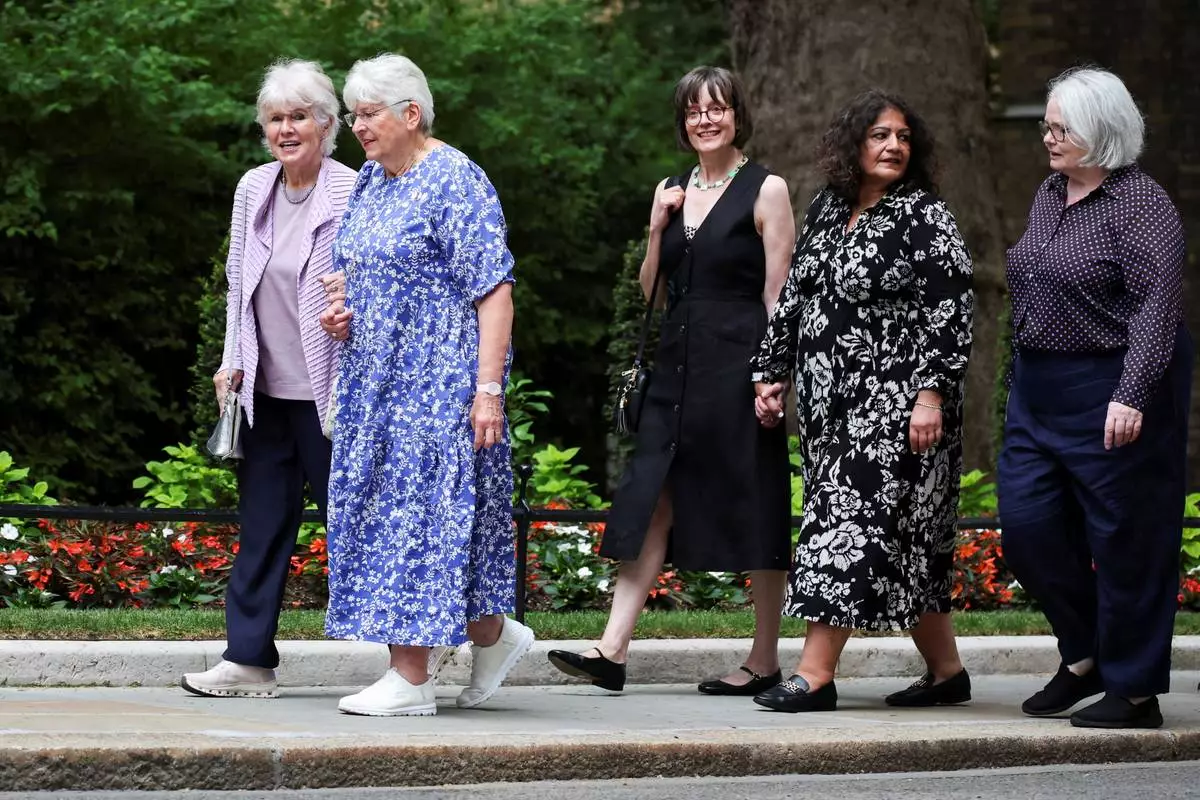
Campaigners arrive for a meeting with Britain's Prime Minister Keir Starmer at Downing Street, to discuss historical forced adoption, in London, Thursday July 2, 2026. (Isabel Infantes/Pool Photo via AP)
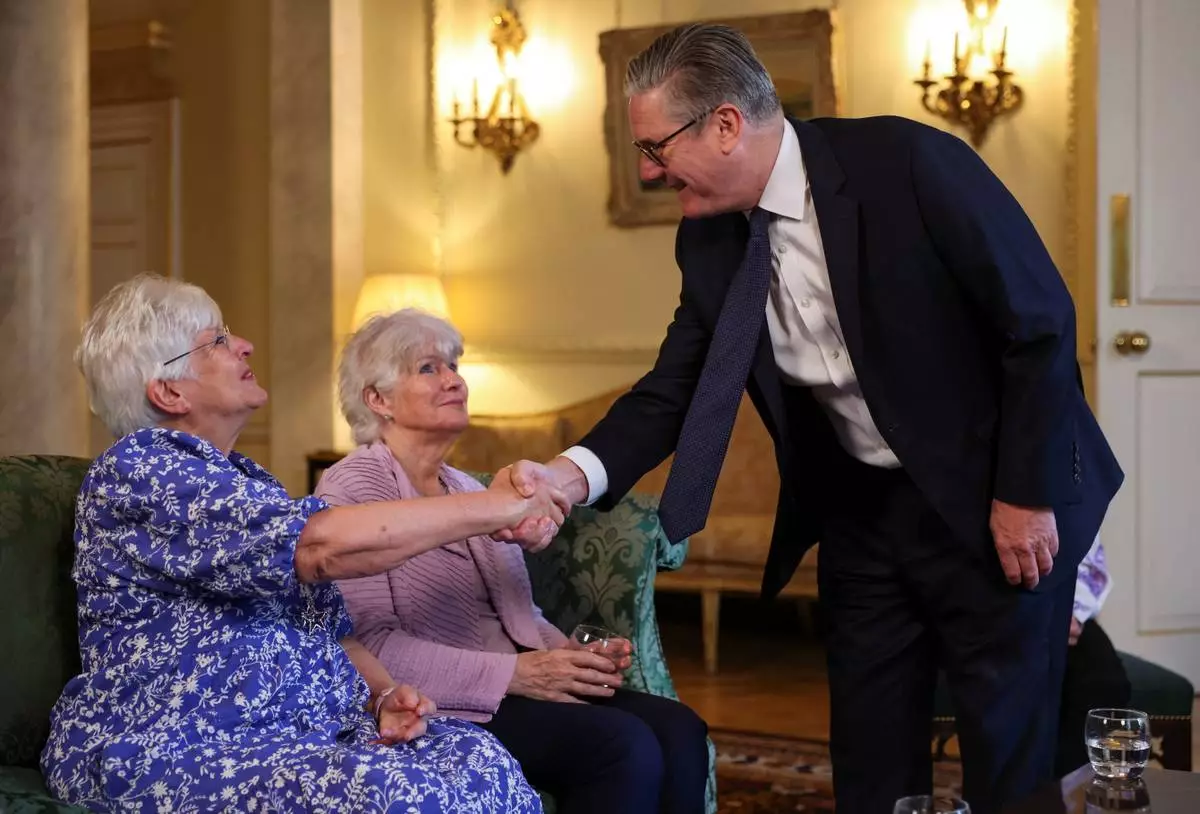
Britain's Prime Minister Keir Starmer meets with campaigners to discuss historical forced adoption, at Downing Street, in London, Thursday July 2, 2026. (Isabel Infantes/Pool Photo via AP)
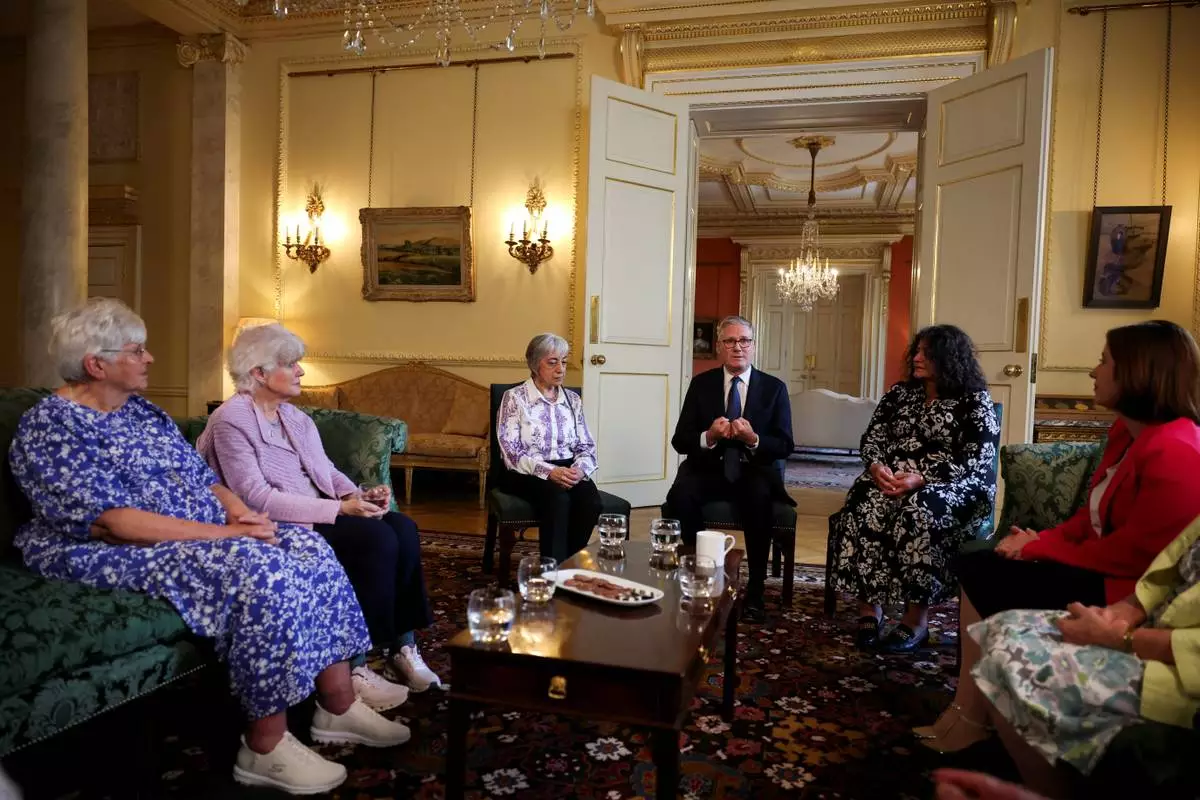
Britain's Prime Minister Keir Starmer, center, attends a meeting with campaigners to discuss historical forced adoption, at Downing Street, in London, Thursday July 2, 2026. (Isabel Infantes/Pool Photo via AP)
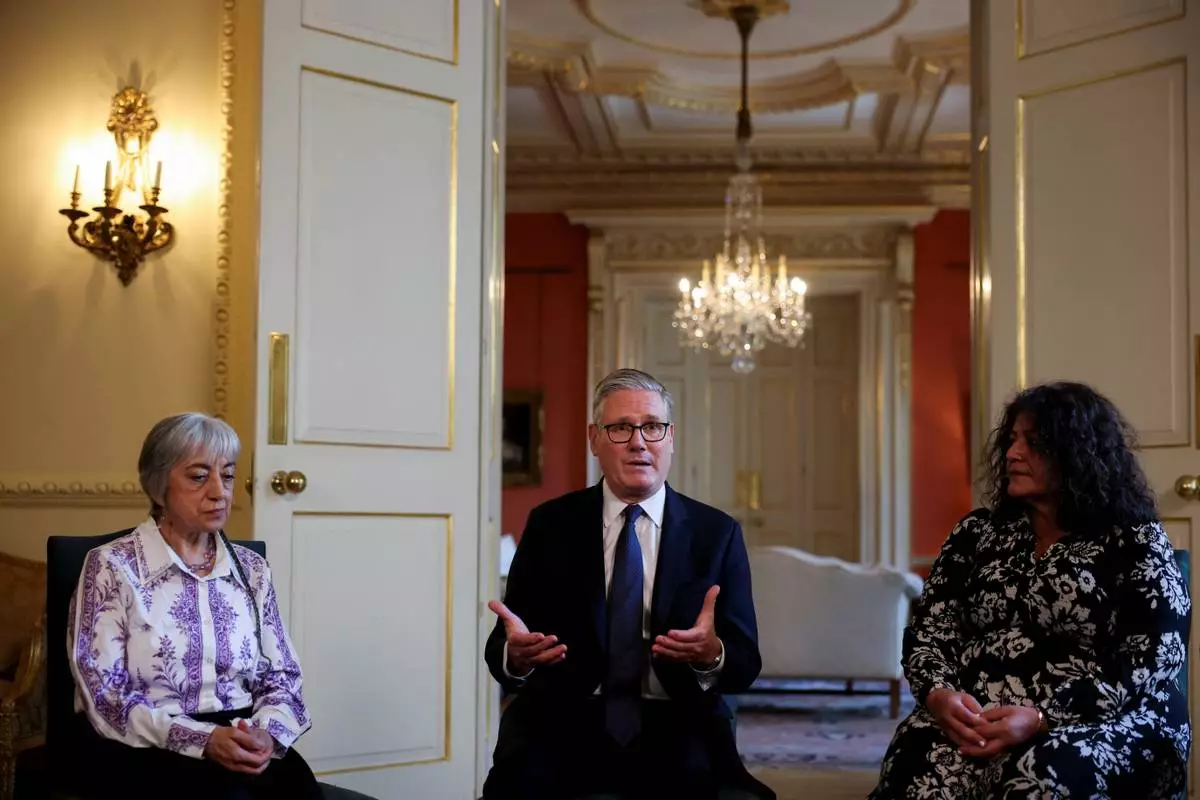
Britain's Prime Minister Keir Starmer, center, attends a meeting with campaigners to discuss historical forced adoption, at Downing Street, in London, Thursday July 2, 2026. (Isabel Infantes/Pool Photo via AP)

Britain's Prime Minister Keir Starmer speaks to the media outside 10 Downing Street to announce his resignation in London, Monday, June 22, 2026.(AP Photo/Thomas Krych)
WASHINGTON (AP) — President Donald Trump and his fellow Republicans are reviving a line of attack against Democrats heading into the midterm elections: They're communists.
In just the past week, Trump has issued dark warnings that members of the Democratic Party's ascendant left are communists who want to “completely destroy the traditional American way of life" and even engage in assassinations. Vice President JD Vance has similarly called out communism as a political shift that is “something we haven't seen in the U.S.” House Speaker Mike Johnson has decried “radical candidates” who are “self-described, self-identifying Marxists.”
The GOP's ideological focus conflates democratic socialism, which often centers on securing universal healthcare, higher taxes on the wealthy and stricter corporate regulation, with communism, under which private ownership is largely eliminated. It has been building since Zohran Mamdani, a democratic socialist, won the Democratic nomination for New York City mayor last year.
But it's kicked into a higher gear recently after democratic socialists won several New York City congressional primaries last week. The primary victory on Tuesday by another democratic socialist, Melat Kiros, for a Denver congressional seat suggested the trend may extend beyond Manhattan liberalism.
“The Democrats are making this easy for us,” Rep. Richard Hudson, the North Carolina Republican who leads the House GOP's strategy and fundraising arm, said in an interview. “They're nominating extreme liberals, leftists who are out of touch even with mainstream Democrats.”
The messaging effort comes as Republicans scramble to hold onto threadbare congressional majorities in the November midterms. It risks overlooking public frustration, particularly among younger voters, with unfettered capitalism at a time of growing income inequality and rising costs.
But it also gives Republicans a much-needed opportunity to shift the conversation back to territory that is more comfortable for them after their party has spent much of the year on defense over the fallout from Trump's decision to launch a war against Iran, which contributed to widespread price spikes.
Ralph Reed, the longtime conservative activist who hosted Trump last week at a Faith and Freedom Coalition conference, acknowledged that Republicans are facing steep headwinds this year. But the recent string of wins by democratic socialists, he said, allows Republicans to present a contrast between “common sense and crazy.”
The renewed push could tug at tensions among Democrats who are largely united in their loathing of Trump but are divided over the party's direction. This year's primaries are shaping up as a referendum between centrists who are eager to course correct from what they see as progressive overreach earlier in the decade and a left-wing pushing for even more sweeping change.
“A lot of this anger has been boiling under the surface,” said Joseph Geevarghese, executive director of Our Revolution, which was founded by U.S. Sen. Bernie Sanders, a Vermont independent who caucuses with Democrats. “It’s coming to the fore in this moment in a very powerful way.”
But Rep. Josh Gottheimer, a centrist New Jersey Democrat, called the victories in Colorado and New York “aberrations.”
“We’ve got to fight like hell to keep our party from being hijacked by socialists,” he said. “Most of them are bomb throwers, not problem solvers.”
Nevada Attorney General Aaron Ford easily dispatched a more progressive rival earlier this year in his Democratic bid for governor in a state Trump carried in 2024. As he eyes a general election challenge to Republican Gov. Joe Lombardo, he insisted candidates like those who won in New York don't represent all Democrats.
He said the Democratic Socialists of America “is not the face of our party.”
Rep. Suzan DelBene, a Washington Democrat who chairs the House Democratic campaign committee, said in a statement that Republicans were “resorting to desperate attacks that aren’t actually about the pocketbook issues.”
Trump and fellow Republicans risk missing the mark when the public's embrace of capitalism might not be as strong as it was decades ago.
About half of U.S. adults, 54%, have a positive view of capitalism, according to an August poll from Gallup, a slight decline from 61% in 2010. Democrats have driven some of the shift, but favorable opinions of capitalism have fallen among independents as well.
Only 42% of Democrats viewed capitalism favorably, while 66% had a positive view of socialism. The poll found that both younger and older Democrats have warmed slightly on socialism since 2010, but Democrats under age 50 are much less likely to view capitalism favorably. Democrats age 50 or older didn't shift meaningfully.
“Young voters, who I would argue are driving a lot of the electoral energy that we're seeing, came of age politically in a post-Soviet world,” Geevarghese said. “The attacks don't land in the same way when Donald Trump was politically of age.”
Hudson, who is running the House GOP campaign committee, acknowledged the communism line might not resonate in the same way with all voters, particularly younger people. That's why, he said, it's important for Republicans to tailor their message to the needs of individual districts.
“I've never run cookie-cutter campaigns where we just say one thing over and over everywhere,” he said.
Still, the argument was high on Trump's mind again on Wednesday as he visited the newly built Theodore Roosevelt Presidential Library in North Dakota. He called the former president a “ferocious opponent of a thing called communism.”
“It’s the biggest threat to our country, including World War I, World War II, Pearl Harbor, September 11,” he said. "It’s a bigger threat, potentially a bigger threat than that, because it’s like a cancer that spreads, and you better stop it fast.”
Beverly Gage, a history professor at Yale University who has written on the rise and fall of Sen. Joe McCarthy, said earlier eras of anti-communism politics took hold because there was a large and active Communist Party in the U.S. and the Soviet Union was the country's primary foe. But she said Trump's focus on the issue is notable given his ties to Roy Cohn, a onetime confidant of Trump who earlier worked for McCarthy.
“It's not very many steps to get from McCarthy to Roy Cohn to Donald Trump,” she said.
California Gov. Gavin Newsom, a potential Democratic presidential candidate, shrugged off Trump's communism focus as “bunk.” In an interview, he said the direction of the party isn't all that different from the dynamics he's navigated for decades in California politics.
“I governed in an environment where the DSA was otherwise known as progressives," he said. “This dialectic is so deeply familiar to me, and I don't over read any of it.”
This story has been corrected to show the spelling of the Washington congresswoman’s first name is Suzan, not Susan.
Associated Press writer Michelle L. Price in contributed to this report

Attendees celebrate after Democratic congressional candidate Melat Kiros won the Democratic nomination during a primary election night watch party at The Broadway, Tuesday, June 30, 2026, in Denver. (AP Photo/Rebecca Slezak)
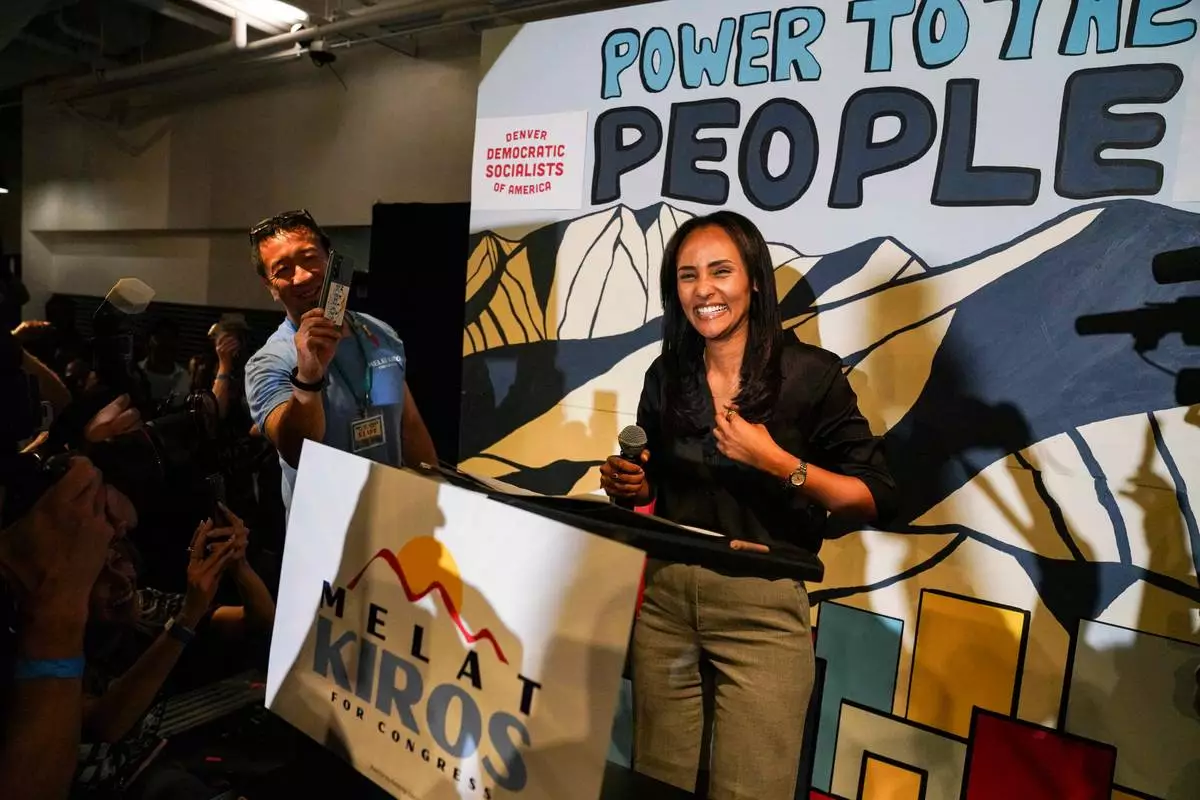
Democratic congressional candidate Melat Kiros stands on stage as supporters cheer after she won the Democratic nomination during a primary election night watch party at The Broadway, Tuesday, June 30, 2026, in Denver. (AP Photo/Rebecca Slezak)

President Donald Trump arrives to speak at the Faith & Freedom Coalition's policy conference at the Washington Hilton, Friday, June 26, 2026, in Washington. (AP Photo/Julia Demaree Nikhinson)

President Donald Trump walks through scaffolding on the North Portico as he leaves the White House to travel to Medora, N.D. for the opening of the Theodore Roosevelt Presidential Library, Wednesday, July 1, 2026, in Washington. (AP Photo/Manuel Balce Ceneta)

President Donald Trump leaves the stage after speaking at the Burning Hills Amphitheater during the Theodore Roosevelt Presidential Library opening ceremony Wednesday, July 1, 2026. (AP Photo/Matt Rourke)