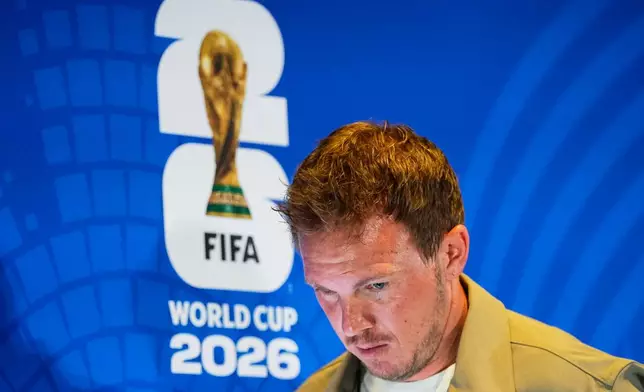
BERLIN (AP) — Germany coach Julian Nagelsmann met with his bosses to answer questions about his team’s disappointing World Cup performance at a special crisis-meeting at the headquarters of the German soccer federation on Thursday.
Nagelsmann is in the firing line and his future is uncertain after Germany’s loss to Paraguay on penalties in the first knockout round Monday.
Click to Gallery
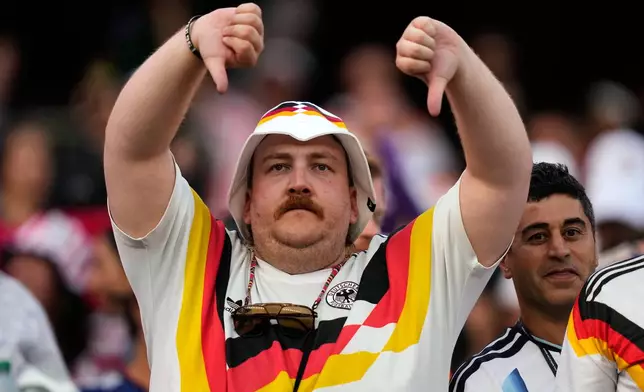
A Germany fan reacts at the end of the World Cup round of 32 soccer match between Germany and Paraguay in Foxborough, Mass., near Boston, Monday, June 29, 2026. (AP Photo/Charles Krupa)
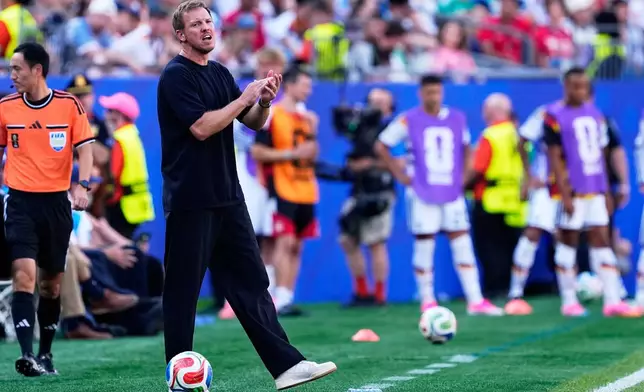
Germany head coach Julian Nagelsmann applauds during the World Cup round of 32 soccer match between Germany and Paraguay in Foxborough, Mass., near Boston, Monday, June 29, 2026. (AP Photo/Petr David Josek)
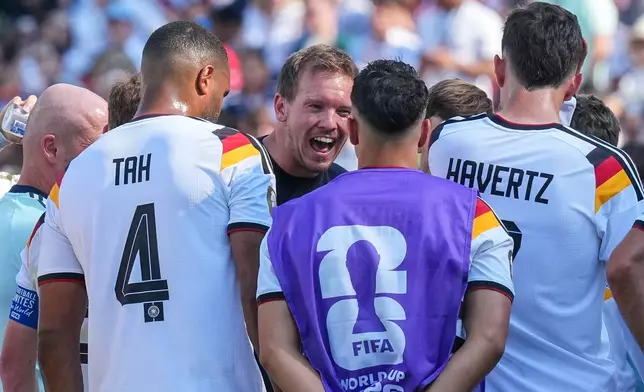
Germany head coach Julian Nagelsmann talks with his players at the hydration break during the World Cup round of 32 soccer match between Germany and Paraguay in Foxborough, Mass., near Boston, Monday, June 29, 2026. (AP Photo/Martin Meissner)
Germany head coach Julian Nagelsmann arrives to the field before the World Cup round of 32 soccer match between Germany and Paraguay in Foxborough, Mass., near Boston, Monday, June 29, 2026. (AP Photo/Petr David Josek)
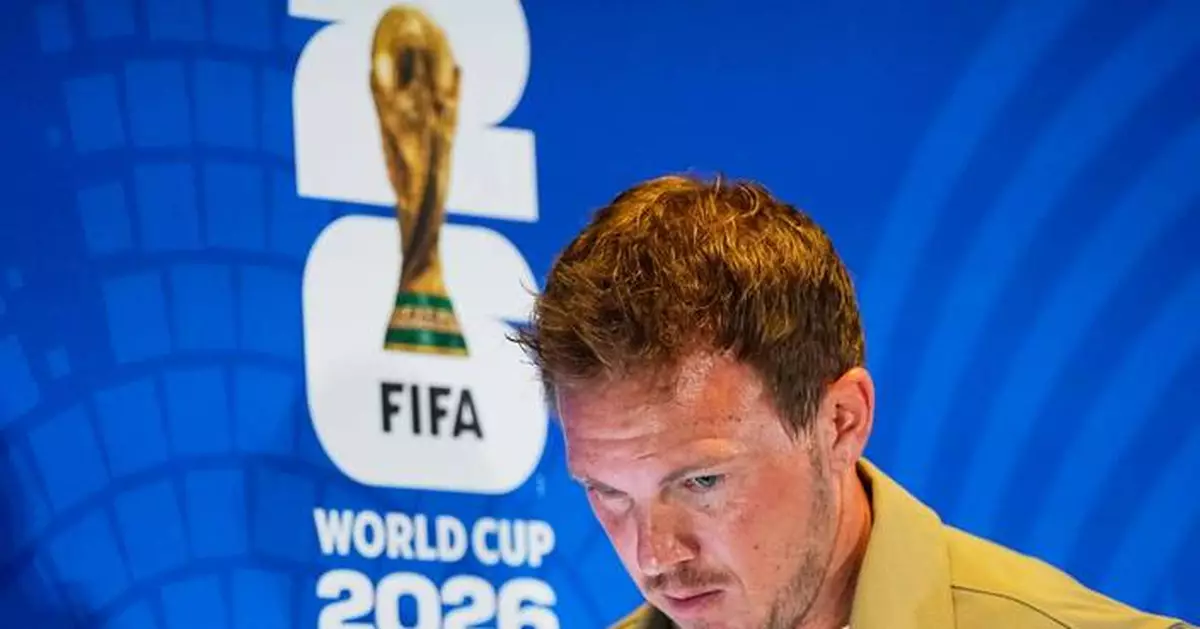
Germany head coach Julian Nagelsmann leaves a press conference ahead of the World Cup round of 32 soccer match between Germany and Paraguay in Foxborough, Mass., near Boston, Sunday, June 28, 2026. (AP Photo/Martin Meissner)
The coach has faced criticism at home over contentious decisions, contradictory messaging, abrupt changes to earlier stated positions, sticking with struggling players at the expense of others, and ultimately failing to get the team performing at a level expected from the sum of its parts. Irritable media appearances also did little to endear him to viewers at home.
While Nagelsmann vowed to stay on immediately after Germany’s exit, federation president Bernd Neuendorf said the following day that the soccer body would “calmly look at the reasons why the team was unable to realize its potential" and that "after such a crushing blow, we cannot and do not wish to simply return to business as usual.”
It was the third early World Cup exit in a row for Germany – an embarrassment for a soccer-mad country that prides itself on always being among the contenders for the title. Germany is a four-time world champion and Nagelsmann had raised expectations by declaring the team's intent was to win the World Cup again.
Ultimately, it did little to justify such lofty goals. Germany batted aside tournament debutant Curaçao, then needed late goals from Deniz Undav to beat Ivory Coast, before it lost its final group game to Ecuador and slumped to the loss against Paraguay.
Before the shootout, several German players declined captain Joshua Kimmich’s request for penalty takers, showing the scenario hadn’t been planned for. Defender Jonathan Tah was one of the players to step up, but missed the decisive spot kick.
“I’ve replayed that missed penalty in my mind thousands of times, trying to somehow steer the ball into the net in my thoughts,” Tah wrote on Instagram. “The reality is that the ball didn’t go in. And that hurts. But one thing is certain – I would take it again.”
The Bild tabloid reported Thursday’s meeting lasted around three hours and that Nagelsmann spoke about tactical misjudgments and the atmosphere at the team camp in Winston-Salem, which has since been heavily criticized.
The 38-year-old Nagelsmann has a contract as Germany coach through the European Championship in 2028, but Neuendorf and others have reportedly asked him to resign. A decision is expected in the coming days.
See more of AP’s World Cup coverage here
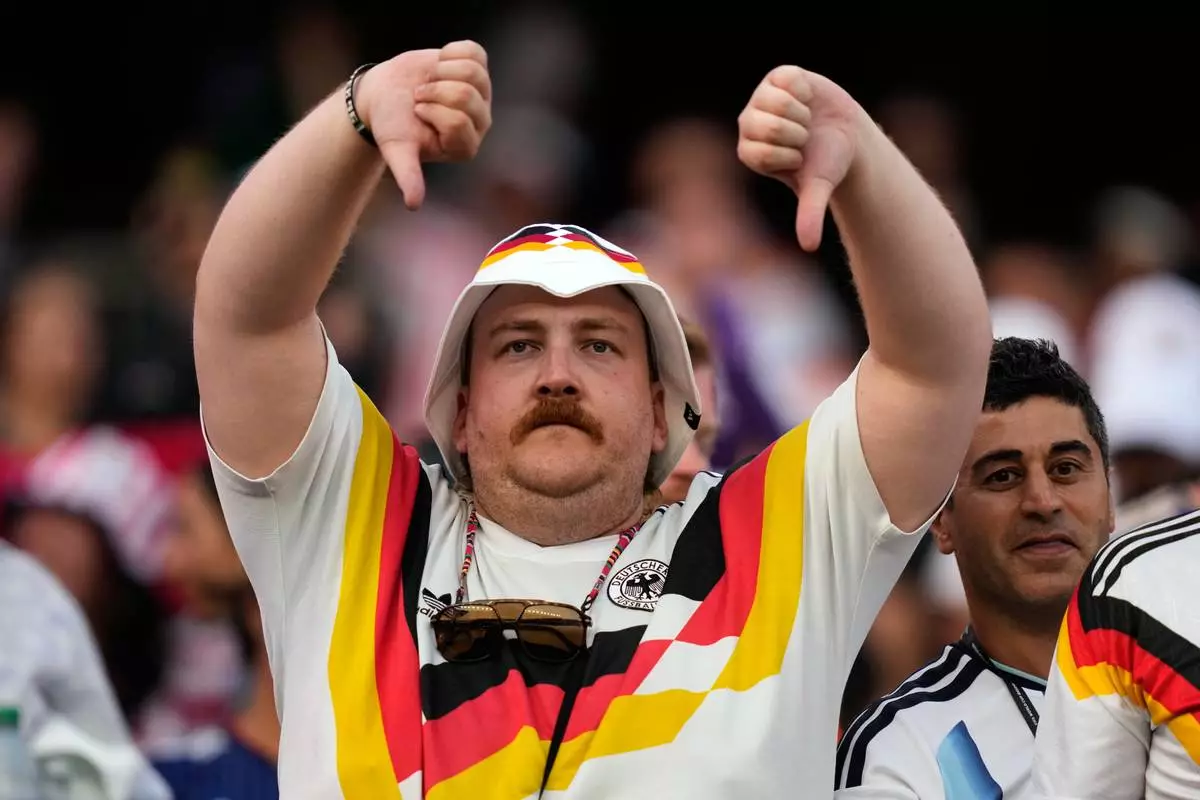
A Germany fan reacts at the end of the World Cup round of 32 soccer match between Germany and Paraguay in Foxborough, Mass., near Boston, Monday, June 29, 2026. (AP Photo/Charles Krupa)
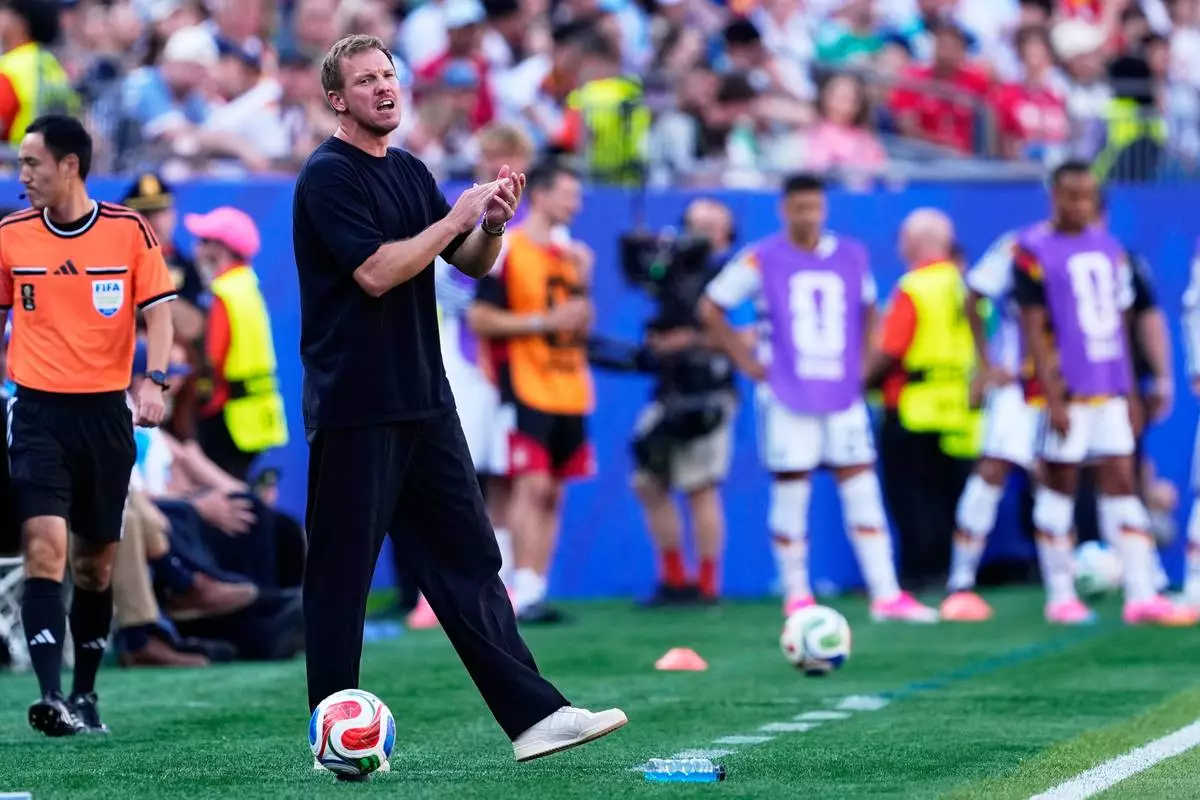
Germany head coach Julian Nagelsmann applauds during the World Cup round of 32 soccer match between Germany and Paraguay in Foxborough, Mass., near Boston, Monday, June 29, 2026. (AP Photo/Petr David Josek)
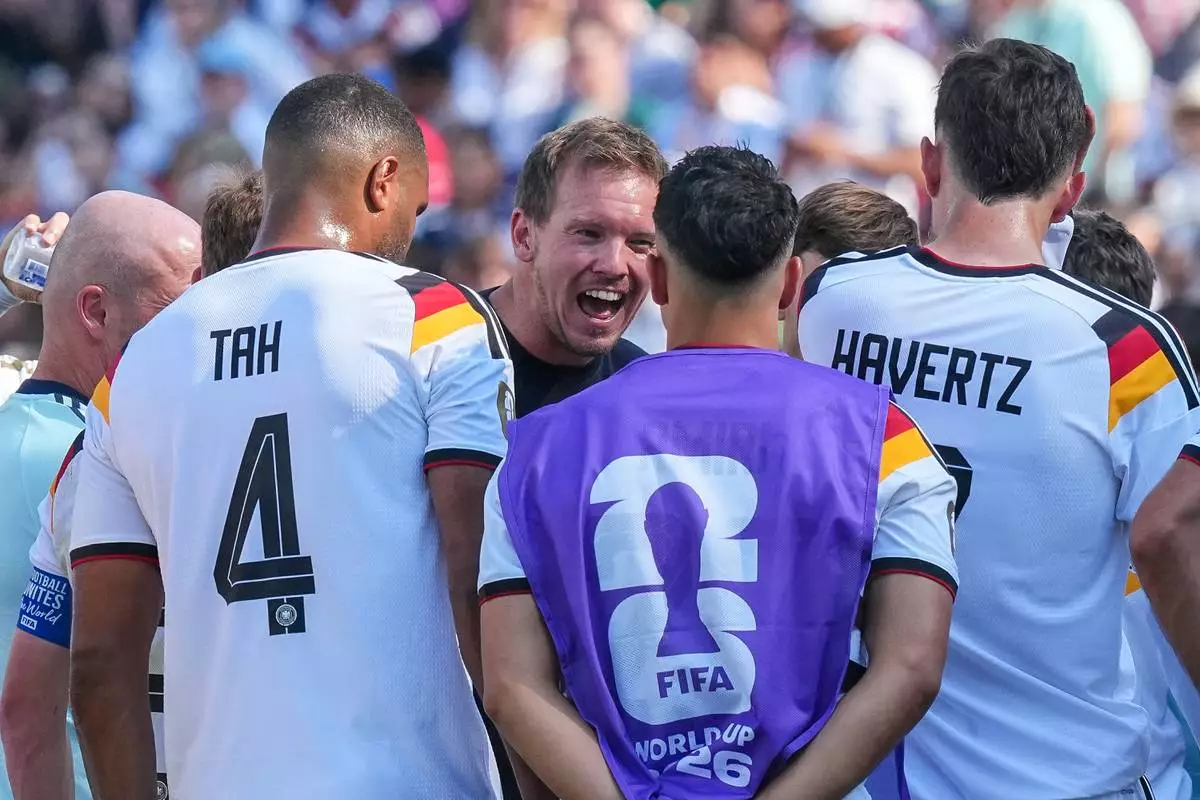
Germany head coach Julian Nagelsmann talks with his players at the hydration break during the World Cup round of 32 soccer match between Germany and Paraguay in Foxborough, Mass., near Boston, Monday, June 29, 2026. (AP Photo/Martin Meissner)

Germany head coach Julian Nagelsmann arrives to the field before the World Cup round of 32 soccer match between Germany and Paraguay in Foxborough, Mass., near Boston, Monday, June 29, 2026. (AP Photo/Petr David Josek)
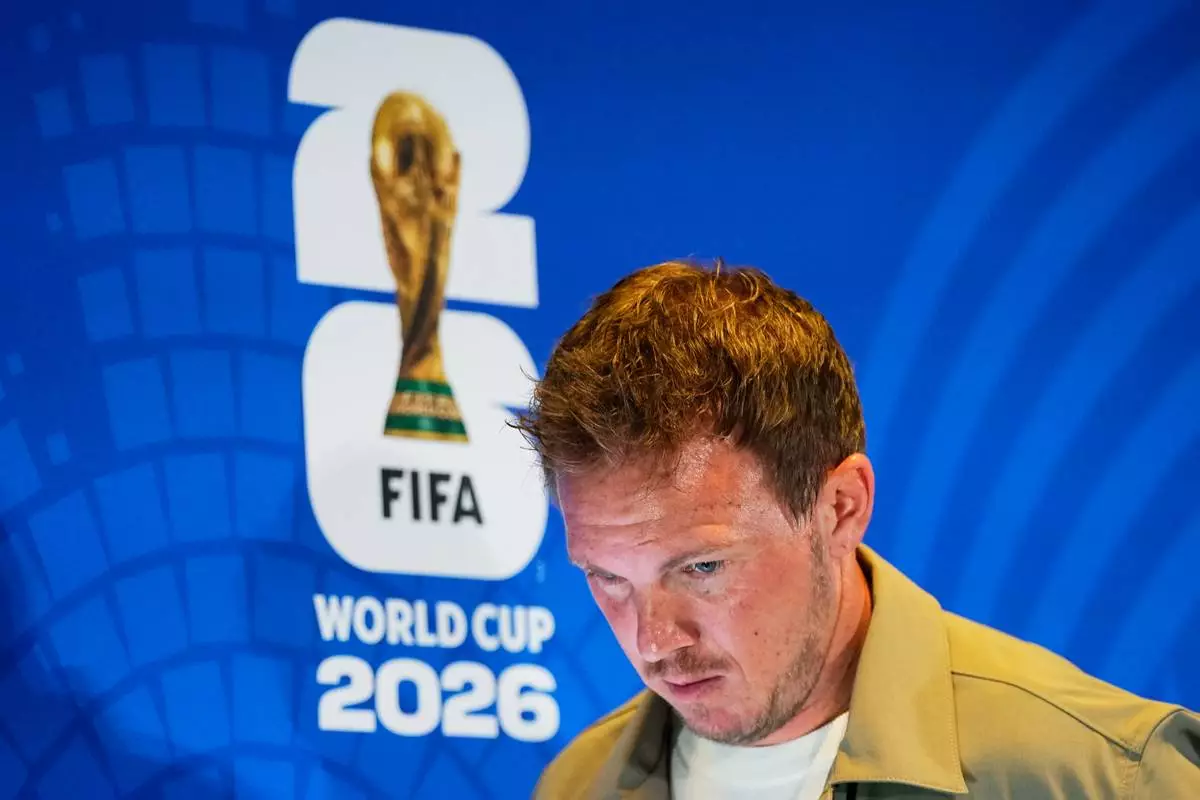
Germany head coach Julian Nagelsmann leaves a press conference ahead of the World Cup round of 32 soccer match between Germany and Paraguay in Foxborough, Mass., near Boston, Sunday, June 28, 2026. (AP Photo/Martin Meissner)
NEW YORK (AP) — Most U.S. stocks are rising Thursday after the latest update on the job market suggested the Federal Reserve may feel less pressure to hike interest rates. But more swings for chip stocks and other winners of the artificial-intelligence boom are keeping indexes mixed.
The S&P 500 fell 0.3%, even though two out of every three stocks within the index were rising. The Dow Jones Industrial Average was up 329 points, or 0.6%, as of 12:30 p.m. Eastern time, and the Nasdaq composite was 1.1% lower after erasing an early gain.
Stocks broadly got some help from easing Treasury yields in the bond market, which fell after a report from the U.S. government said employers added 57,000 jobs to their payrolls last month. That’s growth, which is good for the economy, but it was also short of the 100,000 jobs that economists expected and a slowdown from May’s hiring pace.
The weaker-than-expected result could keep pressure off inflation, which has been accelerating worldwide because of jumps in oil prices caused by the war with Iran. And if inflation slows in upcoming months, now that oil prices are back below where they were before the war, the Federal Reserve may feel less need to raise interest rates several times this year.
That would be a relief for investors, who tend to love lower interest rates because they can give the economy a boost by making it cheaper for U.S. households and businesses to borrow money and spend. Lower rates also tend to push upward on prices for stocks and other investments.
The yield on the 10-year Treasury got to 4.50% in the morning, up from 3.97% just before the war. But after the release of the U.S. hiring data, it fell back to 4.47%.
The two-year Treasury yield, which more closely tracks expectations for the Fed, fell more sharply. Traders now see an 82% chance that the Fed and its new chairman, Kevin Warsh, will not raise the federal funds rate at its next meeting later this month. That’s up from the 71% chance seen a day earlier, according to data from CME Group.
“The labor market isn’t overheating,” said Brian Jacobsen, chief economic strategist at Annex Wealth Management. He said the data could allow the Fed to wait through the summer to get more clues about how inflation is behaving before having to decide on hiking rates.
On Wall Street, the company behind LaCroix sparkling waters helped lead the market and climbed 13.4% after National Beverage said it will pay a special dividend of $3.25 for each share that investors hold.
Dollar Tree rose 2.6% after the retailer said it approved a program to send up to $2.5 billion to its shareholders by buying back its stock.
Stocks of companies in the crypto industry were also strong after the price of bitcoin rose roughly 2%, a day after dropping near its lowest level since 2024. Robinhood Markets rose 2.4%, and Coinbase Global gained 2.8%.
But more drops for computer chip companies weighed on indexes. They’ve come under pressure because of worries that their stock prices shot too high in the frenzy around AI and that all the spending on chips and data centers may not result in as much profit and productivity growth as hoped.
Memory maker Micron Technology erased an early gain to drop 5.7%, a day after plunging 10.6%. Nvidia fell 2%, and Applied Materials sank 9.2%. They were some of the heaviest weights on the S&P 500 because they've grown so huge in size amid AI mania.
In stock markets abroad, continued drops for chip companies sent indexes sharply lower in several Asian markets. South Korea's Kospi index sank 7.9% due to losses for chip companies like SK Hynix. That’s its worst drop since a 10% plunge a little more than a week ago.
Indexes also fell 2.5% in Tokyo and 2% in Shanghai.
European indexes were stronger, and France’s CAC 40 rallied 1.7%.
In the oil market, prices continued to ease on hopes for negotiations for a permanent end to the war with Iran. Brent crude, the international standard, fell 0.6% to $71.16 per barrel.
AP Business Writers Chan Ho-him and Matt Ott contributed to this report.
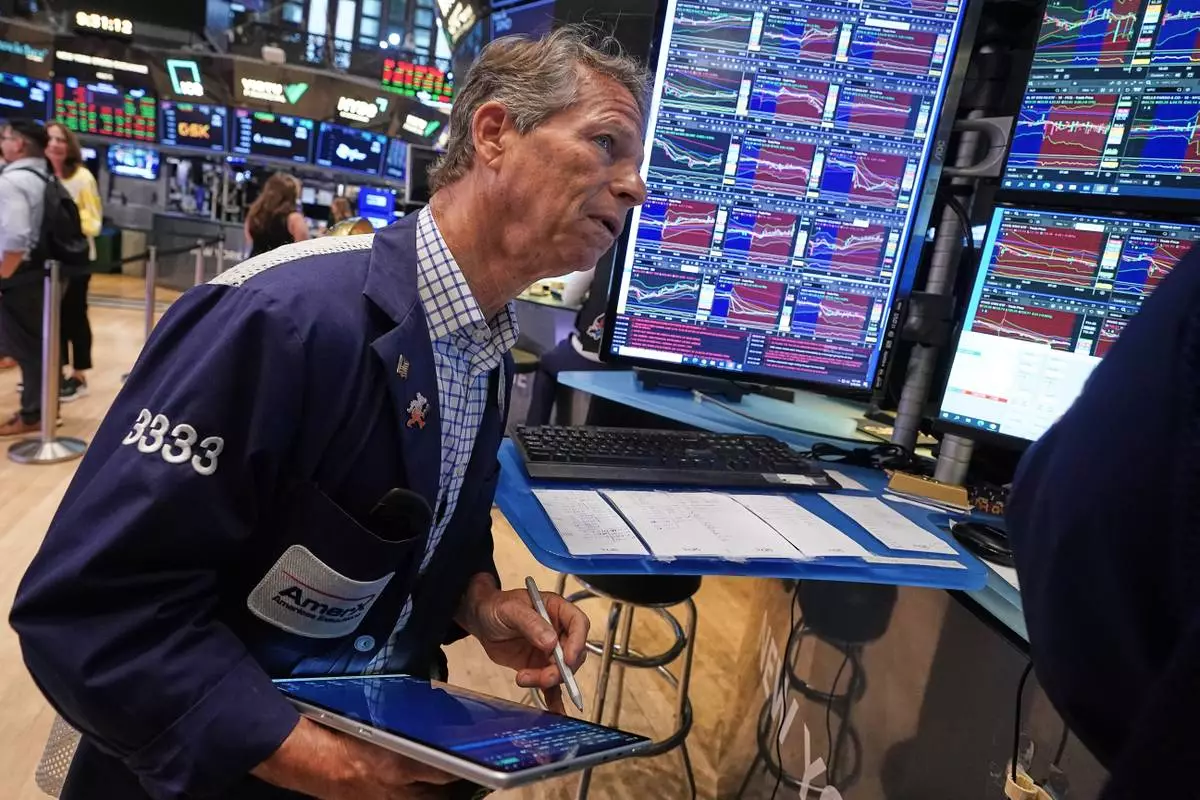
Trader Robert Charmak works on the floor of the New York Stock Exchange, Friday, June 26, 2026. (AP Photo/Richard Drew)
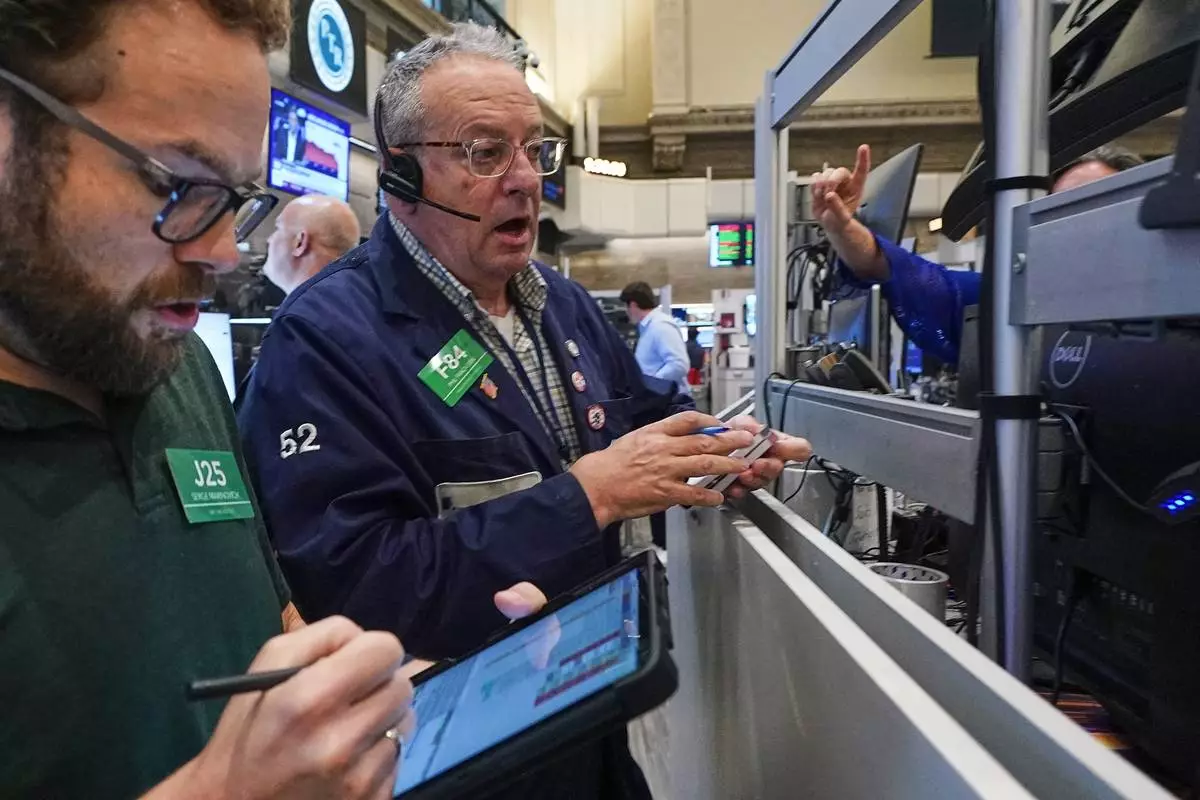
Options traders Serge Marinovich, left, and Phil Phil Fracassini work on the floor of the New York Stock Exchange, Friday, June 26, 2026. (AP Photo/Richard Drew)
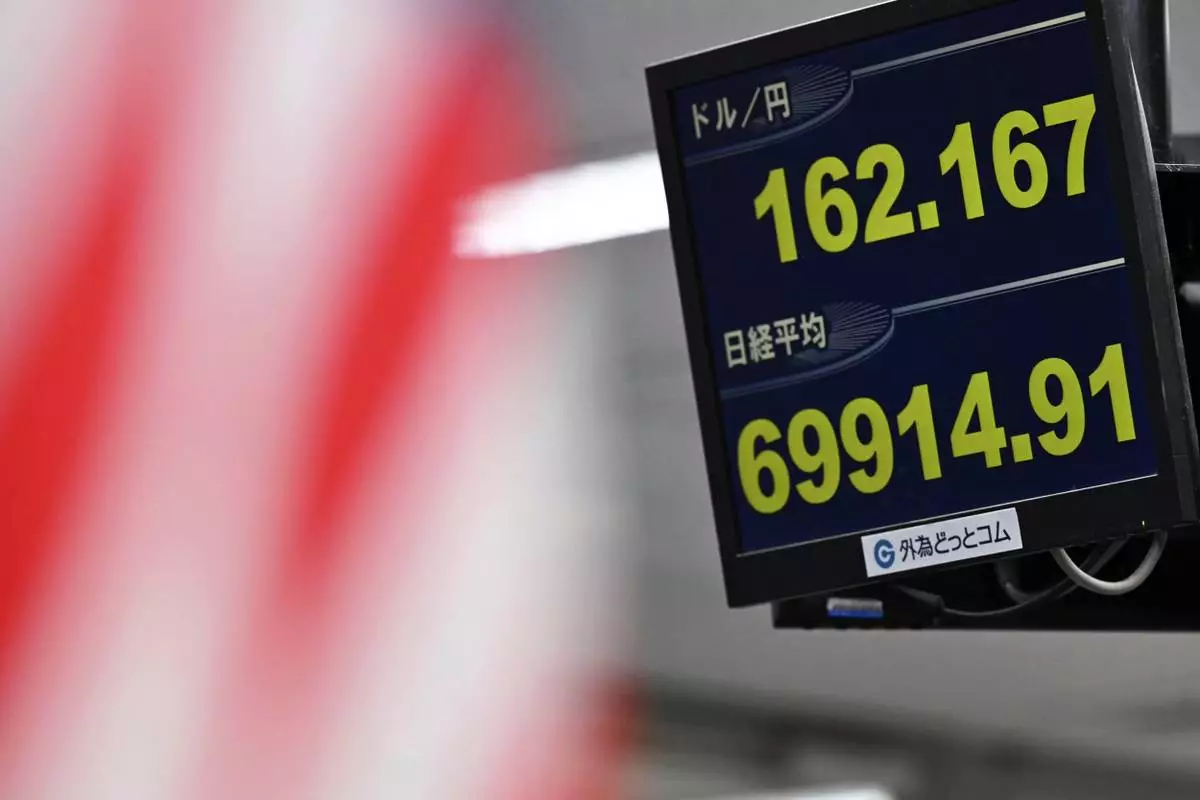
An electronic board shows Japan's benchmark Nikkei 225 index, bottom, and exchange rate of the Japanese yen against the U.S. dollar in Tokyo Tuesday, June 30, 2026. (Kenichiro Kojima/Kyodo News via AP)
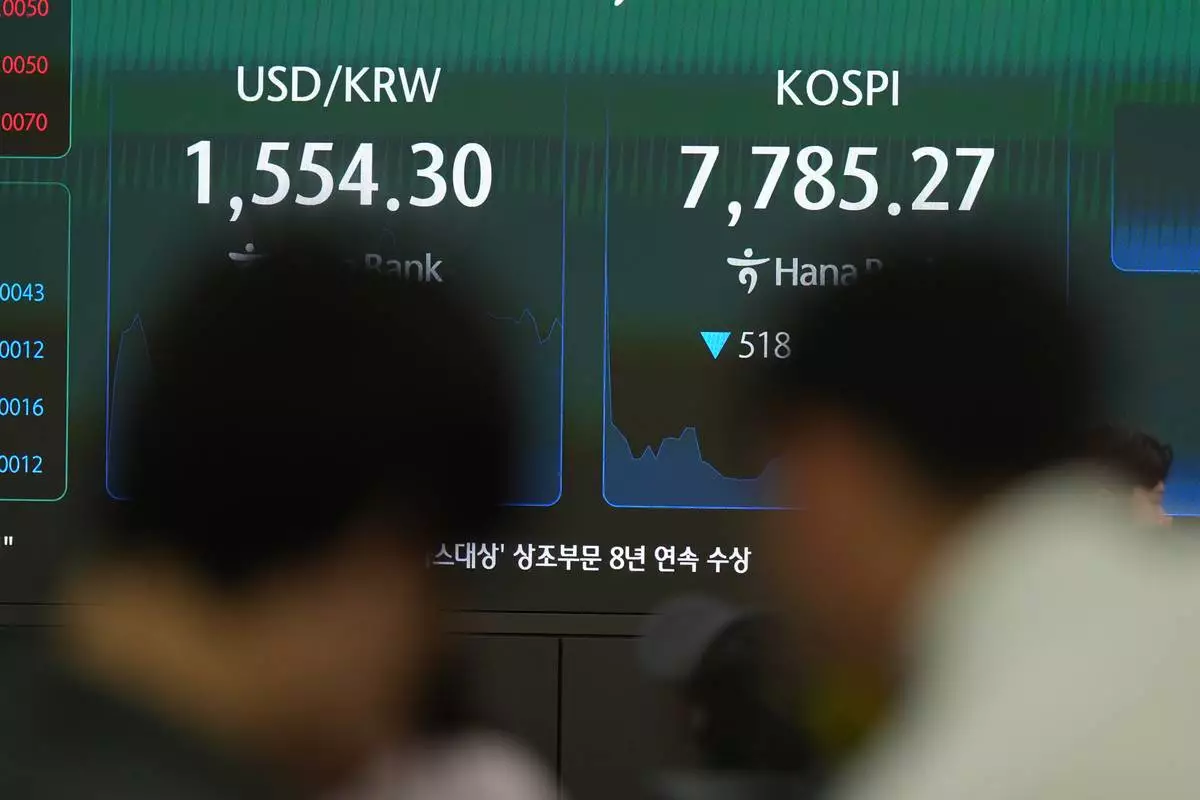
Members of media film near the screens showing the Korea Composite Stock Price Index (KOSPI) and the foreign exchange rate between U.S. dollar and South Korean won at a dealing room of Hana Bank in Seoul, South Korea, Thursday, July 2, 2026. (AP Photo/Lee Jin-man)
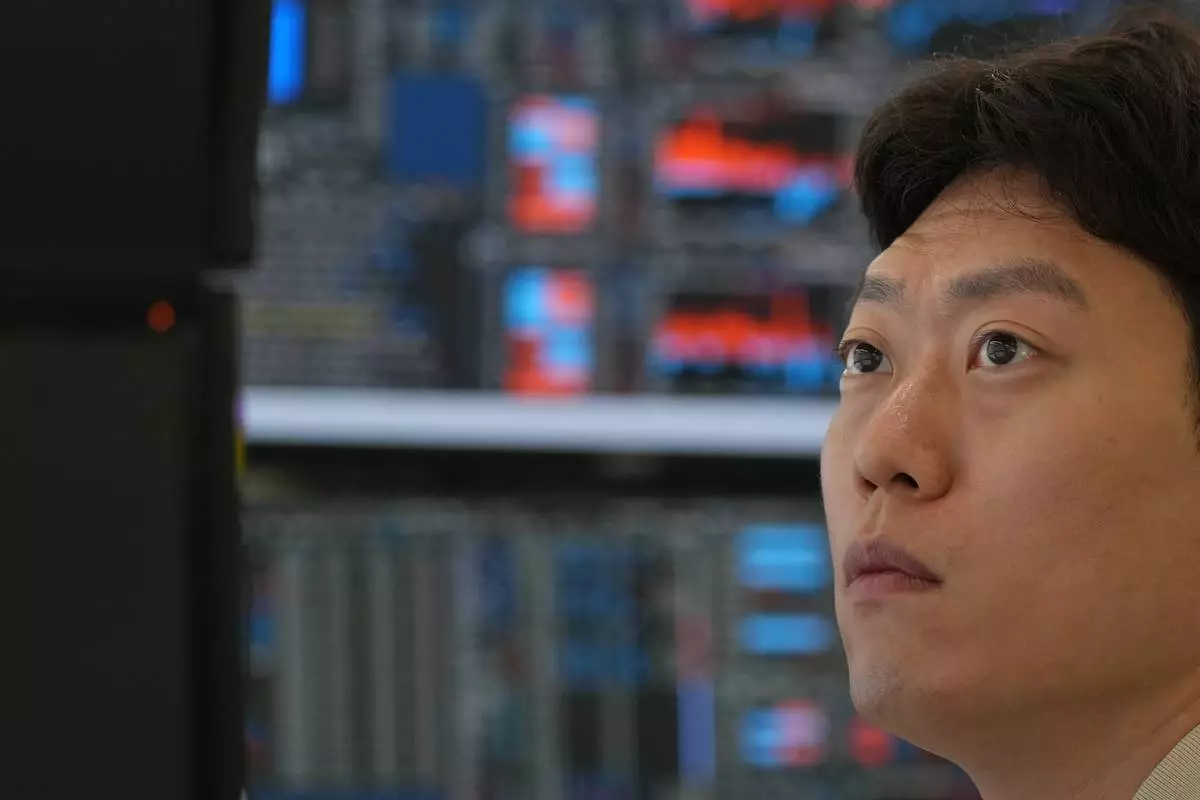
A dealer watches computer monitors at a dealing room of Hana Bank in Seoul, South Korea, Thursday, July 2, 2026. (AP Photo/Lee Jin-man)
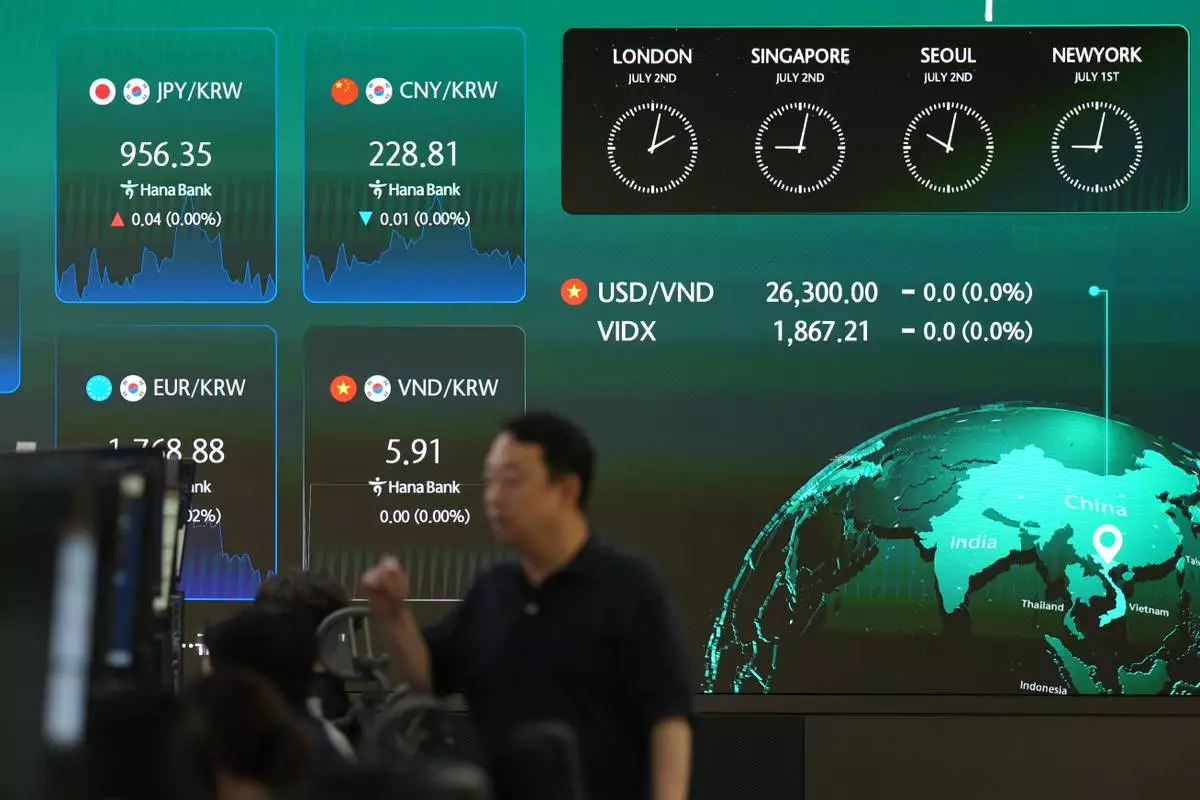
A dealer walks past near the screens showing the foreign exchange rates at a dealing room of Hana Bank in Seoul, South Korea, Thursday, July 2, 2026. (AP Photo/Lee Jin-man)
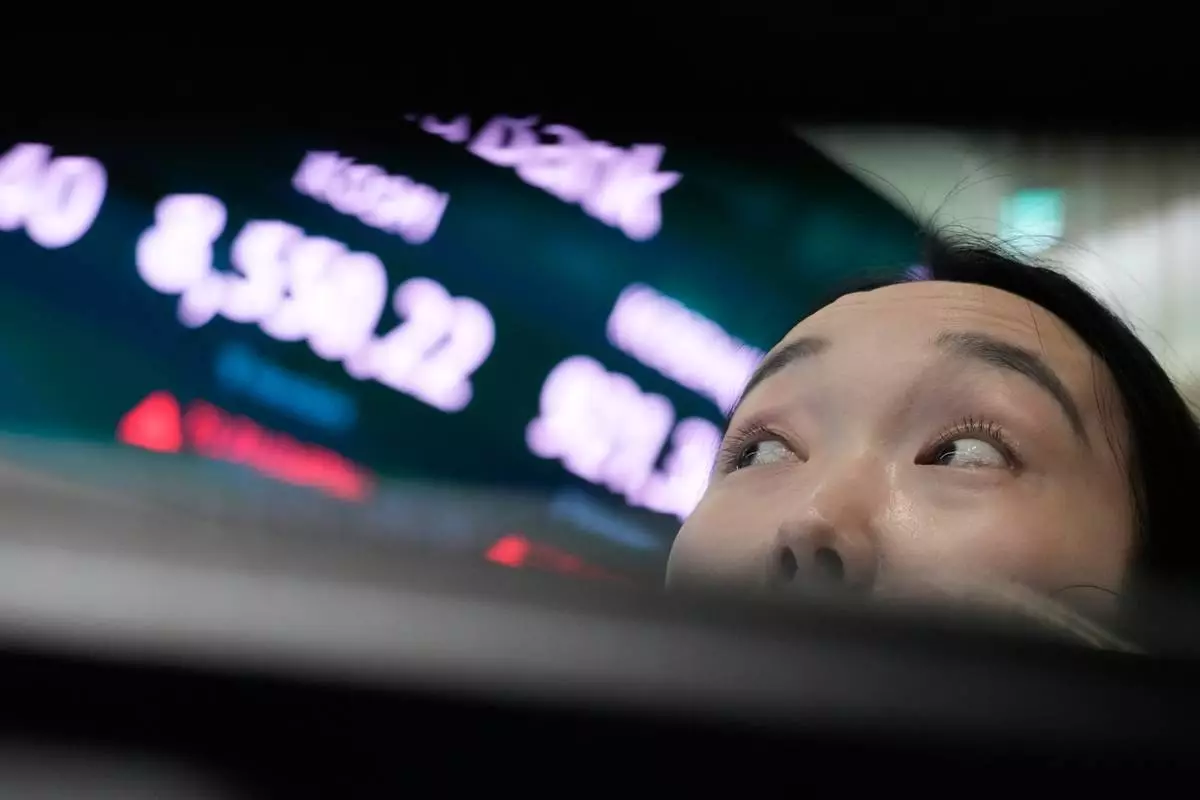
A currency trader watches monitors near a screen showing the Korea Composite Stock Price Index (KOSPI) at the foreign exchange dealing room of the Hana Bank headquarters in Seoul, South Korea, Wednesday, July 1, 2026. (AP Photo/Ahn Young-joon)