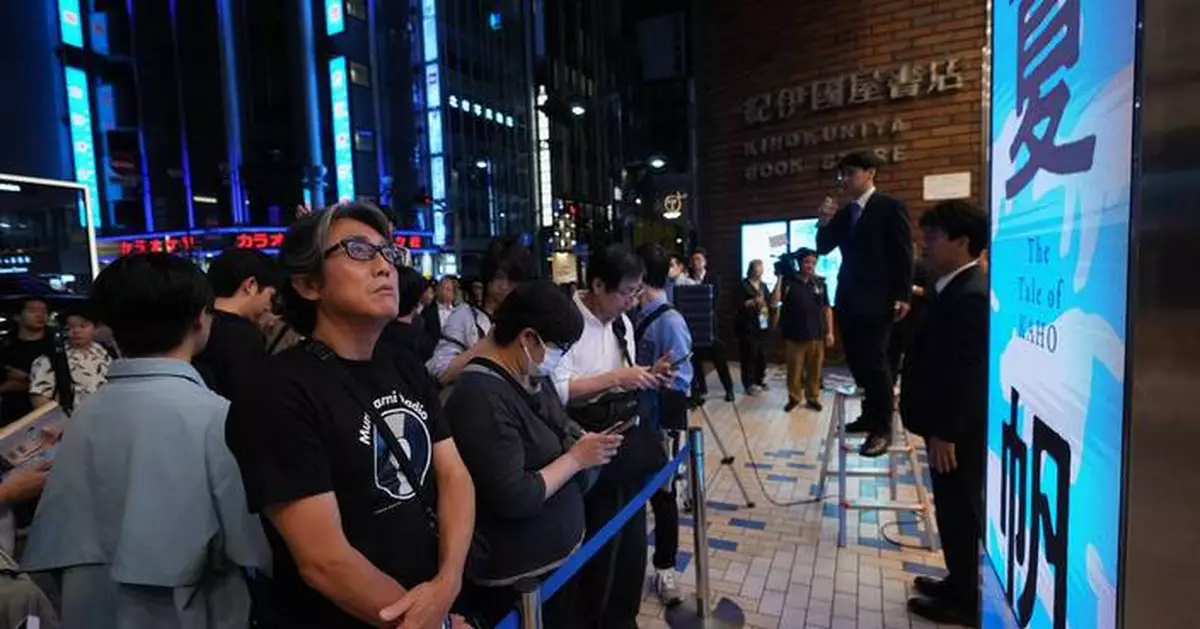
TOKYO (AP) — Hours before Haruki Murakami's new book was set to go on sale in Japan on Friday, dozens of fans gathered outside a major Tokyo bookstore for a special event to get their first copies as soon as the clock struck midnight.
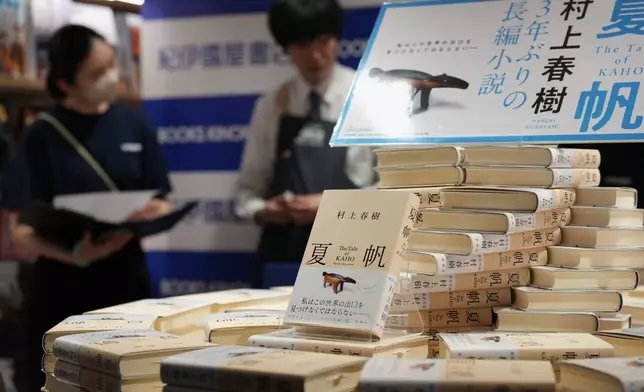
“The Tale of KAHO” is the Japanese author's first full-length novel featuring a lone woman protagonist, according to Shinchosha Publishing Co.
Click to Gallery
Bookstore staff prepare a countdown event for their customers to receive copies they pre-purchased, of author Haruki Murakami's new book titled "The Tale of Kaho," at the Kinokuniya bookstore in Tokyo, Thursday, July 2, 2026. (AP Photo/Hiro Komae)
A man receives a copy of Haruki Murakami's new book titled "The Tale of KAHO" minutes after the clock struck midnight at a Kinokuniya bookstore in Tokyo, Friday, July 3, 2026. (AP Photo/Hiro Komae)
Atsushi Watanabe, a college student from Hadano, southwest of Tokyo, receives a copy of Haruki Murakami's new book titled "The Tale of KAHO" minutes after the clock struck midnight during a countdown event at a Kinokuniya bookstore in Tokyo, Friday, July 3, 2026. (AP Photo/Hiro Komae)
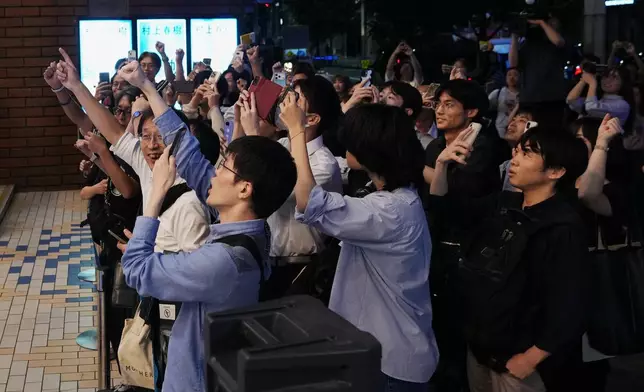
People count down during an event to receive copies they pre-purchased, of Haruki Murakami's new book, titled "The Tale of KAHO" after the clock strikes midnight, at a Kinokuniya bookstore in Tokyo on Thursday, July 2, 2026. (AP Photo/Hiro Komae)
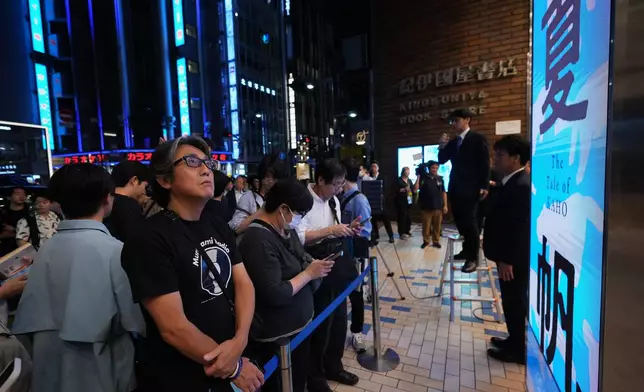
People attend a countdown event to receive copies they pre-purchased, of Haruki Murakami's new book, titled "The Tale of KAHO" after the clock strikes midnight, at a Kinokuniya bookstore in Tokyo on Thursday, July 2, 2026. (AP Photo/Hiro Komae)
“Kaho, a picture book author, is just an average young woman. But truly bizarre things start happening around her,” Murakami said in a brief message posted on the publisher’s campaign website. “I wrote this novel as I put myself in her shoes.”
His statement drew the attention of many fans, because most of Murakami's protagonists are young or middle-aged men.
“I'm excited about finding out how the story evolves around a female main character,” said Naoyuki Yamano, the first customer to buy the new Murakami novel.
Initially, the novel started as a short story titled “Kaho,” which Murakami rehearsed at a book reading event two years ago at Waseda University, his alma mater in Tokyo, with Mieko Kawakami, a renowned female author and fan of his work. The story was published in the June 2024 edition of the monthly Shincho magazine.
Takumi Hashimoto, a 33-year old office worker who attended the launch event with three fellow members of a Murakami book reading club, said he hopes to read a story from a female protagonist’s perspective and find out how the story evolved from a series of magazine stories into a full-length novel.
His companion, Mizuki Shirota, 33, said she was struck by the way Murakami portrayed the female protagonist’s emotions in the magazine version.
“The story was written in a way that makes you very aware of lookism, or how I, as a woman, am perceived by men ... there were parts that I even felt startled a bit," Shirota said. “So I want to read that again in the book."
One day, 26-year-old Kaho goes on a blind date arranged by her book editor. Over dinner, her date tells her that, although he has dated a number of women, “I’ve never seen one as ugly as you.” Baffled rather than outraged, curious Kaho tries to uncover the meaning of his words. Soon, bizarre things begin happening to her.
Murakami has since released three subsequent “Kaho” stories in Shincho magazine, most recently in the March edition. He weaves the four stories into a 352-page new novel with four chapters: “Kaho and the Motorcycle Man,” “The Anteater of Musashi-sakai,” “Kaho and the Termite Queen” and “The Guardian Angel, Elephant Egg and Scarlett Johansson.”
The new book comes out three years after his previous novel, “The City and Its Uncertain Walls,” which follows a male protagonist navigating love, loss and the boundaries between real and subconscious worlds.
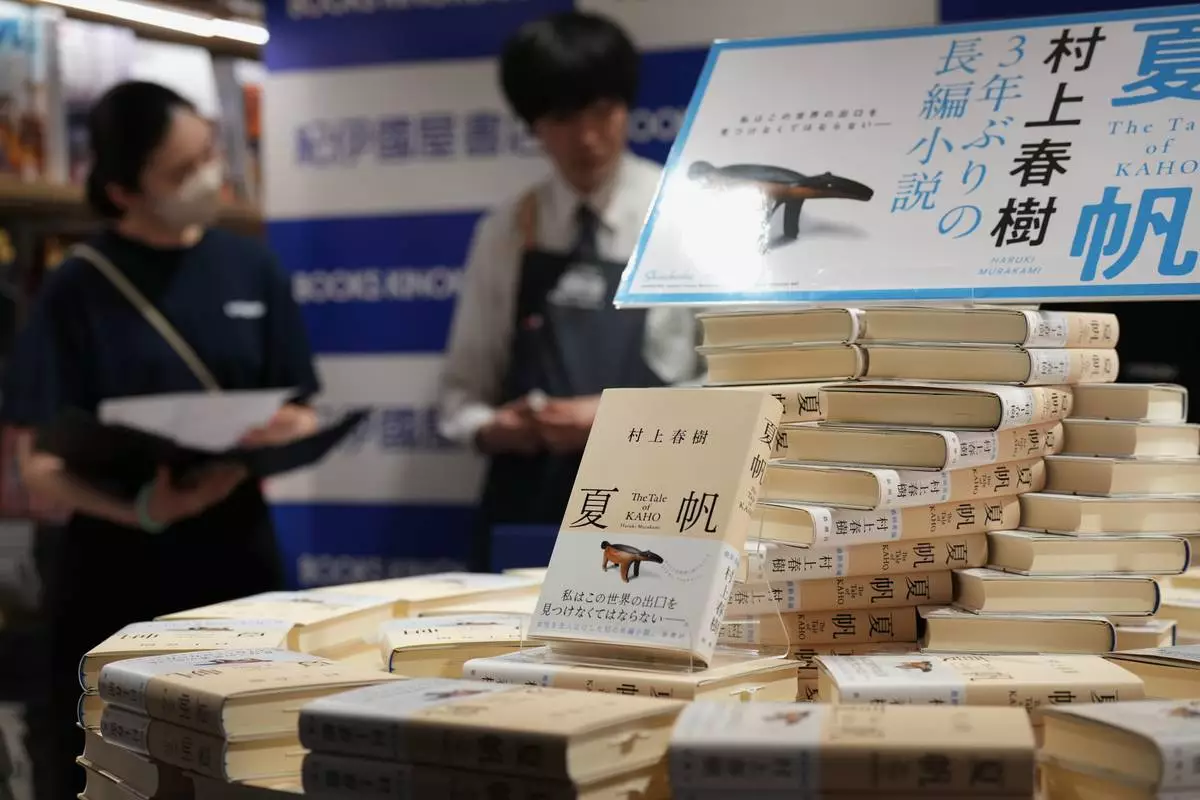
Bookstore staff prepare a countdown event for their customers to receive copies they pre-purchased, of author Haruki Murakami's new book titled "The Tale of Kaho," at the Kinokuniya bookstore in Tokyo, Thursday, July 2, 2026. (AP Photo/Hiro Komae)

A man receives a copy of Haruki Murakami's new book titled "The Tale of KAHO" minutes after the clock struck midnight at a Kinokuniya bookstore in Tokyo, Friday, July 3, 2026. (AP Photo/Hiro Komae)

Atsushi Watanabe, a college student from Hadano, southwest of Tokyo, receives a copy of Haruki Murakami's new book titled "The Tale of KAHO" minutes after the clock struck midnight during a countdown event at a Kinokuniya bookstore in Tokyo, Friday, July 3, 2026. (AP Photo/Hiro Komae)
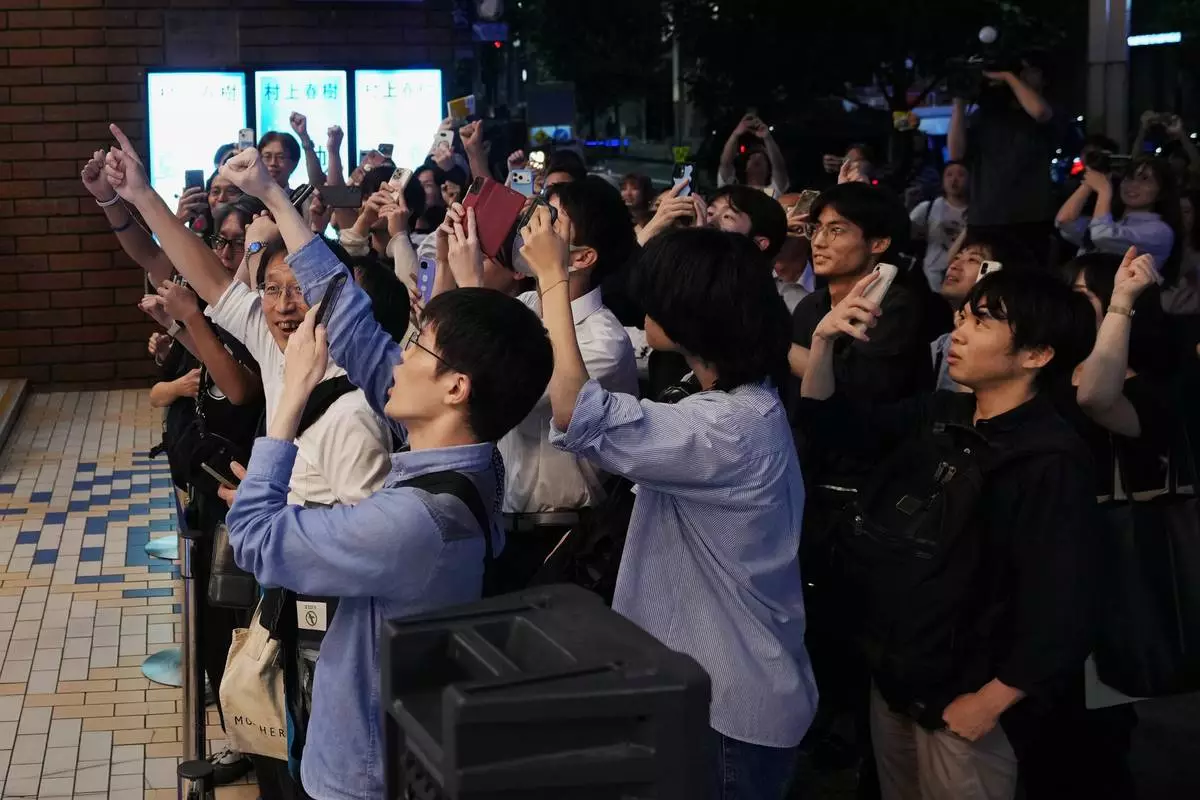
People count down during an event to receive copies they pre-purchased, of Haruki Murakami's new book, titled "The Tale of KAHO" after the clock strikes midnight, at a Kinokuniya bookstore in Tokyo on Thursday, July 2, 2026. (AP Photo/Hiro Komae)
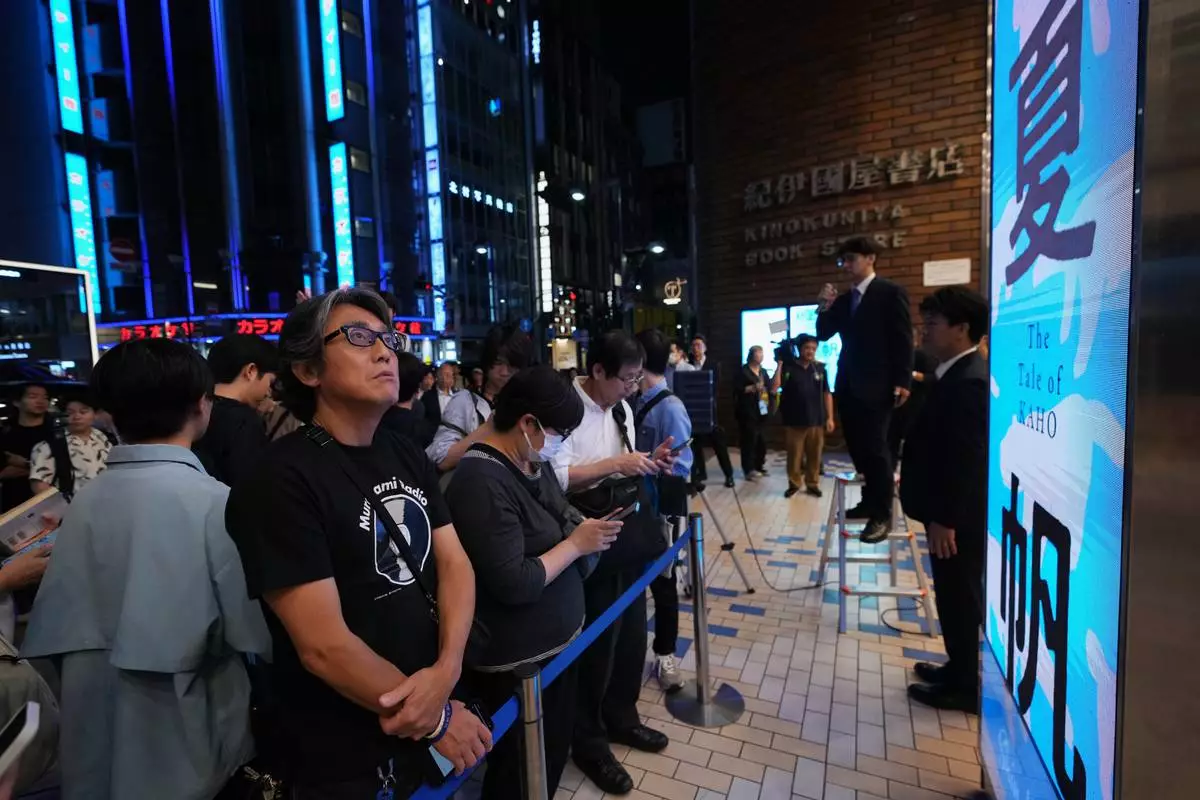
People attend a countdown event to receive copies they pre-purchased, of Haruki Murakami's new book, titled "The Tale of KAHO" after the clock strikes midnight, at a Kinokuniya bookstore in Tokyo on Thursday, July 2, 2026. (AP Photo/Hiro Komae)
CATIA LA MAR, Venezuela (AP) — The stench of decomposing bodies hung heavy over streets of flattened buildings Thursday as rescue missions to find survivors of Venezuela’s devastating earthquakes increasingly turned to the recovery of corpses.
Desperate for good news, Venezuelan and international emergency workers celebrated the near-miraculous rescue of a 43-year-old security guard found alive after almost eight days under the rubble. National broadcasters reran footage all day of the exuberant moment he was pried free from the collapsed mall and lifted onto a stretcher as crowds, including rescuers from 10 countries, embraced one another and cheered. Trapped in an air pocket beneath the concrete, Hernán Alberto Gil Flores survived on the food and water that rescuers managed to pass him through the crevices.
But elsewhere across the hardest-hit state of La Guaira, where thousands remain missing, an air of hopelessness was setting in. The port city of Catia La Mar teemed with officials carrying body bags and stacking caskets.
The government of acting President Delcy Rodríguez, whose response to the earthquake has been widely criticized as slow and disorganized, has counted at least 2,295 people killed by the earthquake and more than 11,000 injured.
With thousands sleeping in crowded shelters or outside, doctors have voiced concern that the fallout could pave the way for a widening medical crisis of untreated injuries and infectious diseases in a healthcare system already on the brink.
Faced with complaints that foreign crews and civilians have shouldered most of the rescue efforts, Rodríguez sought to defend the government response a day before the extension of her 180-day mandate as acting leader was set to expire. Rodríguez served as deputy to former President Nicolás Maduro until he was ousted by the United States in January. She became interim leader with the backing of the Trump administration.
With little transparency by Venezuelan officials, it was unclear what would happen once the deadline passes on Friday.
Under Venezuela’s constitution, temporary absences are to be filled by the vice president — which was Rodríguez’s former role — for up to 90 days. These interim appointments can be extended by the national assembly for an additional 90 days.
The Venezuelan leader has strong support from lawmakers and the Trump administration. The National Assembly, controlled by Rodríguez’s party, can trigger a snap election if lawmakers declare the post permanently vacant.
Since the U.S. capture of Maduro, the Trump administration has expanded its role in Venezuelan affairs — a seismic shift in relations between the long-adversarial nations.
The U.S. has thrown support behind Rodríguez and largely turned its back on opposition leader and Nobel Peace Prize winner María Corina Machado, who this week accused Rodríguez’s government of blocking her return to her country. Washington has also sought to remake Venezuela’s lucrative energy industry and opened the door for Venezuela’s state oil company to sell fuel to U.S. companies.
John M. Barrett, the U.S. chargé d’affaires to Venezuela, said Wednesday that revenue from Venezuelan oil production, controlled by the U.S. Treasury since Maduro's seizure, is also being made available for relief efforts.
While the U.S. has committed over $300 million in assistance to the response, the State and Treasury Department teams were working “to make sure that those funds are made available for this specific reconstruction effort, including for shelter, sanitation, health and energy generation,” Barrett said. Venezuela’s oil and gas production was not directly impacted by the earthquakes, he added, and said production continues to increase.
Oversight of where that money flows is crucial, said Laura Cristina Dib, Venezuela program director at the independent human rights organization Washington Office on Latin America.
Even before the earthquakes, it was difficult to track how the seized oil revenue was being spent, she said, adding: “There are a lot of transparency questions that linger on the use of that fund in a moment in which Venezuelans really need that money to be used for the protection of Venezuelans."
When asked about growing criticism over the Venezuelan government's relief efforts, U.S. officials have been vocal in their support for Rodríguez.
“What I can say with confidence is that the local authorities have fully complied with our requests and have accelerated this massive humanitarian response,” Barrett said.
Janetsky reported from Mexico City. Associated Press journalists Ben Finley in Washington D.C and Gabriela Aoun Angueira in San Diego contributed to this report.
Corrects that the deadline for the acting president expires on Friday, not Thursday.
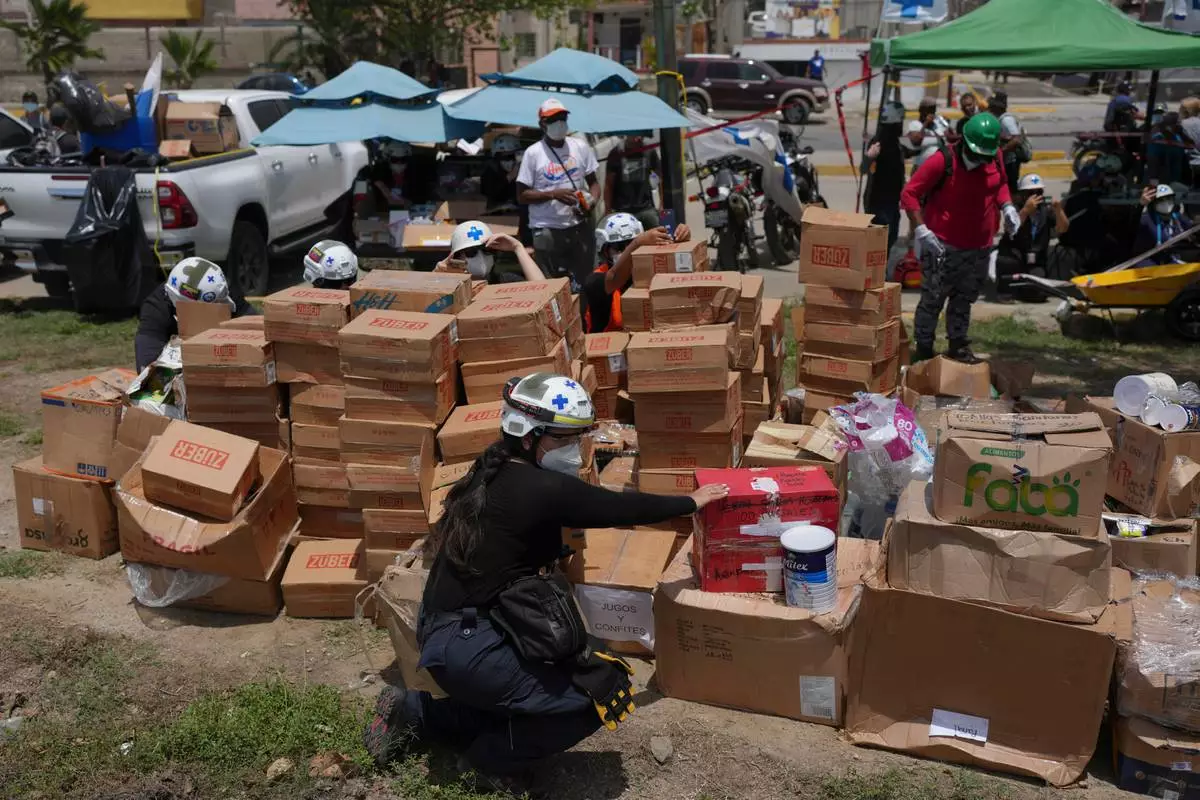
Rescue workers sort humanitarian aid for earthquake survivors in La Guaira, Venezuela, Thursday, July 2, 2026. (AP Photo/Matias Delacroix)
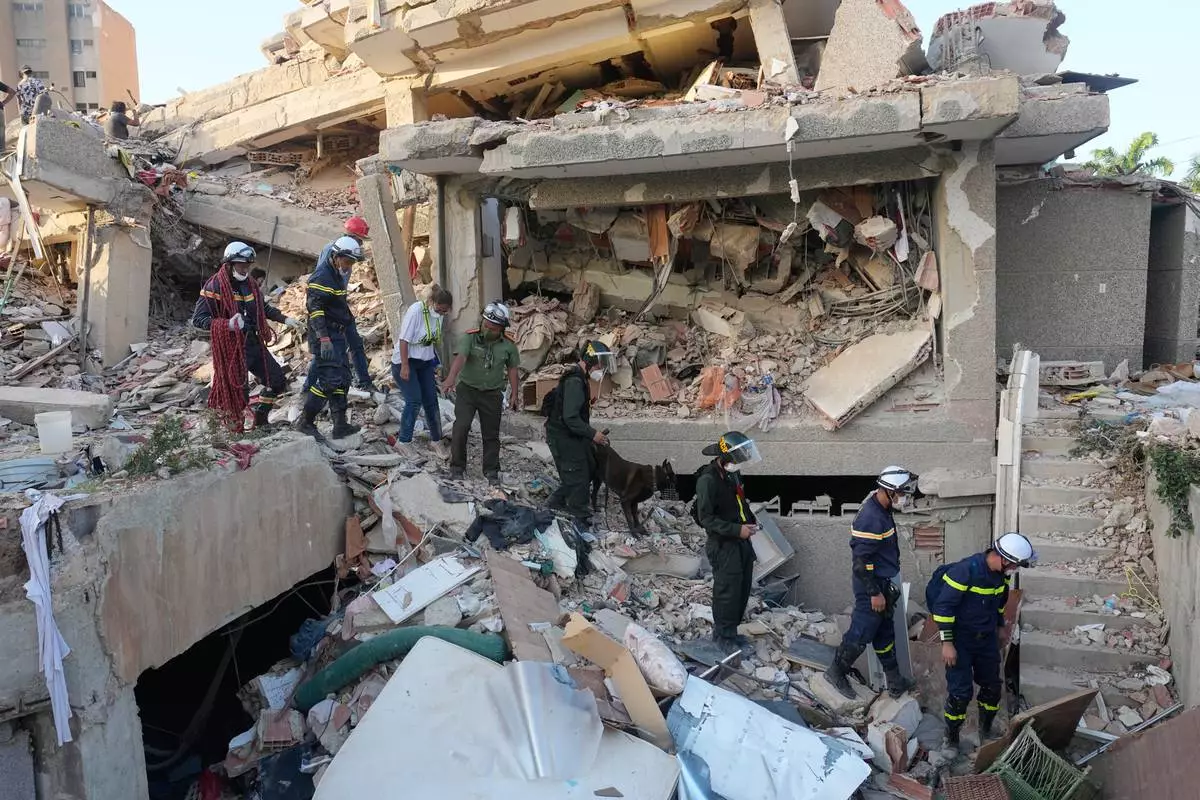
Vietnamese rescuers searches a building that collapsed during back-to-back earthquakes in Catia La Mar, Venezuela, Wednesday, July 1, 2026. (AP Photo/Fernando Vergara)
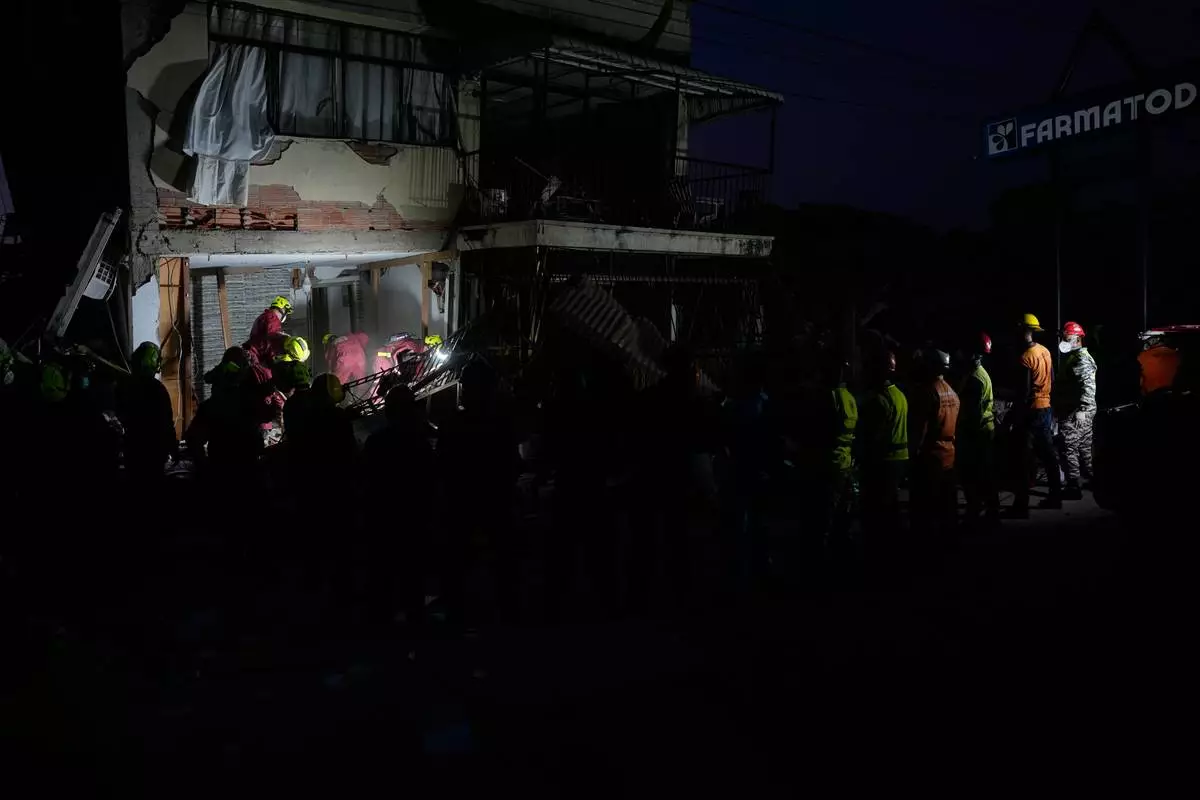
Rescuers from Argentina search a building damaged by back-to-back earthquakes after residents reported hearing noises from beneath the rubble in Catia La Mar, Venezuela, Wednesday, July 1, 2026. (AP Photo/Fernando Vergara)
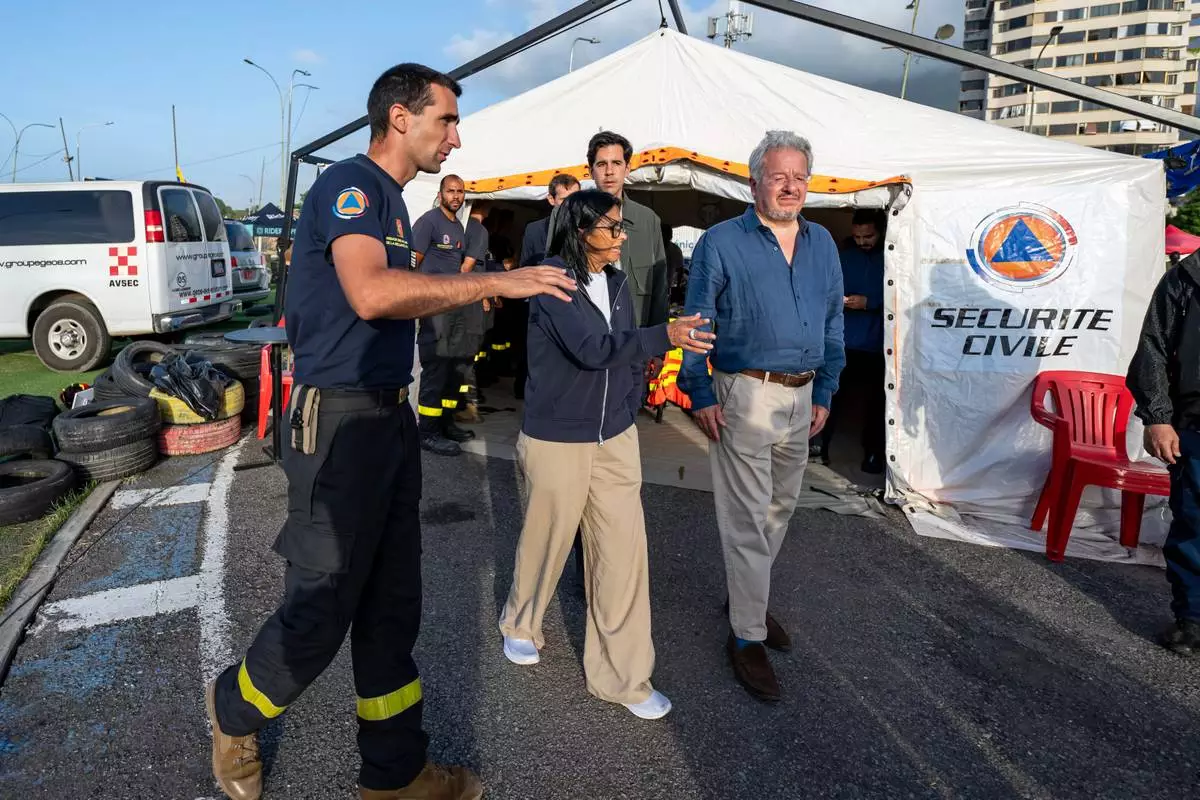
Lieutenant-Colonel Vianney Labbe, left, head of the detachment of the French 7th Civil Security Training and Intervention Regiment (RIISC 7), Venezuela's interim President Delcy Rodriguez, center, Oliver Blanco, Venezuela's Vice Minister for Europe and North America, and French ambassador to Venezuela Emmanuel Pineda, right, visit a temporary camp of the French Civil Security in La Guaira, Wednesday, July 1, 2026, following the June 24 earthquakes. (Miguel Medina/Pool Photo via AP)
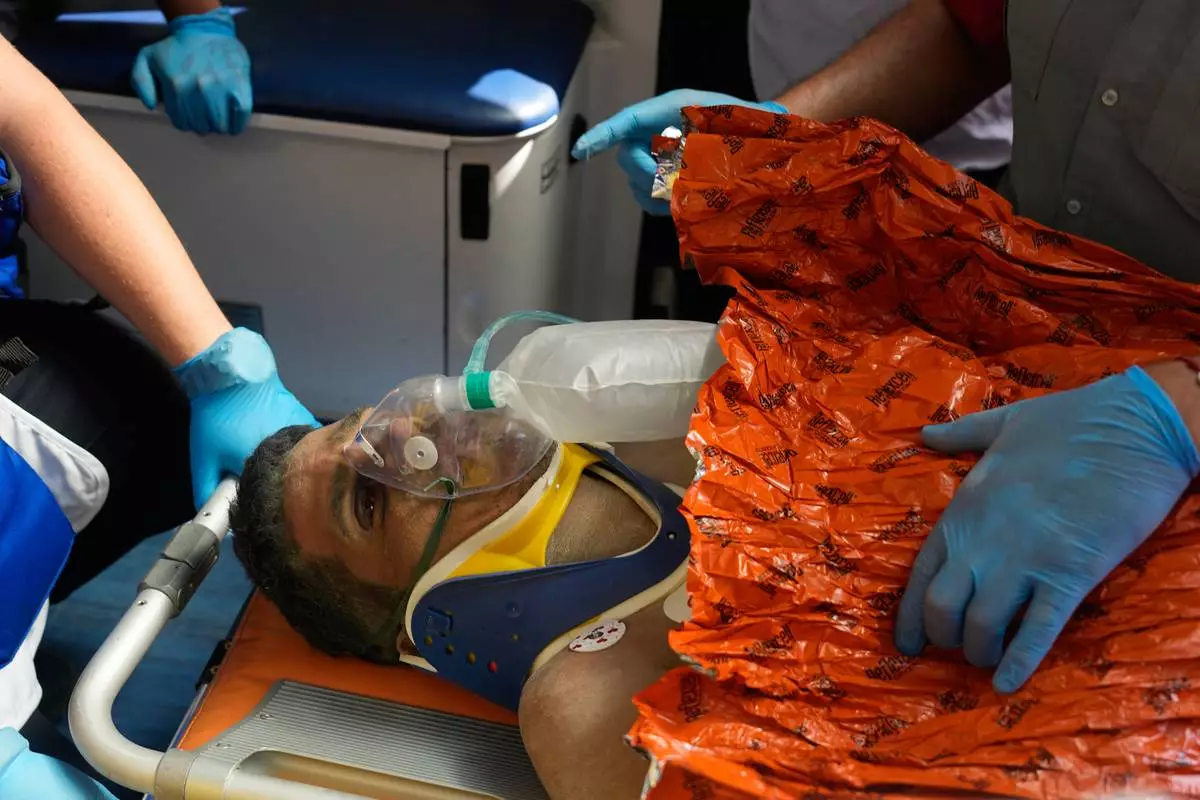
Rescue workers attend to Hernán Alberto Gil Flores after he was pulled from the rubble eight days after he was trapped by twin earthquakes that struck Catia La Mar, Venezuela, Thursday, July 2, 2026. (AP Photo/Fernando Vergara)
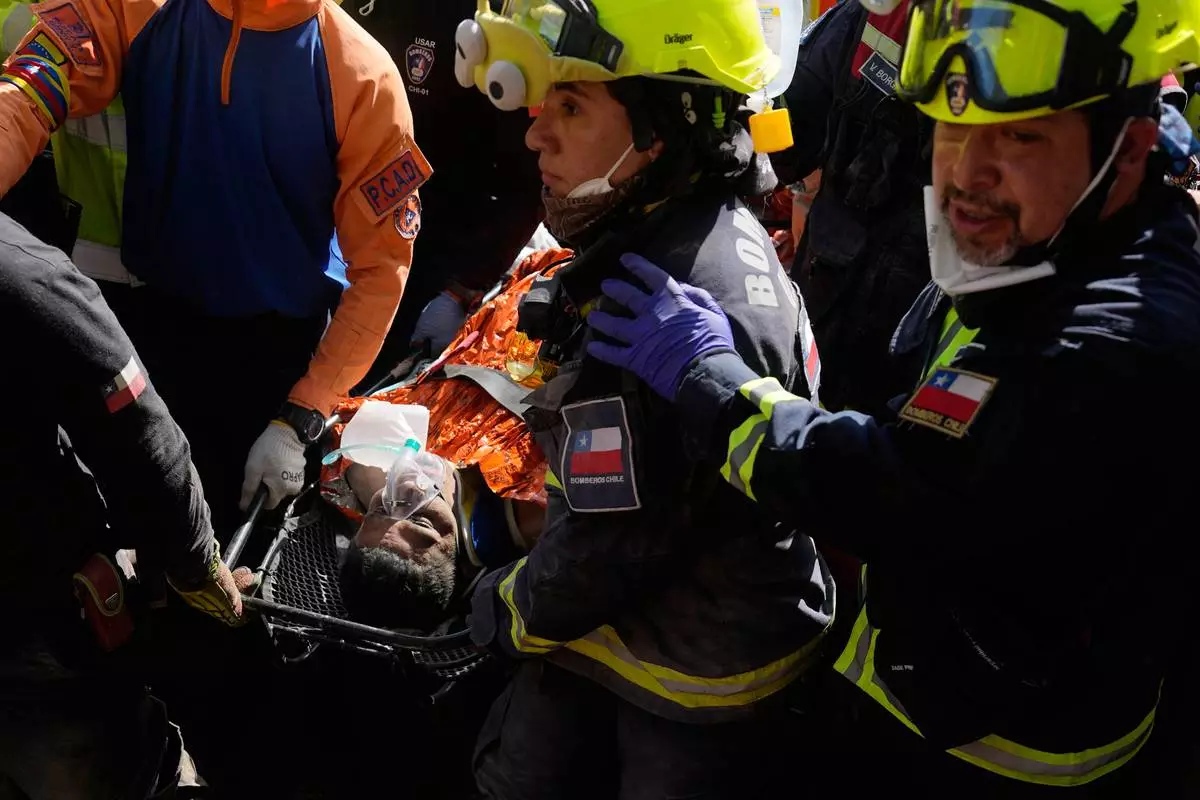
Chilean rescue workers carry Hernán Alberto Gil Flores after he was pulled from the rubble eight days after he was trapped by twin earthquakes that struck Catia La Mar, Venezuela, Thursday, July 2, 2026. (AP Photo/Fernando Vergara)