President Donald Trump has been warning recently that communism will pose a threat to the U.S. if Democrats win in the upcoming midterm elections.
“It’s the biggest threat to our country, including World War I, World War II, Pearl Harbor, September 11th,” he said on Wednesday, segueing into a political message as he visited the newly constructed Theodore Roosevelt Presidential Library in North Dakota.
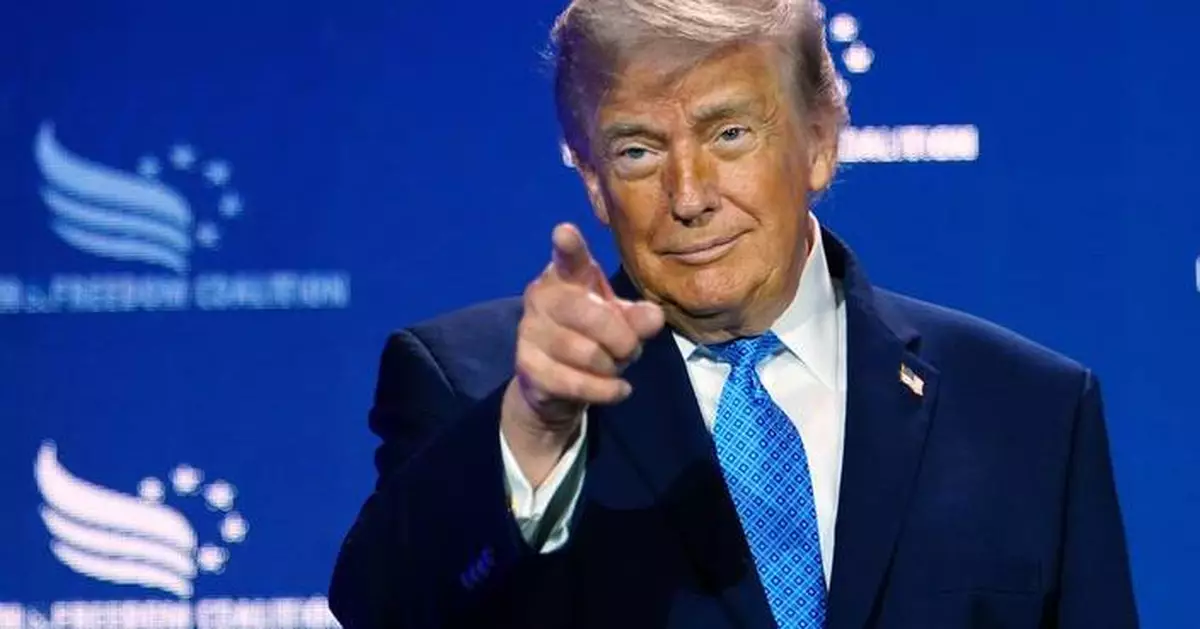
Last week, he referred to Democrats as “hard core, godless Communists” at the Faith & Freedom Coalition’s 2026 policy conference.
Trump's latest round of attacks has followed primary victories by democratic socialist candidates. They are reminiscent of similar narratives he has employed throughout his political career.
But experts say his claims, echoed by Vice President J.D. Vance and other Republican leaders, are off base.
Here's a closer look at the facts.
TRUMP: “It's becoming a communist party. These are not social Dumocrats, these are hardcore, godless Communists."
THE FACTS: No candidate openly belonging to the U.S. Communist Party has ever been elected to state or federal office, according to experts. Although there are fringes of the Democratic Party that have expressed support for communist ideas, experts say that they still advocate for a market-based economy and that it is inaccurate to paint the entire party with such a broad brush. Trump recently began referring to Democrats pejoratively as “Dumocrats.”
“The reality is that none of these major political figures in the Democratic Party, even those further out on the left, are identifying as communists,” said Marc Selverstone, director of presidential studies at the University of Virginia’s Miller Center for Public Affairs, adding that it’s an opportunity to portray Democrats as marginal figures.
Selverstone, who authored a book on international communism, noted that Democrats who are more closely aligned with socialism and democratic socialism are still far from supporting basic communist ideals such as the abolition of private property or central economic planning.
Rather, democratic socialists believe in providing a more extensive social safety net within the confines of democracy. The movement often centers on securing universal healthcare, higher taxes on the wealthy and stricter corporate regulation.
Some democratic socialists belong to the Democratic Socialists of America, a political and activist organization — not a party.
Over the years, Trump has labeled his opponents as communists and discussed the effectiveness of doing so.
“All we have to do is define our opponent as being a communist or a socialist or somebody who is going to destroy our country,” he told reporters at his New Jersey golf club in August 2024 while describing how he planned to defeat his Democratic opponent, then-Vice President Kamala Harris, whom he branded “comrade Kamala” in the presidential election.
Asked to comment on Trump's claims of communist beliefs among Democratic candidates, Kendall Witmer, the Democratic National Committee's rapid response director, said that the president is “grasping at straws" ahead of the midterms.
Olivia Wales, a White House spokeswoman, said that “the Democrats' embrace of socialism and communism is an existential threat to our country” and that Trump will “keep calling out their radicalism.”
Communist Party USA has a small footprint in current U.S. politics. It brought in about 20,000 members over the past several years and is in the process of assessing how many are active, according to co-chair Joe Sims. He agreed that recent Democratic candidates cannot accurately be described as members of his party.
“I don’t know of any of those candidates who are members of the Communist Party or who subscribe to Marxism in the tradition that our party comes from,” he said. “Not that it would be a crime if there are such forces, but at this stage, I really don’t see it.”
Darializa Avila Chevalier, a declared democratic socialist who upset a fifth-term New York City congressman for the Democratic nomination to run in November, is facing scrutiny over deleted social media posts sympathetic to communism and related topics. She said in a statement sent to The Associated Press that she is “proud to be a democratic socialist,” and her campaign confirmed that she does not identify as a communist.
Graham Platner won the Maine Democratic primary for U.S. Senate, setting up a high-stakes race against longtime incumbent Republican Sen. Susan Collins. He has similarly faced extensive criticism for old online comments, including one in which he called himself a communist. But he told CNN last October: “I'm not a communist. I'm not a socialist.”
Harvey Klehr, an expert on American communism and professor emeritus at Emory University, said it is unlikely that Democrats who gravitate toward ideas associated with communism actually consider themselves members of the Communist Party.
A small number of communist candidates have been elected to local offices in the U.S. But experts say no open members of the Communist Party have won state or federal office.
There is a long history of U.S. politicians calling opponents communist or Marxist without evidence — perhaps most infamously, Sen. Joseph McCarthy, who led efforts to blacklist accused communists in the 1950s. McCarthy's chief counsel during his televised hearings was Roy Cohn, who became Trump's mentor and fixer as he rose to prominence as a real estate mogul in New York.
“I think it's part of the arsenal of the right, which today means the Republican Party, largely, to pull out these accusations of communism, of godless communism,” said Maurice Isserman, a professor of American history at Hamilton College and an expert in American communism.
Find AP Fact Checks here: https://apnews.com/APFactCheck.
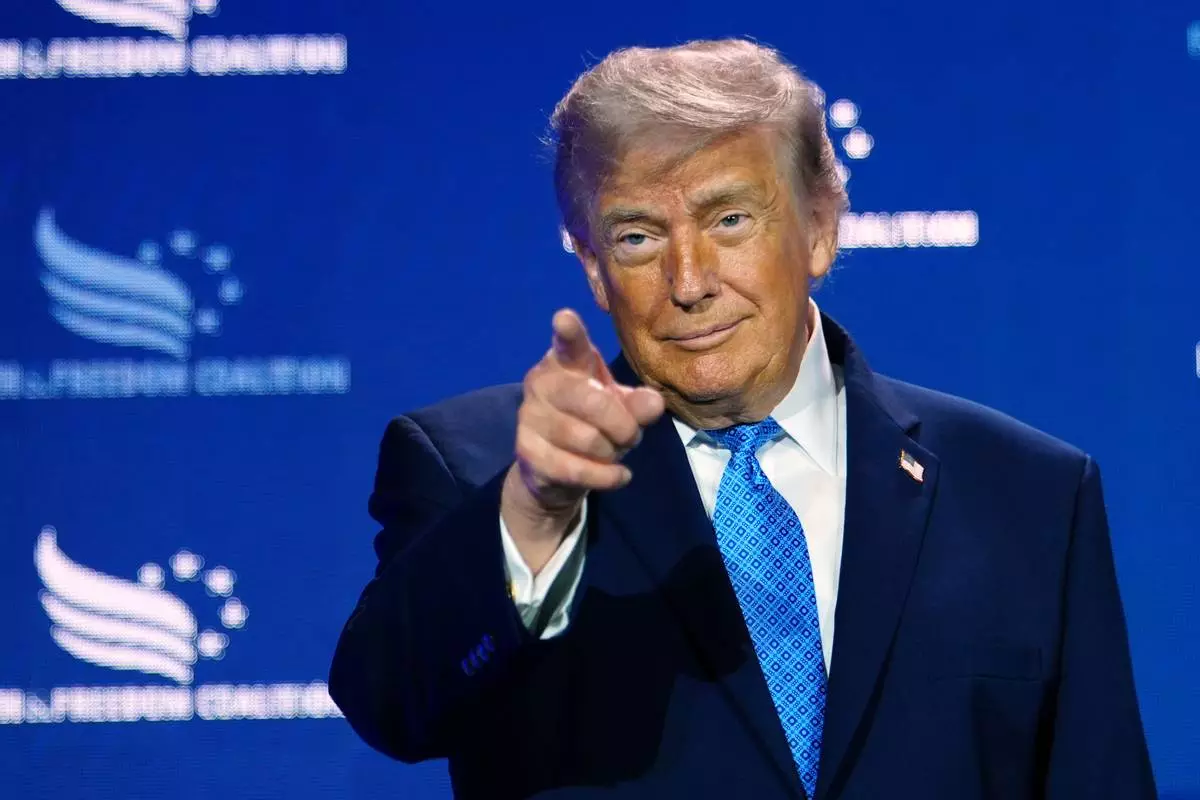
President Donald Trump arrives to speak at the Faith & Freedom Coalition's policy conference at the Washington Hilton, Friday, June 26, 2026, in Washington. (AP Photo/Julia Demaree Nikhinson)