TOYOTA, Japan--(BUSINESS WIRE)--Jul 3, 2026--
SkyDrive Inc. (“SkyDrive”), a leading compact eVTOL (*1) aircraft developer based in Japan, is pleased to announce the successful completion of a promotional event held together with leading Indonesian helicopter operator Whitesky Aviation, at Whitesky’s Cengkareng Heliport, strategically located next to Soekarno-Hatta International Airport in Jakarta. The event, held over two days from June 23 to June 24, confirmed demand for the aircraft from potential customers in the mining and agriculture industries, as well as among government organizations.
This press release features multimedia. View the full release here: https://www.businesswire.com/news/home/20260702302595/en/
SkyDrive sees opportunities for growth in Indonesia due to a combination of factors which affect standards of living and productivity in both urban and rural areas. The Jakarta metropolitan area experiences annual economic losses from traffic congestion estimated at approximately 65 trillion rupiah (*2). Both the mining industry (a major industry in various Indonesian regions accounting in total for approximately 10% of regional GDP (*3)) and Indonesia’s vast agricultural plantations (which exceed 15 million hectares in area (*4)) are affected by logistics and disaster response delays resulting from underdeveloped infrastructure.
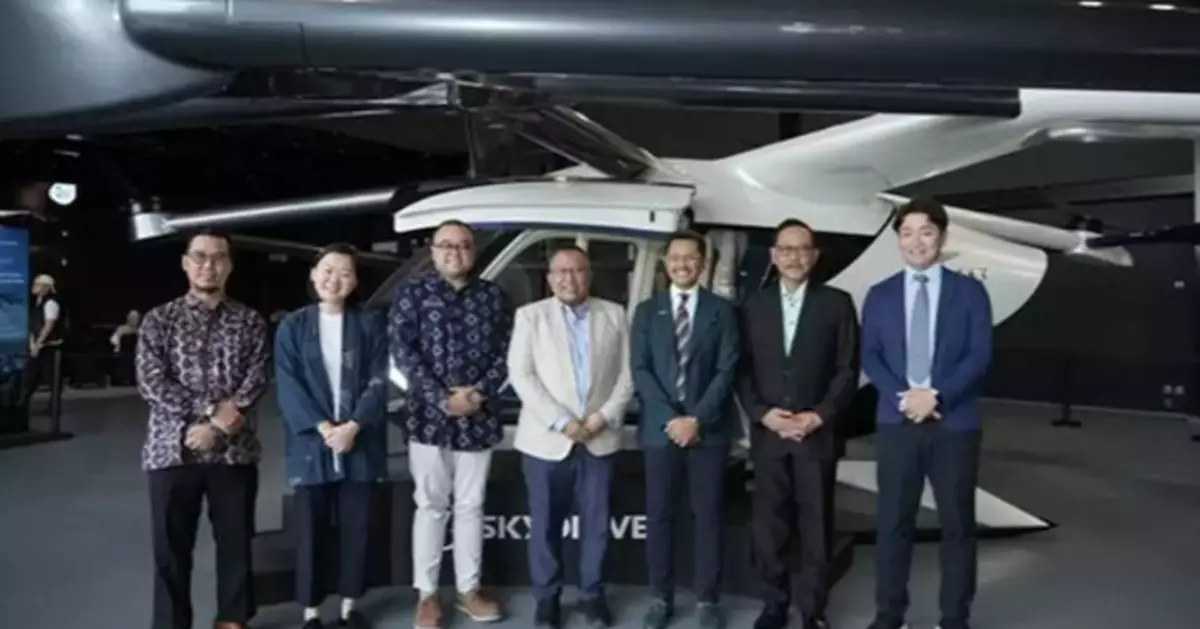
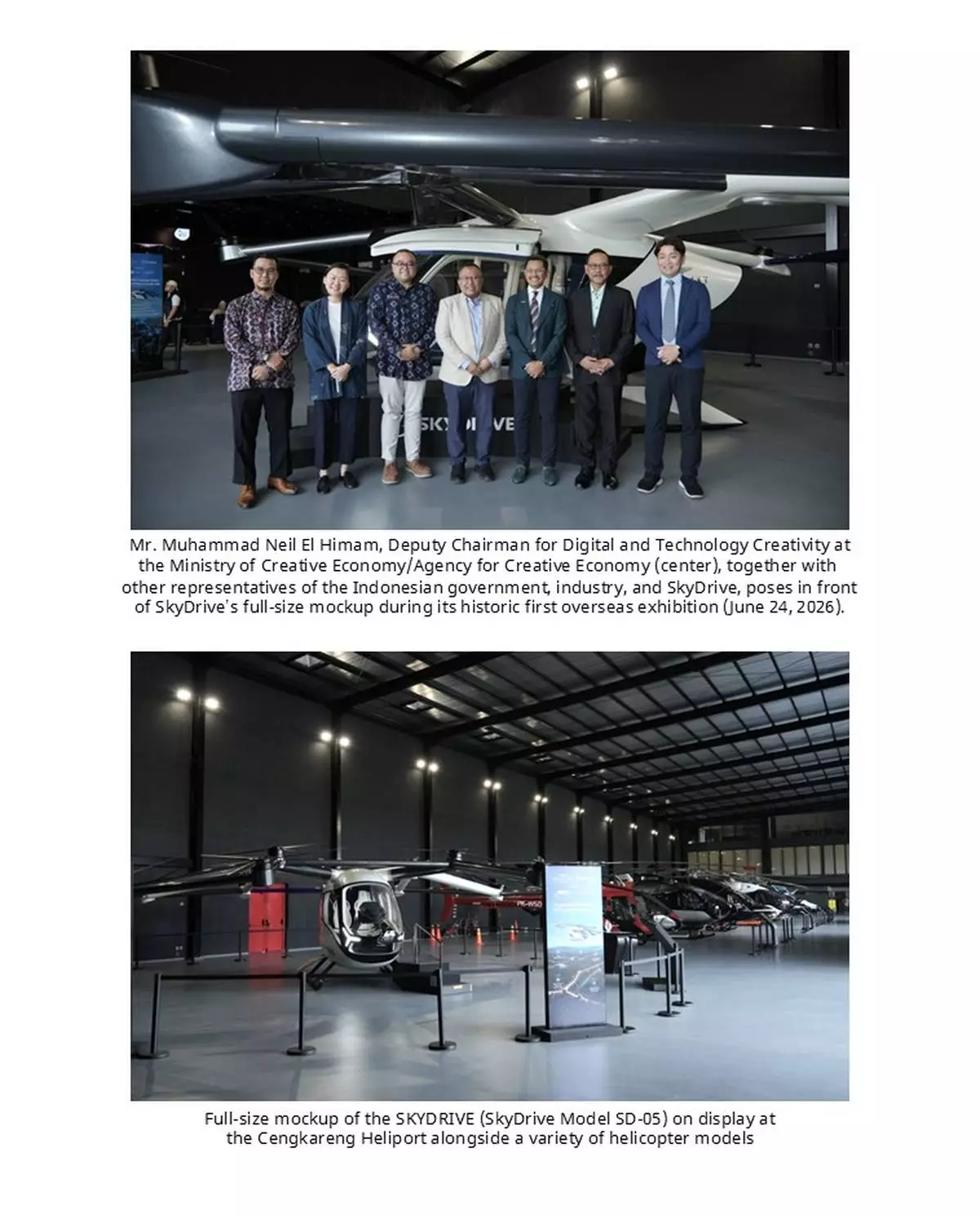
At the above event, SkyDrive exhibited a full-scale mockup of the "SKYDRIVE (SkyDrive Model SD-05)" outside Japan for the first time, presenting the attendees with various proposals for specific practical eVTOL applications aimed at resolving the social challenges Indonesia is working to resolve.
The History of Cooperation between SkyDrive and Whitesky
SkyDrive and Whitesky entered a strategic alliance for the launch of eVTOL operations in Indonesia back in August 2025 (*5). Since then, both parties have been working together to discuss the future of the business and develop specific business plans.
The cooperation between the two companies began with a focus on resolving the extreme chronic traffic problems that currently affect quality of life in Jakarta. One specific issue caused by congestion is the slow speed of road travel between Soekarno-Hatta International Airport and the city center. As Whitesky runs the Cengkareng Heliport, conveniently located next to the airport, air taxi services between the airport and the city center formed a natural starting point for discussions on the future feasibility of urban eVTOL routes.
Talks between SkyDrive and Whitesky on alleviating urban traffic congestion were followed by further investigations into the potential role of eVTOL in supporting the mining and agricultural industries that play such an important role in driving the sustainable development of Indonesia’s economy.
While natural resource mining is a key industry on Indonesian islands including Kalimantan, Sulawesi and Sumatra, mining sites are frequently located in areas with limited road infrastructure leading to logistical inefficiencies and delays in providing medical treatment to the victims of the industrial accidents in these areas, which may occur as frequently as a few times per week.
Alongside mining, both companies are also investigating potential for cooperation in the agricultural sector due to the huge size of Indonesia’s many agricultural plantations. While drones are currently used for spotting forest fires and wide-ranging surveillance patrols, the large distances involved can limit effective drone deployment.
As talks between SkyDrive and Whitesky moved beyond urban air taxi services to encompass eVTOL services for regional industries, it became clear that eVTOLs offer potential for reduced operating costs and lower environmental impact in both scenarios. With this in mind, the current event was held to build momentum towards specific eVTOL usage cases in these fields.
Proposed Use Cases
Following initial discussions focusing on the usage of eVTOL aircraft for urban air taxi services, SkyDrive and Whitesky are now moving forward with concrete investigations into eVTOL applications in various major regional industries as described below.
Currently, conventional helicopters are used to provide some of the above services. Switching these helicopters to eVTOLs will allow for lower operating costs, fewer emissions, and quieter operations.
Event Summary
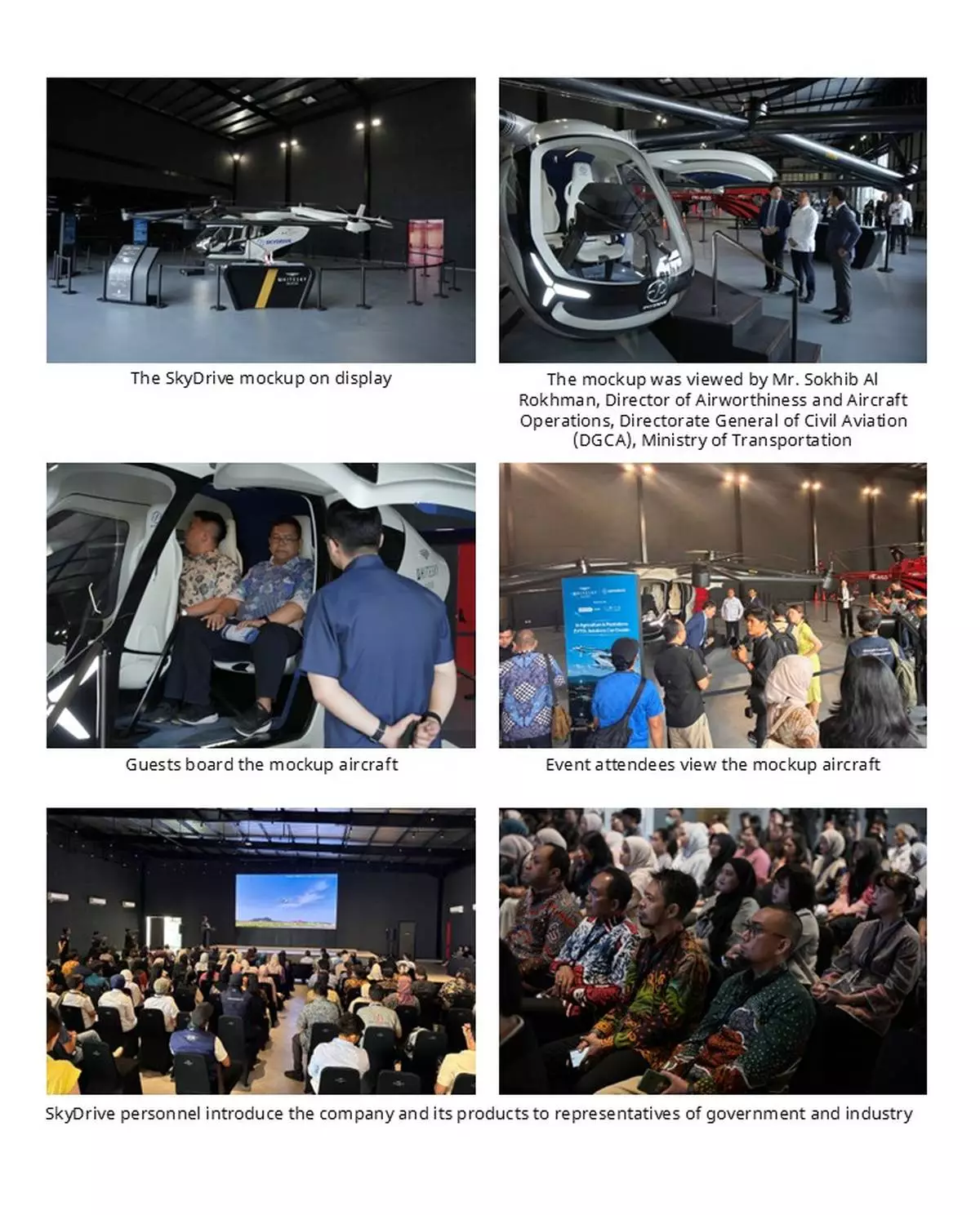
At the event, senior representatives of the Indonesian government and private sector companies were able to experience first-hand the size and comfort of a mockup of the SKYDRIVE (SD-05), which was on exhibit outside Japan for the first time. SkyDrive was able to confirm the strong level of interest among attendees over the respective roles that the aircraft can play in Indonesia’s urban and rural areas. Some attendees shared enthusiastic feedback, noting: “The diverse range of potential business cases within Indonesia provides ample opportunity for the future introduction of SkyDrive’s eVTOL aircraft, with potential applications including shuttle operations for mining companies, land surveillance for large agricultural holdings, and avoidance of traffic congestion in urban areas” and “we can see great potential in the aircraft as an economic alternative to helicopters and also as a means to create new industrial value through advanced technology”.
Comments
Mr. Muhammad Neil El Himam, Deputy Chairman for Digital and Technology Creativity at The Ministry of Creative Economy/Agency for Creative Economy:
The next-generation Advanced Air Mobility (AAM) and eVTOL technologies developed by SkyDrive represent a 'new face' that brings innovation to our creative economy. We are confident that the introduction of SkyDrive's advanced technology will go beyond a mere evolution in transportation, creating immense economic value through new intellectual property and specialized jobs. For Indonesia to become a nation capable of developing and managing new technologies, it is essential for global companies like SkyDrive and local partners to unite in building a 'complete ecosystem' through industry-academia-government collaboration. We welcome and will strongly support SkyDrive's continuous challenge to propel the future of mobility.
Mr. Sokhib Al Rokhman, S.SiT., S.T., M.T.,
Director of Airworthiness and Aircraft Operations, Ministry of Transportation of the Republic of Indonesia
Our country welcomes new technologies in next-generation mobility, and we highly evaluate the initiatives taken by private sectors. While there will be absolutely no compromise on aviation safety and security, we are prepared to flexibly advance our regulatory framework. This includes utilizing existing structures and providing multiple airports as regulatory sandboxes for demonstration trials. To facilitate the introduction of foreign-made aircraft such as SkyDrive, we hope to conclude an agreement on the type certification validation process with the Japan Civil Aviation Bureau (JCAB) of the Ministry of Land, Infrastructure, Transport and Tourism in the future to ensure smooth cooperation. In alignment with the company's plan to launch commercial operations as early as 2029, we will fully commit ourselves over the next three years to developing the necessary regulations for safe commercial operations.
Future Developments
Through this event, SkyDrive and Whitesky gathered data on potential eVTOL applications in various industries, including the transportation of personnel and goods, emergency medical services, and land surveillance. This data will be harnessed for the various feasibility tests required to prepare for commercialization. Both companies will also work together, through public-private cooperation with the Indonesian government, to develop the processes required for the certification of eVTOL aircraft in Indonesia. The first step toward commercial services in Indonesia is to prepare the infrastructure and operational systems needed to support commercial eVTOL flights in the mining areas in Kalimantan and urban air taxi services in and around Jakarta.
About PT Whitesky Aviation
Whitesky Aviation is a premier Indonesian aviation company that has been redefining air mobility across the archipelago since 2010. Backed by an official Aircraft Operator Certificate (AOC 135-016), Whitesky operates a robust fleet of helicopters and fixed-wing aircraft specializing in non-scheduled charter services tailored to corporate, private, medical, and tourism needs. With a deep commitment to safety, precision, and customer satisfaction, the company has become a trusted partner for clients seeking efficient access to remote areas, high-priority logistics, or premium flight experiences. From supporting strategic infrastructure projects to executing emergency evacuations and luxury leisure trips, Whitesky blends operational excellence with local expertise to deliver high-impact, reliable solutions. As Indonesia’s demand for vertical and regional air connectivity continues to rise, Whitesky Aviation stands at the forefront—driven by innovation, empowered by skilled professionals, and inspired by the mission to connect people, opportunities, and regions that conventional transportation often leaves behind.
For more information, please visit: https://www.whitesky.co.id/
About SkyDrive Inc.
SkyDrive is a Japanese compact eVTOL company aiming “to take the lead in the once-in-a-century mobility revolution”. The company began testing eVTOL prototypes in 2014 prior to official incorporation in 2018. Under its future vision for urban transportation, flying in eVTOLs will become a regular part of city life. In 2019, SkyDrive became the first company to fly a crewed eVTOL in Japan. In 2025, the company successfully showcased the eVTOL "SKYDRIVE", the company’s first eVTOL product, with demonstration flights at the Osaka Expo witnessed by thousands of visitors over a one-month period. SkyDrive began production of “SKYDRIVE” in March 2024 at a plant owned by Suzuki Motor Corporation, SkyDrive's official production partner. SkyDrive has been working with civil aviation authorities in Japan and the US to obtain certification for “SKYDRIVE”, with the aim of launching the aircraft into service in 2028. SkyDrive is headquartered in Toyota, Aichi Prefecture, and led by CEO Tomohiro Fukuzawa, an engineer and entrepreneur.
For more information, please visit: https://skydrive.co.jp/en/
SkyDrive Exhibits Full-Size Mockup Overseas for the First Time
SkyDrive Exhibits Full-Size Mockup Overseas for the First Time

SkyDrive Exhibits Full-Size Mockup Overseas for the First Time