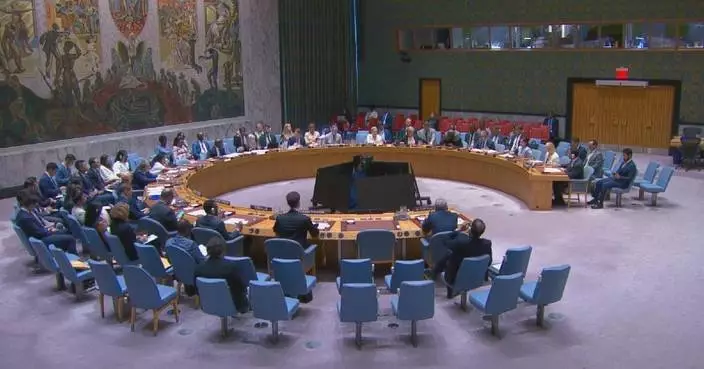
The United States and Iran engaged in a heated exchange at an emergency United Nations (UN) Security Council meeting on Thursday, trading accusations over the Strait of Hormuz, regional attacks, and the implementation of a recent diplomatic memorandum.
The U.S. opened the debate by taking aim at Iran, blaming Iran for recent drone and missile strikes on civilian infrastructure in Gulf nations including Bahrain and Kuwait, and claiming the security of commercial ships and international waterways is at risk.
The U.S. then turned its focus to the Strait of Hormuz, alleging that Iran is obstructing the passage of all vessels through the strategic shipping lane.
U.S. Permanent Representative to the UN Mike Waltz argued that Iran has violated the core tenets of a recently signed bilateral agreement.
"Just two weeks ago, the United States signed a memorandum of understanding with Iran. Its most basic premise is the Straits, international waterways must be open, attacks on civilian shipping must stop. And we're here today because Iran ignored that," he said.
Iran, however, pushed back strongly, accusing the United States of once again deploying "lies and disinformation" to target the country. The Iranian delegation argued that the current crisis was rooted in U.S. and Israeli military operations launched against Iran during ongoing diplomatic negotiations.
"Just two weeks ago, the United States signed a memorandum of understanding with Iran. Its most basic premise is the Straits, international waterways must be open, attacks on civilian shipping must stop. And we're here today because Iran ignored that," said Iran's Permanent Representative to the UN, Amir Saeid Iravani.
Following Iran's remarks, the U.S. delegation requested the floor again to rebut Iranian side's claims, asserting that Iran was attempting to silence the Security Council despite its mandate to address international peace and security.
The U.S. representative said that closing international waterways and threatening commercial shipping does not constitute acts of self-defense.
In response, Iran countered that certain regional countries are facilitating U.S. and Israeli military operations by allowing the use of their territory and airspace, thereby bearing international responsibility. Iran further accused U.S. of imposing a naval blockade on Iran, characterizing it as a form of "collective punishment."
On June 18, Iran and the United States signed the MoU on ending the war in the region on all fronts, including Lebanon.
On June 22, technical negotiations between Iran and the United States began in Switzerland, following high-level consultations between Iranian and U.S. delegations the previous day, mediated by Pakistan and Qatar.
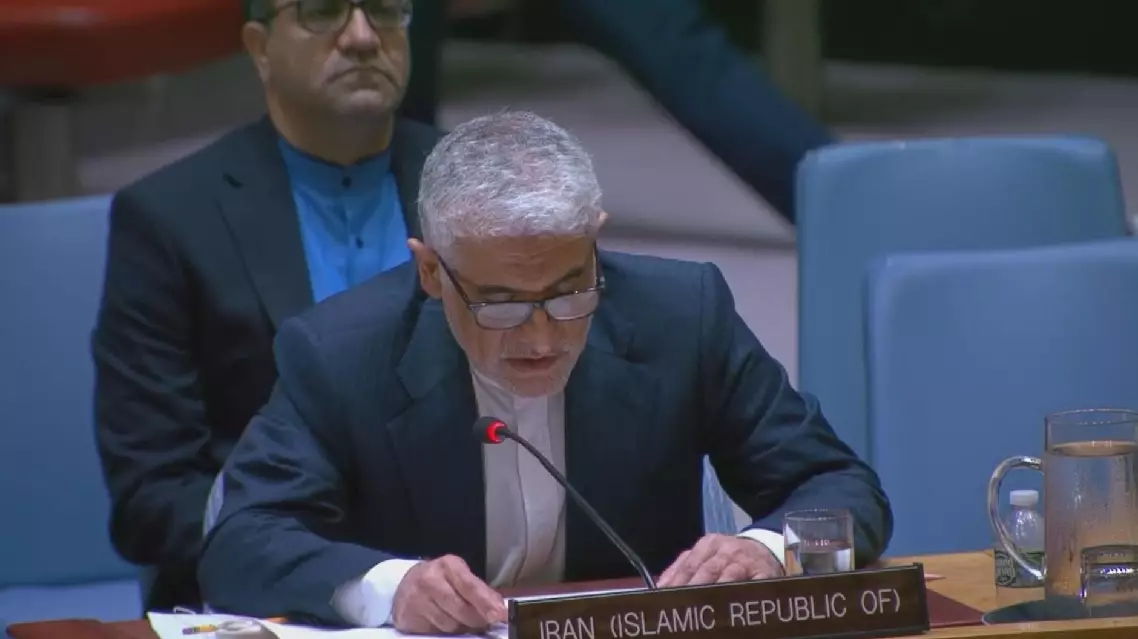
U.S., Iran trade accusations over Strait of Hormuz at UN Security Council meeting