DAMASCUS, Syria (AP) — Mourners filed through Damascus on Friday, a day after an explosive device set off in a cafe in the Syrian capital killed 10 people.
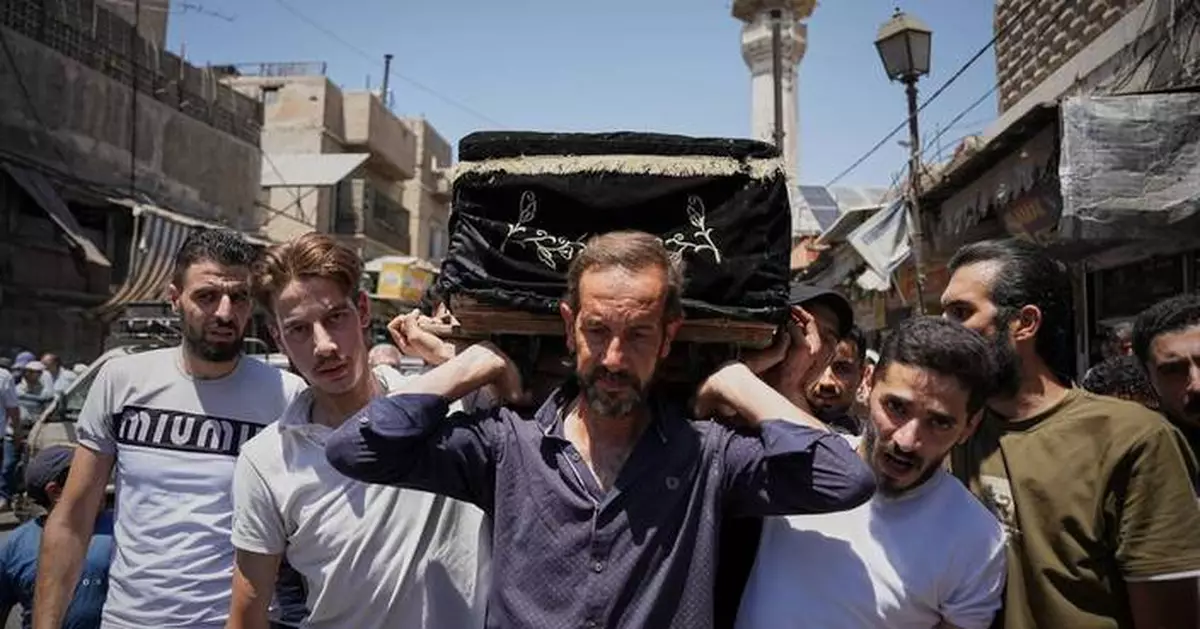
The funeral procession in the normally bustling Midan neighborhood carried the coffins of three of the victims. Another 21 were wounded in the explosion at a popular cafe near the capital's main judicial complex, which was often frequented by lawyers.
Click to Gallery
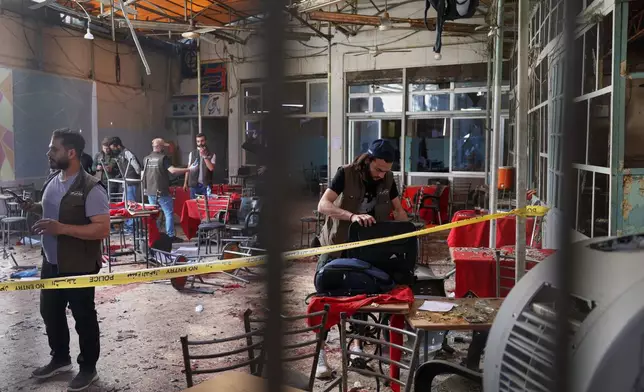
Syrian security inspects the site after an explosive device was detonated in a cafe near the main courthouse complex, in Damascus, Syria, Thursday, July 2, 2026 (AP Photo/Ghaith Alsayed)
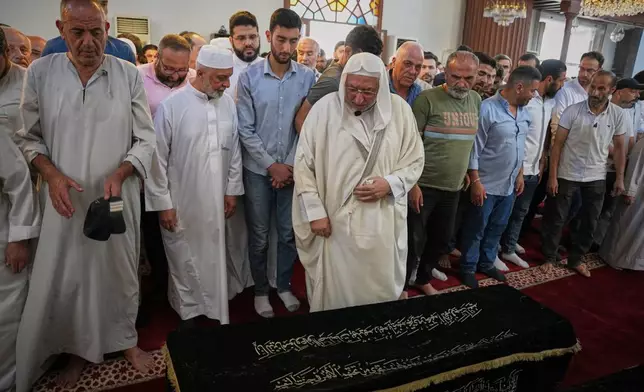
Mourners pray over the coffin of Fathi Muhammad Saeed Qabbani, who was killed Tuesday when an explosive device detonated in a cafe near Damascus' main courthouse complex, during his funeral in the Al-Midan neighborhood of Damascus, Syria, Friday, July 3, 2026. (AP Photo/Omar Albam)
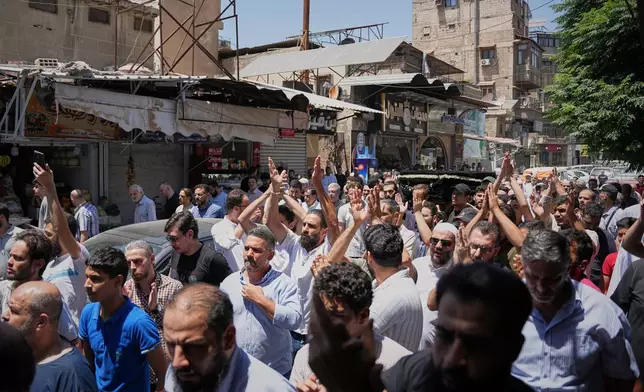
Mourners carry the coffin of Fathi Muhammad Saeed Qabbani, who was killed Tuesday when an explosive device detonated in a cafe near Damascus' main courthouse complex, during his funeral in the Al-Midan neighborhood of Damascus, Syria, Friday, July 3, 2026. (AP Photo/Omar Albam)
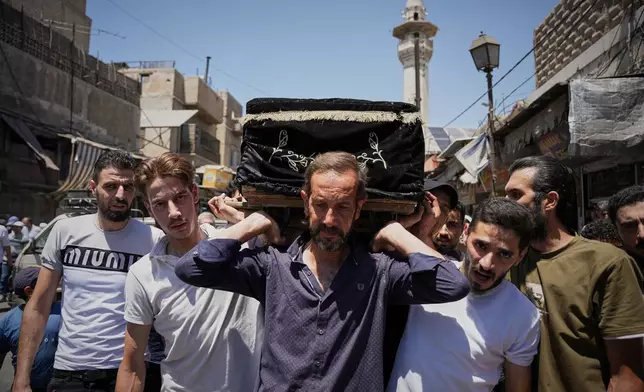
Mourners carry the coffin of Fathi Muhammad Saeed Qabbani, who was killed Tuesday when an explosive device detonated in a cafe near Damascus' main courthouse complex, during his funeral in the Al-Midan neighborhood of Damascus, Syria, Friday, July 3, 2026. (AP Photo/Omar Albam)
Syria's Health Ministry raised the death toll Friday from nine to 10. Officials have promised to arrest those behind the attack, but no updates were announced in the investigation. No group has claimed responsibility for the attack.
Bahaa Qabbani said his brother, Fathi Qabbani, a married father of one son, worked at a shop near the site of the explosion and was passing by the cafe at the moment of the blast. He was killed.
Qabbani called the perpetrators of the attack “a group of terrorists who are against the homeland,” and called on security forces to “take hold of the country with an iron fist."
Although there is so far no indication who carried out the attack, many were quick to blame loyalists of former President Bashar Assad, who was ousted in an insurgent offensive in December 2024. During the funeral procession, some mourners chanted, “The people want remnants of the former regime to be executed.”
Also Friday, Syria's state-run news agency SANA reported that three members of security forces were wounded in an attack on a checkpoint at the entrance to the Damascus suburb of Jaramana. It said that a man on a motorcycle threw two hand grenades at the checkpoint guards and tried to throw a third one, but it exploded in his hand, killing him.
Another person was arrested in connection with the attack, SANA reported.
Since overthrowing the Assad dynasty, Syria’s new rulers have struggled to exert control across the country and to check extremist groups.
Deadly attacks blamed on the Islamic State group have targeted religious minorities, including a suicide attack on a church in a Damascus suburb and a bomb set off in a mosque in a predominantly Alawite area in the city of Homs.
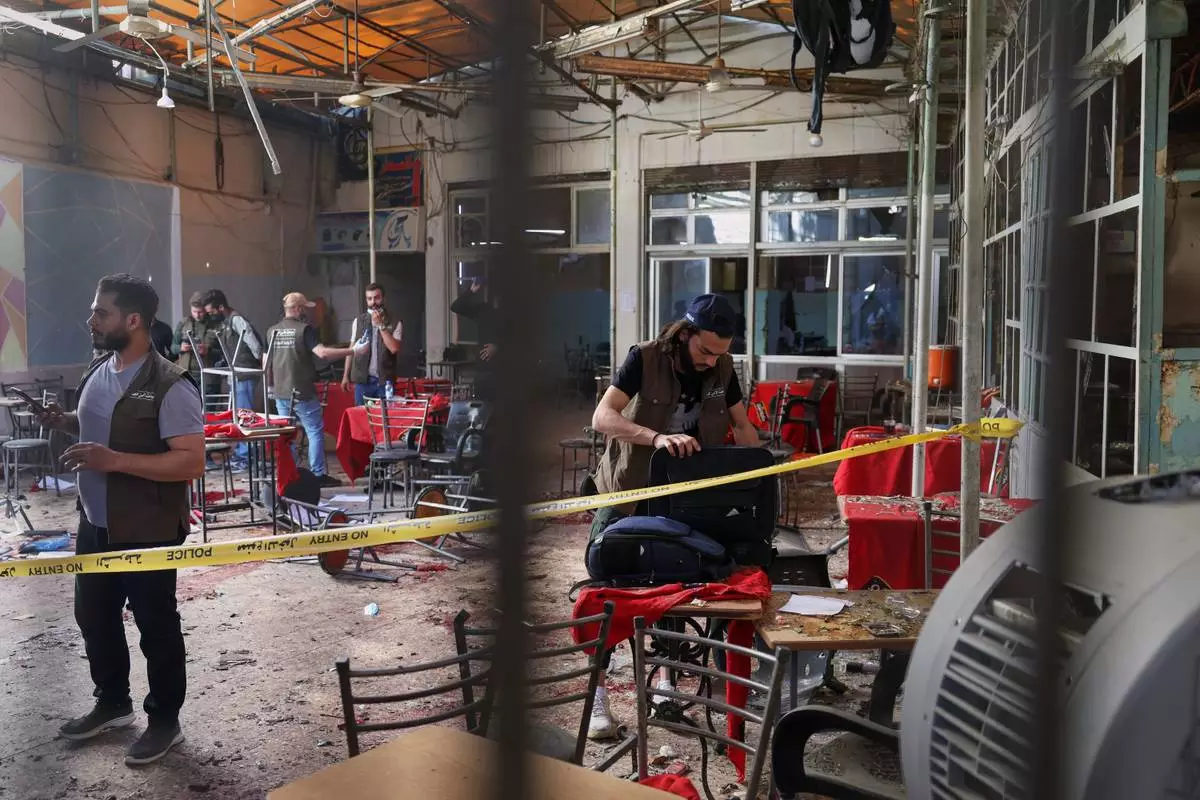
Syrian security inspects the site after an explosive device was detonated in a cafe near the main courthouse complex, in Damascus, Syria, Thursday, July 2, 2026 (AP Photo/Ghaith Alsayed)
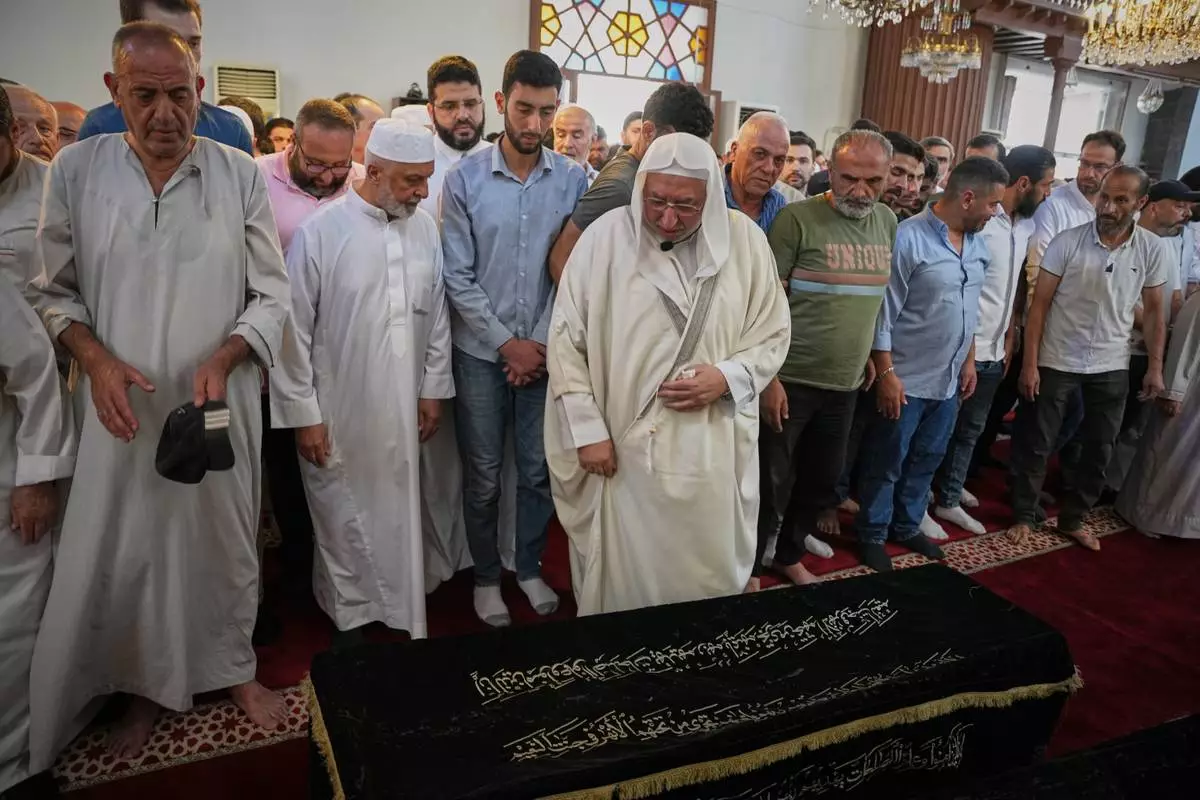
Mourners pray over the coffin of Fathi Muhammad Saeed Qabbani, who was killed Tuesday when an explosive device detonated in a cafe near Damascus' main courthouse complex, during his funeral in the Al-Midan neighborhood of Damascus, Syria, Friday, July 3, 2026. (AP Photo/Omar Albam)
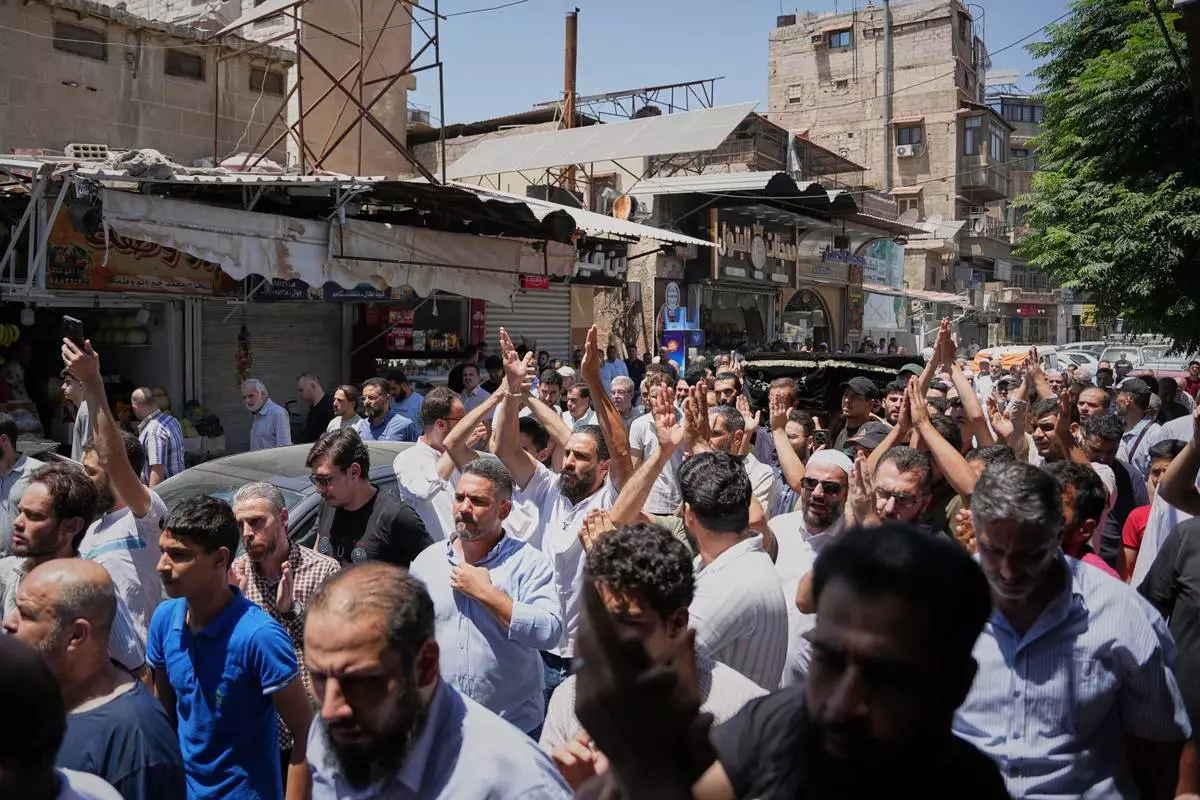
Mourners carry the coffin of Fathi Muhammad Saeed Qabbani, who was killed Tuesday when an explosive device detonated in a cafe near Damascus' main courthouse complex, during his funeral in the Al-Midan neighborhood of Damascus, Syria, Friday, July 3, 2026. (AP Photo/Omar Albam)
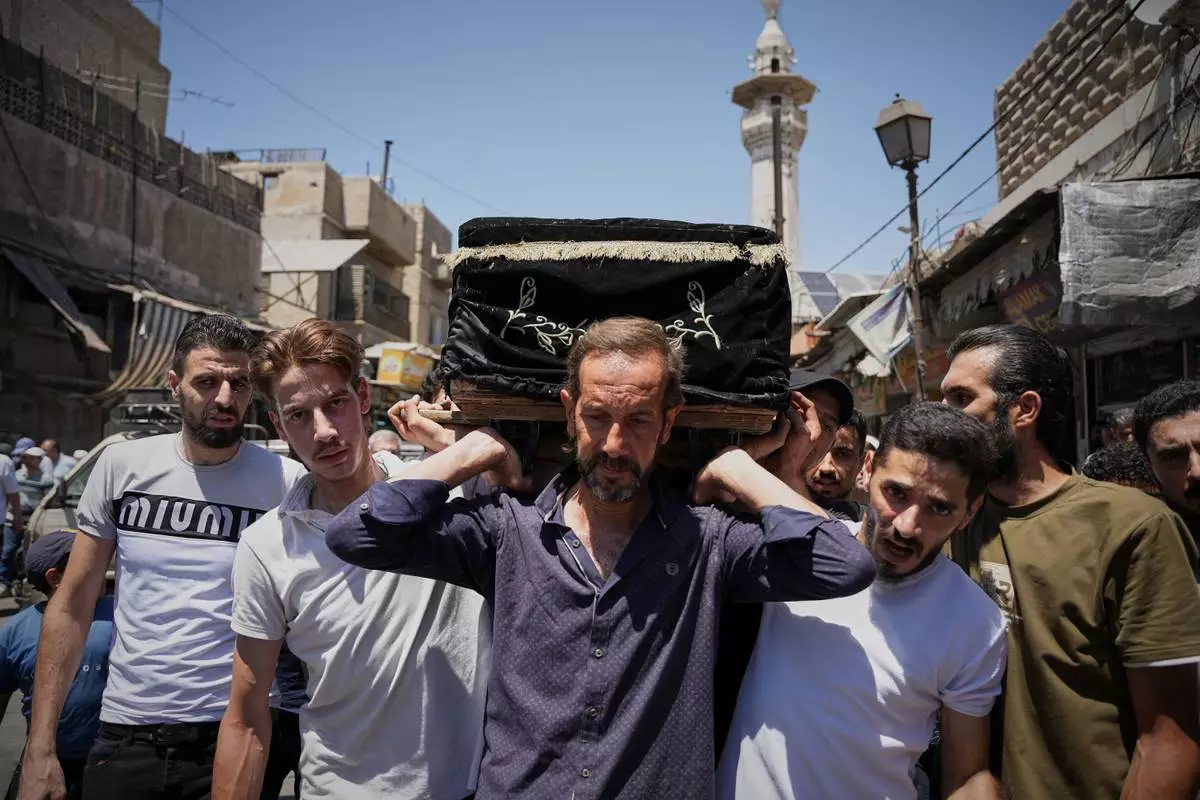
Mourners carry the coffin of Fathi Muhammad Saeed Qabbani, who was killed Tuesday when an explosive device detonated in a cafe near Damascus' main courthouse complex, during his funeral in the Al-Midan neighborhood of Damascus, Syria, Friday, July 3, 2026. (AP Photo/Omar Albam)