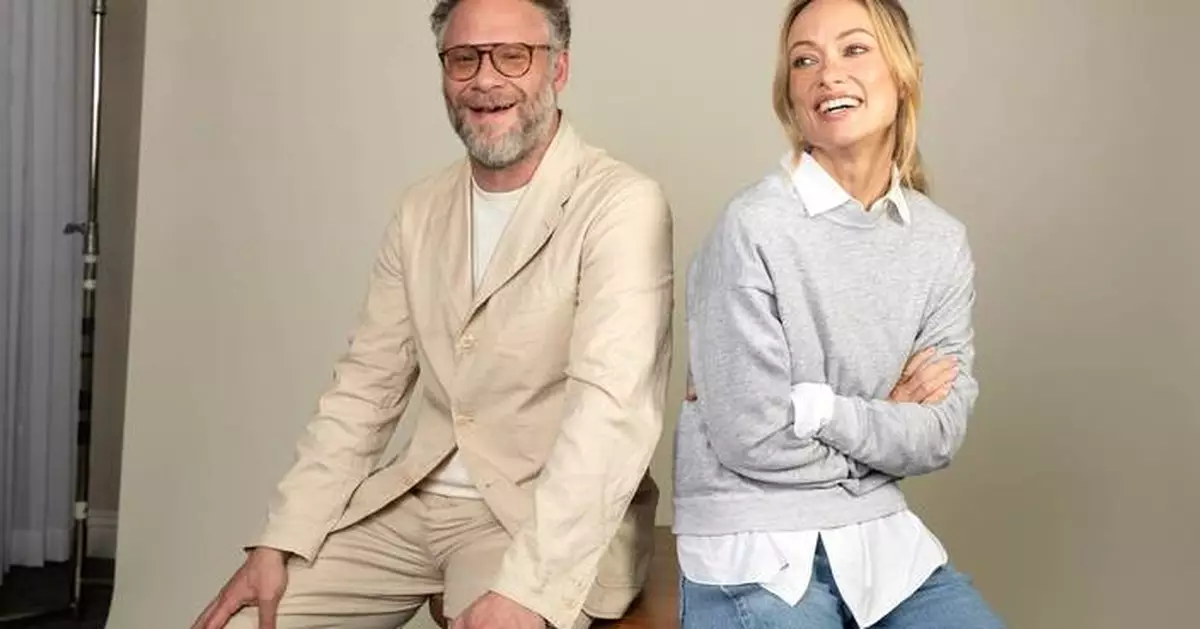
Seth Rogen gave Olivia Wilde a note at the end of the shoot for “The Invite.” In it, he wrote, “I love screaming at you.”
It wasn’t some toxic jab from a volatile actor to his director and co-star after a difficult shoot; They really have found a kind of magic in screaming at each other on screen, first in the Chinatown-ish “Missing Reel” episode of “The Studio,” in which Wilde plays a satirical version of herself as the crazed director, and then as a couple on the rocks in the acerbic chamber dramedy “The Invite,” which expands nationwide on July 10.
“There’s nothing precious about either of us really,” Wilde said. “There was, like, a permission speak — permission to scream — freely.”
Rogen, 44, and Wilde, 42, came up in the same class of sorts, with memorable roles on television, in the late 90s and early-aughts, that blossomed into movie stardom and, eventually, directing. But until recently, they’d only ever really crossed paths meaningfully once: At a table read for Judd Apatow’s slacker pregnancy comedy “Knocked Up” over 20 years ago. Wilde did not get the role, and they went their separate ways.
And perhaps it was for the best. “Knocked Up” might not have been the right use of Wilde and Rogen together. They seem to excel not as a traditional romantic comedy duo, but in a realm that’s more prickly, more abrasive.
In “The Invite,” tensions are already simmering between Joe (Rogen) and Angela (Wilde) when their more liberated upstairs neighbors, neighbors Pína (Penélope Cruz) and Hawk (Edward Norton), arrive for dinner, and stir things up over one booze, and a revelation-filled night.
Wilde and Rogen spoke to The Associated Press about how the cast got Wilde to act in the movie, studio productions and not taking casting too personally. Remarks have been edited for clarity and brevity.
WILDE: I loved the opportunity on “The Studio” to make fun of myself, like what a thrill, and to just make fun of this business in the most loving way. I loved getting to play in that world, but there was no part of me that was like, wait a minute, do you think I’m (expletive) insane?
ROGEN: Thank God.
WILDE: Did you feel offended that I wanted you to be a sexless dad?
ROGEN: A sexless sad man? No, I got it. I give that: Sexless sad dad.
WILDE: This role was like the best of Albert Brooks and a little bit of a ‘70s Richard Dreyfuss or maybe like ’80s Richard Dreyfuss. And I felt like there is a bit of Albert Brooks and Richard Dreyfuss in you, which is high praise.
ROGEN: Hey, I can only hope.
ROGEN: Very much so. We overtly pressured her to do it. We had a side text chain between us where we would strategize about how to do it and how to launch a multipronged attack on her to back her into doing it. Thank God it worked. And I just kept saying no to every other option she put on the table. I literally made it impossible to hire another person because everyone else you suggested I was like, “I don’t think they’d be good at this.”
WILDE: Meryl Streep?
ROGEN: Yeah, that wouldn’t work.
WILDE: It did take encouraging because I just for whatever reason had real impostor syndrome about it because I just revere them so much. I felt capable of directing this and holding it all in place and I really felt a strong connection to the story and everything that needed to happen to make it good but the idea of jumping in the ring was intimidating. I never would have suggested myself. I’d rather die than be like, “What if it was me, you guys?”
ROGEN: I’m the exact opposite, I’m always like, “We need a tighter shot of me, I don’t think we’re featuring me enough in all this.”
WILDE: It was the best experience of my career for every reason, but certainly as an actor. I’ve never had that much fun acting. And it made me think that maybe I don’t hate it.
WILDE: I think so. I think that there’s an attitude about marriage in American culture that is very much very reflective of our like, can do attitude, like you’re gonna do it and you’re just gonna stick to it and you’re going to grin and bear it. There’s an American energy to that that I think is part of what keeps people in really rough places and relationships for a long time and in this version of the story, in our version, these people, if they hadn’t been confronted with this evening that the movie’s about, would have just stayed in this kind of difficult conflict-ridden kind of passive-aggressive zone probably forever because they just aren’t people who like to give up. I also think there’s an American puritanical attitude toward sex in general that we are definitely dealing with in the movie, because it’s about people who haven’t talked about sex with each other in a way that they have desperately needed to for years.
ROGEN: Felt American to me, as a Canadian, the most sex-liberal people on the planet.
ROGEN: They would have been way more stressed out that the movie was completely rewritten in the weeks leading to shooting. They don't like that much.
WILDE: Working for a studio, you don’t get the opportunity to be as — this is like the most obvious statement on the planet — but typically, unless you’re Paul Thomas Anderson, I feel like you don’t get the opportunity to be as specific and, in some ways, hopefully a little bold. I think that we wouldn’t have had the same amount of creative ownership as a group and that was what made the experience so valuable. I’m very happy this wasn’t like a hundred billion dollar Sony movie.
ROGEN: We could have done it. We could find a way to spend it. You give me a budget, I will blow through it.
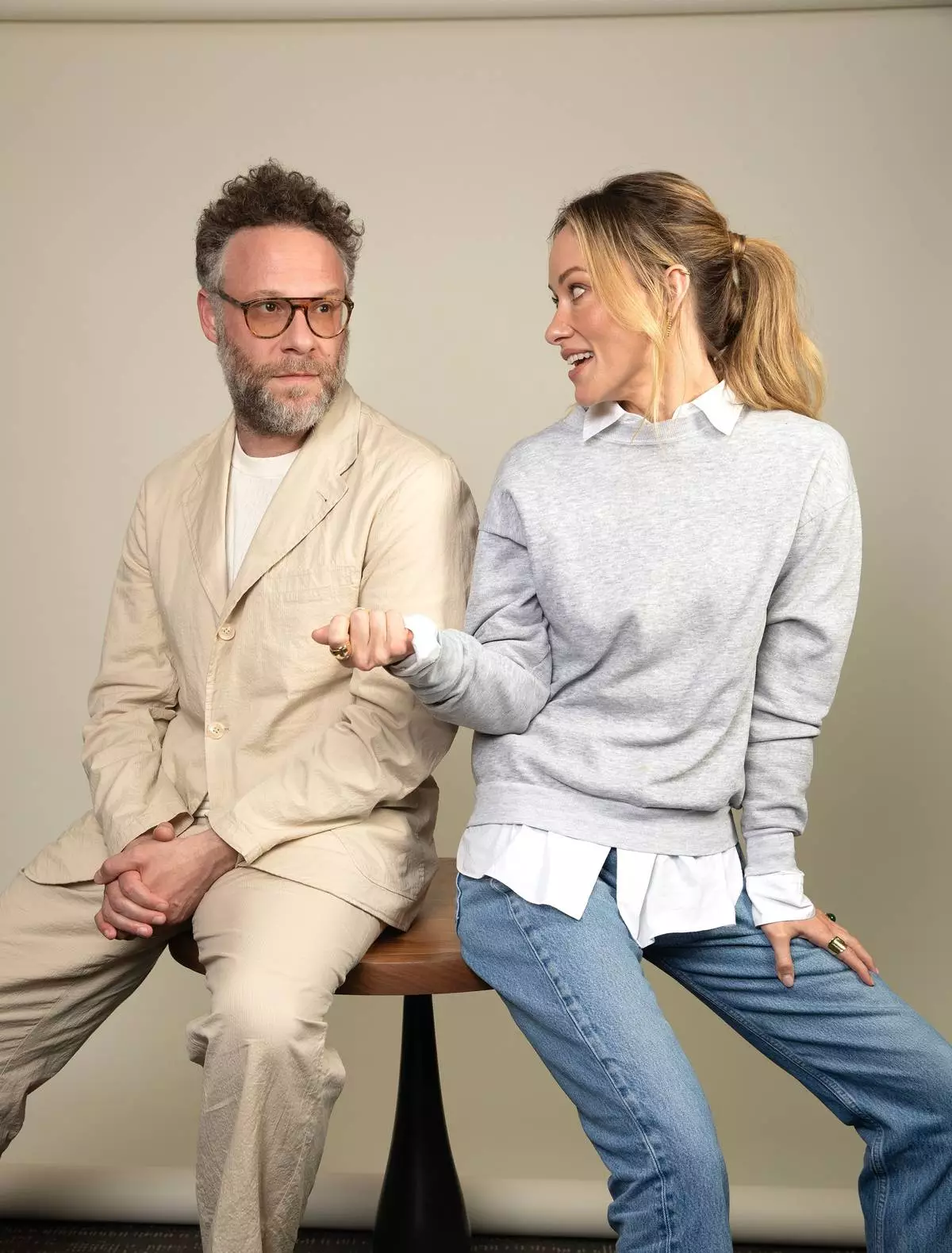
Seth Rogen, left, and Olivia Wilde pose for a portrait in Los Angeles to promote their film "The Invite" on Sunday, May 31, 2026. (Photo by Rebecca Cabage/Invision/AP)
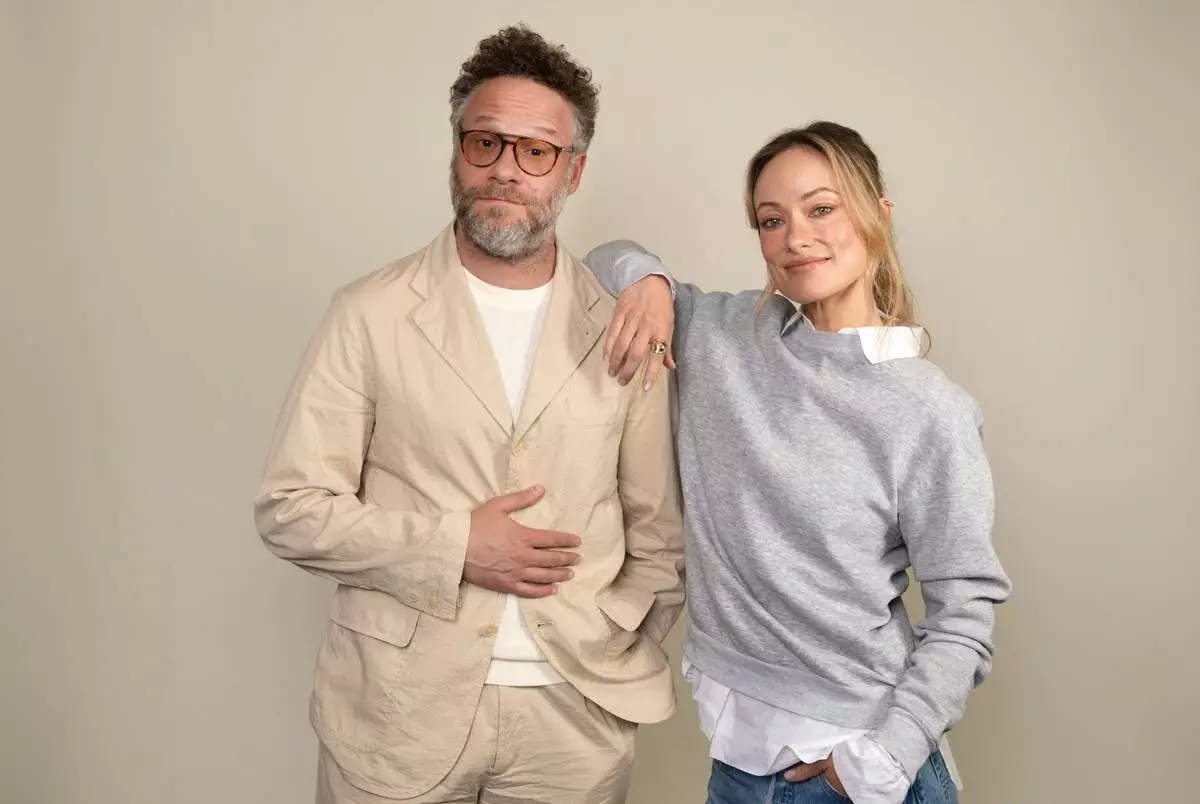
Seth Rogen, left, and Olivia Wilde pose for a portrait in Los Angeles to promote their film "The Invite" on Sunday, May 31, 2026. (Photo by Rebecca Cabage/Invision/AP)
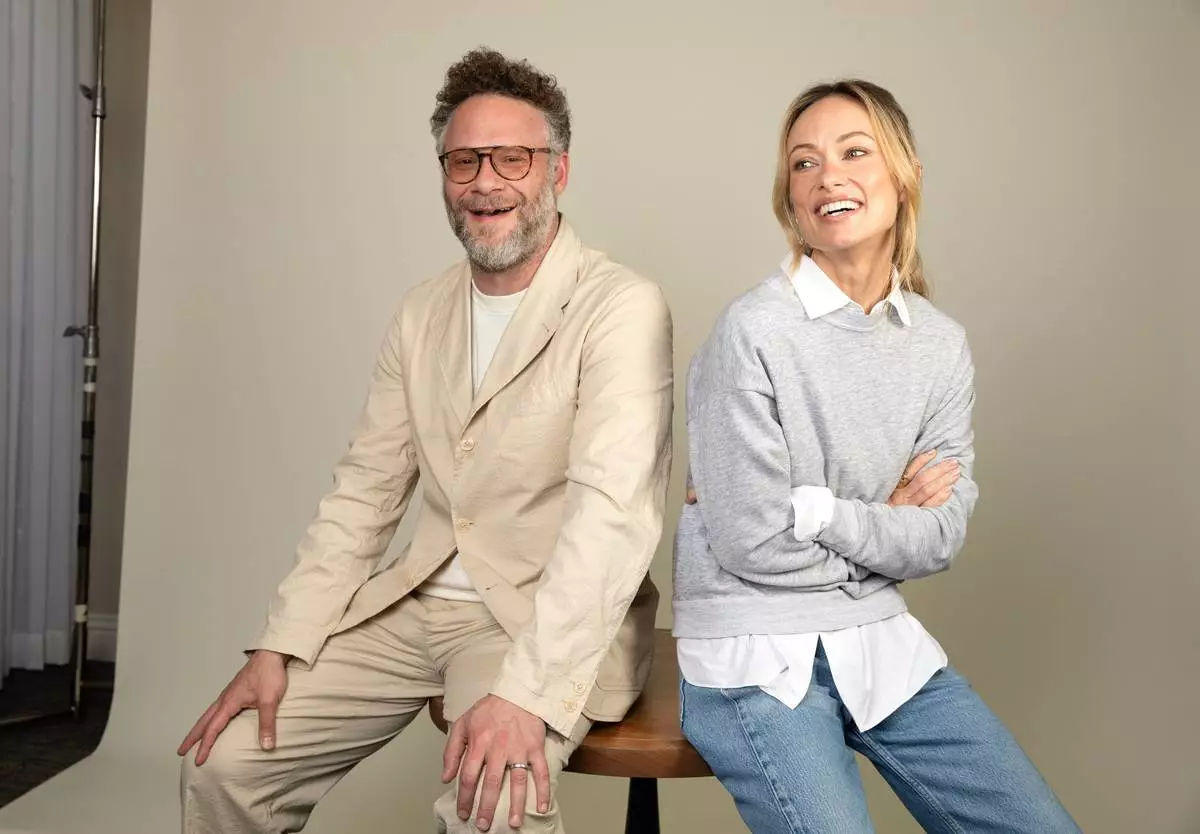
Seth Rogen, left, and Olivia Wilde pose for a portrait in Los Angeles to promote their film "The Invite" on Sunday, May 31, 2026. (Photo by Rebecca Cabage/Invision/AP)