LONDON (AP) — Two Romanian men were sentenced Friday to eight and 12 years in prison over the stabbing of a journalist from a Persian-language television station, an attack the judge said was carried out on behalf of the Iranian state.
Pouria Zeraati, a presenter at London-based Iran International, was stabbed in the leg in March 2024 outside his home in the Wimbledon area of London.
Nandito Badea, 21, and George Stana, 25, were found guilty by a jury last month of wounding with intent to cause grievous bodily harm.
Judge Bobbie Cheema-Grubb said the “evidence overwhelmingly points” to the attack being carried out on behalf of the Iranian authorities.
“I am sure that this was an attack carried out for and for the benefit of a foreign power,” she said during a sentencing hearing at London's Central Criminal Court
U.K. security officials claim Iran is behind a growing number of plots on British soil in which criminal proxies have targeted opposition media outlets and the Jewish community.
The satellite news channel Iran International has previously received threats due to coverage critical of Iran’s theocratic government. Zeraati was a high-profile face on the channel, and prosecutors said a billboard of his face had been seen in the Iranian capital with a “Wanted: Dead or Alive” message.
In 2023 the broadcaster temporarily moved to studios in Washington, D.C., after what it described as an escalation of “state-backed threats from Iran.” The station later resumed operations at a new location in London.
Police said former professional soccer player Badea and another man attacked Zeraati before fleeing in a getaway car driven by Stana and then flying out of the country from Heathrow Airport. Badea and Stana were arrested in Romania in December 2024 and extradited to the U.K. The third suspect, David Andrei, is the subject of criminal proceedings in Romania.
The judge said that Stana should have known that the “targeted and serious” attack was on behalf of Iran and gave him a 12-year sentence. Badea, who was involved in the conspiracy for less time, was handed eight years’ imprisonment.
Iran’s senior diplomat in the U.K. has denied Tehran was behind the attack.
Zeraati recovered from the attack and returned to work but said in a victim impact statement that the incident had left him “scared and anxious” and he had to relocate abroad “for fear of any reprisals.”
Chief Superintendent Kris Wright of Counter Terrorism Policing London said “it was our case that this targeted and violent attack on a journalist was carried out on behalf of the Iranian regime, and the judge agreed with that assessment of the evidence.
“Our message to anyone being asked to carry out activity by foreign states or even unknown entities online is to think again, because you will be caught and you will face justice," he said.
The head of Britain’s MI5 domestic intelligence service, Ken McCallum, said in October that more than 20 “potentially lethal Iran-backed plots” had been disrupted in the previous 12 months.
An Iranian proxy group has claimed credit for a recent string of suspected antisemitic attacks that have included stabbings and attempted fire bombings at synagogues.
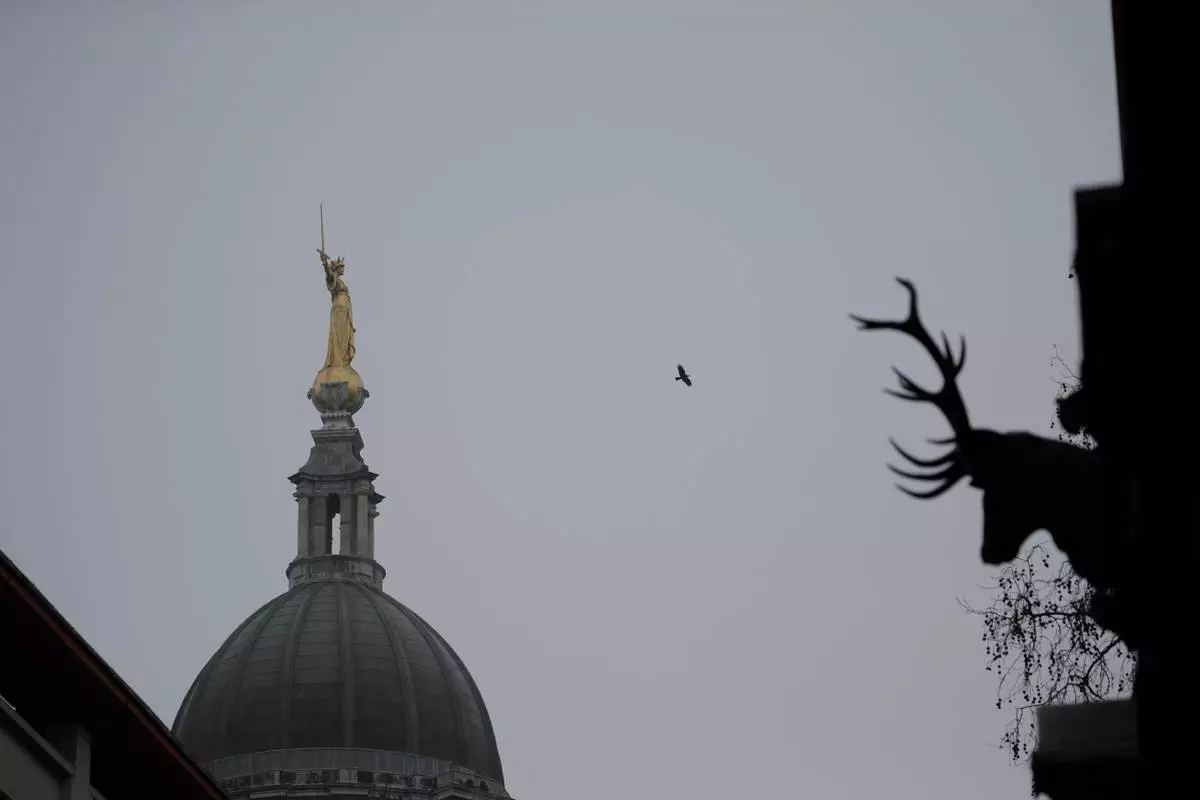
FILE - The statue of Lady Justice stands on top of the Old Bailey court in morning mist in London, March 3, 2021. (AP Photo/Matt Dunham, File)
Joey Logano has three championships in the NASCAR Cup Series but none in the Chase system that has returned this season.
The Team Penske driver is embracing the challenge of proving he can win a title in the format that puts a greater emphasis on banking consistently strong finishes.
“Do I have a little chip on my shoulder? That’s a clear yes,” Logano said with a chuckle after his victory Saturday at Richmond Raceway. “So much so that our team slogan is ‘4 the haters.’ That’s where we’re at. That’s good extra motivation.”
With an impressive surge from 20th to ninth in the standings over the past six races, Logano has flipped the narrative on the elimination playoffs that were in place for 12 years.
From 2014-25, the waning races of NASCAR’s regular season typically were a scramble to make the championship field as a win earned a berth.
But that safety valve has disappeared in the Chase, which will rely entirely on points to set the 16-driver field.
The top 16 in the provisional Chase have been unchanged for the past four races, and the grid for the 10-race title run likely will remain the same at New Hampshire Motor Speedway this weekend.
Shane van Gisbergen holds the 16th and final spot by 50 points over Ryan Preece, who dropped 21 points further below the Chase cutline with a 17th-place finish at Richmond.
The next three drivers ranked outside the Chase — Ross Chastain (12th at Richmond), Brad Keselowski (26th) and Erik Jones (27th) — also lost ground, diluting the potential drama of a surprise qualifier.
“The number of guys that feel the pressure of making the Chase is probably less,” said Christopher Bell, who is among seven drivers who have clinched Chase spots. “In years past, everybody on the outside still had an opportunity to get in, and now it’s kind of dwindled to a couple guys fighting for the spots.”
There’s been more intrigue toward the top half of the standings — particularly the progress of the Team Penske trio.
As Logano continued his push up the points ladder, teammate Ryan Blaney moved past Ty Gibbs into second in the standings at Richmond. Austin Cindric, Penske’s third driver, shored up his title eligibility with a career-best third on a short track to move up a spot to 15th in the points.
Denny Hamlin has a 115-point lead on Blaney and likely will clinch the Chase’s top seed Sunday at New Hampshire, which will be followed by the Aug. 29 regular-season finale at Daytona International Speedway.
The standings then will be reset for the Chase, which begins Sept. 6 at Darlington Raceway with the championship leader ahead by 25 points. Second will start 10 points ahead of third, and the remaining 14 spots will be separated by five-point increments.
“Getting to second is top of mind because every point is going to matter,” Blaney said.
There also is an emphasis on finishing the regular season in the top half of the points standings.
Racing Insights, a NASCAR analytics firm, ran more than 25,000 computer simulations of Chase outcomes, and the champion started in the top six 85% of the time.
Logano, who made the Chase only once while racing under the system in his first five Cup seasons from 2009-13, is 36 points from sixth-ranked Chase Elliott.
“We’ve been able to switch our goals from making the Chase to winning the championship,” said Logano, whose No. 22 Ford was ranked 17th before winning two of the past four races. “It’s quite the turnaround. I look at the last month and a half, we’ve been capable of winning all of them.”
Logano could be among several more drivers who lock into the championship Sunday with a solid result at New Hampshire.
Crew chief Paul Wolfe credited Logano with buoying morale when the team notched only two top-five finishes in the first half of the season.
“I’m proud of everyone sticking together,” Logano said. “There are times you see teams break, and it doesn’t take much longer running the way we were until something probably was going to break. We’ve been able to make quite the recovery to have a legit shot at the championship.”
After finishing sixth at Richmond, Kyle Larson immediately flew to Iowa and scored his fourth victory in the Knoxville Nationals, a prestigious sprint car event. Larson qualified on the pole position last week by winning a preliminary race at the renowned dirt track in Knoxville, Iowa.
He had expected to miss Saturday's main event because of the schedule conflict with Richmond, but a rain delay at Knoxville Raceway allowed the two-time Cup Series champion to arrive in time to lead all 50 laps. “It’s extremely surreal just to talk about the day and the range of emotions,” Larson said.
See AP’s full auto racing coverage here
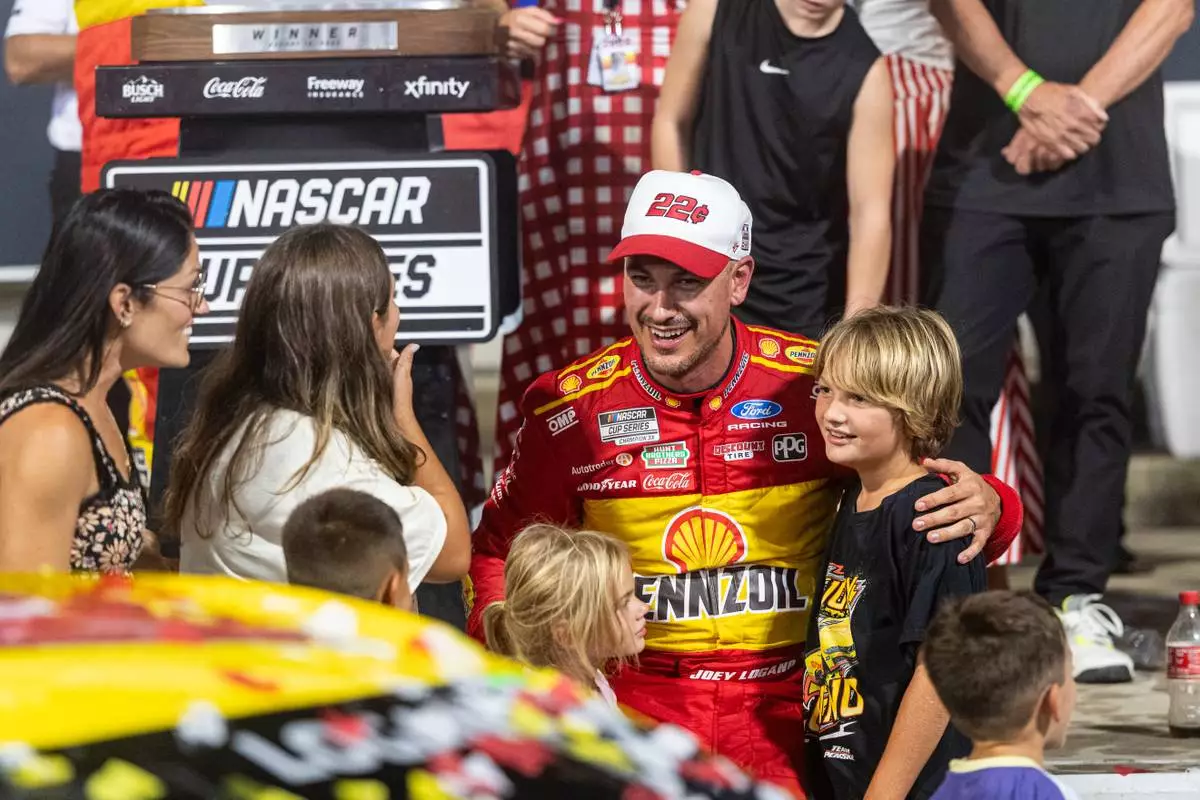
Team Penske driver Joey Logano (22) celebrates with family in victory lane after winning the Cook Out 400 at Richmond Raceway, Saturday, Aug. 15, 2026, in Richmond Va. (AP Photo/Robert Simmons)
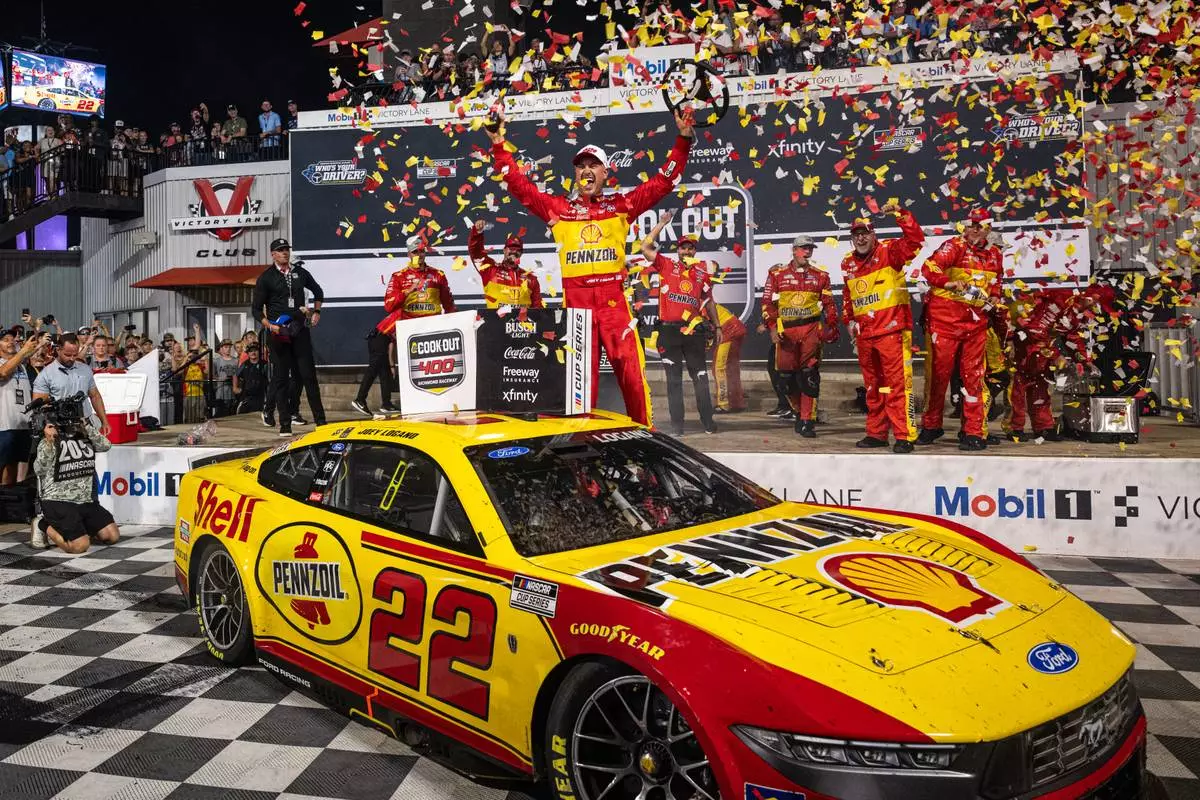
Team Penske driver Joey Logano (22) celebrates in victory lane after winning the Cook Out 400 at Richmond Raceway, Saturday, Aug. 15, 2026, in Richmond Va. (AP Photo/Robert Simmons)