Persistent high temperatures and humidity this summer has caused prolonged power outages in Aden, a port city in southern Yemen, posing serious challenges to the city's economic operations and public services.
Affected by climate change, the hot and humid weather in Aden during the summer has become increasingly severe in recent years, and the lack of power supply has made life more difficult for residents.
Local resident Mohammed Adel said the power outage completely disrupted his family's life, leaving the children in unbearable heat at nights.
"We are residents of Aden. Due to geographical reasons, the humidity here is extremely high, making electricity essential for us. However, Aden currently has almost no electricity, or rather, the power supply almost does not exist. We suffer from approximately 20 hours of power outages every day. The hot and humid weather makes it impossible for us to live normally, and we can't even provide our children with any relief from the heat," said Adel.
The power crisis is not only affecting residents' daily lives but also impacting the local economy. Continuous power outages are disrupting business operations, driving up operating costs for merchants. Meanwhile, hospitals and medical institutions are maintaining basic operations relying on backup power, placing ongoing pressure on urban public services.
The persistent power outages have also sparked public discontent, with many people taking to the streets in protest.
"Every summer we suffer from power crisis. We pay our electricity bills on time, but we still have no power. How can anyone tolerate this? It's the same situation in winter, but even worse in summer -- almost no power at all. Because of the power outages, all the ice cream in the refrigerator melts. We have to use generators, burning five or six barrels of diesel every day, which is extremely costly. This is unreasonable. Every month we have to pay electricity bills and also spend 1.5 to 2 million Yemeni riyals (around 6,300-8,400 U.S. dollars) on diesel," said Hatem Bahakim, a local merchant who runs a store.
In recent years, the Yemeni government has taken a series of measures, including internal governance and external assistance, to improve the power supply situation, but the overall power supply capacity still falls short of actual demand. Aging infrastructure, inadequate equipment maintenance, and a lack of long-term strategic planning all constrain the stable operation of the power system in the country.
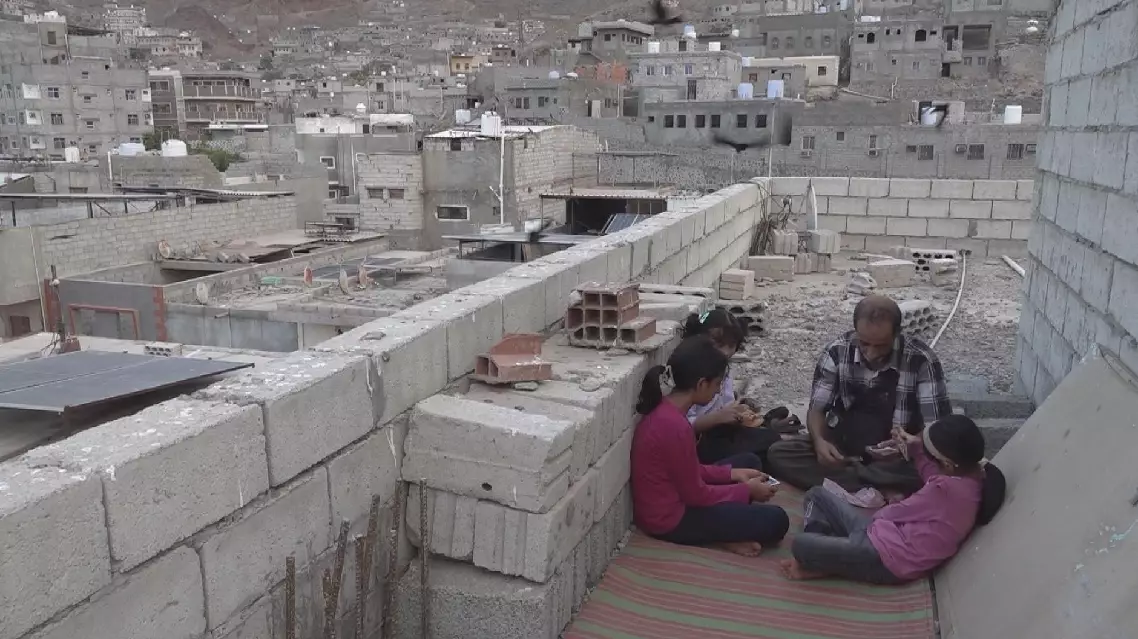
Summer heat, humidity lead to long power outages in Yemeni city