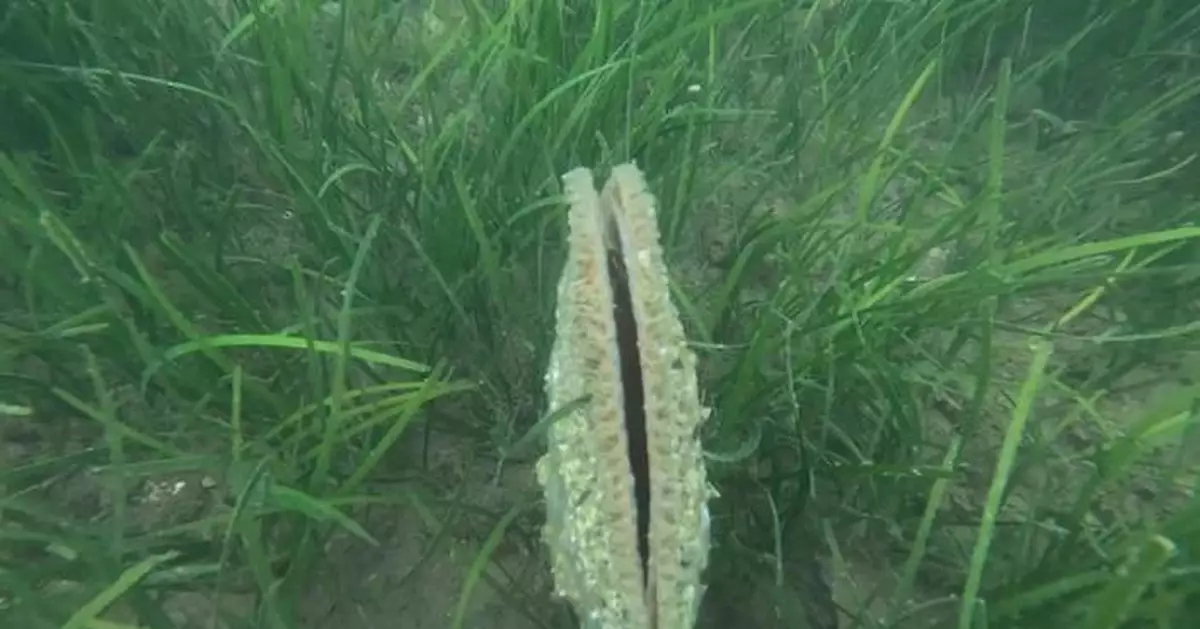
Researchers are racing to save the critically endangered noble pen shell as the species has seen a 99 percent drop in population over the past decade.
Scientists are warning that one of the species, the Mediterranean's largest and most iconic shellfish, is on the brink of extinction. It is one of only a handful of giant Mediterranean clams still known to live along Croatia's Istrian coast.
Divers say the species, which can grow up to 120 centimeters long, once populated large areas of the Adriatic Sea, but has now become exceptionally rare.
"There used to be a lot of them, but now there are only two left. Here, the locals say maybe three, but these are all small quantities. In the whole of the Istrian Peninsula area, we currently have four or five that we know are alive. In the whole of Croatia, we have less than 10 of them," said Sandro Dujmovic, director of the Public Institution Natura Histrica.
Around a decade ago, a deadly parasite and rising sea temperatures triggered the collapse of noble pen shell populations across the Mediterranean, according to scientists.
Some experts also point to human activities along the coastline. They say expanding marinas and land reclamation projects have destroyed natural habitats. There is also concern that the mass dying off is forcing shellfish farmer out of business.
"For me, as a biologist, it's really an alarm. And it doesn't just happen with noble pen shells. Now you have the extinction in many shellfish burrows, because of the rising sea temperatures, and probably some other factors, where people actually close their farms, because they simply can't afford it anymore. So many marine life they are growing is dying," said Milvana Arko Pijevac, a court-appointed expert of marine ecosystems.
At the Aquarium Pula, several surviving noble pen shells are being kept in protected conditions with some available for the public to see. Researchers feed them with laboratory-grown phytoplankton and hope they may eventually reproduce. Similar conservation efforts are underway in Spain, Italy, and some other Mediterranean countries.
"We don't know anything about the reproduction yet, except that we are going to try, and try, and try. So, this is our only way how we are going to succeed. Unfortunately, since 2016, Spain started, but even our group and the group of Italy, we did not succeed yet," said Milena Micic, president and CEO of Aquarium Pula.
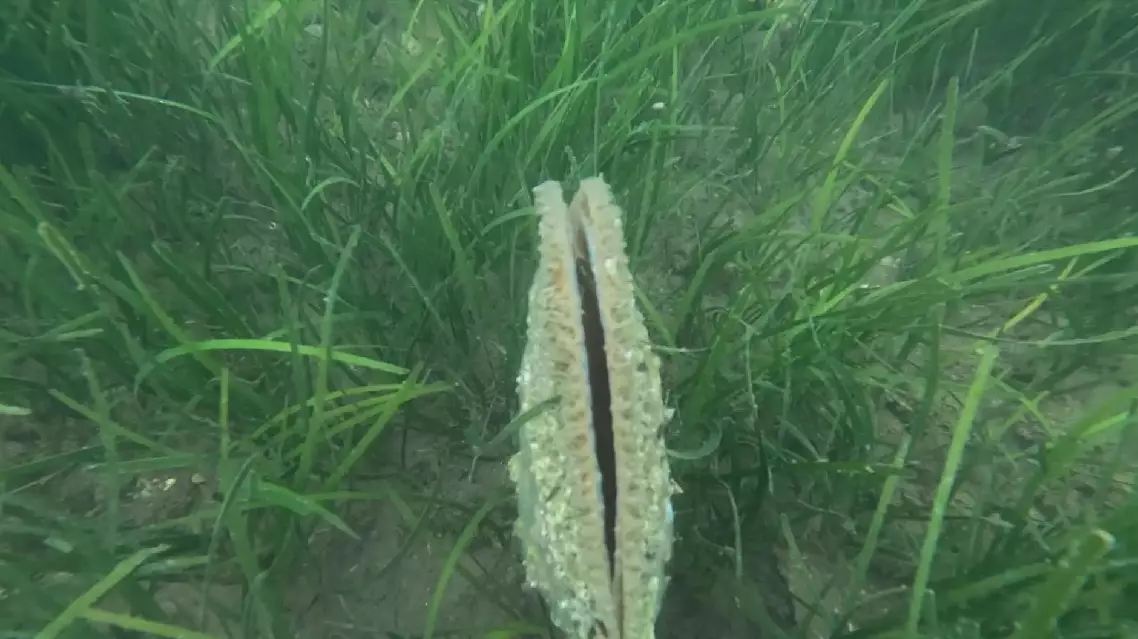
Croatian experts race to save endangered Mediterranean shellfish