Employers and employees should make reasonable work arrangements after tropical cyclones or rainstorms
The Labour Department (LD) today (July 6) reminded employers to make practical and reasonable work arrangements for employees after the cancellation of tropical cyclone warnings or rainstorm warnings, with due consideration to the road and traffic conditions and other factors, and make flexible arrangements for staff to resume work or work remotely (if applicable). This will help maintain good labour relations, and ensure the safety of employees as well as the smooth operation of organisations.
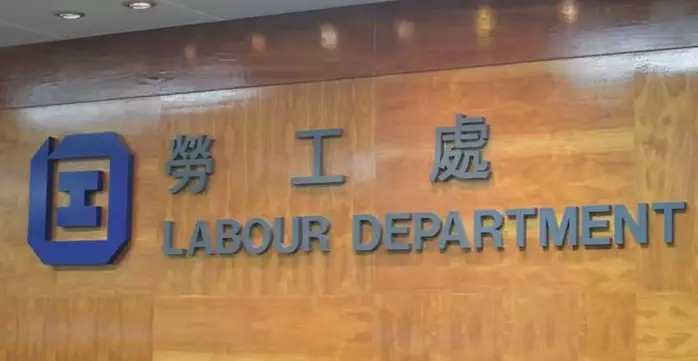
The Labour Department, Photo source: reference image
"For staff who have genuine difficulties in resuming work on time upon cancellation of a tropical cyclone or rainstorm warning, employers should be considerate and handle the situation in a flexible manner. For example, employers may allow employees to resume work by batches, permit employees who have difficulties in returning to workplaces to work remotely (if applicable) or allow more time for them to report for duty and resume work," a spokesman for the LD said.
The spokesman reminded employers to observe the statutory liabilities and requirements under the Employment Ordinance, Occupational Safety and Health Ordinance, Factories and Industrial Undertakings Ordinance, Employees' Compensation Ordinance and Minimum Wage Ordinance.
"Tropical cyclones and rainstorms are natural calamities. If employees are not required to report for duty, or are released from workplaces early, or are unable to report for duty at workplaces or resume work on time, etc due to adverse weather, extreme conditions or other environmental factors beyond their control, employers should not deduct their wages, good attendance bonus, or allowances, nor require employees to compensate subsequently for the loss of working hours in response to the aforementioned situations, or reduce employees' entitlements to annual leave, statutory holidays or rest days under the Employment Ordinance to compensate for the loss of working hours resulting from the issuance of adverse weather warnings or the extreme conditions announcement," the spokesman said.
Employers have an obligation to provide and maintain a safe working environment for their employees under the Occupational Safety and Health Ordinance and the Factories and Industrial Undertakings Ordinance. Moreover, under the Employees' Compensation Ordinance, employers are liable to pay compensation for injuries or deaths incurred when employees are travelling by a direct route from their residence to their workplace, or from their workplace back to their residence after work, four hours before or after working hours on a day when a Tropical Cyclone Warning Signal No. 8 or higher, a Red or Black Rainstorm Warning Signal or extreme conditions are in force.
The LD's latest revised "Code of Practice in Times of Adverse Weather and 'Extreme Conditions'" sets out the relevant guidelines in a reader-friendly and concise manner, reiterating the three major principles for formulating work arrangements under adverse weather and extreme conditions, including formulating work arrangements in advance, giving prime consideration to employees' safety, and complying with requirements of labour legislation, and incorporating corporate examples for reference. The booklet can be obtained from branch offices of the Labour Relations Division or downloaded from the department's webpage (www.labour.gov.hk/eng/public/wcp/Rainstorm.pdf).
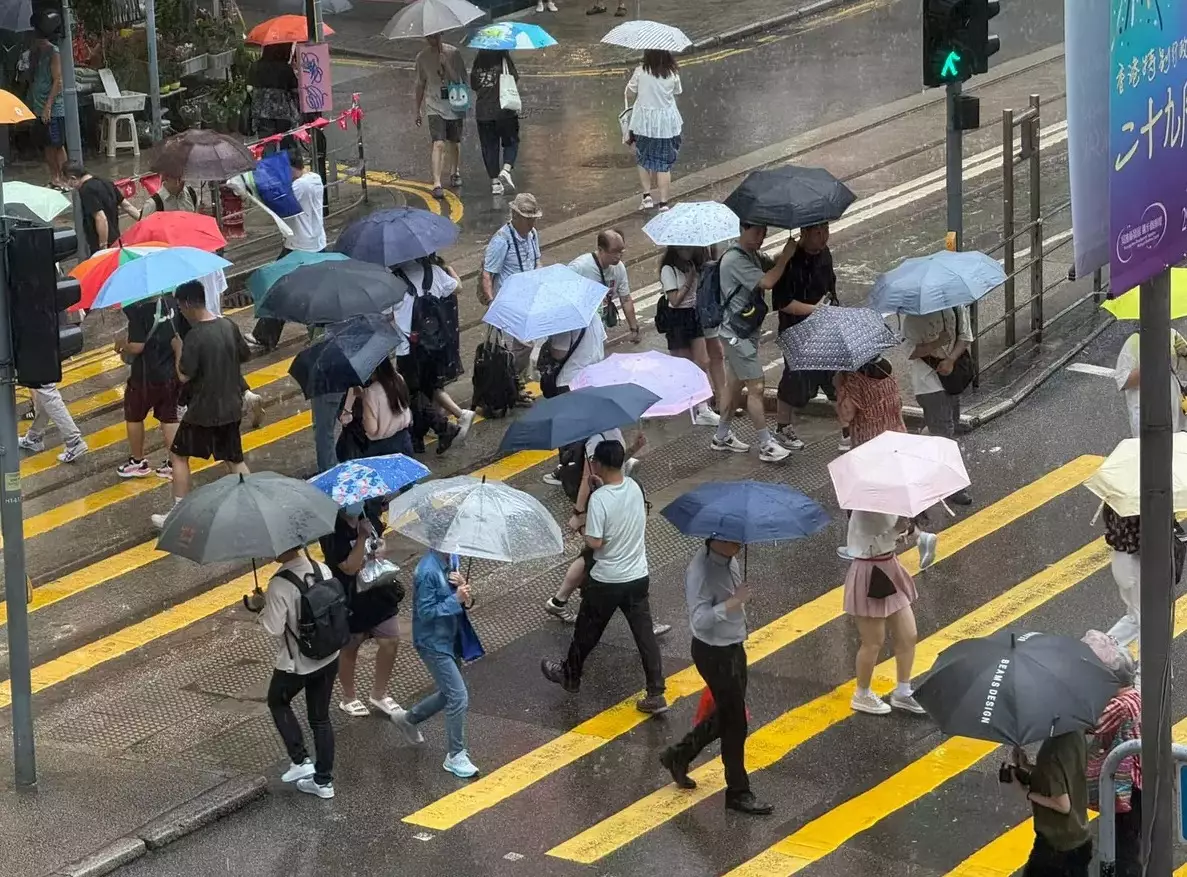
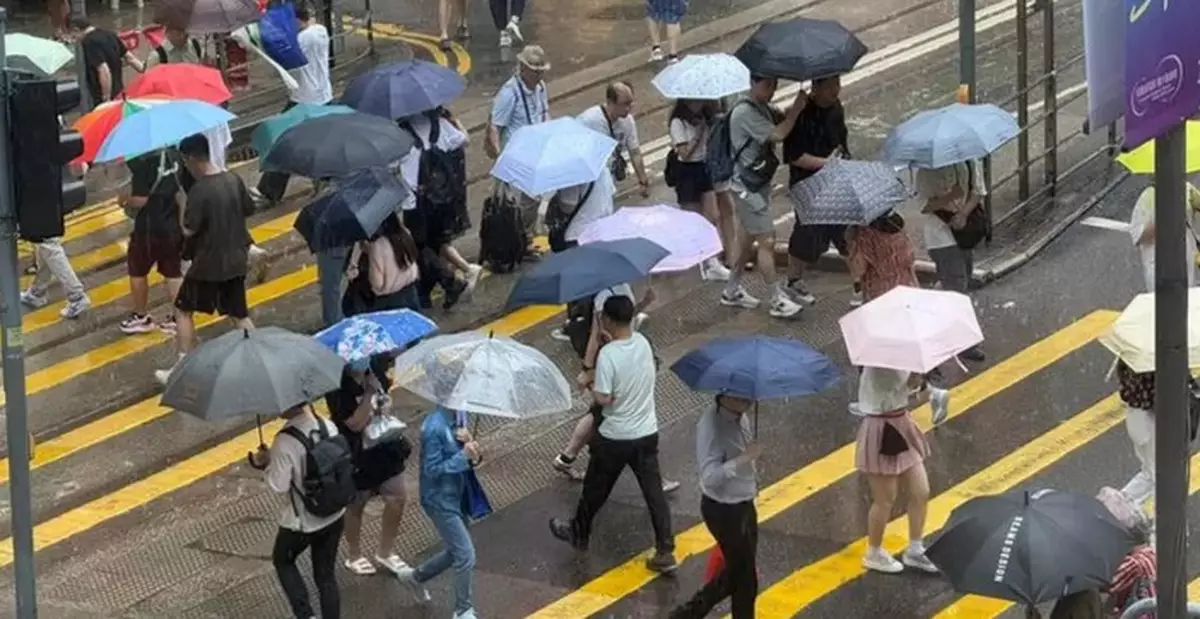
Rainstorm in Hong Kong, Photo source: reference image
New Measures to support development of Hong Kong's fixed income and currency market and offshore Renminbi business
The following is issued on behalf of the Hong Kong Monetary Authority:
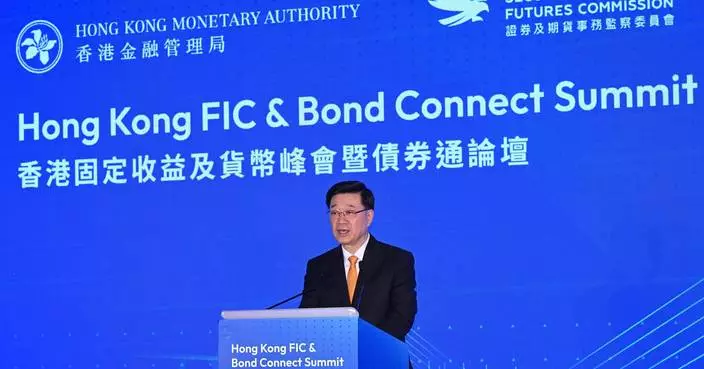
The Hong Kong Monetary Authority (HKMA), the People's Bank of China (PBoC) and the Securities and Futures Commission (SFC) announced today (July 7) a series of new measures to deepen the financial co-operation between Hong Kong and the Chinese Mainland, support the development of Hong Kong's fixed income and currency (FIC) market and offshore Renminbi (RMB) business, and reinforce Hong Kong's position as an international financial centre. These measures include:
- supporting the collaboration of financial infrastructure institutions in Hong Kong and Chinese Mainland to develop a Hong Kong FIC electronic trading platform;
- further enhancing and expanding the Southbound Bond Connect, including increasing the annual investment quota, developing bond repurchase (repo) business using Southbound Bond Connect bonds as collateral, expanding the product scope to cover products with HKD bonds and RMB bonds as underlying assets, connecting to the Macao bond market, and enhancing the management of Southbound Bond Connect market makers;
- supporting the inclusion of onshore bonds issued by the Ministry of Finance and Mainland policy banks that are held under Northbound Bond Connect as eligible margin collateral at the HKFE Clearing Corporation and the SEHK Options Clearing House;
- enhancing the Northbound Bond Connect operational arrangement to extend the settlement time and improve efficiency;
- further enhancing the Swap Connect to include the interbank Seven-Day Fixing Depository-Institutions Repo Rate (FDR007) as a reference rate; and
- supporting the launch of Hong Kong Exchanges and Clearing Limited Five-Year China Government Bond Futures in Hong Kong on August 3.
Building on this, the HKMA also announced five measures to support the development of the offshore RMB market and strengthen Hong Kong's role as a leading offshore RMB business hub, thereby enabling greater outreach to other regions and enhancing support for the real economy. These measures, underpinned by strong support from the PBoC, address industry suggestions for developing the offshore RMB market. These include:
- increasing the size of the HKMA's RMB Business Facility from RMB200 billion to RMB500 billion and extending tenors to include nine-month, two-year and three-year, effective on July 10;
- exploring to introduce a tendering mechanism of seven-day offshore RMB liquidity;
- exploring the issuance of offshore RMB short-term debt instruments to support the building of the offshore RMB yield curve;
- promoting the development of a bilateral currency transaction framework between Indonesian Rupiah and offshore RMB; and
- issuing good practices to banks to promote RMB adoption.
The Chief Executive of the HKMA, Mr Eddie Yue, said, "We are pleased to announce this series of measures, which will further deepen cross-boundary financial co-operation, strengthen financial market connectivity between Hong Kong and the Chinese Mainland, promote the development of Hong Kong's fixed income and currency market, and reinforce Hong Kong's position as an offshore RMB business hub and international financial centre. These measures are the result of concerted efforts of the HKMA, the PBoC and other relevant financial regulatory authorities in Hong Kong and on the Chinese Mainland. We will continue to work closely with the relevant regulatory authorities, the industry and financial infrastructure institutions to ensure timely and smooth implementation of the measures, and explore further enhancements."

Source: AI-found images