LA GUAIRA, Venezuela (AP) — When the high-rise where Noel Márquez lived with his family crashed to the ground and burst into flames in Venezuela's twin earthquakes, Márquez, who happened to be at his girlfriend’s apartment, raced home and called out for his mother, grandparents and siblings. Only his 17-year-old brother, his legs pinned under columns that required heavy machinery to lift, responded.
Márquez and his father, who also survived, spoke through layers of concrete, hearing Leonel suffer, shout for help and inhale suffocating smoke as he waited for a crane to remove the columns crushing him. But it never came. After several hours, Leonel's cries gave way to silence, Márquez said.
Click to Gallery
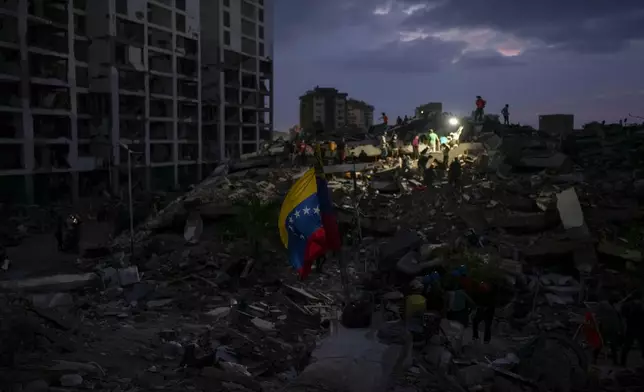
Residents and rescue workers search through the rubble of buildings damaged in the earthquakes that struck La Guaira, Venezuela, Thursday, July 2, 2026. (AP Photo/Matias Delacroix)
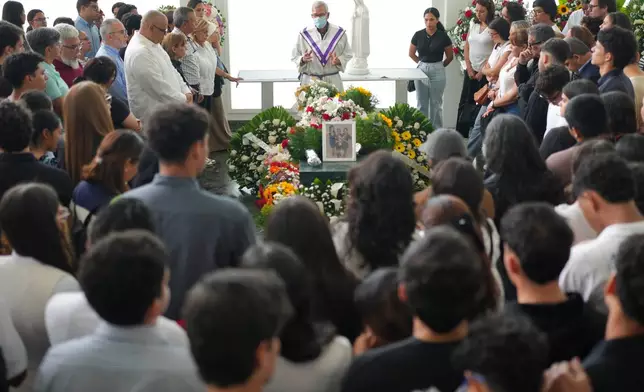
Relatives and friends attend the funeral Mass for Daniela Mora, her mother, Maria Cruz, and her grandmother, Judith Padron, who died when their apartment building collapsed during the earthquake in the San Bernardino neighborhood of Caracas, Venezuela, Saturday, July 4, 2026. (AP Photo/Matias Delacroix)
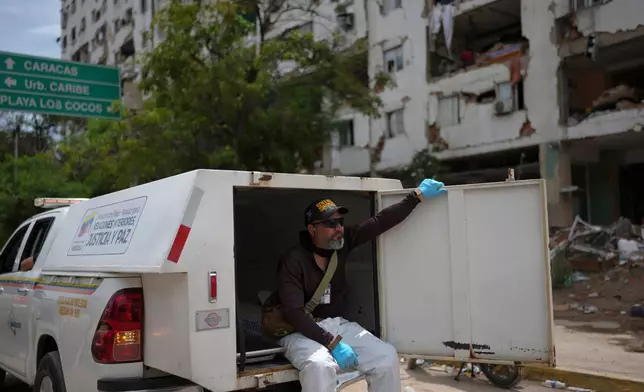
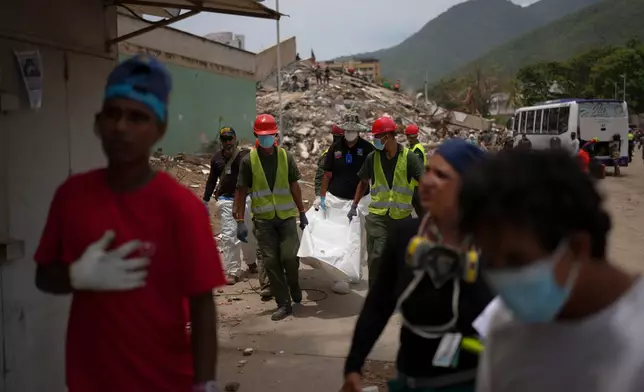
Forensic technician Joel Mirabal rides through the area struck by the earthquakes collecting bodies recovered from the rubble in La Guaira, Venezuela, Tuesday, June 30, 2026. (AP Photo/Matias Delacroix)
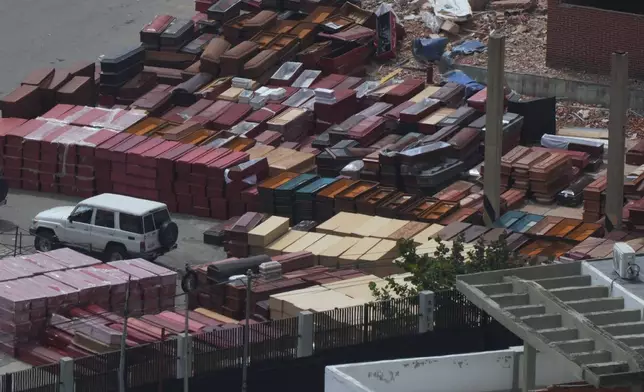
Coffins are stacked at the seaport where forensic workers sort the bodies of earthquake victims in La Guaira, Venezuela, Saturday, July 4, 2026. (AP Photo/Ariana Cubillos)
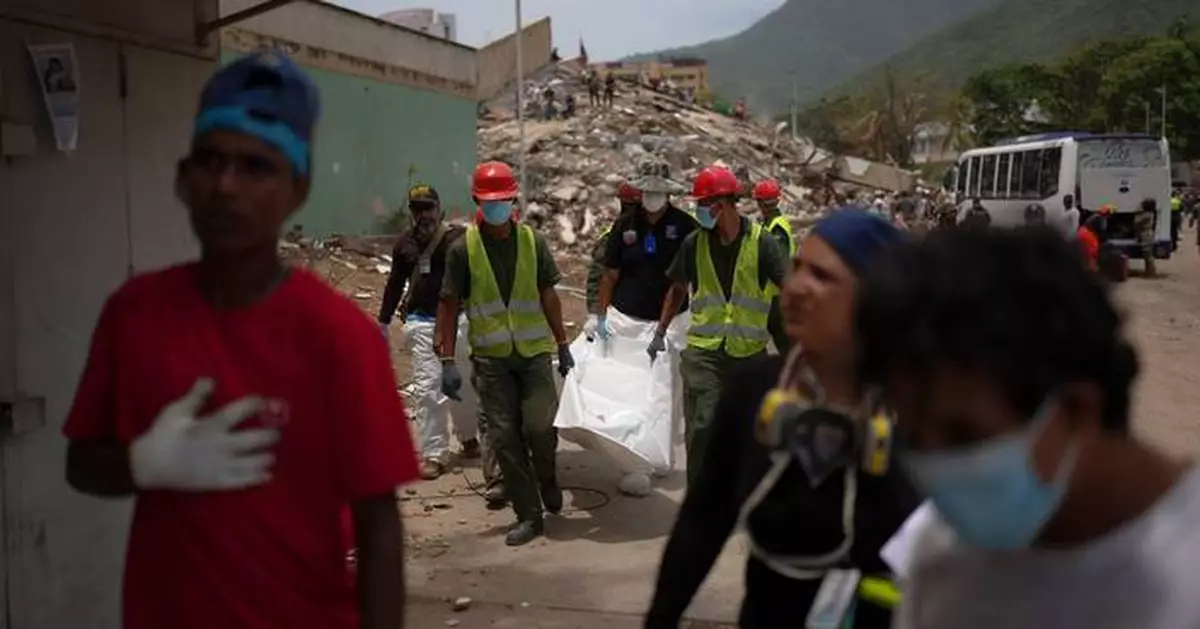
Rescue workers and forensic technician Joel Mirabal, back left, recover the body of an earthquake victim in La Guaira, Venezuela, Tuesday, June 30, 2026. (AP Photo/Matias Delacroix)
But even that, terrible as it was, was not what disturbed him the most. The worst, Márquez said, was trying to recover his families' tangled remains with little more than his bare hands and a saw. He sliced off limbs to free the corpses of Leonel and his mother but was forced to abandon his sister, who was eight-months' pregnant, grandmother and other relatives beneath the ruins — and with their bodies, the hope that if he couldn't save them, he could at least give them proper burials.
“It’s unfair. It’s inhumane, everything that is happening,” 26-year-old Márquez said from the overflowing makeshift morgue at La Guaira port. "We couldn’t get my brother out because we didn’t get a response from the state ... and after 11 days, we are still requesting a crane.”
Márquez is one of countless Venezuelans who, after days of torment, has been left alone to search, if not for signs of life, then for loved ones’ remains — and for some semblance of closure.
International rescue teams, quietly acknowledging the possibility that no more victims would be found alive after 12 days under the rubble, are preparing to depart. Local authorities are turning their focus to finding shelter for thousands of displaced people. But the recovery of the dead has become a pressing, and horrifying, duty for Venezuelans still missing their loved ones.
“I found her hand, but her torso is crushed," said Norely Rodríguez, trying to get her 5-year-old daughter out of the ruins in the hardest-hit state of La Guaira. “I want to see if I can get her out whole."
Many say that just as they were left without government help to rescue survivors in the immediate aftermath of the quakes, so too are they now under-equipped to unearth their dead nearly two weeks later.
The more time passes, the more gruesome the recovery process becomes, said William Gomez, a firefighter in La Guaira. “It has been difficult because the bodies are already in an advanced state of decomposition, decomposed to such an extent that many times when we try to remove them, they fall apart.”
Authorities announced that the death toll rose on Monday to 3,535, with another 16,740 people injured. Beyond that is an untold toll: those whose bodies have yet to be found. There are no official statistics on how many people are buried under the rubble, but more than 30,000 reports of missing people have been sent to a website set up by the Venezuelan opposition.
Over the weekend in La Guaira, no government civil defense crews or security forces could be seen helping families dig. The vast majority of those working their way through the wreckage were civilians using their bare hands or rudimentary tools like pickaxes and shovels, occasionally accompanied by firefighters and Mexican rescuers who remain in the country.
There are 1.2 million tons of debris in the most affected parts of La Guaira, according to the United Nations Development Program.
“We are the ones helping ourselves: our family. Nobody else helps us except for a few volunteers,” said Yeikhary Urbina, who found the bodies of her mother and brother on Saturday suspended under piles of concrete, seemingly locked in an embrace.
In several WhatsApp chats on Monday, neighbors who could no longer wait for authorities to help them recover their dead discussed pooling their own money to rent a crane — for the price of $11,500, in one case.
Search teams from Italy, Argentina, Spain and other countries have already returned home. The Venezuelan government has not yet called off the search for survivors. But officials have pivoted from promoting heroic rescue stories on social media to announcing reconstruction plans under a program called Venezuela Reborn.
“Venezuela is entering a process of infrastructure recovery, of housing recovery,” acting President Delcy Rodríguez told state TV on Saturday. She has fiercely rejected widespread criticism that her government reacted too slowly to the disaster and accused media outlets of spreading misinformation.
Families with missing loved ones face fresh horrors as they scour the rubble. Some have searched for days to find corpses of loved ones so decomposed, they cannot tell them apart.
Others have dug and dug only to find nothing at all. “She kept asking, ‘Why did God play this trick on me?’" Geraldine Perdomo said of her sister, who was feverishly clawing at the ruins of her home for anything that would confirm the death of her two daughters.
And some, like Márquez, have agonized for days to extract their loved ones' bodies only to lose them again in the chaos of the impromptu morgue beneath grain silos at the La Guaira port, where a near-constant stream of bodies has been arriving since the June 24 quakes.
Márquez said that on Sunday, a week after delivering their corpses, he heard authorities had located his mother and grandfather. But Leonel, he said, "is still missing because of the negligence here.”
He and many other residents of the country’s public housing blocks — built years ago for low-income families by former socialist leader Hugo Chávez — say their complaints of negligence long predate this disaster. High-rise buildings housing hundreds of apartments pancaked in the earthquakes, reviving questions about substandard construction.
Alexander, a 42-year-old police officer who lived in one of the towers, was trembling with fury at the government on Sunday — for not addressing what he said were long-running resident concerns that his concrete housing complex was shoddily constructed, for not sending rescue teams in time to save his wife and three daughters, and now, for not delivering heavy machinery to help him recover their bodies.
"Not a single person from the government was here," he said, requesting to be identified only by his first name because, as a government employee, he feared retaliation for criticizing authorities.
After 11 days of searching, he reached the last missing member of his family — his 12-year-old daughter, her corpse decomposed but intact.
“She was waiting for me to pull her out,” he said, cradling the black plastic body bag in his arms.
DeBre reported from Buenos Aires, Argentina.
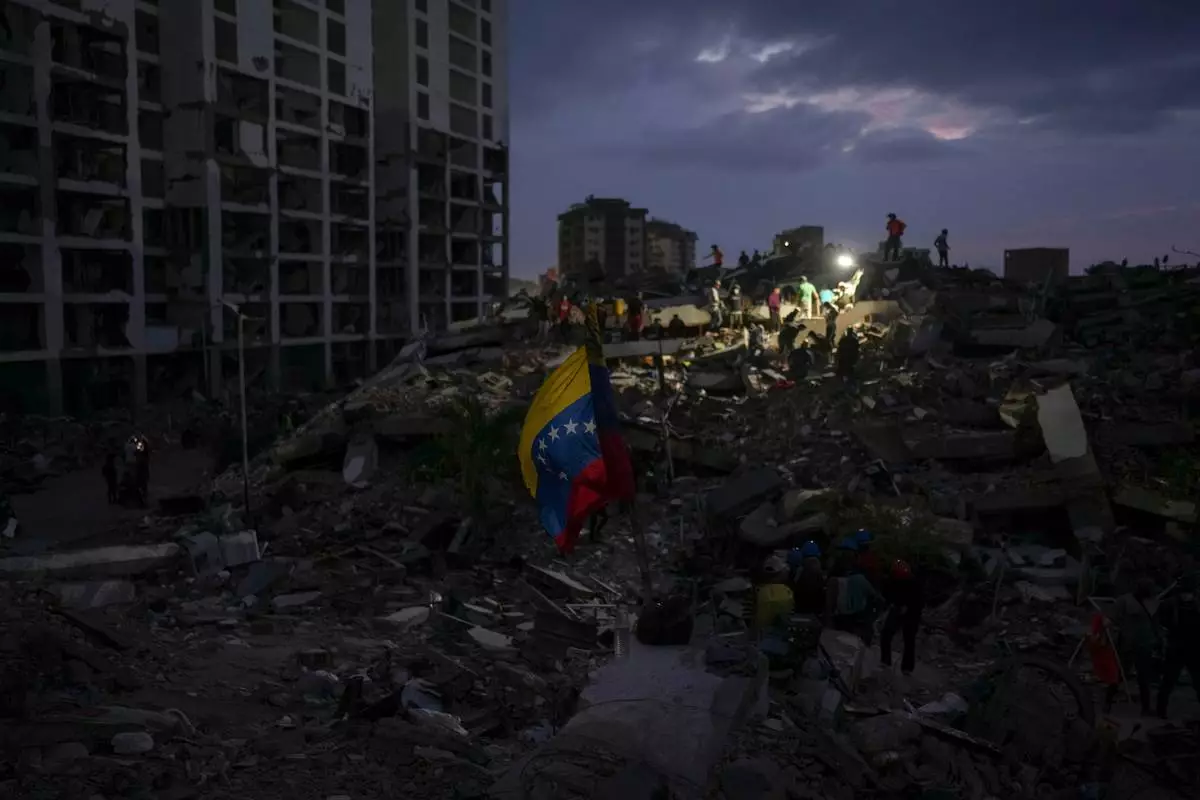
Residents and rescue workers search through the rubble of buildings damaged in the earthquakes that struck La Guaira, Venezuela, Thursday, July 2, 2026. (AP Photo/Matias Delacroix)
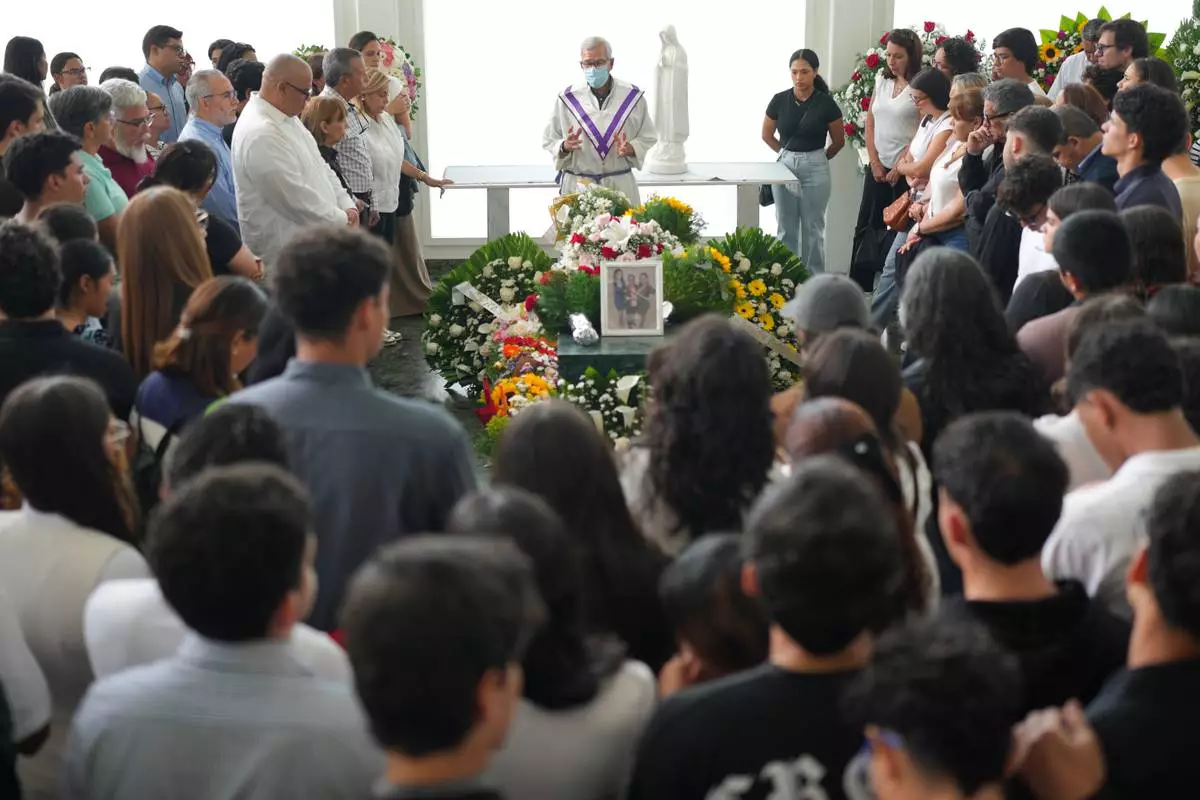
Relatives and friends attend the funeral Mass for Daniela Mora, her mother, Maria Cruz, and her grandmother, Judith Padron, who died when their apartment building collapsed during the earthquake in the San Bernardino neighborhood of Caracas, Venezuela, Saturday, July 4, 2026. (AP Photo/Matias Delacroix)
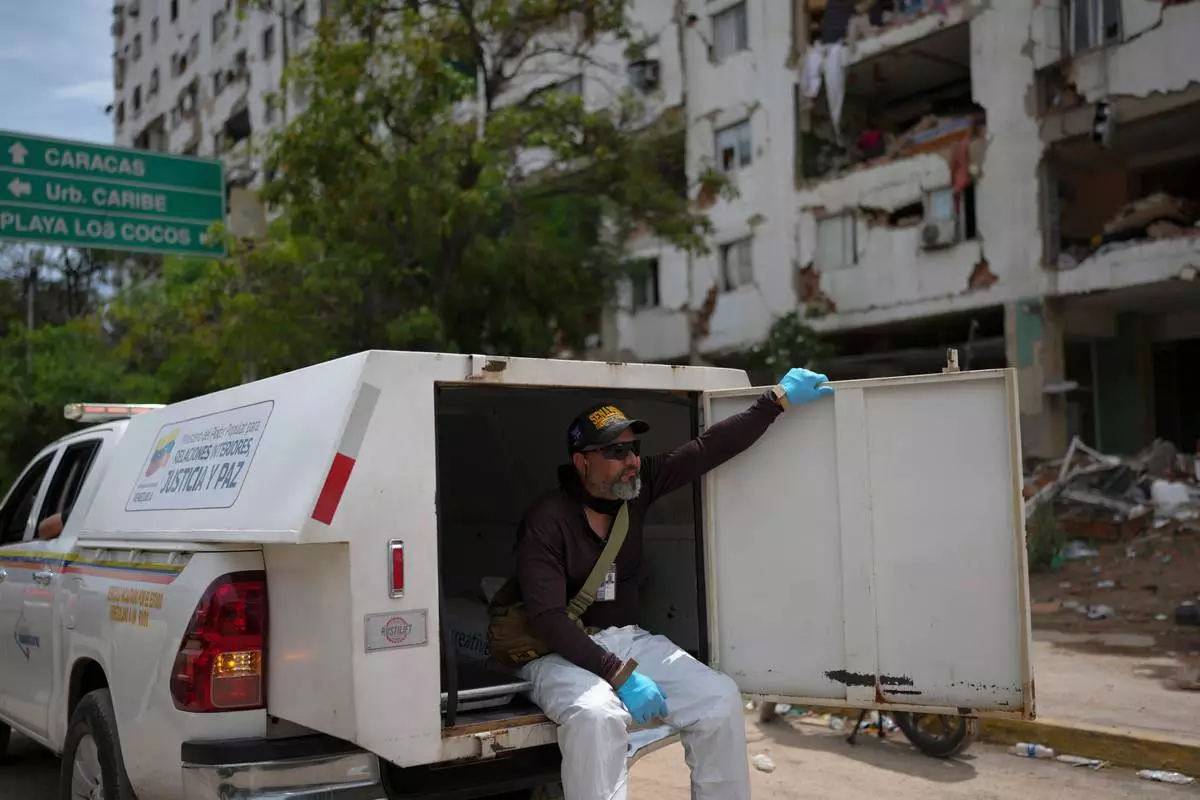
Forensic technician Joel Mirabal rides through the area struck by the earthquakes collecting bodies recovered from the rubble in La Guaira, Venezuela, Tuesday, June 30, 2026. (AP Photo/Matias Delacroix)
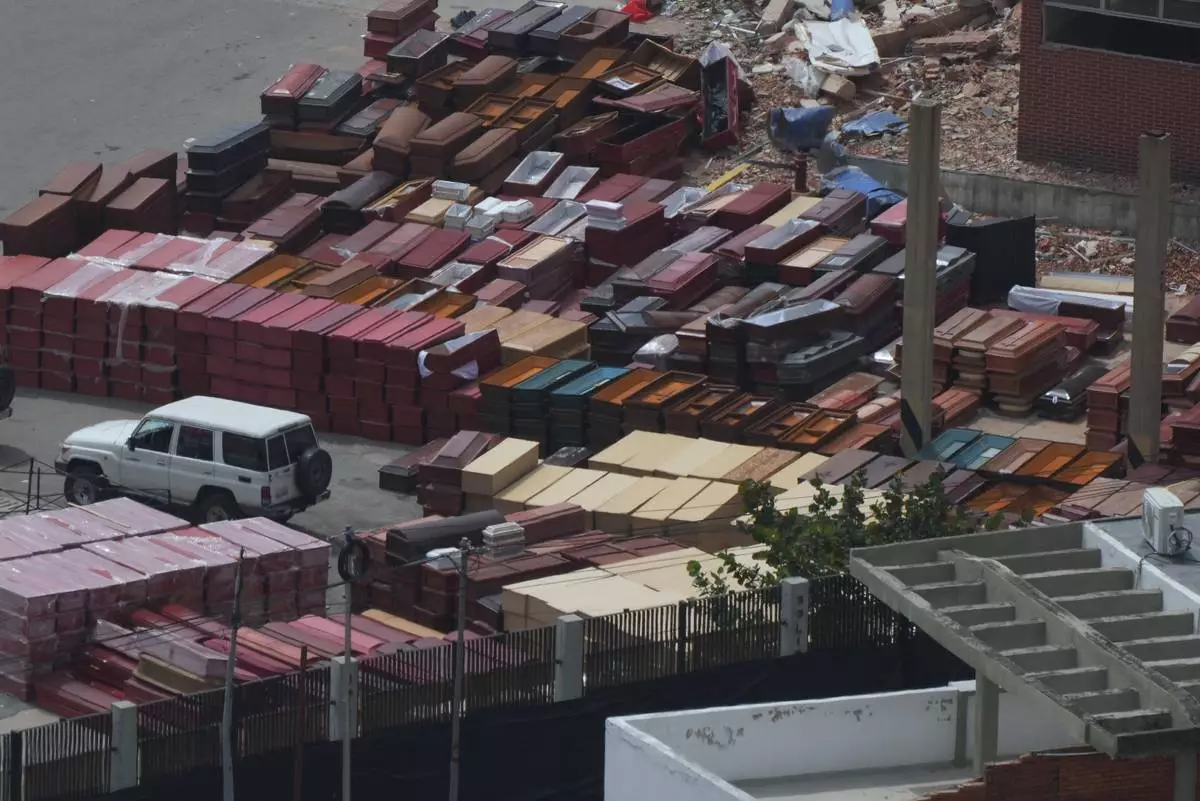
Coffins are stacked at the seaport where forensic workers sort the bodies of earthquake victims in La Guaira, Venezuela, Saturday, July 4, 2026. (AP Photo/Ariana Cubillos)
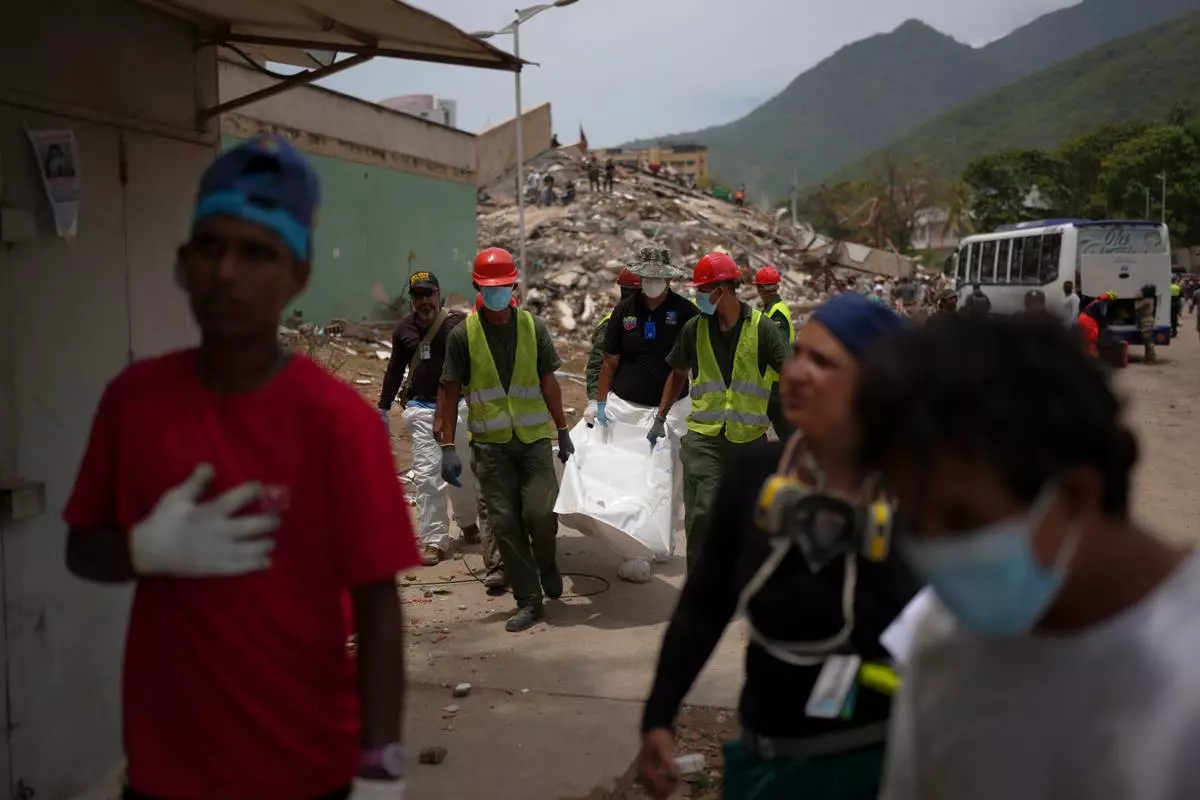
Rescue workers and forensic technician Joel Mirabal, back left, recover the body of an earthquake victim in La Guaira, Venezuela, Tuesday, June 30, 2026. (AP Photo/Matias Delacroix)
A weeklong preliminary hearing for the man accused of killing conservative activist Charlie Kirk is underway in Utah.
Prosecutors are seeking to convince a state judge this week that they have enough evidence against 23-year-old Tyler Robinson to proceed to a trial.
Robinson is charged with aggravated murder in the assassination of Kirk on the Utah Valley University campus last September. Kirk’s parents and widow, Erika Kirk, were in the courtroom for the first time, along with Donald Trump Jr., President Donald Trump’s son.
The hearing marks the most significant presentation of evidence in the case so far. After the hearing concludes, state District Judge Tony Graf must determine if the case should proceed.
Here's the latest:
State District Judge Tony Graf has placed the hearing on a 15-minute afternoon break.
Former State Bureau of Investigation Agent David Hull will return to the witness stand after the break.
State District Judge Tony Graf is considering several things when deciding whether graphic videos of the shooting and other evidence should be “published,” a legal term that means shown in court.
In some cases, he has found that videos can be shown in court and on the livestream of the hearing. In other cases, he is allowing video to be introduced as evidence but says it can’t be shown in the courtroom or on the livestream.
Tyler Robinson’s defense team has argued that some of the videos may have been altered, with clips taken from longer videos. They’ve also said some evidence may violate Robinson’s due process rights in part because the people who made or edited the videos aren’t in court to testify.
But the prosecution team has generally taken the stance that the records are public and should be published in court. In some cases, they have asked that redacted versions be published.
An attorney for the press has argued that the public has the right to see the exhibits, since they will be used by the court to decide whether the case proceeds.
The judge is also considering whether some of the video or written evidence is so prejudicial that it would make it hard to find impartial jurors if the case goes to trial.
David Sturgill with the Utah County Attorney’s Office is asking former State Bureau of Investigation Agent David Hull to describe the evidence he collected during the shooting investigation.
Hull says phone tips from members of the public poured in, along with many cellphone videos of the shooting taken by people who attended the event. Prosecutors want to present some of those videos, including one from a woman who also wrote a statement confirming she took it.
But defense attorney Kathryn Nester has objected to the video and the written statement, saying they shouldn’t be admitted in part because the woman isn’t present in court to testify about them. It’s difficult for the court to assess a witness’s reliability when the witness isn’t there to be cross-examined, Nester says.
State District Judge Tony Graf says the evidence is allowable under a rule governing “reliable hearsay.”
The spelling of David Hull's last name has been corrected
Defense attorney Kathryn Nester asked former Utah Valley University police Officer Chris Bagley about security plans, body camera footage and any evidence found on the day Charlie Kirk was shot.
Bagley said he wasn’t given any tactical or operational plans before the event.
After the shooting, Bagley looked on the roof of the Losee building, but says he didn’t find any spent casings at that point. His body camera stopped recording while he was on the roof.
“I think my battery died. I don’t know,” Bagley says. He didn’t go back to the roof once his body camera was charged because it was too chaotic, he said.
He has about 27 minutes of body camera footage from that day, Bagley said.
Hull, who now works for the Utah Department of Public Safety, says he investigated major crimes when he worked for the State Bureau of Investigation.
He explained how SBI helps other law enforcement agencies process crime scenes and investigate after serious incidents.
Hull says he wasn’t familiar with Charlie Kirk or Utah Valley University before he was asked to help with the shooting investigation. He was eventually tasked with leading the investigation.
Former Utah Valley University police Officer Chris Bagley is done testifying.
David Hull, a former Utah State Bureau of Investigation agent, is called to the stand.
Court is back in session for Tyler Robinson’s preliminary hearing after an hourlong lunch break.
Defense attorney Kathryn Nester is expected to continue her cross-examination of former Utah Valley University police Officer Chris Bagley.
Television crews, photographers and writers are camped outside the Fourth Judicial District Courthouse in Provo, Utah.
Seats inside the courtroom are limited, so many members of the press are covering Tyler Robinson’s preliminary hearing from the sidewalks outside. They’re watching the building entrances to see who is coming and going, hoping for any opportunity to interview those involved with the case.
Security is tight, and surveillance teams can be seen on rooftops. A drone buzzes overhead occasionally.
Charlie Kirk’s parents and his widow, Erika Kirk, are at the hearing today. So is Donald Trump Jr. and far-right influencer Jack Posobiec.
Robinson’s parents have also been attending the hearing.
The judge has called a break for lunch. Tyler Robinson’s preliminary hearing will resume after the hourlong break.
Utah is an open carry state, former Utah Valley University police Officer Chris Bagley told defense attorney Kathryn Nester.
Utah state laws allow adults to carry guns openly or conceal them without a permit, though there are restrictions for people ages 18 to 20.
There are some exceptions at public colleges, however. Utah Valley University says it follows state law and allows gun owners to carry a concealed firearm if they have a permit.
Nester is questioning Bagley about the report he wrote after the shooting, including his observation about finding an empty pistol holster on the ground after the crowd fled.
Bagley acknowledged that he never took custody of the holster and doesn’t know if it was ever fingerprinted.
Defense attorney Kathryn Nester is cross-examining former Utah Valley University police Officer Chris Bagley.
She asked Bagley if he ever attended a meeting to discuss how officers would keep people safe on the day of the shooting. Bagley said he did not.
Bagley said there were six officers working that day. Thousands of people attended the event.
There were no metal detectors being used to screen the crowd, and no drones being used for security, Bagley said.
He also said there were no law enforcement officers on the roof, stairway or walkway when he arrived to work that day.
Former Utah Valley University police Officer Chris Bagley says he saw a disturbance in the gravel rooftop of the Losee building that looked like a “sniper pad,” where someone might have been lying in a position that would allow them to shoot a weapon.
The disturbance included spots that looked like they were made by two elbows and two knees, as well as a spot where someone might have laid a gun down. Bagley says he put police tape around the scene to keep people from going near it.
He then realized that they probably did not have a shooter in custody, Bagley said, and so called to have the building searched and secured.
Bagley also went to watch some surveillance video, which showed an individual run to the edge of the roof and drop down. He found a shoe print in the grass on the north-east side of the building, he said.
Court is back in session after a 15-minute break. Judge Tony Graf is talking to attorneys about how exhibits are being handled in court.
The three of them walked out of the courtroom about a minute after former Utah Valley University police officer Chris Bagley started testifying about Kirk’s arrival on campus the day he was shot.
Kirk’s mother, Kathryn Kirk, clutched a pocket-sized packet of tissues. She had been listening to the proceedings with her head bowed and eyes closed. Widow Erika Kirk had been leaning her head on the shoulder of a blonde woman sitting to her right.
Defendant Tyler Robinson has meanwhile been sitting quietly between his attorneys at the defense table, looking at the exhibits on a monitor and occasionally taking notes. He’s wearing a gray suit, a pale pink shirt, and a tie, with his wrists shackled to a chain around his waist.
Before a 15-minute recess Monday, former Utah Valley University police officer Chris Bagley said that shortly after the shooting last September, he ran up a public staircase to reach the roof of the Losee Center building, which he knew had a clear line of sight to the location where Charlie Kirk was sitting when he was shot.
On the roof, he spotted something “that looked out of place to me,” Bagley said. It was a red-and-black screwdriver.
Bagley says he could see the right side of Charlie Kirk as the conservative activist spoke on campus.
Kirk was answering a question when Bagley heard a gunshot, he said, and chaos erupted.
People got up and started running.
Within a few moments, Bagley says he heard officers over the radio say that someone was in custody, so he began assessing the crowd for injuries.
Then he began working to “preserve the crime scene,” Bagley said.
He spotted a pistol holster that had been left on the ground, but knew that he had heard a rifle shot rather than a pistol shot, Bagley added.
Bagley says that on the day of the shooting, he got to work around 11 a.m., and his job was to secure an area near a campus building called the Hall of Flags.
Bagley is using aerial drone photos to describe the layout, including whether there is a clear line of sight or view between different places on campus and the courtyard where Charlie Kirk was shot.
Former Utah Valley police officer Chris Bagley is describing the university campus where Charlie Kirk was shot.
He is using a drone image of Utah Valley University taken in December to set the scene, including a parking garage and campus buildings.
But Robinson’s defense team says he hasn’t adequately shown that he took the photo or that it accurately depicts the campus.
State District Judge Tony Graf says Bagley has first-hand knowledge of the area, so he is allowing it to be used as evidence.
They are a few rows behind Kirk’s parents and his widow, Erika Kirk, who is watching the proceedings with a furrowed brow.
Prosecutors have called Spanish Fork Police Officer Chris Bagley to the stand. Bagley was an officer at Utah Valley University when Charlie Kirk was shot there last year.
Trump Jr. was among the conservative political figures who spoke at Kirk’s memorial service last year.
Robinson, 23, is charged with aggravated murder in Kirk’s assassination. Robinson’s attorneys have not commented on his guilt or innocence, and the preliminary hearing will determine whether there is enough evidence to allow the criminal case to proceed.
Chief Deputy Utah County Attorney Chad Grunander told state District Judge Tony Graf that the exhibits will include several videos of the Sept. 10, 2025, shooting, which occurred as Kirk was addressing a crowd of thousands at Utah Valley University.
The videos will be shown on a courtroom monitor that is being set up so that it won’t be captured by the press videographer in the courtroom, Graf said.
The judge says people in the courtroom need to show proper decorum during the preliminary hearing.
Spectators aren’t allowed to display pins, clothing, photos or other visible demonstrations of support for anyone involved in the hearing. That includes things like shaking heads, Graf said.
Decorum rules like these are common during court proceedings.
Most witnesses will also be kept out of the hearing until it is time for them to testify, Graf said.
The hearing will run from 9 a.m. to 5 p.m. MT each day, with two 15-minute breaks and a one-hour lunch break at noon. It is expected to last a week.
State District Judge Tony Graf is going over his rules for the hearing, including some limitations on the use of technology such as cellphones and laptops.
Graf says the court has the duty to protect and uphold the rights of Tyler Robinson, the man accused of killing the Turning Point USA founder, and those of Kirk’s widow, Erika Kirk.
Erika Kirk has arrived at the Utah courthouse for the preliminary hearing of the man accused of killing her husband, Charlie Kirk.
Three men escorted her into the building several minutes before the hearing was expected to begin.
Charlie Kirk’s parents, Robert and Kathryn Kirk, arrived separately.
Armed officers with binoculars are on the roof of the courthouse where Tyler Robinson faces a key hearing in the fatal shooting of Charlie Kirk.
More officers are on the ground outside the courthouse. A drone was also flying overhead. Robinson’s defense team arrived at Utah County court with a dolly to move boxes of documents.
The focus of the hearing is whether there’s enough evidence to send Robinson to trial and whether the death penalty will be an option if there’s a conviction.
Shelly Juber, who lives nearby in Orem, got one of the 14 courtroom seats set aside for the public.
“I’m a trial watcher, true-crime enthusiast. … My grandson’s girlfriend was there the day it happened,” she said, referring to Utah Valley University.
For Tyler Robinson to be found guilty at trial, prosecutors will have to prove without any reasonable doubt that he killed Kirk. But the criteria for this week’s preliminary hearing are less strict.
Mark Kouris, who was a prosecutor and state judge in Salt Lake City, says there’s a low threshold for prosecutors to show the case against Robinson should proceed to trial.
“Effectively, it’s 51% — there’s a 51% chance they did it,” Kouris, now an adjunct professor at the University of Utah’s S.J. Quinney College of Law, said in an interview. “This standard is extremely low, and the chances of them not getting through it are, quite frankly, almost nothing.”
Charlie Kirk’s family thanked supporters for their kindness and prayers ahead of Monday’s preliminary hearing.
“Every court proceeding serves as a painful reminder of his death,” Erika Kirk, his widow, said in a statement posted on X, “and the loss that has irrevocably impacted our lives and the lives of his children.”
She added that the public outpouring “has sustained us during the darkest days of our lives.”
The statement was posted on behalf of Kirk’s parents, Robert and Kathryn, his widow and his sister Mary.
“Out of respect for the judicial process, we will not be commenting further at this time,” the brief statement said.
Erika Kirk forgave defendant Tyler Robinson during her husband’s memorial service in September.
“My husband, Charlie, he wanted to save young men, just like the one who took his life,” she said as she struggled to hold back tears.
“I forgive him because it was what Christ did. It is what Charlie would do,” she added.
Her declaration was an outlier among prominent conservatives, including President Donald Trump, who said in September on Fox News that he hopes Robinson gets the death penalty.
Erika Kirk took the helm of Turning Point USA, the conservative youth movement that her husband co-founded, shortly after her husband’s death.
She is expected in court throughout the week with her husband’s parents, Robert and Kathryn Kirk.
State District Judge Tony Graf said recently that prosecutors violated his restrictions on talking outside the courtroom when Deputy Utah County Attorney Christopher Ballard told a media outlet his office had ample evidence to convict Tyler Robinson of killing Charlie Kirk.
Robinson’s lawyers argued the comments were intended to influence potential jurors. As a punishment, they wanted the judge to block prosecutors from seeking the death penalty.
But Graf said that was too severe, and that Ballard's comments weren’t malicious.
The judge said any potential bias issues could be addressed by expanding the jury pool or more closely questioning potential jurors when the case goes to trial.
Starting with today’s hearing, the focus of the case shifts to whether there is enough evidence for a trial and whether the death penalty is warranted, said Paul Cassell, a University of Utah law professor and former federal judge.
Cassell said evidence made public to date in court filings suggests prosecutors have “an overwhelming case.”
“This seems like the proverbial slam dunk at this stage of the case, where the only issue is whether there is a sound basis for moving forward with a trial on the merits,” he said.
A death sentence is an option in Utah only when a crime has aggravating circumstances. Prosecutors will argue in Robinson’s case that Kirk’s shooting endangered others in attendance.
Authorities have said DNA consistent with Robinson’s was found on the trigger of the rifle used to kill Kirk, the fired cartridge casing, two unfired cartridges and a towel used to wrap the rifle.
Robinson’s parents had confronted him after authorities released a surveillance photo of the suspect and details about the rifle, authorities have said. His parents convinced him to meet with a family friend, a retired sheriff’s deputy who reportedly helped arrange for Robinson to turn himself in.
Prosecutors have said Robinson left a note for his roommate, who was also his romantic partner, that read: “I had the opportunity to take out Charlie Kirk and I’m going to take it.” They also said he wrote to his roommate in a text message about Kirk: “I had enough of his hatred. Some hate can’t be negotiated out.”
Defense attorneys unsuccessfully sought to block prosecutors from using recorded statements from Robinson’s roommate during the hearing. The defense wanted the roommate to testify in person so Robinson could exercise his right to challenge the credibility of witnesses against him. Graf said the time for challenging witnesses would come later.
The proceeding will resemble a mini-trial, with prosecutors planning to offer DNA evidence linking Robinson to the suspected murder weapon, testimony from investigators, autopsy findings, witness statements and video of Kirk’s killing. They are not required to present all their evidence and can use secondhand information or hearsay.
After the hearing concludes, state District Judge Tony Graf must determine if the case should proceed.
Prosecutors need only demonstrate that there are reasonable grounds to believe Robinson killed Kirk. The standard is lower than for a trial, where prosecutors have to prove guilt “beyond a reasonable doubt.”
Charlie Kirk’s widow and parents are expected this week in a Utah court where prosecutors seeking the death penalty will argue that the man charged with killing the conservative activist should stand trial for murder.
The five-day preliminary hearing that starts today will be the first time members of Kirk’s family are in the Utah courtroom with defendant Tyler Robinson. The hearing will be livestreamed.
Robinson turned himself in after the shooting. Prosecutors allege that he also sent a text message confession to his partner and left a note saying he had an opportunity to kill one of the nation’s leading conservative voices, “and I’m going to take it.”
He has not entered a plea in the case, however.
Robinson, 23, is charged with aggravated murder in the Sept. 10 assassination of Kirk, who was addressing a crowd of thousands at Utah Valley University. His attorneys have not commented on his guilt or innocence.
▶ Read more
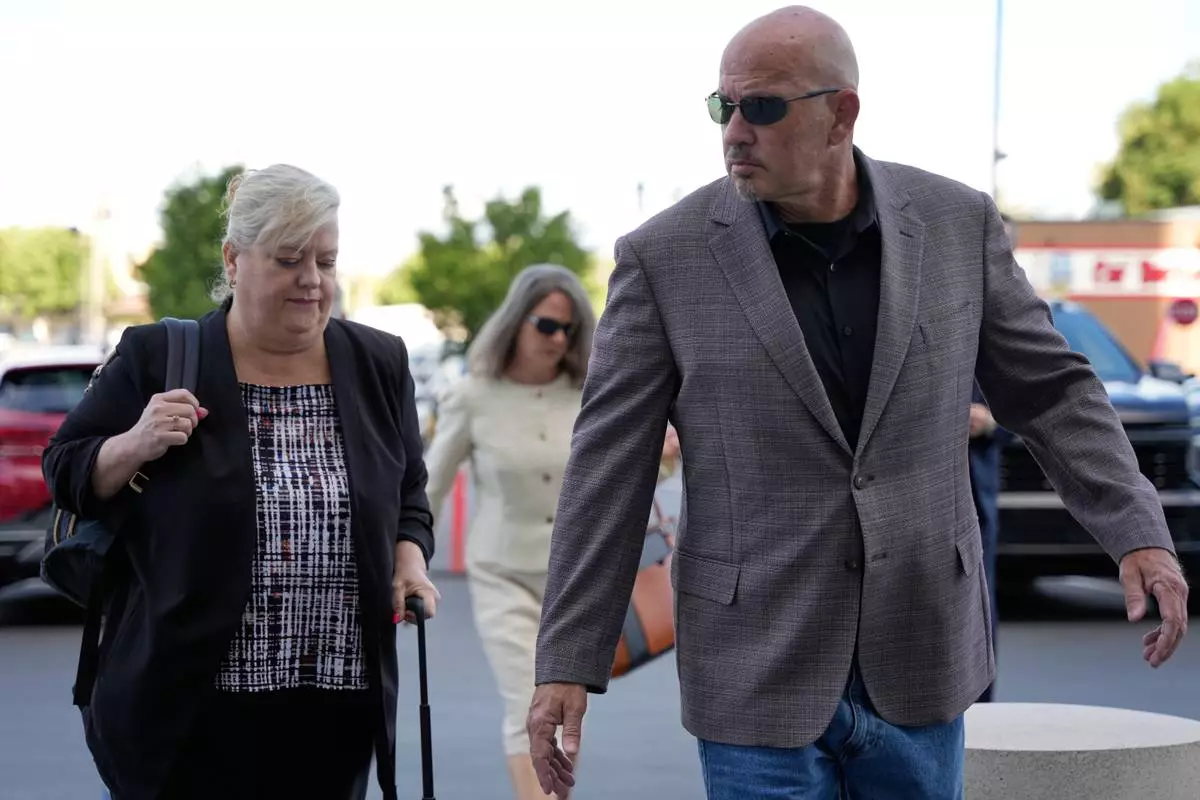
Attorney Kathryn Nester, left, arrives at the Fourth District Courthouse for a hearing for Tyler Robinson, accused in the fatal shooting of Charlie Kirk, Monday, July 6, 2026, in Provo, Utah. (AP Photo/Marielle Scott)
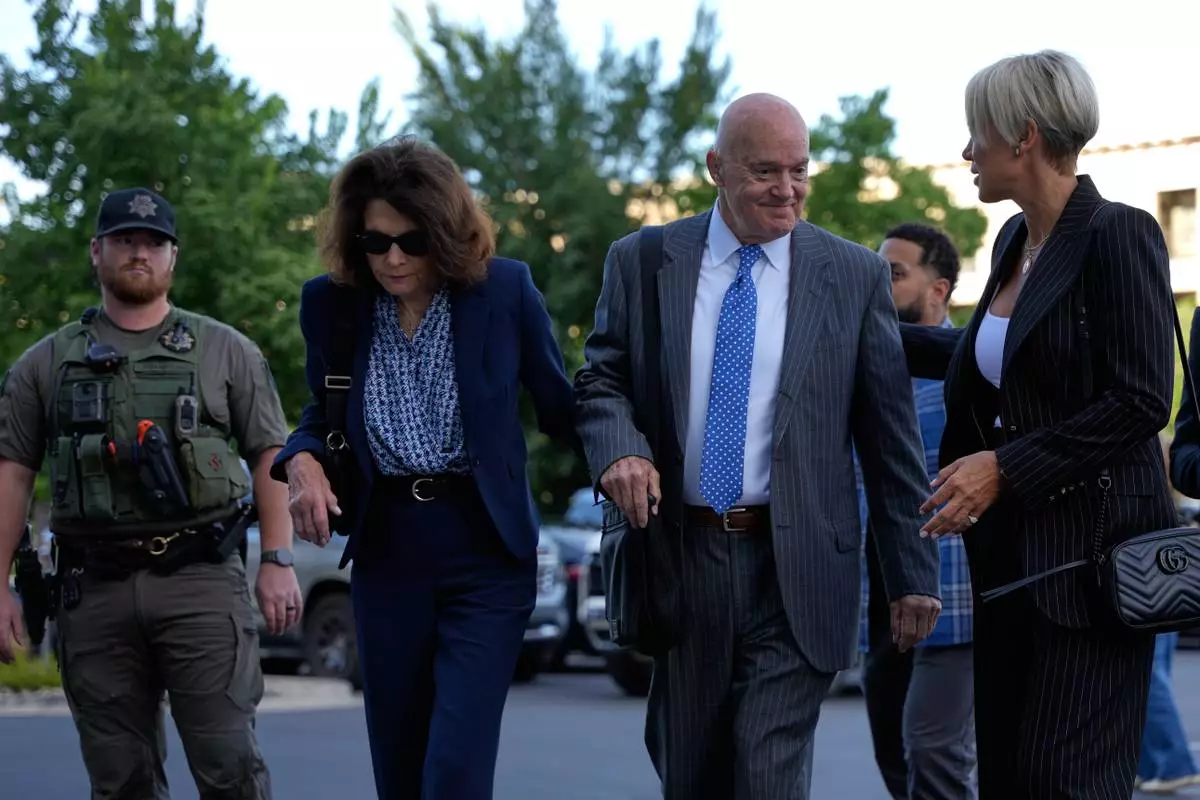
Charlie Kirk's parents, Robert and Kathryn Kirk, arrive at the Fourth District Courthouse for a hearing for Tyler Robinson, accused in the fatal shooting of Charlie Kirk, Monday, July 6, 2026, in Provo, Utah. (AP Photo/Marielle Scott)
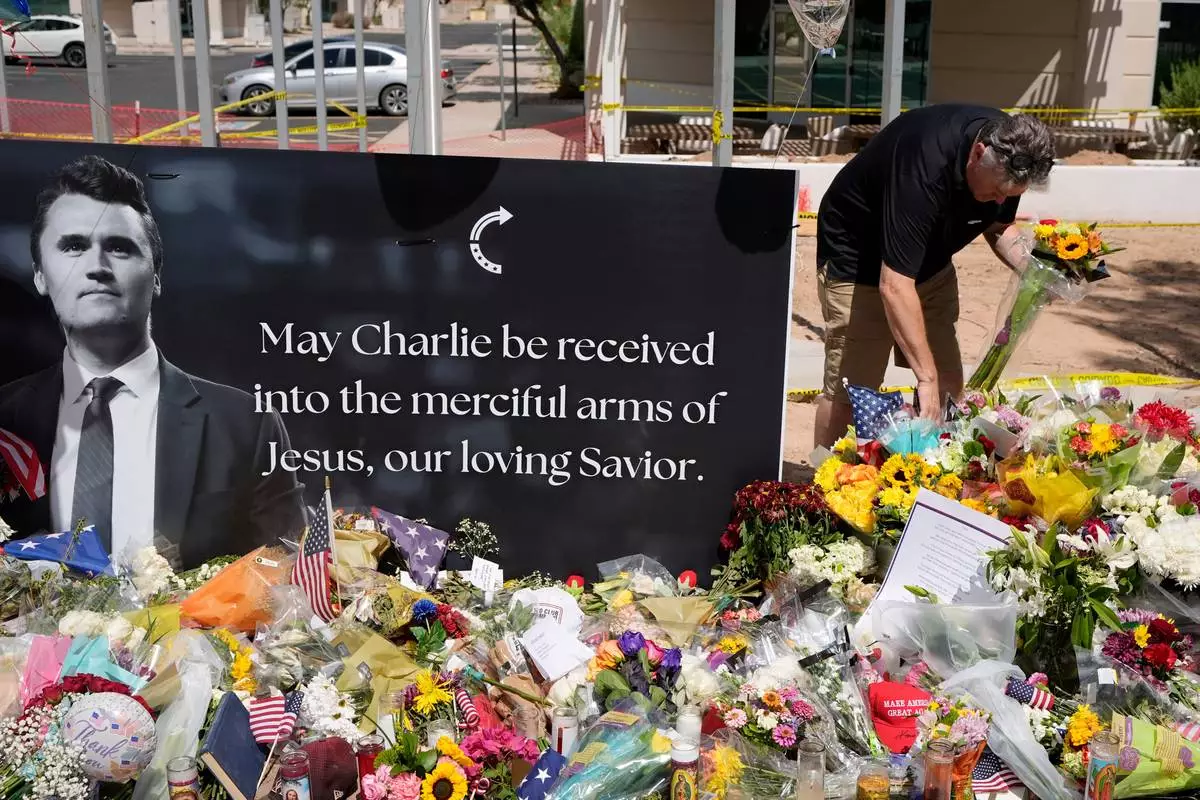
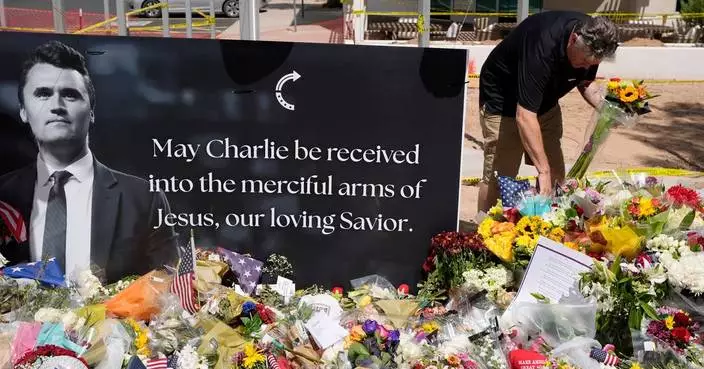
FILE - A well-wisher places flowers at a makeshift memorial set up for Charlie Kirk at Turning Point USA headquarters, Sept. 11, 2025, in Phoenix. (AP Photo/Ross D. Franklin, File)
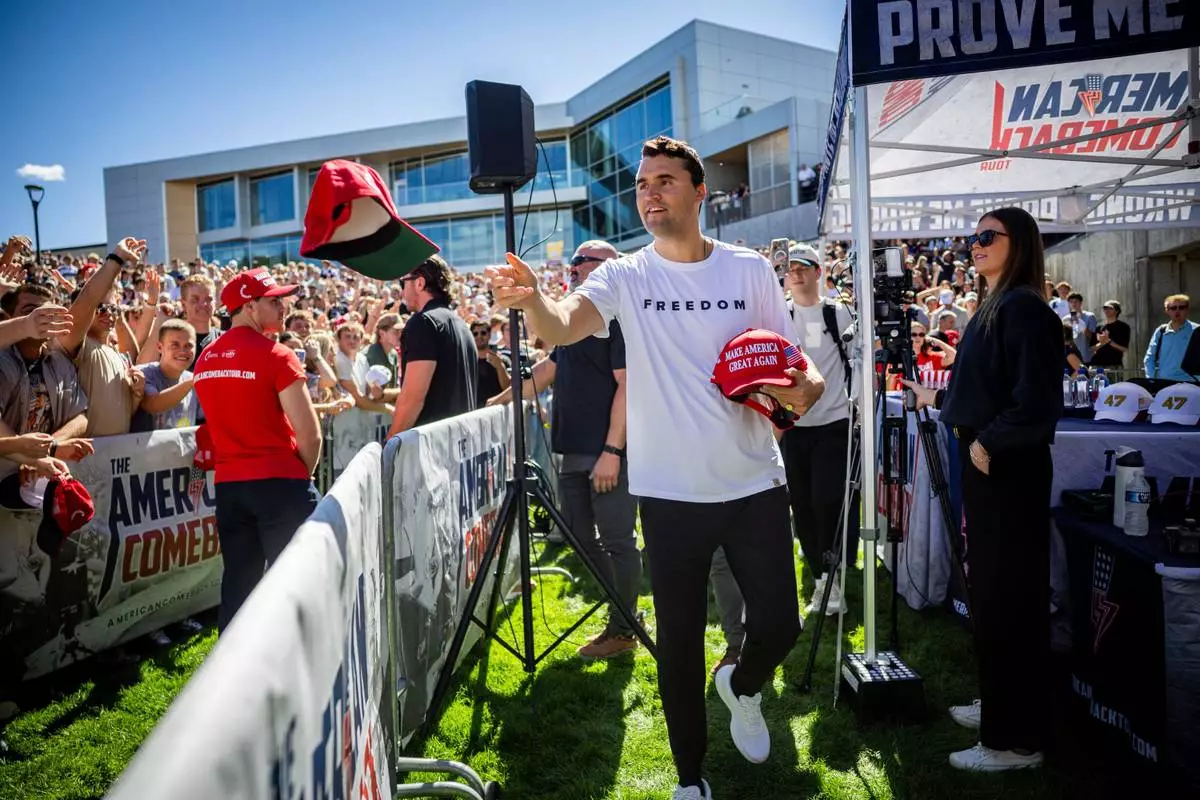
FILE - Charlie Kirk hands out hats before speaking at Utah Valley University in Orem, Utah, Sept. 10, 2025. (Tess Crowley/The Deseret News via AP, File)