NEW YORK (AP) — States across the country saw steep drops in the number of people covered by the Affordable Care Act over the past year, with Ohio and Oklahoma each losing nearly one-third of enrollees, according to new federal data that provides the first complete 50-state breakdown of sharp enrollment declines following the January expiration of enhanced subsidies.
The data, posted in late June by the Trump administration and first reported on by The Associated Press, reveals how changes in each state’s insured population led to around 2.6 million fewer Americans having Obamacare plans in February compared with the same time last year.
It captures not only how many people signed up for or were automatically reenrolled in plans in 2026, but how many paid their first monthly premiums to keep coverage, according to Cynthia Cox, a vice president and director of the ACA program at the healthcare research nonprofit KFF, who reviewed the dataset. She said it accounts for people who were retroactively removed from coverage after a nonpayment grace period ended.
“This is the first time we’ve seen state-level data that shows how much ACA marketplace enrollment truly fell,” Cox said. “It’s in line with our expectations, but it does show a very steep drop in the number of people with ACA coverage.”
Health analysts have kept a close eye on changes in ACA enrollment since the expiration of so-called enhanced premium tax credits caused many Americans’ monthly health insurance fees to double or triple, forcing some to forgo coverage entirely. The subsidies had been at the center of a bitter fight in Congress last fall, with Democrats and some Republicans calling for their renewal.
Health insurance costs have been rising across ACA and other health insurance programs at a time when voters in the approaching November elections say affordability is among their top concerns.
In a report released last week, the U.S. Department of Health and Human Services suggested the significant drop in enrollment this year could be attributed to a federal crackdown on fraudulent or “phantom” enrollment. But analysts have said it was more likely related to the Jan. 1 expiration of federal subsidies, and other changes, including tightened requirements on which immigrants could access subsidized plans.
An AP analysis of the data finds that Ohio and Oklahoma each saw a more than 32% decline in ACA enrollment over the past year. They lost larger shares of their covered populations than any other state.
Following closely behind, and losing more than a fourth of their enrollees, were Arizona, South Carolina, Minnesota, Indiana, Michigan, Mississippi, Louisiana and Missouri.
Florida, a state that relies highly on ACA insurance in part because it did not expand Medicaid and is home to many gig workers and entrepreneurs, still has more residents in the marketplace than any other state, at nearly 4 million. But it also saw the highest number of enrollees drop coverage this year — around 443,000.
The data doesn’t show whether people who dropped ACA health insurance this year found coverage elsewhere, and chances are some of them became insured through employer plans or other options. But Cox said most people who left the marketplace are likely going without insurance, because it is typically a “place of last resort” to get health coverage for people who aren’t eligible elsewhere.
Some of the states that saw the largest enrollment declines were the same ones that saw the biggest enrollment gains after the federal government introduced enhanced subsidies during the COVID-19 pandemic. Cox said that isn’t surprising, because those states likely had large numbers of people who enrolled only because the enhanced subsidies made coverage much more affordable.
Only one state saw an increase in its covered population. New Mexico gained some 14% more enrollees in the government health insurance program compared with the same time last year. It was the only state in the nation that fully replaced the lost federal subsidies using its own funds.
About three in five states use the federal marketplace Healthcare.gov, while the rest operate their own state-based marketplaces for ACA insurance.
The new data shows that federal marketplace states overall lost larger shares of enrollees than states with state-based exchanges.
One reason for that could be that many states with their own marketplaces took steps to offset costs for their residents when the enhanced subsidies expired in January.
New Mexico, which saw double-digit enrollment gains, is the most extreme example of that. In a special legislative session last fall, lawmakers in the state approved a plan to use state funds to make up for the missing subsidies through mid-2026. In March, the state’s governor signed a bill to continue making up the difference through mid-2027.
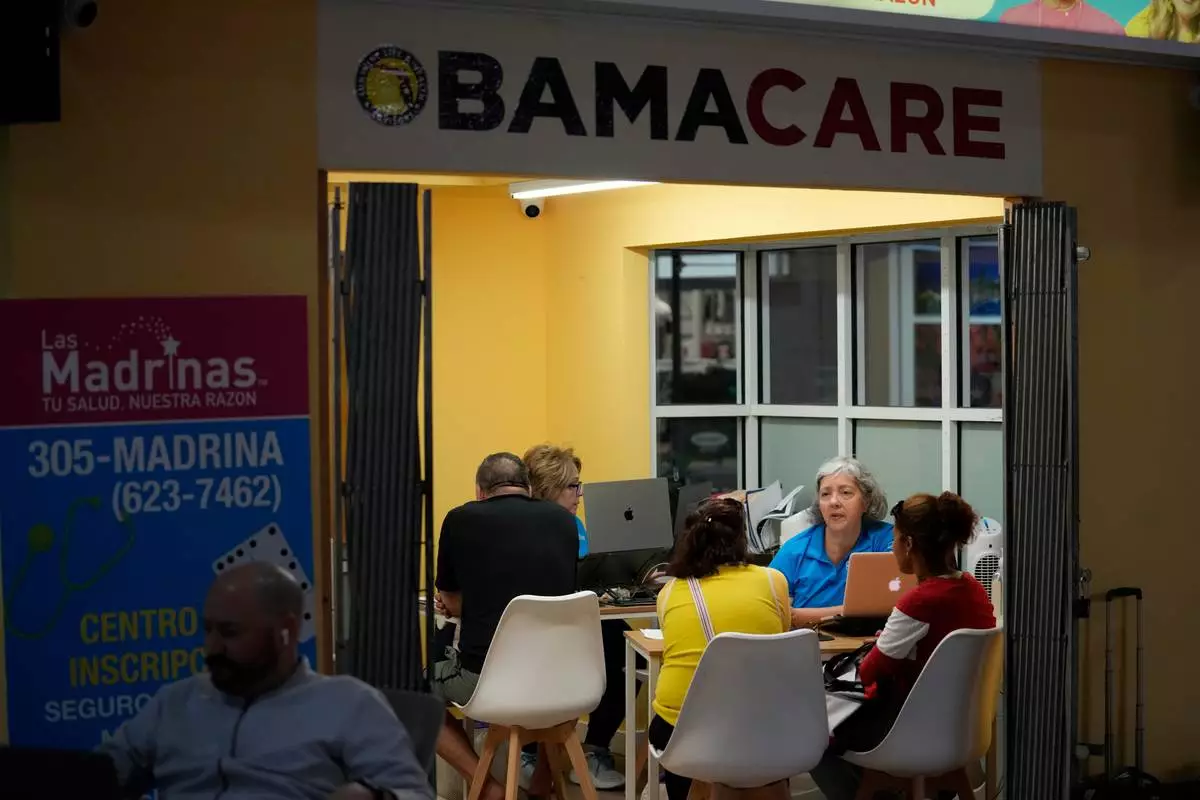
FILE - Insurance agent Maria Collado, center right, works with clients at a shopping mall kiosk run by Las Madrinas de los Seguros, Spanish for "The Godmothers of Insurance," at a shopping center in Miami, Dec. 5, 2023. (AP Photo/Rebecca Blackwell, File)
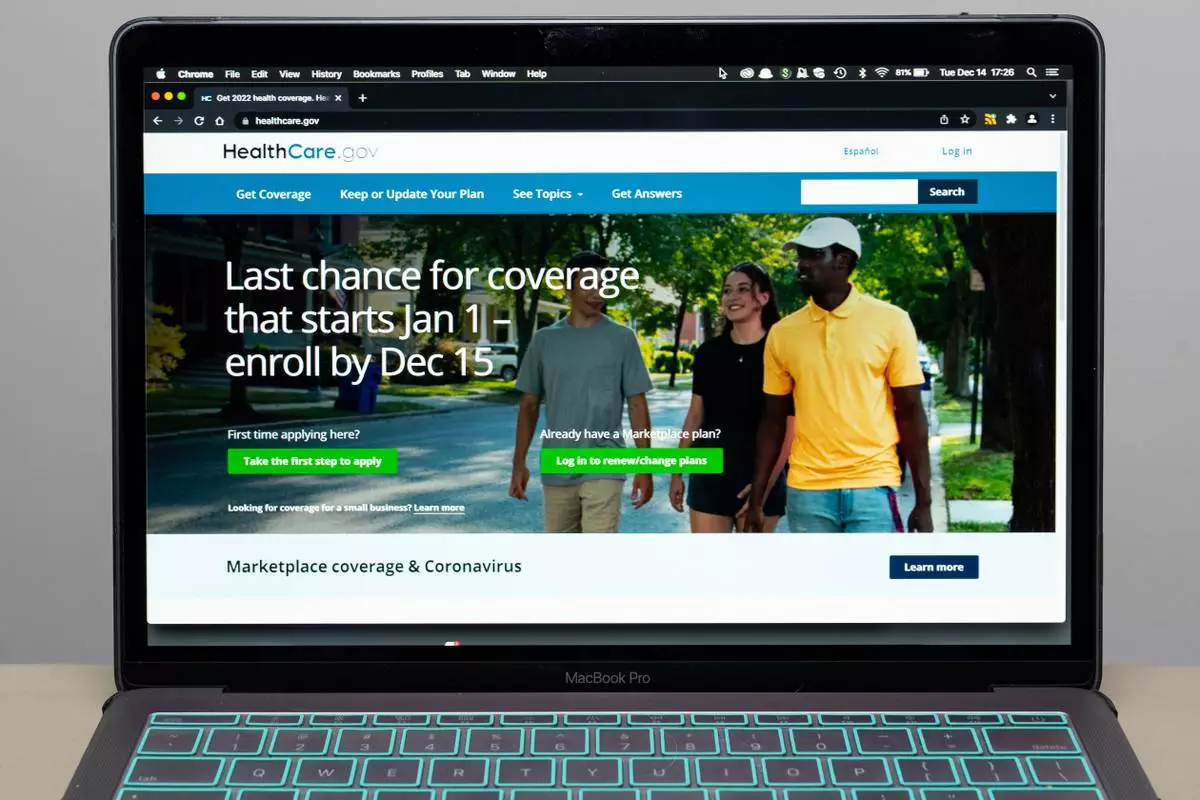
FILE - The healthcare.gov website is seen on Dec. 14, 2021, in Fort Washington, Md. (AP Photo/Alex Brandon, File)
WASHINGTON (AP) — President Donald Trump said Monday that he's building a granite helipad on the White House lawn, insisting that the landing area is needed to accommodate new, more powerful presidential choppers.
Confirmation of the project came as construction crews had already begun working on the helipad on the South Lawn, where the president had UFC build a temporary arena for a cage fight celebrating his 80th birthday. He said the project would be privately funded and estimated its cost at up to $6 million.
“It’s got the seal of the White House on it in granite, in carved granite,” Trump told reporters in the Oval Office. "It’s really a beautiful thing.”
The Republican president did not offer details on how long the work would take. It is the latest major construction project he has overseen in an effort to increasingly mold the White House in his own image.
Some of Trump's major White House construction projects have relied on public money, even when the president initially suggested otherwise. Still, Trump said that Sikorsky Aircraft, a subsidiary of defense contracting giant Lockheed Martin, would be paying for the helipad.
Asked about the cost of the project and a timeline for its completion, Lockheed Martin responded with a statement reading in part: “This specific contribution was made to the Trust for the National Mall, the National Park Service’s nonprofit organization” and “conducted in full accordance with all applicable laws and regulations.”
In 2024, Sikorsky completed a new fleet of helicopters for use as Marine One, and President Joe Biden took the first flight aboard a modern VH-92A Patriot helicopter on his way to the Democratic National Convention in Chicago — the same day the military announced Sikorsky delivered the last of the 23 new aircraft.
But Trump said the newer aircraft were more powerful than Vietnam War-era choppers that long had been used as Marine One, and that the modern ones were too potent to land on the White House lawn without damaging the grass.
"It’s not that the grass gets discolored — it gets ripped out,” the president said.
Indeed, the new aircraft has indeed seen limited service because their exhaust vents aim heat downward, scorching the White House South Lawn.
The Marines and Sikorsky have spent years trying to find a solution to the problem, which has meant that the new helicopters haven't been used at the White House. Trump recalled telling a group of gathered military generals that a White House helipad would solve those problems.
The president said Sikorsky was building the helipad and paying the "full cost” because they “felt a little bit guilty” that the new fleet of helicopters was too powerful to land at the White House.
Trump also said he told builders to “do a beauty” and suggested granite rather than simply laying concrete and painting it white.
“You’re landing on granite, which is the strongest stone,” the president said, noting that the completed landing pad could also be used for other events, like outdoor White House news conferences. He added that the helipad will allow officials to “finally retire 45-year-old helicopters” that had been used as Marine One.
Trump's other projects to remake the White House include tearing up part of the Rose Garden for a patio space reminiscent of his Mar-a-Lago estate in Florida and affixing partisan plaques to the wall of the colonnade for a Presidential Walk of Fame.
Trump also had crews redo the bathroom attached to the Lincoln Bedroom and renovate the Palm Room, place new flagpoles on the north and south lawns and demolish the entire East Wing for a sprawling ballroom.
While the term “Marine One” is applied to a variety of helicopter models that transport presidents, the most iconic and longest serving helicopter to take on the mission is the specially modified VH-3D Sea King helicopter that first entered service in 1978.
In the early 2000s, President George W. Bush, a Republican, began an effort to modernize the helicopter fleet, but the program ran into cost overruns, leading it to be scrapped by President Barack Obama's administration.
Obama, a Democrat, restarted the program, but new, technical issues emerged, and it wasn’t until May 2014 that the military finally awarded Sikorsky a contract to build the next presidential helicopter -- the VH-92A Patriot, which were the aircraft delivered in 2024.
A Marine Corps spokesman, Capt. Jacob M. Sugg, declined to comment on matters pertaining to the White House property. But he said the Marine One squadron currently consists of nine Sikorsky VH-3D Sea Kings that were first deployed in the 1970s, as well as six Sikorsky VH-60Ns deployed in the late 1980s and 10 of the newer VH-92A Patriots.
Later Monday, Trump addressed a lunch in the Rose Garden patio space and detailed yet another White House construction project, this one to revamp the columns on the building's north side.
Crews have erected scaffolding and Trump said, “We’ve taken about 150 years of paint off of the columns," noting that, “If you don’t strip the paint off, it gets worse and worse and worse.”
“A lot of love is being put into the White House,” Trump said.
He didn't say who would be covering the cost of the column work.
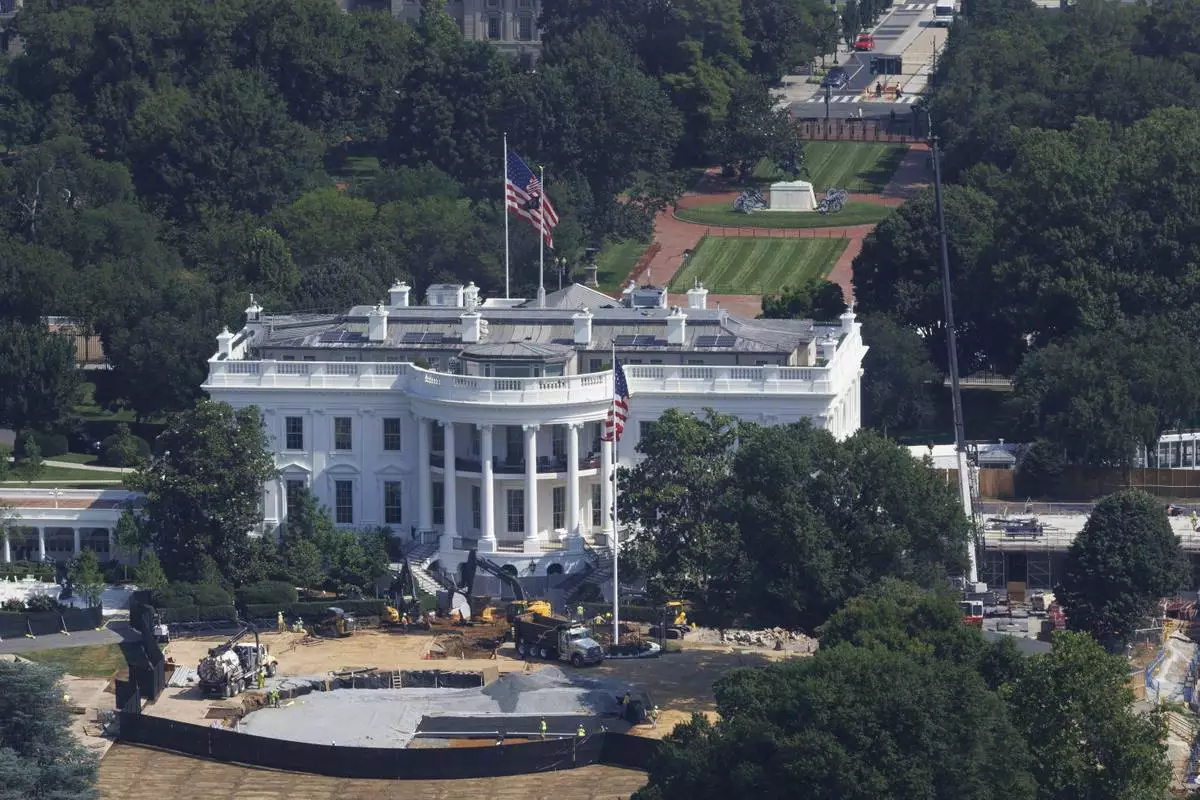
Construction workers continue designing a helipad for Marine One at the White House South Lawn, Wednesday, July 1, 2026, in Washington. (AP Photo/Tom Brenner)
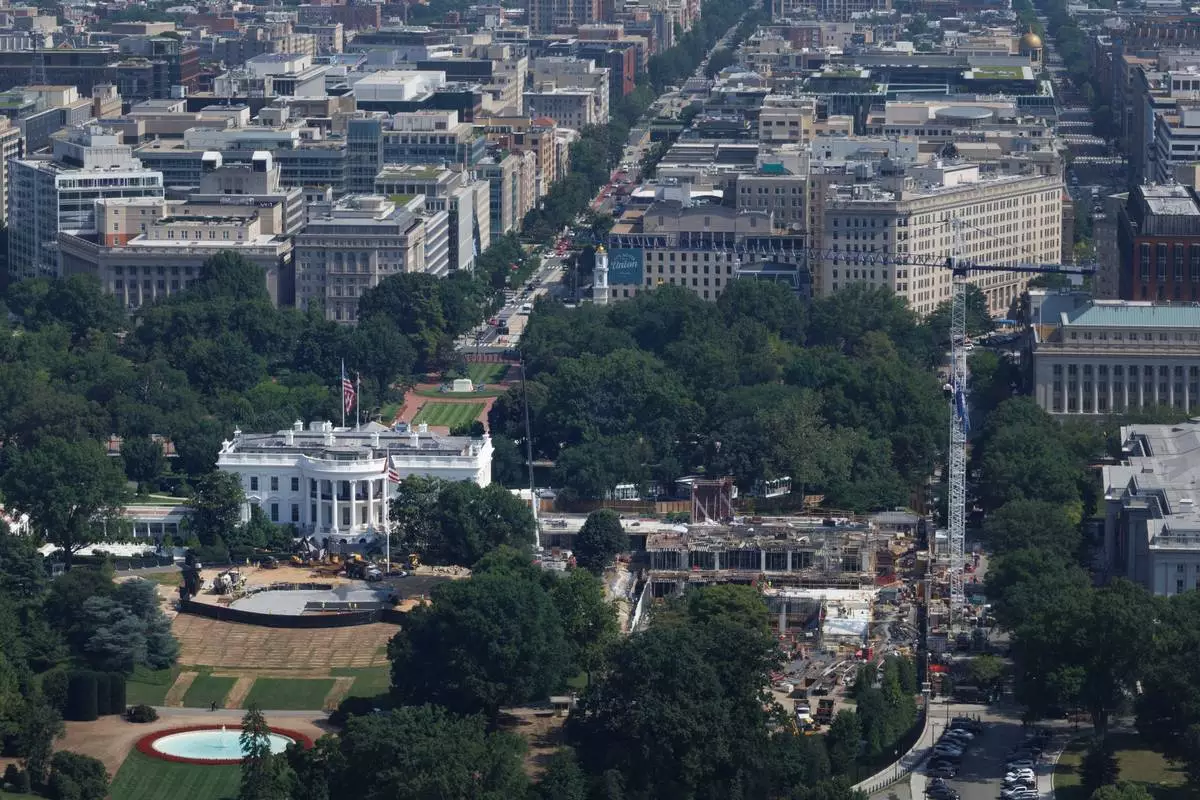
Workers construct a helipad for Marine One on the South Lawn of the White House, Wednesday, July 1, 2026, in Washington. (AP Photo/Tom Brenner)
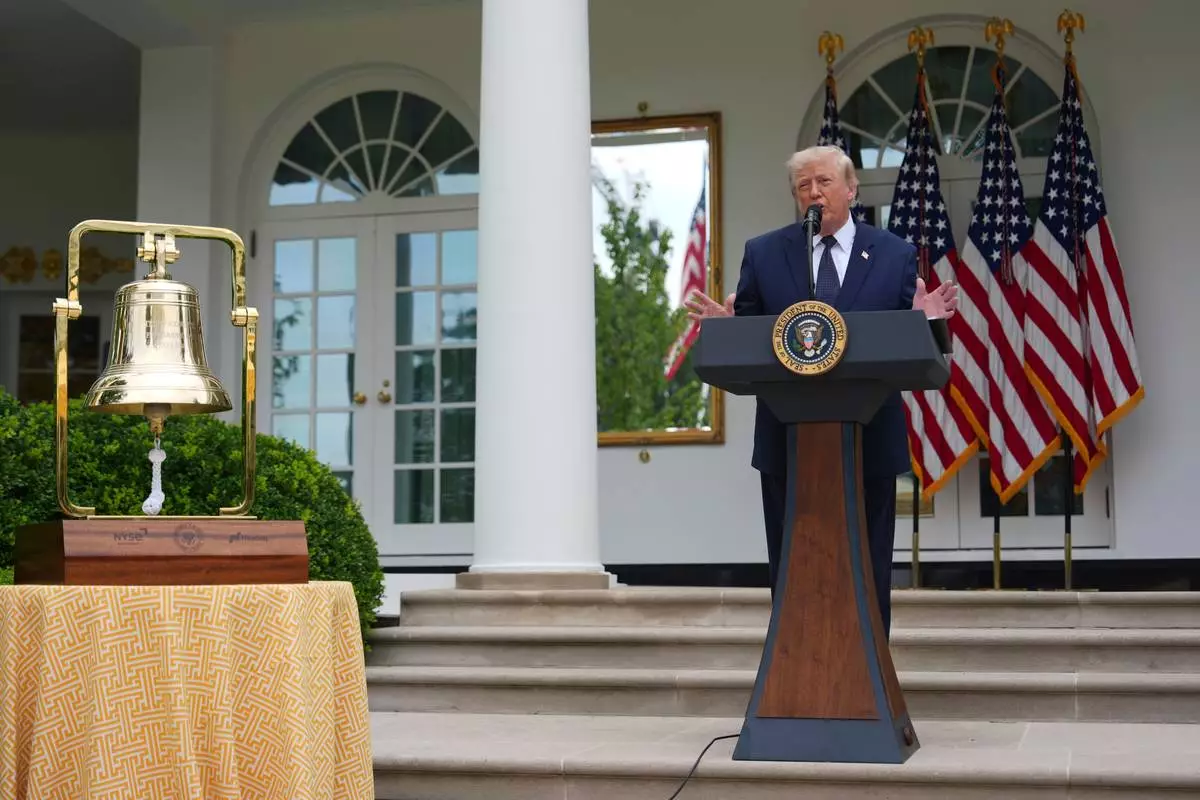
President Donald Trump speaks alongside the New York Stock Exchange bell at a lunch in the White House Rose Garden, Monday, July 6, 2026, in Washington. (AP Photo/Julia Demaree Nikhinson)