SAN FRANCISCO (AP) — All charges against a radiologist accused of trying to kill his family in 2023 by driving his car off a cliff along the Northern California coast have been dismissed by a judge following his completion of a mental health program.
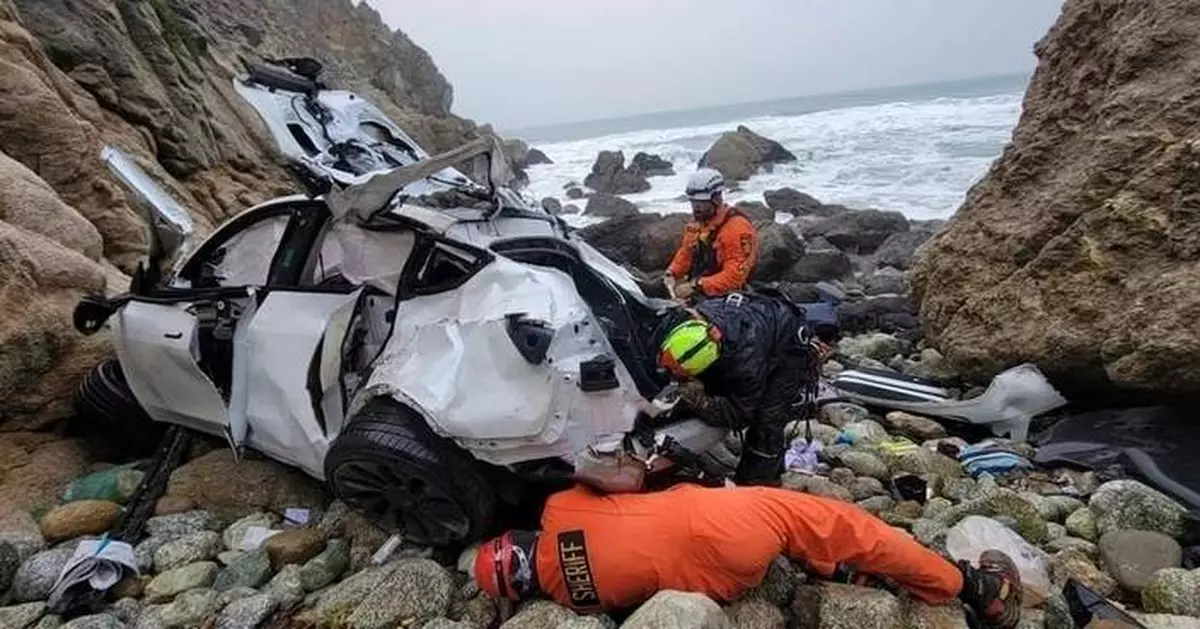
Prosecutors charged Dharmesh Patel, 45, with attempted murder after he drove his Tesla off a 250-foot (76-meter) cliff along the Pacific Coast Highway known as “Devil's Slide,” injuring his wife and two young children. All four survived the Jan. 2, 2023, crash in what one official called an “absolute miracle.”
A San Mateo County judge dismissed the charges on Monday after Patel completed a two-year mental health diversion program with a Stanford University psychiatrist and a family therapist this week, San Mateo County District Attorney Steve Wagstaffe said.
“The judge was required by the law to dismiss the charges,” Wagstaffe said.
In 2024, a different judge ruled Patel would receive mental health treatment instead of standing trial after his defense attorneys argued he was going through episodic major depression with hallucinations when he drove his family off the cliff and qualified for mental health diversion under California law that went into effect in 2023.
“If the person who’s given mental health diversion follows the treatment plan, there’s nothing that can be done and at the end of the two years he gets it wiped out of his record.” Wagstaffe said.
San Mateo prosecutors unsuccessfully opposed diversion for Patel.
Wagstaffe and other California district attorneys have argued that attempted murder should be excluded from eligibility for mental health diversion, and they are working with lawmakers to amend the law.
“We’ll try again in the future," he said about the law. “We’re not giving up.”
Patel's attorney, Joshua Bentley, did not immediately returned a message Tuesday seeking comment.
Patel, of Pasadena, was on a family road trip in the Bay Area at the time of the crash. He told a psychiatrist after his arrest that he was depressed and had delusions that his children, ages 4 and 7 at the time, would be trafficked by kidnappers, Wagstaffe said.
Patel was in jail without bail until he was released in 2024 to complete a mental health outpatient treatment program. He then moved in with his parents in San Mateo County and was monitored through a GPS bracelet. He had to surrender his driver’s license and passport, and had to check with the court weekly.
Wagstaffe said Patel's wife and children also moved to the San Francisco Bay Area, and the court eventually allowed him to spend time with his family and take them out on drives.
Patel’s wife testified that she had forgiven her husband and did not want him to be prosecuted. She said her children missed their father and they wanted him back home.
After the charges were dismissed Monday, Patel walked to the courtroom gallery where his wife was waiting and the two left the building together, the Mercury News reported.
Months after his arrest, the Medical Board of California barred Patel from practicing medicine while he faced attempted murder charges. The board said Tuesday that Patel surrendered his California medical license in December.
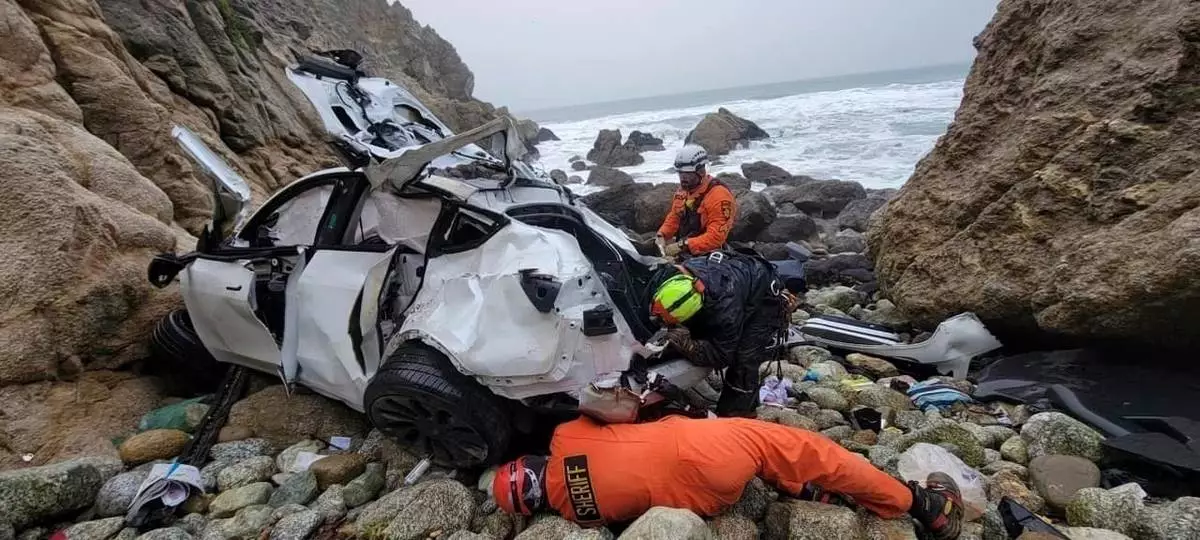
FILE - In this photo provided by the San Mateo County Sheriff's Office, emergency personnel respond to a vehicle over the side of Highway 1 on Jan. 1, 2023, in San Mateo County, Calif. (Sgt. Brian Moore/San Mateo County Sheriff's Office via AP, File)
ATLANTA (AP) — The U.S. Department of Justice cannot have the names and personal contact information for every person who worked during the 2020 election in Georgia’s Fulton County, a federal judge ruled Tuesday.
The Justice Department in April served a grand jury subpoena seeking the names and personal contact information of county employees and volunteer poll workers. President Donald Trump has long claimed without evidence that widespread voter fraud in Georgia's most populous county, a Democratic stronghold, cost him victory in the state in 2020.
Fulton County asked a judge to quash the subpoena, arguing it was meant to “target, harass and punish the President’s perceived political opponents” and that it was “grossly over broad and untethered to any reasonable need.”
“Given the low need for the subpoenaed information and the highly burdensome nature of the disclosure of the same, the Subpoena is unreasonable and must be quashed,” U.S. District Judge William Ray wrote in his ruling, calling the scope of the request “staggering.”
Fulton County Board of Commissioners Chairman Robb Pitts applauded the ruling.
“Fulton County will continue to do all that is needed to assure Georgia citizens that our election process is fair and proper and to show that the attacks against it are baseless,” he said in an emailed statement.
An email seeking comment was sent to the Justice Department.
While grand juries often work with federal prosecutors to investigate alleged crimes, “that does not give the DOJ the right to use the Grand Jury to do whatever the DOJ wants,” wrote Ray, who was nominated to the bench by Trump.
Even if the records sought by the Justice Department could help find people who worked for the county during the 2020 election who support the theory that the election was unfair, the information couldn't be used to charge anyone, Ray wrote.
“That is because the statute of limitations for any possible crime arising from the 2020 Election has long expired,” he wrote.
The subpoena came after the FBI in January served a search warrant at the Fulton County election hub and seized hundreds of boxes of ballots and other documents from the 2020 election. A federal judge in May denied the county's request to force the federal government to return the ballots.
The Justice Department argued in a court filing that the subpoena was the “next step in the normal investigative process” and that it seeks “records identifying persons with relevant knowledge.”
Kamal Ghali, a lawyer for the county, argued that the subpoena “will chill participation by election workers” and that the statute of limitations for any of the alleged misconduct had already lapsed.
Justice Department lawyer William McComb argued the statute of limitations issue is not relevant at the investigative stage. The point of the investigation is to figure out what charges can be brought, he said.
“My point is, as we sit here now, we are not sure what charges can be brought. That's the whole point of the investigation,” he said.
The judge noted that the Justice Department had expressed concern about possible criminal actions in the years that followed the election, including an alleged failure by the county to preserve electronic ballot images. But he pointed out that the subpoena seeks information related to what happened during the 2020 election and its immediate aftermath.
“In these hyper-political times in which we currently live, there are sure to be some who disagree with this decision because they believe the allegations of fraud in the 2020 Election and believe that ‘light’ should be brought to those claims,” Ray wrote.
He added that nothing prevents continued investigation into those allegations by people who believe those claims — such as Congress or even the Justice Department — but the power of the grand jury, “which exists to investigate potential crimes and to bring viable indictments” cannot be used for that purpose. Otherwise, anyone in power could use the grand jury process to subpoena personal information of citizens “with no legitimate law enforcement purpose,” he wrote.
“Thus, everyone, whether you support the President or you do not, or whether you believe the 2020 Election was fair or believe that it was not, should be concerned about the DOJ’s ability to utilize the power of the Grand Jury to appropriate your private information without a legitimate purpose,” Ray wrote.
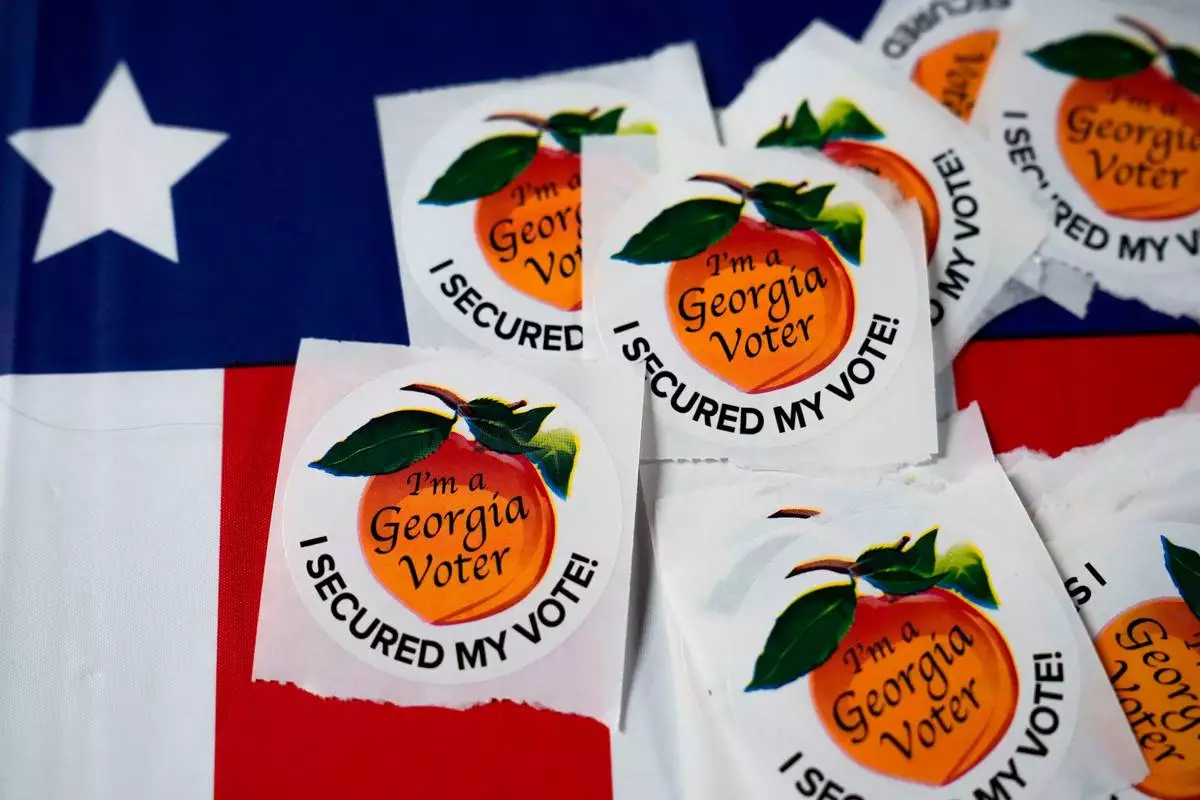
FILE - Stickers sit on a table inside a polling place, Nov. 5, 2024, in Atlanta. (AP Photo/Brynn Anderson, File)