Chinese memory chip makers are expanding their production capacity as an AI boom triggers a supply gap in the global memory chip market, fueling demand downstream.
Industry insiders said that the memory chip industry is poised to enter a period of high prosperity, with the global memory chip market experiencing an unprecedented boom.
While memory chip prices have risen globally, the major driver behind this price surge is not booming end-user demand, but the "siphoning effect" of AI chips on memory chip production capacity, according to experts.
"Lines are being converted to more profitable AI chips, and only a few chip makers still produce conventional memory chips. Fearing potential supply disruptions, cloud service providers have been stockpiling and locking in orders in advance, creating panic buying that further widens the supply gap," said Xin Yi, a research manager at IDC China.
Many Chinese storage companies are accelerating capacity expansion to keep pace with orders.
Biwin Storage Technology, a company from China's tech hub Shenzhen, has been building capacity for enterprise-level memory modules and other product lines since the end of last year.
"Currently, our production lines are operating at near full capacity. We are expanding into areas with high demand, particularly enterprise-grade storage used in data centers, including enterprise-grade SSDs and enterprise-grade memory modules," said He Han, general manager of Biwin Storage Technology.
The shortage has also driven a significant surge in the stock prices of memory chip manufacturers in the capital market. Leading companies such as Samsung Electronics, SK Hynix, and Micron have all seen their stock prices jump, with their market values all exceeding one trillion U.S. dollars.
Experts point out that this round of price increases is not a simple cyclical price hike but a long-term structural shift triggered by AI, and the upward cycle might continue until 2028.
"In terms of supply and demand, we're seeing persistent tightness of supply while the demand continues to rise. Our baseline assessment is that the supply crunch in memory chips won't ease between 2027 and 2028," said IDC's Xin Yi.
However, a recent research report from JPMorgan said that AI memory's rapidly rising share of cloud service providers' capital expenditure, expected to reach 52 percent this year and potentially exceed 70 percent next year, is not durable in the long term.
"In the short term, high valuations are supported by the HBM (High Bandwidth Memory) supply-demand gap, so the downside risk is limited. But beyond 2027, if AI commercialization fails to keep pace with capacity expansion, the storage sector will face a real stress test," said Xin.
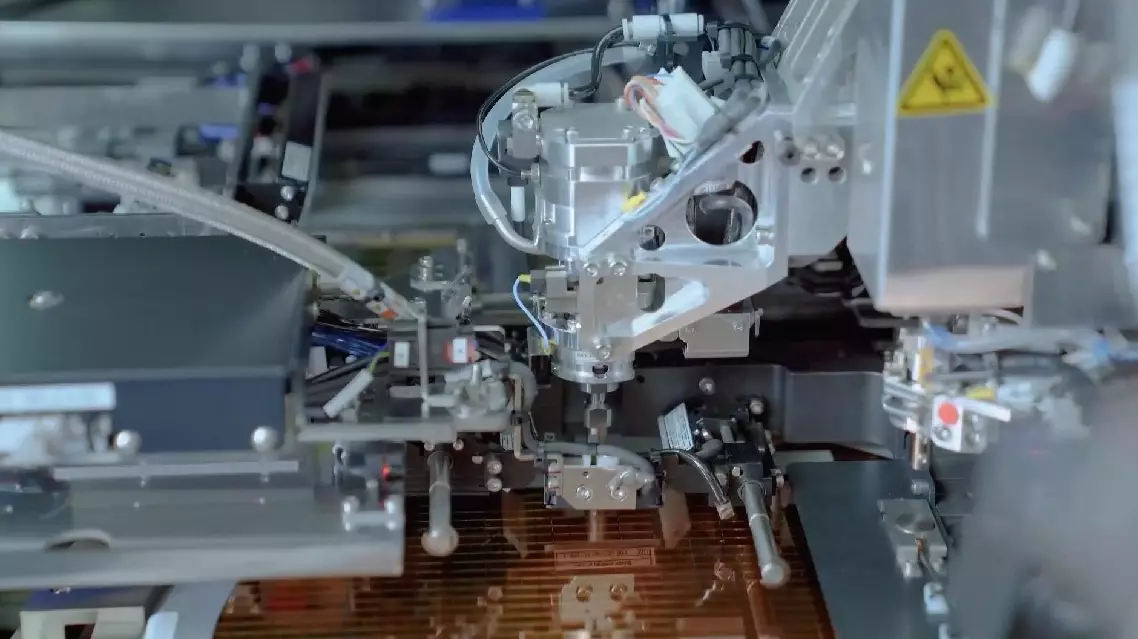
Chinese memory chip companies ramp up capacity as demand soars