Namibian President Netumbo Nandi-Ndaitwah arrived in Chengdu City of southwest China's Sichuan Province on Wednesday, continuing her week-long state visit to China.
Nandi-Ndaitwah arrived in China on Sunday. This visit comes as the two countries celebrate their 36th anniversary of the establishment of diplomatic ties. This is the 74-year-old president's first visit to China since taking office last year.
The visit marks another milestone in the growing China-Namibia partnership, which spans agriculture, energy, trade and cultural exchanges. It also underscores both countries' shared commitment to strengthening Global South cooperation and upholding multilateralism.
Sichuan, one of China's leading agricultural provinces, offers a glimpse into that cooperation in practice. China has long supported Namibia through agricultural technology demonstration projects and training programs. In Sichuan, advances in hybrid rice cultivation and modern farming techniques are providing practical experience that could help improve agricultural productivity in Namibia.
Last June, a Namibian water resources delegation visited Sichuan, and they shared insights on reservoir management and water conservation, and fostered valuable knowledge sharing.
Trade is also booming. In 2025, total trade between Sichuan and Namibia exceeded 300 million yuan (around 44 million U.S. dollars), over five times higher than the previous year. Exports from Sichuan approached 200 million yuan (around 29 million dollars), up more than 300 percent. Sichuan-based companies are also exploring projects in Namibia, such as biomass power plants.
From national strategies to local partnerships, China-Namibia relations are becoming more dynamic. As this visit unfolds, the partnership is set to expand further, injecting fresh momentum into Global South cooperation.

Namibian president arrives in Chengdu, continues state visit
Minyag Choekyi Gyaltsan, the ninth reincarnation of Minyag Shadrong Tulku and a renowned ancient architecture expert, has traced the history of the Potala Palace, a World Heritage site in southwest China's Xizang Autonomous Region.
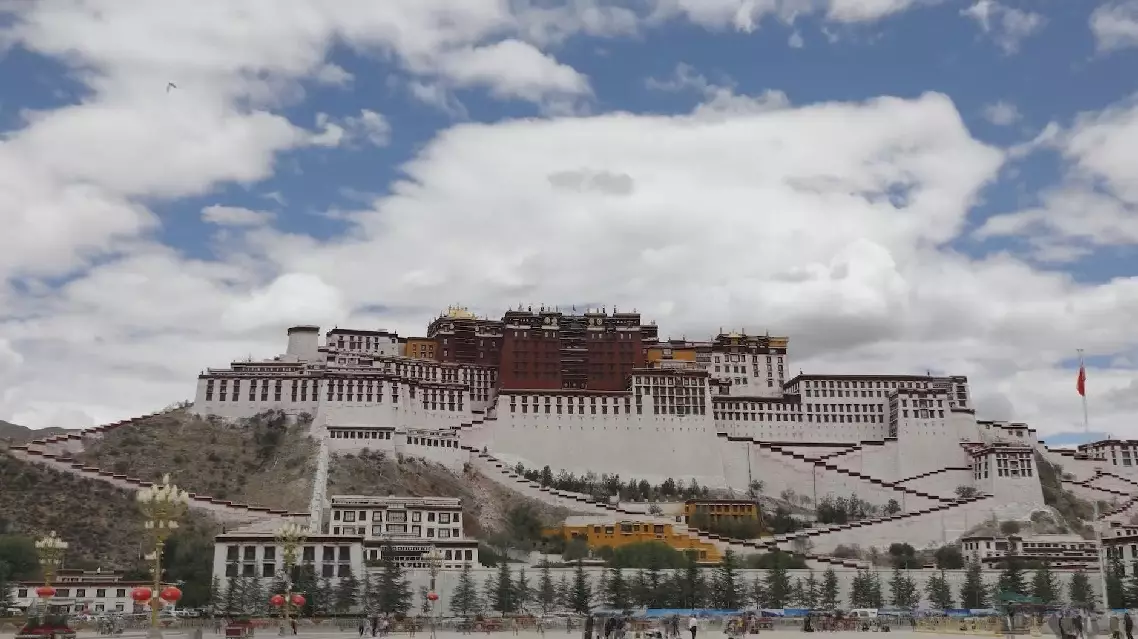
Perched atop Mount Marpori (meaning "red hill" in Tibetan) in central Lhasa, capital of Xizang, the Potala Palace traces its origins back to the 7th century, during the reign of Tibetan King Songtsen Gampo. It was later expanded in the 17th century by the fifth Dalai Lama.
Even today, traces of history from more than 1,300 years ago can still be seen in its overall layout, according to Minyag Choekyi Gyaltsan.
"What did the Potala Palace look like during Songtsen Gampo's reign? This is what I have learned from my research. From historical records and murals at the Potala Palace, we know its core was formed of watchtower-type buildings. They included Songtsen Gampo's own watchtower and one for his consort. However, we can't confirm which consort. The two watchtowers were linked by an iron chain bridge, a detail recorded in historical texts. This is also supported by the murals," he said.
"In the 17th century, at the time of the 5th Dalai Lama, the Potala Palace was renovated. Desi Sangye Gyatso recorded, in The Solely Venerable Catalogue of the Stupa World, that, of the Songtsen Gampo-era Potala Palace, only a few wall foundations and relic sites remained. This is supported by historical texts. These sites still retain their original names," he said.
"Look at the Potala Palace as a whole. To the east is the East Great Fort (Sharchen Jok). To the west, near Phuntso Donlam and below the Monk Officials' School, there's a relatively tall structure called the Victory Fort (Yugyel Jok). Going further west, after passing the White and Red palaces, you will see a small structure called the Denma Fort (Denma Jok). It's only visible from the Potala Palace's north side. Between the Denma Fort and the Red Palace there's a small yellow building, next to which is the King's Fort (Gyelpo Jok)," he said.
"In order, from east to west, you have the East Great Fort, Victory Fort, Denma Fort and King's Fort. They are all still known by their ancient names. Of these four forts, the King's Fort and Denma Fort are special, as they stand right next to each other, just as is recorded in historical texts. An iron-chain bridge connects the king's fortress and the princess's fortress. Of these structures, the East Great Fort was used by officials and the Victory Fort below it, by military officers. Hence the name, Victory. Beyond the military officers' fort were the king's and his consort's forts. Below them were the Shoul city walls, the gates and other fortresses. These structures existed back then and are still clearly visible today. In terms of architectural style, the forts and fortresses were almost the same. More slender structures like these were called forts," he said.
Hailing the still evident historical traces 1,300 years later, Minyag Choekyi Gyaltsan called for more respect to this priceless cultural treasure.
"That's a brief introduction to the Potala Palace during Songtsen Gampo's reign. Thirteen hundred years later, the historical traces are still evident. This in itself is deeply significant. For that reason, we should value these precious relics even more. It's extremely important that we respect them," he said.
Ancient architecture expert traces history of Potala Palace, calls for respect