A young Tibetan man from a pastoral area in southwest China's Sichuan Province has carved out a career far away from his family home to become a highly-skilled welder involved in one of the country's most ambitious energy projects.
The young welder named Erji has traveled an extraordinary path to take up the coveted position with the China National Nuclear Corporation, where he now plies his trade.
In the tight corridors of a nuclear power plant in east China's Jiangsu Province, sparks fly as molten metal meets steel. Every weld must be flawless, because inside these pipes, the reactor's highly radioactive, high-temperature, high-pressure coolant will flow around the clock once they start operation.
The opportunity to enter this crucial field was seized upon by Erji, who believed he had what it took to fulfill the role and get away from the herding life his family had long followed.
"In 2021, the company came to our school to recruit. It was really inspiring. So I joined the nuclear industry. I had already earned several honors back then. In school, I won all kinds of awards, including the National Technical Expert. I met all the qualifications they were looking for," he said.
Erji's very first project saw him working on the groundbreaking Hualong One, China's self-developed, third-generation nuclear power reactor. Erji has quite literally left his mark, with his worker ID being permanently engraved on one of its main pipelines.
"It means responsibility. Having my ID stamped on the pipe means I am responsible for it for life," he said.
But far removed from the high-tech world of nuclear energy, Erji's story began in the mountains of the Aba Tibetan and Qiang Autonomous Prefecture in the southwestern Sichuan Province.
Set on the eastern edge of the Qinghai-Xizang Plateau, the region is defined by its breathtaking landscapes and an average elevation of over 3,500 meters above sea level.
Born in 1999 into a Tibetan family, Erji's early life was shaped by the demands of the plateau. Attending school meant hours of walking along rugged mountain paths, and after classes, he would help his family herd yaks.
For a time, education felt out of reach, and so too did the hope of a different future.
Later, the school started offering boarding, easing the burden of his long commute, but by the time Erji was about to finish ninth grade, he was having thoughts about giving up his studies altogether.
"My family didn't have much. And my grades were really bad. I just couldn't keep going. I thought about giving up. I wanted to ease the burden on my family, go out with my parents to work, and help support my younger brother's schooling," said Erji.
However, a turning point came with China's "9+3" free vocational education program. Launched in Sichuan in 2009, it offers Tibetan students three years of free secondary vocational education after nine years of compulsory schooling, covering tuition, living expenses, and medical insurance.
With this initiative, Erji saw a path forward for the first time and it was at this point that he chose to pursue welding, hoping to learn a skill that could help him earn a living. But the training was brutal, as he endured long hours facing steel plates, heat and isolation. Once again, he thought about giving up.
"My teacher talked with me about some harsh realities. He said, 'Three years will pass quickly. When you finish school, do you really want to go back home, live like your parents, herding yaks, getting married, having children there, and letting your kids walk the same path you did?' Those words really struck me," he recalled.
That conversation lit a fire in Erji, who sought to push himself harder, sometimes practicing up to 15 hours a day. His persistence paid off as he started winning skills competitions, earning recognition and prize money.
For Erji, building a better life with his own hands was never just about money, it was about dignity, pride, and the quiet confidence of knowing he could shape his own future.
After joining the China National Nuclear Corporation, his determination only grew stronger. Becoming a nuclear-grade welder required certification from China's nuclear safety authority, a process that usually takes around a year and a half, but the now focused and highly motivated Erji completed it in just three months.
Now, with every new achievement in the energy sector, Erji feels proud to playing his part in delivering life-changing outcomes to millions of people.
"Every time I hear news that another reactor has been connected to the grid, I feel a deep sense of pride. I think that through my hands, all those pipes were connected, bringing electricity to millions of homes. That's something worth being proud of," he said.
Erji has now moved on to tackling a new nuclear power project as he sets his sights on mastering automated welding technologies, preparing for the next wave of industrial innovation.
Drawing on his own personal experiences, he is now also passing on what he knows, training a new generation of welders.
"I was shaped by the country's good policies. Without the targeted poverty alleviation programs, and all the supportive policies I got, how could I have ever walked out of the mountains? Let alone being able to contribute my own strength to a major national project. Even though I'm just a small part of the project, it gives me a real sense of achievement," he said.
Erji's journey is more than just one man's story. It's a glimpse into how opportunity can reach the most remote corners, how a young person with a dream and a steady hand can forge a life they once thought may out of their reach.
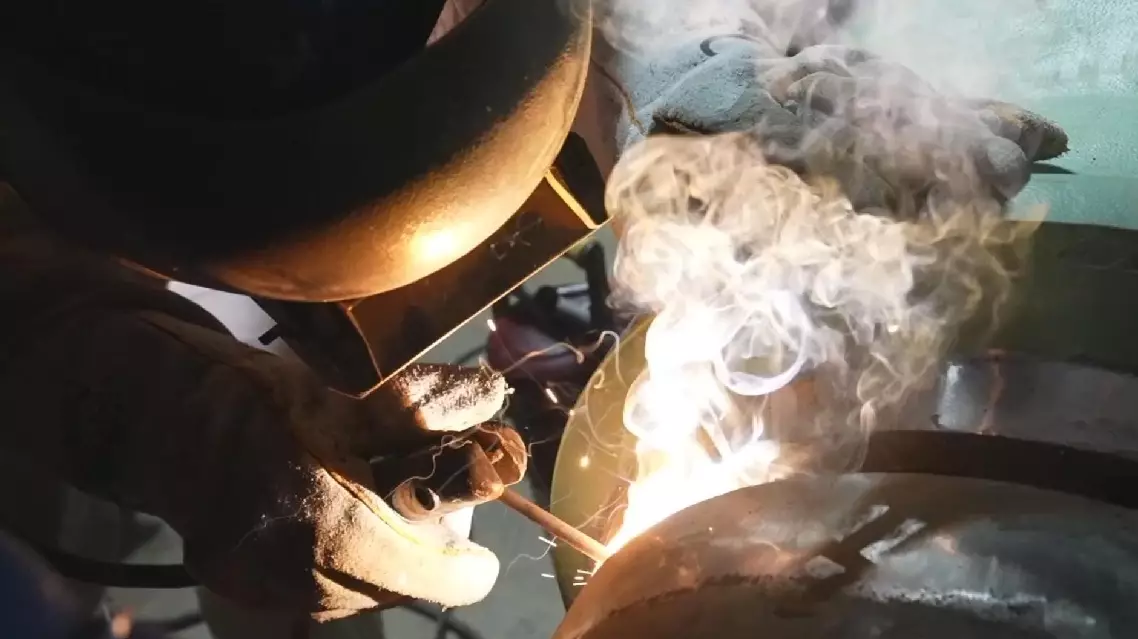
Young Tibetan herder leaves behind rural life to contribute to China’s national nuclear project