8th Singapore-Hong Kong Permanent Secretaries Exchange Programme concludes successfully
The 8th Singapore-Hong Kong Permanent Secretaries Exchange Programme, attended by the Permanent Secretary for the Civil Service, Ms Shirley Lam, together with six Permanent Secretaries of the Hong Kong Special Administrative Region (HKSAR) Government, successfullyconcluded today (July 8). The Permanent Secretaries who also attended included the Permanent Secretary for Home and Youth Affairs, Mr Patrick Li; the Permanent Secretary for Development (Planning and Lands), Ms Doris Ho; the Permanent Secretary for Innovation, Technology and Industry, Mr Kevin Choi; the Permanent Secretary for Education, Ms May Chan; the Permanent Secretary for Commerce and Economic Development, Ms Angela Lee; and the Permanent Secretary for Transport and Logistics, Mr Vic Yau.
Click to Gallery
8th Singapore-Hong Kong Permanent Secretaries Exchange Programme concludes successfully Source: HKSAR Government Press Releases
8th Singapore-Hong Kong Permanent Secretaries Exchange Programme concludes successfully Source: HKSAR Government Press Releases
8th Singapore-Hong Kong Permanent Secretaries Exchange Programme concludes successfully Source: HKSAR Government Press Releases
8th Singapore-Hong Kong Permanent Secretaries Exchange Programme concludes successfully Source: HKSAR Government Press Releases
8th Singapore-Hong Kong Permanent Secretaries Exchange Programme concludes successfully Source: HKSAR Government Press Releases
8th Singapore-Hong Kong Permanent Secretaries Exchange Programme concludes successfully Source: HKSAR Government Press Releases
This morning, the delegation met with the Deputy Prime Minister and Minister for Trade and Industry of Singapore, Mr Gan Kim Yong, and the Coordinating Minister for Public Services of Singapore, Mr Chan Chun Sing, respectively. They exchanged views on issues of mutual interest, such as on development projects of the Guangdong-Hong Kong-Macao Greater Bay Area and the Northern Metropolis, which present further cooperation opportunities between Hong Kong and Singapore.
Upon arrival in Singapore the day before yesterday (July 6), Ms Lam had a meeting with the Head of Civil Service of Singapore, Mr Chan Heng Kee, to exchange views on civil service management. The Permanent Secretaries of the delegation also had separate meetings with several Permanent Secretaries of Singapore to discuss respective policy areas such as youth development, land planning, innovation and technology, education, trade and transport.
Yesterday (July 7), the delegation had a roundtable discussion with a number of Permanent Secretaries of Singapore to share their latest policies and experience on three key topics, namely AI, citizen engagement and urban planning. Ms Lam said that Hong Kong and Singapore share many similarities, and that the roundtable discussion provided an important platform for civil service leaders of both sides to engage in in-depth and candid exchanges on the common challenges and opportunities, draw reference from each other and explore new areas for collaboration.
While in Singapore, the delegation also visited Punggol for on-site inspections of the Punggol Digital District and One Punggol. They toured the Dawson Estate, a public housing project, and the Gardens by the Bay.
Summing up the three-day Exchange Programme, Ms Lam expressed her gratitude to the Singapore Government for its meticulous arrangement, which enabled the civil services from both sides to engage in in-depth andfrank discussions across various policy areas and to gain inspiration from one another. Following the 7th Exchange Programme hosted by the HKSAR Government in 2023, this delegation visit to Singapore underscores the solid collaborative relationship between the civil services of both places and marks a key milestonein their shared pursuit of excellence in public service. She noted that amid today's ever-changing geopolitical environment, it is particularly important for the two governments to continue deepening their co-operation. She said she looks forward to sustaining this positive spirit of collaboration with Singapore through the Exchange Programme and across various policy domains and occasions, thereby propelling both places to new heights of development.
The delegation of Permanent Secretaries of the HKSAR Government departed for Singapore on July 6, and completed the itinerary before departing for Hong Kong this afternoon.

8th Singapore-Hong Kong Permanent Secretaries Exchange Programme concludes successfully Source: HKSAR Government Press Releases

8th Singapore-Hong Kong Permanent Secretaries Exchange Programme concludes successfully Source: HKSAR Government Press Releases
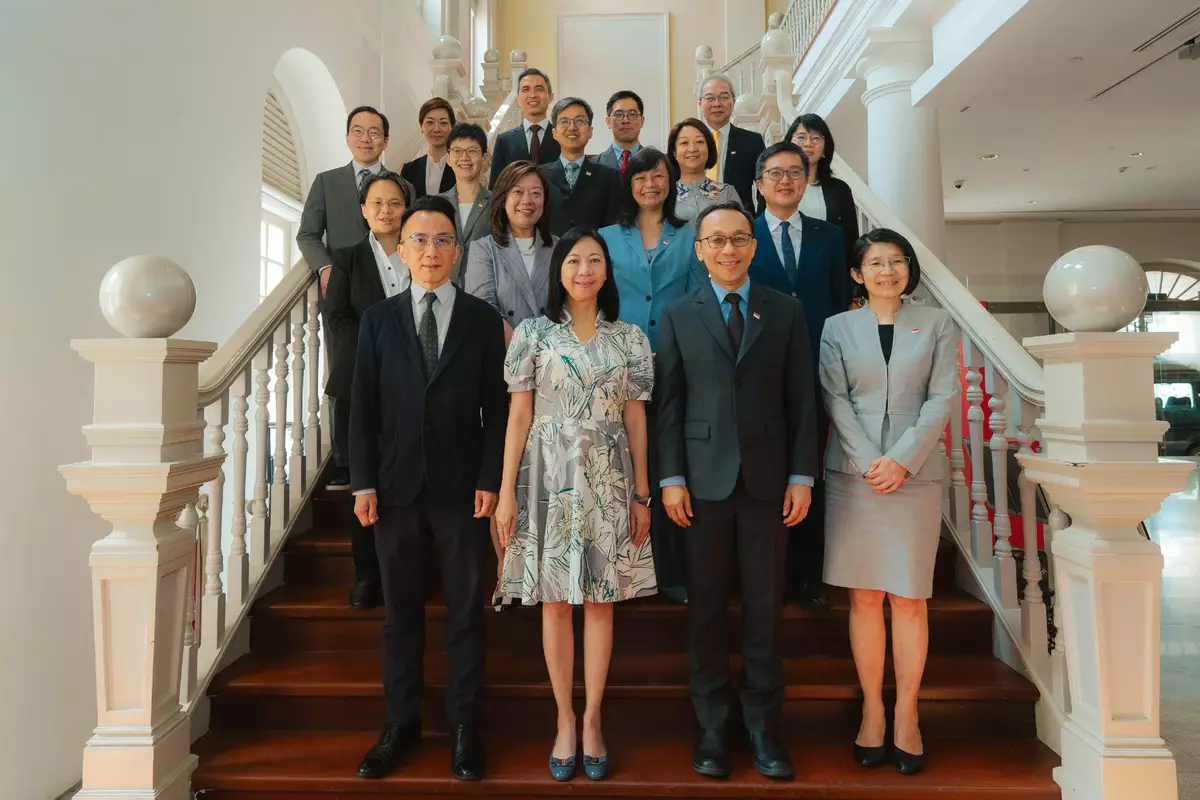
8th Singapore-Hong Kong Permanent Secretaries Exchange Programme concludes successfully Source: HKSAR Government Press Releases
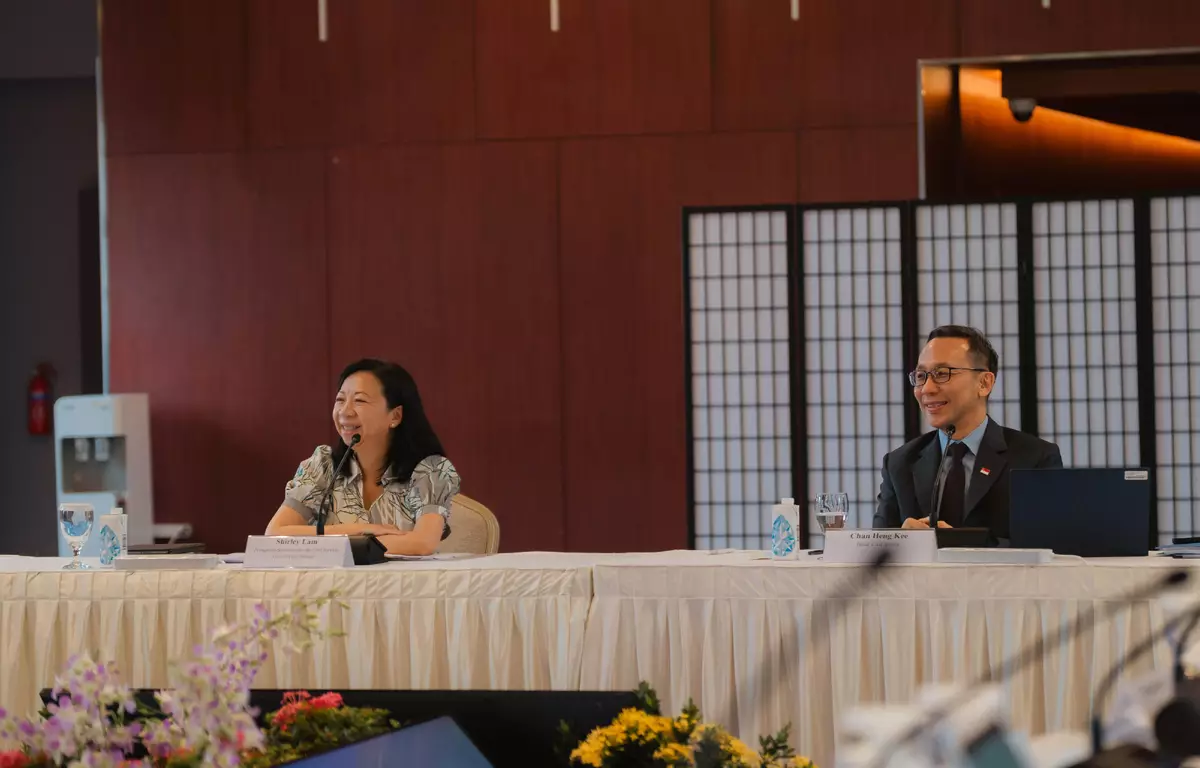
8th Singapore-Hong Kong Permanent Secretaries Exchange Programme concludes successfully Source: HKSAR Government Press Releases

8th Singapore-Hong Kong Permanent Secretaries Exchange Programme concludes successfully Source: HKSAR Government Press Releases

8th Singapore-Hong Kong Permanent Secretaries Exchange Programme concludes successfully Source: HKSAR Government Press Releases
Public urged to continue strengthening anti-mosquito efforts
The Food and Environmental Hygiene Department (FEHD) today (July 8) announced that the monthly gravidtrap index for Aedes albopictus mosquitoes in June dropped to 9.8 per cent, at Level 2, indicating that the distribution of Aedes albopictus mosquitoes in the survey areas was fairly extensive. The FEHD and relevant government departments have stepped up mosquito prevention and control actions.
In June, among the 62 survey areas, the area gravidtrap indexes (AGI) in two areas exceeded 20 per cent. The gravidtraps were mostly located in the vicinity of private residential areas, public housing estates, schools, hospitals/clinics, recreational and sports facilities and public places. The FEHD has collaborated with relevant government departments to take immediate actions to strengthen mosquito prevention and control work in the areas concerned. In June this year, the FEHD conducted over 69 000 inspections, initiated 30 prosecutions following the discovery of mosquito breeding, and issued 135 statutory notices requiring the clearance of stagnant water or stagnant water containers.
Moreover, the monthly density index for Aedes albopictus in June was 1.3, which represented that an average of 1.3 Aedes albopictus adults were found in the Aedes-positive gravidtraps, indicating that the number of adult Aedes albopictus was not abundant in the survey areas. The gravidtrap and density indexes for Aedes albopictus in different survey areas, as well as information on mosquito prevention and control measures, are available on the department website at www.fehd.gov.hk.
A spokesman for the FEHD said, "With reference to the data from the past few years, the gravidtrap indexes start to rise around April every year. The indexes are higher from May to June. The actual timing and extent of the rise are affected by factors like weather conditions and rainfall. As compared with last year, the temperature began to climb earlier this year and the rainfall in June increased substantially, creating favourable conditions for mosquito growth and breeding. Overall, the trend of gravidtrap indexes this year is similar to those of previous years. In response to the rise in gravidtrap indexes, the FEHD, together with relevant departments and stakeholders, has implemented rapid response measures and deployed targeted actions. The FEHD has continued to intensify the mosquito prevention and control work with relevant government departments in areas under their purview, including eliminating mosquito breeding places, applying larvicides, conducting fogging operations to eradicate adult mosquitoes, and placing mosquito trapping devices at suitable locations. The FEHD has also conducted site inspections with relevant departments, and provided them with professional advice and technical support to assist them in formulating and implementing effective anti-mosquito measures swiftly. At the same time, the FEHD has strengthened publicity and education. The FEHD will continue to monitor mosquito infestation in all districts, and will conduct prompt and effective mosquito prevention and control work."
The FEHD continues to conduct a three-phase Anti-mosquito Campaign this year. The third phase of the Anti-mosquito Campaign will run from August 3 to October 23. During the period, the district offices of the FEHD will target residences, schools, construction sites, public housing estates, hospitals, illegal cultivation sites, waterfront public and private cargo working areas, land boundary control points, typhoon shelters and cross-boundary ferry terminals to remove accumulated water and carry out mosquito prevention and control work. To further enhance the effectiveness of mosquito control, the FEHD and relevant government departments have launched phase one and phase two of the All-out Anti-mosquito Operations on March 25 and April 30 respectively. Departments will continue with the work of phase one, including eliminating potential mosquito breeding places and arranging for necessary structural repairs to minimise mosquito breeding places, and will consistently carry out the work of phase two by conducting regular ultra-low volume fogging operations at places with mosquito infestation to control the mosquitoes. The FEHD called on property management entities to continue actively participating in the All-out Anti-mosquito Operations.
The FEHD currently makes regular announcements on gravidtrap indexes for Aedes albopictus on its webpage. To allow more citizens to quickly grasp the mosquito infestation situation, the FEHD has strengthened information dissemination by promptly announcing the latest gravidtrap indexes through press releases and social media.
In addition, to further reduce the risk of transmission of chikungunya fever (CF), the FEHD has extended its intensified mosquito control work, which was originally activated when the AGI reaches 20 per cent, to cover areas with the AGI falling between 10 and 20 per cent. Specifically, the FEHD will conduct detailed risk assessments in the areas concerned to identify locations with higher mosquito infestation risks and, in collaboration with relevant departments and stakeholders, conduct intensive and targeted mosquito control work. The FEHD will also notify nearby housing estates, advising property management agents and residents to stay vigilant and work together to take mosquito prevention and elimination measures.
To reduce the risk of transmission of CF and dengue fever (DF), the FEHD continues to step up mosquito prevention and control measures across all districts and conduct vector investigations and targeted mosquito control operations within a 250-metre radius of the residence of patients and the places that patients had visited during the infectious period. Actions include removing mosquito breeding grounds, applying larvicides to stagnant water that cannot be cleared, and carrying out ultra-low volume fogging operations in adult mosquito habitats such as densely wooded areas, dark and secluded places, and abandoned structures to eliminate adult mosquitoes.
The FEHD appeals to members of the public to continue to stay alert and work together to carry out mosquito prevention and control measures early, including inspecting their homes and surroundings to remove potential breeding grounds, changing water in vases and scrubbing their inner surfaces, removing water in saucers under plant pots at least once a week, and properly disposing of containers such as empty cans and disposable meal boxes. The FEHD also advises members of the public and estate management bodies to keep drains free of blockage and level all defective ground surfaces to prevent the accumulation of water. They should also scrub all drains and surface sewers with an alkaline detergent at least once a week to remove any mosquito eggs.
Aedes albopictus is a kind of mosquito that can transmit DF and CF. DF is commonly found in tropical and subtropical regions of the world, and has become endemic in many countries in Southeast Asia. In 2024, the World Health Organization (WHO) recorded over 14 million DF cases, which was a record number. In 2025, over 5 million cases and over 4 000 DF-related deaths were reported in over 90 countries/territories. Furthermore, according to the WHO, CF cases have been recorded in more than 110 countries/regions. Many countries worldwide experienced CF outbreaks last year, with more than 500 000 cases reported in 41 countries/regions. Cases have been reported in the Americas, Africa, Asia, and Europe. Temperatures in subtropical and some temperate regions remain elevated due to climate change, creating favourable conditions for mosquito breeding. In addition, CF outbreaks continue to occur in many countries worldwide. The risk of imported cases persists. Members of the public should check the situation of their destinations before travelling abroad, especially when travelling to Southeast Asian countries.
Source: AI-found images