NEW YORK (AP) — The potential unraveling of a fragile truce between Iran and the United States renewed anxiety Wednesday over whether fuel prices would go back up if sustained fighting kept oil tankers from traveling through the Persian Gulf.
Oil prices rose to their highest point in weeks after President Donald Trump declared the U.S. ceasefire with Iran over, responding to Iranian attacks on commercial ships in the Strait of Hormuz and on American military sites in other Gulf nations. Costlier crude oil could lead to costlier gas station fill-ups as drivers in many countries were getting a break from elevated prices brought on by the war.
“Tanker traffic through the Strait of Hormuz has essentially stopped, which tells you more about risk perception right now than any statement from Washington or Tehran," said Jorge Leon, head of geopolitical analysis at Rystad Energy, in an email. “Oil markets reacted quickly to the renewed geopolitical risk."
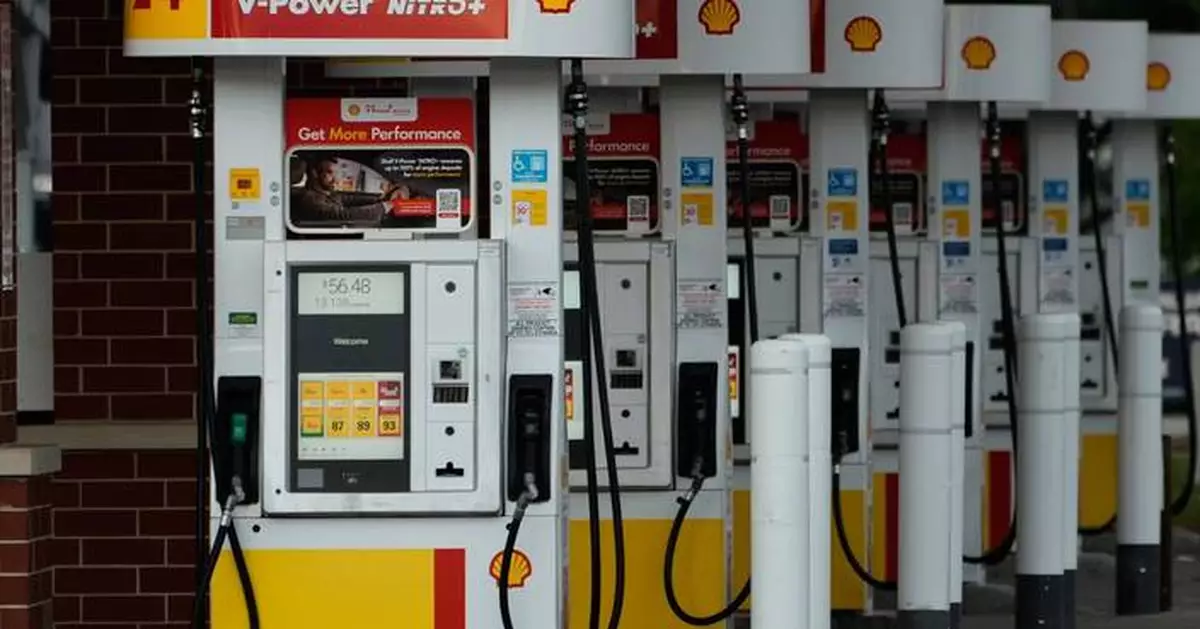
U.S. gasoline prices increased slightly Wednesday to an average of $3.80 for a gallon of regular, up from $3.79 the day before, but still well below the month-ago average of $4.16, according to motor club federation AAA.
Crude oil makes up the bulk of the price of gasoline, so when oil prices rise, gasoline eventually follows. But it can take weeks for consumers to feel the full impacts. That's because refiners make gasoline with oil purchased in advance. The finished product then has to travel through a system of pipelines and trucks to reach gas station pumps.
Gas station owners set prices at the pump, and to stay competitive, they sometimes absorb the impact of higher oil prices instead of immediately passing it along to customers.
To suppress high oil prices during the war, the U.S. and other countries released oil from their emergency stockpiles starting in March. But those stockpiles won’t last forever.
The U.S. Strategic Petroleum Reserve held 319.5 million barrels as of July 3. The last time the inventory was that low was in 1983, when the reserve was initially being filled up.
“Unfortunately, the drawdown of strategic stocks means that there is a lot less ammunition in Trump’s holster,” said Michael Lynch, a distinguished fellow at Energy Policy Research Institute in Amherst, Massachusetts.
A barrel of U.S. benchmark crude was selling for $75.80 on Wednesday, the highest price in more than two weeks. Brent crude, the international standard, climbed close to $79 per barrel, its highest level since June 19.
The market reaction "highlights how sensitive prices remain to any escalation around the strait, given its role as a critical transit route for global oil flows,” Leon said.
A day after the U.S. accused Iran of striking three commercial vessels and revoked the country's ability to openly sell crude oil on the world market, some advised the shipping industry to reconsider whether it was safe to send crewed ships through the Strait of Hormuz — and the wider Middle East.
International Maritime Organization Secretary-General Arsenio Dominguez condemned attacks on ships in the strait.
“As long as the safety and security of crews cannot be assured, I urge flag states, shipowners, operators and all relevant authorities to avoid exposing seafarers to unnecessary danger by transiting the strait,” Dominguez said Wednesday. “The situation in the region remains volatile.”
Some traffic traversed the strait on Tuesday, according to data and analytics company Kpler, which verified 41 crossings compared to 36 on Monday. It was unclear if the crossings happened before or after the strikes. Some vessels also are going “dark” to pass through the strait and not broadcasting their locations, further complicating a complete count.
With the central route through the strait uncrossable due to mines, ships have been using two other routes, the smaller northern route, which goes through Iranian waters, and the southern route, which goes through Omani waters. The three ships struck Tuesday appeared to be using the Omani route.
An economist at advisory firm Oxford Economics said the ceasefire probably would continue to be on-and-off and Washington and Tehran could still deescalate the latest tensions instead of returning to war.
“The question is whether the latest developments merely represent a bump in the road or if we’re emerging from the ‘eye of the storm,‘” Ben May, the firm's director of global macroeconomic research, wrote in a research note. “While Trump said negotiations with Iran were a ‘waste of time’, he maintained an off-ramp by noting that U.S. negotiators would continue talks with Iran, suggesting the truce hasn’t been irrevocably broken.”
The new doubts about the Strait of Hormuz came after two of the biggest shipping companies, Maersk and Hapag-Lloyd, announced Monday that their Gemini Corporation joint partnership would gradually resume service in the Suez Canal, which was paused due to attacks in the Red Sea by Yemen’s Houthis.
Recent stability in the Middle East created the conditions for the companies' decision, but "the recent deterioration could put this resumption in jeopardy once again,” said Judah Levine, head of research at freight booking platform Freightos. “The said.
Hapag-Lloyd said in a Wednesday statement that it made the joint decision after “thorough assessments of the security situation in the Red Sea area” and “if the situation changes or deteriorates, contingency plans are in place.”
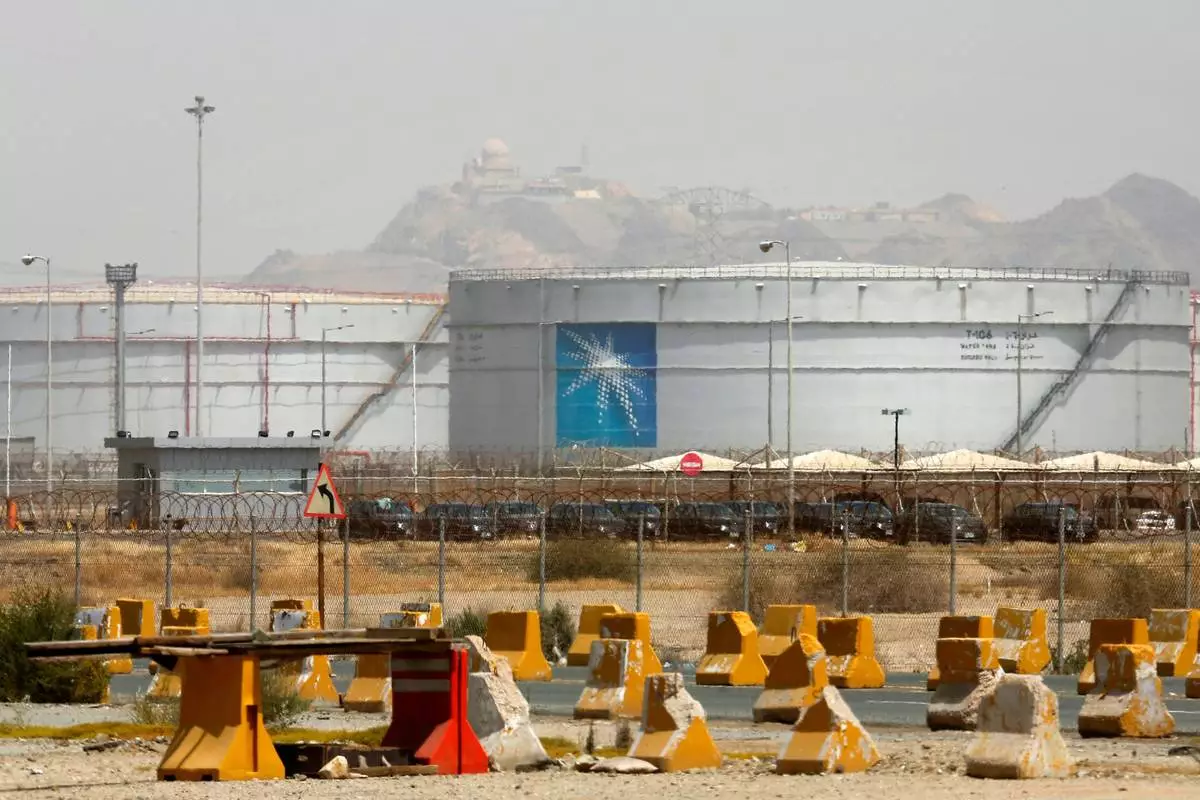
FILE - Storage tanks are seen at the North Jiddah bulk plant, an Aramco oil facility, in Jiddah, Saudi Arabia, on March 21, 2021. (AP Photo/Amr Nabil, File)
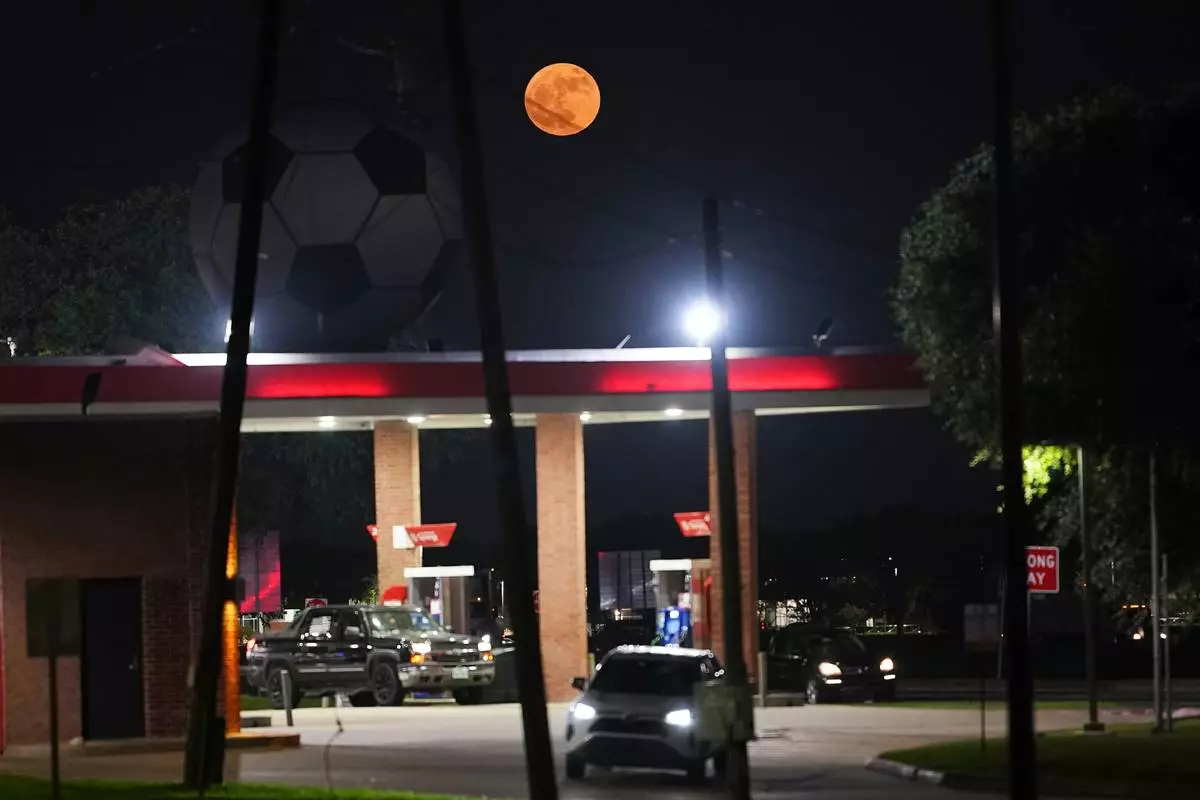
The full moon rises behind a large soccer ball atop a gas station in honor of the World Cup soccer tournament in Arlington, Texas, near Dallas, Monday, June 29, 2026. (AP Photo/Julio Cortez)
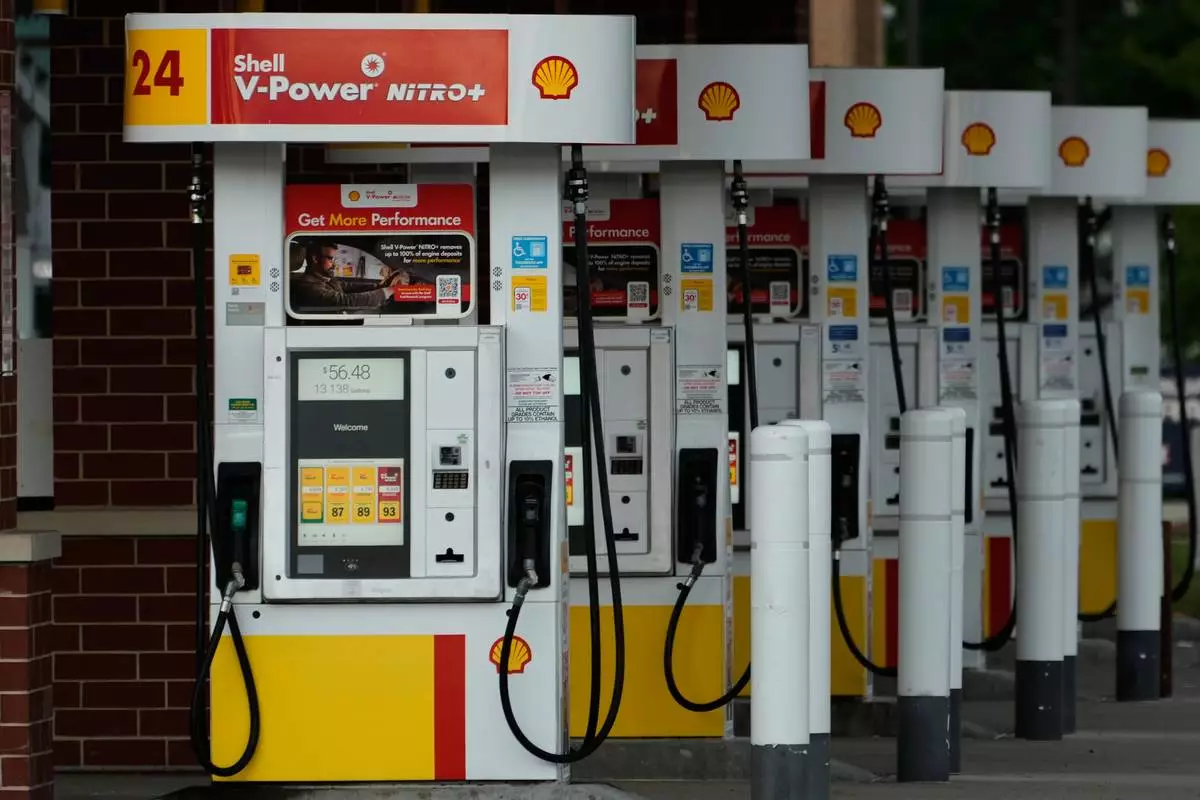
Gas pumps are seen at a gas station in Buffalo Grove, Thursday, June 25, 2026. (AP Photo/Nam Y. Huh)
ANKARA, Turkey (AP) — U.S. President Donald Trump said at a NATO summit Wednesday in Turkey that the U.S. will give Ukraine a license to make Patriot air defense systems to counter missile attacks from Russia in their more than four-year war, a huge coup for Kyiv which has long requested the technology.
Allowing foreign manufacture of Patriots, which the U.S. had resisted, was a turnaround for Trump that mirrored his day at the NATO meeting: Upon arriving, he lashed out at European partners for resisting his efforts to take control of Greenland and for not supporting his war in Iran. But by day's end, he described a gathering of unity and “tremendous love," and praised member nations on their progress in increasing their defense spending.
Separately, the Trump administration also announced plans to rescind Syria's terrorism designation, in a key move toward lifting sanctions on the country.
NATO’s European members plus Canada have scrambled to meet the alliance's increased defense spending targets, which Trump has demanded as the U.S. draws down troops in Europe and insists the continent take more responsibility for its own security.
Trump had reopened old wounds among the 32 NATO leaders by insisting again ahead of the summit that the U.S. should control Greenland, a semiautonomous Danish territory. That led Denmark’s Prime Minister Mette Frederiksen to say her country is “ready to defend every inch of NATO including our own territory.”
Trump also blasted some European countries for refusing to participate in the Iran campaign, singling out Spain as “a terrible partner in NATO” and renewing his threats to cut off trade.
But the tone of Trump’s meeting with the Ukrainian President Volodymyr Zelenskyy was a break from earlier encounters which ended in acrimony, and Trump praised the Ukrainian leader's willingness to reach a deal on ending the fighting in Ukraine.
“We’ve actually developed a good relationship. It’s hard to believe,” Trump said during a news conference with Zelenskyy, adding that he believed a deal on ending the war was on the horizon and that the U.S. would “work on some kind of security package” to provide to Ukraine.
Trump said the Ukrainian president has “done an amazing job” and “been very effective” in the war as he pledged to grant Ukraine a license to manufacture the Patriot defense systems.
“We’ll give them the right to make Patriots. We’ll show them how to do it,” Trump said. “I think they can produce them pretty quickly.”
Patriots are expensive, in high demand and take a long time to produce. Zelenskyy has for years been asking for more of them, and more recently for a license so that Ukraine can manufacture its own.
Ahead of the summit, NATO Secretary-General Mark Rutte praised Trump for the series of U.S. strikes on Iran overnight, after Tehran struck three merchant ships in the Strait of Hormuz.
“I think what you did last night was absolutely necessary,” Rutte said to Trump. “It was a very strong response, and I’m with you on this.”
The U.S. strikes, as well as the revoking of a license allowing Iran to sell its oil on global markets, underscored the fragility of an interim deal to end months of fighting.
Trump said of the interim agreement with Iran: “For me, I think it’s over” — but added he will allow talks to continue.
“It’s just a waste of time dealing with them,” he said.
Rutte has dedicated a huge amount of energy to keeping Trump's support for NATO and to holding the summit together. On Wednesday, he sought to tamp down the president’s ire by giving him credit for recent increases in defense spending from NATO allies.
“Grab the win. It’s there,” Rutte told Trump on Wednesday.
The NATO chief pointed to countries including Estonia, Latvia, Poland and Denmark that are investing more in defense, but noted that the Trump administration expects “the Europeans and Canadians will equalize their spending with the United States.”
Last month Rutte went to Washington to hail the “Trump Trillion” — the $1.2 trillion that European allies and Canada have added to defense spending since Trump came to power in 2017.
As leaders converged on Ankara, Rutte hosted a “big reveal” event to showcase the many deals planned for the increased spending — much of it to be spent on U.S. companies, creating thousands of jobs for Americans.
At last year's summit, the allies agreed to invest 5% of their gross domestic product on defense — 3.5% on their defense budgets and 1.5% on infrastructure so troops and equipment can move faster in times of conflict.
Yet figures released by NATO on Tuesday showed that Slovenia, Belgium, Spain and the Czech Republic have struggled to meet the alliance’s old spending target of 2% of GDP.
The Trump administration wants to see a leaner “NATO 3.0,” with Europe taking responsibility for its own security, including Ukraine, with conventional weapons while America would continue to provide its nuclear umbrella.
The Pentagon has launched a six-month review of U.S. military presence in Europe, leaving allies to seek clarity on just how deeply Trump intends to cut U.S. force numbers.
Zelenskyy made a fresh appeal Tuesday for Ukraine to be allowed to join the alliance, saying Ukrainian armed forces are highly experienced and would only boost NATO’s defense capabilities. Russia is vehemently opposed to that.
Zelenskyy has highlighted Ukraine’s adaptability and its ability to strike deep inside Russia. He said Ukraine’s armed forces are “eliminating” on average 30,000 Russian troops every month.
In a declaration following Wednesday's summit, NATO leaders pledged to provide Ukraine with $80 billion to help meet its defense needs this year and next, noting “the long-term threat Russia poses to Euro-Atlantic security.”
Concern has been mounting among some countries with borders near Russia that Moscow might be preparing a hybrid attack — a combination of conventional warfare with tactics like cyberattacks — on the continent as Russian President Vladimir Putin struggles to secure victory in Ukraine.
Trump also met with Syrian President Ahmad al-Sharaa, a former insurgent who led the offensive that unseated autocrat Bashar Assad in December 2024. Despite having once been an al-Qaida fighter, al-Sharaa has won Trump’s backing as he seeks to rebuild Syria and restore its shattered ties with the West.
Later, U.S. Secretary of State Marco Rubio said in a statement that Trump has told U.S. lawmakers that the U.S. will soon remove Syria as a state sponsor of terrorism as part of a year-long normalization process with the country’s new government.
“Lifting sanctions on Syria will unlock international trade and investment, give Syria a chance to rebuild, and open up a new chapter for the Syrian people,” Rubio said.
In June 2025, Trump signed an executive order ending a number of economic sanctions before revoking the terrorism designation a few weeks later for President Ahmad al-Sharaa, who took over after the ouster of former leader Bashar Assad in December 2024.
But what still remains intact is a major set of sanctions passed by Congress targeting anyone doing business with or offering support to Syria’s military, intelligence or other suspect institutions. While the Trump administration has passed temporary waivers on those sanctions, known as the Caesar Act, they can only be permanently repealed by law.
———
Associated Press journalists Collin Binkley and Michelle L. Price in Washington contributed.
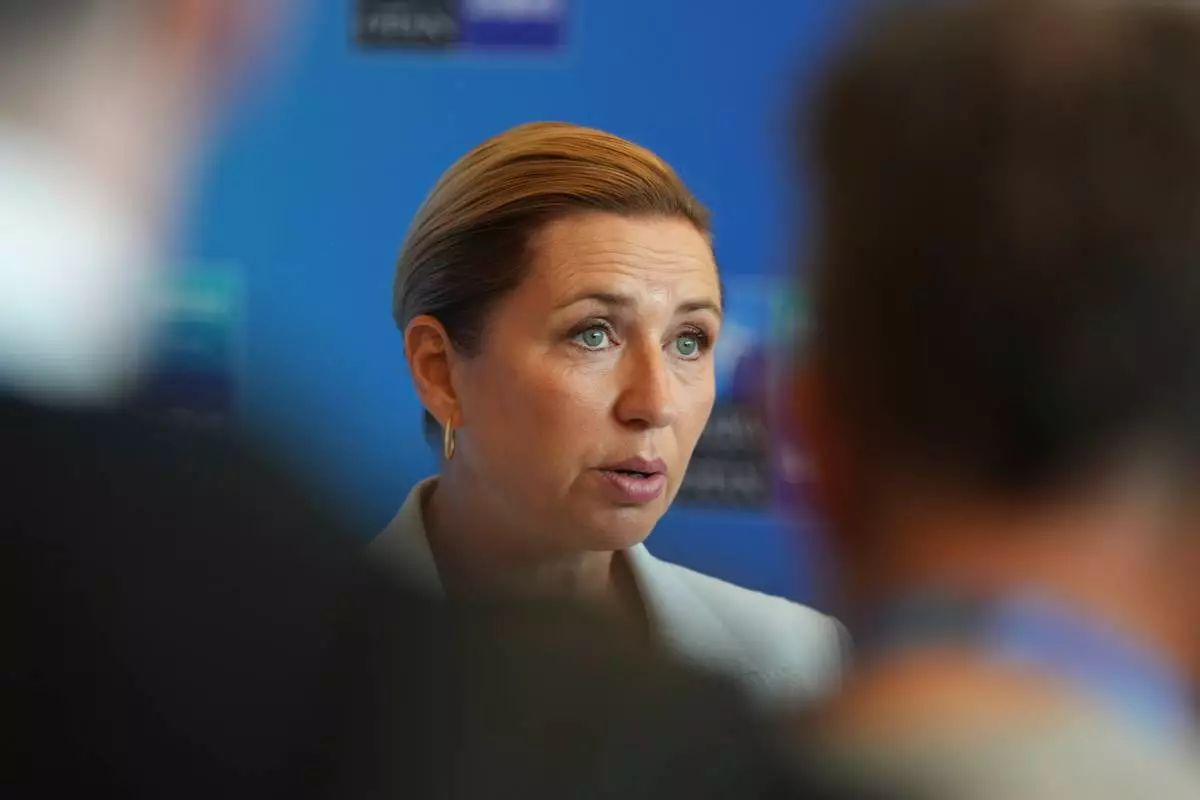
Denmark's Prime Minister Mette Frederiksen makes statements before the NATO summit in Ankara, Turkey, Wednesday, July 8, 2026. (AP Photo/Alastair Grant, Pool)
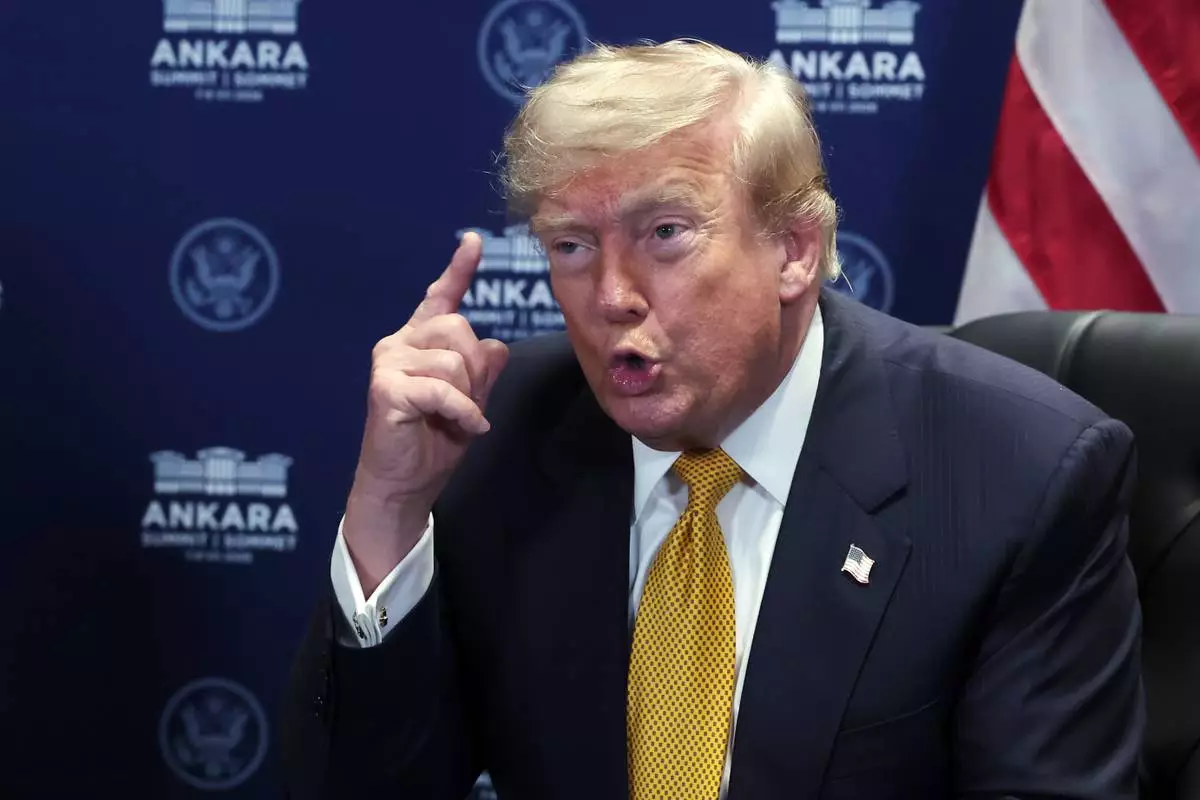
President Donald Trump speaks during a meeting with NATO Secretary General Mark Rutte at the NATO summit in Ankara, Turkey, Wednesday, July 8, 2026. (Filip Singer, Pool Photo via AP)
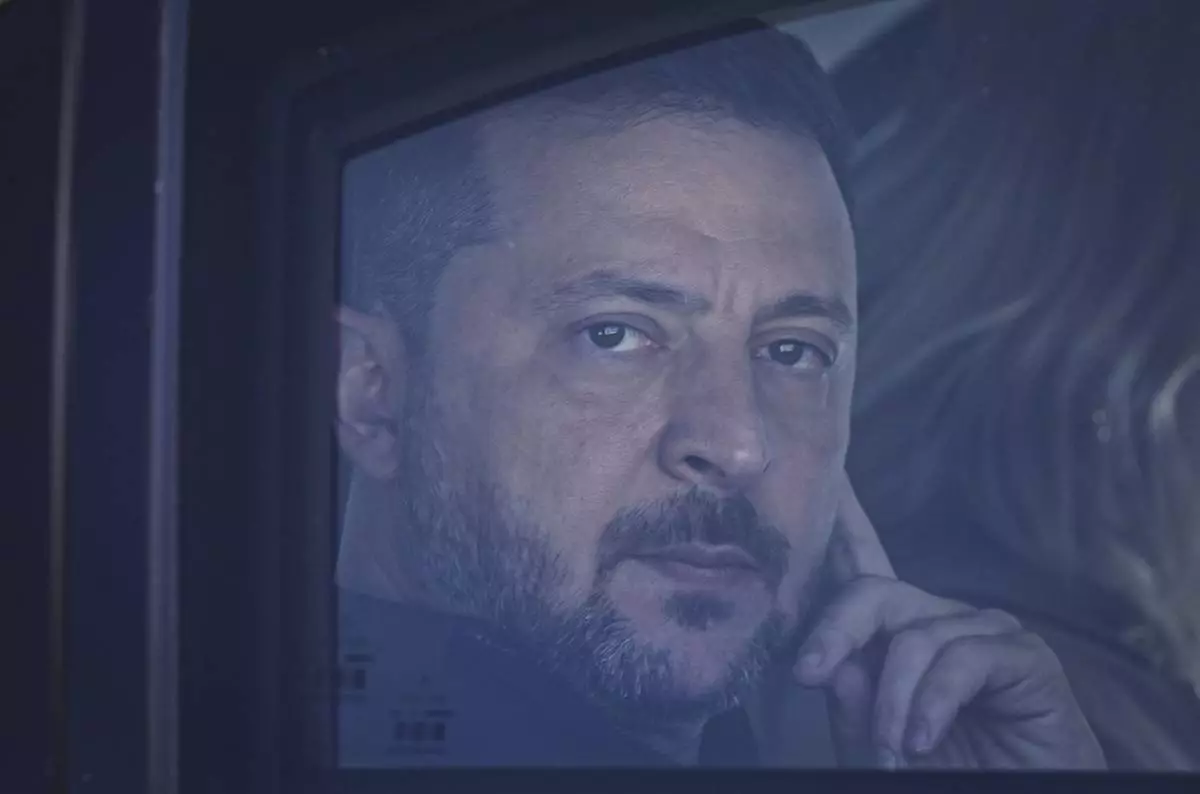
Ukraine's President Volodymyr Zelenskyy looks out from his car window as he arrives for the NATO Summit in Ankara, Turkey, Tuesday, July 7, 2026. (Metin Aktaş, Pool Photo via AP)
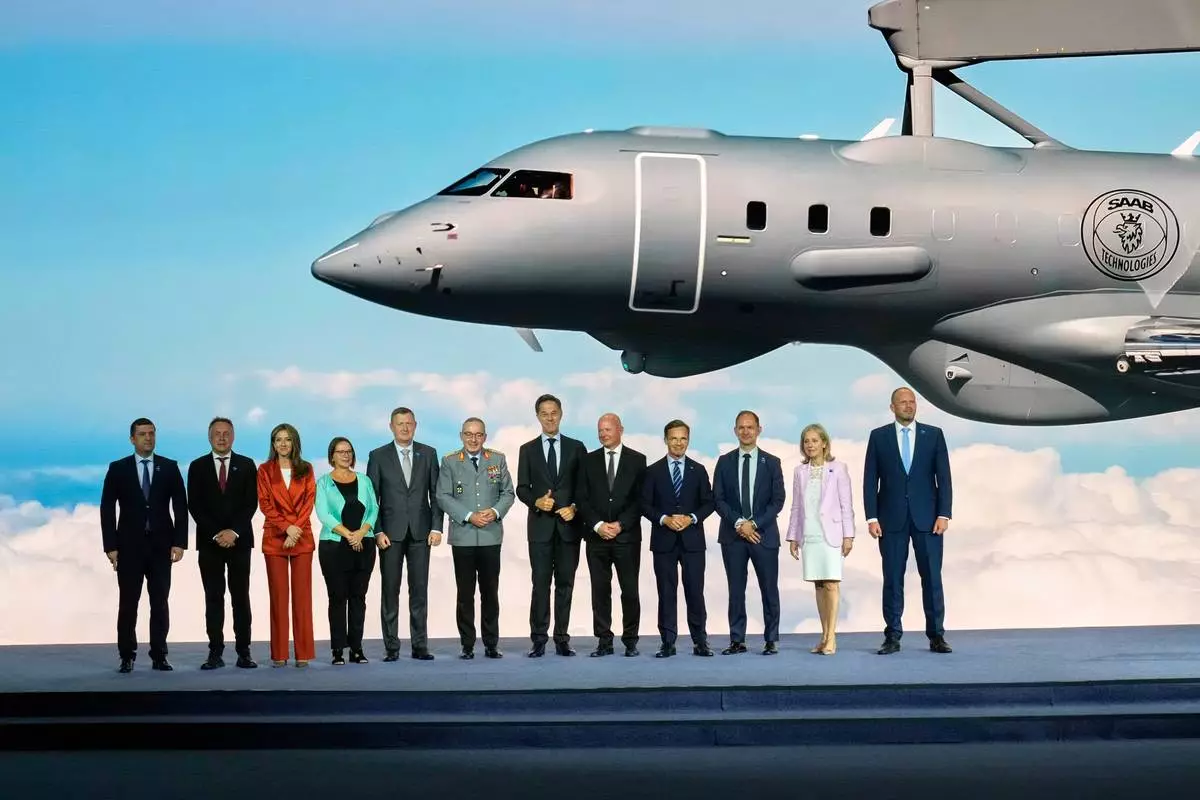
NATO Secretary General Mark Rutte, center, poses with NATO defense ministers and industry representatives during the opening of the NATO Defense Industry Forum on the sidelines of the NATO summit in Ankara, Turkey, Tuesday, July 7, 2026. (AP Photo/Hussein Malla)
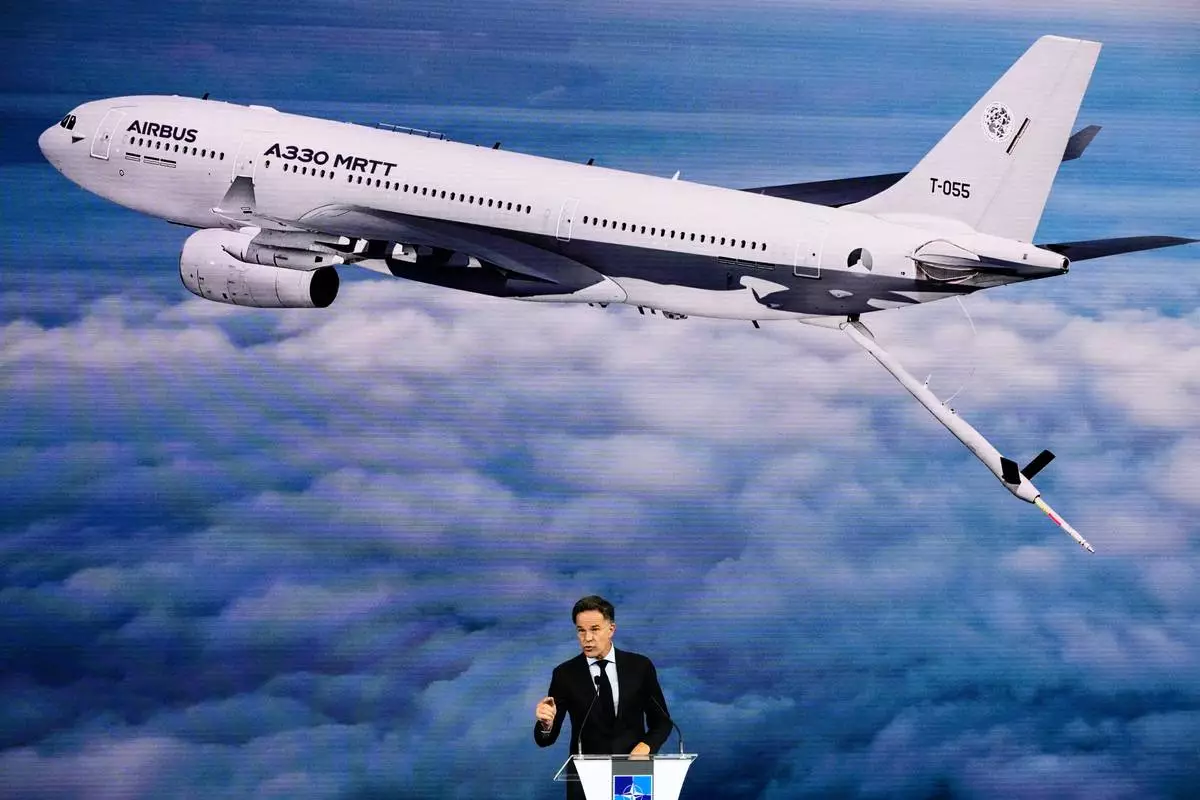
NATO Secretary General Mark Rutte speaks at the opening of the NATO Defense Industry Forum on the sidelines of the NATO summit in Ankara, Turkey, Tuesday, July 7, 2026. (AP Photo/Hussein Malla)
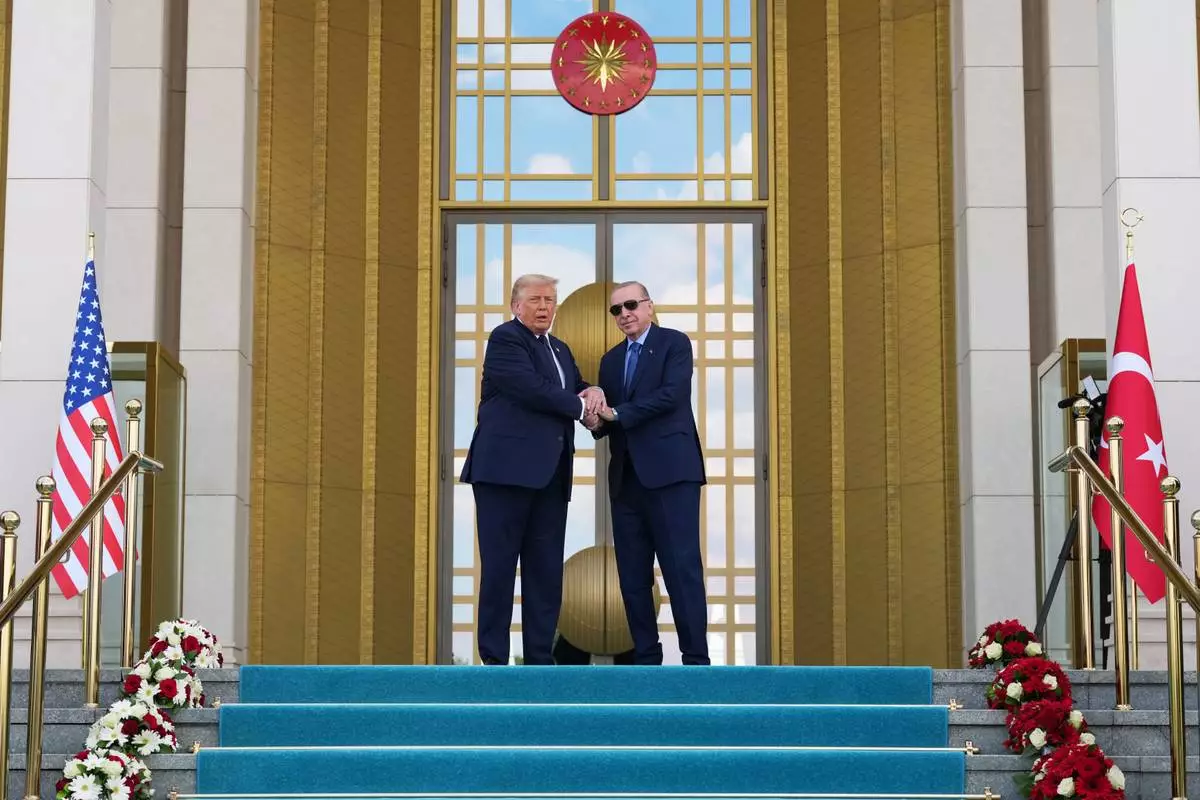
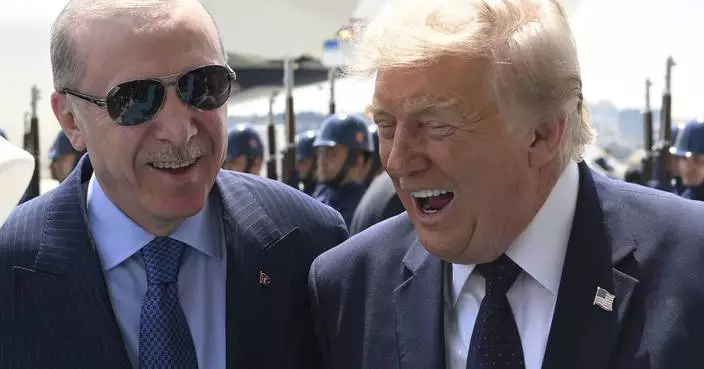
President Donald Trump shakes hands with Turkish President Recep Tayyip Erdogan at the Bestepe Presidential Palace during a formal welcome for the NATO summit in Ankara, Turkey, Tuesday, July 7, 2026.(AP Photo/Alex Brandon)
Two men walk past the NATO logo during the NATO Defense Industry Forum at the NATO summit in Ankara, Turkey, Tuesday, July 7, 2026. (AP Photo/Hussein Malla)