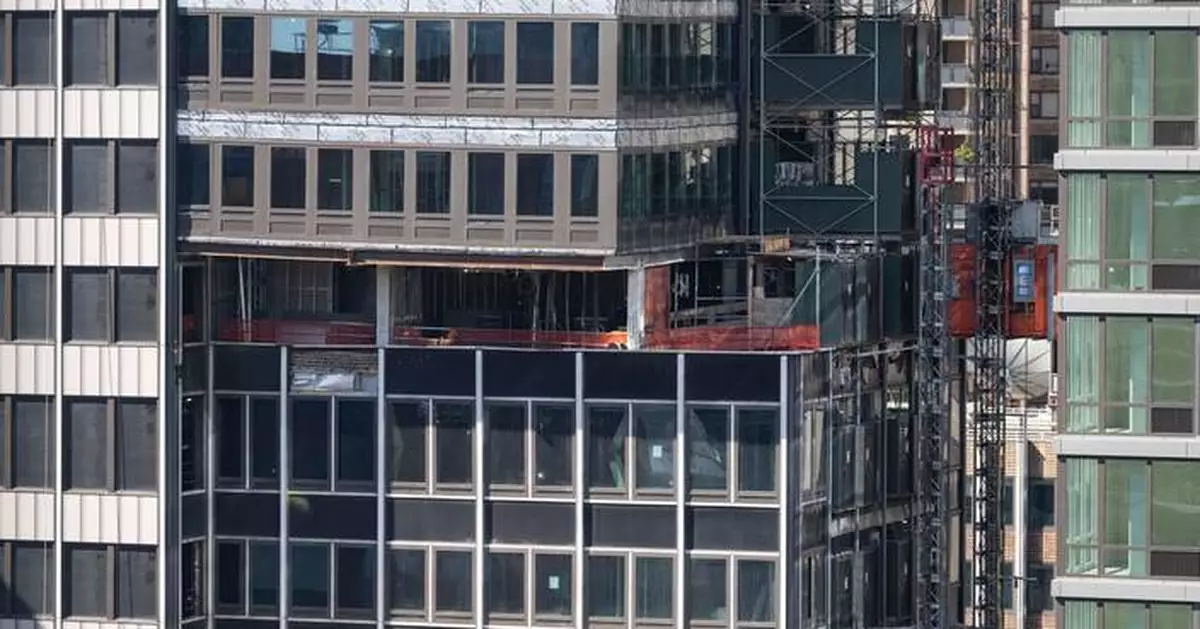
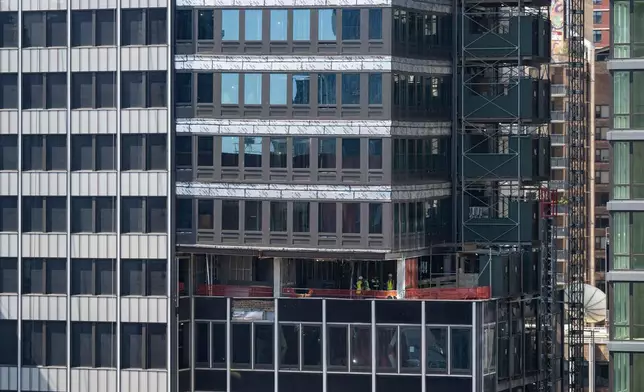
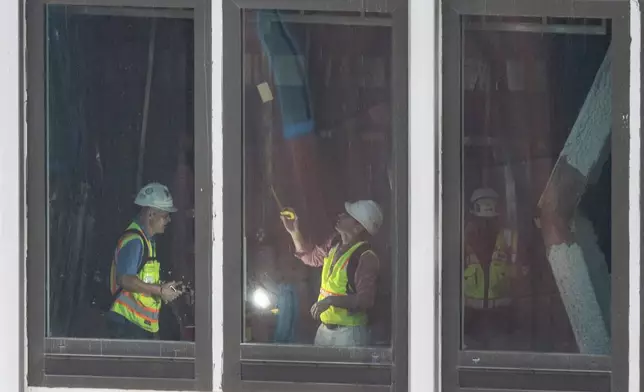
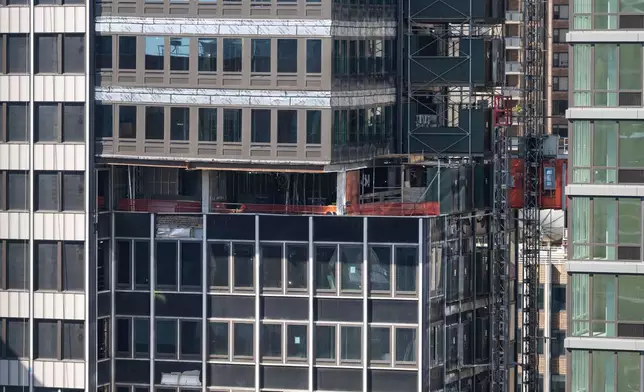
NEW YORK (AP) — Crews worked through the night to shore up a massive, under-construction apartment building in Manhattan after some of its columns buckled and floors sagged, triggering widespread evacuations and street closures over concerns about a collapse.
Mayor Zohran Mamdani confirmed Wednesday that there has been no additional movement in the building, the former headquarters of pharmaceutical giant Pfizer, since Tuesday morning. The structure was deemed stable late Tuesday.
Click to Gallery
People inspect a buckled support beam inside 235 East 42nd Street, Wednesday, July 8, 2026, in New York. (AP Photo/Yuki Iwamura)
Sagging floors above a buckled support beam are seen inside 235 East 42nd Street, Wednesday, July 8, 2026, in New York. (AP Photo/Yuki Iwamura)
People inspect buckled support beams inside 235 East 42nd Street, Wednesday, July 8, 2026, in New York. (AP Photo/Yuki Iwamura)
People inspect a buckled support beam inside 235 East 42nd Street, Wednesday, July 8, 2026, in New York. (AP Photo/Yuki Iwamura)
A buckled support beam is seen inside 235 East 42nd Street, Wednesday, July 8, 2026, in New York. (AP Photo/Yuki Iwamura)
Four nearby buildings remained under evacuation orders Wednesday and normally busy midtown streets around the construction site were closed. After the structural issues were reported Tuesday, a nearby school, the Israeli consulate and a number of hotels were among the buildings evacuated.
“The building is stable and yet we are going to continue to prioritize the safety of all in that immediate area,” Mamdani said.
Temporary shoring and beams were installed on floors 18 through 23 of the building, and additional supports will be added throughout the day as crews make their way to the roof and down to ninth floor, according to Mamdani.
Once the emergency repairs are complete, the city's Department of Buildings will conduct a “rigorous assessment” to ensure the plans and the site are fully compliant with all codes before any non-emergency work proceeds, the mayor said.
On the streets surrounding the massive construction site, everyday life seemed to be slowly returning, with people walking dogs, pushing strollers and riding bikes. Residents and some hotel guests were let into a cordoned-off street near the building.
Authorities responded to emergency calls at the building early Tuesday to discover two mangled support beams and sagging floors on its 21st floor. The building itself, along with a wide stretch of a bustling area not far from the Grand Central transit hub and the Chrysler Building had to be evacuated and closed to pedestrians.
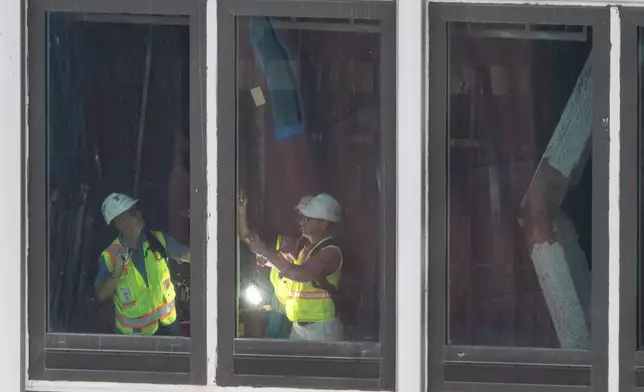
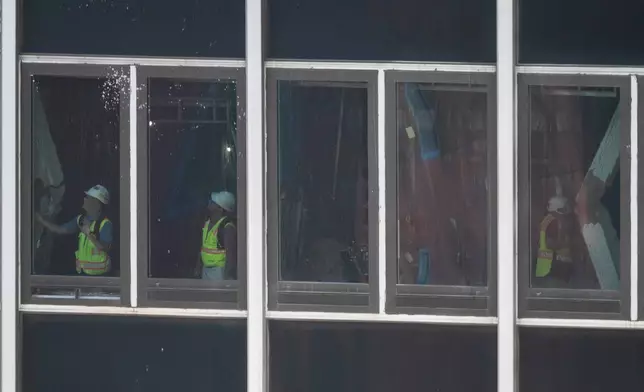
On-site contractors were eventually allowed to reenter the building to do the emergency repairs after city officials did a floor-by-floor inspection. The building was empty other than the workers.
The renovation project is billed as the largest office-to-residential conversion in the city’s history, creating some 1,600 units of housing. The plans call for transforming a pair of office buildings by adding more than a dozen stories atop one tower and redesigning another tower.
MetroLoft, the project developer, has said the building itself is not at risk of collapse and that no debris fell from the building, though Nathan Berman, the firm's founder has acknowledged the added weight from widening the top 15 or so floors of the building likely caused the damage.
Associated Press reporter Michael R. Sisak contributed to this story.
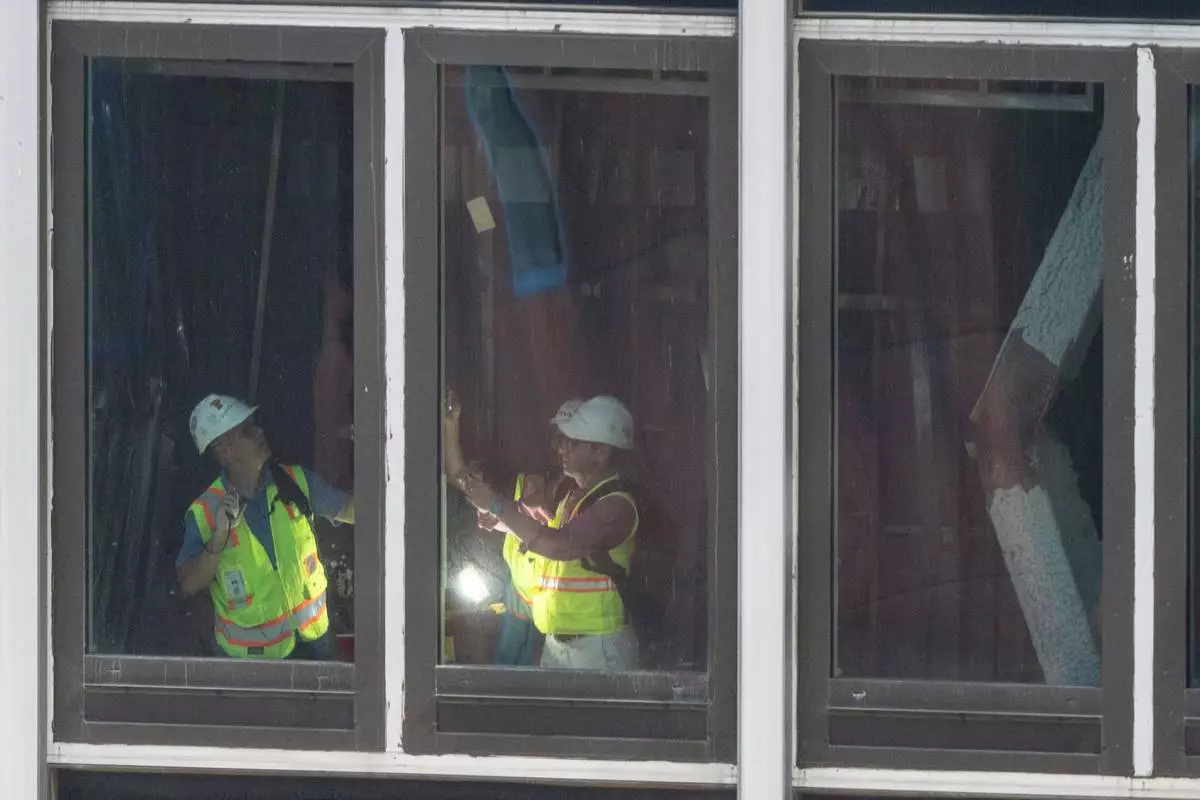
People inspect a buckled support beam inside 235 East 42nd Street, Wednesday, July 8, 2026, in New York. (AP Photo/Yuki Iwamura)
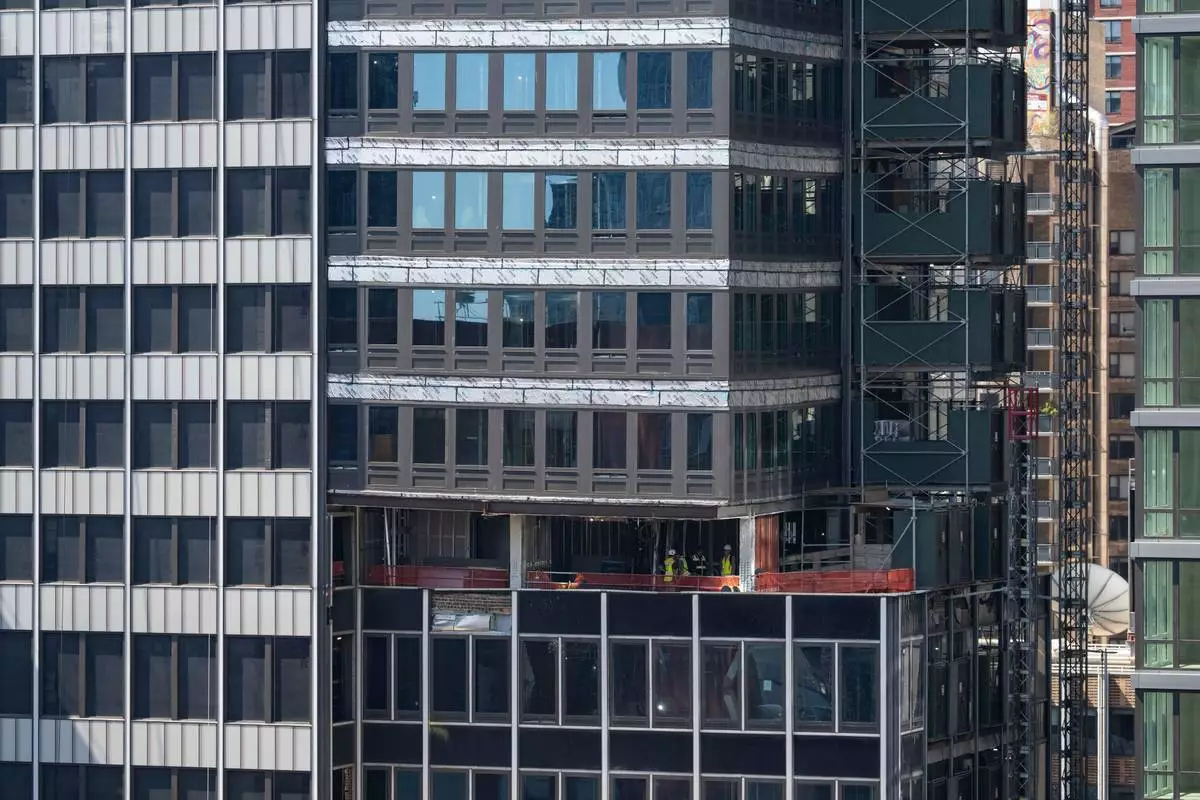
Sagging floors above a buckled support beam are seen inside 235 East 42nd Street, Wednesday, July 8, 2026, in New York. (AP Photo/Yuki Iwamura)
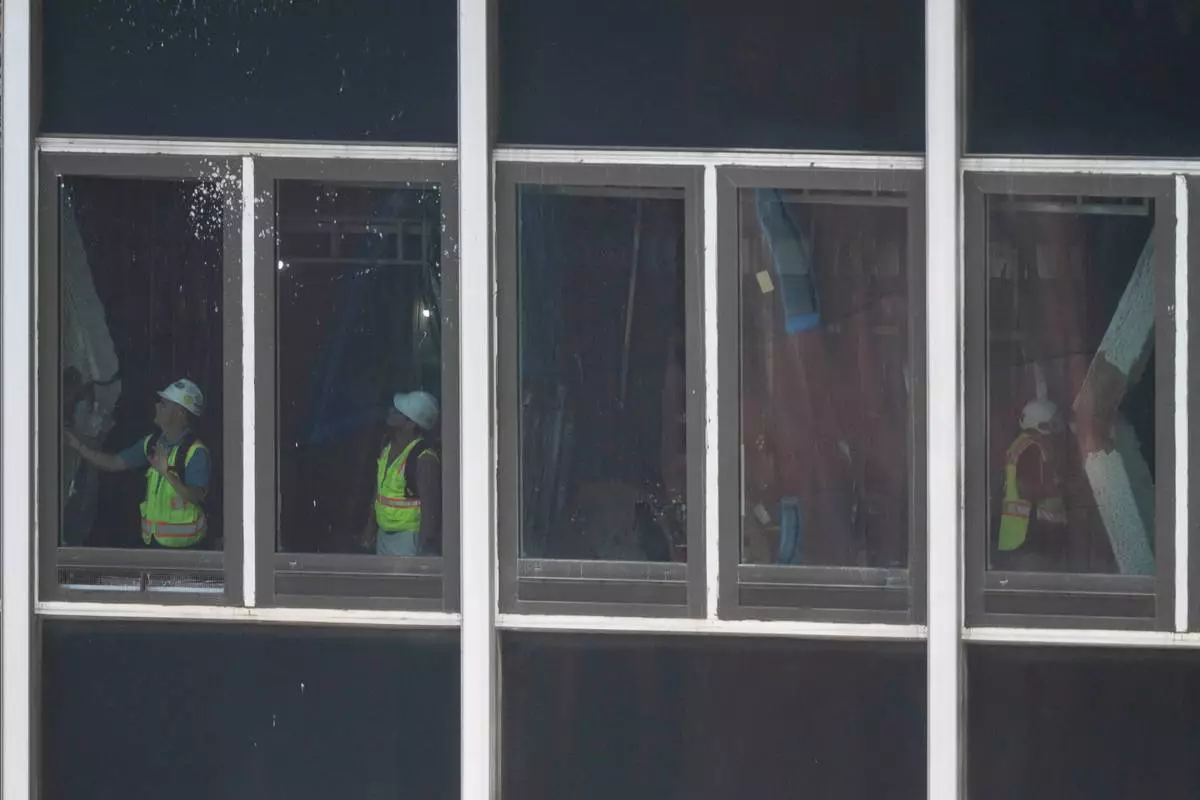
People inspect buckled support beams inside 235 East 42nd Street, Wednesday, July 8, 2026, in New York. (AP Photo/Yuki Iwamura)
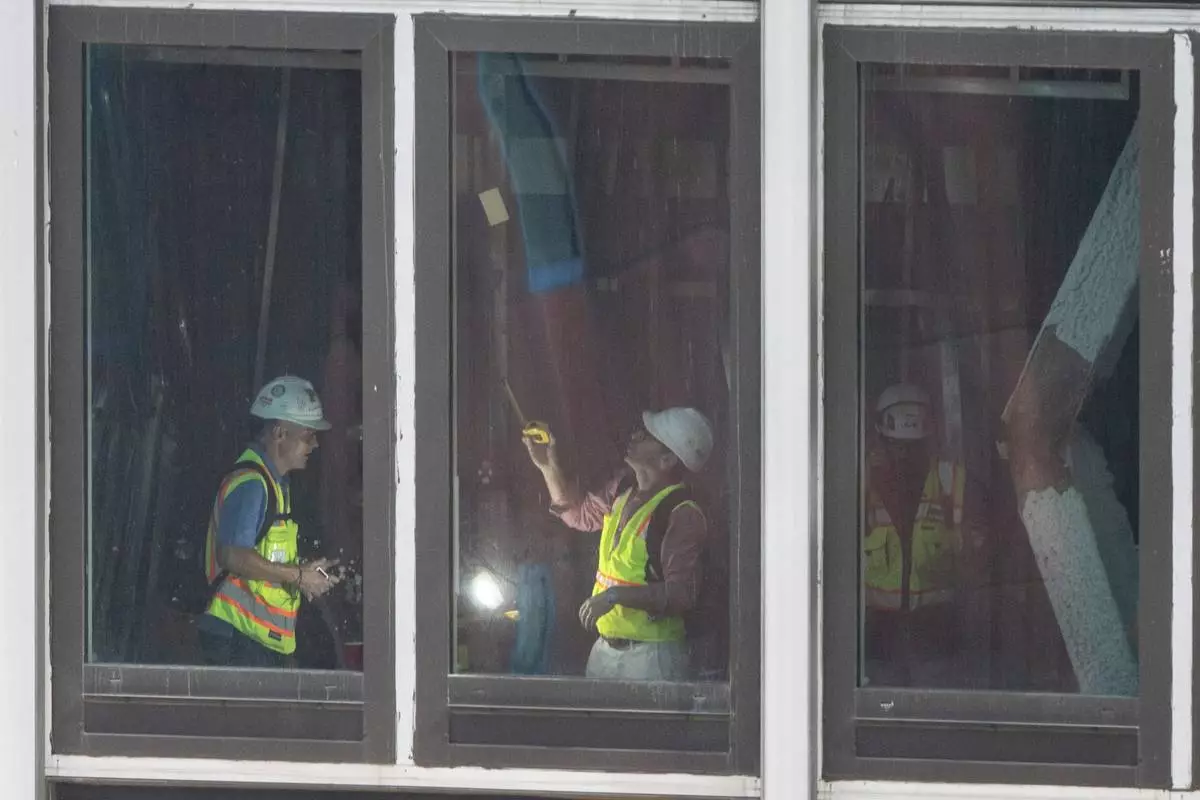
People inspect a buckled support beam inside 235 East 42nd Street, Wednesday, July 8, 2026, in New York. (AP Photo/Yuki Iwamura)
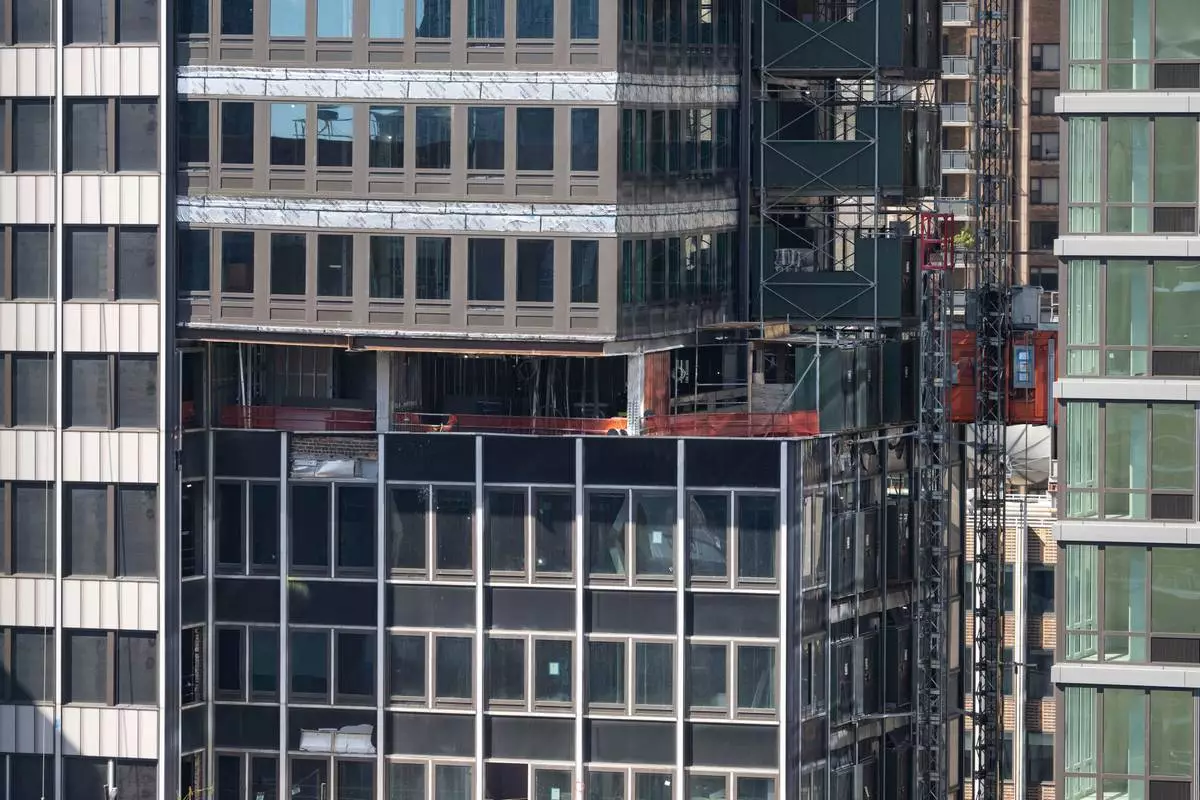
A buckled support beam is seen inside 235 East 42nd Street, Wednesday, July 8, 2026, in New York. (AP Photo/Yuki Iwamura)
NAJAF, Iraq (AP) — Thousands of mourners attended funeral processions for Iran’s Ayatollah Ali Khamenei on Wednesday in the holy Iraqi cities of Najaf and Karbala as part of dayslong funeral ceremonies for the Islamic Republic's late supreme leader.
The ceremonies began on Saturday, with authorities shutting down streets, airspace and daily life in Tehran, Iran's capital, as throngs commemorated the life of the man who led Iran for decades with an iron fist while confronting the West. His body was later taken from Najaf to Karbala before it is to be returned to Iran.
Khamenei was killed in late February in wide-scale U.S. and Israeli strikes on Iran that started the war. The 86-year-old supreme leader was among several senior Iranian leaders killed in strikes during the war.
Talks on ending the war between the United States and Iran appear to be on hold until after the burial.
However, strikes from both sides in the Persian Gulf on Tuesday and into Wednesday raised risks that the interim agreement to end the monthslong conflict that engulfed the Middle East could completely break down.
The U.S. military attacked Iran early Wednesday after it said Tehran struck three ships in the Strait of Hormuz. Iran then launched retaliatory strikes on Kuwait and Bahrain.
Khamenei's body arrived on Tuesday in Najaf, considered one of the holiest of cities for millions of Shiite Muslims worldwide. Mourners holding portraits of Khamenei welcomed the body and senior officials escorting it, including Iranian President Masoud Pezeshkian and Foreign Minister Abbas Araghchi.
The body was placed in a casket draped in the Islamic Republic’s flag and encased in glass.
Some supporters performed self-flagellation on the streets, while others waved Iranian as well as red and black flags symbolizing mourning and revenge.
Muhammad Taqi al-Hakim, a senior scholar at the Najaf seminary, led the funeral prayers at the Shrine of Imam Ali, the Prophet Muhammad’s cousin and son-in-law.
As the coffin was carried into the shrine, large crowds pushed and shoved their way to get close to it. Some threw themselves onto the casket, as attendants struggled to control the crowd, urging the pallbearers to carry it closer to the ground for fear it might fall.
“We, the people of Iraq, will remain a thorn in the eyes of the enemies,” said Jaafar Jawad, a funeral attendee. “(His body arriving here) is the greatest possible honor, and God willing, we will be loyal and repay a little of his debt in the holy city of Najaf.”
The body later arrived in Karbala, also a holy city for Shiites, where Imam Hussein, the grandson of the prophet, was killed in 680 AD. Thousands of supporters gathered in the desert heat in and around the shrine while Abdul Mahdi al-Karbalaei, a representative of Iraq's top Shiite religious authority, led the prayers there.
Iran’s new supreme leader, Ayatollah Mojtaba Khamenei, has yet to make an appearance at the funeral ceremonies, which are unfolding over several days. He is believed to be in hiding after reportedly being wounded in the airstrike that killed his father.
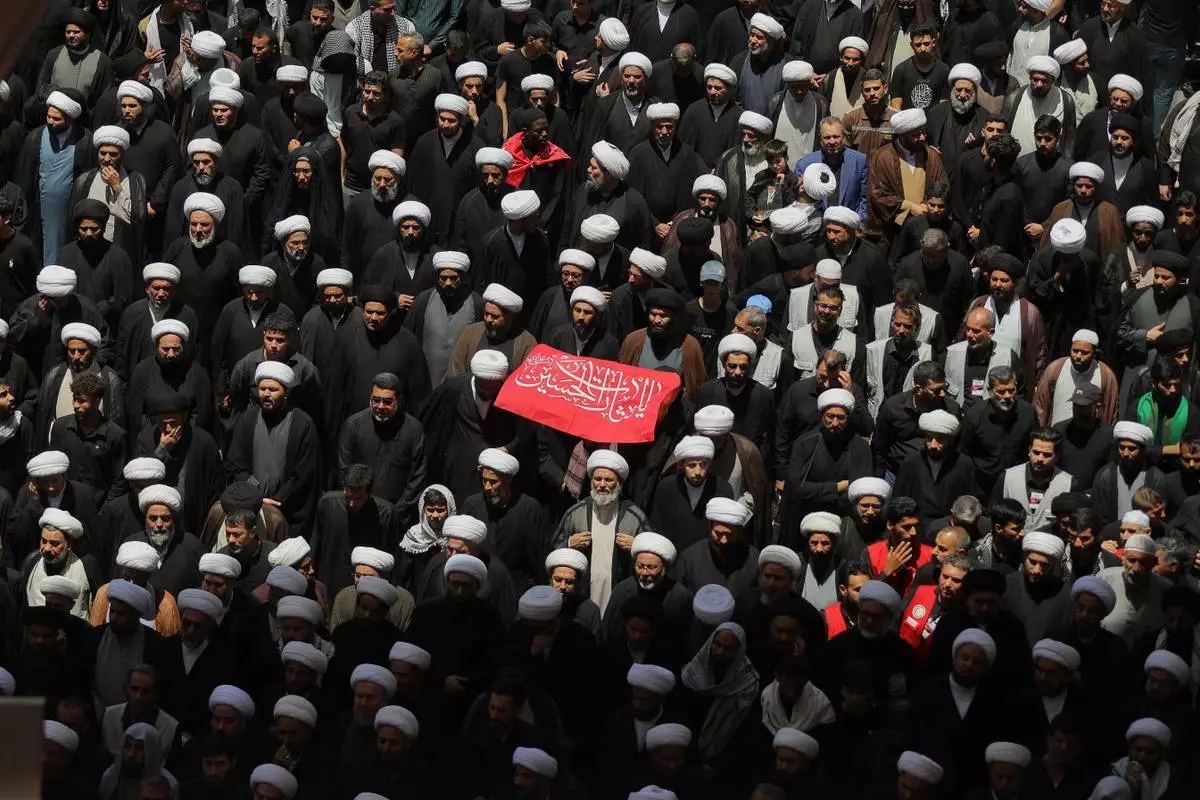
Shiite clerics join other mourners during the funeral procession for the late Iranian Supreme Leader Ayatollah Ali Khamenei inside the Imam Ali Shrine in Najaf, Iraq, Wednesday, July 8, 2026. (AP Photo/Anmar Khalil)
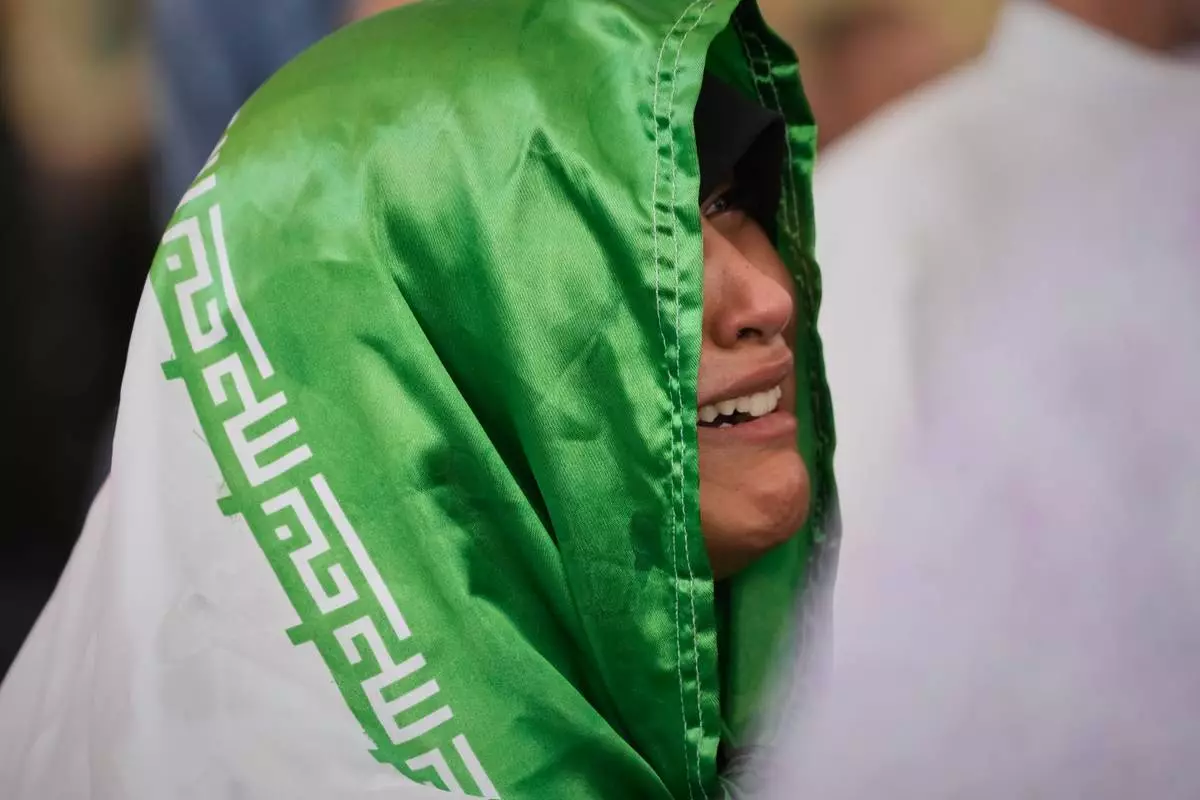
A mourner, draped in an Iranian flag, reacts during funeral prayers for the late Iranian Supreme Leader Ayatollah Ali Khamenei at the Imam Ali Shrine in Najaf, Iraq, Wednesday, July 8, 2026. (AP Photo/Hadi Mizban)
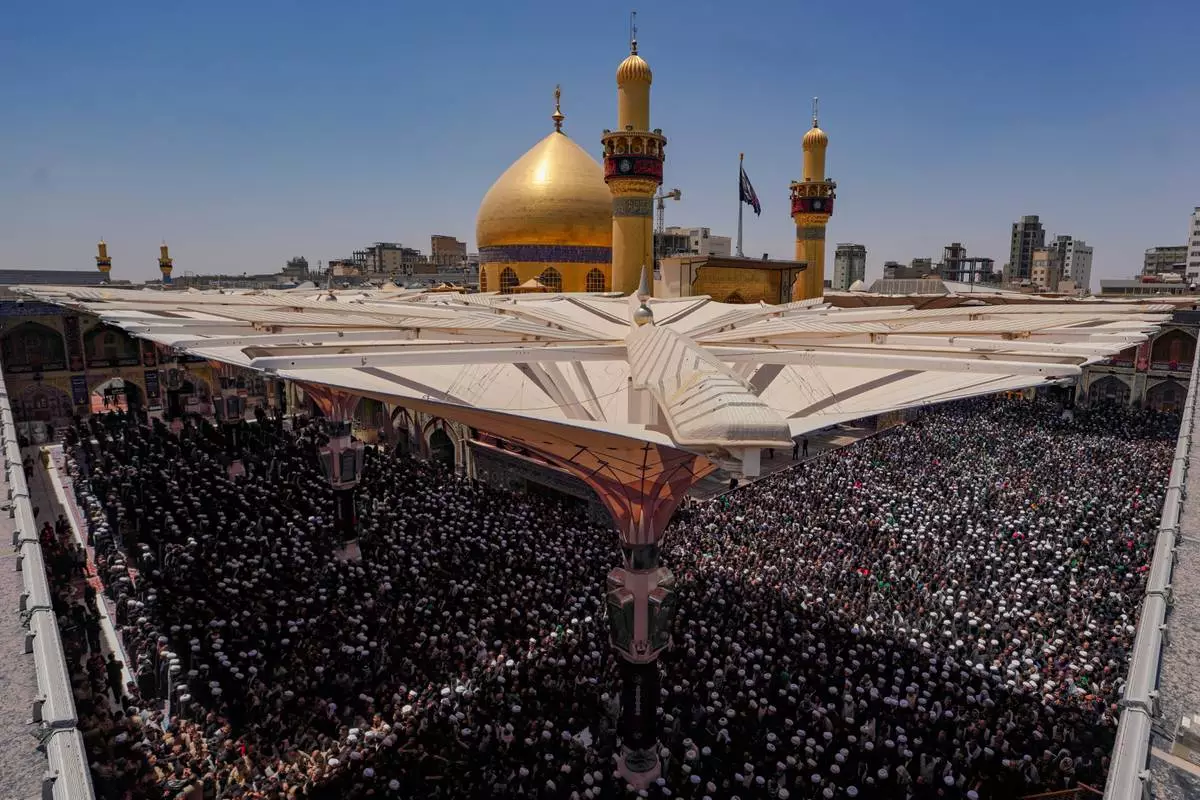
Mourners gather in prayer during the funeral procession for the late Iranian Supreme Leader Ayatollah Ali Khamenei inside the Imam Ali Shrine in Najaf, Iraq, Wednesday, July 8, 2026. (AP Photo/Anmar Khalil)
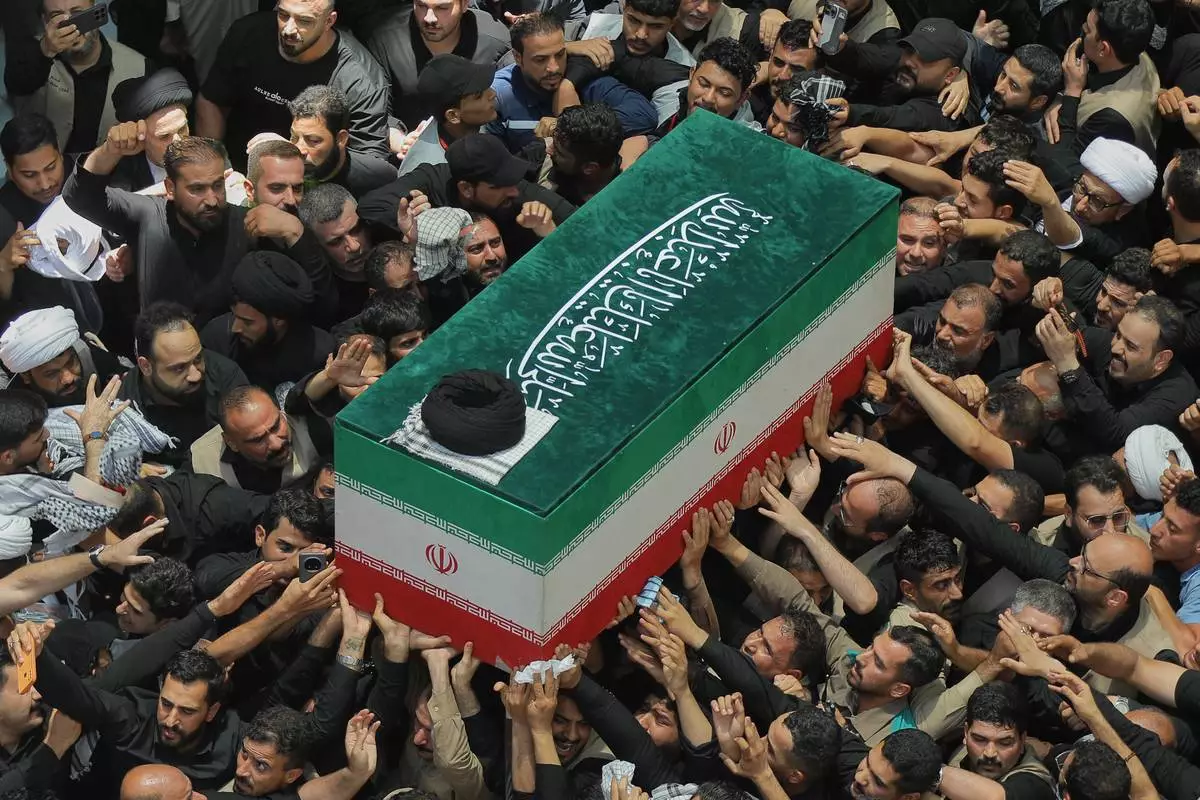
The coffin of the late Iranian Supreme Leader Ayatollah Ali Khamenei is carried by mourners to the Imam Ali Shrine in Najaf, Iraq, Wednesday, July 8, 2026. (AP Photo/Anmar Khalil)
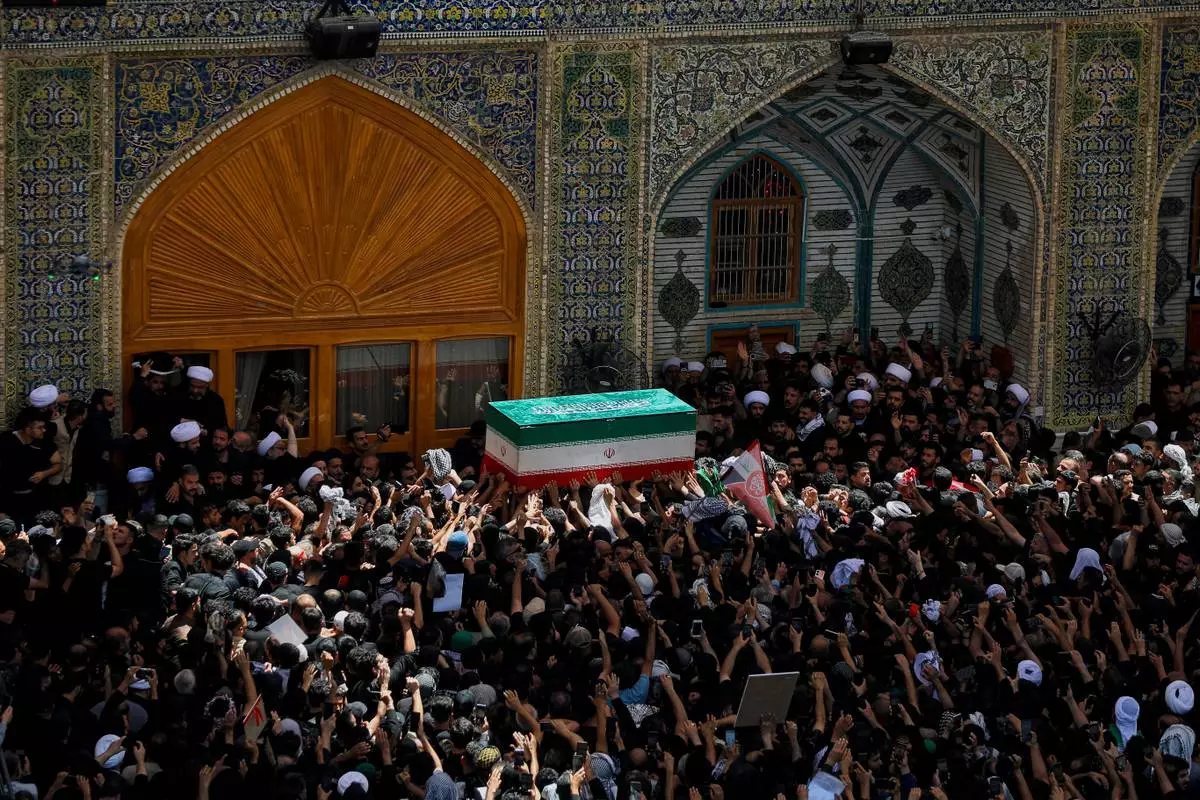
The coffin of the late Iranian Supreme Leader Ayatollah Ali Khamenei is carried by mourners to the Imam Ali Shrine in Najaf, Iraq, Wednesday, July 8, 2026. (AP Photo/Anmar Khalil)
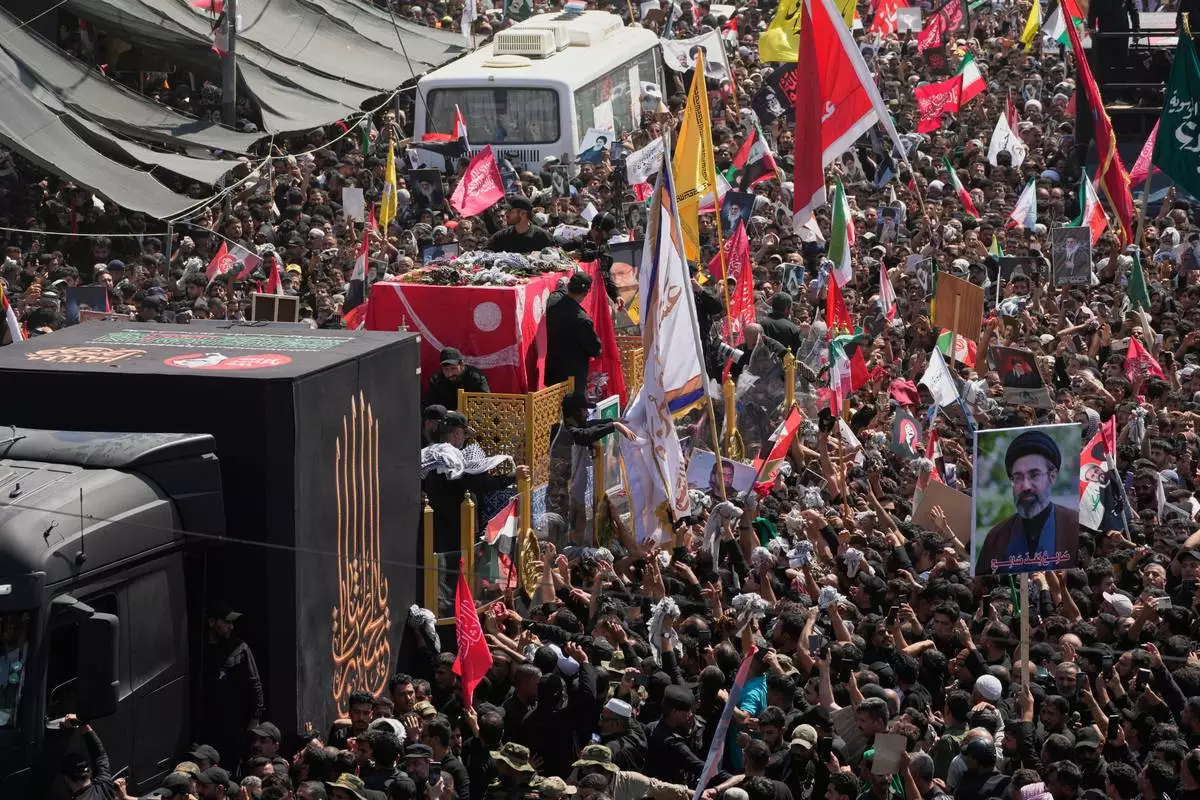
Mourners surround a truck carrying the coffin of Iranian Supreme Leader Ayatollah Ali Khamenei during a funeral procession in Najaf, Iraq, Wednesday, July 8, 2026. (AP Photo/Hadi Mizban)
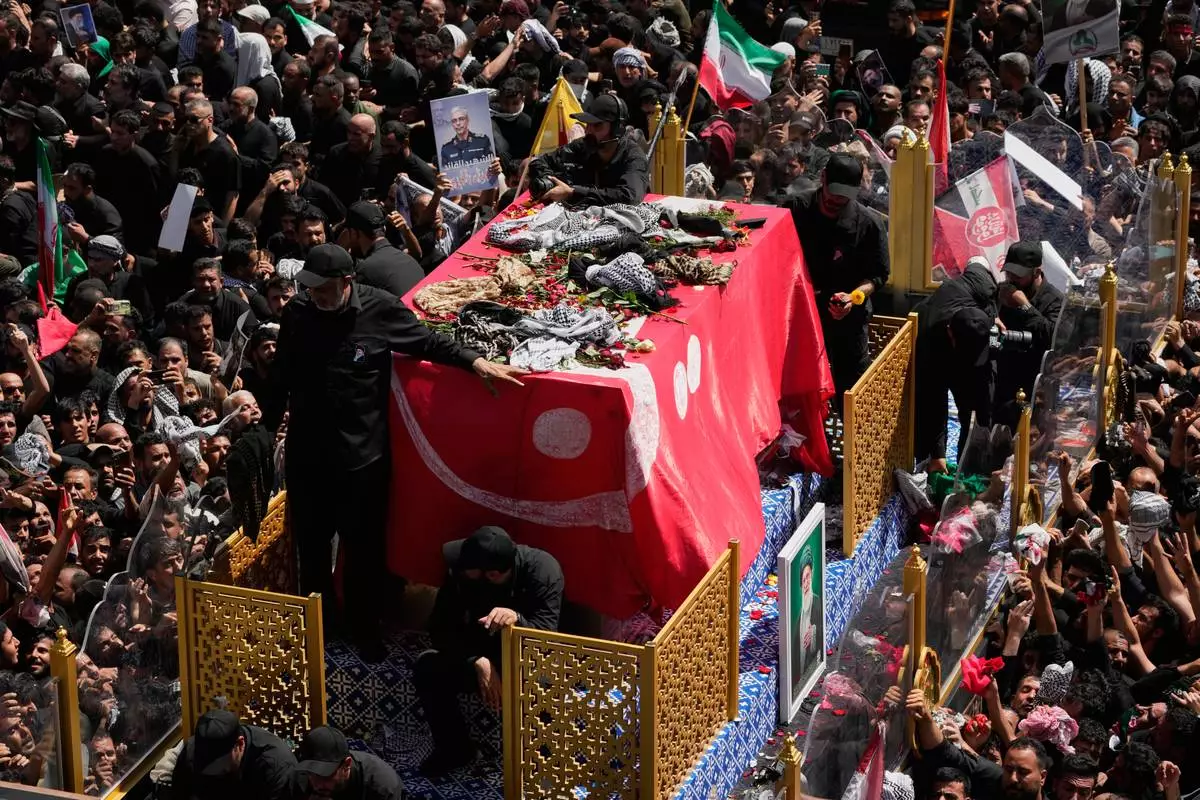
Mourners reach toward a truck carrying the coffin of Iranian Supreme Leader Ayatollah Ali Khamenei during a funeral procession in Najaf, Iraq, Wednesday, July 8, 2026. (AP Photo/Hadi Mizban)
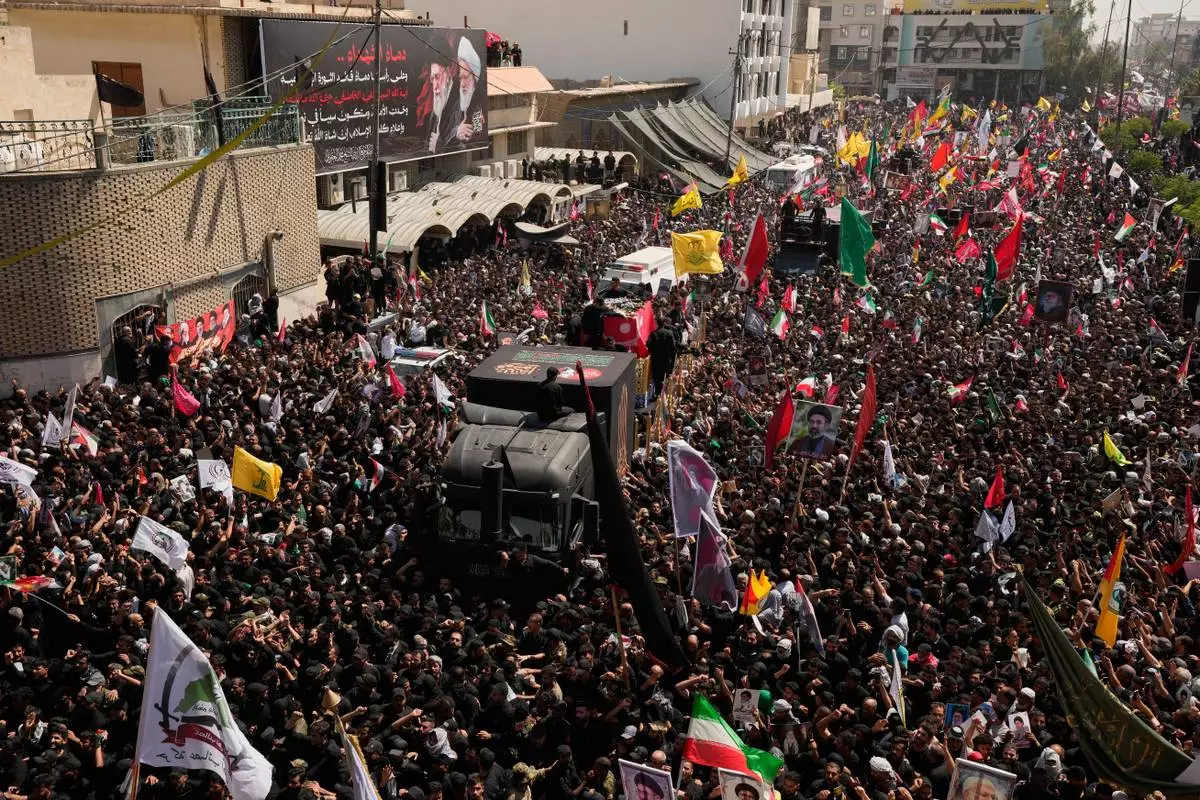
A truck carrying the coffin of the late Iranian Supreme Leader Ayatollah Ali Khamenei makes its way through mourners during a funeral procession in Najaf, Iraq, Wednesday, July 8, 2026. (AP Photo/Hadi Mizban)
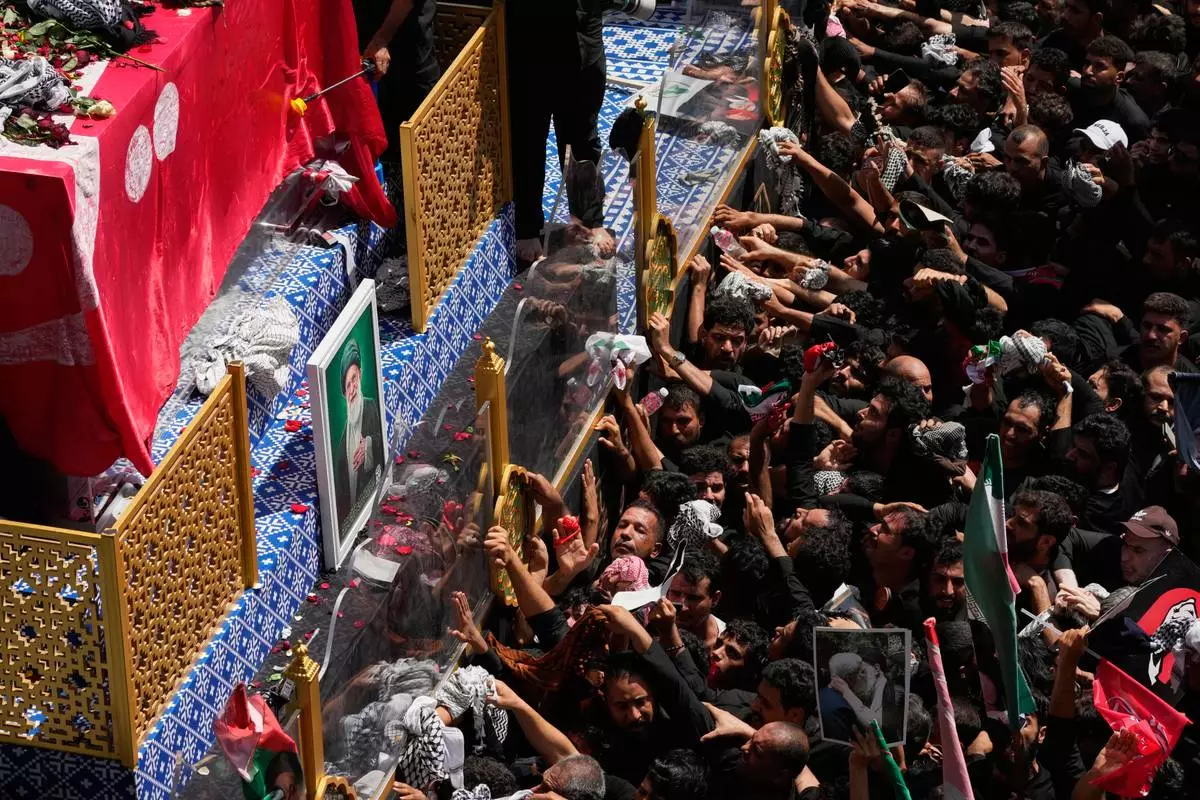
Mourners reach toward a truck carrying the coffin of Iranian Supreme Leader Ayatollah Ali Khamenei during a funeral procession in Najaf, Iraq, Wednesday, July 8, 2026. (AP Photo/Hadi Mizban)
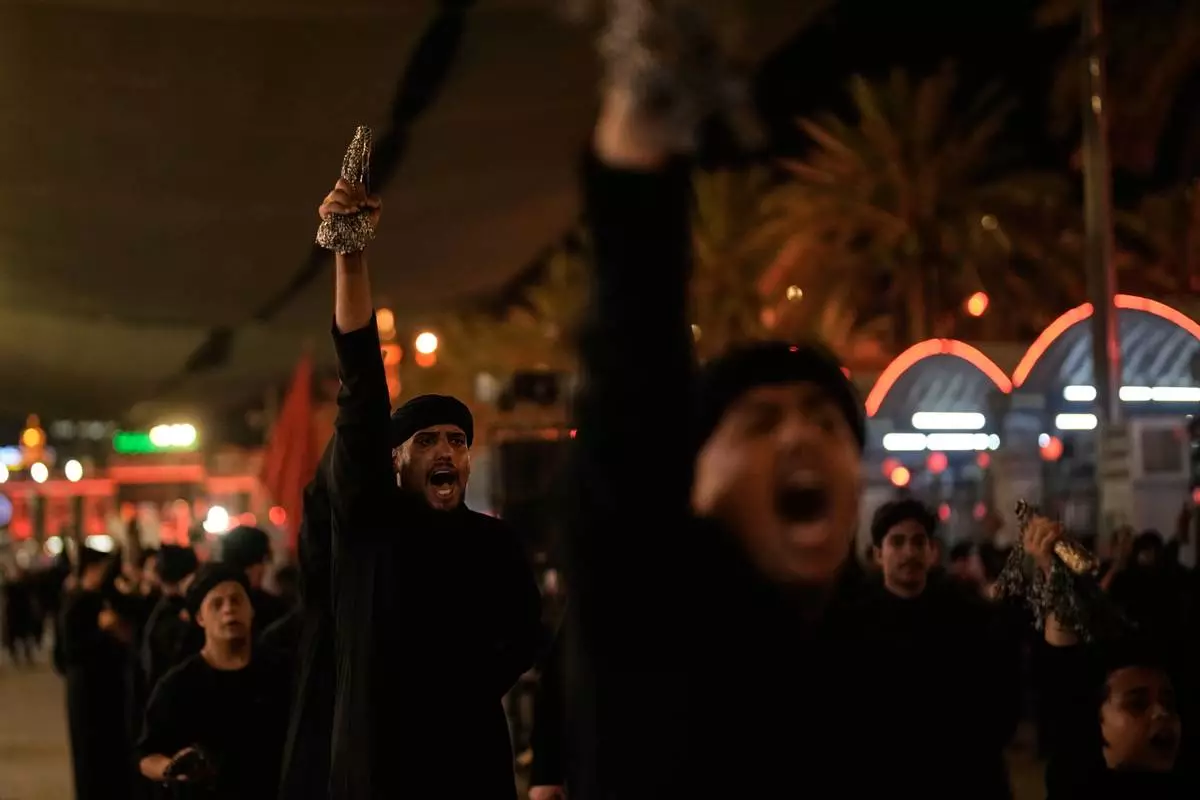
Shiite mourners chant slogans as the perform ritual self-flagellation with chains outside the Imam Hussein Shrine on the eve of funeral ceremonies for the late Iranian Supreme Leader Ayatollah Ali Khamenei in Karbala, Iraq, Tuesday, July 7, 2026. (AP Photo/Khalil Hamra)
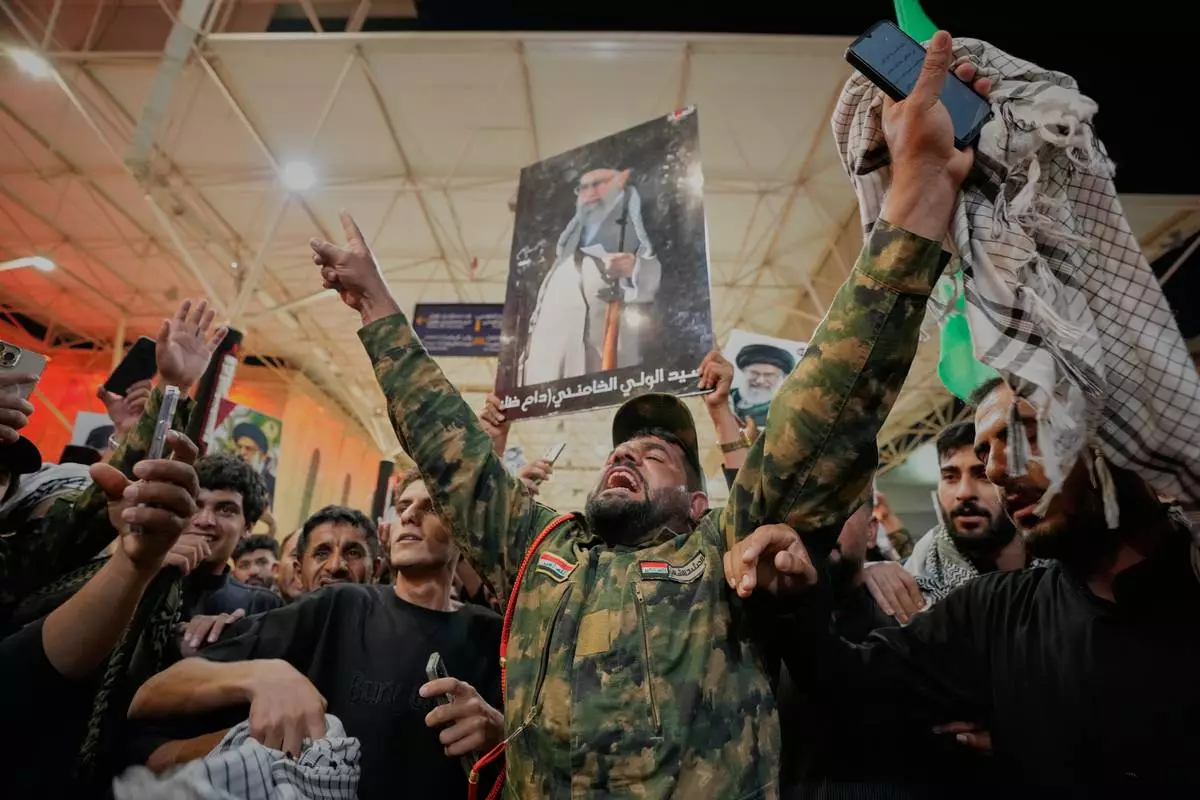
An Iraqi Shiite soldier chants on the eve of funeral ceremonies for the late Iranian Supreme Leader Ayatollah Ali Khamenei outside the Imam Ali Shrine in Najaf, Iraq, Tuesday, July 7, 2026. (AP Photo/Hadi Mizban)
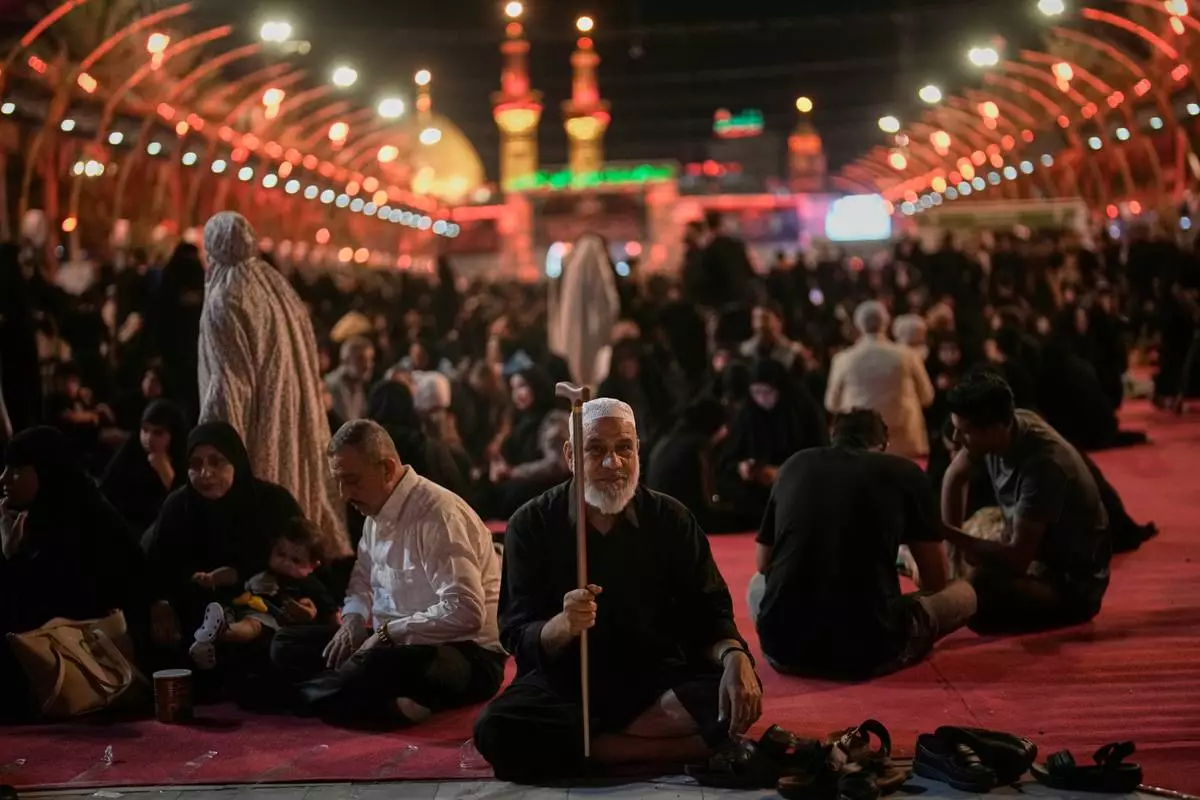
Mourners sit outside the Imam Hussein Shrine on the eve of of funeral ceremonies for the late Iranian Supreme Leader Ayatollah Ali Khamenei in Karbala, Iraq, Tuesday, July 7, 2026. (AP Photo/Khalil Hamra)
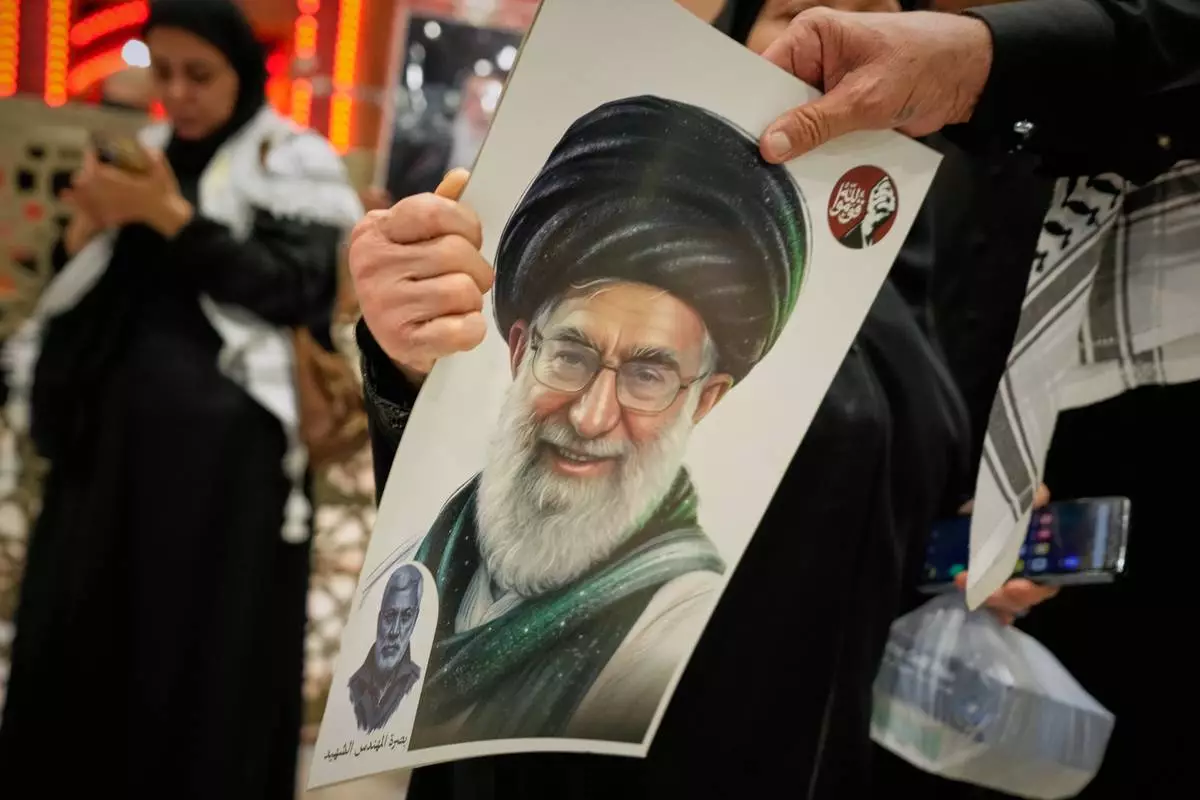
Portraits of the late Iranian Supreme Leader Ayatollah Ali Khamenei are distributed outside the Imam Ali Shrine on the eve of funeral ceremonies in Najaf, Iraq, Tuesday, July 7, 2026. (AP Photo/Hadi Mizban)
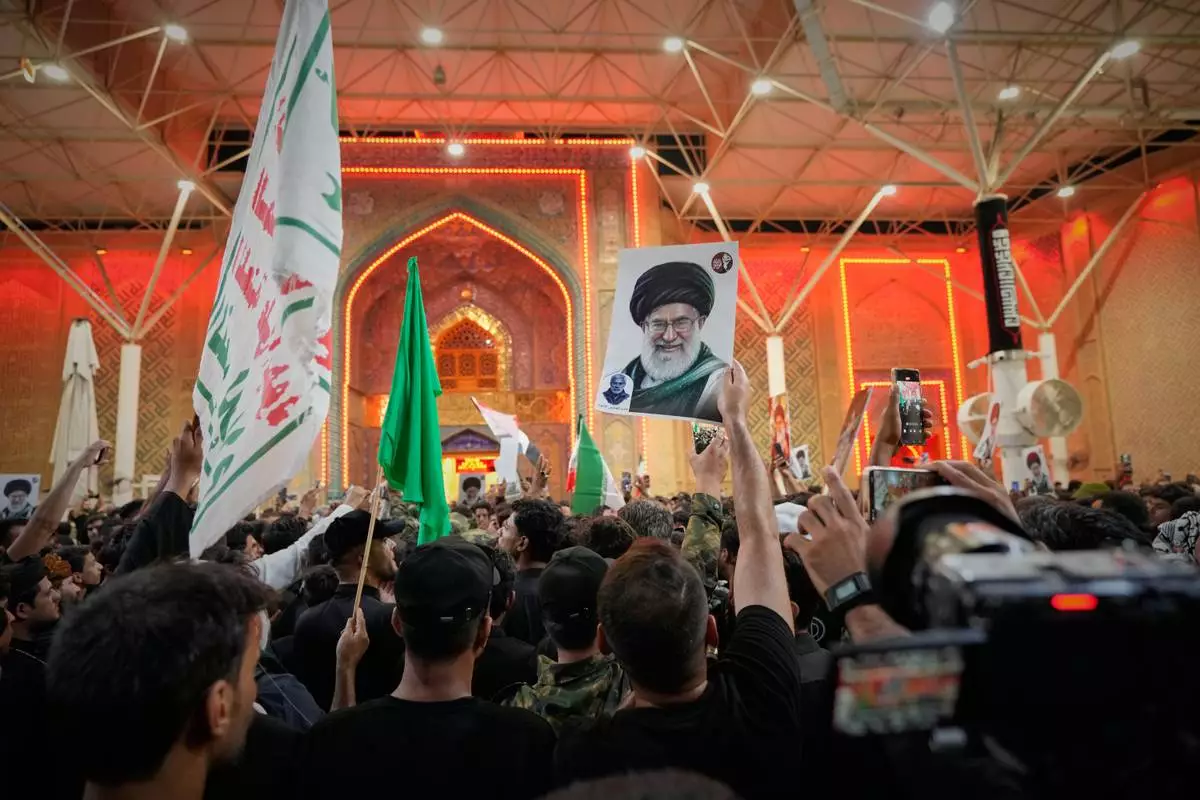
Mourners wave Shiite religious flags and a portrait of the late Iranian Supreme Leader Ayatollah Ali Khamenei outside the Imam Ali Shrine on the eve of funeral ceremonies in Najaf, Iraq, Tuesday, July 7, 2026. (AP Photo/Hadi Mizban)