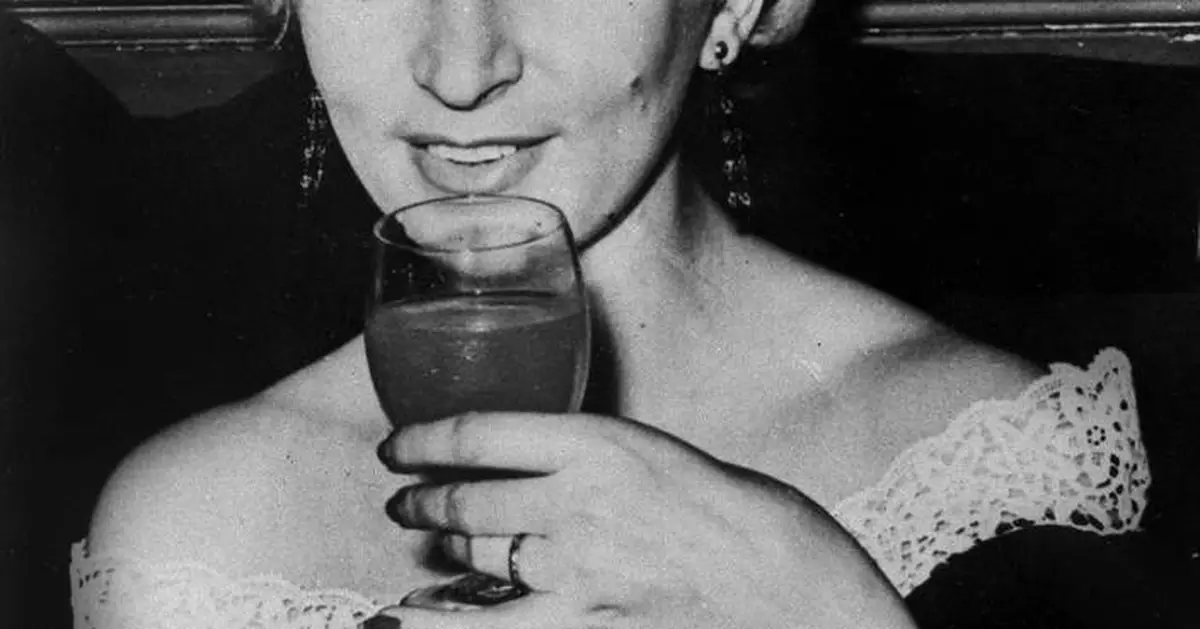
LONDON (AP) — The last woman to be executed in Britain, for gunning down her abusive lover outside a London pub more than 70 years ago, has been posthumously granted a conditional pardon, Deputy Prime Minister David Lammy said Wednesday.
Ruth Ellis, a 28-year-old single mother and nightclub hostess, was hanged on July 13, 1955, for the murder of race-car driver David Blakely. She shot him outside the Magdala pub in the Hampstead neighborhood on April 10, 1955.
“While the pardon does not claim she was innocent of killing David Blakely, it replaces the death penalty with a sentence of life imprisonment to recognize a profound injustice in this exceptional case,” Lammy said.
The killing and trial caused a sensation, and became a cause celebre after she was sentenced to die. When she went to the gallows, 1,000 people held a silent vigil outside Holloway Prison in north London.
Her case is believed to have changed British law. At trial, she was not allowed to argue that she acted because of the emotional impact of abuse. Two years after the hanging, Parliament passed a law allowing a diminished responsibility defense.
The pardon was sought by her grandchildren, who have long fought to reduce her conviction because the repeated sexual, emotional and physical abuse Ellis endured was not considered during the trial or afterward, when she could have been granted a reprieve from the death penalty.
“Justice has finally been done," Laura Enston, a granddaughter, said in a statement. “This pardon does not undo what happened 71 years ago. It does not restore the lives that were broken — the children left behind, the years lost. But it says, formally and finally, that Ruth should not have been executed; that the justice system failed her. That acknowledgment matters profoundly to our family."
Lawyers representing the family applied for the pardon last year by presenting evidence that Ellis likely suffered from what became known as “battered woman syndrome.”
Ellis and witnesses, including her friends and doctors, said Blakely threatened to kill her and she was covered in bruises from assaults in public and being pushed down stairs, the Mishcon de Reya law firm said. They said she was once struck so hard in the abdomen that it caused a miscarriage.
Jurors in her case, however, were told not to consider that she had been “badly treated by her lover.” The trial lasted just over a day, and the jury reached its verdict in less than half an hour.
If the law allowing a diminished responsibility defense had been in place at the time of the trial, lawyers who sought the pardon said Ellis at most would have been convicted of manslaughter and not been sentenced to death.
The U.K. suspended the death penalty in 1965 and abolished it in 1970.
Enston said her mother and uncle, Ellis' two children, never recovered after the execution.
“My uncle took his own life; my mother’s trauma left her unable to be the parent we needed," Enston said. “The shadow of Ruth’s execution has fallen across two generations. We have carried shame that was never ours to bear.”
The case continues to draw attention in popular culture and in local history.
It was the subject of a 1985 feature film, “Dance with a Stranger,” and a miniseries that aired on ITV last year called “A Cruel Love: The Ruth Ellis Story.”
Visitors to the pub where the killing took place are often pointed to two indentations on the tile wall outside that are said to be bullet holes from the shooting.
But others have questioned their authenticity.
Neil Titley, an actor who researched the history of the pub, told the Camden New Journal in 2017 that he was present in the 1990s when a former owner who wanted to capitalize on the Magdala’s notoriety had the holes drilled in the wall to draw tourists.
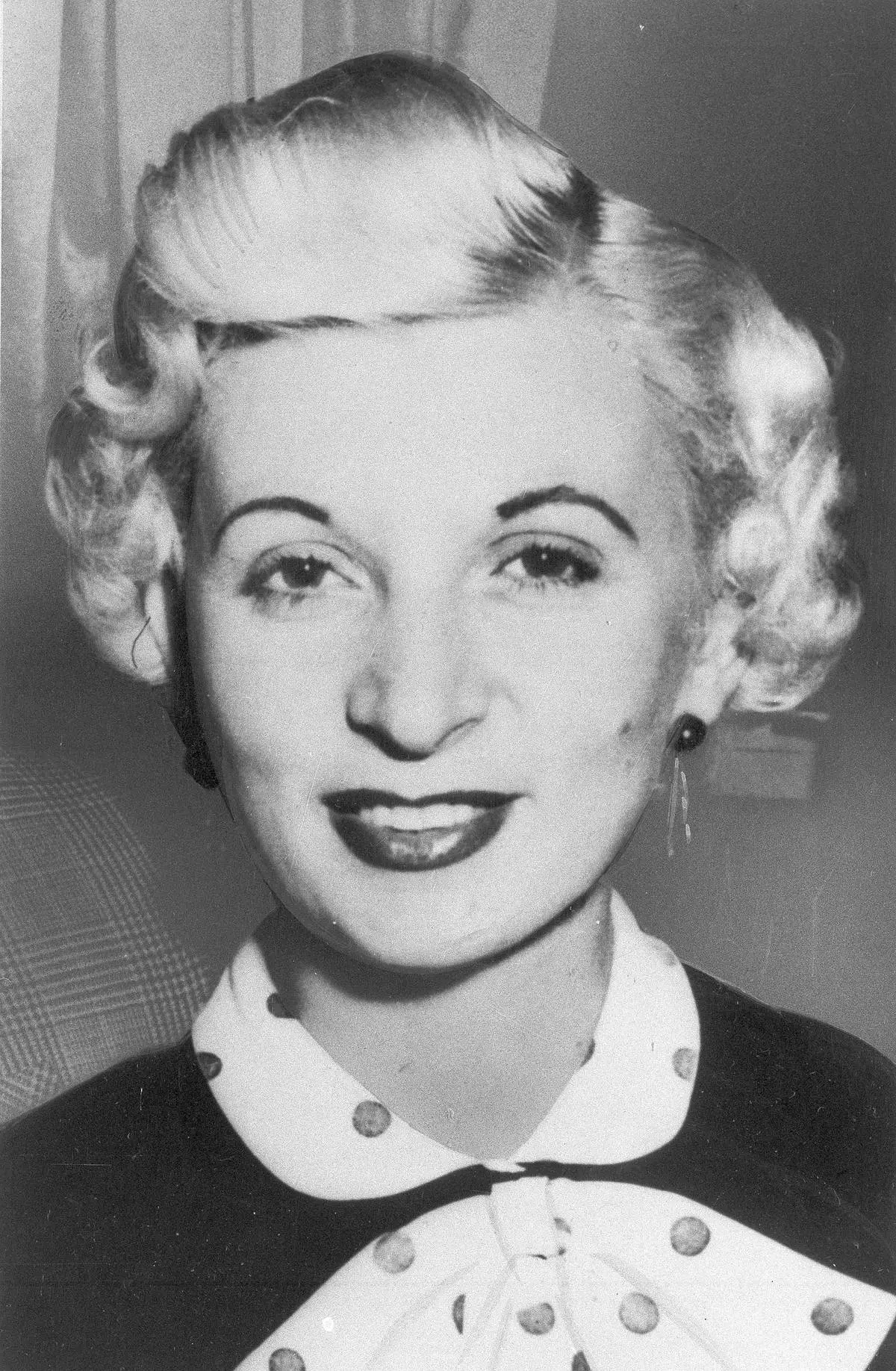
FILE - Mrs. Ruth Ellis, 28-year-old divorcee sentenced to hang on July 13 for killing her lover because he jilted her, passed up the last chance to appeal her sentence in London on July 4, 1955. (AP Photo, file)
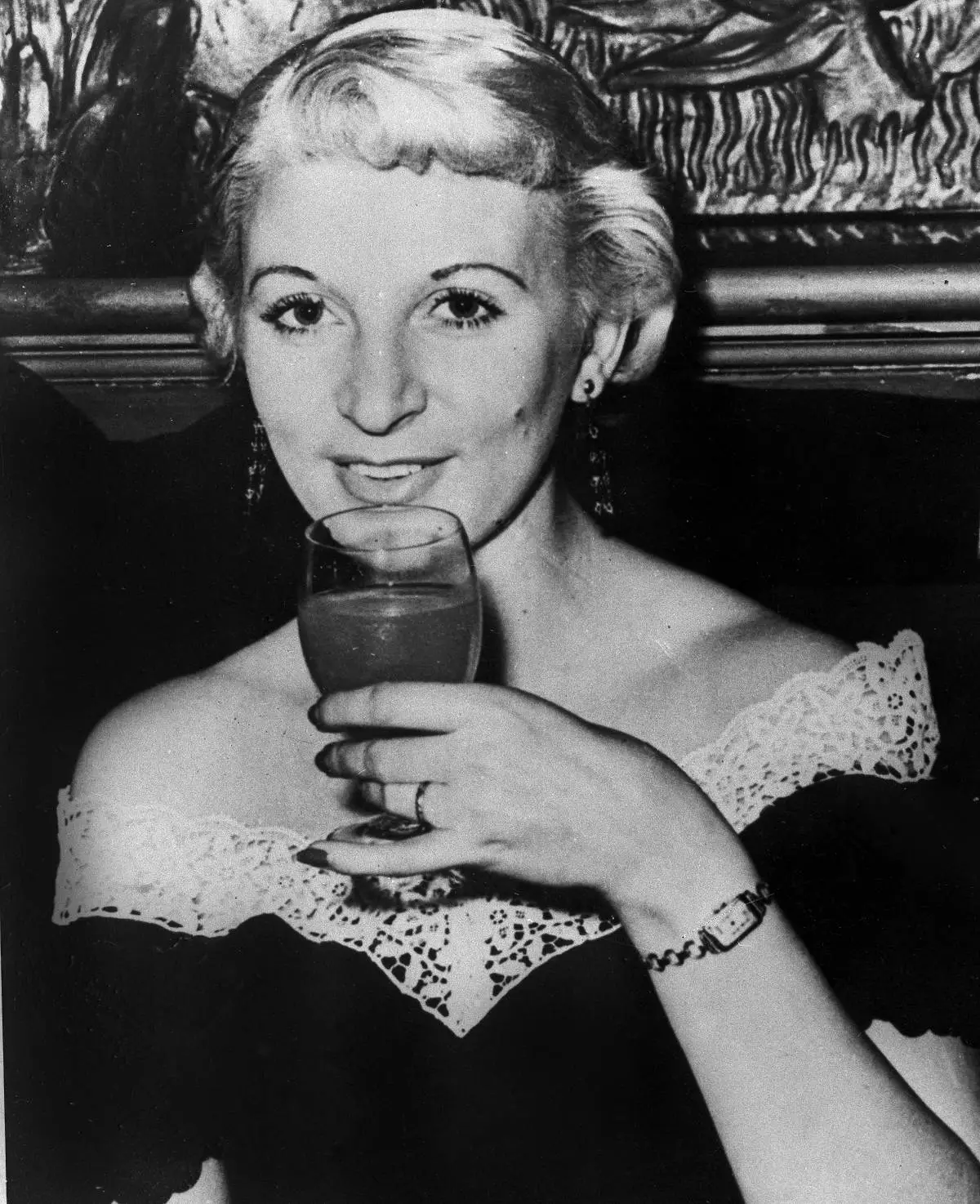
FILE - Platinum Blonde Model Ruth Ellis is shown in 1955 photo. (AP Photo, file)
NAJAF, Iraq (AP) — Thousands of mourners attended funeral processions for Iran’s Ayatollah Ali Khamenei on Wednesday in the holy Iraqi cities of Najaf and Karbala as part of dayslong funeral ceremonies for the Islamic Republic's late supreme leader.
The ceremonies began on Saturday, with authorities shutting down streets, airspace and daily life in Tehran, Iran's capital, as throngs commemorated the life of the man who led Iran for decades with an iron fist while confronting the West. His body was later taken from Najaf to Karbala before it is to be returned to Iran.
Khamenei was killed in late February in wide-scale U.S. and Israeli strikes on Iran that started the war. The 86-year-old supreme leader was among several senior Iranian leaders killed in strikes during the war.
Talks on ending the war between the United States and Iran appear to be on hold until after the burial.
However, strikes from both sides in the Persian Gulf on Tuesday and into Wednesday raised risks that the interim agreement to end the monthslong conflict that engulfed the Middle East could completely break down.
The U.S. military attacked Iran early Wednesday after it said Tehran struck three ships in the Strait of Hormuz. Iran then launched retaliatory strikes on Kuwait and Bahrain.
Khamenei's body arrived on Tuesday in Najaf, considered one of the holiest of cities for millions of Shiite Muslims worldwide. Mourners holding portraits of Khamenei welcomed the body and senior officials escorting it, including Iranian President Masoud Pezeshkian and Foreign Minister Abbas Araghchi.
The body was placed in a casket draped in the Islamic Republic’s flag and encased in glass.
Some supporters performed self-flagellation on the streets, while others waved Iranian as well as red and black flags symbolizing mourning and revenge.
Muhammad Taqi al-Hakim, a senior scholar at the Najaf seminary, led the funeral prayers at the Shrine of Imam Ali, the Prophet Muhammad’s cousin and son-in-law.
As the coffin was carried into the shrine, large crowds pushed and shoved their way to get close to it. Some threw themselves onto the casket, as attendants struggled to control the crowd, urging the pallbearers to carry it closer to the ground for fear it might fall.
“We, the people of Iraq, will remain a thorn in the eyes of the enemies,” said Jaafar Jawad, a funeral attendee. “(His body arriving here) is the greatest possible honor, and God willing, we will be loyal and repay a little of his debt in the holy city of Najaf.”
The body later arrived in Karbala, also a holy city for Shiites, where Imam Hussein, the grandson of the prophet, was killed in 680 AD. Thousands of supporters gathered in the desert heat in and around the shrine while Abdul Mahdi al-Karbalaei, a representative of Iraq's top Shiite religious authority, led the prayers there.
Iran’s new supreme leader, Ayatollah Mojtaba Khamenei, has yet to make an appearance at the funeral ceremonies, which are unfolding over several days. He is believed to be in hiding after reportedly being wounded in the airstrike that killed his father.
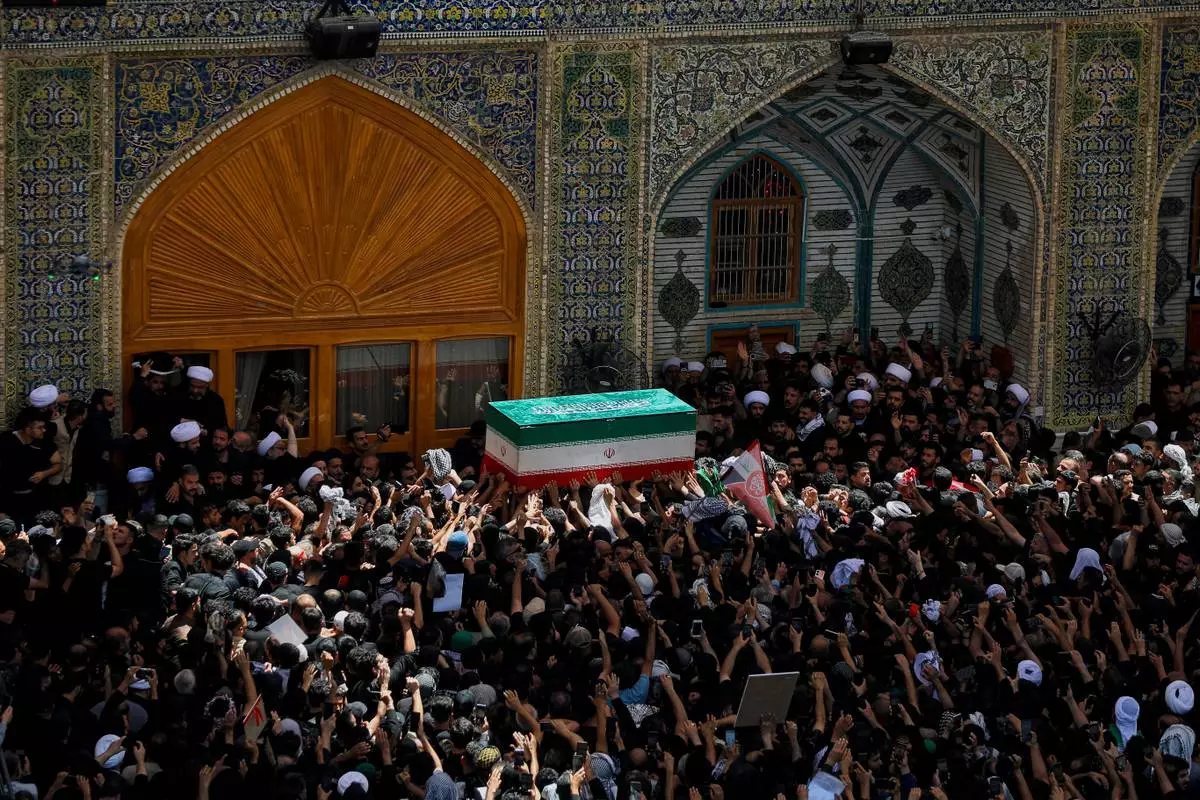
The coffin of the late Iranian Supreme Leader Ayatollah Ali Khamenei is carried by mourners to the Imam Ali Shrine in Najaf, Iraq, Wednesday, July 8, 2026. (AP Photo/Anmar Khalil)
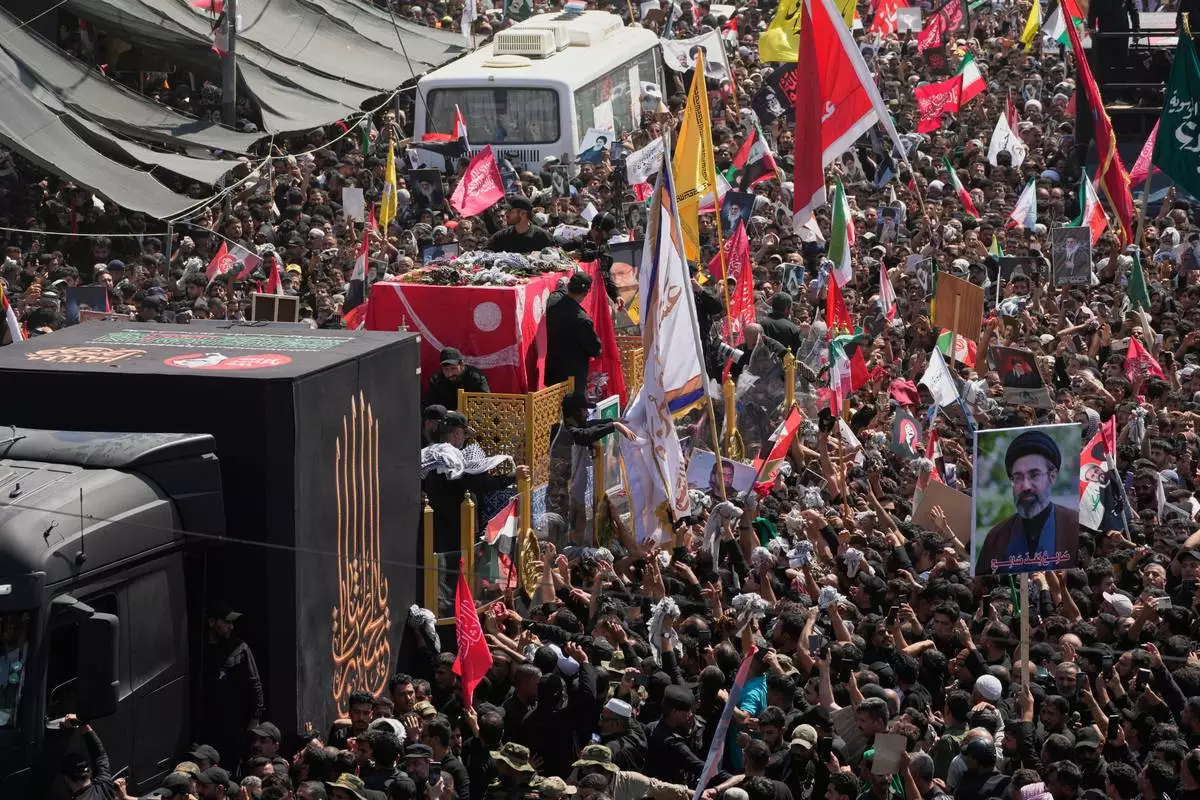
Mourners surround a truck carrying the coffin of Iranian Supreme Leader Ayatollah Ali Khamenei during a funeral procession in Najaf, Iraq, Wednesday, July 8, 2026. (AP Photo/Hadi Mizban)
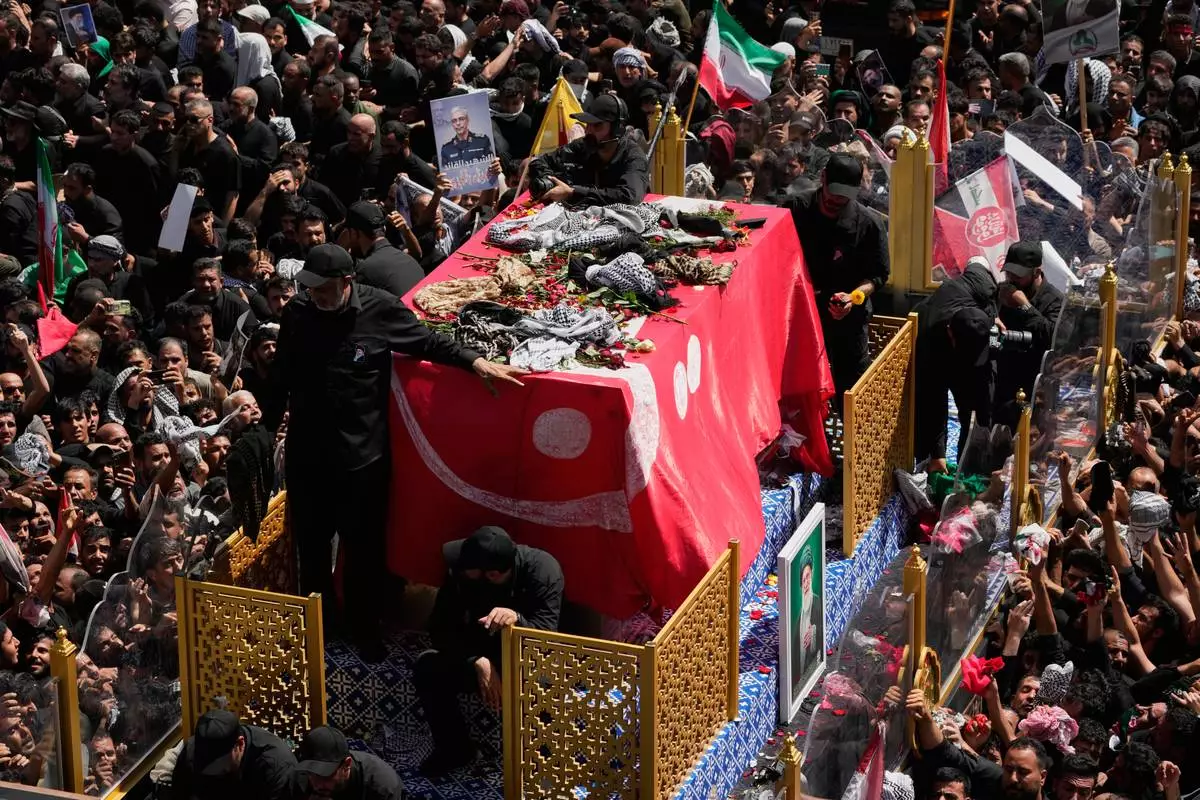
Mourners reach toward a truck carrying the coffin of Iranian Supreme Leader Ayatollah Ali Khamenei during a funeral procession in Najaf, Iraq, Wednesday, July 8, 2026. (AP Photo/Hadi Mizban)
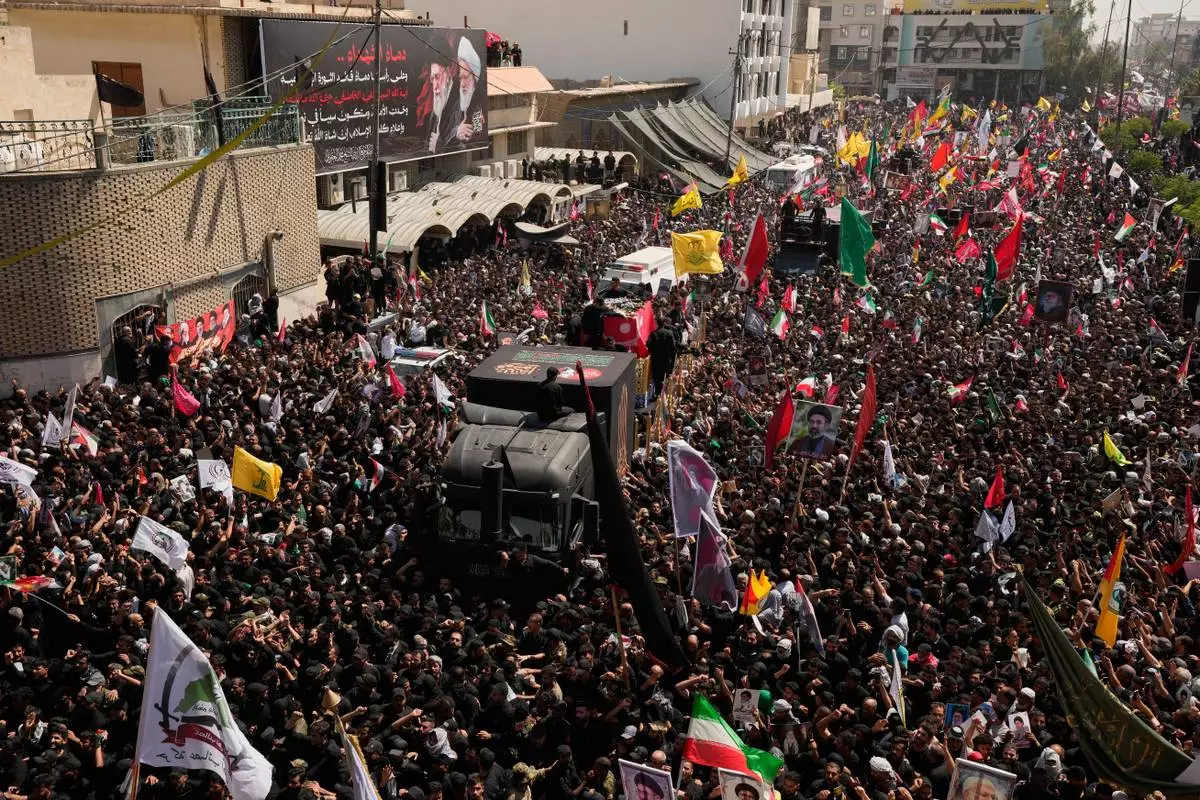
A truck carrying the coffin of the late Iranian Supreme Leader Ayatollah Ali Khamenei makes its way through mourners during a funeral procession in Najaf, Iraq, Wednesday, July 8, 2026. (AP Photo/Hadi Mizban)
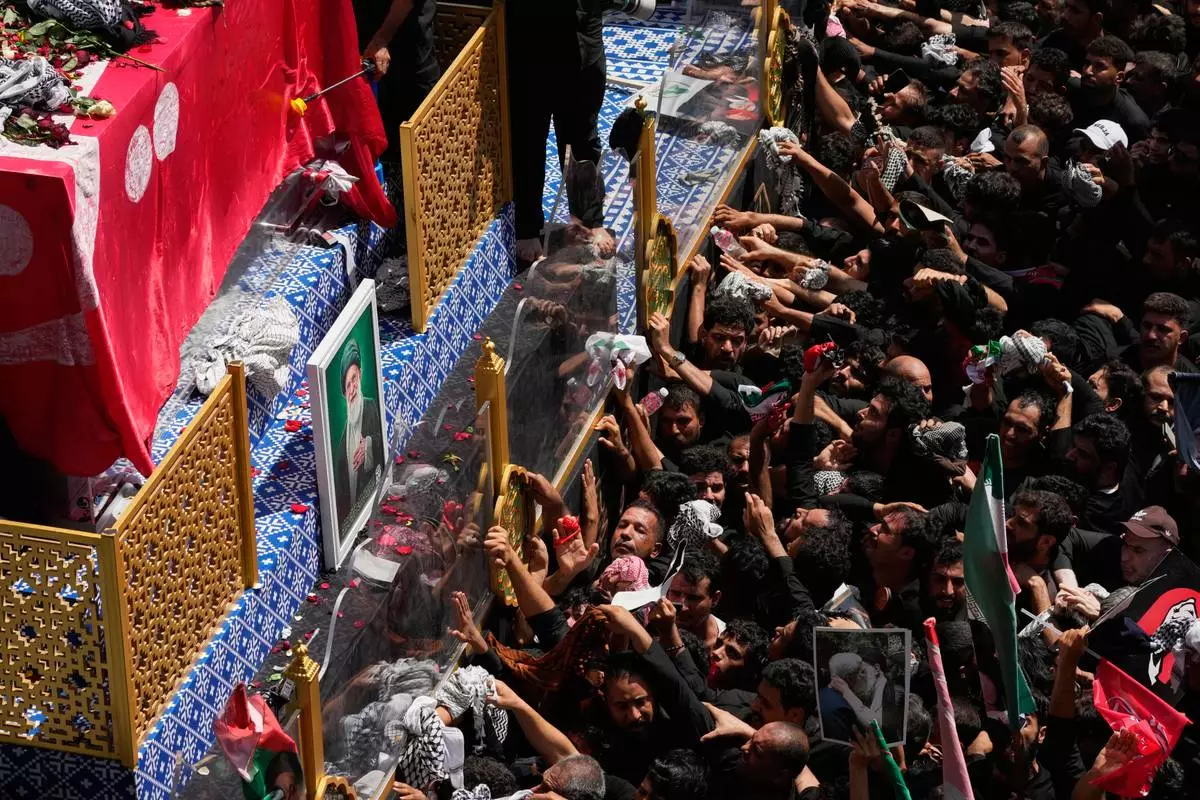
Mourners reach toward a truck carrying the coffin of Iranian Supreme Leader Ayatollah Ali Khamenei during a funeral procession in Najaf, Iraq, Wednesday, July 8, 2026. (AP Photo/Hadi Mizban)
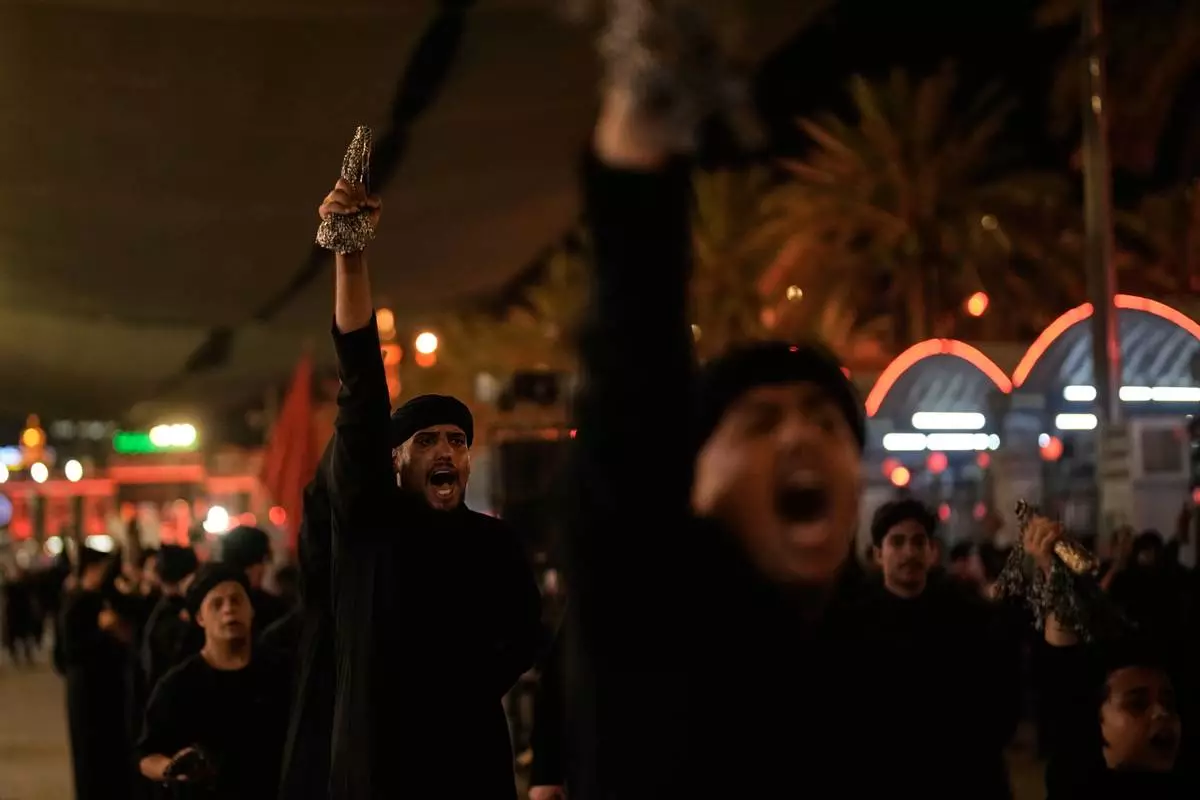
Shiite mourners chant slogans as the perform ritual self-flagellation with chains outside the Imam Hussein Shrine on the eve of funeral ceremonies for the late Iranian Supreme Leader Ayatollah Ali Khamenei in Karbala, Iraq, Tuesday, July 7, 2026. (AP Photo/Khalil Hamra)
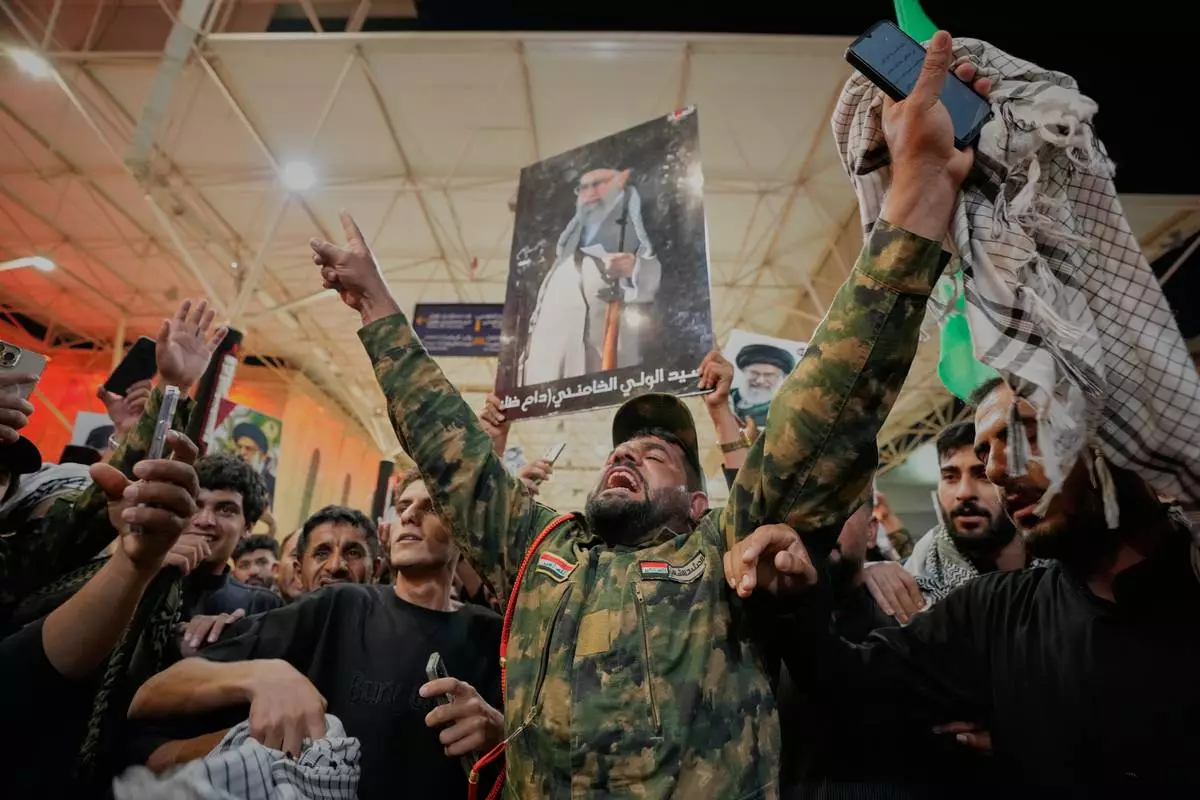
An Iraqi Shiite soldier chants on the eve of funeral ceremonies for the late Iranian Supreme Leader Ayatollah Ali Khamenei outside the Imam Ali Shrine in Najaf, Iraq, Tuesday, July 7, 2026. (AP Photo/Hadi Mizban)
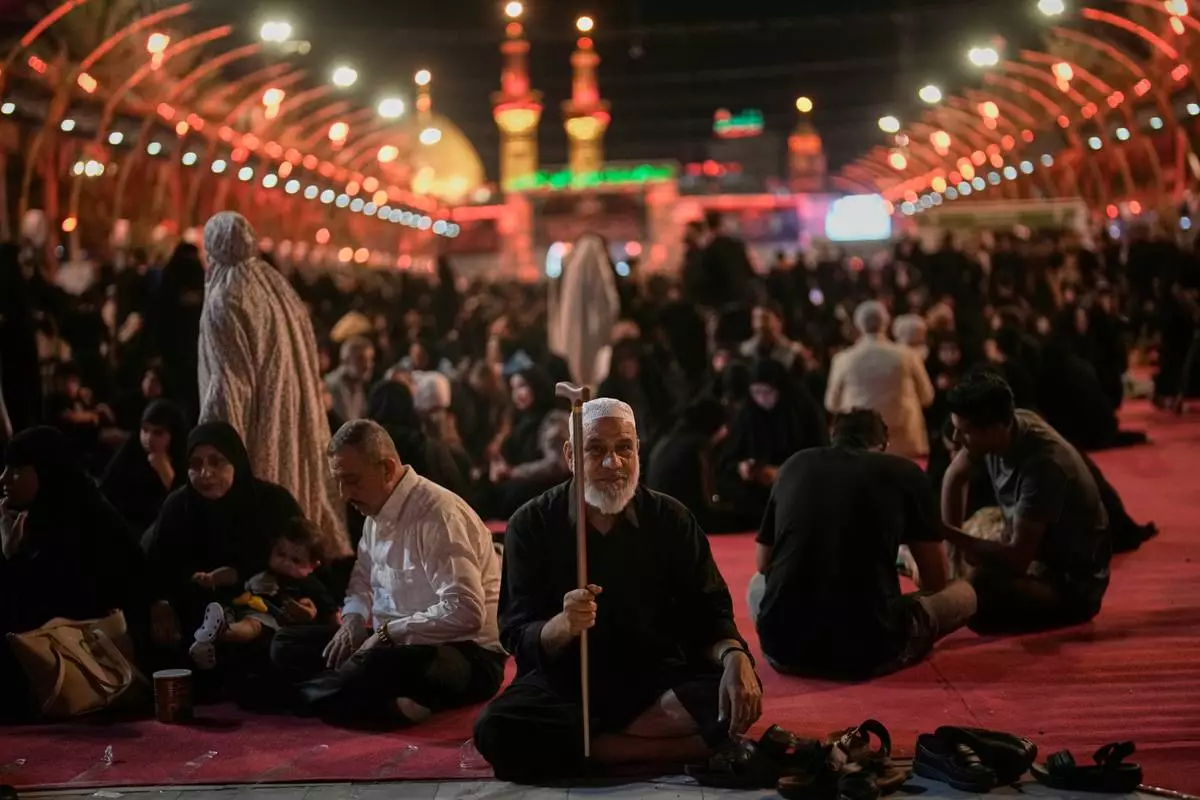
Mourners sit outside the Imam Hussein Shrine on the eve of of funeral ceremonies for the late Iranian Supreme Leader Ayatollah Ali Khamenei in Karbala, Iraq, Tuesday, July 7, 2026. (AP Photo/Khalil Hamra)
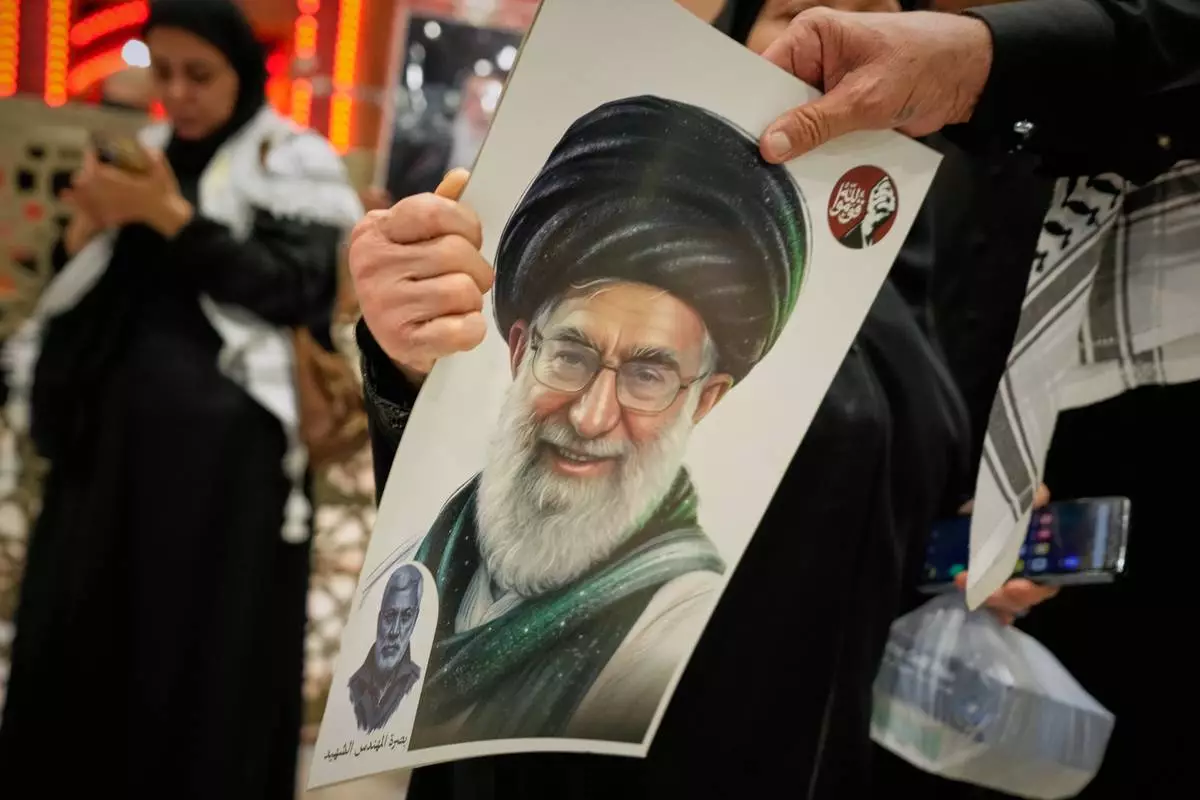
Portraits of the late Iranian Supreme Leader Ayatollah Ali Khamenei are distributed outside the Imam Ali Shrine on the eve of funeral ceremonies in Najaf, Iraq, Tuesday, July 7, 2026. (AP Photo/Hadi Mizban)
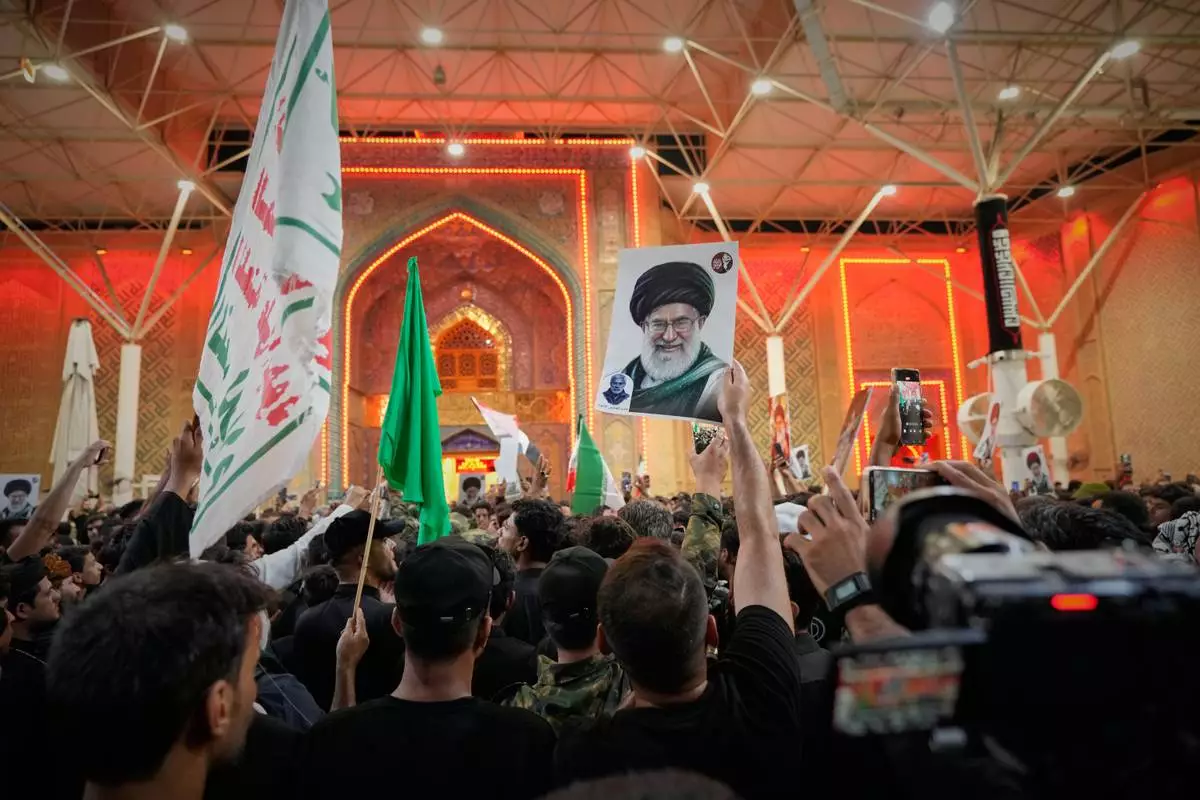
Mourners wave Shiite religious flags and a portrait of the late Iranian Supreme Leader Ayatollah Ali Khamenei outside the Imam Ali Shrine on the eve of funeral ceremonies in Najaf, Iraq, Tuesday, July 7, 2026. (AP Photo/Hadi Mizban)