Skip to Content Facebook Feature Image

Oil prices and stocks hold steadier as calm returns to financial markets worldwide

News

Oil prices and stocks hold steadier as calm returns to financial markets worldwide
News

News

Oil prices and stocks hold steadier as calm returns to financial markets worldwide

2026-07-09 23:22 Last Updated At:23:30

NEW YORK (AP) — Wall Street and oil prices are holding steadier Thursday in the wait to see what will come next after President Donald Trump raised doubts about the temporary truce in the war with Iran.

The S&P 500 rose 0.4% and was on track to recover its loss from the day before, even though the United States launched new airstrikes against Iran, which responded by targeting U.S. allies in the Middle East. The Dow Jones Industrial Average was up 141 points, or 0.3%, as of 11 a.m. Eastern time, and the Nasdaq composite was 0.5% higher.

More Images
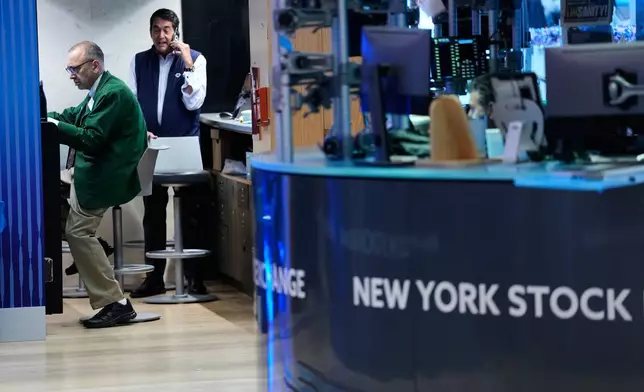
Traders work on the floor at the New York Stock Exchange in New York, Monday, July 6, 2026. (AP Photo/Seth Wenig)

Traders work on the floor at the New York Stock Exchange in New York, Monday, July 6, 2026. (AP Photo/Seth Wenig)

Patrick McKeon works on the floor at the New York Stock Exchange in New York, Monday, July 6, 2026. (AP Photo/Seth Wenig)
Patrick McKeon works on the floor at the New York Stock Exchange in New York, Monday, July 6, 2026. (AP Photo/Seth Wenig)

Michael Pistillo, left, and Federico DeMarco work on the floor at the New York Stock Exchange in New York, Monday, July 6, 2026. (AP Photo/Seth Wenig)

Michael Pistillo, left, and Federico DeMarco work on the floor at the New York Stock Exchange in New York, Monday, July 6, 2026. (AP Photo/Seth Wenig)

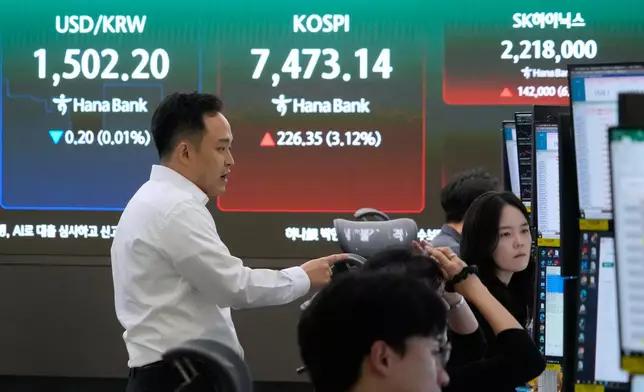
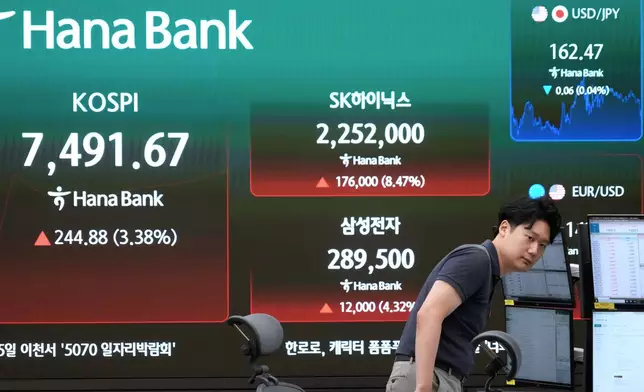
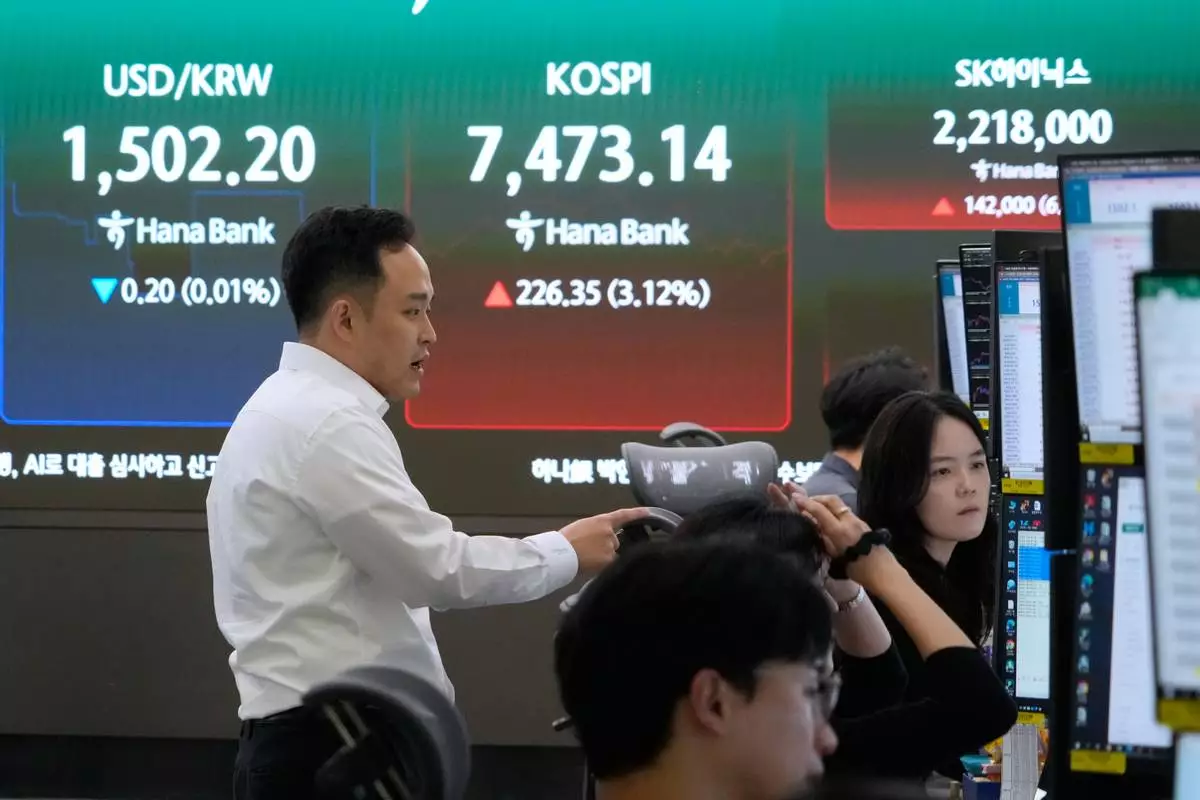
Currency traders work near a screen showing the Korea Composite Stock Price Index (KOSPI) and the foreign exchange rate between U.S. dollar and South Korean won at the foreign exchange dealing room of the Hana Bank headquarters in Seoul, South Korea, Thursday, July 9, 2026. (AP Photo/Ahn Young-joon)
Currency traders work near a screen showing the Korea Composite Stock Price Index (KOSPI) and the foreign exchange rate between U.S. dollar and South Korean won at the foreign exchange dealing room of the Hana Bank headquarters in Seoul, South Korea, Thursday, July 9, 2026. (AP Photo/Ahn Young-joon)
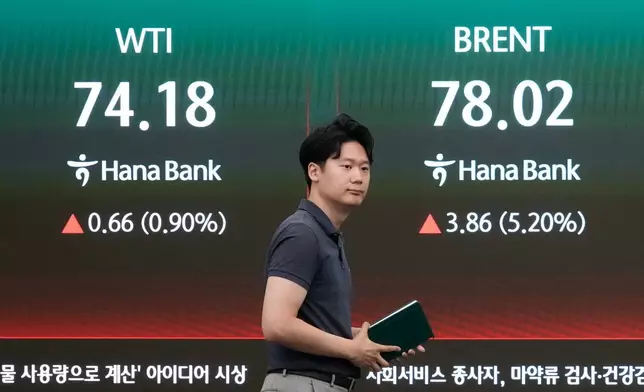
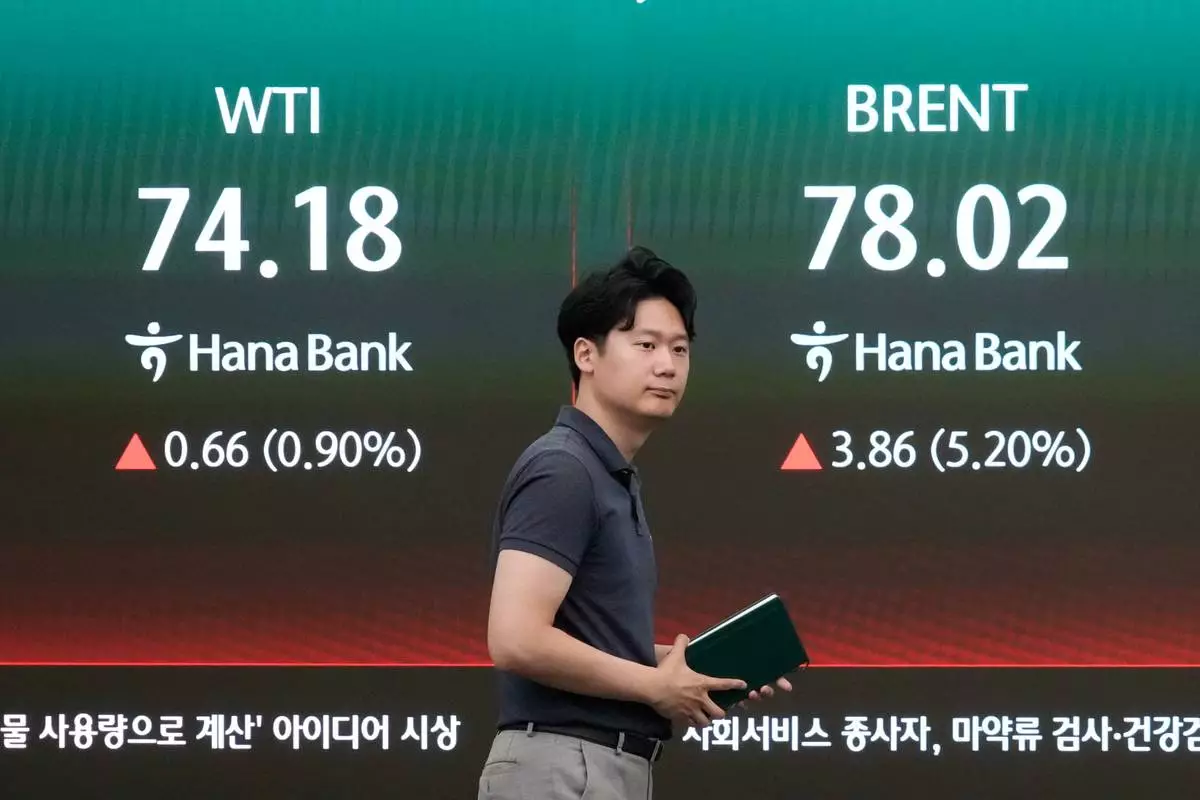
A currency trader passes by a screen showing international oil prices at the foreign exchange dealing room of the Hana Bank headquarters in Seoul, South Korea, Thursday, July 9, 2026. (AP Photo/Ahn Young-joon)
A currency trader passes by a screen showing international oil prices at the foreign exchange dealing room of the Hana Bank headquarters in Seoul, South Korea, Thursday, July 9, 2026. (AP Photo/Ahn Young-joon)

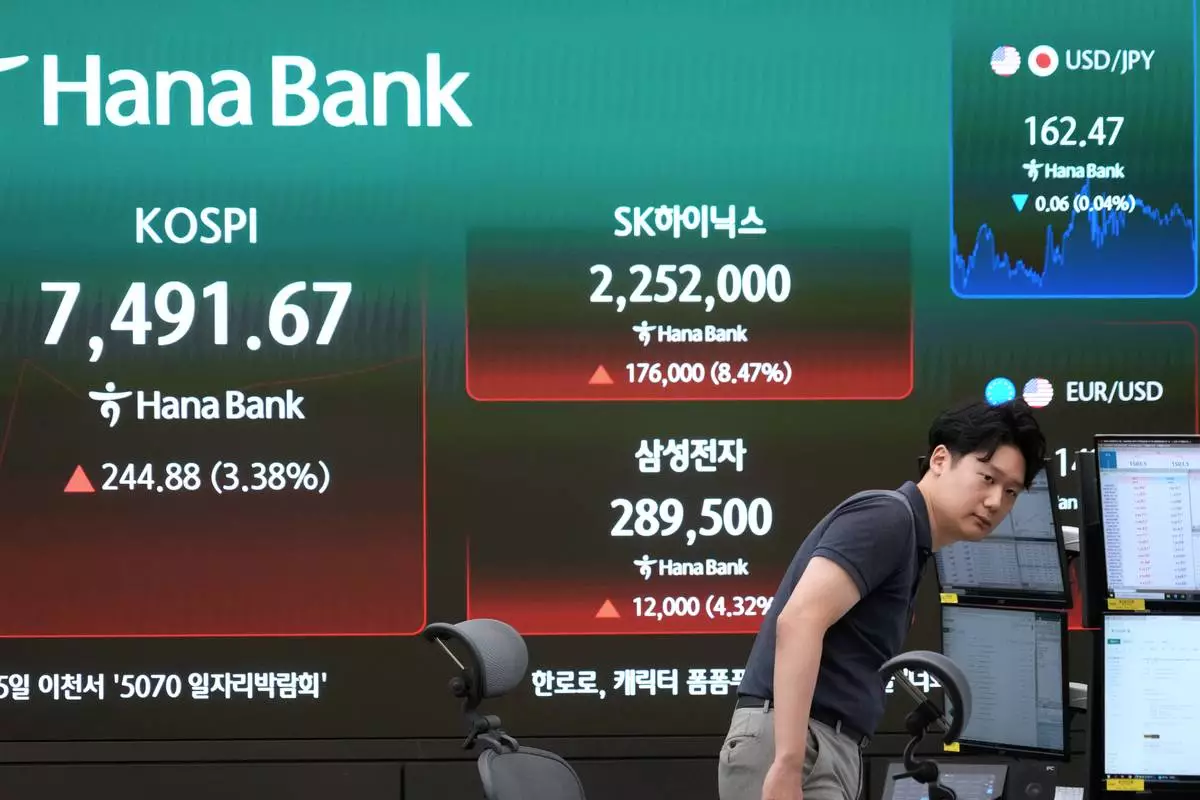
A currency trader watches monitors near a screen showing the Korea Composite Stock Price Index (KOSPI), SK Hynix and Samsung Electronics Co. stock price at the foreign exchange dealing room of the Hana Bank headquarters in Seoul, South Korea, Thursday, July 9, 2026. (AP Photo/Ahn Young-joon)

A currency trader watches monitors near a screen showing the Korea Composite Stock Price Index (KOSPI), SK Hynix and Samsung Electronics Co. stock price at the foreign exchange dealing room of the Hana Bank headquarters in Seoul, South Korea, Thursday, July 9, 2026. (AP Photo/Ahn Young-joon)

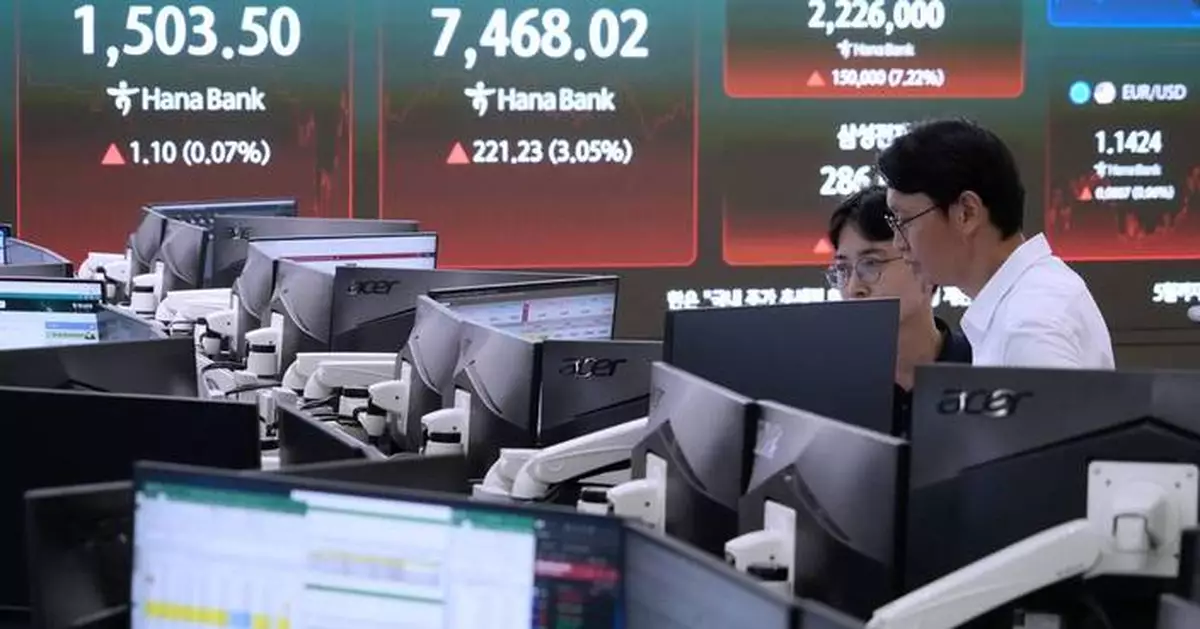
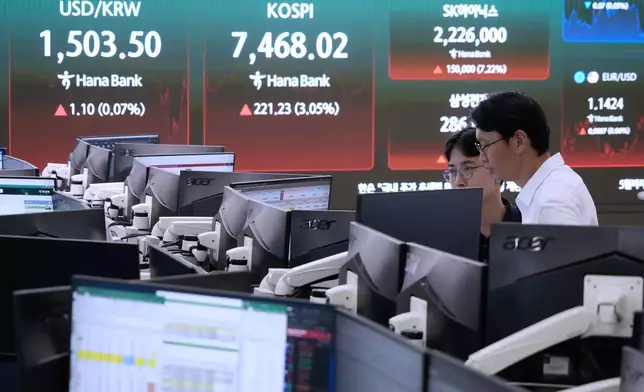
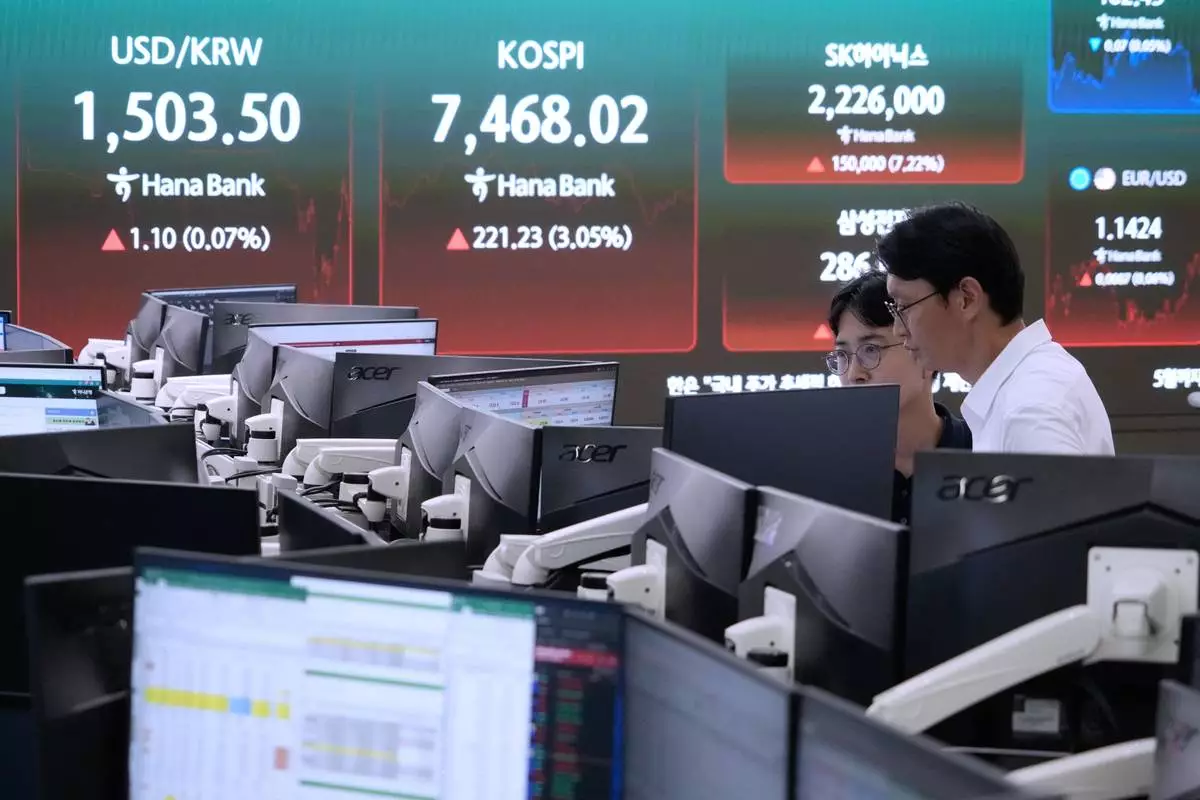
Currency traders watch monitors near a screen showing the Korea Composite Stock Price Index (KOSPI) and the foreign exchange rate between U.S. dollar and South Korean won at the foreign exchange dealing room of the Hana Bank headquarters in Seoul, South Korea, Thursday, July 9, 2026. (AP Photo/Ahn Young-joon)

Currency traders watch monitors near a screen showing the Korea Composite Stock Price Index (KOSPI) and the foreign exchange rate between U.S. dollar and South Korean won at the foreign exchange dealing room of the Hana Bank headquarters in Seoul, South Korea, Thursday, July 9, 2026. (AP Photo/Ahn Young-joon)

In the oil market, prices gave back some of their jumps from the day before. The price for a barrel of Brent crude, the international standard, fell 0.5% to $77.61. That’s down from $78.02 the day before but still above its $71.80 price from the end of last week.

The worry is that a return to full-blown war will block oil tankers from the Strait of Hormuz and prevent the delivery of crude from the Persian Gulf to customers worldwide. That could worsen inflation, which economists expected would ease with oil prices, and in turn force the Federal Reserve and other central banks to raise interest rates.

Higher rates can keep a lid on inflation, but they also slow the economy and hurt prices for all kinds of investments.

But Trump also said Wednesday that the latest back-and-forth fighting would not result in “long-term” military action, raising uncertainty about just what will happen.

The swings for oil prices have halted what had been a steady decline in gasoline prices, and the cost for a gallon climbed a nickel overnight, according to motor club AAA. The average price for a gallon of regular gasoline was $3.85 Thursday, up 68 cents from a year earlier.

In the meantime, renewed strength for makers of computer chips and other winners of the boom around artificial-intelligence technology is helping to support stock markets worldwide.

In South Korea, whose stock market is dominated by two companies that make semiconductors, the Kospi index rose 0.6% after tumbling 5.3% the day before. SK Hynix, which is preparing to sell shares of its stock that will trade in the United States, jumped 5.3% in Seoul.

On Wall Street, Micron Technology’s rise of 7.1% was the strongest force pushing upward on the S&P 500. Micron cited “surging demand for memory in the AI era” as it gave a progress update on construction in central New York of what it says is the largest semiconductor manufacturing site in U.S. history.

Such stocks have become some of Wall Street’s most influential after growing so big in the euphoria around AI. But AI stocks have also come under pressure recently because of worries their prices shot too high and that AI may not create enough productivity and profits to make all the investments in chips and data centers worth it.

Stocks broadly got some help from stabilizing yields in the bond market. The yield on the 10-year Treasury edged down to 4.55% from 4.56% late Wednesday.

It had been climbing on worries about high oil prices and the potential for higher interest rates, which cranked up the pressure on stocks and prices for other investments.

Besides the war with Iran, another big event for Wall Street is the upcoming start of earnings reporting season for companies. Next week, the biggest banks are set to unveil how much profit they made from April through June. Companies across industries will need to report strong growth to justify the big moves their stock prices have made.

PepsiCo fell 3.9% even though it reported slightly better revenue for the latest quarter than analysts expected. Numbers released by the company behind Gatorade and Doritos showed weakening trends in its North American food and drinks businesses.

In stock markets abroad, indexes rose across much of Europe and Asia.

Besides Seoul’s climb, stock indexes rose 1.7% in Shanghai and 0.7% in Paris.

On the losing end was Hong Kong’s Hang Seng, which slipped 0.7% as shares of Apple supplier Luxshare fell 1.5% in its trading debut.

AP Business Writers Chan Ho-him and Matt Ott contributed to this report.
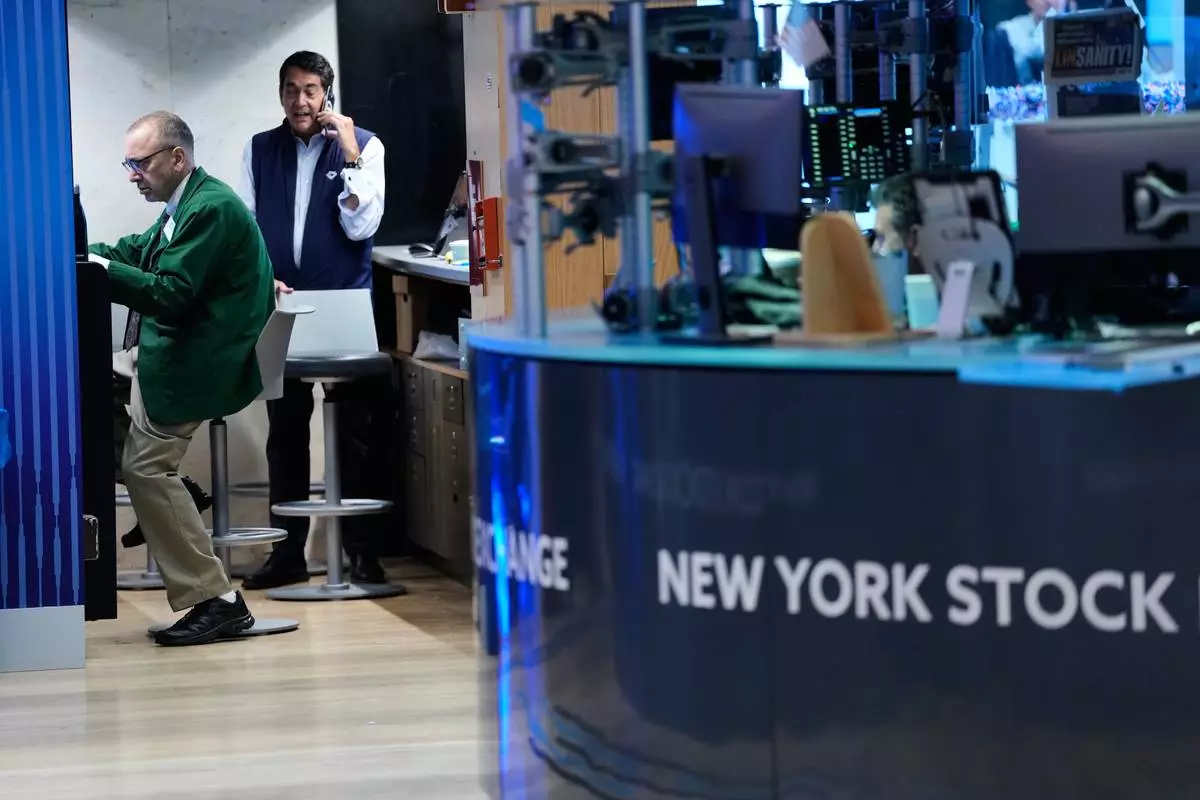
Traders work on the floor at the New York Stock Exchange in New York, Monday, July 6, 2026. (AP Photo/Seth Wenig)

Traders work on the floor at the New York Stock Exchange in New York, Monday, July 6, 2026. (AP Photo/Seth Wenig)

Patrick McKeon works on the floor at the New York Stock Exchange in New York, Monday, July 6, 2026. (AP Photo/Seth Wenig)
Patrick McKeon works on the floor at the New York Stock Exchange in New York, Monday, July 6, 2026. (AP Photo/Seth Wenig)

Michael Pistillo, left, and Federico DeMarco work on the floor at the New York Stock Exchange in New York, Monday, July 6, 2026. (AP Photo/Seth Wenig)

Michael Pistillo, left, and Federico DeMarco work on the floor at the New York Stock Exchange in New York, Monday, July 6, 2026. (AP Photo/Seth Wenig)

Currency traders work near a screen showing the Korea Composite Stock Price Index (KOSPI) and the foreign exchange rate between U.S. dollar and South Korean won at the foreign exchange dealing room of the Hana Bank headquarters in Seoul, South Korea, Thursday, July 9, 2026. (AP Photo/Ahn Young-joon)
Currency traders work near a screen showing the Korea Composite Stock Price Index (KOSPI) and the foreign exchange rate between U.S. dollar and South Korean won at the foreign exchange dealing room of the Hana Bank headquarters in Seoul, South Korea, Thursday, July 9, 2026. (AP Photo/Ahn Young-joon)
A currency trader passes by a screen showing international oil prices at the foreign exchange dealing room of the Hana Bank headquarters in Seoul, South Korea, Thursday, July 9, 2026. (AP Photo/Ahn Young-joon)
A currency trader passes by a screen showing international oil prices at the foreign exchange dealing room of the Hana Bank headquarters in Seoul, South Korea, Thursday, July 9, 2026. (AP Photo/Ahn Young-joon)

A currency trader watches monitors near a screen showing the Korea Composite Stock Price Index (KOSPI), SK Hynix and Samsung Electronics Co. stock price at the foreign exchange dealing room of the Hana Bank headquarters in Seoul, South Korea, Thursday, July 9, 2026. (AP Photo/Ahn Young-joon)

A currency trader watches monitors near a screen showing the Korea Composite Stock Price Index (KOSPI), SK Hynix and Samsung Electronics Co. stock price at the foreign exchange dealing room of the Hana Bank headquarters in Seoul, South Korea, Thursday, July 9, 2026. (AP Photo/Ahn Young-joon)

Currency traders watch monitors near a screen showing the Korea Composite Stock Price Index (KOSPI) and the foreign exchange rate between U.S. dollar and South Korean won at the foreign exchange dealing room of the Hana Bank headquarters in Seoul, South Korea, Thursday, July 9, 2026. (AP Photo/Ahn Young-joon)

Currency traders watch monitors near a screen showing the Korea Composite Stock Price Index (KOSPI) and the foreign exchange rate between U.S. dollar and South Korean won at the foreign exchange dealing room of the Hana Bank headquarters in Seoul, South Korea, Thursday, July 9, 2026. (AP Photo/Ahn Young-joon)

Sales of previously occupied U.S. homes slowed in June, but a key measure of home prices climbed to an all-time high, adding to affordability challenges for prospective homebuyers.

Existing home sales fell 2.4% last month from May to a seasonally adjusted annual rate of 4.09 million units, the National Association of Realtors said Thursday. Sales rose 2.8% compared with June last year.

The latest sales tally fell short of the roughly 4.21 million pace economists were expecting, according to FactSet.

Home sales have been mostly hovering close to a 4-million annual pace going back to 2023, far short of the historic norm that is closer to 5.2-million.

Sales have remained sluggish as mortgage rates have mostly trended higher in the months since the war between the U.S. and Iran started. Expectations of higher inflation amid surging oil prices have pushed up the long-term bond yields that lenders use as a guide to pricing home loans, causing mortgage rates to climb. Still, mortgage rates remain below where they were a year ago.

Despite the lackluster sales, home prices continued to rise nationally last month. The U.S. median sales price increased 1.8% in June from a year earlier to $440,600, an all-time high on data going back to 1999, NAR said. Home prices have risen on an annual basis for 36 months in a row.

First-time buyers accounted for 33% of home purchases last month, down from 35% in May and up from 30% in June last year. Historically, they made up 40% of home sales.

“Without a doubt, the affordability is a major challenge for people who want to become homeowners, which is the reason why we need more supply,” said Lawrence Yun, NAR’s chief economist.

The U.S. housing market has been in a slump since 2022, when mortgage rates began to climb from pandemic-era lows. Sales of previously occupied U.S. homes were essentially flat last year, stuck at a 30-year low.

Through the first half of this year, seasonally adjusted sales of existing U.S. homes are up only 0.7% compared to the same period in 2025.

Years of soaring home prices, especially in the early part of this decade when rock-bottom mortgage rates fueled a buying frenzy, have left many would-be homebuyers frozen out of the market. And a chronic shortage of homes for sale nationally, due partly to years of below-average new home construction, has helped prop up home prices even in a multiyear sales slump.

Many of the homes purchased last month likely went under contract in April and May, when the average rate on a 30-year mortgage ranged from 6.23% to 6.53% -- the highest level going back to late August, according to mortgage buyer Freddie Mac.

Those who can afford to buy at current mortgage rates or pay all cash are likely to encounter buyer-friendly trends in many markets. In June, median list prices fell 2.5% from a year earlier, the steepest annual drop on data going back to 2017, according to Realtor.com.

Still, housing market pricing trends vary widely regionally and locally. Consider, since peaking in 2022 at $449,000, list prices have come down 7.3% in the West and 3.5% in the South, but are up 10% in the Midwest and 12.6% in the Northeast, according to Realtor.com.

Meanwhile, home shoppers have more homes on the market to choose from than this time last year, although home inventory levels remain well below historical norms.

There were 1.56 million unsold homes at the end of last month, down 0.6% from May and up 1.3% from June last year, NAR said. That’s still well short of the roughly 2 million homes for sale that was typical before the COVID-19 pandemic.

June’s month-end inventory translates to a 4.6-month supply at the current sales pace. Traditionally, a 5- to 6-month supply is considered a balanced market between buyers and sellers.

“We need to see 30%-40% growth in inventory,” Yun said. “We’re not seeing that, so inventory (is) still remaining relatively tight.”

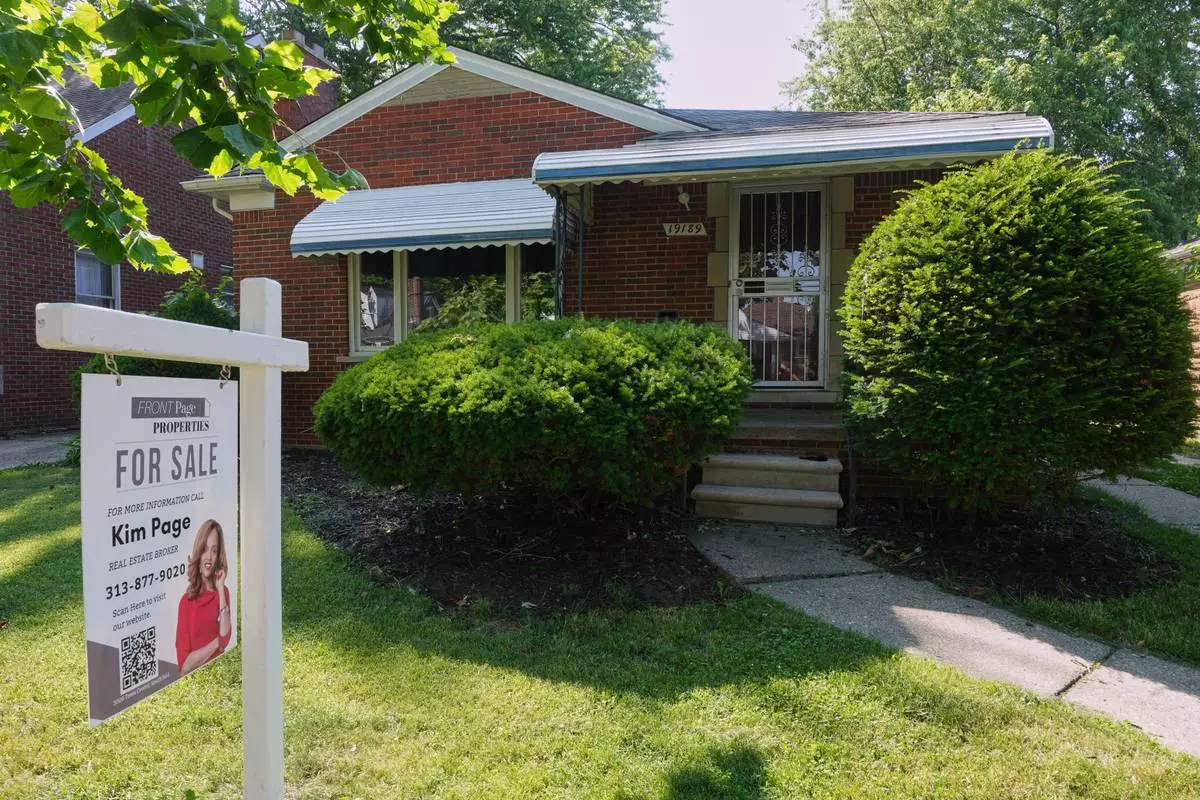
An existing home for sale is shown Tuesday, July 7, 2026, in Detroit. (AP Photo/Paul Sancya)

An existing home for sale is shown Tuesday, July 7, 2026, in Detroit. (AP Photo/Paul Sancya)

Recommended Articles