SANTA ROSA, Calif.--(BUSINESS WIRE)--Jul 9, 2026--
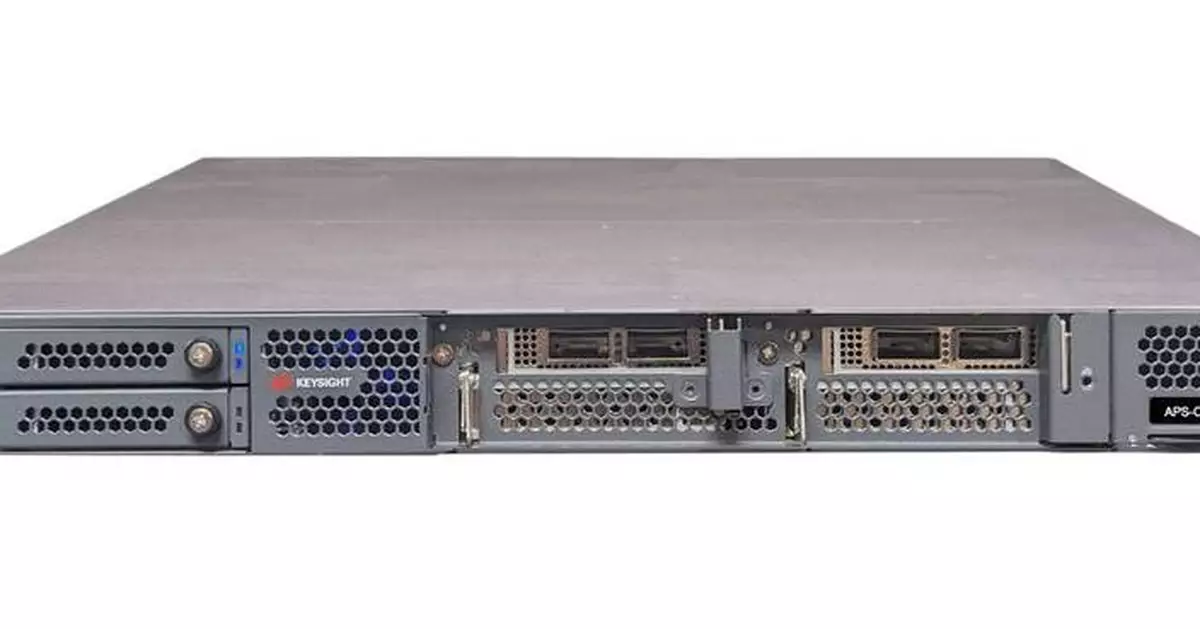
Keysight Technologies, Inc. (NYSE: KEYS) today announced the APS-ONE-400, a modular network cybersecurity test platform. This new 4x100GE platform significantly boosts performance for Layer 4-7 traffic, encrypted traffic, and Elephant Flow traffic all within a 1 rack unit (RU) system. It enables network equipment manufacturers (NEMs), service providers, and data center operators to validate demanding scenarios while lowering overall infrastructure requirements.
This press release features multimedia. View the full release here: https://www.businesswire.com/news/home/20260709611791/en/
The growing complexity and volume of network loads — including legitimate and malicious traffic, post-quantum cryptography (PQC)-encrypted traffic, Zero Trust Network Access (ZTNA), and the Elephant Flow transmissions common in AI and large language model (LLM) workloads — require network equipment manufacturers (NEMs), service providers, and data center operators to validate that their solutions can withstand these demands prior to deployment. However, this often requires multiple specialized test tools that can drive up costs and consume limited lab resources.
To address this challenge, Keysight developed the APS-ONE-400 appliance, an addition to its APS-100/400GE hardware family. The new modular, scalable 4x100GE network application and cybersecurity test platform generates hyperscale Layer 4-7 traffic, PQC-encrypted Transport Layer Security (TLS) throughput, security strikes, and ZTNA test capabilities — all within a compact 1RU footprint that improves lab efficiency.
The APS-ONE-400 4x100GE test platform offers the following benefits:
Ram Periakaruppan, Vice President and General Manager, Keysight's Network Test and Security Solutions, said: “The exponential growth of data transfers and bandwidth demands generated by AI and machine learning workloads is putting unprecedented strain on data center, service provider, and enterprise network infrastructures. Continuously validating that networks can handle these challenges without compromising security requires realistic, hyperscale, traffic emulation capabilities. Keysight's modular APS-ONE-400 compute node delivers new heights in realism, emulating the traffic flows associated with generative AI models and agentic applications at hyperscale, including the huge Elephant Flow datasets common to LLM training use cases and PQC-encrypted traffic flows, all in a compact form factor that conserves critical lab resources.”
Resources
About Keysight Technologies
At Keysight (NYSE: KEYS), we inspire and empower innovators to bring world-changing technologies to life. As an S&P 500 company, we’re delivering market-leading design, emulation, and test solutions to help engineers develop and deploy faster, with less risk, throughout the entire product lifecycle. We’re a global innovation partner enabling customers in communications, industrial automation, aerospace and defense, automotive, semiconductor, and general electronics markets to accelerate innovation to connect and secure the world. Learn more at Keysight Newsroom and www.keysight.com.
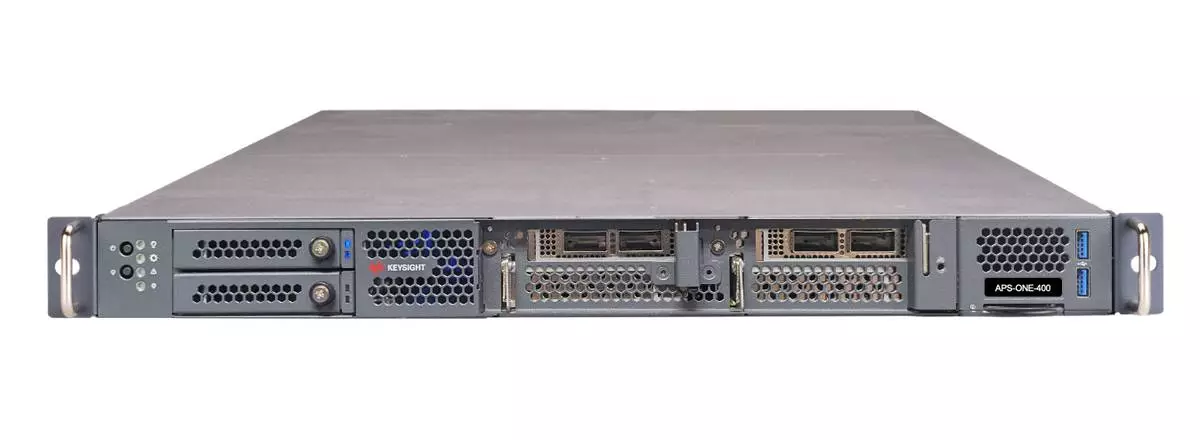
The Keysight APS-ONE-400 4x100GE modular network cybersecurity test platform delivers hyperscale L4-7 traffic, encrypted TLS traffic, security strikes, and Elephant Flows via a 1RU footprint that minimizes rack space usage, power consumption, and cooling demands.
NEW YORK (AP) — Wall Street and oil prices are holding steadier Thursday in the wait to see what will come next after President Donald Trump raised doubts about the temporary truce in the war with Iran.
The S&P 500 rose 0.4% and was on track to recover its loss from the day before, even though the United States launched new airstrikes against Iran, which responded by targeting U.S. allies in the Middle East. The Dow Jones Industrial Average was up 141 points, or 0.3%, as of 11 a.m. Eastern time, and the Nasdaq composite was 0.5% higher.
In the oil market, prices gave back some of their jumps from the day before. The price for a barrel of Brent crude, the international standard, fell 0.5% to $77.61. That’s down from $78.02 the day before but still above its $71.80 price from the end of last week.
The worry is that a return to full-blown war will block oil tankers from the Strait of Hormuz and prevent the delivery of crude from the Persian Gulf to customers worldwide. That could worsen inflation, which economists expected would ease with oil prices, and in turn force the Federal Reserve and other central banks to raise interest rates.
Higher rates can keep a lid on inflation, but they also slow the economy and hurt prices for all kinds of investments.
But Trump also said Wednesday that the latest back-and-forth fighting would not result in “long-term” military action, raising uncertainty about just what will happen.
The swings for oil prices have halted what had been a steady decline in gasoline prices, and the cost for a gallon climbed a nickel overnight, according to motor club AAA. The average price for a gallon of regular gasoline was $3.85 Thursday, up 68 cents from a year earlier.
In the meantime, renewed strength for makers of computer chips and other winners of the boom around artificial-intelligence technology is helping to support stock markets worldwide.
In South Korea, whose stock market is dominated by two companies that make semiconductors, the Kospi index rose 0.6% after tumbling 5.3% the day before. SK Hynix, which is preparing to sell shares of its stock that will trade in the United States, jumped 5.3% in Seoul.
On Wall Street, Micron Technology’s rise of 7.1% was the strongest force pushing upward on the S&P 500. Micron cited “surging demand for memory in the AI era” as it gave a progress update on construction in central New York of what it says is the largest semiconductor manufacturing site in U.S. history.
Such stocks have become some of Wall Street’s most influential after growing so big in the euphoria around AI. But AI stocks have also come under pressure recently because of worries their prices shot too high and that AI may not create enough productivity and profits to make all the investments in chips and data centers worth it.
Stocks broadly got some help from stabilizing yields in the bond market. The yield on the 10-year Treasury edged down to 4.55% from 4.56% late Wednesday.
It had been climbing on worries about high oil prices and the potential for higher interest rates, which cranked up the pressure on stocks and prices for other investments.
Besides the war with Iran, another big event for Wall Street is the upcoming start of earnings reporting season for companies. Next week, the biggest banks are set to unveil how much profit they made from April through June. Companies across industries will need to report strong growth to justify the big moves their stock prices have made.
PepsiCo fell 3.9% even though it reported slightly better revenue for the latest quarter than analysts expected. Numbers released by the company behind Gatorade and Doritos showed weakening trends in its North American food and drinks businesses.
In stock markets abroad, indexes rose across much of Europe and Asia.
Besides Seoul’s climb, stock indexes rose 1.7% in Shanghai and 0.7% in Paris.
On the losing end was Hong Kong’s Hang Seng, which slipped 0.7% as shares of Apple supplier Luxshare fell 1.5% in its trading debut.
AP Business Writers Chan Ho-him and Matt Ott contributed to this report.
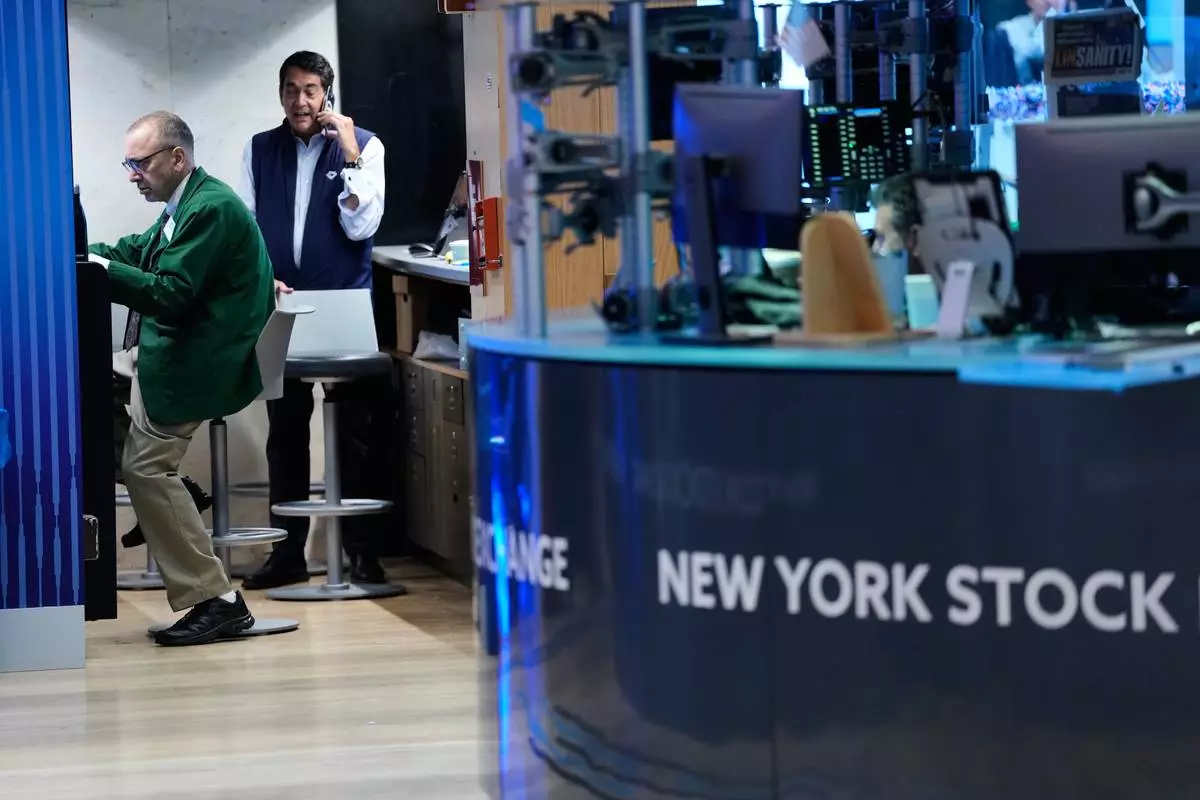
Traders work on the floor at the New York Stock Exchange in New York, Monday, July 6, 2026. (AP Photo/Seth Wenig)
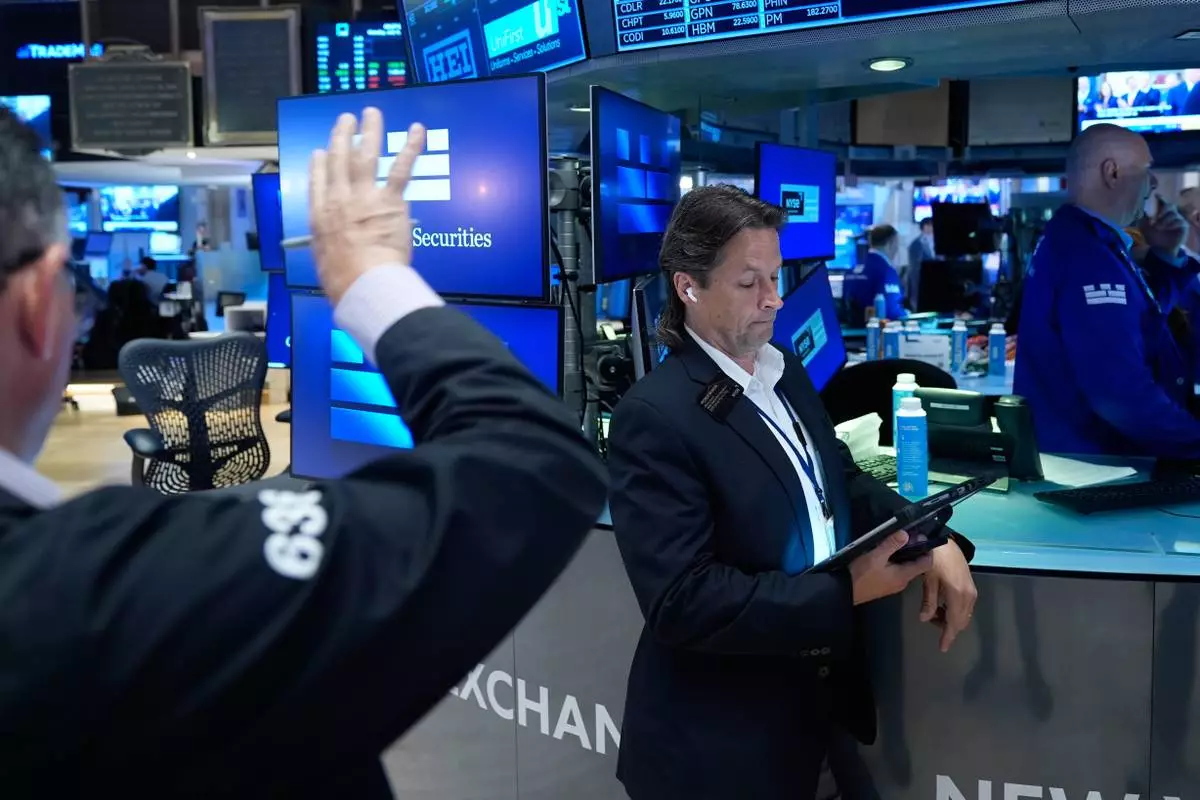
Patrick McKeon works on the floor at the New York Stock Exchange in New York, Monday, July 6, 2026. (AP Photo/Seth Wenig)
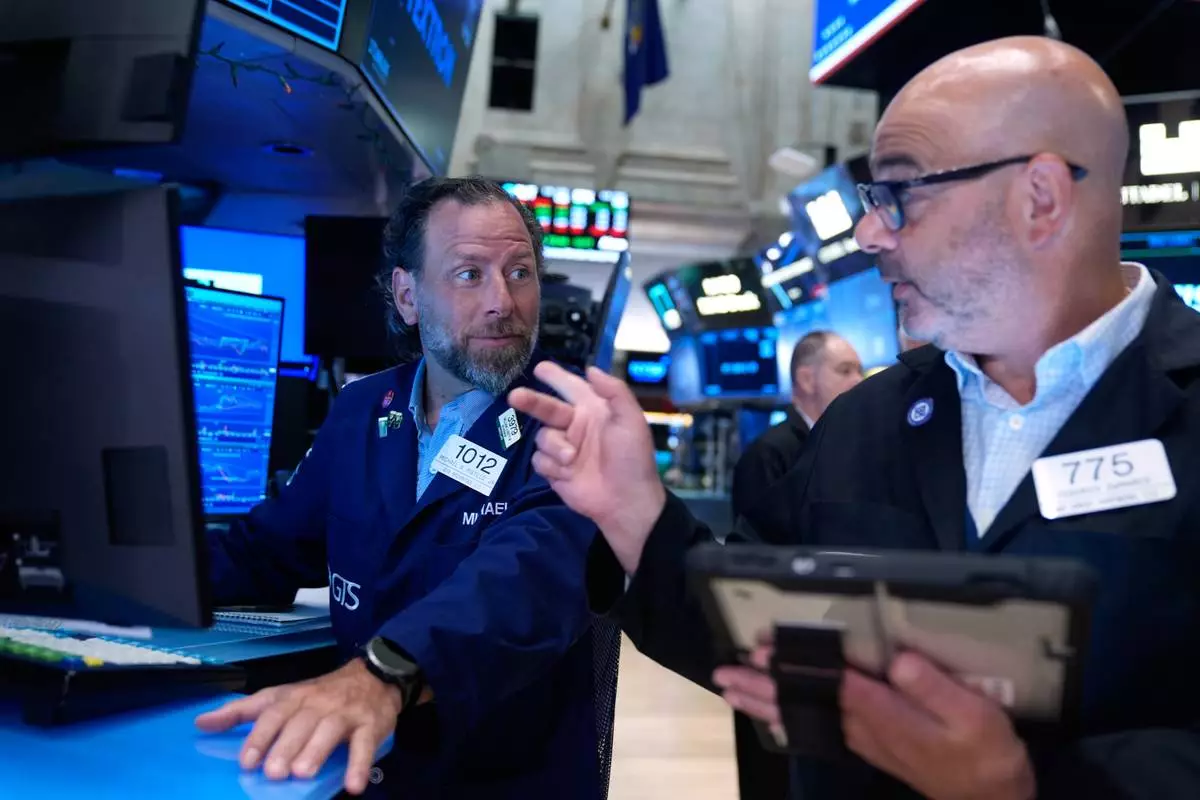
Michael Pistillo, left, and Federico DeMarco work on the floor at the New York Stock Exchange in New York, Monday, July 6, 2026. (AP Photo/Seth Wenig)
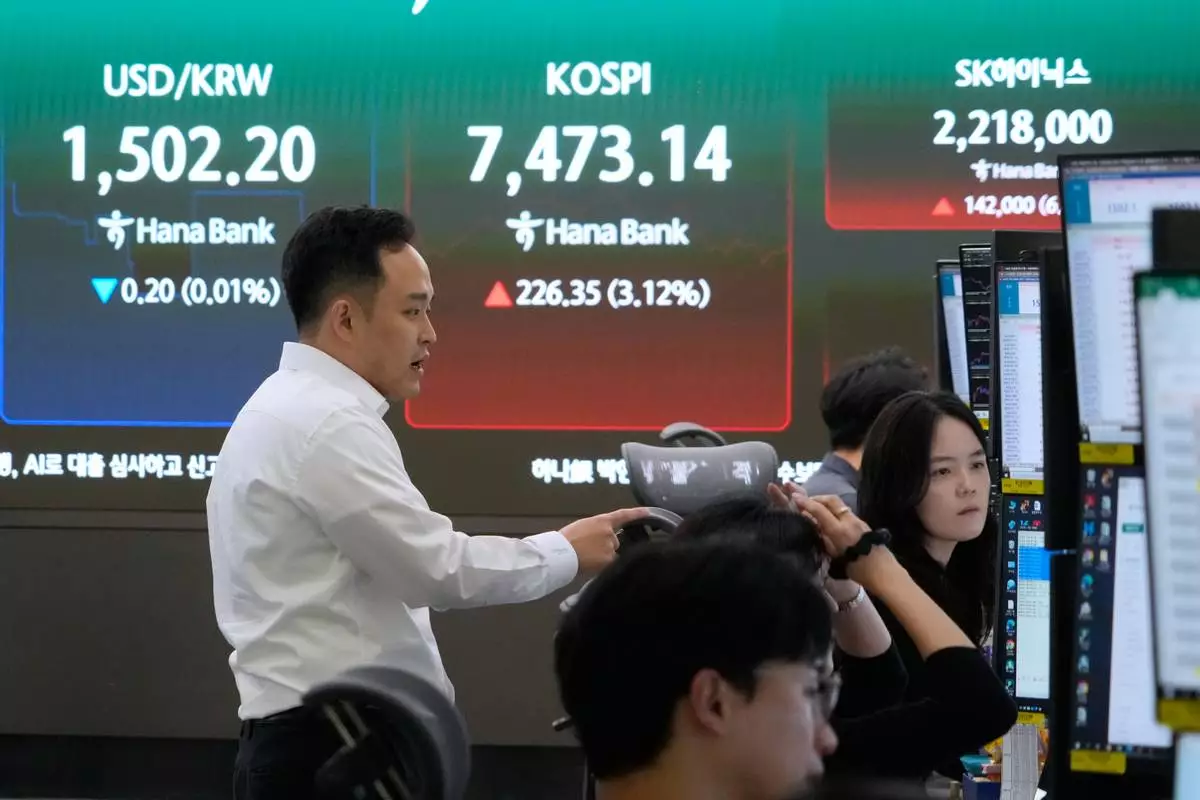
Currency traders work near a screen showing the Korea Composite Stock Price Index (KOSPI) and the foreign exchange rate between U.S. dollar and South Korean won at the foreign exchange dealing room of the Hana Bank headquarters in Seoul, South Korea, Thursday, July 9, 2026. (AP Photo/Ahn Young-joon)
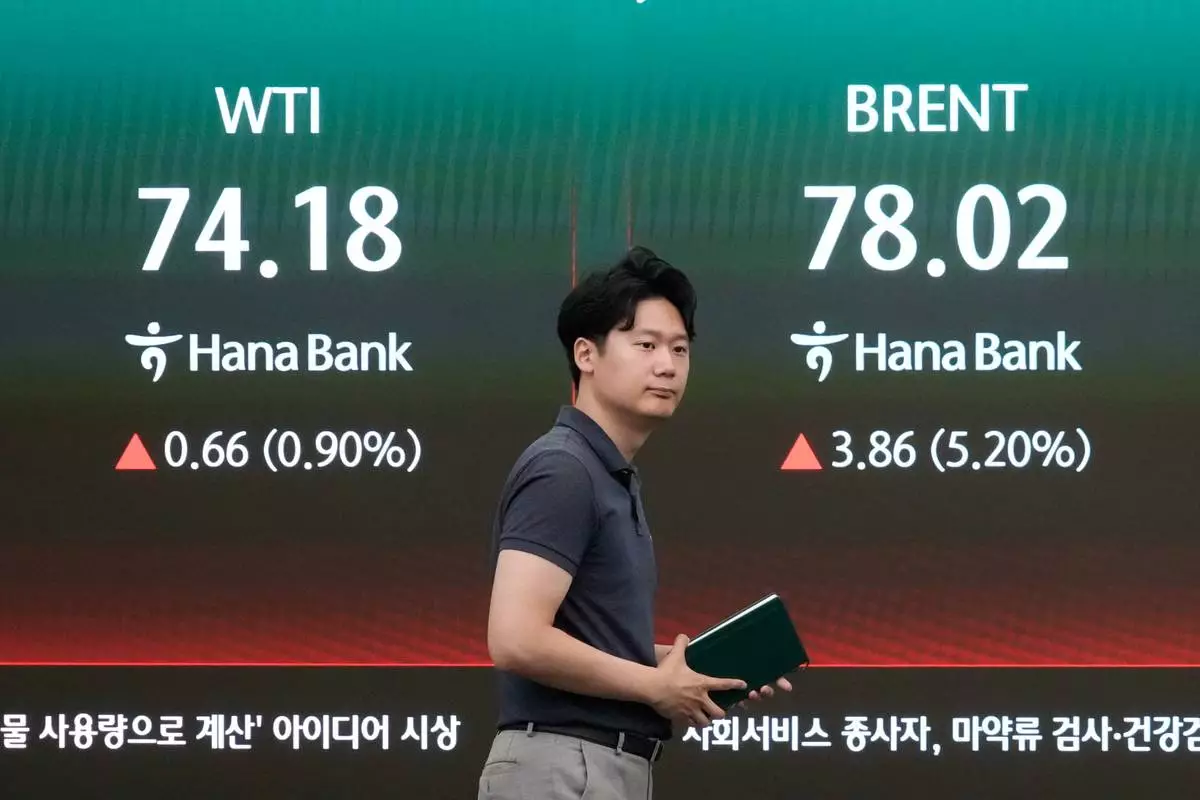
A currency trader passes by a screen showing international oil prices at the foreign exchange dealing room of the Hana Bank headquarters in Seoul, South Korea, Thursday, July 9, 2026. (AP Photo/Ahn Young-joon)
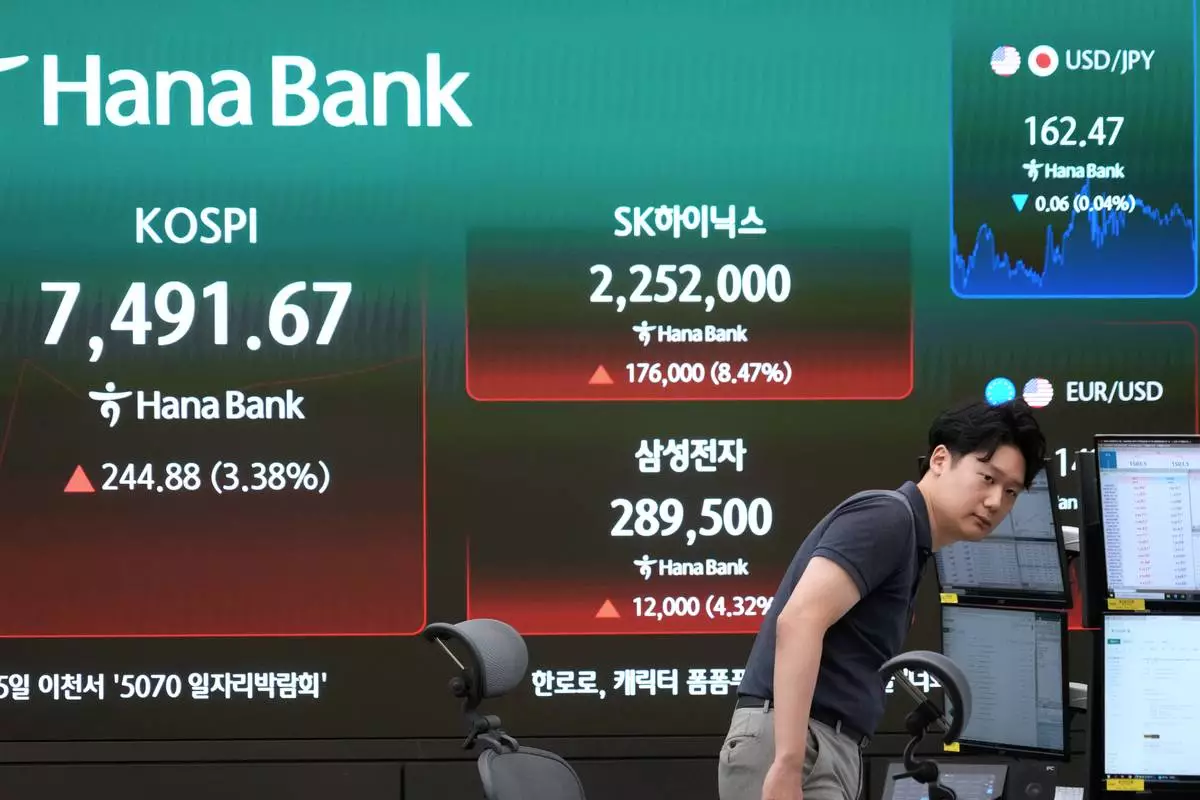
A currency trader watches monitors near a screen showing the Korea Composite Stock Price Index (KOSPI), SK Hynix and Samsung Electronics Co. stock price at the foreign exchange dealing room of the Hana Bank headquarters in Seoul, South Korea, Thursday, July 9, 2026. (AP Photo/Ahn Young-joon)
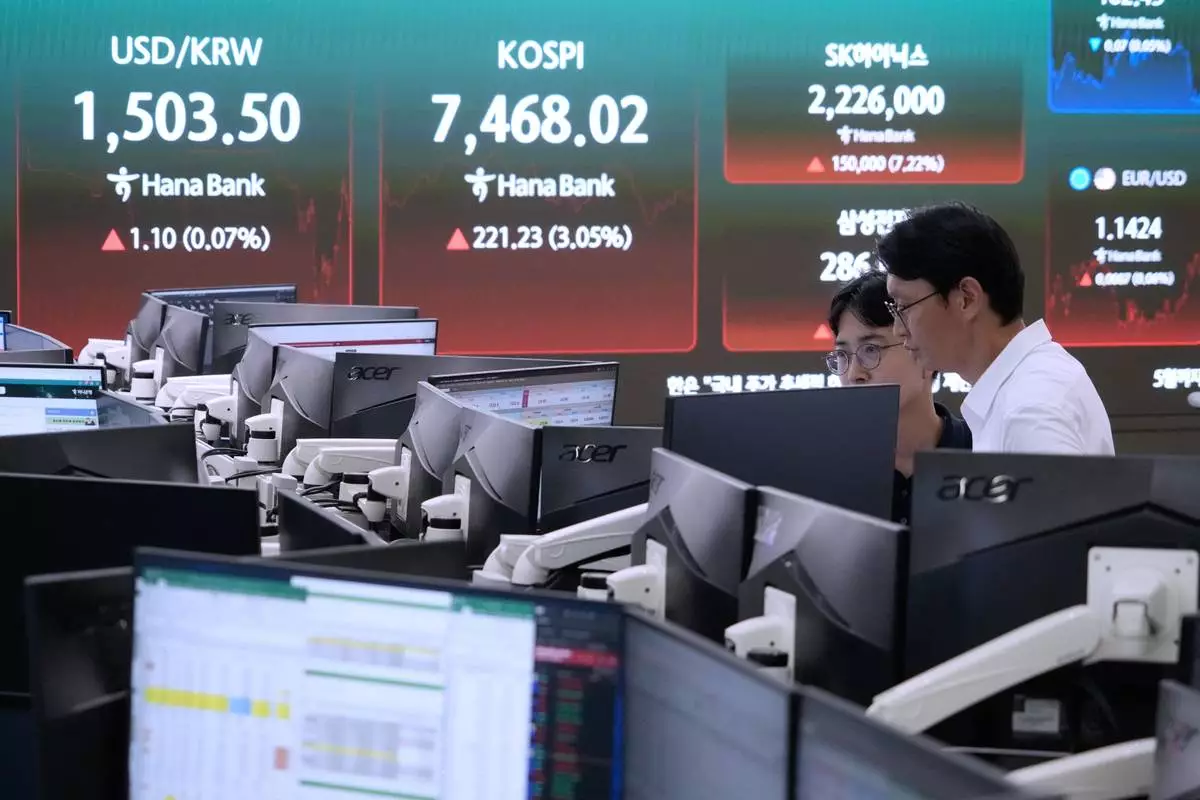
Currency traders watch monitors near a screen showing the Korea Composite Stock Price Index (KOSPI) and the foreign exchange rate between U.S. dollar and South Korean won at the foreign exchange dealing room of the Hana Bank headquarters in Seoul, South Korea, Thursday, July 9, 2026. (AP Photo/Ahn Young-joon)