China's consumer price index (CPI), a main gauge of inflation, rose 1 percent year on year in the first half of 2026, official data showed Thursday.
The monthly CPI has stayed slightly above 1 percent for five straight months, reflecting a moderate pace of increase.
Authorities said supply of key consumer goods has remained stable, with food prices fluctuating only slightly. In June, grain and edible oil prices declined, while beef and aquatic products rose, leaving overall fluctuations relatively small.
Due to the conflict in the Middle East, the international crude oil price rose by more than 20 percent year on year in the first half of the year, which drove up the domestic gasoline price.
In response, China took temporary regulatory measures to maintain the figure significantly lower than that of the international price.
"The year-on-year increase in core CPI, which excludes food and energy prices, has expanded compared with the same period last year. In particular, service prices have risen year on year. For instance, the demand for elderly care, childcare and domestic services is strong, which has driven a moderate year-on-year increase in household service prices. During holidays, residents have a strong demand for travel, which has driven up the prices of travel agencies and other tourism services significantly," said Liu Nancun, an economist at the Analysis and Forecasting Division of the Price Monitoring Center under the National Development and Reform Commission.

China's CPI up 1 pct in H1, food prices stable
Authorities have sought to quell fears after hundreds of snakes escaped from a flooded farm in south China's Guangxi Zhuang Autonomous Region after Typhoon Maysak damaged the facility, with local hospitals saying antivenom supplies remain fully stocked and sufficient to meet any potential demand.
The incident occurred in Guangxi's Hengzhou after heavy rainfall breached the embankment of a local reservoir, triggering flooding in the surrounding area, and seeing an estimated 800 to 900 snakes escaping from the farm on Monday, though most are believed to be non-venomous.
Local reports said that one villager had been bitten and was receiving emergency treatment, while residents from neighboring villages organized a volunteer snake-catching team to help contain the situation. Using fishing nets and other equipment, the team has been working to locate and capture the escaped reptiles.
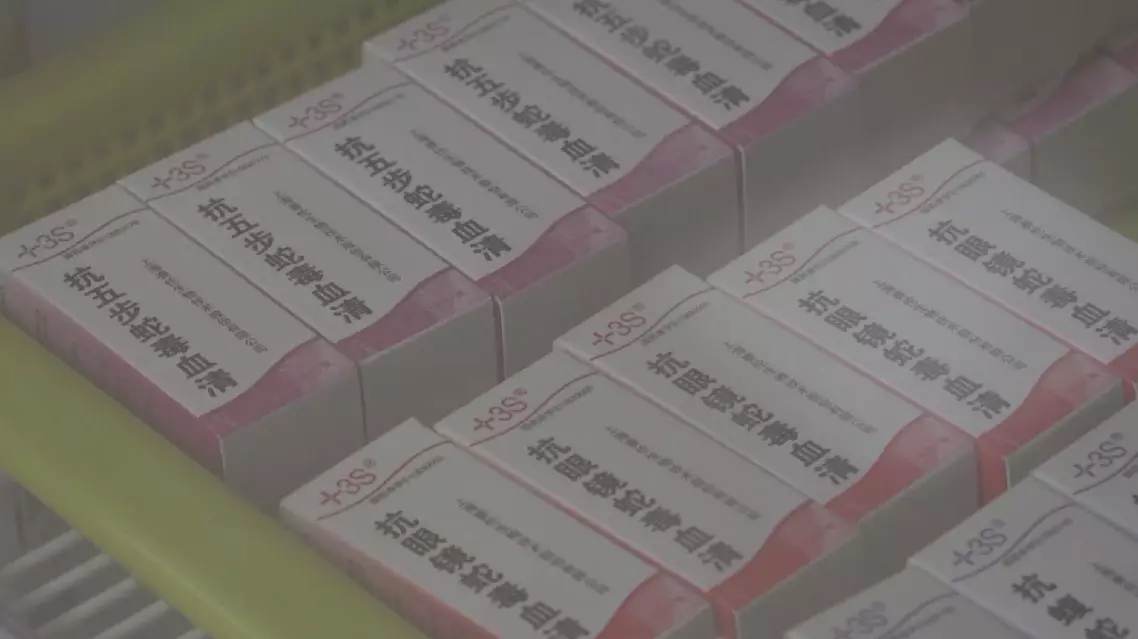
Amid concerns, the head of the pharmacy department at Hengzhou People's Hospital, which serves as a designated snakebite treatment center, confirmed that key medical supplies, including antivenom, remain well stocked. Cobra antivenom, in particular, is kept as a priority reserve item.
"We have four types of antivenom in stock — for pit vipers, five-step vipers, many-banded kraits, and cobras. Cobra antivenom is what we're most focused on right now, and we keep the most of it. But all four are part of our regular stockpiles," said Jiang Xin, chief pharmacist and pharmacy director at the Hengzhou People's Hospital.
Jiang further clarified there are no shortages, but said reserves can be brought in quickly from Guangxi's regional capital of Nanning if required.
"Given the current situation, we have significantly increased our stockpiles. Our reserves are sufficient for any emergency that may arise. And if needed, Nanning can replenish our supplies within 24 hours. So our inventory is more than adequate right now," said Jiang.
Snake escape sparks fear in China's Guangxi, but hospital says antivenom supplies adequate