加州,聖馬提歐--(BUSINESS WIRE)--七月 9, 2026--
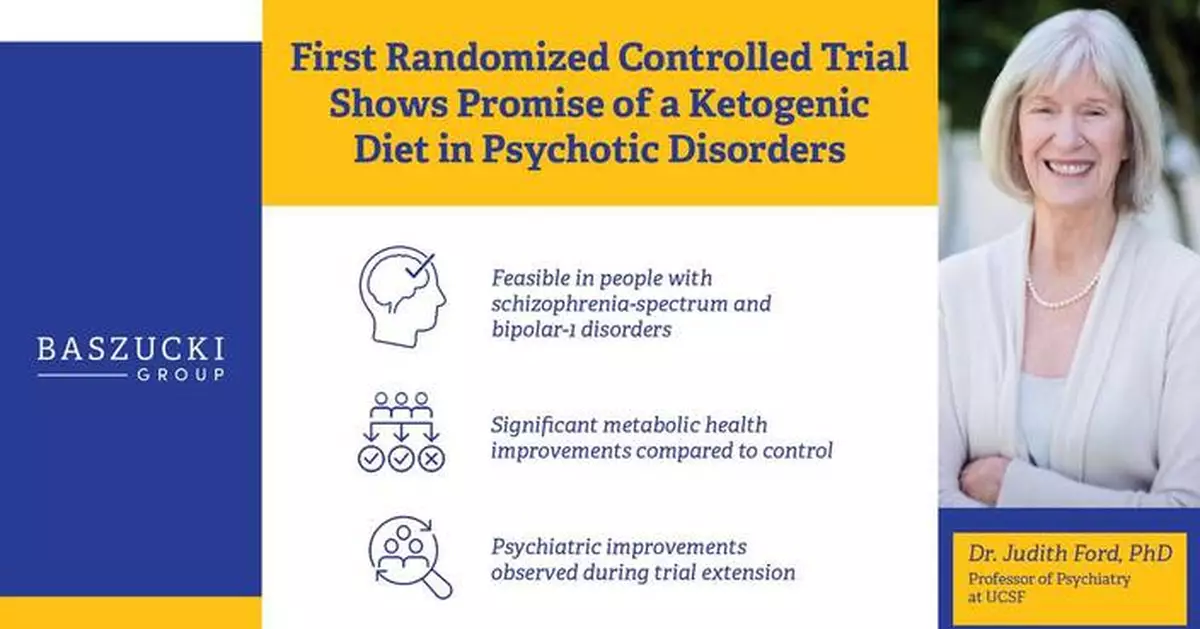
(美國商業資訊)-- 《精神分裂症公報》(Schizophrenia Bulletin) 今天發表了一份開創性的隨機對照試驗 (RCT) 報告。越來越多研究探討應用生酮飲食治療精神病性障礙的潛在效益,這項由加州大學舊金山分校 (UCSF) 的研究人員進行、並獲美國國家心理健康研究所 (NIMH) 贊助部分資金的試驗為這類研究報告增添一筆新發現。這項研究徵求患有精神分裂症譜系障礙或I型躁鬱症的受試者進行為期一個月的開放標籤階段初始隨機對照試驗。結果顯示,與一般飲食相比,生酮飲食能迅速改善代謝狀況。此外,某些受試者繼續進行為期四個月的生酮飲食單臂研究,他們的代謝、精神狀況及認知功能指標均呈現顯著改善。
本新聞稿包含多媒體資訊。完整新聞稿請見此: https://www.businesswire.com/news/home/20260618646955/zh-HK/
在錄取的58名受試者中,47人完成了為期一個月的初步生酮飲食與一般飲食效果對照研究。其中25名受試者選擇繼續攝取生酮飲食,將試驗總時長延長至四個月(即單臂延長研究)。研究結果顯示生酮飲食具有高度可行性:在為期一個月的隨機對照試驗中,83%接受每日檢測的受試者維持生酮狀態;在延長至四個月的試驗中,這一比例達到94%;而且沒有人表示因採取生酮飲食而引起嚴重副作用。
採取生酮飲食的受試者在一個月後與對照組相比,其關鍵代謝指標顯示出具統計意義的改善。在這項對照試驗中,即便排除了體重減輕的影響,較高的酮體數值仍與血糖降低及憂鬱症狀 (PHQ-9) 減輕相關。這表明所觀察到的效應可歸因於生酮狀態本身,而不只是體重減輕的結果。
為期四個月的延長研究則顯示受試者不僅代謝狀況持續改善,憂鬱和精神分裂症症狀也顯著減輕,認知功能也有所增強。儘管這項單臂延長研究的受試者僅有25名,但它釋放出生酮飲食有希望成為治療嚴重精神疾病的介入手段,仍足以鼓舞人心。
「我們觀察到認知和心理症狀方面的改善。這對精神病性障礙患者尤其重要,因為現有的抗精神病藥物雖然能夠緩解精神病症狀,卻無法改善患者包括認知或憂鬱症狀的整體心理健康,然而這些症狀往往嚴重衝擊患者的生活。」研究負責人、加州大學舊金山分校 (UCSF) 及威爾神經科學研究所 (Weill Institute for Neurosciences)精神科教授Judith M. Ford博士說。Ford教授指出,儘管研究結果令人振奮,但也表明有必要進行更大規模、更長期且全面控管的對照試驗,以驗證這些益處在大規模應用中是否依然成立。
該研究報告的作者群強調,一個月的介入似乎不足以反映這種介入辦法潛在的心理健康治療益處,而四個月研究觀察到的顯著認知和精神改善有必要在控管嚴謹的狀態下進行再驗證。這些結果與最近的幾項 精神分裂症 與 躁鬱症 試行研究結果一致。這些結果共同表明進行更大規模、更長期隨機對照試驗的必要,才能評估應用生酮療法治療嚴重精神疾病患者的效果與安全性。
「這項研究提供進一步證明,指出生酮療法是一種可行、安全的嚴重精神疾病治療方案,而且有潛力帶來變革性療效。」贊助該研究的Baszucki Group聯合創始人兼總裁Jan Ellison Baszucki表示,「現在我們應該以多元且持續的方式投入精神疾病代謝療法研究,進行嚴謹的科學檢證,以擴大這些研究的範圍,並提高群眾對其潛力的認識。」
關於Baszucki Group
Baszucki Group 由Roblox創辦人兼執行長David Baszucki和暢銷書作家Jan Ellison Baszucki創立於2021年。該集團利用私人捐贈、影響力投資、宣傳宣導、故事講述和社群建構等方式在科學、醫學、農業、食品及生態環境系統領域推動根本性變革。Baszucki Group的主要目標是透過支持代謝、精神病學和神經科學交叉領域的研究活動來改善心理健康。如欲進一步瞭解精神障礙以及腦部健康的代謝治療方法,包括生酮療法,請造訪Baszucki Group的非營利性計畫 Metabolic Mind 。
免責聲明:本公告之原文版本乃官方授權版本。譯文僅供方便瞭解之用,煩請參照原文,原文版本乃唯一具法律效力之版本。
請前往 businesswire.com 瀏覽源版本:https://www.businesswire.com/news/home/20260618646955/zh-HK/
Baszucki Group媒體聯絡人:media@baszuckigroup.org
KEYWORD: CALIFORNIA UNITED STATES NORTH AMERICA
INDUSTRY KEYWORD: MENTAL HEALTH RESEARCH HOSPITALS FITNESS & NUTRITION CLINICAL TRIALS HEALTH GENERAL HEALTH OTHER SCIENCE SCIENCE
SOURCE: Baszucki Group
Copyright Business Wire 2026.
PUB: 07/09/2026 05:12 AM/DISC: 07/09/2026 05:12 AM
http://www.businesswire.com/news/home/20260618646955/zh
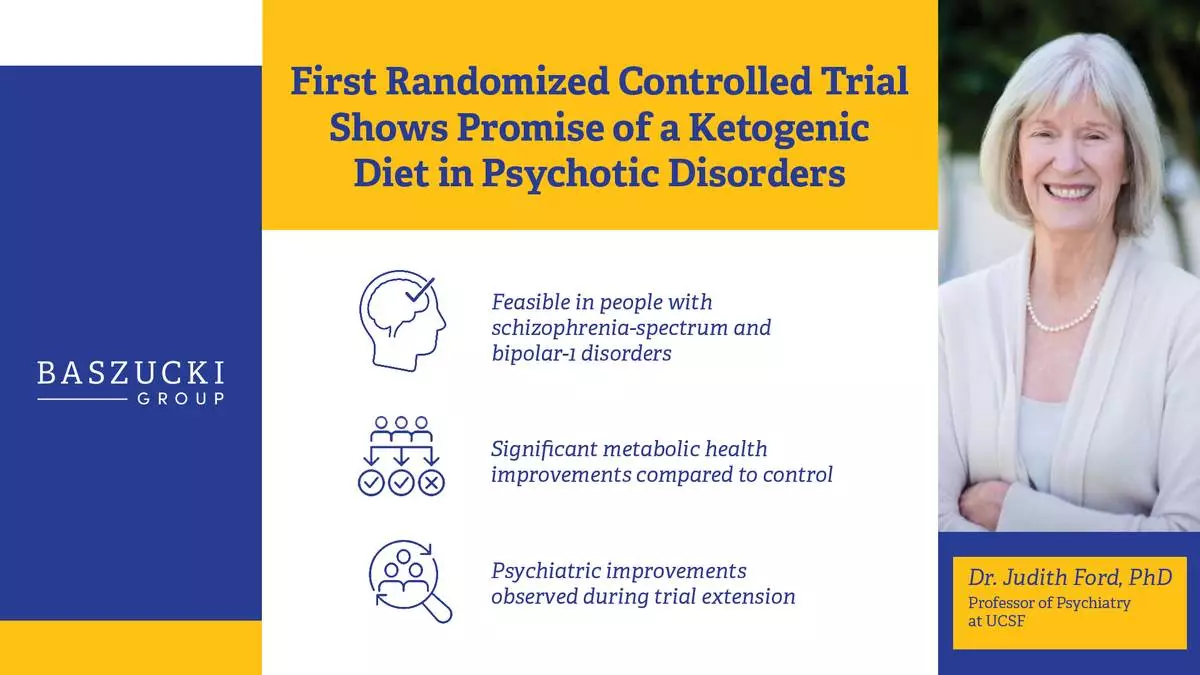
第一項應用隨機對照試驗探究應用生酮飲食治療精神病性障礙成效的報告顯示樂觀前景。
NEW YORK (AP) — Yahm Levin is a diehard Democrat who lives in one of the nation's most liberal cities. And yet the 39-year-old Jewish woman from Los Angeles is sometimes afraid to use her first or last name when meeting people — even those who share her progressive politics.
Levin has learned from recent experience that being identified as a Jew, especially one who lived in Israel, can trigger uncomfortable questions from fellow Democrats. Or worse. So, she introduces herself by her middle name, Shelly, which she said feels safer.
“I don’t really feel comfortable in leftist circles anymore,” said Levin, a former librarian. “I just want to be a Jewish American who has a connection to Israel. But I feel like I can’t do that. And it’s very frustrating. And sometimes a little scary.”
Nearly three years after the war in Gaza began with Hamas' attack on Oct. 7, 2023, intensifying criticism of Israel within the Democratic Party has left Levin feeling “politically homeless.”
A new poll from The Associated Press-NORC Center for Public Affairs Research finds that most Jewish adults don't feel well represented by political leaders at a troubling moment for many in their community. Most Jewish Americans, 63%, say prejudice against Jewish people is an “extremely” or “very” serious problem in the U.S. At the same time, few believe that either party is doing a good job supporting Jewish people in the United States.
The new survey of 1,022 Jewish adults — including people who identify as Jewish by religion and religiously unaffiliated people who identify as Jewish through culture, ethnicity or family background — offers a rare detailed accounting of a key demographic that sits at the very center of some of the nation’s most divisive political debates.
It indicates that many Jewish adults feel isolated at a moment when antisemitism is a growing concern across the political spectrum and support for Israel has become a flash point in both parties. The survey found that many Jewish adults, 36%, say supporting Israel is “extremely” or “very” important to their Jewish identity, while another 26% say it's “somewhat” important.
Just 15% of Jewish adults say that the Democratic Party supports Jewish people in the U.S. “extremely” or “very” well, while another 33% say the party supports them somewhat well. About 41% say the Democratic Party supports the Jewish community “not very well” or “not well at all.”
Jewish adults even feel worse about President Donald Trump and the Republican Party, although not by much — a noteworthy finding considering that Jewish Americans overwhelmingly identify as Democrats. About half of Jewish adults say Trump and Republicans don't support Jewish people in the U.S. well.
The poll also suggests a sense of isolation. Despite the Jewish community's widespread concerns about antisemitism, Americans overall are far less concerned, with only 38% of U.S. adults saying prejudice against Jewish people is an “extremely” or “very” serious problem.
Nearly three years after the war in Gaza began, it's not just Jewish Democrats who are re-examining their political loyalties.
Max Sacher, a 27-year-old Jewish Republican from Austin, Texas, said he was generally pleased with Trump’s support for the Jewish community until he saw the president’s latest diplomatic attempt to end months of conflict with Iran. Trump launched the war in partnership with Israeli Prime Minister Benjamin Netanyahu.
“It’s one of the most embarrassing documents I’ve read. It basically cedes everything to Iran,” said Sacher, who is a graduate student in finance. “I feel very lost politically. I used to have a home. Now I feel like I’m on an island in modern-day politics.”
Jewish voters made up 3% of the 2024 electorate, according to AP VoteCast. They overwhelmingly voted Democratic, with 66% casting ballots for Vice President Kamala Harris and 33% for Trump.
On some key questions, Jewish adults see things differently than Americans overall.
U.S. adults in general are more likely than Jewish adults to see Trump as “extremely” or “very” supportive of Jewish people in the United States. About 3 in 10 U.S. adults say Trump is highly supportive of Jewish people, compared to about 2 in 10 Jewish adults.
Most Jewish adults, 77%, say there is more prejudice against Jewish people compared with three years ago, before the Hamas attack.
Ellen Kuberski, a 72-year-old Jewish Democrat from Chicago, scoffed when asked about Trump. She described a “general disgust and hatred” for the Republican president. But she’s also upset with the Democratic Party, which she says has been much more supportive of the Palestinians than Israel or American Jews in recent years. She was especially upset when progressive activists were protesting against Israel even when the Israeli hostages were still captive in Gaza.
“I tend to be more in line with the far left in just about everything else. But now the far left is attacking the Jewish community," she said. “There’s enough antisemitism in the world that we don’t need politicians on what’s supposed to be on our side coming out with that crap.”
The Jewish community is divided over some of the people at the forefront of the Israel debate. However, New York City Mayor Zohran Mamdani, a democratic socialist who is a vocal critic of Israel, is more popular among Jewish adults than Netanyahu or Trump, who promised to be "the best friend Jewish Americans have ever had in the White House.”
About 4 in 10 Jewish adults, 44%, view Mamdani “somewhat” or “very” favorably, while a similar share, 39%, view him “somewhat” or “very” unfavorably. About 2 in 10 Jewish adults don’t know enough to say.
Kylle Epstein, a 24-year-old Jewish Democrat from Clearwater, Florida, cheered Mamdani and like-minded Democrats who have won recent congressional primary elections in New York.
“I think Mamdani is absolutely phenomenal. He makes Democrats think,” Epstein said, calling for "new blood in the party."
On Netanyahu, only about one-third of Jewish adults have a “somewhat” or “very” favorable opinion of the Israeli prime minister, while about 6 in 10 have a “somewhat” or “very” unfavorable view, including 42% who have a “very” unfavorable opinion. About 1 in 10 don’t know enough to say.
Jewish adults have a slightly more negative view of Trump than Netanyahu, with a similar share, 29%, saying they view Trump favorably.
Meanwhile, the poll found that Pennsylvania Gov. Josh Shapiro, one of the nation's most prominent Jewish Democratic officials, is still unknown by many Jewish adults.
About 4 in 10 Jewish adults have a “somewhat” or “very” favorable opinion of the Democratic governor, while about 2 in 10 have a “somewhat” or “very” unfavorable opinion. About 4 in 10 don’t know enough to say.
In interviews, many Jewish adults indicated that their Jewish heritage does not mean they want the U.S. government to provide unconditional support of Israel.
In fact, about 4 in 10 Jewish adults say the U.S. is “too supportive” of the Israelis, similar to U.S. adults overall, although about 3 in 10 Jewish adults say the U.S. is “not supportive enough” of Israel, compared to only about 2 in 10 U.S. adults.
At the same time, about 4 in 10 Jewish adults say the U.S. is “not supportive enough” of the Palestinians, similar to U.S. adults.
The issue is salient for Jewish adults in a way that it's not for many Americans. About 6 in 10 Jewish adults say Israel is an “extremely” or “very” important issue to them personally, compared to only 35% of U.S. adults.
“Jews and Israel are connected, but they’re not synonyms,” said Levin, the former librarian from Los Angeles.
She said that the lack of understanding on both sides has fueled a rise of antisemitism, even in a city packed with Democrats.
She was walking along Los Angeles' famed Olvera Street with her husband last month when they came across a spray-painted sign on the sidewalk that read, “Death to Zionists," alongside an upside down triangle that has been associated with Hamas.
Levin said it's getting harder and harder to support Democrats, although she doesn't think she could vote Republican.
“I mostly shake my head a lot and try to breathe,” she said.
Sanders reported from Washington.
Associated Press religion coverage receives support through the AP’s collaboration with The Conversation US, with funding from Lilly Endowment Inc. The AP is solely responsible for this content.
The AP-NORC poll of 3,040 adults was conducted June 11-17 using a sample drawn from NORC’s probability-based AmeriSpeak Panel, which is designed to be representative of the U.S. population. The poll included interviews with 1,022 Jewish adults. The margin of sampling error for adults overall is plus or minus 2.8 percentage points and the margin of sampling error for Jewish adults is plus or minus 5.0 percentage points.

FILE - People watch the lighting of the world's largest menorah on Fifth Avenue by Central Park for the seventh night of Hanukkah, Dec. 31, 2024, in New York. (AP Photo/Heather Khalifa, File)

FILE - A woman holds a sign saying, "end antisemitism" while attending a March for Israel rally Nov. 14, 2023, on the National Mall in Washington. (AP Photo/Jacquelyn Martin, File)