Tens of thousands of Palestinians in Gaza now live with permanent injuries after more than two years of war, as a shattered healthcare system struggles with severe shortages of medical supplies and rehabilitation equipment.
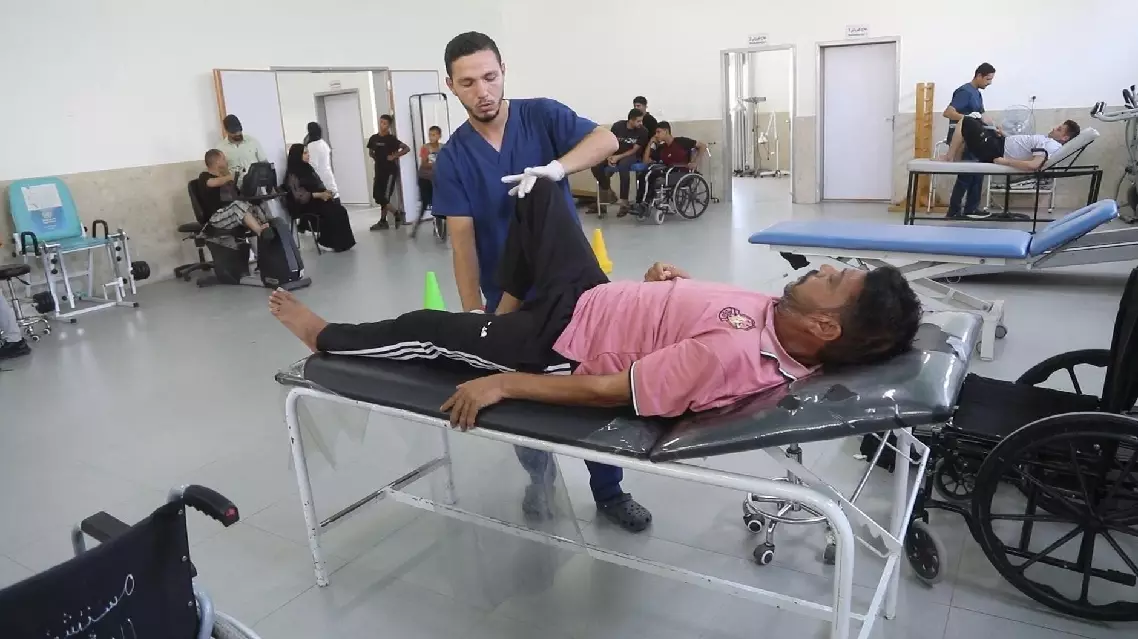
At the Palestine Red Crescent Society Rehabilitation Center in Khan Younis, dozens of children and young adults attend daily sessions of physical and psychological therapy. The services have become indispensable to their recovery, yet remain critically under‑resourced, highlighting the severe lack of rehabilitation facilities across Gaza and the inability of existing centers to meet the overwhelming needs.
Among the patients is Mohammad Khalifa, an amputee who lost his leg during the conflict. Determined to restore his independence, he now undergoes intensive rehabilitation while grappling with the daily realities of life with a prosthesis.
"Everyone here was injured in the war and live with different conditions, including paralysis and spinal cord injuries. Sadly, most of them are children and young people," said Mohammad Khalifa.
Nearby, Tamer Al Sharif is recovering from shrapnel wounds that left him paralyzed. He says rehabilitation helps maintain his condition while he waits for treatment he cannot receive inside Gaza.
"I need medical treatment outside Gaza because I suffer from joint stiffness and spinal injuries. I need spinal stabilization surgery, but that treatment is not available here. Rehabilitation helps prevent my muscles from atrophying and further suffering," said Tamer Al Sharif.
For many patients, the center offers more than rehabilitation. It provides a chance to regain mobility, rebuild confidence and begin recovering from the physical and psychological scars of war.
"We face major challenges due to shortages of medical supplies, including physical therapy equipment. Patients also struggle to reach the hospital from different parts of Gaza. We hope the crossings can be opened so essential rehabilitation supplies can enter, and patients can be allowed to travel abroad for treatment," said Tareq Al Hanafi, director of Palestine Red Crescent Rehabilitation Center.
The scale of rehabilitation needs remains immense. According to Gaza's Government Media Office, more than 19,000 people now require long-term care, including over 5,400 amputees, 1,500 people living with paralysis, and 1,200 who have lost their vision.
For thousands of people wounded by the war in Gaza, recovery is a long and difficult journey. Despite scarce resources, rehabilitation remains their best hope of regaining mobility, independence and a sense of normalcy.
Rehab center becomes lifeline for thousands maimed in Gaza war
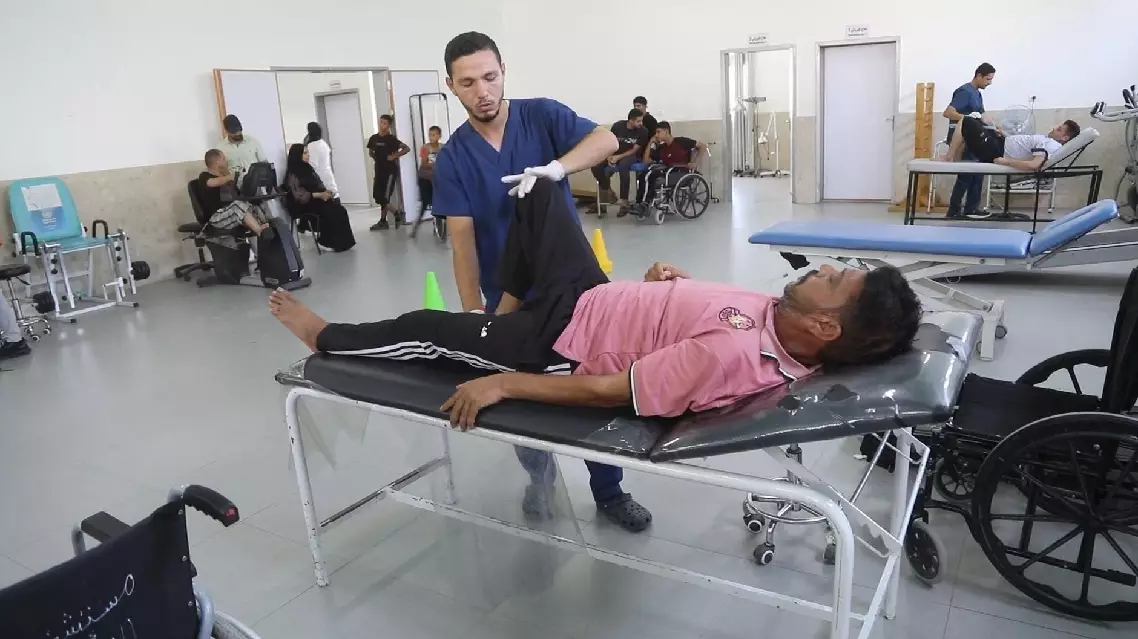
Rehab center becomes lifeline for thousands maimed in Gaza war
China's eastern coastal provinces have intensified emergency preparations for Typhoon Bavi, the ninth of the year, as it approaches the country.
Super Typhoon Bavi was centered over waters about 1,210 kilometers southeast of Keelung, China's Taiwan, at 5:00 on Thursday.
The typhoon is forecast to move westward before turning northwestward at around 15 to 20 kilometers per hour and could make landfall along the coast between Fuqing in Fujian Province and Wenling in Zhejiang Province on Saturday night as a strong typhoon or a typhoon.
After making landfall, the typhoon will move northwestward and gradually weaken.
China's meteorological authority issued an orange alert for typhoon on Thursday morning, which is the second highest level in the country's four-tier color-coded weather warning system.
The State Flood Control and Drought Relief Headquarters on Wednesday activated a Level IV emergency response for flood control and typhoon prevention in the provinces of Zhejiang and Fujian, the Ministry of Emergency Management said.
The headquarters will upgrade or adjust the emergency response in accordance with the development of the typhoon, the ministry said.
Both Fujian and Zhejiang activated Level IV emergency responses for typhoon prevention on Thursday morning.
The Nanjing section of the Yangtze River in east China's Jiangsu Province also activated a Level IV emergency response on Wednesday, urging ships and docks to take measures to prevent losses from Bavi.
According to local maritime authorities, the Yangtze River is currently in its main flood season, with the water level reaching 8.06 meters at the Nanjing tide station during high tide times, which is 14 percent higher than that in the same period last year. Moreover, the main waterway has a flow rate approaching 52,000 cubic meters per second, posing risks to water traffic.
As the typhoon is expected to bring winds and rains to the region and make the river even more swollen, the Nanjing Maritime Safety Administration has intensified ship control, grasped trajectories of ships carrying hazardous chemicals and cargo containers, and guided ships entering the river from the sea to adjust their navigation plans and take shelter in the closest safe areas.
"We have reinforced all berthed ship, including seagoing vessels, small bulk carriers and inland waterway vessels. And all key emergency standby forces within our jurisdiction have been deployed to designated locations," said Zhu Dengxuan, deputy director of the Longtan Maritime Safety Administration in Nanjing.
In Fujian, strong winds and rough seas triggered by Bavi disrupted coastal transportation on Wednesday, prompting maritime authorities to suspend passenger ferry services and strengthen emergency preparedness.
By the end of Wednesday, eight coastal passenger ferry routes and 22 passenger ferries had been suspended, according to the Fujian maritime bureau. Authorities also ordered all 110 marine construction projects underway along the coast to halt operations.
The Fujian maritime bureau has activated a Level III emergency response for typhoons, carrying out safety inspections and continuing to issue warnings to shipping companies, marine construction operators and vessels in port.
In the northeastern city of Fuding, a sheltered anchorage is serving as a safe haven for more than 200 fishing boats.
"Our typhoon anchorage can accommodate about 220 boats. It has been gradually packed with ships from Zhejiang and Fuding over the past three days. As soon as a ship arrives, we would persuade the crew to go ashore," said Chen Bin, chief of a local village.
As of Wednesday afternoon, all the 4,973 fishing boats in Fuding have returned to harbors to take shelter, and the remaining 783 crew members and inspectors have been asked to return to safe areas by Friday noon.
In Zhejiang, the provincial flood control and drought relief headquarters has urged coastal localities and relevant authorities to closely monitor the typhoon's development and make full preparations, including arranging shelter for key vessels, securing fishing boats in ports, suspending maritime routes and closing marine tourism sites.
The maritime authorities in Wenzhou City of Zhejiang began evacuating tourists and residents from its Nanji and Beiji islands on Sunday.
So far, more than 2,000 people on the two scenic islands have all been evacuated, and relevant ferry services have been suspended.
China has a four-tier emergency response system, with Level I being the most severe response, as well as a four-tier color-coded weather warning system, with red representing the most severe level, followed by orange, yellow and blue.
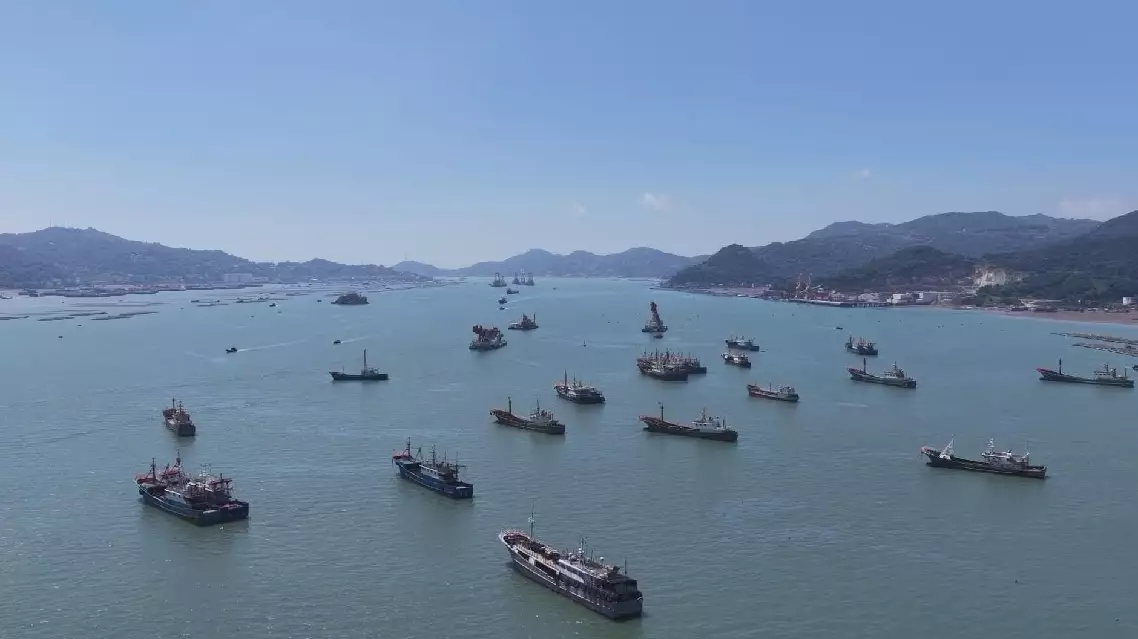
East China coastal provinces brace for Typhoon Bavi