WASHINGTON--(BUSINESS WIRE)--Jul 9, 2026--
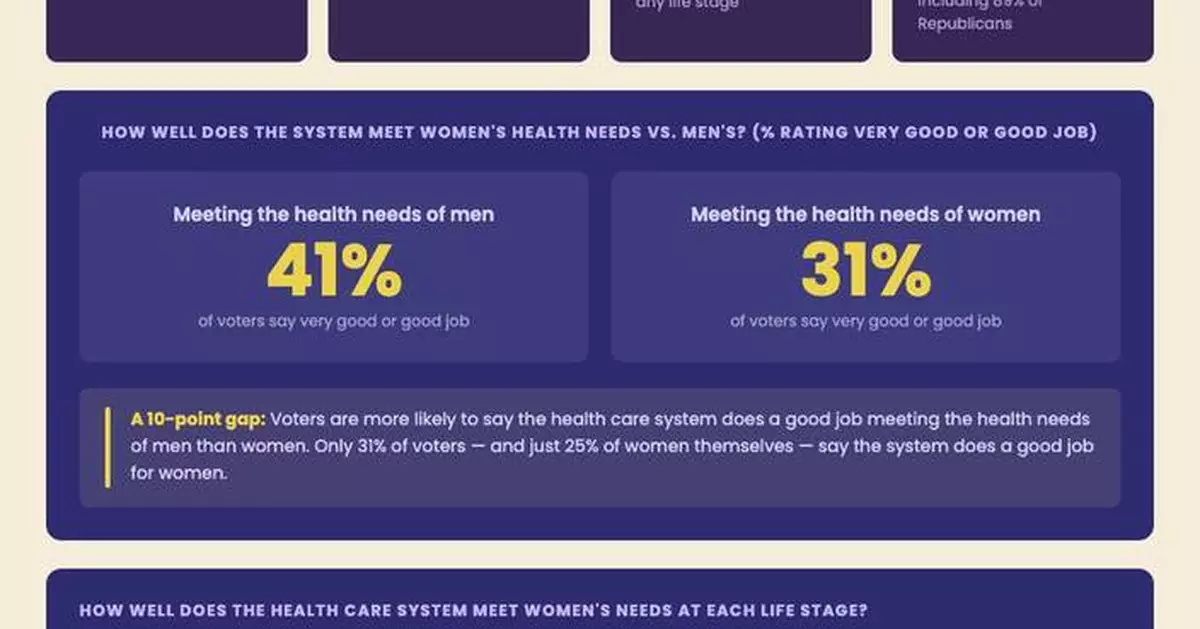
A sweeping new national voter survey paints a troubling picture of women’s health care in America today. Despite near-universal agreement that women have unique health needs deserving specific attention, only 31% of voters believe the U.S. health care system is doing a good or very good job of meeting those needs. The survey, conducted by Impact Research and Echelon Insights for Center Forward among 1,206 registered voters in the likely electorate nationwide, reveals a health care system that voters across party lines believe is falling short for women at nearly every stage of life.
This press release features multimedia. View the full release here: https://www.businesswire.com/news/home/20260709065898/en/
“These findings should serve as a wake-up call for the health care industry and for policymakers,” said Tara Evans, Marketing Director for Plan B One-Step. “Women are telling us loudly and clearly that the system is not working for them. From reproductive health to menopause care to postpartum support, the gaps are real, they are significant, and voters want action.”
KEY FINDINGS ON THE STATE OF WOMEN’S HEALTH CARE:
The findings reveal that the health care gap is not evenly distributed. Women with fair or poor health are 15 points more likely than those in excellent or very good health to say the system does not pay enough attention to their needs. Those earning under $50,000 annually are among the most likely to feel overlooked, with 61% of voters earning $30,000 to $49,000 per year agreeing the system does not pay enough attention to their health issues.
“The picture this data paints is one of a system that works better for some Americans than others, and women, particularly those with lower incomes or in rural communities, are bearing the greatest burden of that failure,” adds Evans. “Plan B is committed to being part of the solution by ensuring that at the very minimum, women have access to emergency contraception when they need it.”
Plan B is the most widely distributed over-the-counter emergency contraception. It’s available in all 50 U.S. states, at all major retailers, local grocers, and other pharmacies, with no ID or prescription needed to purchase regardless of what state someone lives in.
In addition to ensuring accessibility right off the shelf, Plan B donates up to 500,000 units of their product each year to clinics, nonprofit organizations, advocacy groups, and other qualifying organizations that focus on supporting medically underserved communities.
The survey was conducted January 12–16, 2026, with a margin of sampling error of plus or minus 3.2 percentage points. Full topline results are available at center-forward.org.
About Plan B One-Step
Plan B One-Step is a backup method of birth control used to help prevent unintended pregnancy after unprotected sex or if the usual method of birth control fails. It is not an abortion pill and will not impact implantation or harm an existing pregnancy. Emergency contraception, like Plan B, is used within 72 hours after unprotected sex. The sooner it is taken, the better it works. Available without a prescription or ID at retailers nationwide, Plan B is safe, legal, and accessible in all 50 states. These findings are part of The 2026 Women’s Health Mandate, a five-part bipartisan data series on women’s health care in America, conducted by Impact Research and Echelon Insights for Center Forward.
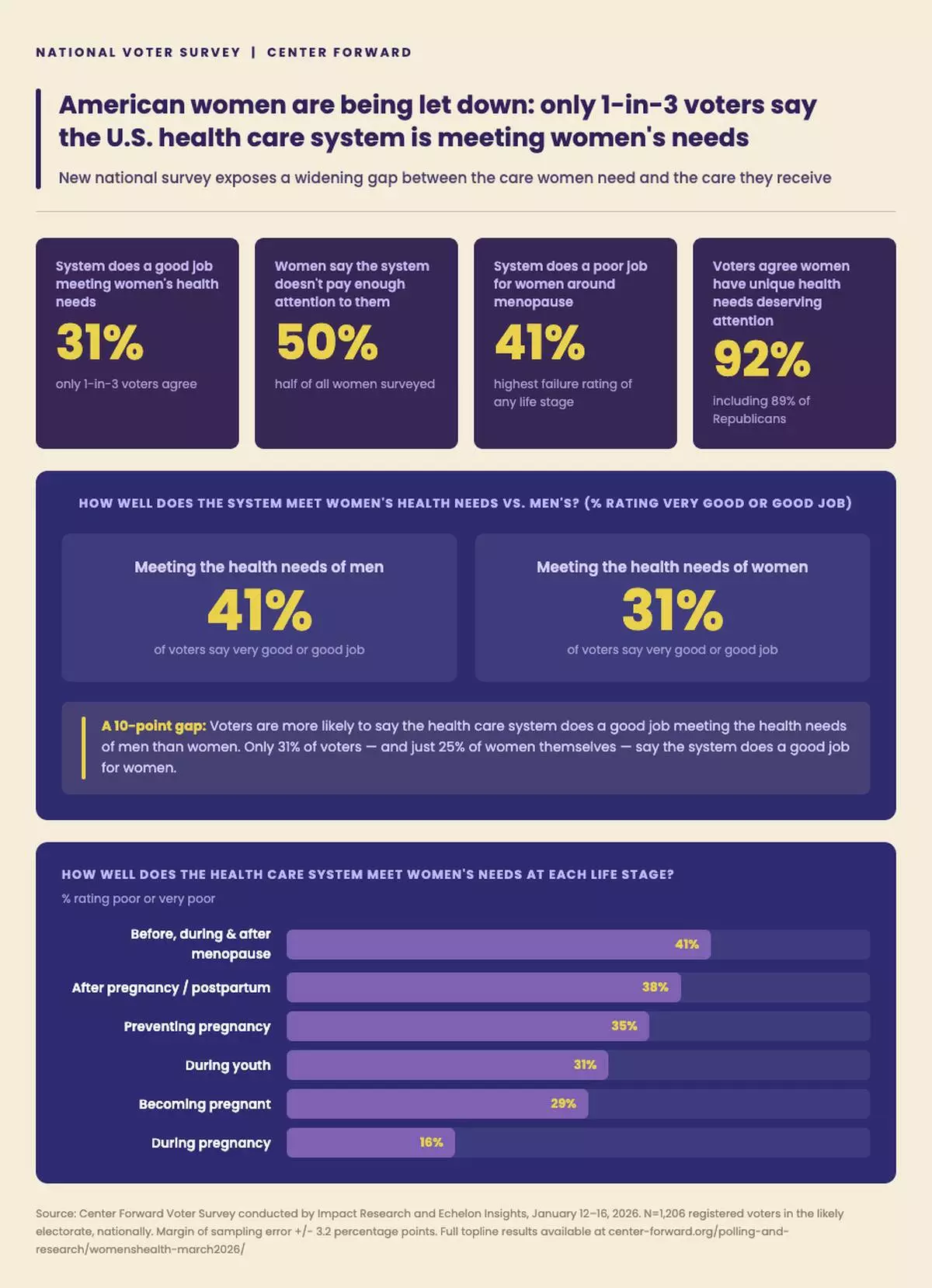
The 2026 Women’s Health Mandate: American women are being let down
NEW YORK (AP) — Wall Street and oil prices are holding steadier Thursday following their sharp swings the day before in the wait to see what will come next after President Donald Trump raised doubts about the temporary truce in the war with Iran.
The S&P 500 rose 0.3%, even though the United States launched new airstrikes against Iran, which responded by targeting U.S. allies in the Middle East. The Dow Jones Industrial Average was down 47 points, or 0.1%, as of 9:35 a.m. Eastern time, and the Nasdaq composite was 0.5% higher.
In the oil market, prices edged lower following their spurts higher from the day before. The price for a barrel of Brent crude, the international standard, slipped 0.1% to $77.94. That’s down from $78.02 the day before but still above its $71.80 price at the end of last week.
The worry is that a return to full-blown war will block oil tankers from the Strait of Hormuz and prevent the delivery of crude from the Persian Gulf to customers worldwide. That could worsen inflation, which economists expected would ease with oil prices, and in turn force the Federal Reserve and other central banks to raise interest rates.
Higher rates can keep a lid on inflation, but they also slow the economy and hurt prices for all kinds of investments.
But Trump also said Wednesday that the latest back-and-forth fighting would not result in “long-term” military action, raising uncertainty about just what will happen.
The swings for oil prices have halted what had been a steady decline in gasoline prices, and the cost for a gallon climbed a nickel overnight, according to motor club AAA. The average price for a gallon of regular gasoline was $3.85 Thursday, up 69 cents from a year earlier.
In the meantime, some renewed strength for computer chip companies and other winners of the boom around artificial-intelligence technology are helping to support stock markets worldwide.
In South Korea, whose stock market is dominated by two companies that make semiconductors, the Kospi index rose 0.6% after tumbling 5.3% the day before. SK Hynix, which is preparing to sell shares of stock that will trade in the United States, jumped 5.3% in Seoul.
On Wall Street, Micron Technology’s rise of 7.2% was the strongest force pushing upward on the S&P 500. Close behind ws the 3.5% rise for Broadcom.
Such stocks have become some of Wall Street’s most influential after growing so big in the euphoria around AI. But AI stocks have also come pressure recently on worries that their prices shot too high and that AI may not produce enough productivity and profits to make all the investments in chips and data centers worth it.
They and other stocks also got some help from stabilizing yields in the bond market. The yield on the 10-year Treasury held at 4.56%, where it was the day before.
It had been climbing on worries about high oil prices and the potential for higher interest rates, cranking up the pressure on stocks and prices for other investments.
Besides the war with Iran, another big event for Wall Street is the upcoming start of the latest earnings reporting season. Next week, the biggest banks are set to unveil how much profit they made from April through June. Companies broadly will need to report strong growth to justify the big moves their stock prices have made.
PepsiCo fell 4.8% even though it reported slightly better revenue for the latest quarter than analysts expected. Numbers released by the company behind Gatorade and Doritos showed weakening trends in its North American food and drinks businesses.
In stock markets abroad, indexes rose across much of Europe and Asia.
Besides Seoul’s climb, stock indexes rose 1.7% in Shanghai and 0.7% in Paris.
On the losing end was Hong Kong’s Hang Seng, which slipped 0.7% as shares of Apple supplier Luxshare fell 1.5% in its trading debut.
AP Business Writers Chan Ho-him and Matt Ott contributed to this report.
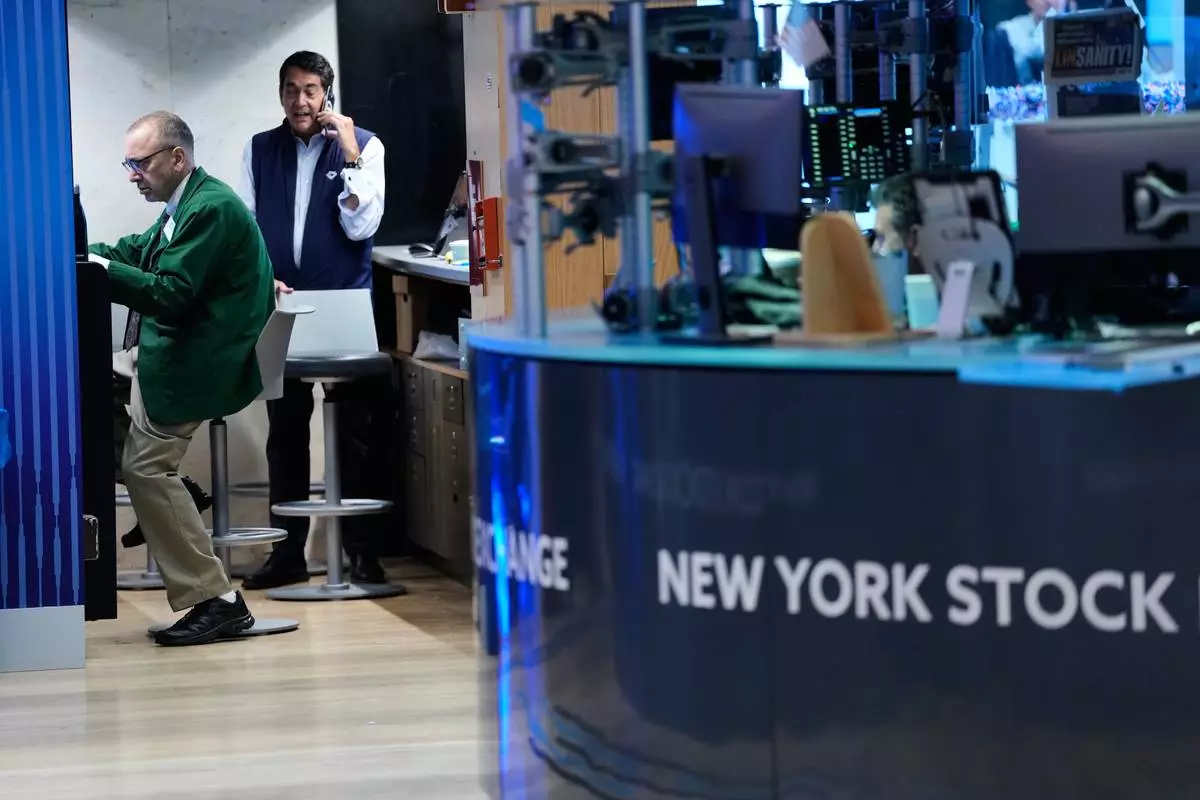
Traders work on the floor at the New York Stock Exchange in New York, Monday, July 6, 2026. (AP Photo/Seth Wenig)
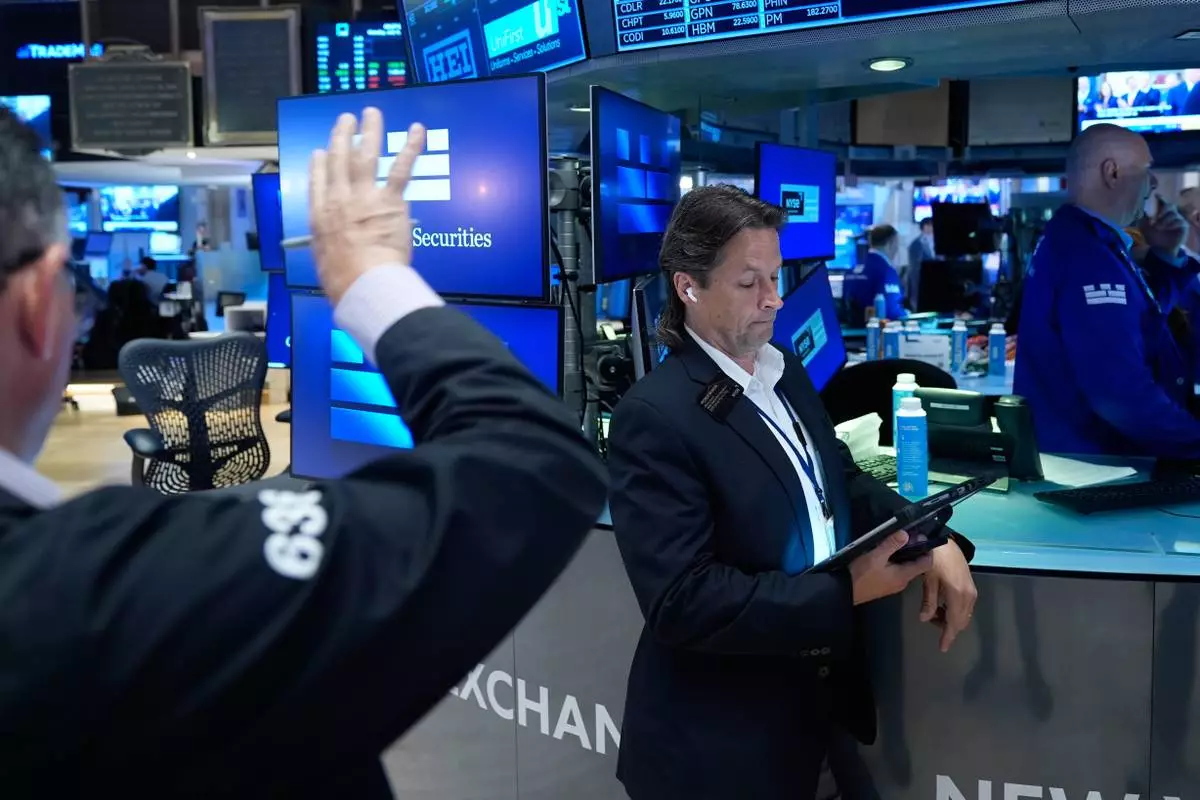
Patrick McKeon works on the floor at the New York Stock Exchange in New York, Monday, July 6, 2026. (AP Photo/Seth Wenig)
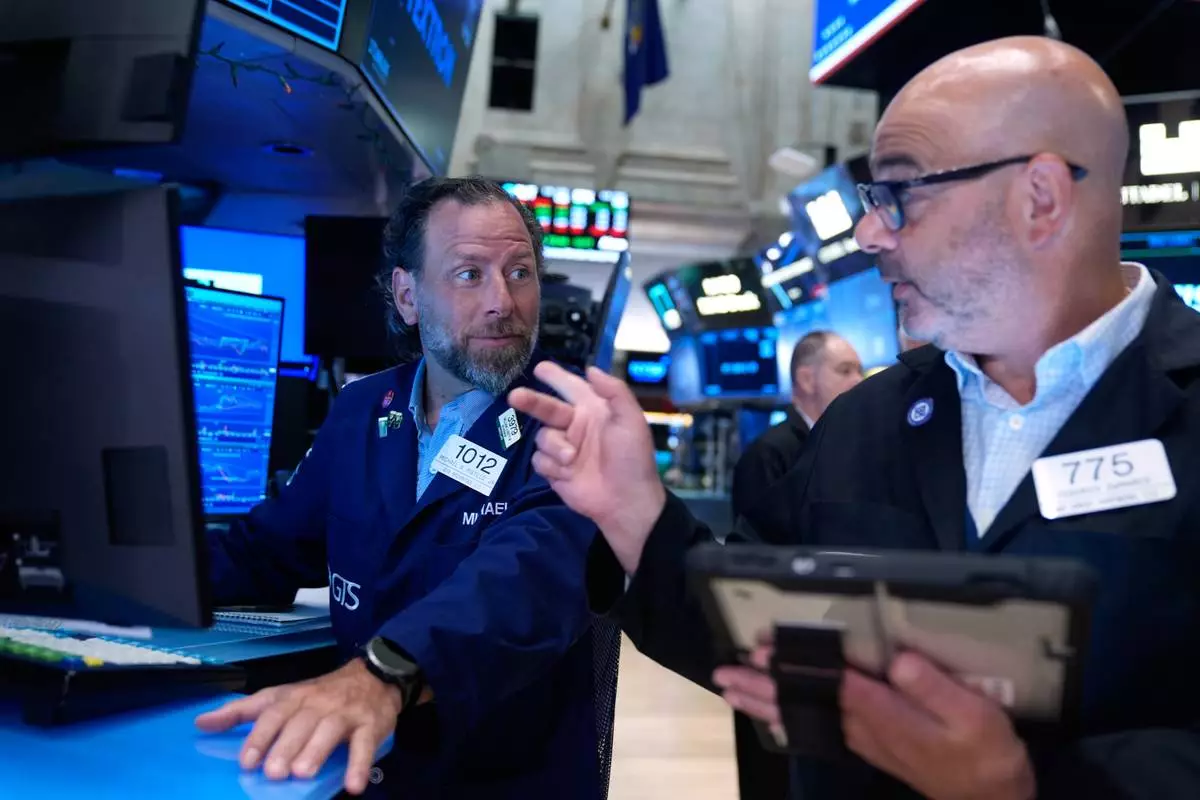
Michael Pistillo, left, and Federico DeMarco work on the floor at the New York Stock Exchange in New York, Monday, July 6, 2026. (AP Photo/Seth Wenig)
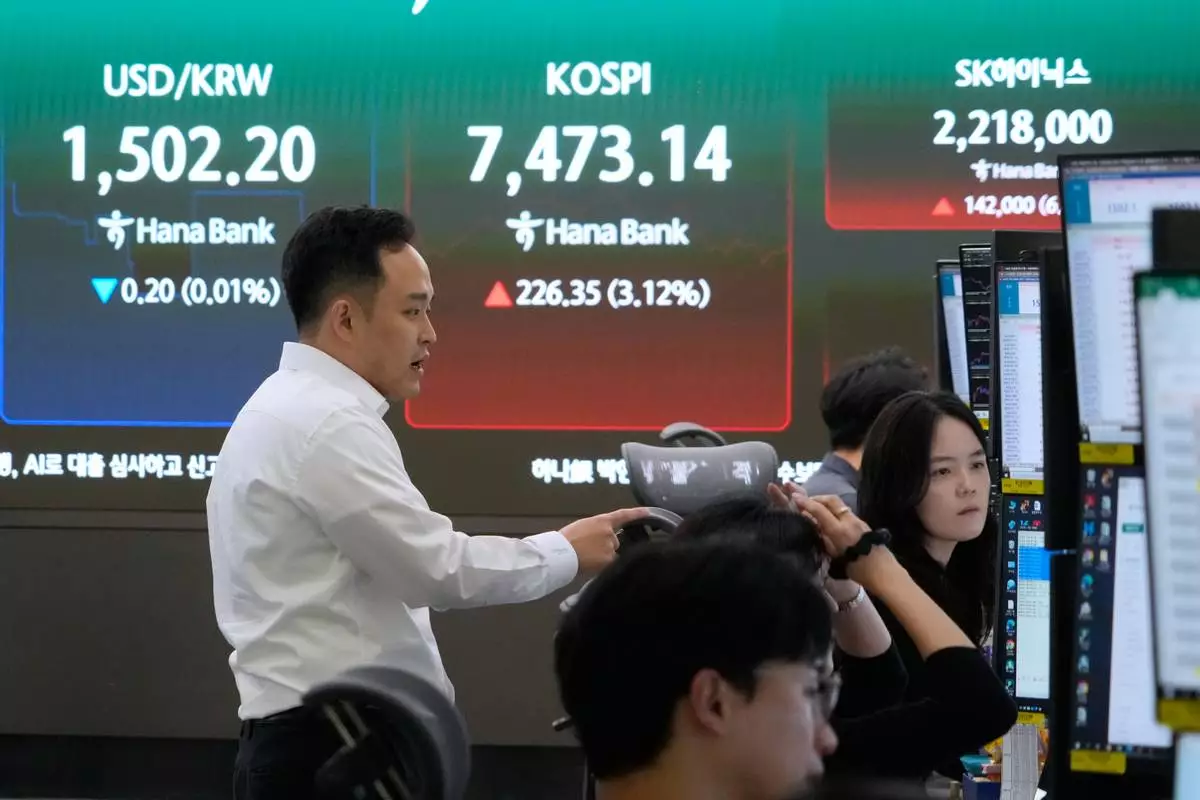
Currency traders work near a screen showing the Korea Composite Stock Price Index (KOSPI) and the foreign exchange rate between U.S. dollar and South Korean won at the foreign exchange dealing room of the Hana Bank headquarters in Seoul, South Korea, Thursday, July 9, 2026. (AP Photo/Ahn Young-joon)
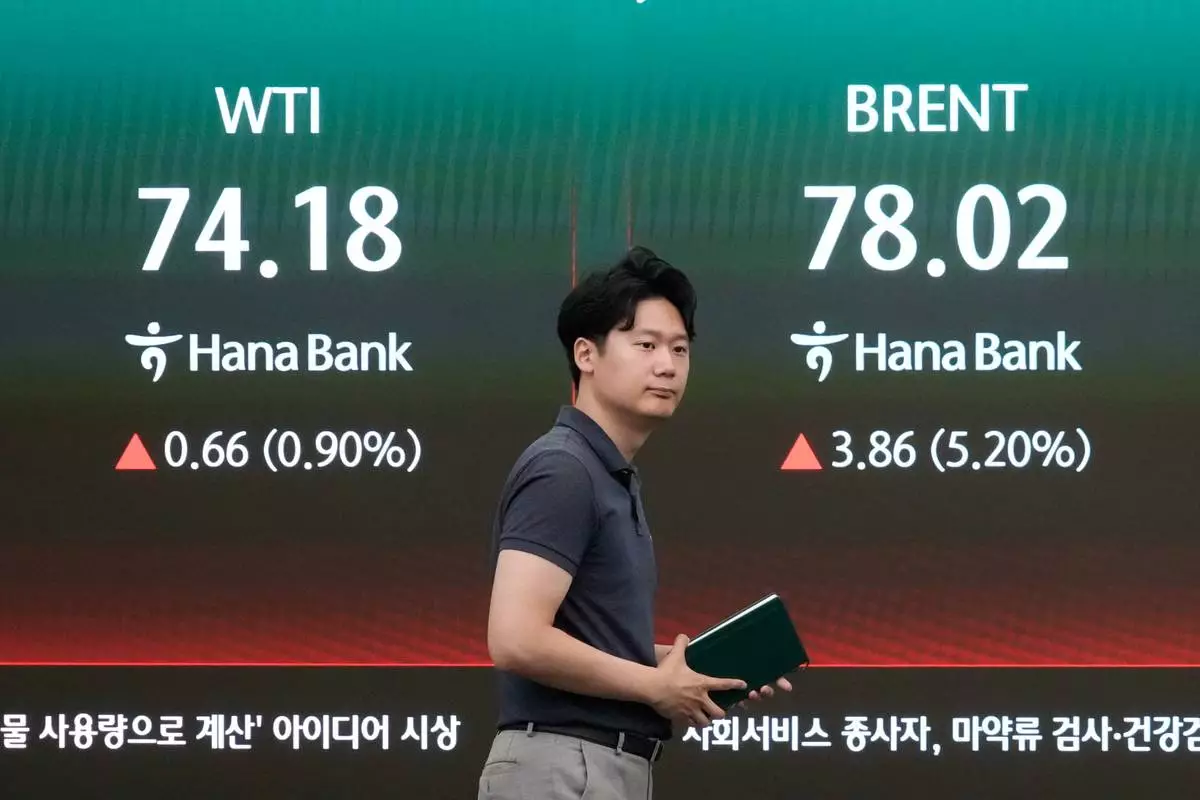
A currency trader passes by a screen showing international oil prices at the foreign exchange dealing room of the Hana Bank headquarters in Seoul, South Korea, Thursday, July 9, 2026. (AP Photo/Ahn Young-joon)
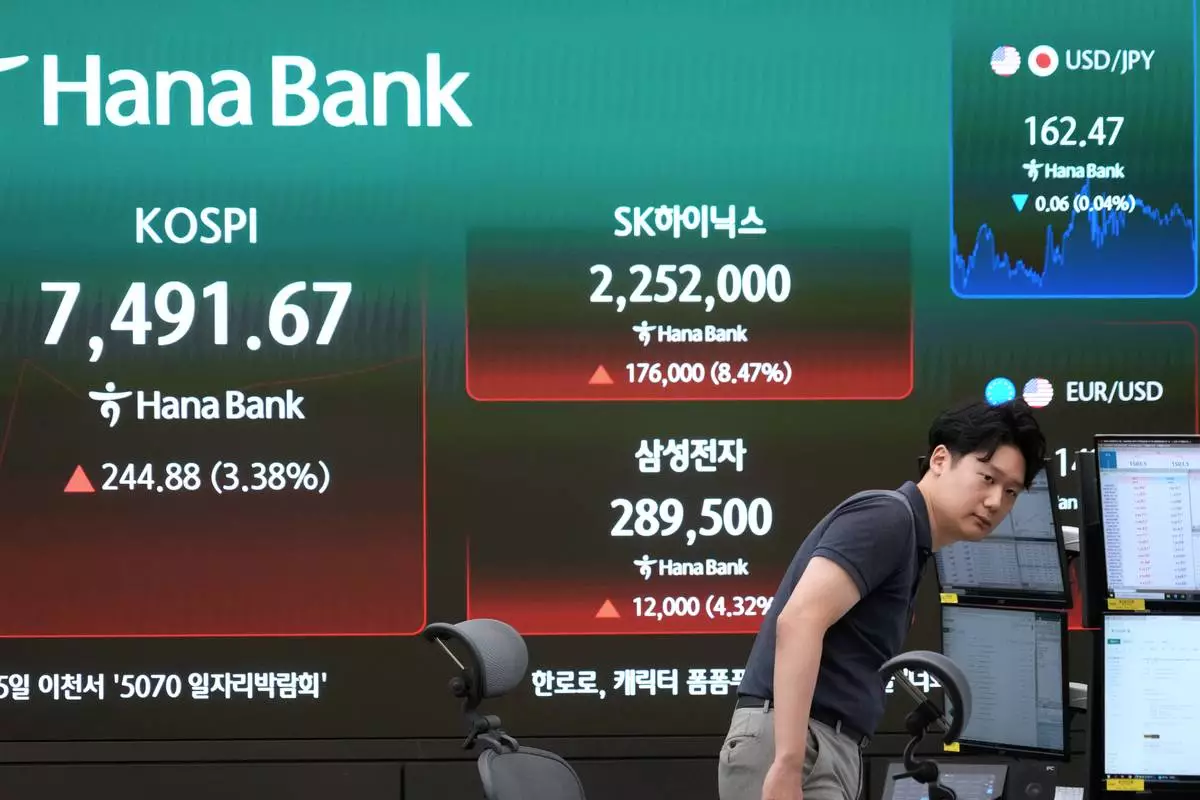
A currency trader watches monitors near a screen showing the Korea Composite Stock Price Index (KOSPI), SK Hynix and Samsung Electronics Co. stock price at the foreign exchange dealing room of the Hana Bank headquarters in Seoul, South Korea, Thursday, July 9, 2026. (AP Photo/Ahn Young-joon)
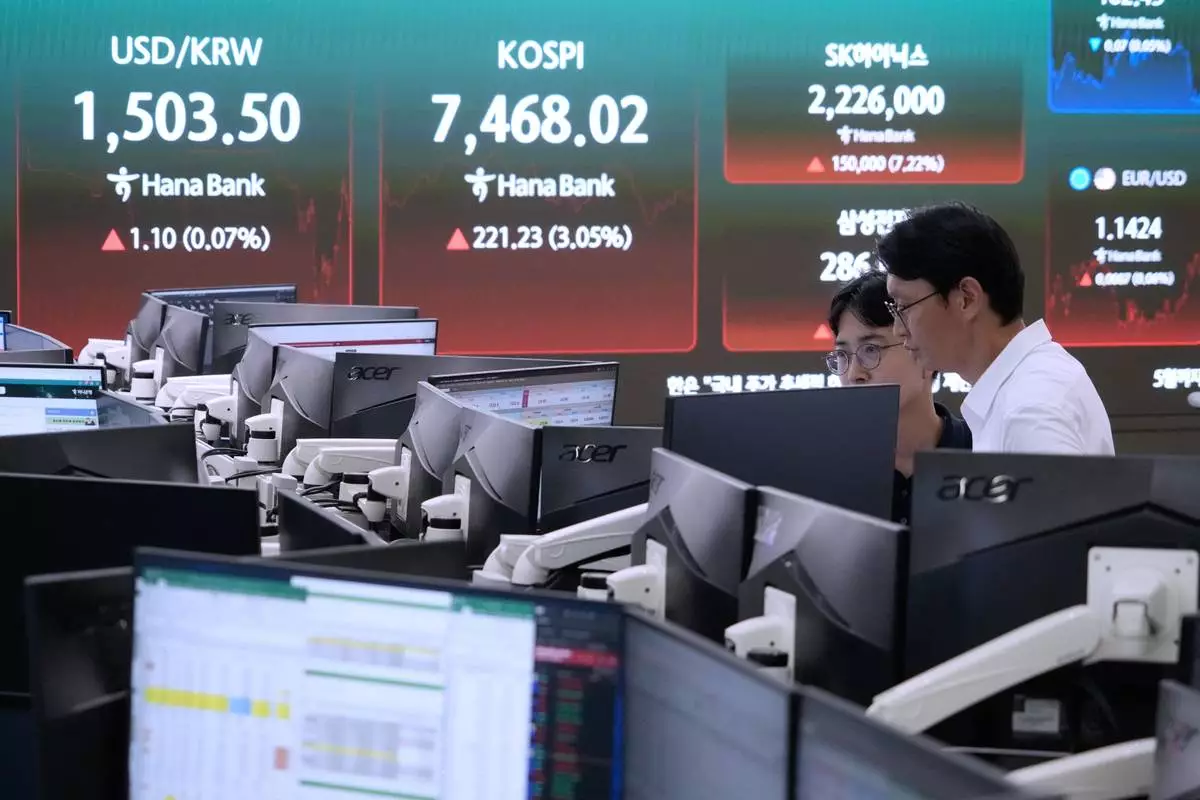
Currency traders watch monitors near a screen showing the Korea Composite Stock Price Index (KOSPI) and the foreign exchange rate between U.S. dollar and South Korean won at the foreign exchange dealing room of the Hana Bank headquarters in Seoul, South Korea, Thursday, July 9, 2026. (AP Photo/Ahn Young-joon)