It's a story with covered wagons and one room schoolhouses, but showrunner Rebecca Sonnenshine says the “Little House on the Prairie” remake for Netflix still speaks to today's American dream.
The show, premiering Thursday and set in the late 1800s, follows the Ingalls family led by Charles and Caroline and their two daughters Mary and Laura — as they settle in the American frontier. It's adapted from a series of semi-autobiographical books written by Laura Ingalls Wilder about her own family's pioneer life. In 1974, Michael Landon co-created the TV series based on the books where he played Pa alongside Melissa Gilbert as Laura. It aired for nine seasons. In the new version, Luke Bracey plays Pa and Alice Halsey is Laura.
Sonnenshine says the same frontier spirit from back then is baked into how Americans see themselves, even today.
“This idea of rugged individualism is the cornerstone of American mythos,” Sonnenshine says. “It's still manifesting in our lives constantly … We're real go-getters.”
In “Little House,” we see the Ingalls family seeking land and opportunity as they move west. In real life, Sonnenshine says, those settlers often didn't understand what they were part of.
“There was no CNN or up-to-date newspapers, telling you” what was really happening, she says. “They did not understand the politics of land ownership or these treaties that have been made or these reservations,” she said. In the show, we see Charles begin to grasp the politics at play as the family encounters the Osage Nation and their new neighbors — and keeps some of that to himself. Sonnenshine says “it's not out of malice, exactly” but because “knowledge did not flow as freely as it does now.”
As the Ingalls family builds their new life, we're introduced to various neighbors who help them do it. That includes an Osage family adjusting to their own new way of life as settlers claim parts of their land. Laura strikes up a friendship with an Osage girl, and there's a mutual respect among Charles and the Osage family patriarch.
“A lot of what this show is about is getting to know people that are not like you, all kinds of different people, because once you get to know people, that’s where all the change happens,” said Sonnenshine.
Mr. Edwards, a fan favorite from the books and series, helps Pa build the family's cabin. He's a rugged Civil War veteran with a heart of gold — grieving the loss of his own family, finding a new one in the Ingalls.
Staying true to characters like Edwards and including key events from the source material was a priority for Sonnenshine. She and her writers made a list of “iconic moments” with a checklist to follow. “We just crossed them off as we went along. ‘OK, we’ve found a way to incorporate this' or ‘Ma gets a chair,' which is very important, or 'great Pa builds a door.’” Building a door, says Sonnenshine, is “a whole chapter in a book.”
Trip Friendly, whose father Ed co-created the series with Landon and was an executive producer, controls the overall rights to the Laura Ingalls Wilder stories. He's an executive producer on the remake, and Sonnenshine says Trip is “very passionate about telling the story of the books.”
Landon's portrayal of Pa made him arguably one of the most popular TV dads in the history of the medium. He was a devoted family man with strong morals and compassion for others.
Bracey had never watched the original which he says was beneficial to creating his own interpretation of the character.
“I didn't feel that burden,” said Bracey. “The intimidating factor has come after making it. When I’ve told people what I’ve done, and I’ve been told how important it is to them. That’s where it’s got intimidating.”
Bracey said it's refreshing to play a genuinely good person, who makes mistakes, but is good.
“There’s very few really good people in television and movies. I feel lots of times they have to have a dark secret or a checkered past or whatever,” he said.
Crosby Fitzgerald, who plays Ma, says that goodness is present off-screen too. “Working with Luke is incredible. He actually is like Pa in person. Just really lifted me up all the time. It's impossible to work on a set like this, especially with this legacy, and not be uplifted by the vibe.”
Sonnenshine says Season 1 is also about Laura learning that neither of her parents are perfect, particularly Pa. She comes to understand that “he does make mistakes and that’s OK.' And even Charles talks about that. I think that’s a more honest portrayal of fatherhood.”
Sonnenshine most recently wrote the adaptation for the hit film “The Housemaid” starring Sydney Sweeney and Amanda Seyfried and is writing its sequel. She was also a writer on “The Boys,” which was known for its explicit language and sex and graphic violence. It's not an exaggeration to say that writing for “Little House,” even on a streaming platform, is different.
“This is the first time I’ve ever written without using any curse words,” said Sonnenshine.
“I’ve usually done, like much darker material. So I always say, well, I’m in my family era right now.”
Filming on the show's second season is underway. Netflix recently confirmed the addition of another popular character from the originals. Willa Dunn has been cast as Laura's rival Nellie Oleson, whose father owns the general store.
“She’s here and she’s acting up a storm,” said Sonnenshine. “It’s really fun. People love that character. I think we’re doing a slightly different take on the character, which is also really fun. The book is our sort of touchstone and then building upon that for her and her family has been — it brings a new dynamic to the Ingalls family.”
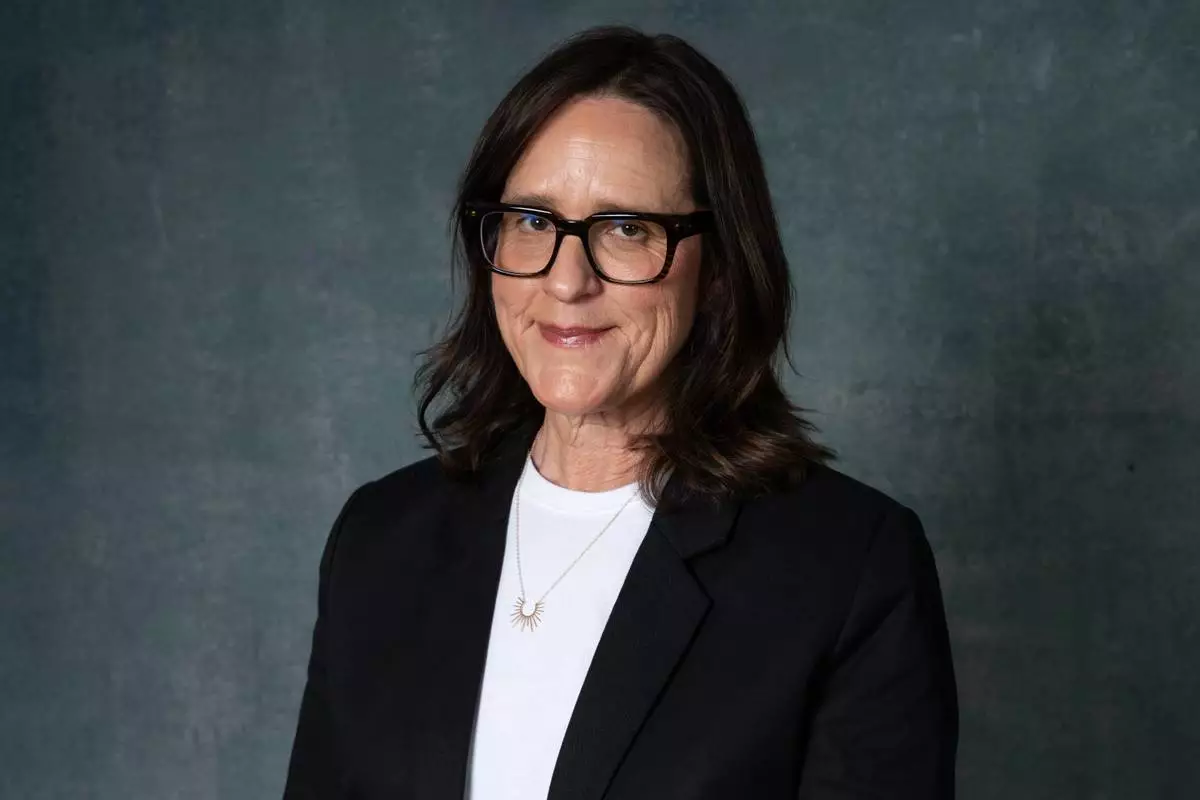
Rebecca Sonnenshine poses for a portrait to promote "Little House on the Prairie" on Friday, May 15, 2026, in Los Angeles. (Photo by Andrew Park/Invision/AP)
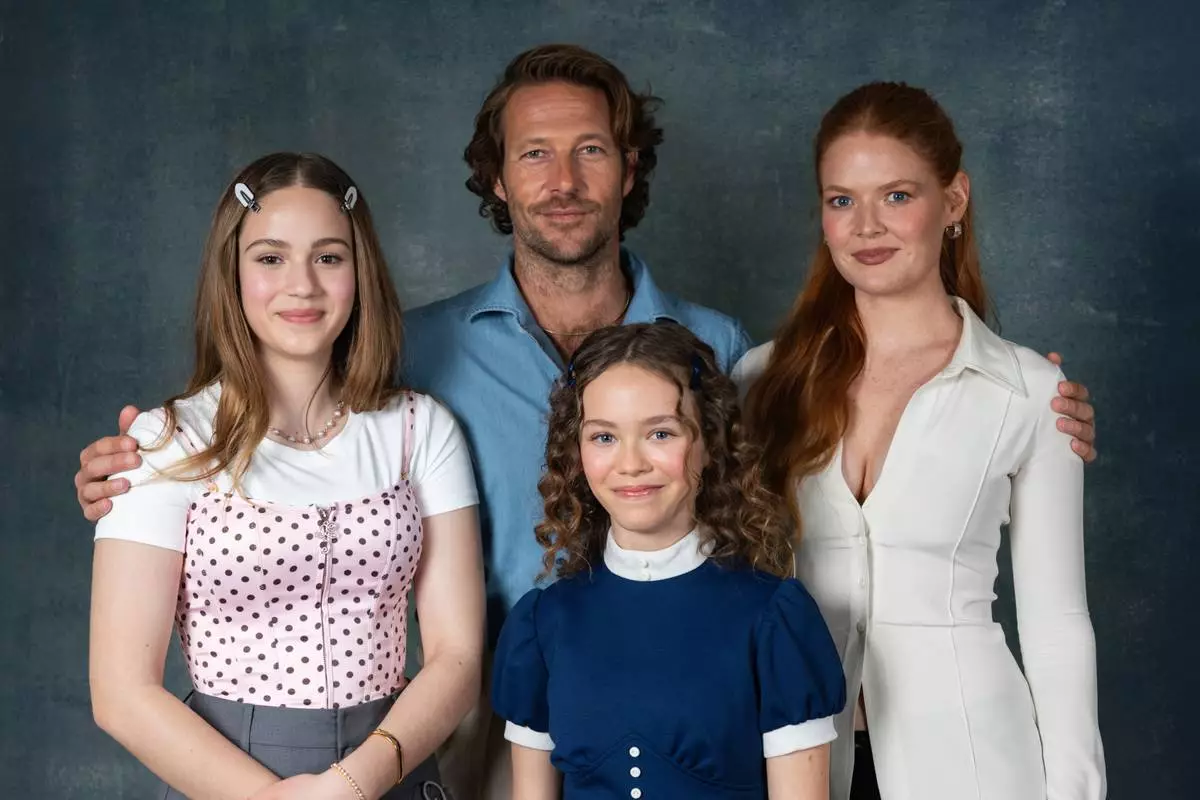
Skywalker Hughes, from left, Luke Bracey, Alice Halsey, and Crosby Fitzgerald pose for a portrait to promote "Little House on the Prairie" on Friday, May 15, 2026, in Los Angeles. (Photo by Andrew Park/Invision/AP)
The U.S. launched new airstrikes against Iran early Thursday, hours after President Donald Trump said recent Iranian attacks on ships in the Strait of Hormuz signaled the end of the ceasefire and threatened to escalate the conflict if they didn’t stop.
Iran responded by targeting U.S.-allied Kuwait and Qatar and accused the U.S. of striking near its sole nuclear power plant.
Back-and-forth attacks, including on Wednesday, have repeatedly threatened the ceasefire, but Thursday’s appeared bigger all around. And Trump’s mixed messaging — approving back-to-back military strikes while insisting they don’t mean a return to full-scale war — is fueling uncertainty about what comes next.
Here's the latest:
Bridget Diakun, senior risk and compliance analyst for maritime data company Lloyd’s List Intelligence, said in a news briefing that ships were still passing through the strait as of Wednesday, but Lloyd’s is still reviewing the numbers since some passages are “dark,” when ships stop broadcasting signals that show their location.
“The situation does remain really volatile,” she said.
Lloyd’s List Intelligence said preliminary data shows there were at least 576 transits in June, up from 233 in May, but down from 3,131 in June 2025.
In June, there were 264 outbound vessels and 137 inbound ships.
Outbound ships included bulkers, crude oil tankers and product tankers. Inbound ships included crude oil tankers, product tankers, bulk carriers and gas carriers.
In June, there was an even split between “dark” transits and online transits that broadcast their locations.
German Chancellor Friedrich Merz said the agreement on the long-range cruise missiles, which are used to strike targets deep inside enemy territory, was reached this week on the sidelines of the NATO summit in Turkey’s capital, Ankara.
“This will close an important strategic gap in our defense, and at the same time, we will work to develop our own European systems and station them in Europe,” Merz told parliament after returning from the two-day summit.
The deal struck with the Trump administration amounts to broader export of American know-how to some of its major allies in Europe, whose security posture has been upended by Russia’s full-scale invasion of Ukraine.
▶ Read more
The former Olympic canoe racer pleaded not guilty Thursday to deliberately damaging the recently renovated Lincoln Memorial Reflecting Pool, a politically charged case that his defense attorneys and other Trump administration critics have derided as an abuse of prosecutorial power.
David Hearn, who competed in three Summer Olympics, entered the plea during his initial appearance in D.C. Superior Court. Hearn, 67, of Bethesda, Maryland, was indicted last Thursday on a single felony count of property destruction.
Trump ordered a multimillion-dollar renovation of the Reflecting Pool ahead of the nation’s 250th anniversary this month, but the project has been plagued with problems. Workers have used chemicals to curtail an algae bloom. Trump has said the pool likely would need to be drained again for liner repairs after chunks of blue coating were seen floating at the surface.
Trump has claimed without substantiation that vandals dumped fertilizer into the pool and slashed the coating with a box cutter.
▶ Read more
During Wednesday’s meeting with Ukrainian President Volodymyr Zelenskyy on the sidelines of the NATO summit in Turkey, Trump said the U.S. will meet a longstanding request from Ukraine and give it a license to make the Patriot air defense systems. He also praised Zelenskyy for doing “an amazing job” — a sharp change in tone from past criticisms of the Ukrainian leader.
But setting up domestic production of the mobile, surface-to-air systems will take many months, said Serhii Beskrestnov, an adviser to Ukraine’s defense minister.
A production license would typically come with technical process documentation, training for specialists, supplier contacts and foreign consultants to help launch manufacturing, Beskrestnov wrote on the Telegram messaging app.
The main obstacle would be time, rather than Ukraine’s technical or organizational capacity, he added.
The southern African kingdom of Eswatini has accepted a fourth group of people deported from the United States under a bilateral agreement to host third-country nationals, with 11 people arriving this week, the government said Thursday.
Acting government spokesperson Thabile Mdluli said the group, predominantly from African countries, would remain in the kingdom temporarily while their rights were protected.
“The government reaffirms that, during their temporary stay in the Kingdom, the fundamental rights of the third-country nationals will be respected and protected in accordance with the laws of the Kingdom of Eswatini and the Kingdom’s international obligations,” Mdluli said in a statement.
Under a series of often-secret agreements that are part of a broad U.S. crackdown on immigration, the Trump administration has deported thousands of people to nearly two dozen countries that are not their own, advocates say.
▶ Read more
Futures for the S&P 500 rose 0.1% before the opening bell Thursday, while futures for the Dow Jones Industrial Average fell 0.1%. Nasdaq futures were up 0.5%.
Oil prices inched up again Thursday, with Brent crude, the international standard, rising 64 cents to to $78.66 per barrel. It briefly topped $80 on Wednesday. Before the Iran war began, Brent oil was trading at around $72 a barrel. Earlier optimism over an interim peace deal recently brought it back to prewar levels.
Benchmark U.S. crude rose 54 cents to $74.06 a barrel.
▶ Read more
President Donald Trump says he believes the ceasefire with Iran is over. He says he’s not sure he wants a deal anymore and says the U.S. should “finish the job.” But he also insists continued attacks don’t mean a return to war or long-term action.
The confusion and uncertainty in Trump’s mixed messaging and his approval of back-to-back military strikes leave major questions about what comes next in the conflict, just weeks after difficult diplomacy to reach even an initial deal between the longtime adversaries.
The whipsawing rhetoric could be a strategy to increase the pressure on Tehran to stop attacking ships transporting oil and natural gas in the Strait of Hormuz and bend to U.S. demands on its nuclear program — something Trump has tried before.
Whether it’s a negotiation tactic or a signal of an escalation in fighting, mediators are scrambling to save the interim deal and the actions risk further inflaming tensions.
▶ Read more
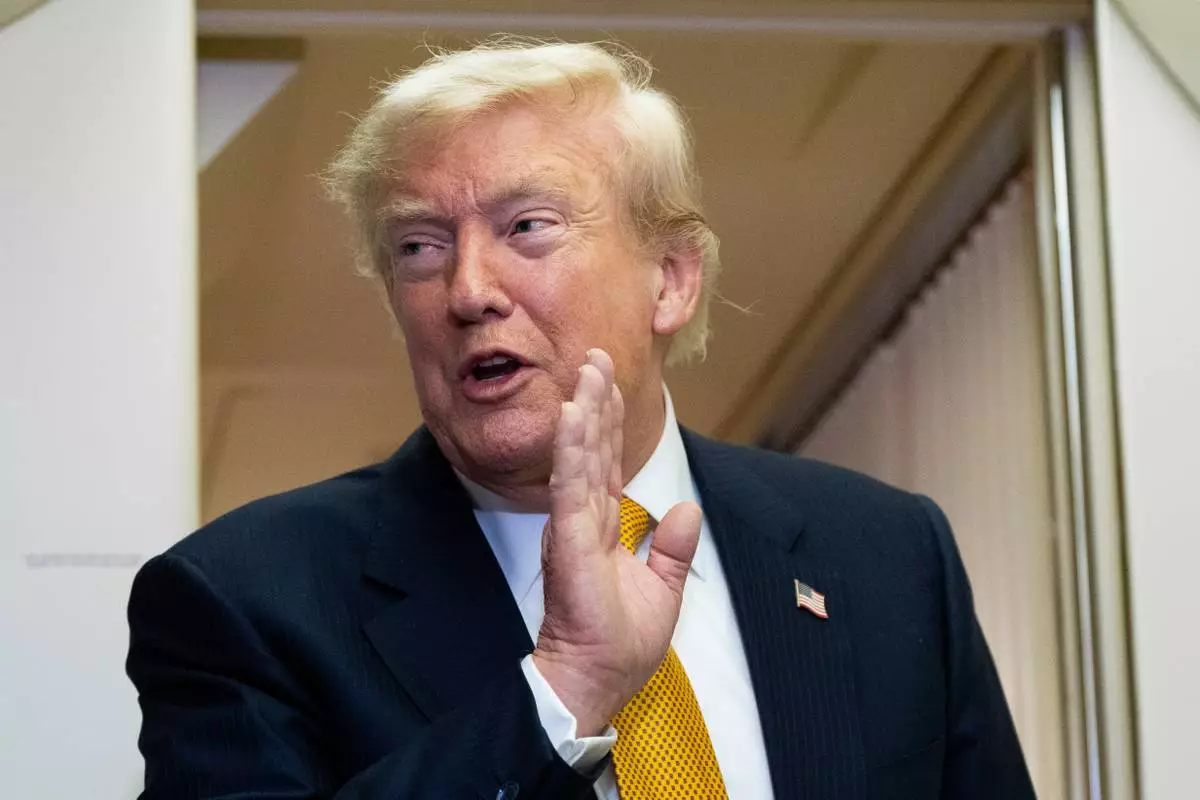
President Donald Trump speaks with reporters in flight on Air Force One after landing at U.S. Air Force Base at RAF Mildenhall, in Suffolk, Eastern England, Wednesday, July 8, 2026. (AP Photo/Alex Brandon)
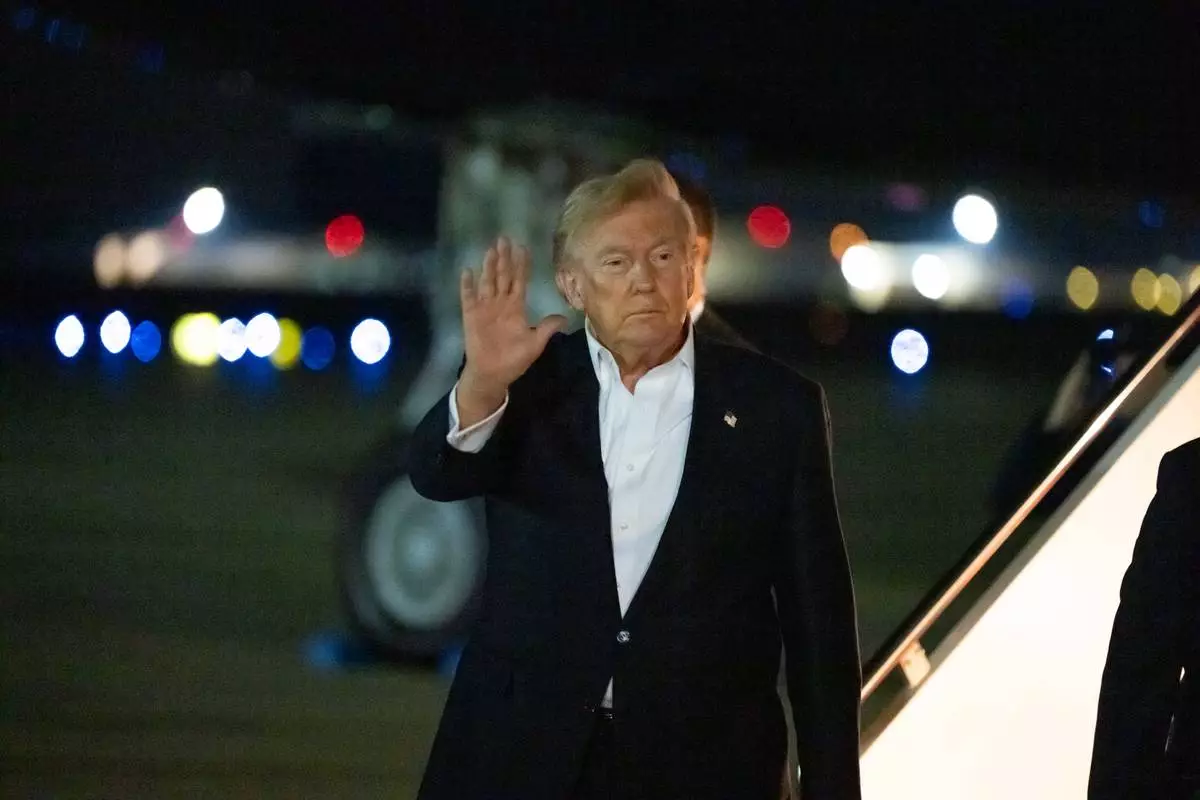
President Donald Trump waves as he arrives on Air Force One, Thursday, July 9, 2026, at Joint Base Andrews, Md. (AP Photo/Alex Brandon)
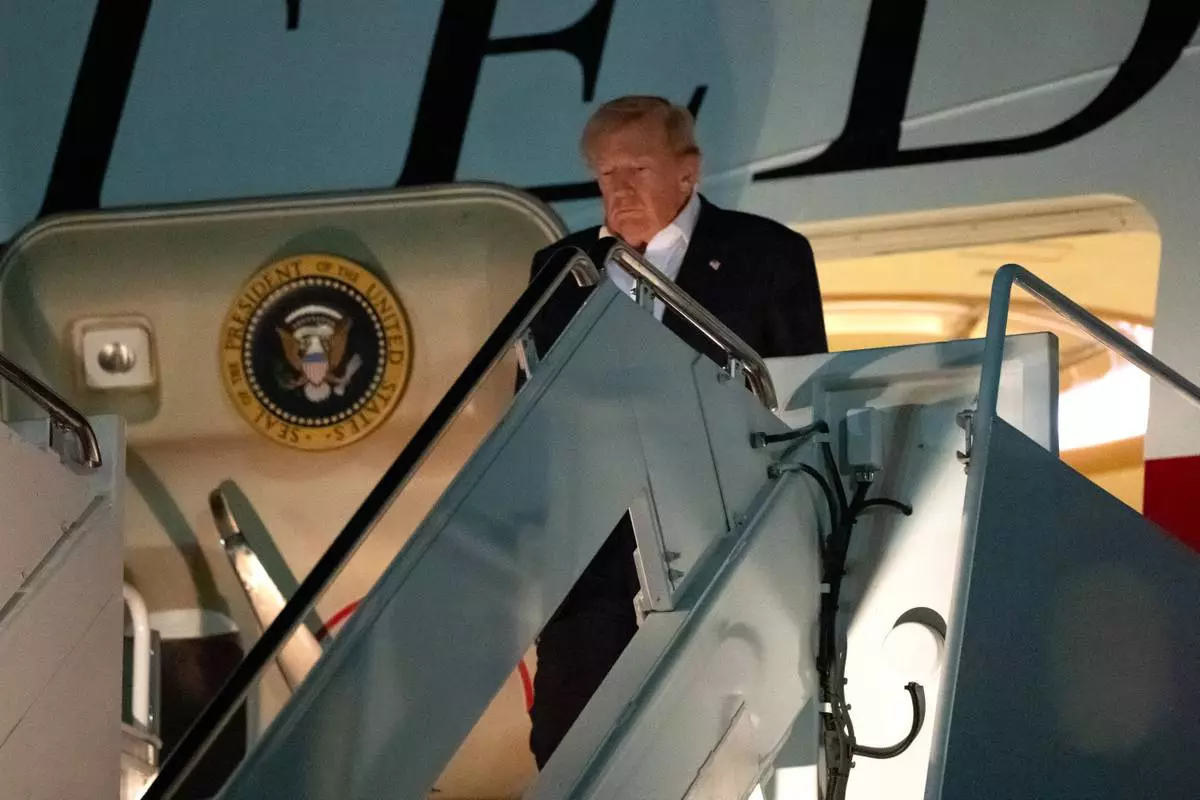
President Donald Trump arrives on Air Force One, Thursday, July 9, 2026, at Joint Base Andrews, Md. (AP Photo/Alex Brandon)