China's new energy vehicle (NEV) market posted stable growth in output, sales and exports in the first half of 2026, according to data released by the China Association of Automobile Manufacturers (CAAM) on Thursday.
From January to June, China produced 7.438 million NEVs and sold 7.446 million units, up 6.7 percent and 7.3 percent year on year, respectively. In June alone, NEV sales accounted for nearly 60 percent of total new car sales in the country.
On the export front, China shipped out 5.096 million vehicles in the first six months, a jump of 65.3 percent from a year earlier. Of them, NEV exports reached 2.355 million units, rising by 120 percent year on year.
Chen Shihua, deputy secretary-general of the CAAM, said NEV exports have become the core driver of the sector's overall export growth this year. The rapid export expansion is a concentrated reflection of the transformation and upgrading of China's auto industry and its rising international competitiveness, he said.
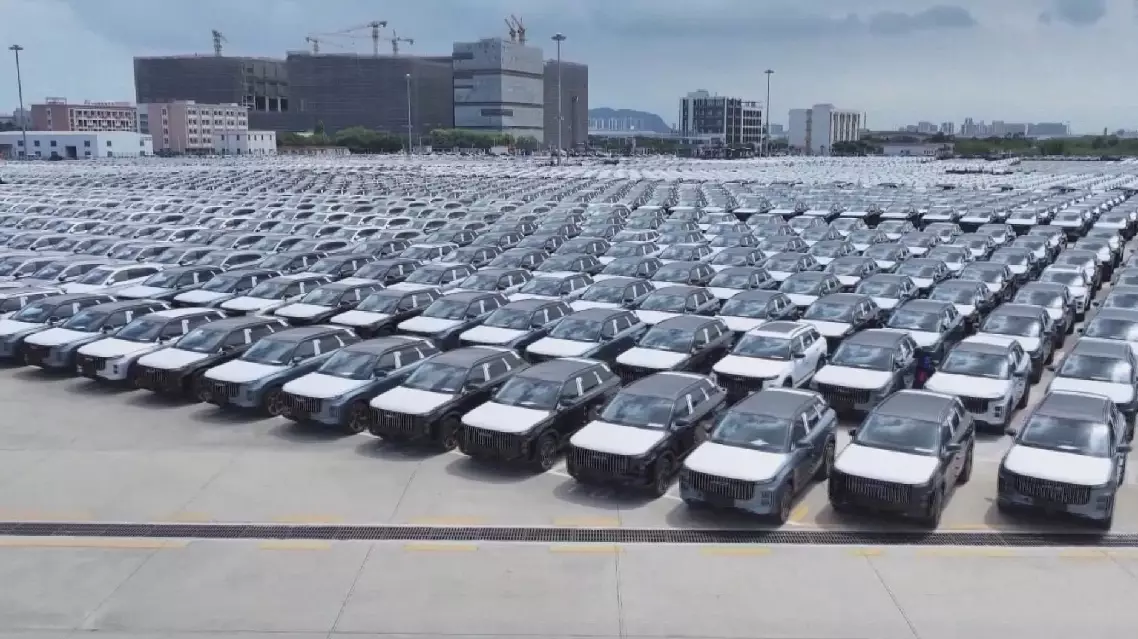
China's NEV market grows steadily in first half of 2026
Rescuers are deploying high-tech tools such as drones to aid relief efforts in Yunbiao Town, one of the areas hardest hit by flooding in south China's Guangxi Zhuang Autonomous Region.
On Wednesday morning, vehicles were coming and going, and rescuers were busy loading supplies onto inflatable boats destined for submerged villages.
In villages cut off by flooding where inflatable boats cannot reach, authorities and volunteer groups have deployed large numbers of drones to deliver food, drinking water and medical supplies. "Each drone can carry 80 kilograms of supplies, fly for about 20 minutes on a full load, and drop goods to areas up to five kilometers away," said Tu Junjie, a drone technician of Ramunion Rescue, a Chinese non-governmental and humanitarian relief organization.
"Within five kilometers, a drone flight takes just three to four minutes. With continuous operation, the efficiency is extremely high. Given conditions on the ground, cargo drones would be ideal, and we need skilled pilots to run them," said Xiao Qin, a staff member of Guangxi Beigu Smart Agriculture Company.
China Mobile, a major Chinese telecom company, is using a drone to provide mobile communication signal coverage within a two-kilometer radius above the town, helping residents who lost network access to call for help.
"The drone is equipped with a satellite base station. It flies over areas where power, phone networks are all down. Once it's overhead, it beams down mobile signals so people on the ground can make calls and get help," said Liu Tie, a technician of China Mobile.
By Wednesday afternoon, things in Yunbiao started to turn for the better.
"Floodwaters have receded in the village, but my supermarket remains flooded inside. It hasn't drained out yet. I'm so grateful, thanks to our country. Everyone has shown such kindness," said Lin Qingqing, a local resident.
"The floodwater has receded. All we see is mud now," said Wang Yufeng, another local.
The forecast calls for continued rain across Guangxi over the next couple of days, though it is expected to gradually ease.
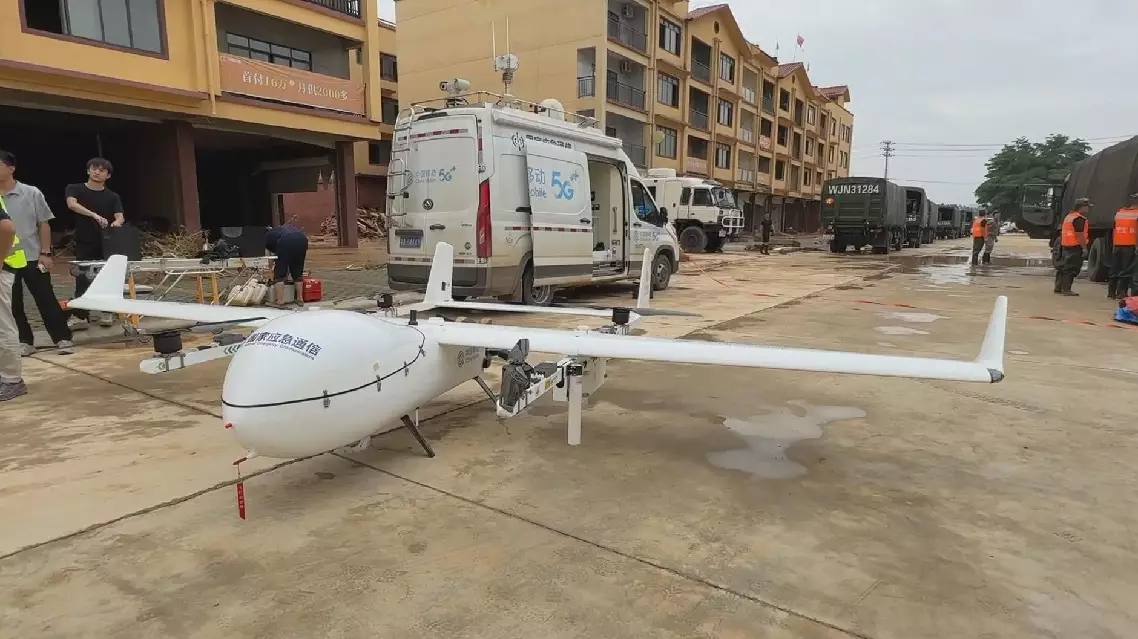
Drones aid flood rescue operations in south China's Guangxi