DAMASCUS, Syria (AP) — France has finally returned 23 Syrian archaeological treasures that remained in the country for about 15 years after being loaned for an exhibition. Their return coincided with French President Emmanuel Macron’s landmark visit to Damascus — the first by a major Western leader since the ouster of Bashar Assad in late 2024.
The artifacts, flown aboard Macron’s presidential aircraft on Tuesday and returned to Syria’s National Museum, include Roman bronze objects, Byzantine and Islamic-era pieces and a richly colored mosaic panel that once adorned the Umayyad Mosque. The collection was loaned in 2011 to an exhibition of Syrian antiquities at the Arab World Institute in Paris.
Click to Gallery
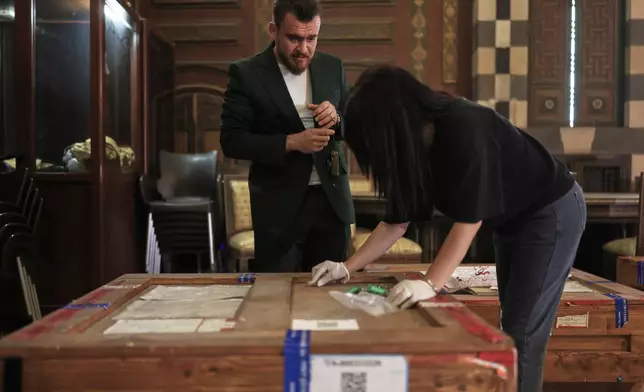
Museum employees prepare to unpack crates containing antiquities returned from France at the National Museum in Damascus, Syria, Wednesday, July 8, 2026. (AP Photo/Ghaith Alsayed)
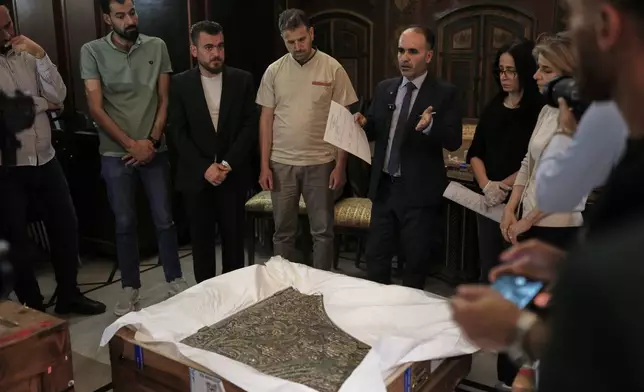
Ayman Nabou, deputy director-general of Antiquities and Museums, speaks as museum employees and officials gather around an antiquity returned from France at the National Museum in Damascus, Syria, Wednesday, July 8, 2026.(AP Photo/Ghaith Alsayed)
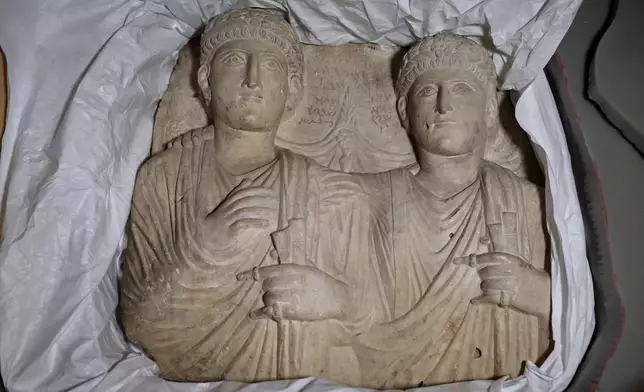
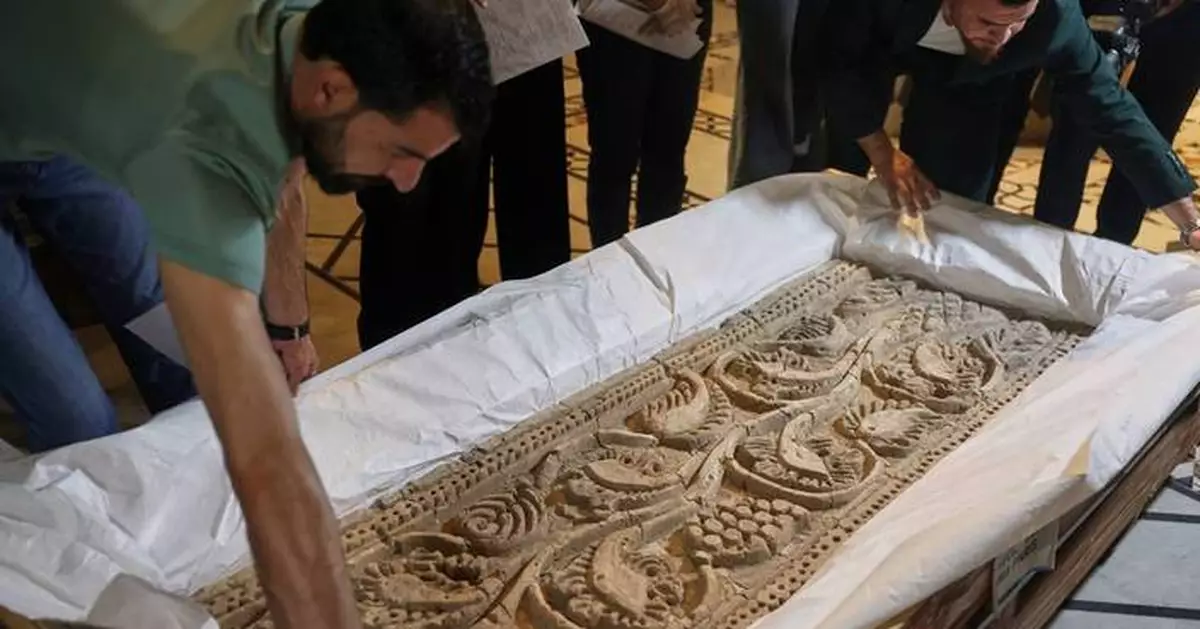
Palmyrene funerary reliefs that once adorned the walls of tombs and date to the second and third centuries A.D. are displayed after Syrian authorities unveiled antiquities returned from France at the National Museum in Damascus, Syria, Wednesday, July 8, 2026. (AP Photo/Ghaith Alsayed)
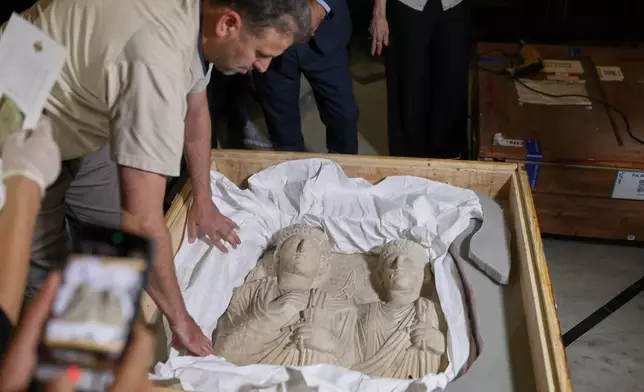
A museum employee opens a crate containing Palmyrene funerary reliefs that once adorned the walls of tombs and date to the second and third centuries A.D. after Syrian authorities unveiled antiquities returned from France at the National Museum in Damascus, Syria, Wednesday, July 8, 2026.(AP Photo/Ghaith Alsayed) ADDITION: Adds identification of the artifact as Palmyrene funerary reliefs.
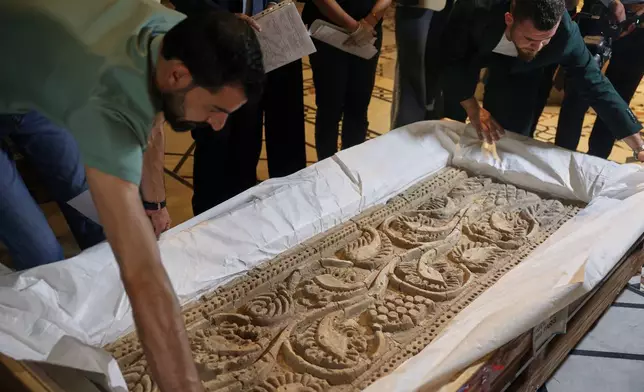
Museum employees unpack a carved stone panel after Syrian authorities unveiled antiquities returned from France at the National Museum in Damascus, Syria, Wednesday, July 8, 2026.(AP Photo/Ghaith Alsayed)
The Syrian Foreign Ministry said that the artifacts belonged to museums in Damascus, Aleppo, Latakia and Palmyra and remained in France after diplomatic ties between the two countries were severed under Assad’s rule. It described France as the first country to cooperate with Syria under a national campaign to recover antiquities held abroad.
“Today we are unveiling a selection of archaeological artifacts that have been returned to Syria,” said Ayman al-Nabo, deputy director-general of Syria’s Directorate-General of Antiquities and Museums, at the opening of an exhibition at the National Museum in Damascus featuring two of the returned pieces.
At the National Museum, curator Nivine Saadeddine said the returned collection spans some of the most significant periods of Syrian civilization.
“They date from the ninth millennium B.C. to the 14th and 15th centuries A.D. Every object represents a distinct chapter in Syria’s history,” she said.
For Maamoun Abdulkarim, Syria’s former director-general of antiquities and museums, the return closes a chapter that stretched across years of war, diplomatic isolation and failed attempts to retrieve the collection.
Abdulkarim, now a professor of archaeology at the University of Sharjah in the United Arab Emirates, said the loan was made as part of normal cultural cooperation before the conflict.
Abdulkarim said he formally requested the return of the artifacts in 2014 but received no response. He said French officials later told Syrian authorities they could not communicate with representatives of Assad’s government, which had become internationally isolated and subject to broad sanctions after the crackdown on anti-government protests and the ensuing civil war.
He said UNESCO’s Beirut office later tried to mediate, but the effort also failed.
The dispute also had personal consequences, Abdulkarim said.
“We were interrogated by Bashar Assad’s security forces,” he said. “We were beaten and accused of being too lenient in protecting Syria’s antiquities. Had it not been for the correspondence we had sent to the institute proving we had repeatedly requested the artifacts’ return, we could have been imprisoned.”
Despite the ordeal, Abdulkarim said he welcomed the renewed cultural cooperation.
“I am very happy that, despite everything that happened, the war is over, Syria is reopening to the world and cultural exchange is returning,” he said.
Syria’s Ministry of Foreign Affairs said France is the first country to cooperate with Syria under a national campaign to recover antiquities held abroad since Assad was overthrown by insurgent forces, ending more than five decades of Assad family rule.
Despite the war and severed ties, Syrian artifacts have previously been repatriated under formal loan agreements, Abdulkarim said. Around 2017, Italy returned two pieces that had been damaged by the Islamic State group after restoring them for an exhibition in Rome on the destruction of cultural heritage, he added. Other artifacts remain in Japan under a longstanding archaeological cooperation agreement dating back to excavations conducted there in the 1980s.
Meanwhile, Abdulkarim said, thousands of Syrian artifacts looted from archaeological sites during the war remain scattered around the world.
“Recovering them will require years of diplomatic work,” Abdulkarim said.
He said the return from France sends “a positive message for the future” and could help encourage further international cooperation to recover Syria’s stolen heritage.
Syria’s cultural heritage suffered extensive damage during the country’s nearly 14-year conflict. Ancient cities, including the UNESCO World Heritage site of Palmyra, were heavily damaged, while landmarks such as the medieval Crusader fortress of Crac des Chevaliers bear scars from years of fighting. IS militants also destroyed temples, tombs and monumental sculptures in Palmyra, considering them symbols of idolatry, while trafficked antiquities became a lucrative source of revenue for armed groups.
Abou AlJoud reported from Beirut, Lebanon.
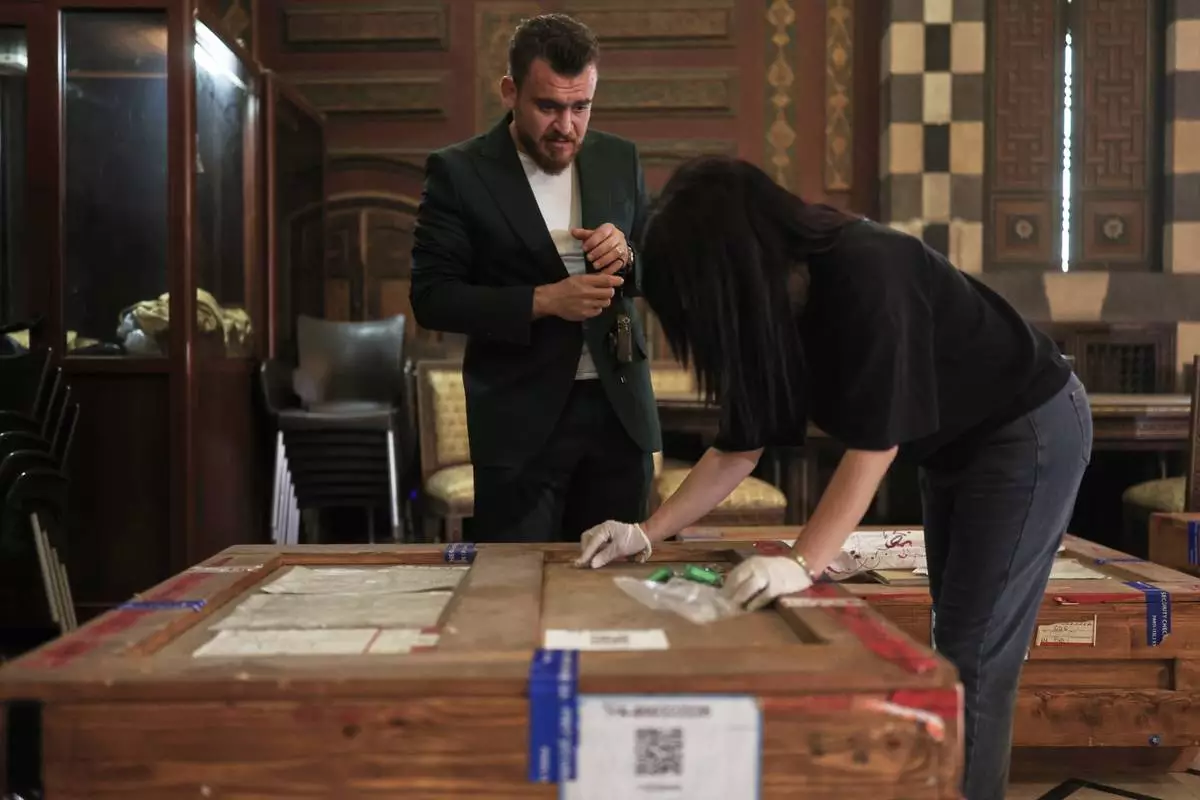
Museum employees prepare to unpack crates containing antiquities returned from France at the National Museum in Damascus, Syria, Wednesday, July 8, 2026. (AP Photo/Ghaith Alsayed)
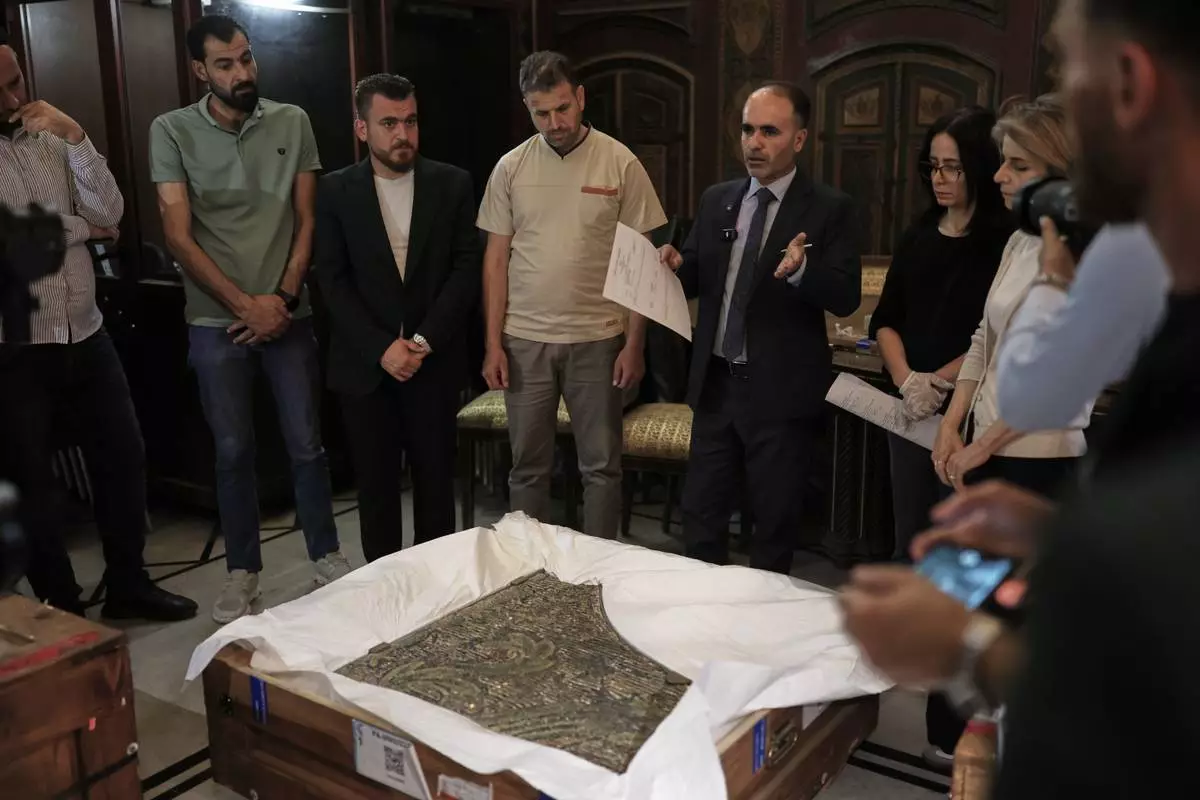
Ayman Nabou, deputy director-general of Antiquities and Museums, speaks as museum employees and officials gather around an antiquity returned from France at the National Museum in Damascus, Syria, Wednesday, July 8, 2026.(AP Photo/Ghaith Alsayed)
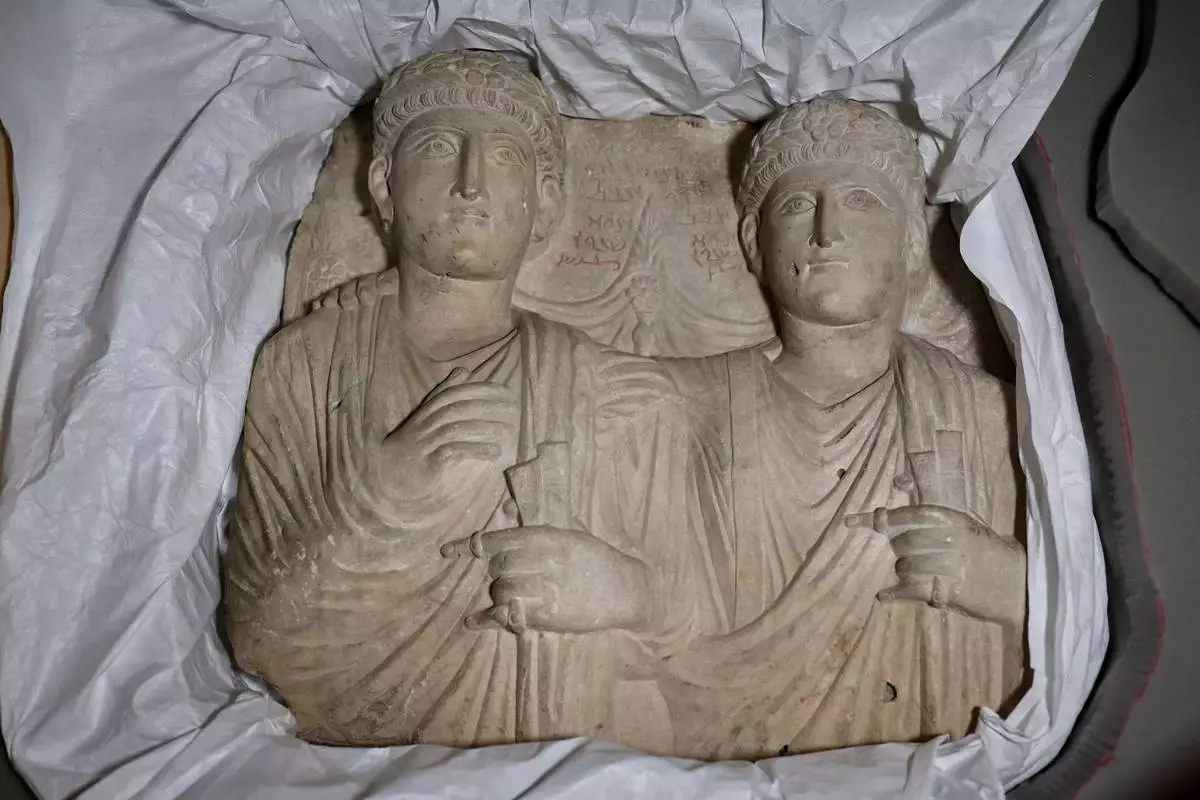
Palmyrene funerary reliefs that once adorned the walls of tombs and date to the second and third centuries A.D. are displayed after Syrian authorities unveiled antiquities returned from France at the National Museum in Damascus, Syria, Wednesday, July 8, 2026. (AP Photo/Ghaith Alsayed)
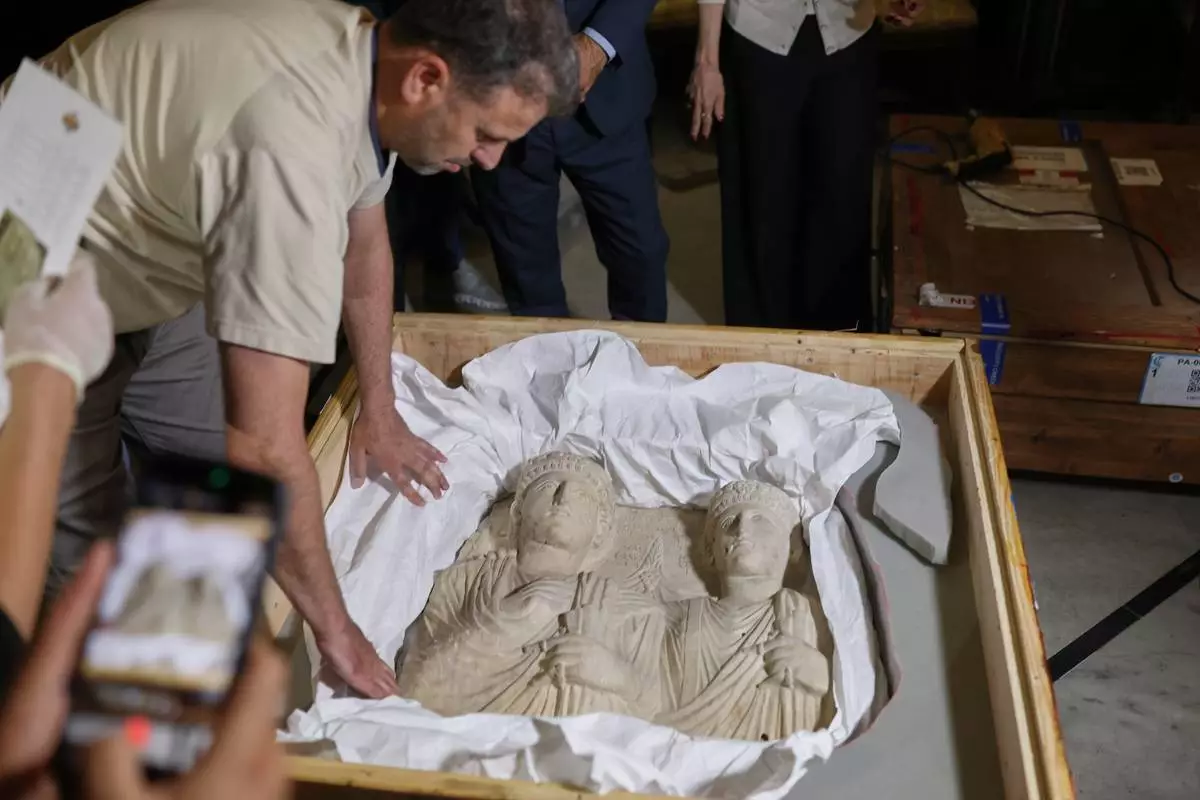
A museum employee opens a crate containing Palmyrene funerary reliefs that once adorned the walls of tombs and date to the second and third centuries A.D. after Syrian authorities unveiled antiquities returned from France at the National Museum in Damascus, Syria, Wednesday, July 8, 2026.(AP Photo/Ghaith Alsayed) ADDITION: Adds identification of the artifact as Palmyrene funerary reliefs.
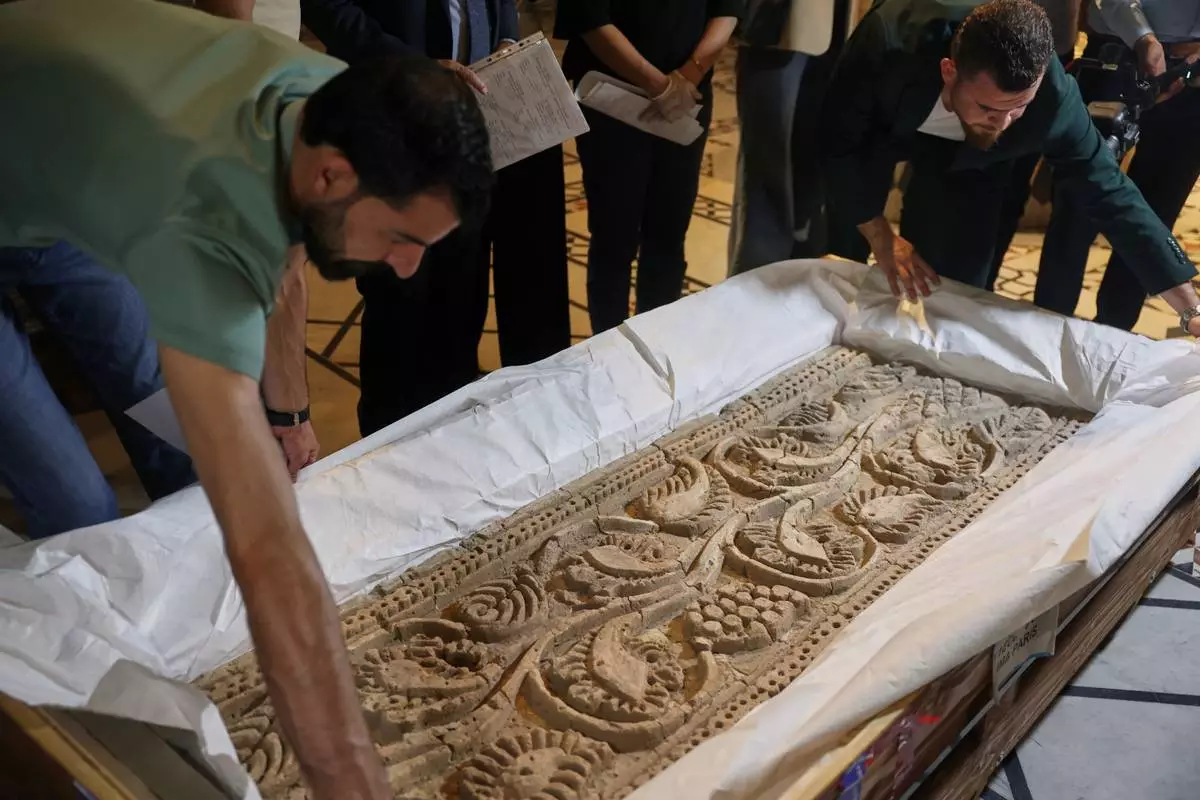
Museum employees unpack a carved stone panel after Syrian authorities unveiled antiquities returned from France at the National Museum in Damascus, Syria, Wednesday, July 8, 2026.(AP Photo/Ghaith Alsayed)