Skip to Content Facebook Feature Image

Colombia's court on the conflict with FARC rebels in limbo as president-elect vows to dismantle it

News

Colombia's court on the conflict with FARC rebels in limbo as president-elect vows to dismantle it
News

News

Colombia's court on the conflict with FARC rebels in limbo as president-elect vows to dismantle it

2026-07-11 03:44 Last Updated At:04:00

BOGOTA, Colombia (AP) — A decade after the Colombian government signed a historic peace accord with a now-defunct rebel group, the tribunal handling crimes related to the conflict faces an uncertain future after the country's president-elect vowed to dismantle it.

Known as the Special Jurisdiction for Peace, or SJP, the court — much like the peace deal with the rebels of the Revolutionary Armed Forces of Colombia, or FARC — has long divided the country.

Colombia's President-elect Abelardo de la Espriella, who has been endorsed by U.S. President Donald Trump, has described the tribunal as a “failed” court. But analysts and legal experts say dismantling it will not be easy because of constitutional and international safeguards.

The tribunal is protected by Colombia’s Constitution and backed by the International Criminal Court, the leading world court, which closed its own, nearly two-decade preliminary examination of Colombia in 2021, after concluding the country was meeting its international justice obligations — mainly because of the progress made by the Colombian tribunal.

Alejandro Ramelli, president of the tribunal, told The Associated Press that closing was contingent on the SJP continuing its work — otherwise, Colombia would be in breach of its obligations to the world court.

The SPJ's mandate is to investigate war crimes and crimes against humanity until 2028, with an additional five-year period for trials, after which Colombia's Congress would decide whether to extend its term by another five years.

Colombia has yet to emerge from the cycle of violence as armed gangs continue to fight for control of the profits from drug trafficking and illegal mining, including dissident factions of the FARC that rejected the peace accord, the National Liberation Army, or ELN, and the Clan del Golfo cartel.

Supporters see the Colombian tribunal as a landmark that helped end Latin America’s longest-running guerrilla insurgency and hold those responsible for atrocities accountable. Critics argue the tribunal is biased against former members of the military.

The SJP, which began operating in 2018, has handled cases involving more than 14,000 suspects accused of crimes committed during the conflict. About 70% of them are former FARC guerrillas, 29% are former members of the security forces and the rest are civilians.

Iván Cancino, de la Espriella’s designated justice minister, told radio station Caracol Radio on Wednesday that he does not intend to eliminate the SJP, but will demand results and review its spending.

The outgoing President Gustavo Petro has criticized the SJP during his term. This week he said on X that the tribunal's budget “must be strengthened,” and that “establishing the judicial truth about the conflict is fundamental to national reconciliation.”

Ramelli told the AP that cutting the tribunal’s budget “would seriously affect the fundamental right of access to justice,” especially for victims of the armed conflict and that an “abrupt termination” of the court would result in a legal limbo.

He pointed to the court's rulings against FARC’s former leadership for more than 21,000 kidnappings and against a group of former military personnel for more than 100 extrajudicial killings.

In both cases, the FARC and the military acknowledged responsibility and received alternative sentences that did not include prison time but required them to carry out projects benefiting victims.

The court has also handed down a 20-year prison sentence to a former soldier who denied taking part in extrajudicial killings.

“What is the value of the truths uncovered through the judicial process?” Ramelli said. “We now know the true scale of FARC kidnappings, the recruitment of more than 18,677 children, the sexual violence committed by the FARC and the extrajudicial killings carried out by security forces.”

“The country simply did not know the full extent of these crimes,” he said.
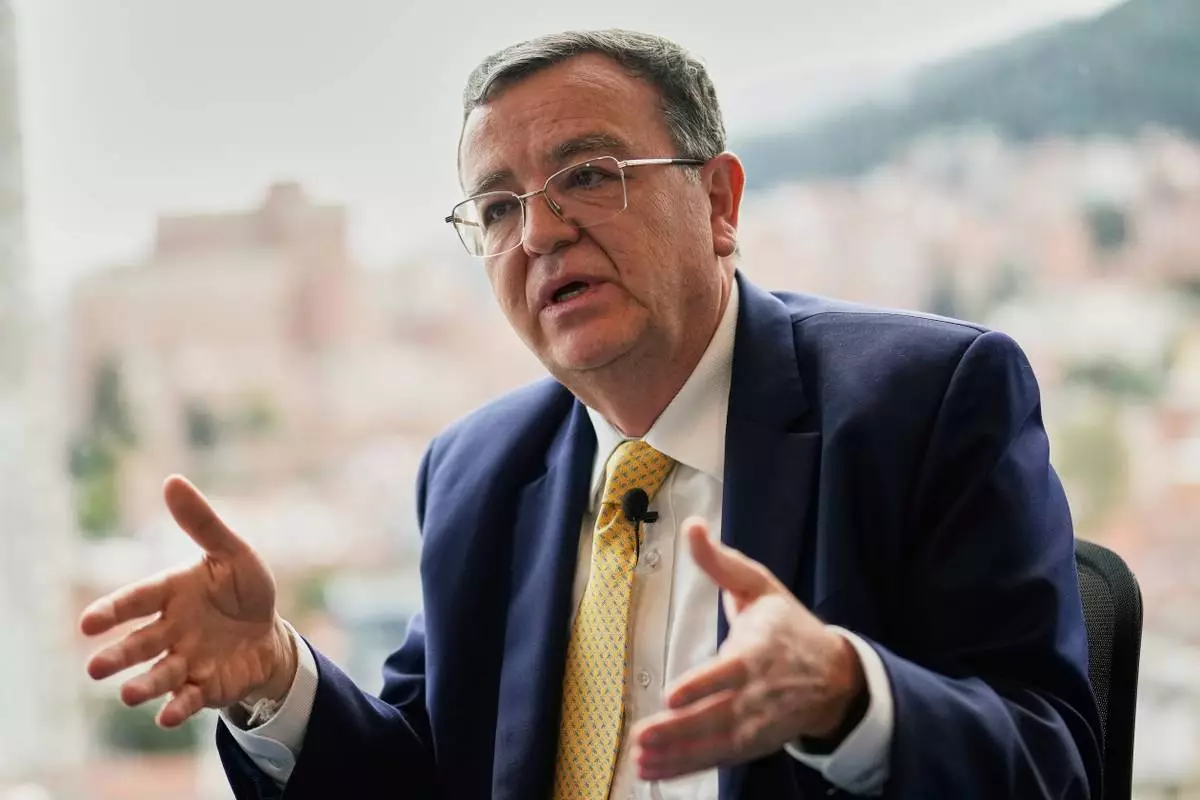
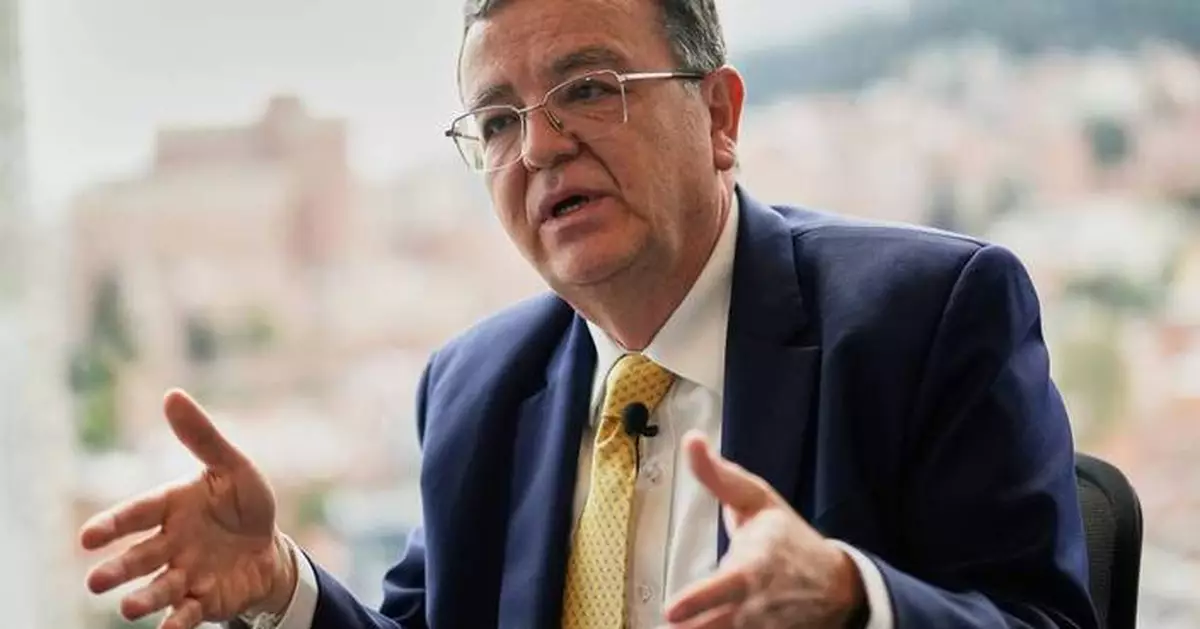
FILE - Special Jurisdiction for Peace (JEP) President Judge Alejandro Ramelli Arteaga gives an interview in Bogota, Colombia, July 1, 2025. (AP Photo/Fernando Vergara, File)

FILE - Special Jurisdiction for Peace (JEP) President Judge Alejandro Ramelli Arteaga gives an interview in Bogota, Colombia, July 1, 2025. (AP Photo/Fernando Vergara, File)

SAWYER, Mich. (AP) — A completed bridge linking Detroit and Canada is expected to open by the end of the month after U.S. and Canadian officials reached an agreement to resolve the dispute that delayed its debut, according to two people directly involved in the negotiations.

The sources were not authorized to publicly disclose the deal before a formal announcement.

A ribbon-cutting ceremony scheduled for early June was postponed after the Windsor-Detroit Bridge Authority said the two countries needed more time to resolve “outstanding issues.” The delay followed President Donald Trump’s earlier threats to block the bridge’s opening.

Commercial traffic is now expected to begin before Aug. 1, according to two officials, though a date for the official ribbon-cutting ceremony has not yet been set.

Republican U.S. Senate candidate Mike Rogers referenced the deal during an interview Friday.

“I had a conversation with the secretary yesterday, Secretary of Commerce Lutnick, and the deal will be announced in the next few days,” Republican Senate candidate Mike Rogers said Friday on WJR radio. “This is getting wrapped up. That bridge is going to get open.”

The delay in opening the Gordie Howe International Bridge became an issue in one of the country’s most closely watched Senate races. Democratic candidate Mallory McMorrow, who has since dropped out, tried to turn the controversy into a political liability for Trump and Republicans.

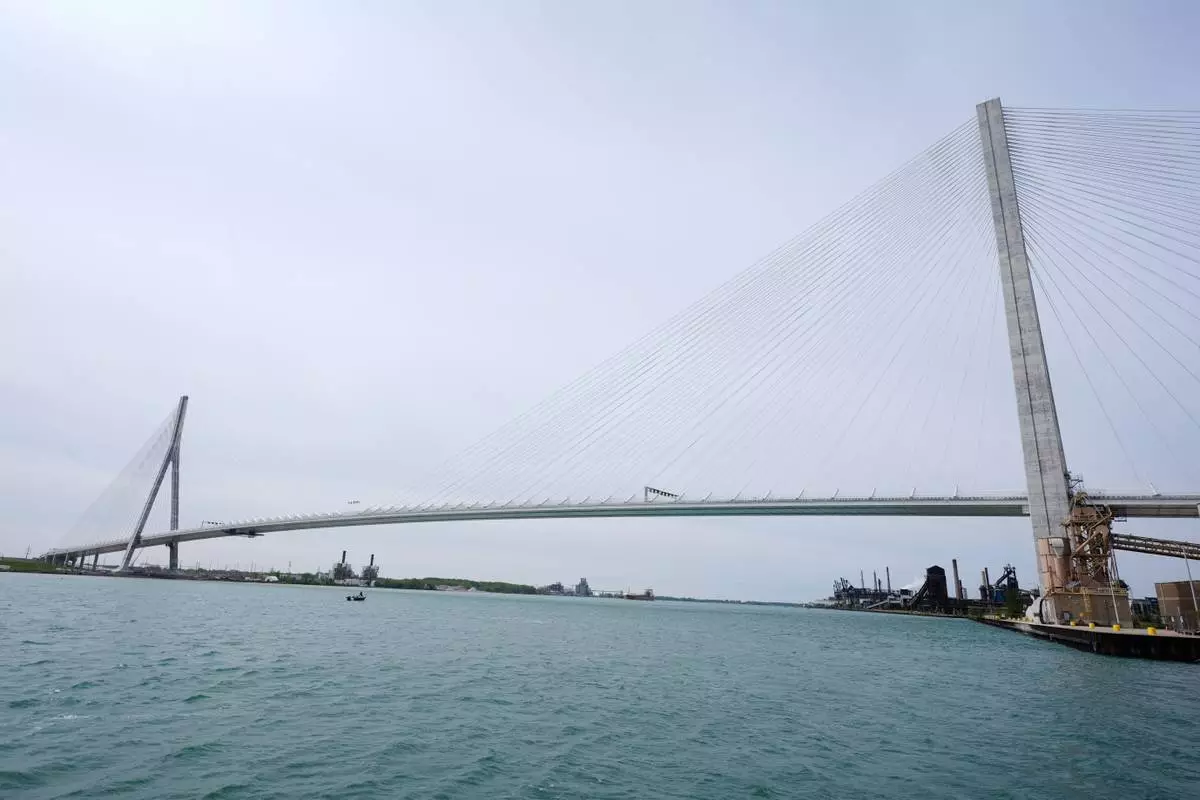
The 1.5-mile-long (2.4-kilometer-long) bridge, which spans the Detroit River and connects the Motor City with Windsor, Ontario, was slated for a ribbon-cutting ceremony on June 12. It was abruptly postponed after officials said the U.S. and Canada were still working to resolve “outstanding issues.”

The dispute gave Democrats a rare opportunity to tie Trump directly to a project with visible economic consequences in a battleground state.

In February, Trump demanded in a social media post that Canada hand over at least half ownership of the new bridge to the U.S. government and accept other unspecified demands, part of his broader clashes with Canada over trade.

Canada financed the bridge’s construction. The project was negotiated by Rick Snyder, the former Republican governor of Michigan, and work has been underway since 2018 and cost close to $4.4 billion.

Named after the late Canadian hockey great Gordie Howe, who spent 25 seasons leading the Detroit Red Wings, the bridge is expected to be another vital economic artery between Canada and the United States.

The toll bridge, jointly owned by Canada and Michigan, is expected to help ease congestion at the existing Ambassador Bridge and the Detroit-Windsor tunnel. Work has been underway since 2018.

Detroit and Windsor have been neighborly for generations, with residents in both countries frequently crossing the shared river border for entertainment and shopping. Windsor’s population in 2021 was about 230,000. Like Detroit, the Canadian city’s economy has a strong focus on manufacturing and the auto industry.

Commercial trade between the two cities primarily has been across the nearly century-old and privately-owned Ambassador Bridge, which is closer to downtown Detroit than the Gordie Howe Bridge.

The Moroun family are owners of the Ambassador Bridge between Detroit and Windsor. Federal campaign finance records show Matthew Moroun donated $1 million to Trump’s super PAC earlier this year.

FILE - The Gordie Howe Bridge is shown under construction between Windsor, Ontario and Detroit, May 22, 2026. (AP Photo/Paul Sancya, File)

FILE - The Gordie Howe Bridge is shown under construction between Windsor, Ontario and Detroit, May 22, 2026. (AP Photo/Paul Sancya, File)

Recommended Articles