China's railways have recorded 123.663 million passenger trips since the summer travel season began on July 1, with hubs ramping up service to meet demand, according to China State Railway Group.
Passenger traffic is relatively concentrated in the Beijing-Tianjin-Hebei area, the Yangtze River Delta, the Greater Bay Area, and the Chengdu-Chongqing region.
The Chengdu Railway Bureau has already processed over 10 million passenger trips, which is a significant increase from last year. To handle the upcoming surge in demand, the bureau will add 11 pairs of overnight high-speed trains from Friday to Sunday, serving major cities across the north, south, central, northwest, and southwest of the country.
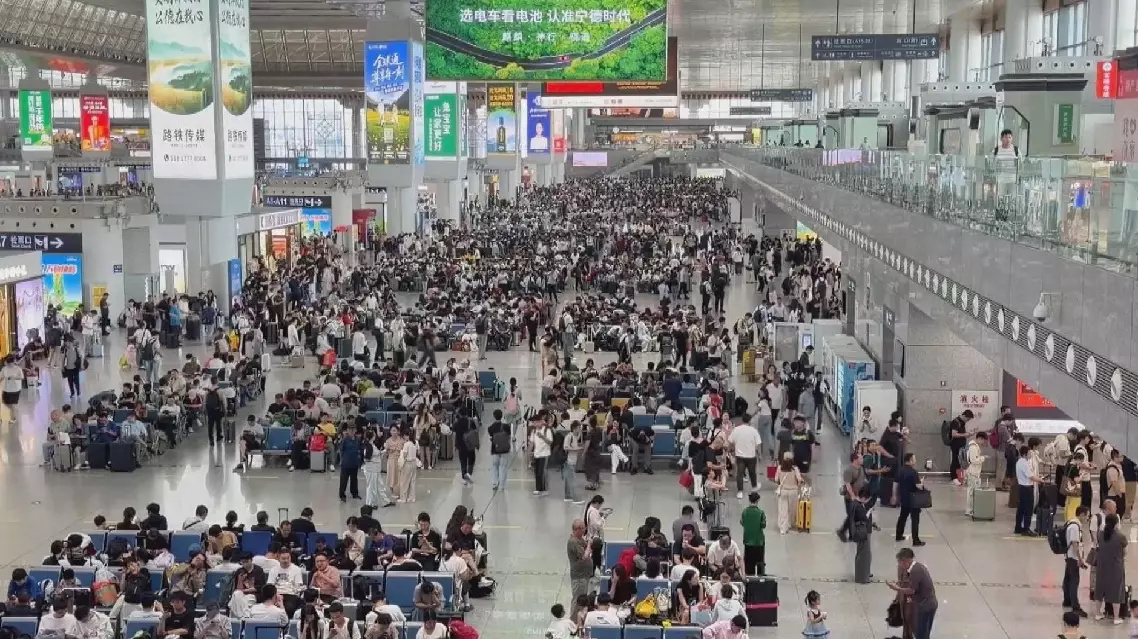
China sees summer rail travel surge, regions ramp up service
China's Producer Price Index (PPI) rose 1.5 percent year‑on‑year in the first half of the year, influenced by improved supply‑demand dynamics in domestic industries and fluctuations in international commodity prices, the National Bureau of Statistics (NBS) said Friday.
The growth rate widened compared with the same period last year, pointing to a gradual recovery in industrial production prices, the NBS said.
Data showed that in June alone, the PPI increased by 4.1 percent, with the growth rate widening by 0.2 percentage points compared to the previous month.
"In terms of production, the industrial sector has become increasingly intelligent, green, and integrated, while the new economy and new growth drivers played an ever-greater role in supporting and leading the sector, resulting in rising prices in related industries," said Dong Lijuan, chief statistician of the NBS' Department of Urban Surveys.
Due to international factors, prices in the petroleum-related industries have shifted from a downward trend to an upward one. In the first half of the year, prices in petroleum and natural gas extraction, as well as petroleum, coal, and other fuel processing industries, all turned from decline in the first quarter to growth, according to the NBS.
Additionally, certain downstream manufacturing sectors saw sustained price improvement thanks to optimized market competition order. The year-on-year growth rates of ex-factory prices in the electrical machinery and equipment manufacturing sector, as well as the computer communication, and other electronic equipment manufacturing sector, both expanded compared to last year.
In the non-ferrous metals industry, driven by demand from new energy and artificial intelligence development, prices continued their strong upward trend. Specifically, in the first half of the year, ex-factory prices in non-ferrous metal mining and dressing, as well as non-ferrous metal smelting and rolling processing, rose by 31.7 and 21.9 percent year-on-year, respectively.
In the petrochemical industry, influenced by the U.S.-Israel-Iran conflict, prices rose to varying degrees. In the first half of the year, ex-factory prices in petroleum and natural gas extraction, petroleum, coal, and other fuel processing, and chemical raw materials and chemical products manufacturing increased by 8.6 percent, 3.1 percent, and 3.9 percent year-on-year respectively.
In the ferrous metals industry, supported by front-loaded infrastructure investment and strengthened capacity and output regulation, prices stabilized. The year-on-year price change in ferrous metal smelting and rolling processing turned from negative to positive starting in May, with the decline in the first half of the year narrowing compared to the same period last year.
"Certain downstream manufacturing sectors have seen sustained price improvement under the influence of optimized market competition order, computing infrastructure construction, and industrial technology upgrades. In the first half of the year, the year-on-year growth rates of ex-factory prices in the electrical machinery and equipment manufacturing sector, as well as the computer, communication, and other electronic equipment manufacturing sector, both expanded compared to the same period last year," said Liu Nancun, an economist with the National Development and Reform Commission.
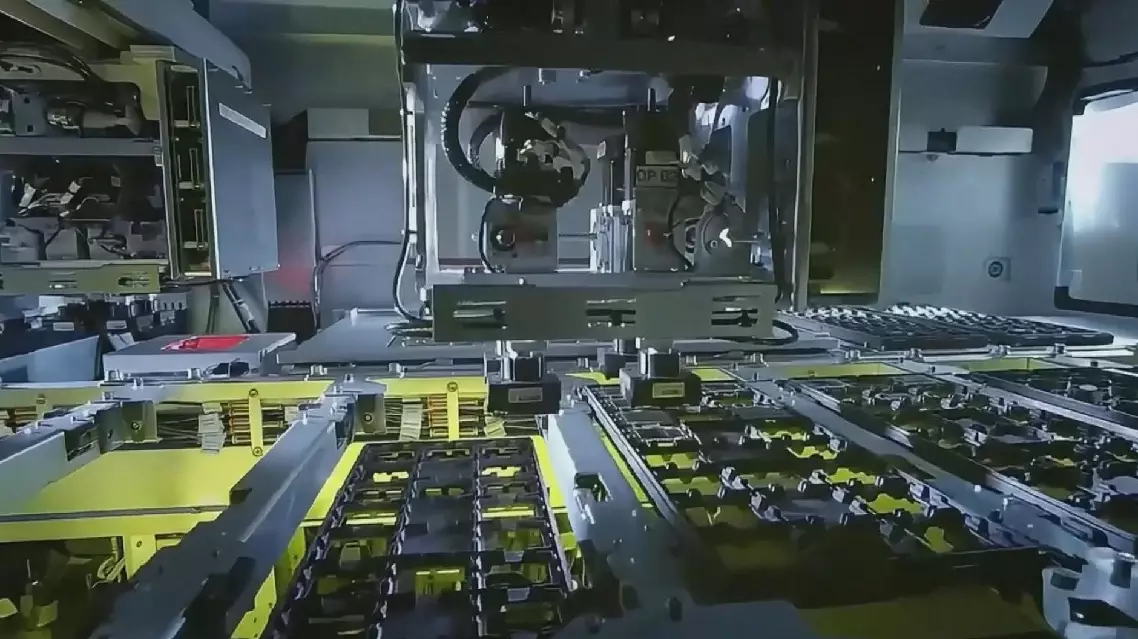
China's PPI rises 1.5 pct in first half of 2026