Skip to Content Facebook Feature Image

MidFirst Bank and The Nature Conservancy Celebrate $160,000 Milestone for Sustainability and Conservation Efforts

Business

MidFirst Bank and The Nature Conservancy Celebrate $160,000 Milestone for Sustainability and Conservation Efforts
Business

Business

MidFirst Bank and The Nature Conservancy Celebrate $160,000 Milestone for Sustainability and Conservation Efforts

2026-07-10 22:02 Last Updated At:22:10

PHOENIX--(BUSINESS WIRE)--Jul 10, 2026--

MidFirst Bank, the largest privately owned bank in the nation, and The Nature Conservancy, a global conservation organization, today announced they have raised over $160,000 for sustainability and conservation efforts. Since 2023, MidFirst Bank customers in Oklahoma, Arizona and Texas have had the opportunity to support these efforts through the Earth Card, a debit card made from recycled plastics that turns everyday purchases into action.

This press release features multimedia. View the full release here: https://www.businesswire.com/news/home/20260710242521/en/

When a customer opens a new MidFirst Bank checking account and selects the Earth Card, MidFirst will donate $50 to The Nature Conservancy on the customer’s behalf. As customers begin to use their Earth Card for everyday spending, MidFirst contributes an additional five cents per transaction, as long as the debit card is used at least six times per month. With no extra fees or enrollment steps beyond choosing the card, MidFirst makes it easy for customers to turn their routine purchases – from morning coffee to groceries, gas and more – into consistent contributions that create a big impact.

“Protecting our planet requires sustained commitment, and it requires partners like The Nature Conservancy,” said Jeff Records, Chairman of MidFirst Bank. “It is a privilege to support the efforts to protect our oceans, land and fresh water through the Earth Card program. We are proud of this partnership and of our customers, whose everyday choices have helped us reach this incredible milestone. We look forward to continuing our support.”

Impact Beyond Banking

MidFirst Bank first launched its Cause Debit Cards program in 2008 to offer customers a way to make everyday banking reflect their own values. The Earth Card is one of many; customers can choose to support a variety of causes ranging from breast cancer research and awareness to heart health, eye care and community arts. Across all programs, MidFirst’s cause cards have generated millions of dollars for community partners, demonstrating how banking can extend well beyond traditional financial services to become a vehicle for widespread impact.

“Community investment is central to how MidFirst operates,” said Jeff Lowe, Arizona Market President of MidFirst Bank. “The Earth Card is one piece of a much larger commitment to supporting the organizations and causes that make our communities stronger, and we appreciate the opportunity to give back.”

Learn more about the Earth Card by visiting www.midfirst.com/earth. Learn more about The Nature Conservancy’s sustainability and conservation efforts by visiting https://www.nature.org.

About MidFirst Bank

With over $42 billion in assets, Oklahoma City-based MidFirst Bank is the largest privately owned bank in the United States. MidFirst operates banking locations in Oklahoma, Arizona, California, Colorado, Nevada, Texas and Utah, and provides commercial lending, wealth management, private banking and mortgage servicing nationwide.

MidFirst demonstrates a strong commitment to community investment through philanthropy, volunteerism and partnerships with organizations that advance healthcare, education, and civic development. For more information on MidFirst Bank visit midfirst.com.
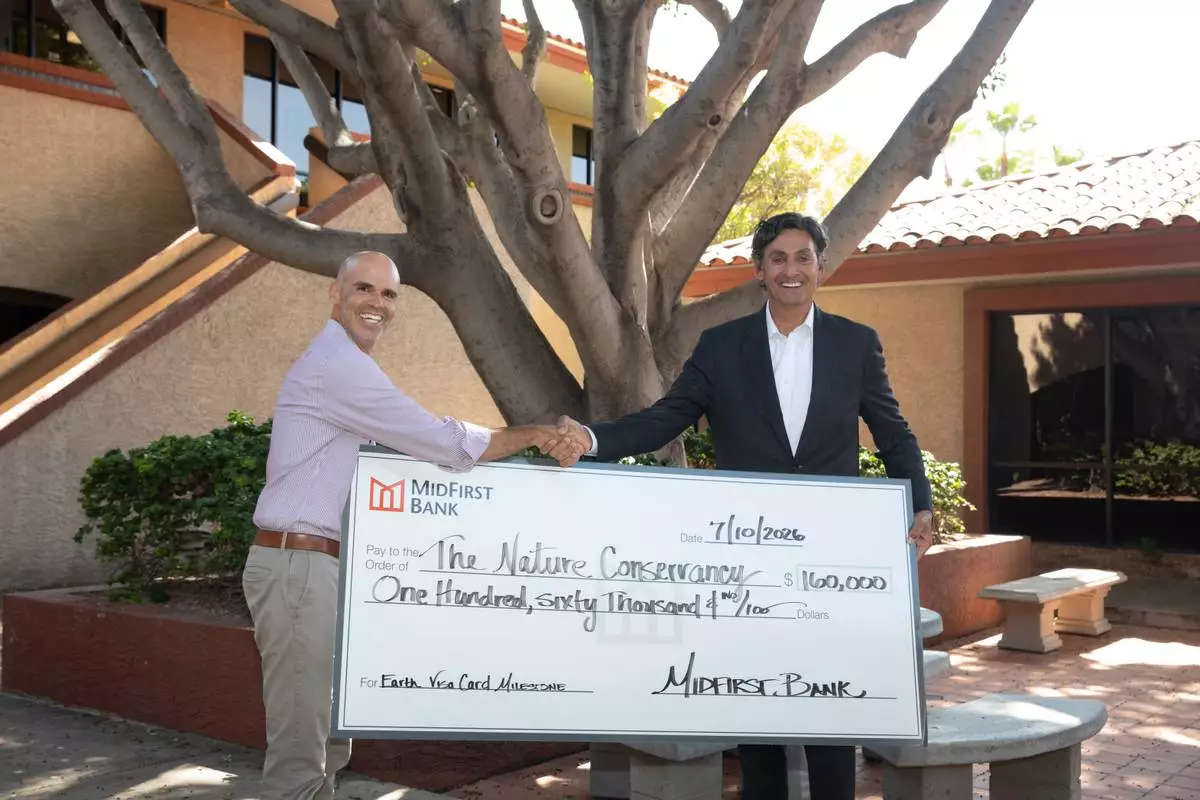
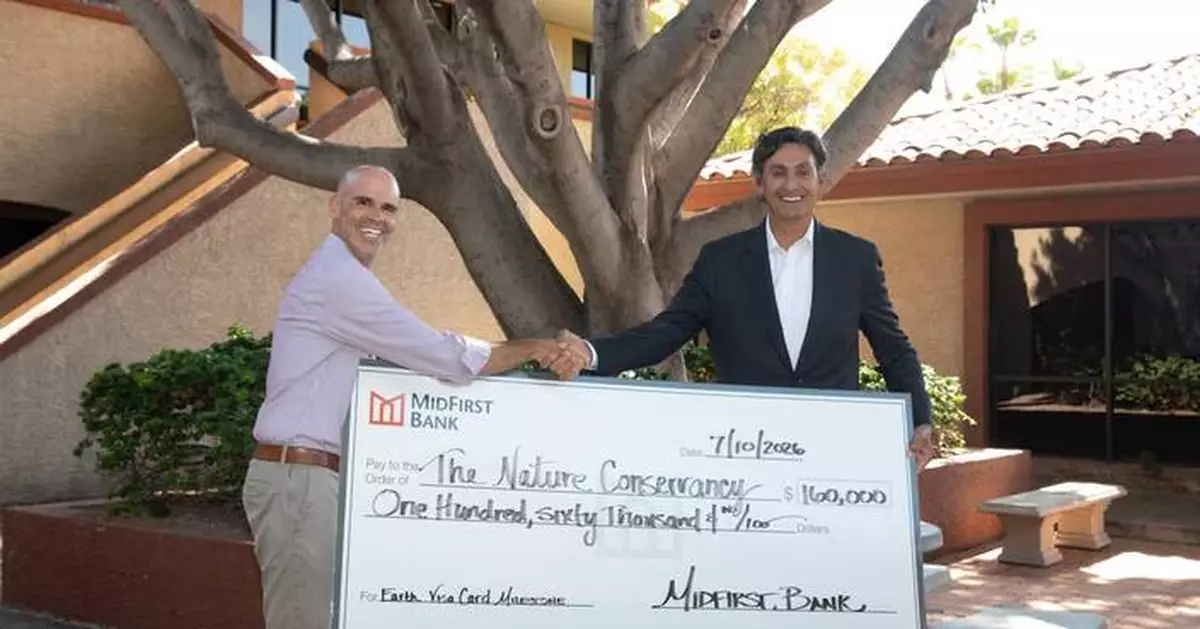
Check presentation from MidFirst Bank to The Nature Conservancy


Check presentation from MidFirst Bank to The Nature Conservancy

WASHINGTON (AP) — President Donald Trump will let the bipartisan housing bill approved by Congress become law without his signature, saying Friday that he was refusing to put his name on it because of the little progress made in passing a strict voter ID bill that he has been pushing.

“I will not sign the Housing Bill, which has been fully approved by Congress and sent to the White House, in PROTEST over the fact that the United States Senate is not capable of passing THE SAVE AMERICA ACT,” Trump posted on social media.

Trump had 10 days until the Friday deadline to sign the bill, issue a veto, or allow the measure to take effect without his signature. He has chosen to let the measure become law without his express approval, undercutting his administration's claims that he considers it a priority to combat inflation.

Trump’s rejection of the bipartisan housing legislation exacerbates tensions with his own party in a midterm election year and cuts short their efforts to address a key voter concern about rising costs. His post comes more than a week after he canceled plans to sign the bipartisan legislation, announcing he was using it as leverage in his push for a strict voter ID bill.

The 21st Century ROAD to Housing Act aims to lower the cost of housing and spur more home construction. It’s the broadest federal effort in decades to address America’s housing affordability problems, as state and local regulations have made it difficult to build in many of the communities that are also sources of job growth and economic opportunity. White House economists estimated earlier this year a national shortage of 10 million homes and the bill could help to close a portion of that gap.

But Trump called the bill “a yawn” and “so unimportant” compared to legislation that would require proof of citizenship for all voters.

He surprised Republican lawmakers on June 24, when, shortly before a planned signing ceremony at the Capitol, he announced he would not approve the bill until lawmakers first passed the voting legislation.

That bill, the SAVE America Act, doesn’t have enough Republican support to pass.

The housing bill passed the Senate on an 85-5 vote and the House approved it with an 358-32 vote.

That legislation seeks to cut federal housing rules, slim-down environmental reviews, make it faster to build homes and limit the ability of corporations to buy single-family homes.

The bill does not address all of the causes of the country’s housing woes, including a shortage of construction workers, climbing insurance costs and wages that have not risen fast enough for renters and buyers.

But the bill has drawn support from the real estate industry and housing advocates.

The U.S. housing market has been a driver of recent affordability challenges as skyrocketing prices have kept aspiring buyers out of the market. The National Association of Realtors said Thursday that the median sales price increased 1.8% in June from a year earlier to $440,600, an all-time high on data going back to 1999.

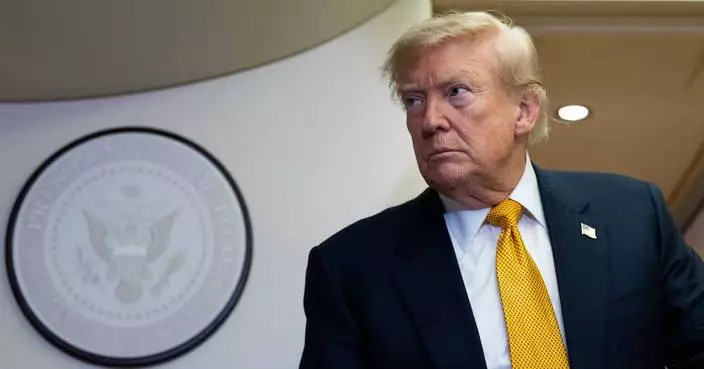
President Donald Trump speaks with reporters in flight on Air Force One after landing at U.S. Air Force Base at RAF Mildenhall, in Suffolk, Eastern England, Wednesday, July 8, 2026. (AP Photo/Alex Brandon)

President Donald Trump speaks with reporters in flight on Air Force One after landing at U.S. Air Force Base at RAF Mildenhall, in Suffolk, Eastern England, Wednesday, July 8, 2026. (AP Photo/Alex Brandon)

Recommended Articles