CHICAGO (AP) — Tristan Peters didn't have much time to think about his chances to hit for the cycle. But when the Chicago White Sox rookie came up for a second time in the seventh inning Friday night, he knew what to do.
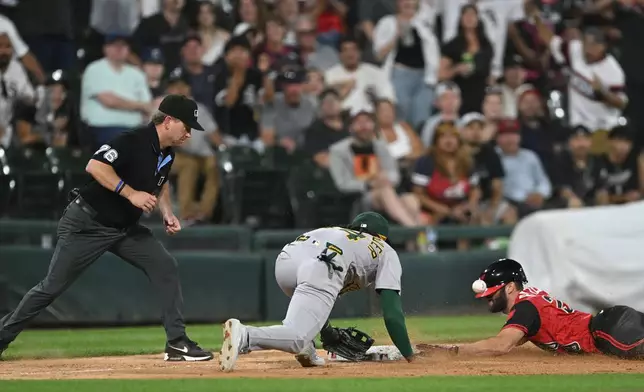
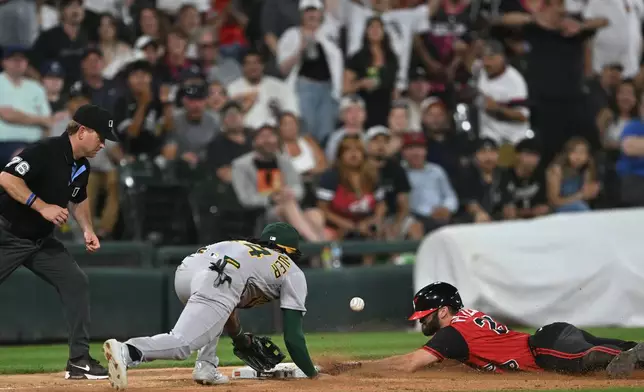
Needing a triple for the cycle after homering earlier in the seventh, Peters hit a hard grounder past Athletics first baseman Joey Meneses and down the right-field line. He never hesitated as he rounded second — ignoring a stop sign from third base coach Justin Jirschele — and beat the relay throw with a headfirst slide into third, drawing a huge ovation.
Click to Gallery
Chicago White Sox's Tristan Peters, left, celebrates with closing pitcher Tyler Davis, center, after defeating the Athletics in a baseball game in Chicago, Friday, July 10, 2026. (AP Photo/Paul Beaty)
Chicago White Sox's Tristan Peters, right, slides safely into third base for an RBI triple while the Athletics third baseman Joshua Kuroda-Grauer, left, catches the throw during the seventh inning of a baseball game in Chicago, Friday, July 10, 2026. (AP Photo/Paul Beaty)
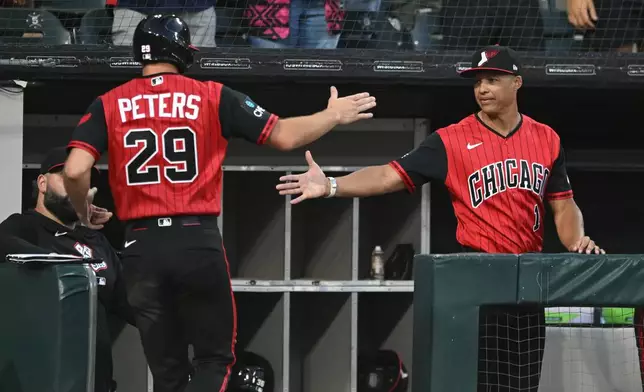
Chicago White Sox's Tristan Peters (29) celebrates with manager Will Venable, right, at the dugout after scoring on a Miguel Vargus sacrifice fly during the fifth inning of a baseball game against the Athletics in Chicago, Friday, July 10, 2026. (AP Photo/Paul Beaty)
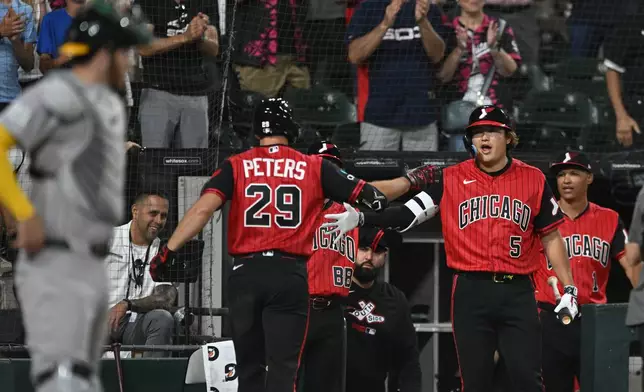
Chicago White Sox's Tristan Peters (29) celebrates with teammate Munetaka Murakami (5) at the dugout after hitting a two-run home run during the seventh inning of a baseball game against The Athletics in Chicago, Friday, July 10, 2026. (AP Photo/Paul Beaty)
Chicago White Sox's Tristan Peters, right, slides safely into third base for an RBI triple while Athletics third baseman Joshua Kuroda-Grauer, center, catches the throw during the seventh inning of a baseball game in Chicago, Friday, July 10, 2026. (AP Photo/Paul Beaty)
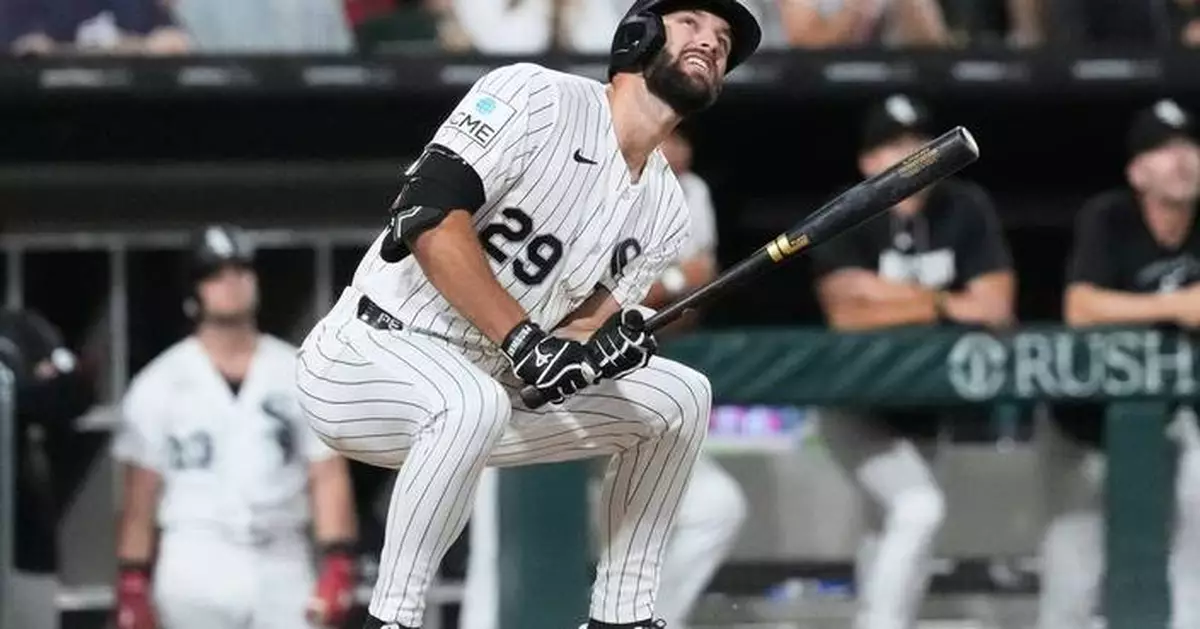
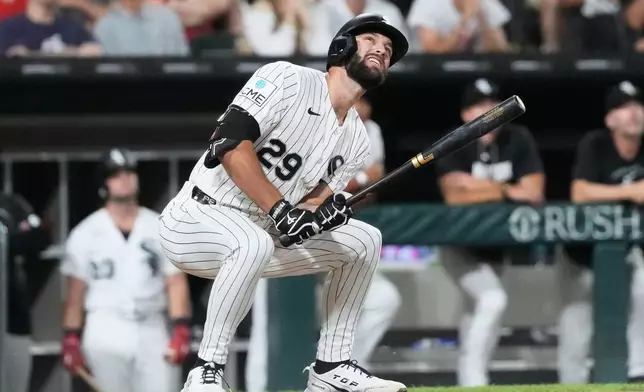
Chicago White Sox's Tristan Peters reacts after hitting a foul ball during the seventh inning of a baseball game against the Boston Red Sox in Chicago, Tuesday, July 7, 2026. (AP Photo/Nam Y. Huh)
“When I hit the ball, I was thinking three,” he said.
Peters became the first White Sox player to hit for the cycle since Jose Abreu on Sept. 9, 2017, and the fifth in major league history to do it from the No. 9 spot in the batting order. The way he did it was even more rare.
According to MLB, Peters became just the third player since 1961 to get two hits in the same inning to complete the cycle. The others were Felix Pie in 2009 and Jim Ray Hart in 1950.
“It’s No. 1, for sure,” Peters said when asked where it ranked among his career achievements. “That was incredible. It’s awesome, amazing.”
The 26-year-old from Canada made his big league debut last Aug. 8. This was his 93rd career game. He raised his batting average to .303 with his 4-for-4 night, driving in four runs and scoring two as the White Sox beat the Athletics 14-1.
“It’s impressive, there haven’t been too many of those,” Chicago manager Will Venable said. “Those are pretty rare, and Tristan has done such a good job of playing the right way — putting swings on good pitches to hit.”
Surprising Chicago remained atop the AL Central, percentage points ahead of Cleveland.
Peters was stranded at second after his two-out double to center in the third. In the fifth, his run-scoring single to right made it 2-0.
In the seventh, Peters followed Kyle Teel's leadoff walk with a two-run homer. His triple drove in the last run of an eight-run inning in which the White Sox sent 12 men to the plate.
He's the third major leaguer to hit for the cycle this season, joining the Cubs' Pete Crow-Armstrong and the Phillies' Bryce Harper.
AP MLB: https://apnews.com/hub/mlb

Chicago White Sox's Tristan Peters, left, celebrates with closing pitcher Tyler Davis, center, after defeating the Athletics in a baseball game in Chicago, Friday, July 10, 2026. (AP Photo/Paul Beaty)
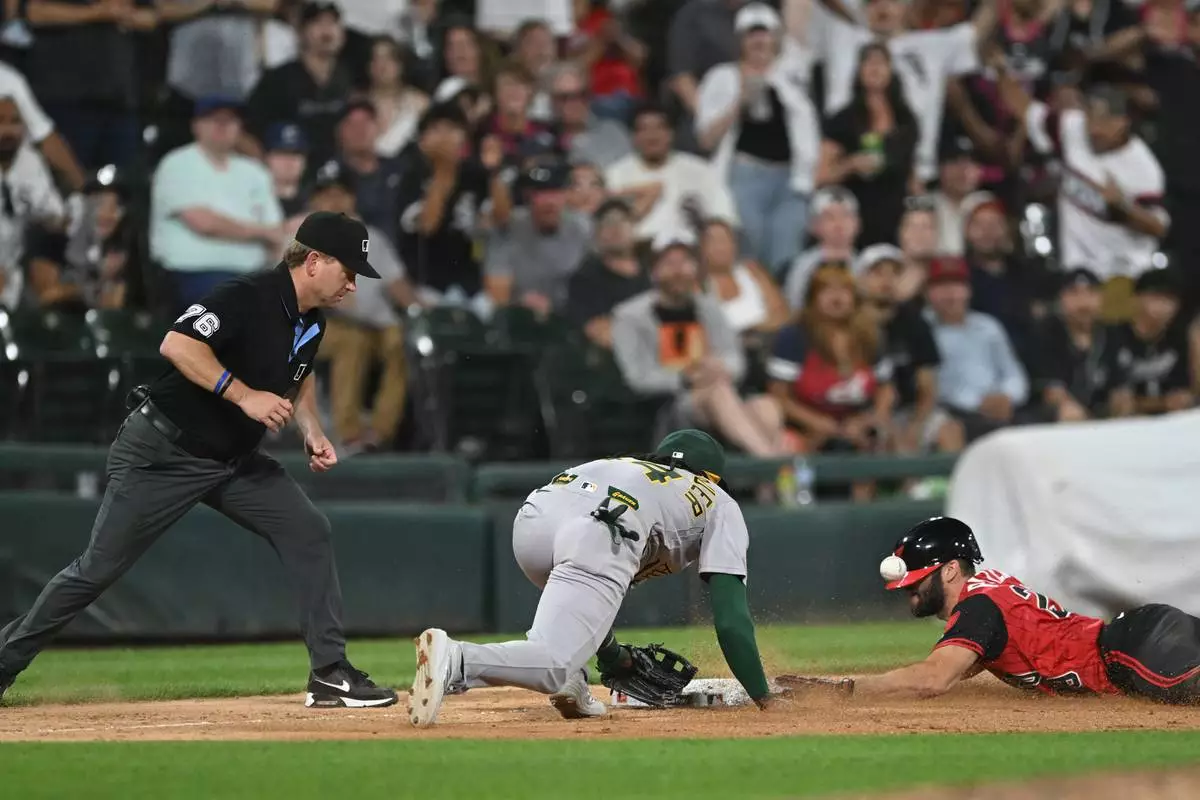
Chicago White Sox's Tristan Peters, right, slides safely into third base for an RBI triple while the Athletics third baseman Joshua Kuroda-Grauer, left, catches the throw during the seventh inning of a baseball game in Chicago, Friday, July 10, 2026. (AP Photo/Paul Beaty)
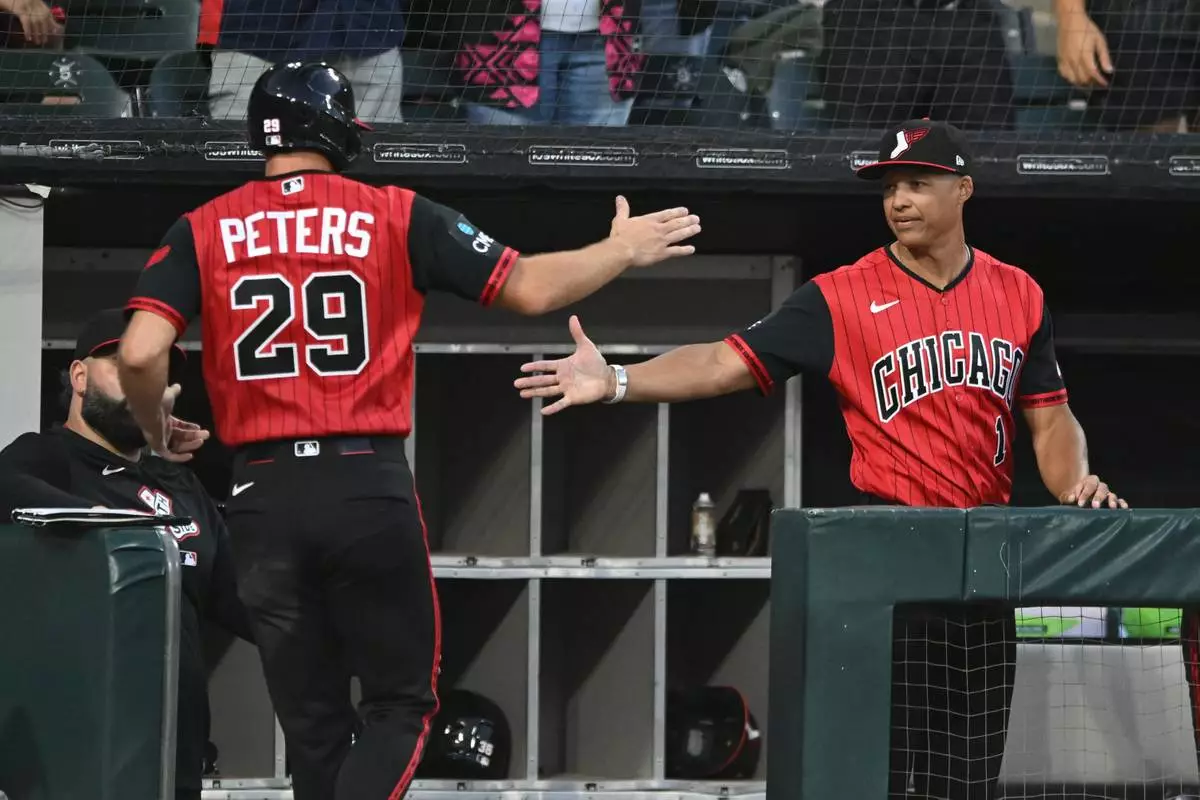
Chicago White Sox's Tristan Peters (29) celebrates with manager Will Venable, right, at the dugout after scoring on a Miguel Vargus sacrifice fly during the fifth inning of a baseball game against the Athletics in Chicago, Friday, July 10, 2026. (AP Photo/Paul Beaty)

Chicago White Sox's Tristan Peters (29) celebrates with teammate Munetaka Murakami (5) at the dugout after hitting a two-run home run during the seventh inning of a baseball game against The Athletics in Chicago, Friday, July 10, 2026. (AP Photo/Paul Beaty)
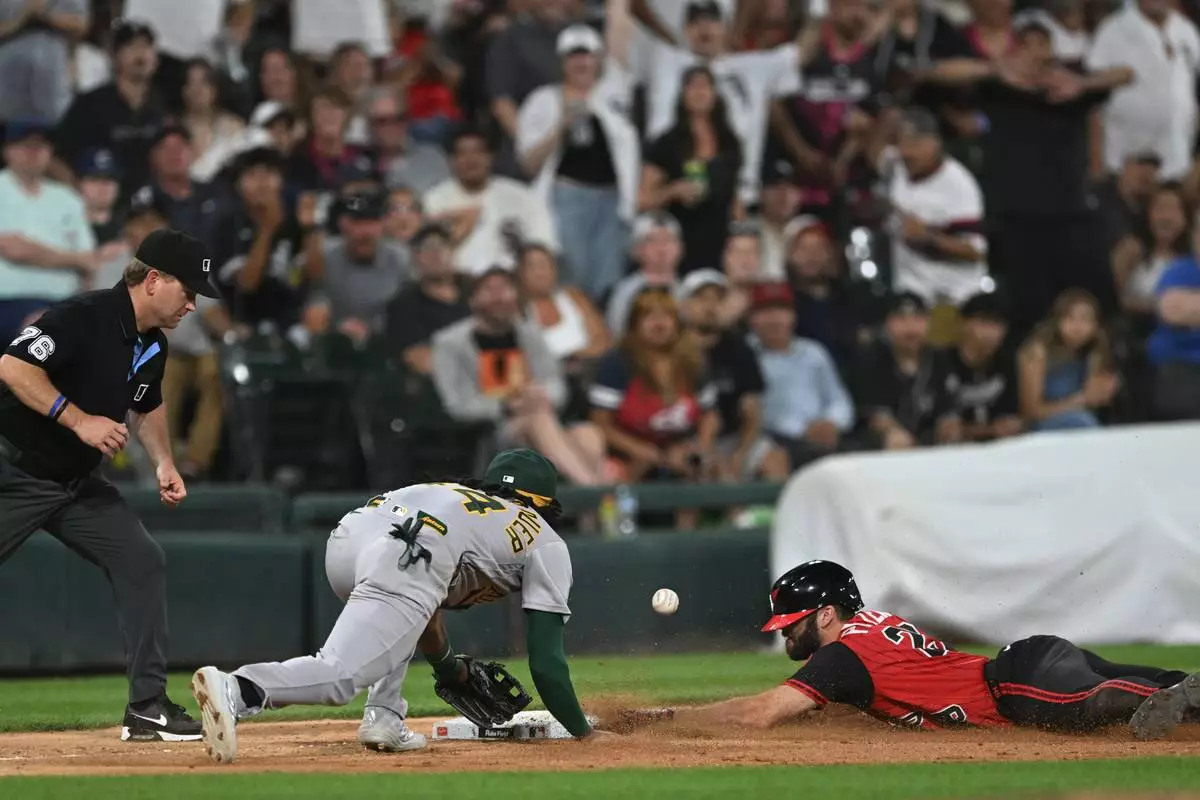
Chicago White Sox's Tristan Peters, right, slides safely into third base for an RBI triple while Athletics third baseman Joshua Kuroda-Grauer, center, catches the throw during the seventh inning of a baseball game in Chicago, Friday, July 10, 2026. (AP Photo/Paul Beaty)

Chicago White Sox's Tristan Peters reacts after hitting a foul ball during the seventh inning of a baseball game against the Boston Red Sox in Chicago, Tuesday, July 7, 2026. (AP Photo/Nam Y. Huh)
Canada is striking back at the United States with retaliatory tariffs on about $20 billion worth of American goods, including steel, dairy products, appliances and farm equipment, as the trade war between the once-friendly neighbors escalates.
Sen. Darline Graham won the Republican nomination to replace her late brother, Lindsey Graham, on South Carolina’s general election ballot, notching another win for President Donald Trump after he threw his support behind the political novice. And Justice Department lawyers told a court that if Trump’s name does not appear somewhere on the Kennedy Center, then the cultural center may be “required to be taken down.”
Here's the Latest:
The snowballing opposition to data centers across the United States has transformed the midterm election landscape and has Trump defending the world’s richest companies.
Few people had even heard of a data center before the late 2022 debut of OpenAI’s ChatGPT ignited worldwide demand for chatbots and other generative AI products that typically require large amounts of computing power. Now Oracle, Meta, Google, Amazon and Microsoft expect to plunge more than $700 billion into data centers in the U.S. this year alone.
Trump continues to stick up for data centers, even as politicians from both parties run from them and many communities try to block them. His administration is pushing to help tech giants build and connect data centers to power plants and high-voltage power lines.
▶ Read more
Republicans as well as Democrats are turning data centers into a punching bag.
The president says AI development is key to competing against China, and Republican House Speaker Mike Johnson said a federal pause on data center construction might be a “dangerous prospect.” But most registered voters oppose building a data center in their area, according to a July Fox News poll, including 60% of Republicans and 53% of MAGA voters.
Many Democratic leaders and candidates have withdrawn support for data centers. Now even Texas Gov. Greg Abbott has announced a halt on approval of new data centers until audits determine their impact on the state’s electrical grid.
Trump says tech companies “can use a little public relations help,” but he says data centers bring “jobs and lots of money and lower taxes.”
▶ Read more
An inflation measure closely watched by the Federal Reserve was unchanged last month, in the latest sign that many Americans are still struggling with higher costs.
The Commerce Department’s Wednesday report showed that prices rose 3.7% in July compared with a year earlier. Inflation has worsened since the Iran war began in late February, when it stood at 2.9%. It remains noticeably above the Fed’s target of 2%.
Stubbornly high prices are shaping up to be a key issue in the midterm elections, particularly as the Iran war keeps gas prices high, Trump is threatening new tariffs on Canada and China, and spending on AI infrastructure has pushed up the cost of computers, gaming consoles, and semiconductors.
The U.S. and Canada have ramped up their trade war with steep new tit-for-tat tariffs, but analysts are betting the longtime allies will eventually strike a deal to end a conflict neither side really wants. “If there is political will, there is an off ramp,’’ said former U.S. trade negotiator Wendy Cutler.
The prospects for compromise appear bleak right now with Canadian Prime Minister Mark Carney reacting to Trump’s new 50% U.S. tariffs on certain Canadian goods by taxing about $20 billion in American products including steel, dairy products, appliances and farm equipment.
“You’re at war when you get attacked. We got attacked,’′ Carney, who came to power last year on the promise that he’d stand up to Trump.
▶ Read more
Three U.S. Secret Service officials were placed on administrative leave Tuesday, pending the outcome of an investigation by the agency’s professional standards office.
The three were operating in non-law-enforcement capacities and were being investigated for potential misconduct, the agency’s public information office reported. However, the cause for the action remained unclear as the Office of Professional Responsibility was beginning its review.
The Secret Service has been under scrutiny as Trump has been the subject of at least three assassination plots in the past two years. In April, police said an armed man breached security at the Washington Hilton during the White House Correspondents’ Association dinner, which Trump was attending.
▶ Read more
Justice Department attorneys argued that if Trump’s name does not appear somewhere on the Kennedy Center, then the money from donors for renovations would shrivel up and the “decrepit, dilapidated” cultural center may be “required to be taken down.”
That came from a court filing late Monday on the long-running saga over whether the president’s name can be added to the cultural institution and venue meant to honor John F. Kennedy after his assassination. The original attempt to add “Donald J. Trump” on the building’s facade was halted by the court in May following a lawsuit from Democratic Rep. Joyce Beatty, an ex officio member of the Kennedy Center.
The center’s Trump-aligned board of trustees then voted again this month to get the president’s name back on the cultural institution in a different way: by appending “Renovated and Restored By President Donald J. Trump” under the title on the building’s facade. Another phrase, “Endowed by the Trump Kennedy Center Fund” would be a possible addition, as well as renaming the plaza in front of the Kennedy Center to honor the president.
▶ Read more
U.S. Sen. Darline Graham won the Republican nomination to replace her late brother on South Carolina’s general election ballot, notching another win for President Donald Trump after he threw his support behind the political novice.
Graham defeated U.S. Rep. Ralph Norman in Tuesday’s special Republican primary runoff, two weeks after they were the top two finishers in a 10-way primary.
Despite being a political unknown, Graham bested some of South Carolina’s top political names in the special election spun up after Lindsey Graham’s sudden death last month. She was appointed by Gov. Henry McMaster to serve out the remaining months of her late brother’s current term and swiftly won an endorsement from Trump, who encouraged her to enter the race for a full term and campaigned for her in the state last week.
Graham will face Democratic nominee Annie Andrews in November.
▶ Read more
Canada struck back at the United States on Tuesday with retaliatory tariffs on about $20 billion worth of American goods, including steel, dairy products, appliances and farm equipment, as the trade war between the once-friendly neighbors escalated sharply.
The confrontation threatened one of the world’s largest trading relationships and further strained ties between the United States and a country long considered one of its closest allies. A prolonged dispute could raise costs for American businesses and consumers less than 2½ months before the midterm elections.
The new tariffs extended well beyond industrial goods, hitting everyday purchases such as seafood, cheese, clothing, cosmetics and toilet paper, with some facing duties as high as 50%.
“We did not choose this conflict, but when our economic integration is used as a weapon rather than the foundation for a win-win partnership, we need to stand up,” Finance Minister François-Philippe Champagne said in French, calling the situation “an unprecedented challenge imposed on Canada.”
▶ Read more
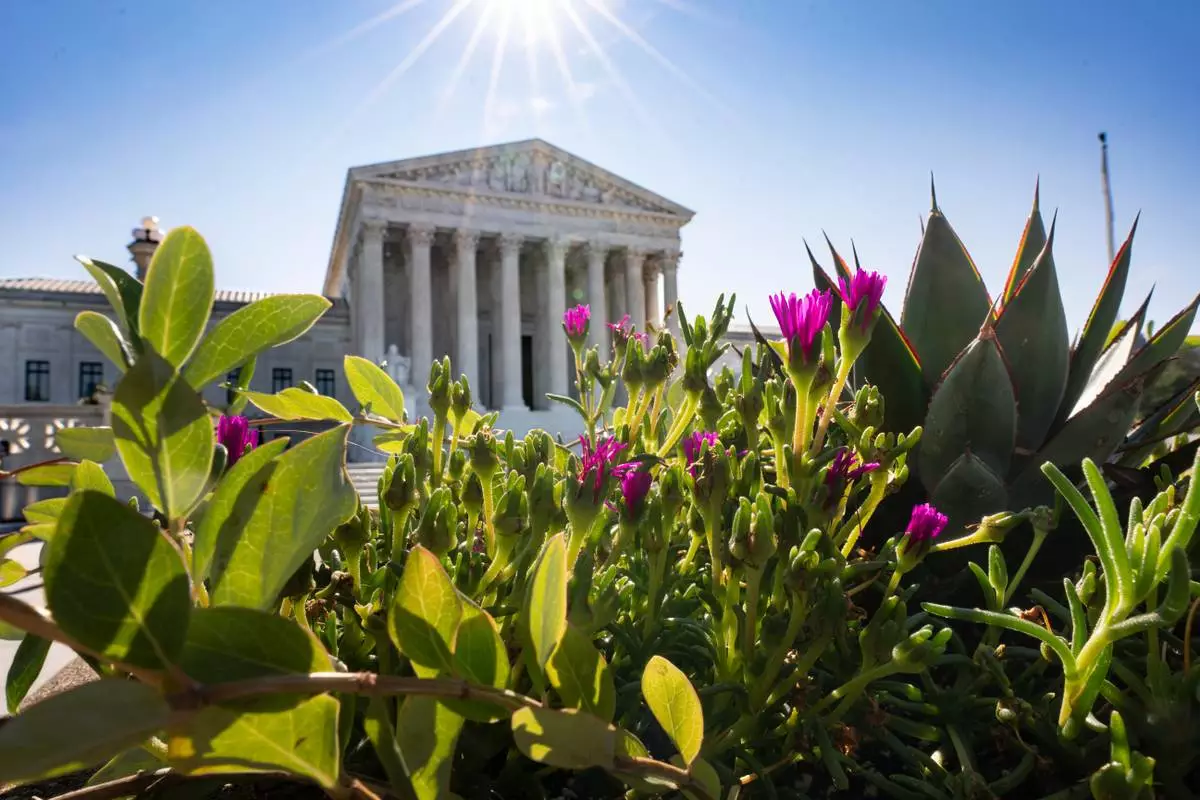
The Supreme Court is seen on the morning after the conservative majority sided with the Trump administration in a case over President Donald Trump's executive order restricting mail-in voting, on Capitol Hill in Washington, Tuesday, Aug. 25, 2026. (AP Photo/J. Scott Applewhite)
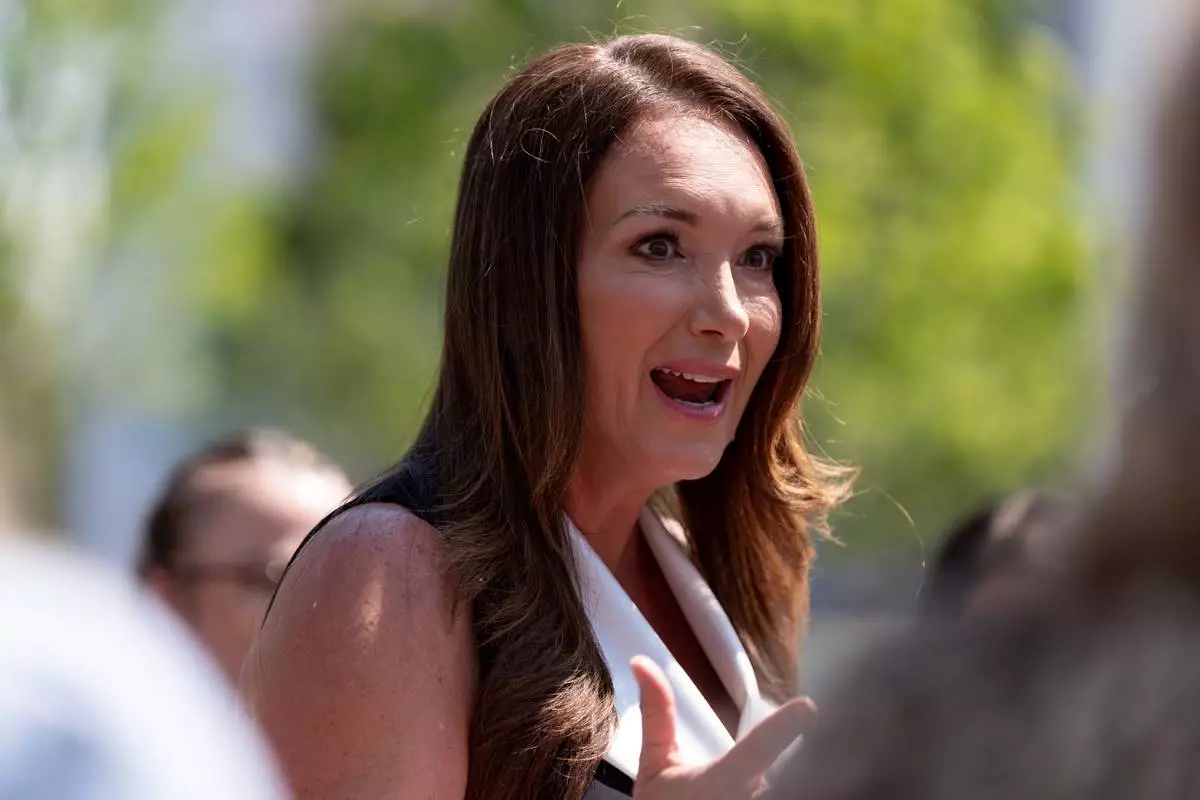
Agriculture Secretary Brooke Rollins speaks with reporters at the White House, Tuesday, Aug. 25, 2026, in Washington. (AP Photo/Alex Brandon)
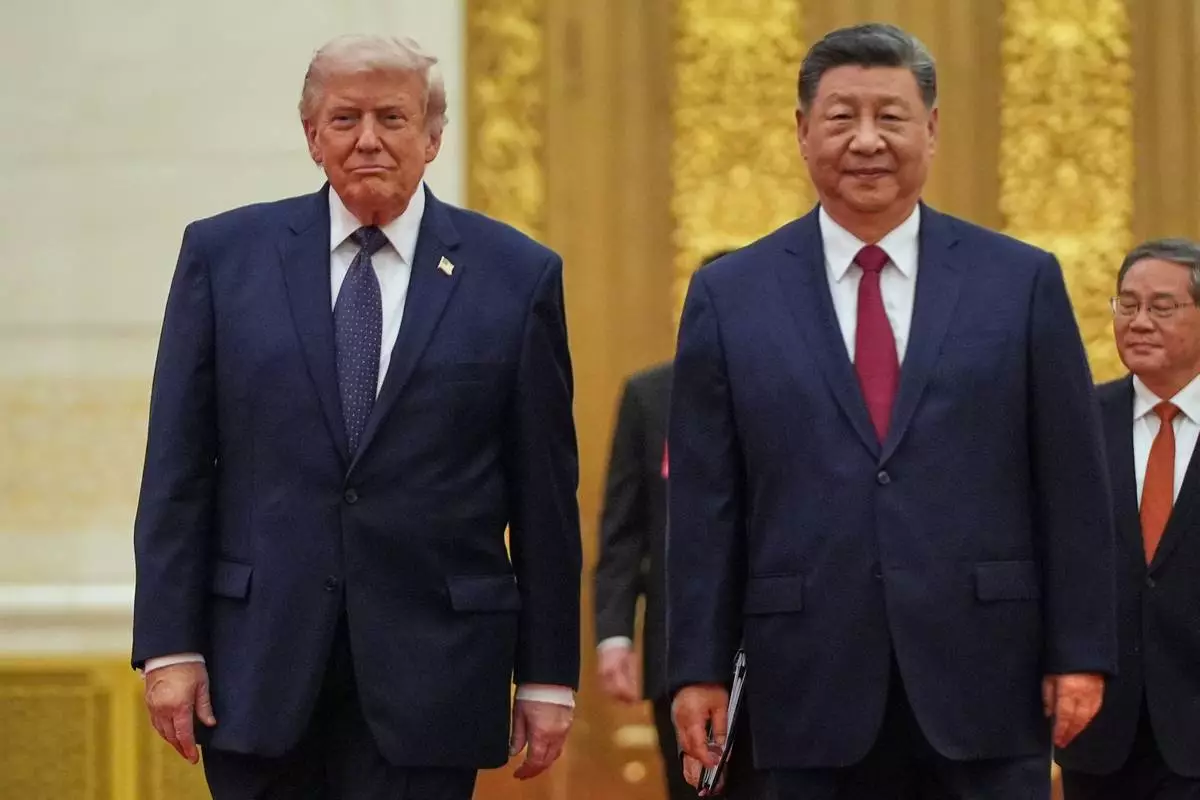
FILE - President Donald Trump, left, and Chinese President Xi Jinping arrive a state dinner at the Great Hall of the People May 14, 2026, in Beijing. (AP Photo/Mark Schiefelbein)
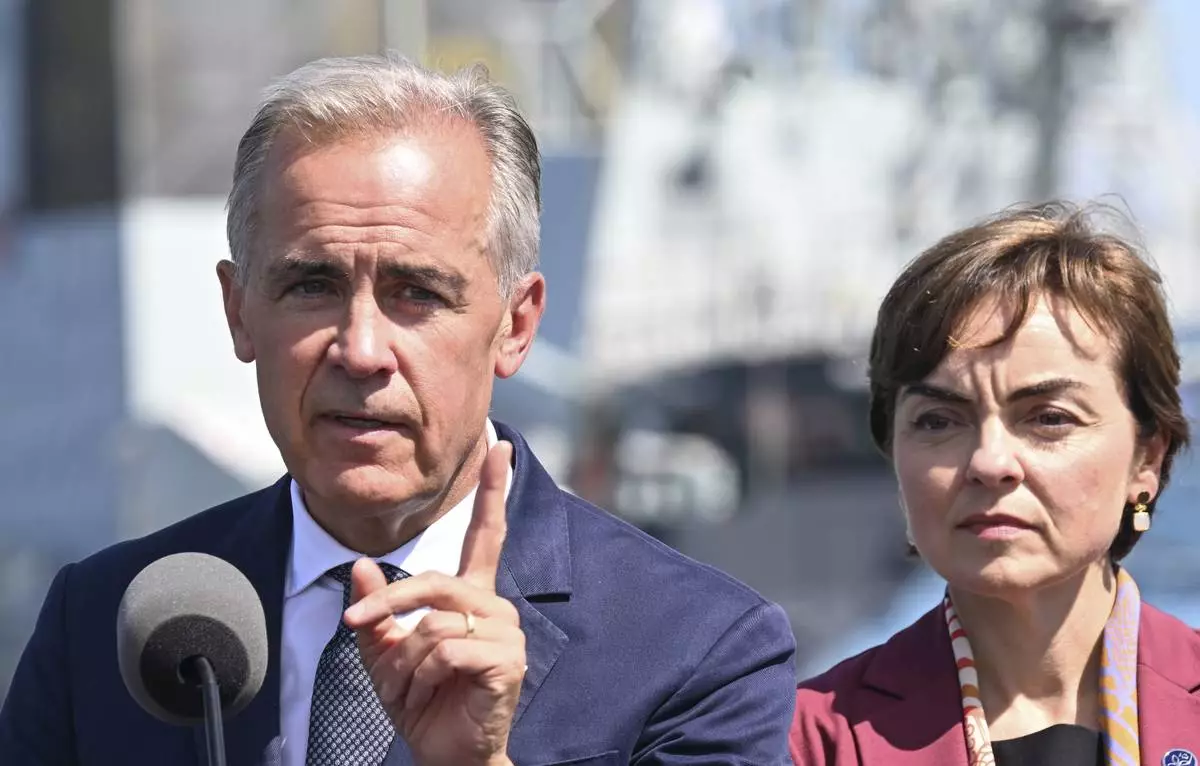
Canadian Prime Minister Mark Carney speaks as he announces a $11.3 billion contract for icebreakers at the Davie shipyard in Levis, Quebec, Monday, Aug. 24, 2026. Quebec Premier Christine Frechette, right, looks on. (Jacques Boissinot/The Canadian Press via AP)
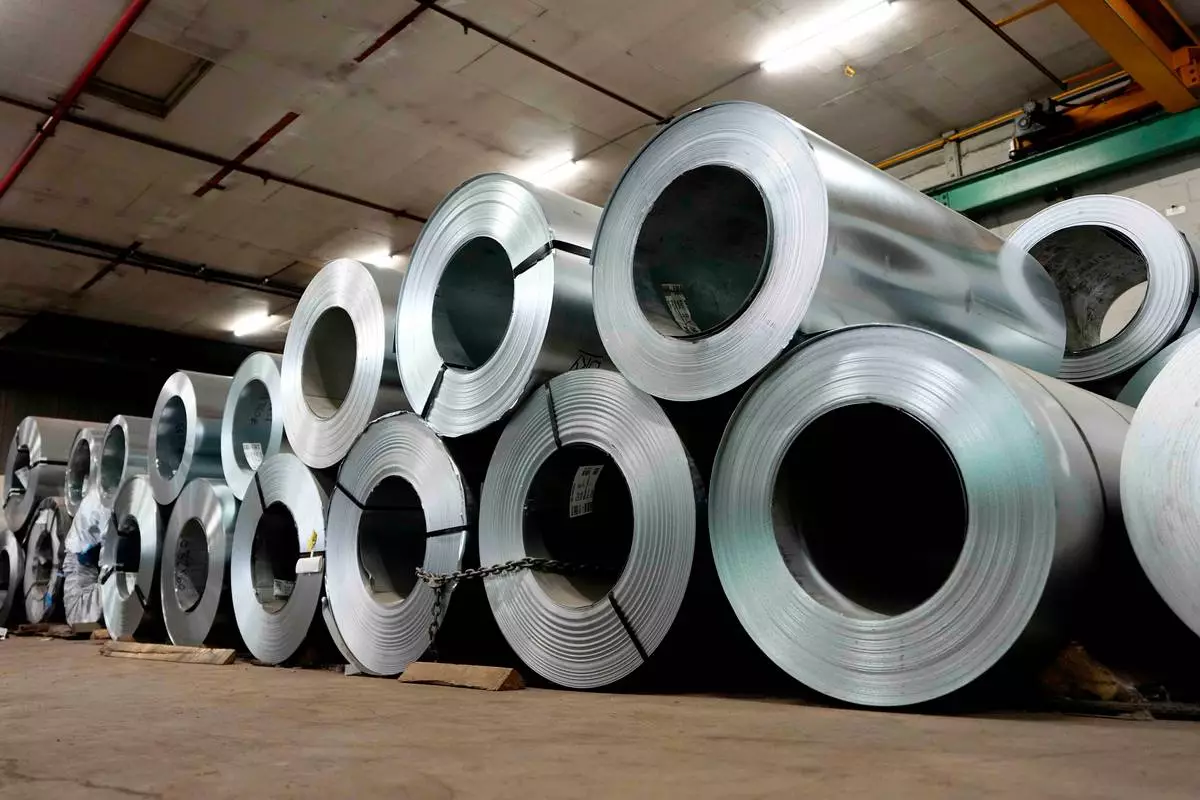
Steel coils, which will be made into roofing, siding and HVAC products, are seen in the manufacturing plant at Ideal Roofing in Ottawa, on Tuesday, Aug. 25, 2026. (Justin Tang/The Canadian Press via AP)