China on Friday completed its 2026 water-sediment regulating operation on the Yellow River, as the discharge rate at the Xiaolangdi Reservoir in central China's Henan Province was reduced to 600 cubic meters per second, according to the Ministry of Water Resources.
The water-sediment regulating operation started on June 22, aiming to improve the Yellow River's flood discharge capacity and reduce the risk of sediment accumulation in the river's lower reaches.
Coordinated by the Yellow River Conservancy Commission, the 19-day, multi-reservoir initiative saw the maximum discharge rate of the Xiaolangdi Reservoir on the Yellow River reaching 4,990 cubic meters per second, and the maximum outflow sediment concentration totalling 787 kilograms per cubic meter.
"This round of water-sediment regulating operation achieved multiple goals, including emptying reservoirs for flood control, discharging sediment from reservoirs and ecological water replenishment. The water levels at all six reservoirs involved in the operation, such as Xiaolangdi, Sanmenxia and Wanjiazhai, have been lowered below the flood-control limit, freeing up a total storage capacity of 4.172 billion cubic meters. The sediment flushed from the Xiaolangdi Reservoir reached 179 million tonnes, setting a record high among all previous operations during the same period. Remarkable results have been yielded in ecological protection. During the operation, 165 million cubic meters of water was diverted to the wetland of the Yellow River Estuary Delta," said Zhang Bingduo, director of the planning division of the bureau of flood and drought disaster prevention of the Yellow River conservancy commission under the Ministry of Water Resources.
By estimation, the water and sediment flow generated by this operation will enter the sea around July 15.
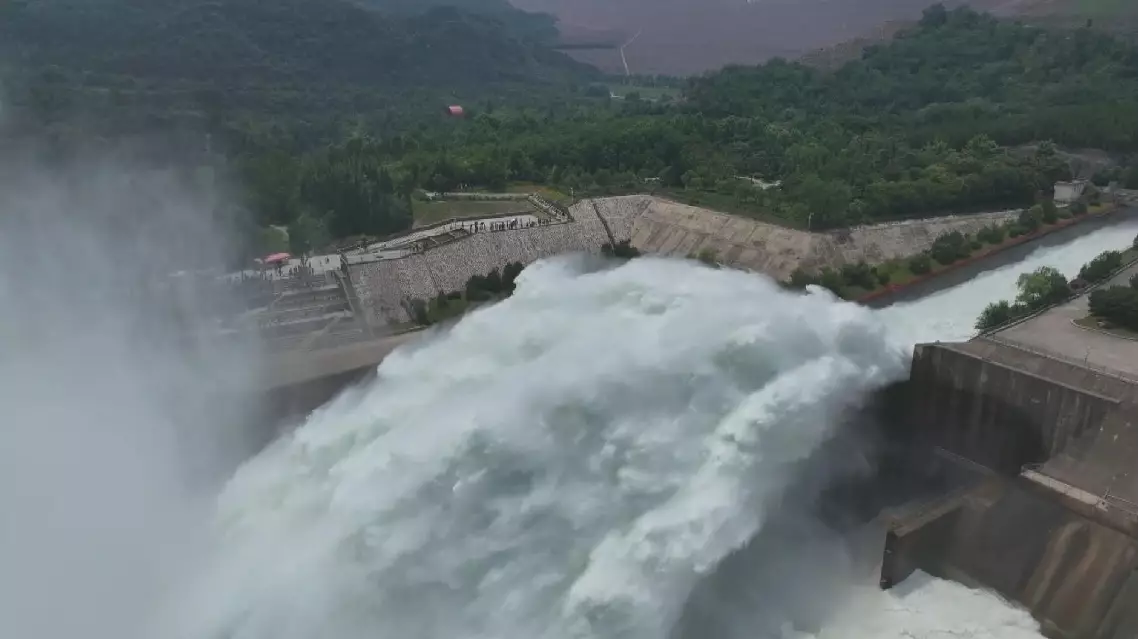
China completes Yellow River water-sediment regulating operation for 2026