Business leaders urged public-private partnership to maintain sustainable growth amid uncertainties at the third Asia-Pacific Economic Cooperation Business Advisory Council (ABAC) meeting, which was held in the Thai capital Bangkok from July 6 to 9.
The current business environment is becoming more complex, while geopolitical uncertainties continue to affect business decisions, said Thai Prime Minister Anutin Charnvirakul in a keynote address at the third ABAC meeting in 2026.
These challenges cannot be solved by the governments alone, nor can businesses solve them without governments creating the right environment; thus, public-private partnership is key to sustainable growth, he noted.
"I think we have to focus on quality growth, not just growth for the sake of growing. But how do we make sense with the new technologies that we have, with the information that we have, how do we make sense and try and mitigate some of these issues that are going on in the world," said Kasemsit Pathomsak, a member of ABAC, in an interview with the China Global Television Network (CGTN.)
Chinese representatives said they hope to build new partnerships in advanced manufacturing, digital technology, green development and cross-border trade.
"I think that fintech will be further discussed, and the connectivity will be further discussed. They reached the consensus at the last point. I think it shows the unity of all the industrial and commercial circles of the Asia-Pacific region," said Wu Meng, director-general of the Department of International Cooperation of the China Council for Promotion of International Trade.
The four-day event gathered over 200 business leaders and experts to finalize policy recommendations for APEC leaders regarding sustainable development, digital innovation, AI, and regional connectivity
The Asia-Pacific Economic Cooperation (APEC) is the highest-level economic cooperation mechanism that enjoys the broadest scope and the most significant influence in the Asia-Pacific region.
The region is home to one third of the world's population and accounts for over 60 percent of the global economy and nearly half of global trade.
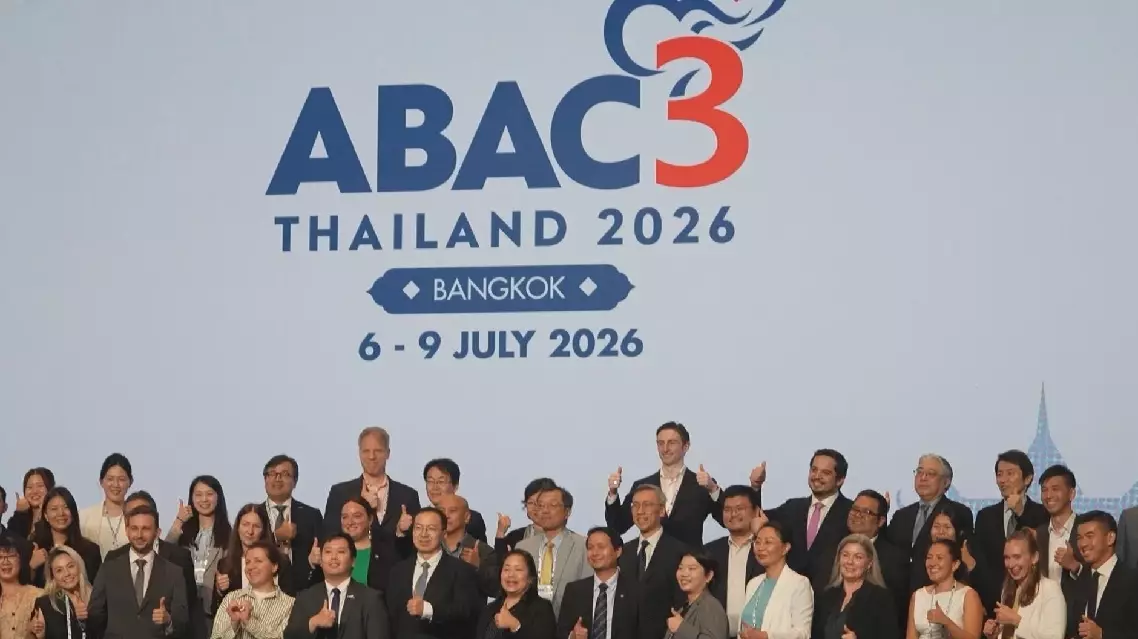
Business leaders urge public-private partnership for sustainable growth at ABAC meeting
China stands ready to work with Uzbekistan to usher in a new "golden decade" for bilateral relations, as the two sides celebrate the 10th anniversary of the China-Uzbekistan comprehensive strategic partnership, Chinese President Xi Jinping said on Monday during a meeting with Uzbek President Shavkat Mirziyoyev on the sidelines of the Shanghai Cooperation Organization (SCO) Summit 2026 in Bishkek, Kyrgyzstan.
Xi said that under the guidance of the two heads of state, China and Uzbekistan have elevated and upgraded their bilateral relations, reaped fruitful results in cooperation across various fields, and achieved remarkable success in building a China-Uzbekistan community with a shared future.
China is willing to work with Uzbekistan to consolidate strategic mutual trust, deepen mutually beneficial cooperation, and jointly usher in a new "golden decade" for bilateral relations, he said.
No matter how the international landscape may evolve, China's commitment to deepening China-Uzbekistan friendship remains unwavering, Xi said, adding that China will, as always, support Uzbekistan in pursuing a development path suited to its national conditions.
He called on the two countries to work together to advance bilateral cooperation.
Both sides should promote the high-quality construction of the China-Kyrgyzstan-Uzbekistan railway, expand cooperation in areas such as artificial intelligence and desertification control, and uphold mutual benefit, Xi said.
He stressed the need to speed up the establishment of cultural centers in each other's country, expand cooperation in education and poverty alleviation, and foster people-to-people bonds.
It's important to make full use of the law enforcement and security cooperation mechanism between the two countries, and join hands to fight the three forces of terrorism, separatism and extremism, Xi said.
As the SCO's founding members, China and Uzbekistan should work together to implement the outcomes of the Tianjin Summit, and advance regional development and prosperity, he said.
Mirziyoyev said that Uzbekistan remains firmly committed to developing relations with China and will not change this course amid shifts in the international landscape.
Uzbekistan is willing to work with China to deepen political mutual trust, expand trade and investment, strengthen cooperation in agriculture, transportation, energy, minerals, and science and technology, promote people-to-people exchanges, and fight the three forces of terrorism, separatism and extremism, advancing the further development of bilateral relations, he said.
The Uzbek side firmly upholds the one-China principle, highly values the four global initiatives proposed by President Xi, and stands ready to work with China to advance the SCO development and uphold international fairness and justice, Mirziyoyev said.
Xi arrived in the Kyrgyz capital on Sunday for the SCO Summit 2026 and a state visit to Kyrgyzstan.
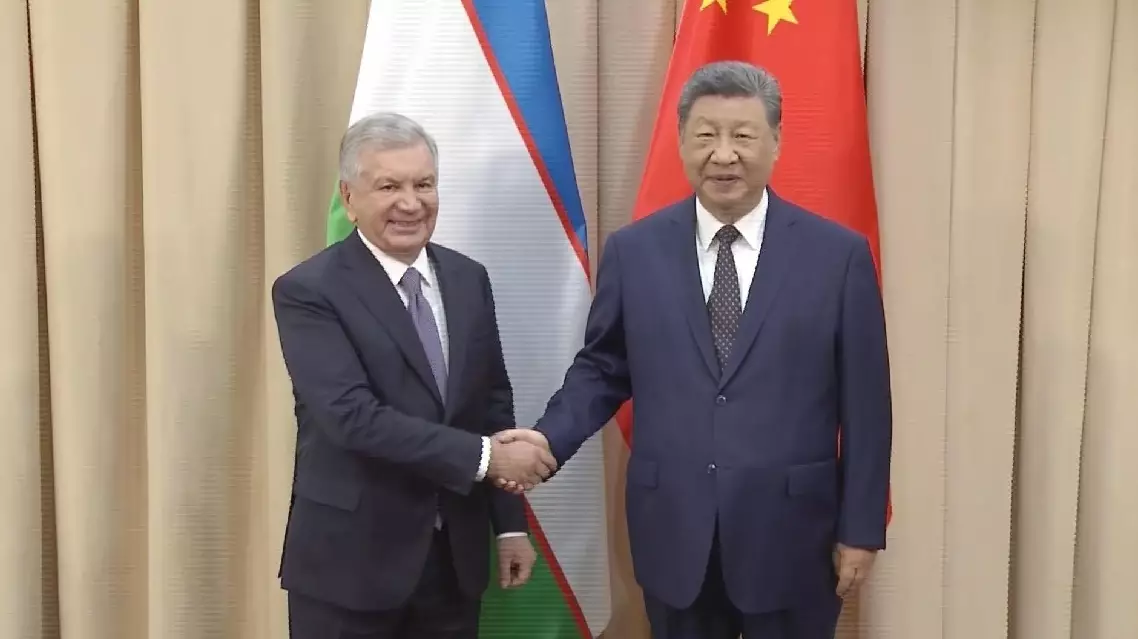
China ready to work with Uzbekistan to usher in new "golden decade" for bilateral relations