The true scale of the Ebola outbreak in the Democratic Republic of the Congo may be significantly larger than official statistics indicate, with many infections going undetected, a senior World Health Organization(WHO) official said on Friday.
WHO Emergencies Director Chikwe Ihekweazu said four out of every five new Ebola cases in parts of the Democratic Republic of the Congo have no known link to existing patients, making it harder for health workers to trace transmission chains.
The latest government data showed 1,792 infections and 625 deaths, while WHO modeling suggests the true scale of the outbreak could be two to four times larger than official data suggest.
About 90 percent of all reported cases remain concentrated in Ituri province but the virus has also spread beyond the epicenter to North Kivu, South Kivu and Tshopo provinces.
The outbreak is caused by the Bundibugyo Ebola strain, for which there is no licensed vaccine or specific therapeutics.

DR Congo Ebola outbreak spreading largely undetected: WHO official

DR Congo Ebola outbreak spreading largely undetected: WHO official

DR Congo Ebola outbreak spreading largely undetected: WHO official
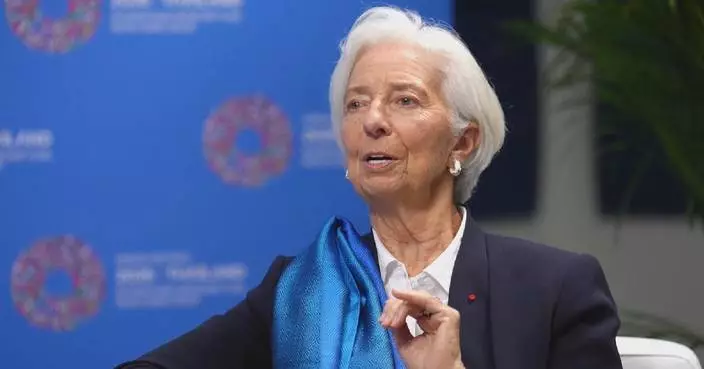
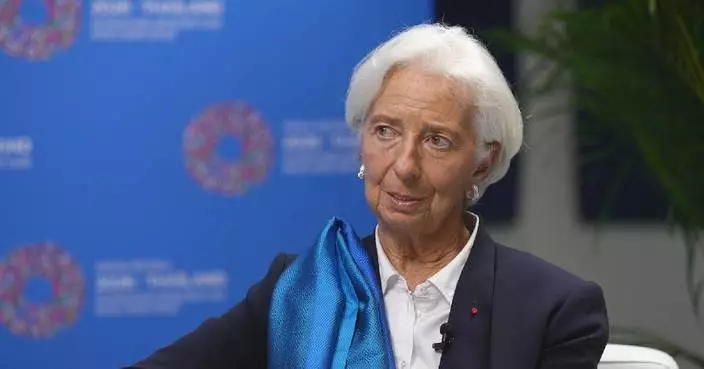
European Central Bank (ECB) President Christine Lagarde stressed the importance of human control over the direction of artificial intelligence (AI) development in an interview with China Media Group in Bangkok, Thailand, earlier this month.
Lagarde has recently warned that Europe faces an extraordinary crisis, as it has fallen far behind the United States and China in AI models, computing power, and investment.
However, in the interview that aired on Friday, she placed greater emphasis on the risks AI poses to humanity as a whole rather than on the regional concern.
"Because I think that there is one particular element, which I strongly believe in. What? The developments that we are seeing as a result of artificial intelligence are so transformational, and gearing in such an independent direction with potential recursive development to artificial intelligence that I think that all of us -- meaning the United States, China, Europe, corporate as well as policymakers -- should be preoccupied by this development. And I see it as a priority that we all understand where this is going and what kind of control human beings like you and me continue to have on this development. I'm more concerned about that than about closing the gap," she said.
Lagarde expressed confidence in the outlook for Europe's AI development and urged efforts to better leverage the region's talent and financial resources.
"So on closing the gap, it's pretty obvious from all accounts -- and I'm not the ultimate expert on artificial intelligence -- but those who know are saying that the United States is ahead of the game, that China is shortly behind. [Compared with] those developments in the U.S., [Chinese developments are] operating on a different model -- less proprietary and more open source. And Europe is -- for some of the member states -- a distant third. So can we become less of a distant third and be a third but have some control and some operational innovation? I think that should be the case, because we should also be able to develop. We have bright minds, great schooling, money, but we don't put them together well," she said.
Lagarde also called for cooperation among different parts of the world, instead of the pursuit of sole dominance.
"I also think that artificial intelligence is a long chain of different segments. So you are hand in hand with others. You don't control the entire ecosystem," she said.
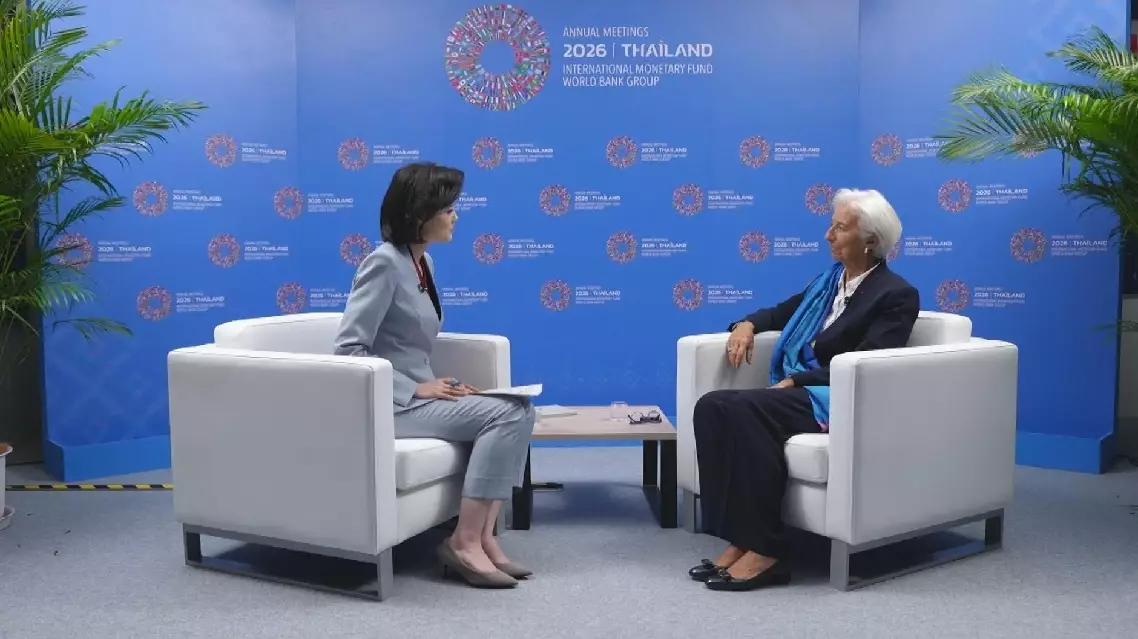
ECB president underscores importance of keeping AI development under control