Chinese Vice Premier He Lifeng met with Andre Desmarais, honorary chairman of the Canada China Business Council (CCBC), in Beijing on Wednesday.
He, who is also a member of the Political Bureau of the Communist Party of China Central Committee, said China welcomes Canadian enterprises to share the opportunities of China's high-quality development, and hopes the CCBC can serve as a bridge and make greater contributions to the growth of China-Canada economic and trade relations.
Desmarais said the Canadian business community has full confidence in China's economic prospects, and the CCBC stands ready to continue supporting the sound and steady growth of Canada-China economic and trade relations.
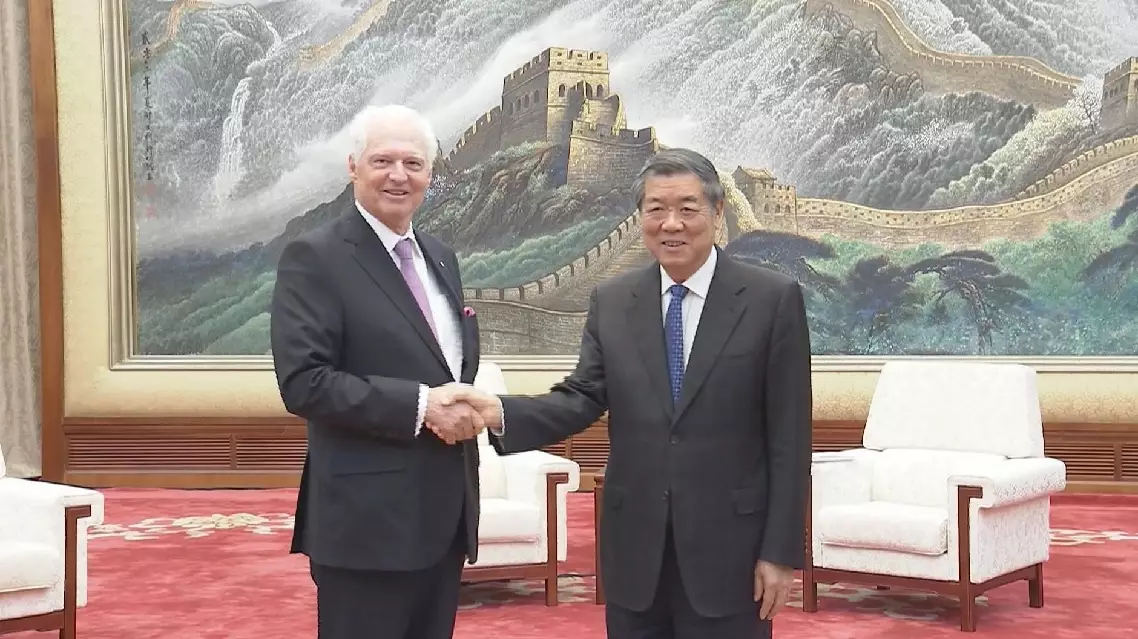
Chinese vice premier meets honorary chairman of Canada China Business Council
Iran's Islamic Revolution Guard Corps (IRGC) said Wednesday that if any vessel enters the "restricted zone" to be announced by Iran in regional waters without coordination, it will be subject to the country's sanction measures.
"If a vessel enters this zone without coordination (with Iran), it will be subject to our sanction measures; meaning that if it seeks to use the Strait of Hormuz in the future, it will not be able to do so, and we will also refuse to provide it with port, insurance, and other required services," IRGC spokesman Hossein Mohebbi said, according to the semi-official Tasnim news agency.
He said the zone's exact coordinates will be announced in the future, adding that it will generally begin around Iran's southeastern port city of Chabahar and will include parts of the Gulf of Oman and the Arabian Sea as well as the routes that can lead to the Strait of Hormuz.
He described the Strait of Hormuz as the "strait of Iran's power," adding the country will use that power to respond to the "enemy's aggression" and force it to stop it.
Following U.S.-Israeli strikes on Iran on Feb. 28, Tehran restricted passage through the Strait of Hormuz, while U.S. forces imposed a naval blockade targeting vessels traveling to or from Iranian ports and coastal areas.
Also on Wednesday, Iran's Foreign Ministry strongly condemned the U.S. Army's "aggressive" attack the night before against a number of Iranian oil tankers.
Expressing the condemnation in a statement, it said, "The U.S. military attack on Iranian commercial vessels in the Persian Gulf and the Gulf of Oman are considered to be in continuation of the U.S. government's military aggression, naval blockade and economic war against Iran, and in flagrant violation of the United Nations Charter and international law."
It called on the UN and the Security Council to take immediate actions against the "blatant violations" of international peace and security owing to "the U.S. aggressive actions against Iran."
The U.S. Central Command said in a Wednesday post on social media platform X that its forces had "destroyed five Iranian crude oil carriers" on Tuesday night in response to the IRGC's targeting of "a U.S. Navy warship with ballistic missiles twice over the past two days."
The IRGC announced in separate statements early Wednesday that its forces had targeted within the preceding hours four U.S. vessels, including two destroyers, and eight oil tankers in regional waters, as well as a U.S. air base in Jordan in retaliatory strikes.
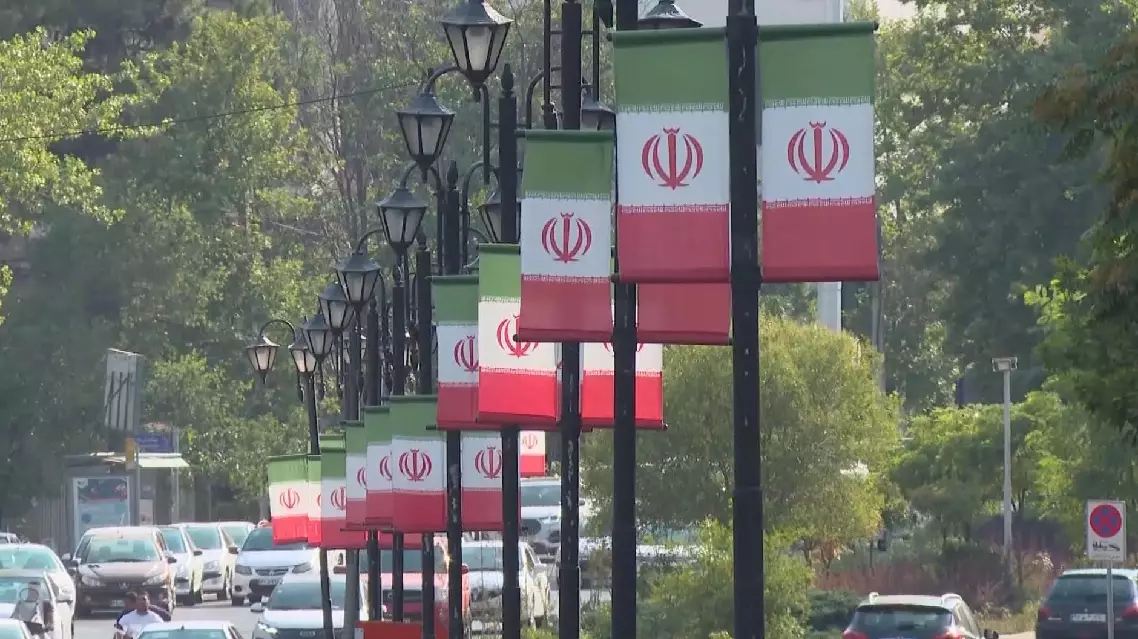
Iran's IRGC says vessels entering "restricted zone" without coordination to face sanctions