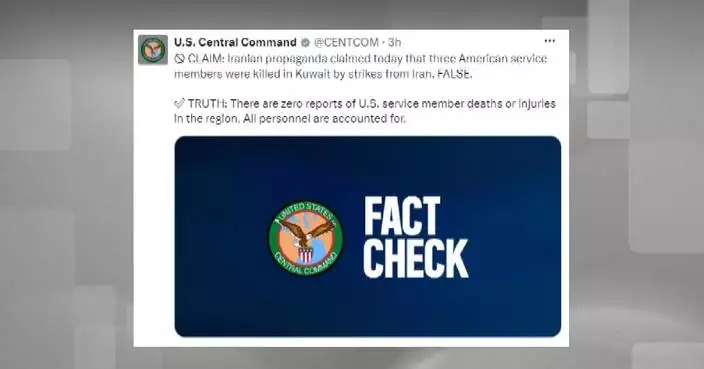
Iran on Sunday insisted the Strait of Hormuz is closed, citing U.S. military activity, while the U.S. Central Command rejected the claim, asserting the strategic waterway remains open and navigation continues despite rising tensions.
Iran's Islamic Revolutionary Guard Corps (IRGC) announced early on Sunday that the Strait of Hormuz would be closed immediately until further notice and the end of U.S. interference in the region, given insecurity caused by illegal interference by foreign powers.
Later in the day, Iran's Persian Gulf Strait Authority (PGSA) announced that due to U.S. military forces' recent "illegal movements" in the region, passage through the waterway is not currently possible.
In a post on social media platform X, the PGSA said "Once stability and calm are restored, all requests (for passage through the Strait of Hormuz) will be reviewed according to the schedule, and the necessary permits will be issued."
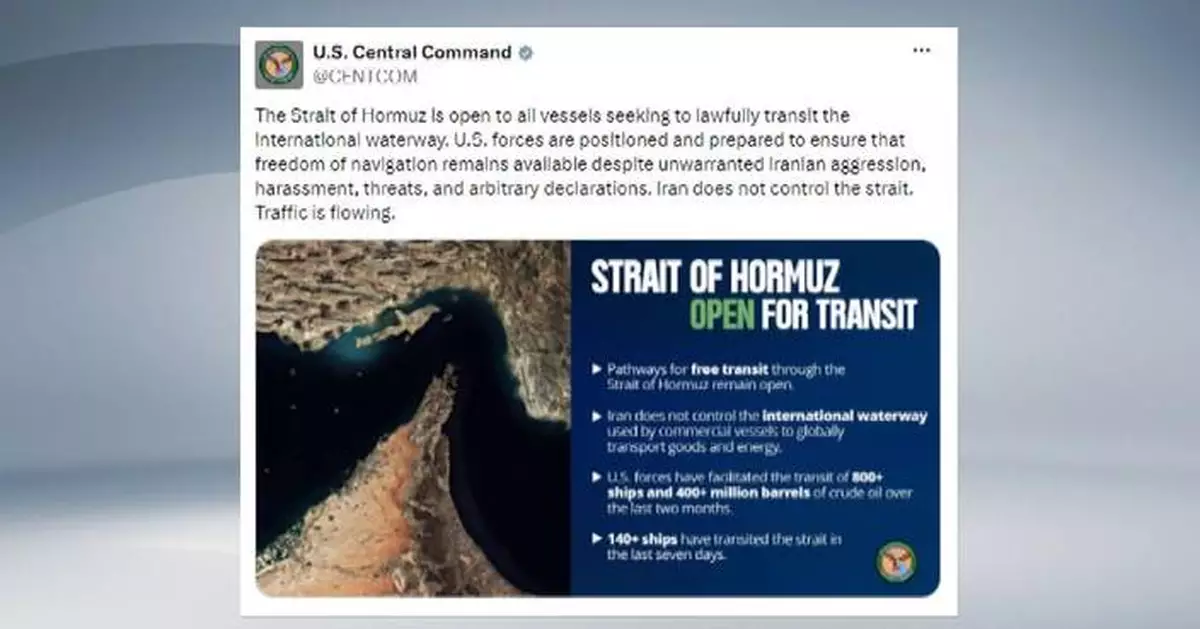
However, the U.S. Central Command said on Sunday that the Strait of Hormuz remained open to vessels seeking lawful transit, adding that Iran did not control the international waterway.
"US forces are positioned and prepared to ensure that freedom of navigation remains available despite unwarranted Iranian aggression, harassment, threats, and arbitrary declarations," CENTCOM said.
Also on Sunday, U.S. President Donald Trump said that the Strait of Hormuz is open to commercial traffic.
A U.S. official said on Sunday that about 20 commercial ships transited the Strait of Hormuz in the past 24 hours in coordination with the U.S. military, and several ships passed without U.S. coordination.
The United States and Iran exchanged a fresh round of attacks over navigation in the Strait of Hormuz on Sunday, despite a memorandum of understanding signed by the two countries in June, raising concerns over renewed regional escalation.
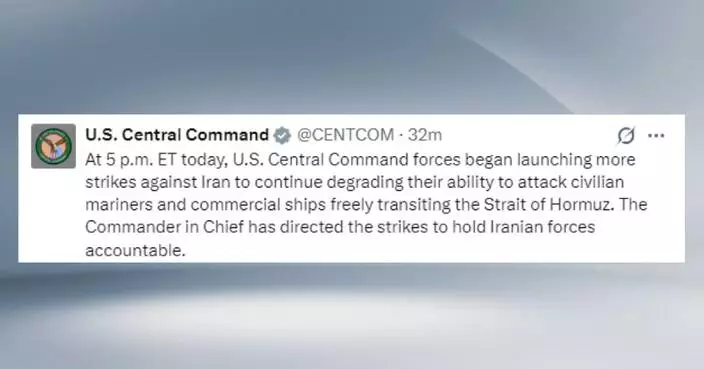
The U.S. Central Command said in a post on X early Sunday that its forces had completed a third round of strikes this week against Iran, "holding Iranian forces accountable for attacking another commercial ship in the Strait of Hormuz."
Iran retaliated later by targeting U.S. bases and facilities across the Gulf, with Iranian media saying the strikes targeted U.S. military facilities in Kuwait, Bahrain and Qatar.
Following U.S.-Israeli strikes on Iran in late February, Tehran tightened its control over the Strait of Hormuz, a strategic waterway through which about one-fifth of the world's seaborne oil trade passes, barring safe passage of Israeli- and U.S.-linked vessels. The traditional Traffic Separation Scheme in the vital waterway became unsuitable for navigation due to the mine threat.
After the MoU was signed between the United States and Iran, two alternative transit routes effectively emerged: a northern route controlled by Iran and a southern route along the Omani coast, where U.S. forces provide navigation support and coordination.
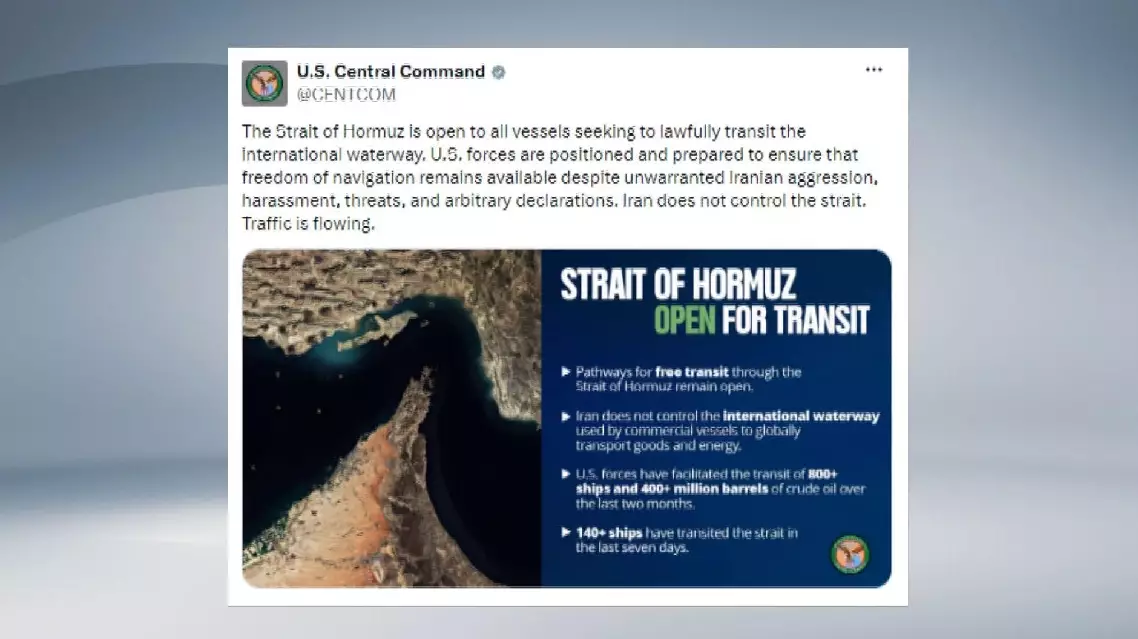
U.S. insists Strait of Hormuz remains open while Iran says transit halts