Skip to Content Facebook Feature Image

New Zealand actor Sam Neill, known for 'Jurassic Park' and 'The Piano,' dies at 78, his family says

ENT

New Zealand actor Sam Neill, known for 'Jurassic Park' and 'The Piano,' dies at 78, his family says
ENT

ENT

New Zealand actor Sam Neill, known for 'Jurassic Park' and 'The Piano,' dies at 78, his family says

2026-07-13 14:44 Last Updated At:15:00

WELLINGTON, New Zealand (AP) — Sam Neill, a smoothly elegant and versatile actor whose career moved from art film to blockbuster as he dodged velociraptors in “Jurassic Park” to playing Holly Hunter’s husband in “The Piano,” has died. He was 78.

In 2023, Neill disclosed he had been diagnosed with angioimmunoblastic T-cell lymphoma, a rare type of non-Hodgkin lymphoma. Neill died on Monday in Sydney, according to a statement posted to the actor’s social media page.

His death was “sudden and unexpected,” the statement said, adding that he “remained cancer free” when he died. A cause of death wasn’t specified.

“Sam was surrounded by family and passed with the dignity that has characterised his whole life,” his family wrote.

Neil was one of a host of actors and directors who achieved international fame after an explosion of Australian films that began in the late 1970s, a list that includes Paul Hogan, Mel Gibson, Geoffrey Rush, Russell Crowe, Jane Campion, Peter Weir and Gillian Armstrong. His range was remarkable, playing opposite Helena Bonham Carter in the Alan Ayckbourn comedy “Sweet Revenge” to chopping off Hunter’s finger in “The Piano” to poking his own eyes out in the sci-fi horror “Event Horizon.”

In “Omen III: The Final Conflict,” he played Damien the Antichrist and he also played Cardinal Thomas Wolsey in “The Tudors.”

The actor first came to the attention of international audiences in Armstrong’s 1979 film “My Brilliant Career,” which also introduced Judy Davis. He later appeared in Phillip Noyce’s “Dead Calm,” a classy thriller set at sea and co-starring the then-relatively unknown Nicole Kidman.

Neill twice co-starred with Meryl Streep, in Australian director Fred Schepisi’s “Plenty” and — again for Schepisi — in “A Cry in the Dark,” a film about the sensationalized aftermath of a dingo killing a baby in the Australian Outback. He earned an Emmy nomination for his performance in the title role of the 1998 miniseries “Merlin” and another as narrator of 2017’s “Wild New Zealand.”

Perhaps Neill achieved his highest level of fame in “Jurassic Park” playing paleontologist Alan Grant, who is summoned to an island off Costa Rica where a theme park has been built to house herds of cloned dinosaurs. He co-starred alongside Laura Dern, Jeff Goldblum and Richard Attenborough.

His character was thoughtful and reasonable, a scientist who warned the mastermind of the theme park before the chaos: “Dinosaurs and man, two species separated by 65 million years of evolution have just been suddenly thrown back into the mix together. How can we possibly have the slightest idea what to expect?”

Grant survived the harrowing events when the creatures get loose, but didn’t return for “The Lost World: Jurassic Park II” in 1997. He came back for the third episode in 2001 and “Jurassic World: Dominion” in 2022.

“It’s probably a little late to learn these things,” he told the Daily New of New York in 2001, “but I finally feel I’ve worked out how to be an action hero. I’m happier with Grant this time. He’s gnarly and grizzled, but he looks like he knows what he’s doing.”

Born in 1947 in Northern Ireland, Neill emigrated to New Zealand at the age of 7. He was born Nigel Neill, but told interviewers he started to go by Sam because there were too many Nigels at his school.

His family settled in Dunedin on the South Island and he was sent to boarding school in Christchurch. After college, he took the lead in “Sleeping Dogs” in 1977, the first feature made in New Zealand in more than a decade.

Neill’s other film roles included playing a Soviet submarine officer who memorably dreams of a home in Montana in “The Hunt for Red October” and an investigator in director John Carpenter’s “In the Mouth of Madness.”

On the small screen, Neill played the malign Chester Campbell in TV’s “Peaky Blinders” and Thomas Jefferson in the four-hour CBS miniseries, “Sally Hemings: an American Tragedy.” On Apple TV+, he was on “Invasion,” playing Oklahoma Sheriff John Bell Tyson, a man late in his career searching for his purpose. In 2024 he starred opposite Annette Bening in the Peacock series “Apples Never Fall.”

The actor became known in New Zealand as a modest and unassuming person who didn't embrace celebrity. On social media, he often posted images of his farm animals, many of them affectionately named after celebrities and friends, like Laura Dern the chicken, Kylie Minogue the duck and Helena Bonham Carter the cow.

New Zealand Prime Minister Christopher Luxon mourned Neill as “one of the greats” in a statement posted to social media.

“He started out when there was barely a film industry to speak of,” Luxon wrote. “For more than fifty years he took New Zealand stories to the world and his talents helped make our film industry into what it is today.”

Neill was also a vintner and under his Two Paddocks brand, he produced pinot noir and riesling wines from his winery in the Central Otago region of New Zealand’s South Island.

His memoir “Did I Ever Tell You This?” came out in March 2023 and he was awarded a knighthood in recognition of his “outstanding contribution to film,” a title approved by the late Queen Elizabeth II.

“I can’t pretend that the last year hasn’t had its dark moments,” Neill told The Guardian in 2023, referring to his cancer diagnosis and treatment. “But those dark moments throw the light into sharp relief, you know, and have made me grateful for every day and immensely grateful for all my friends.”

He is survived by his four children and eight grandchildren.

Kennedy reported from New York.
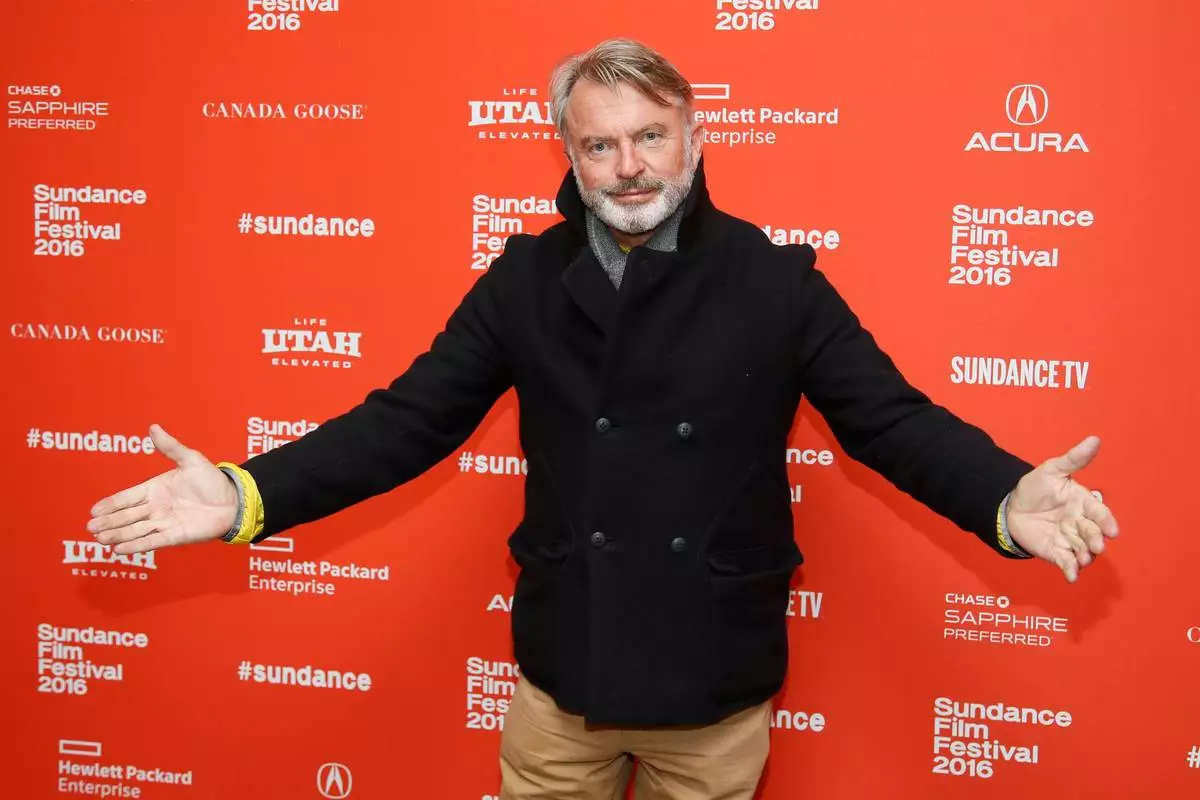
FILE - Actor Sam Neill poses at the premiere of "Hunt for the Wilderpeople" during the 2016 Sundance Film Festival on Jan. 22, 2016, in Park City, Utah. (Photo by Danny Moloshok/Invision/AP, File)
FILE - Actor Sam Neill poses at the premiere of "Hunt for the Wilderpeople" during the 2016 Sundance Film Festival on Jan. 22, 2016, in Park City, Utah. (Photo by Danny Moloshok/Invision/AP, File)

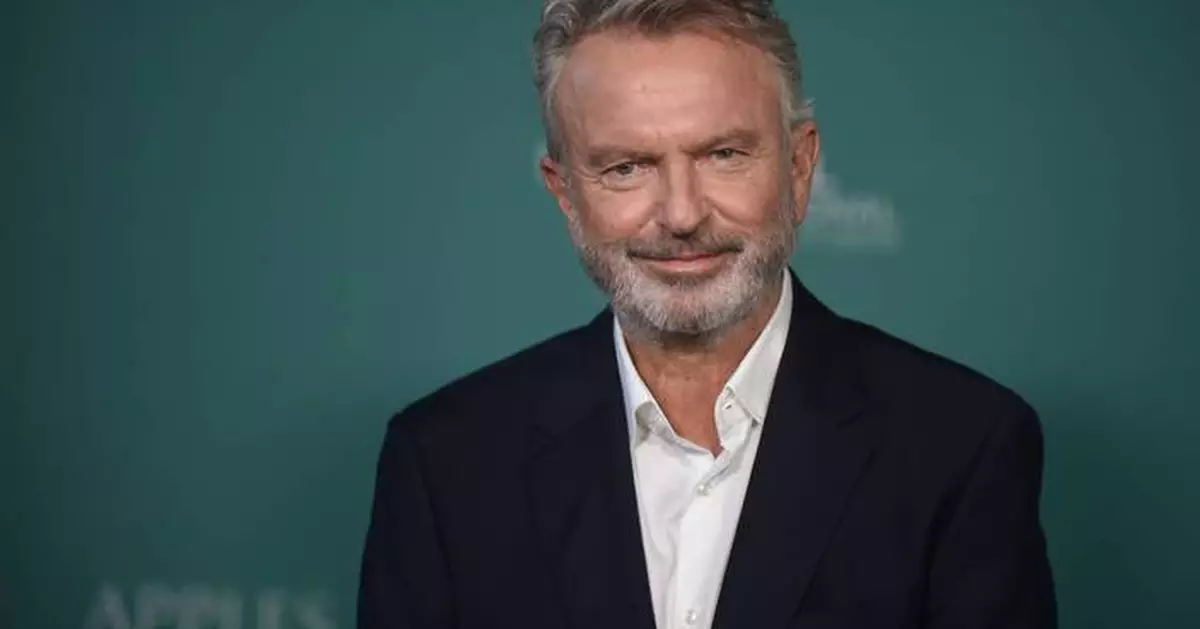
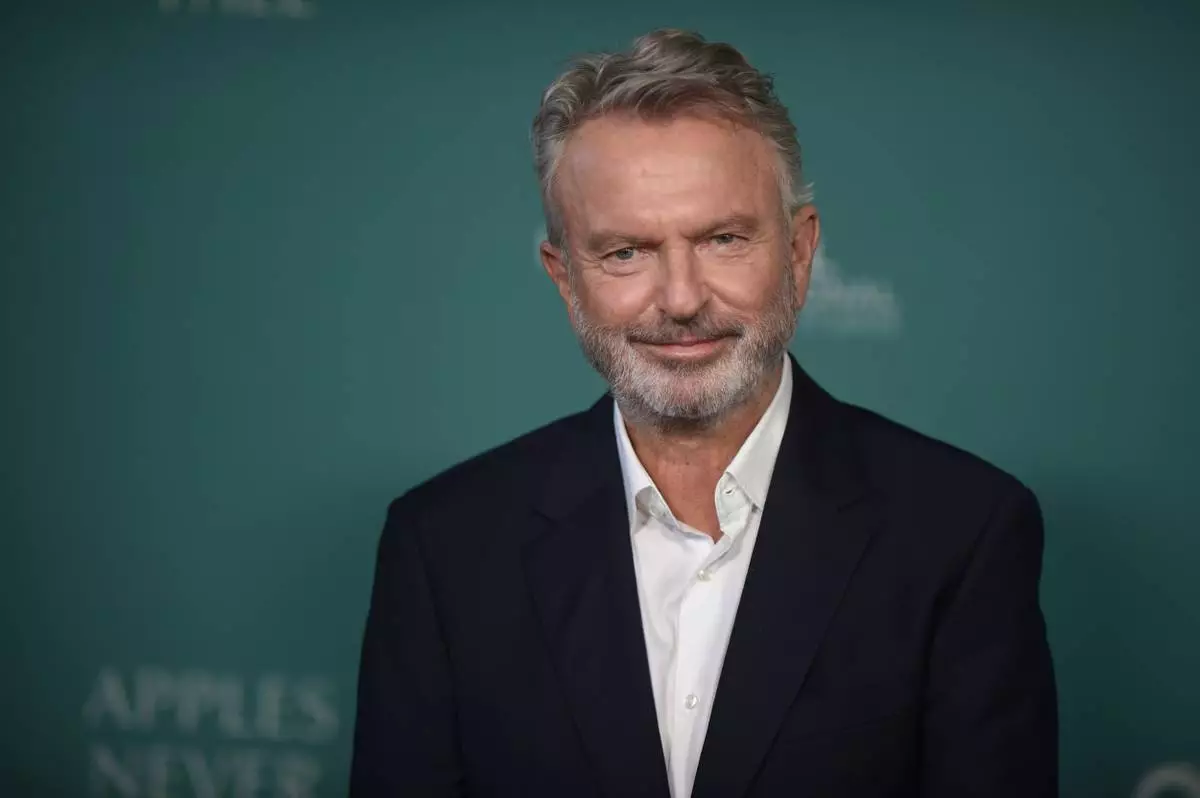
FILE - Sam Neill arrives at the premiere of "Apples Never Fall" on March 12, 2024, in Los Angeles. (Photo by Richard Shotwell/Invision/AP, File)

FILE - Sam Neill arrives at the premiere of "Apples Never Fall" on March 12, 2024, in Los Angeles. (Photo by Richard Shotwell/Invision/AP, File)
DUBAI, United Arab Emirates (AP) — The United States and Iran each asserted Monday they controlled the Strait of Hormuz after a weekend of attacks stretching across the wider Middle East, further threatening any diplomacy to end the war.

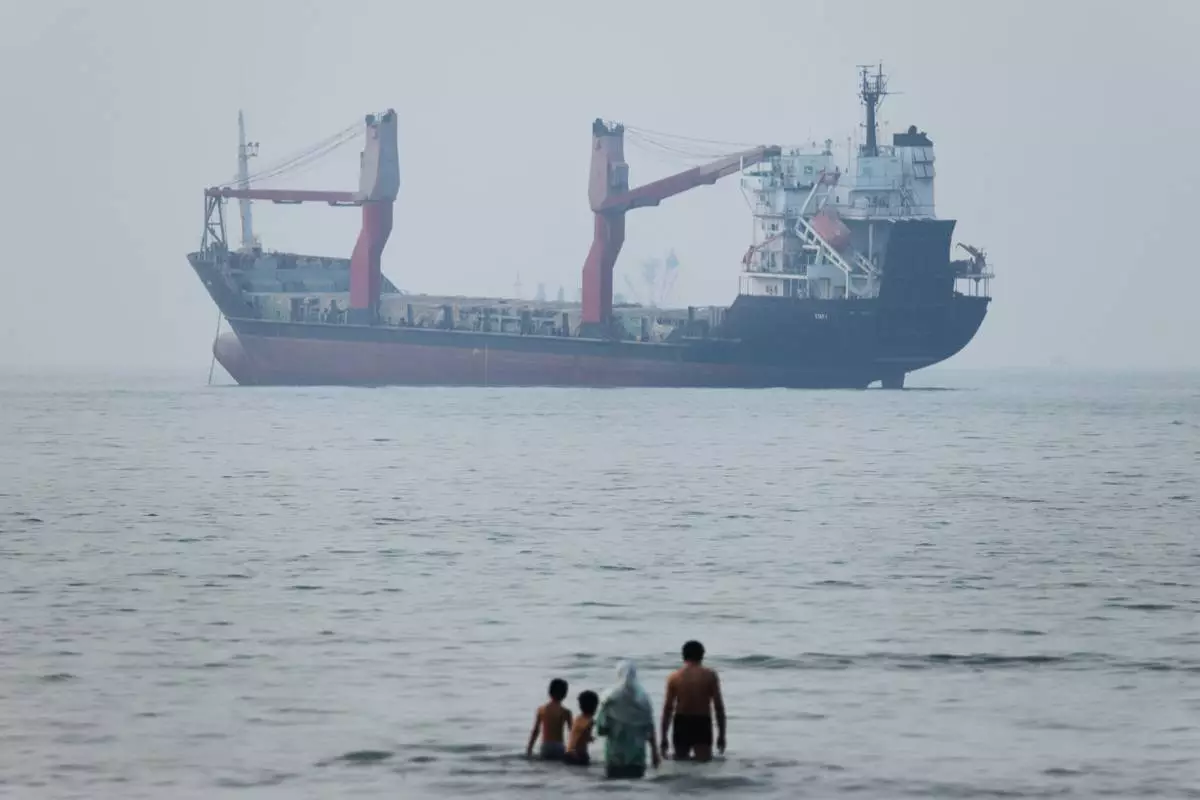
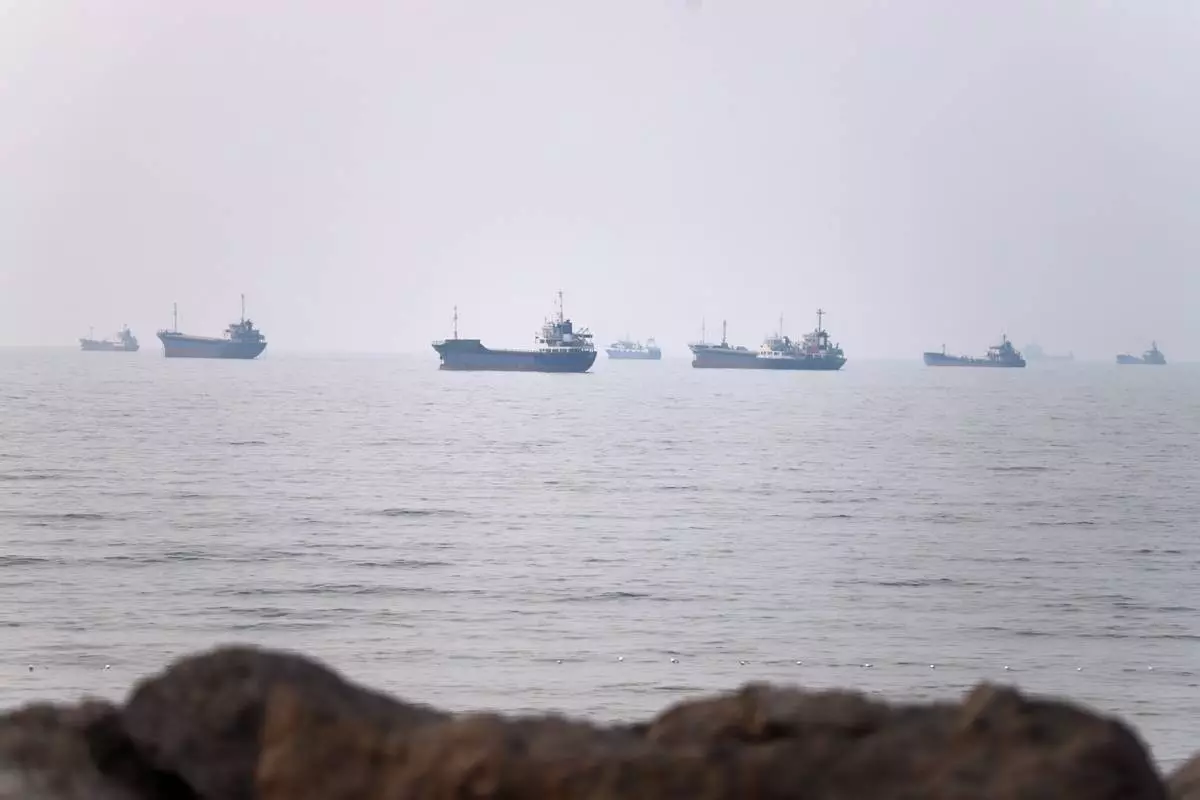
The attacks, sparked by Iran striking a container ship Sunday in the strait off the coast of Oman, again underlined that the waterway that once saw a fifth of the world's traded crude oil and natural gas pass through it remained the key issue in negotiations. The narrow mouth of the Persian Gulf has seen shipping disrupted since the start of the war as Iran maintained a chokehold on it by attacking commercial vessels around it, intimidating shippers.

Iran and the U.S. are nearly at the midway point of the 60-day period of an interim deal that was supposed to set up talks for a permanent end to the war. Instead, it has devolved into a series of attacks over the strait and its future, worrying world leaders the Iran war fully could resume.

“A return to full-scale hostilities would have catastrophic consequences,” United Nations Secretary-General António Guterres said in a statement.

The U.S. military’s Central Command described its forces as hitting dozens of sites in the strikes Monday, including air defense systems, radar sites, missile and drone equipment and small boats.

“The Strait of Hormuz is a vital maritime corridor for global trade,” Central Command said. “Iran does not control it.”

Iran's paramilitary Revolutionary Guard, a key power center in the country's theocracy that controls its ballistic missile arsenal, sharply rejected America's statement.

“The Strait of Hormuz is our territory, and we will not allow a rogue and child-killing army from the other side of the world to continue its illegal interference in it,” the Guard said.

Missile alert sirens sounded three times Monday in Bahrain, home to the U.S. Navy’s 5th Fleet, and Kuwait said it was intercepting hostile fire. There was no immediate word on damage in either country.

In Jordan, the kingdom's military said it shot down four Iranian missiles in an incident that "resulted in zero casualties or material damage.” Jordan also hosts U.S. military forces and aircraft.

In Iran, authorities reported attacks in Homozgan, Khuzestan and Markazi provinces and at least two people were killed, according to state-run IRNA news agency. Semiofficial Iranian media also reported strikes on Sistan and Baluchestan province as well.

Iranian attacks on Sunday stretched Bahrain, Kuwait, Qatar, Jordan and even Oman — whose territorial waters with Iran make up the strait. Oman, which long has been an interlocutor between Tehran and the West, summoned an Iranian diplomat to criticize the attack.

Meanwhile Monday, a base belonging to the armed wing of the Kurdistan Freedom Party, an Iranian Kurdish opposition group based in Iraq’s semiautonomous northern Kurdistan region, came under drone attack. Rebaz Sharifi, commander of the Kurdistan Militia Corps, said the strikes targeted the group’s Chamshar base, without giving details on casualties or damage. No group immediately claimed responsibility.

The U.S. military early Sunday said it hit some 140 targets, including missile and drone launch sites, ammunition dumps, communication equipment and other sites — a far-heavier set of attacks than in two previous rounds of strikes in the last week.

“We bombed the hell out of them last night,” U.S. President Donald Trump told NBC’s “Meet the Press.”

Iran retaliated by attacking nations in the region hosting U.S. military forces, while insisting it alone must control the strait and potentially charge vessels for traveling through it.

“The era of one-sided deals is OVER,” Mohammad Bagher Qalibaf, the speaker of Iran’s Parliament and a main negotiator, wrote. “We told you: keep your word or pay the price. Reality is knocking.”

Iran described the strait as being closed, while the U.S. military and Trump asserted that the strait remained open.

Iran’s chokehold on the strait, however, has loosened as the U.S. military provided support to vessels moving along a southern route hugging the coastline of Oman. That new route has angered Iran, which launched repeated attacks on ships using it.

Iran’s grip on the strait led to a global energy crisis, though oil prices have sharply dropped since wartime highs of $120 a barrel.

Trump suggested last week that the interim deal in the war was “over.” But mediators, including Pakistan, Qatar and Egypt, have continued efforts to reach a final agreement to end the war.

A regional official involved in mediation, speaking on condition of anonymity to discuss talks, said efforts to shore up the ceasefire continued Sunday. Pakistan said its foreign minister spoke by phone with Iran’s top diplomat and urged “de-escalation” on both sides.

Iran’s new supreme leader, Ayatollah Mojtaba Khamenei, unseen since the war began, on Saturday vowed in his first statement since the funeral of his father, Ayatollah Ali Khamenei, that Iranians would avenge his killing.

Associated Press writers Munir Ahmed in Islamabad and Stella Martany in Irbil, Iraq, contributed to this report.

A group of people stands in shallow water as a cargo ship appears anchored in the Strait of Hormuz off Bandar Abbas, Iran, Tuesday, June 30, 2026. (Amirhosein Khorgooi/ISNA via AP)

A group of people stands in shallow water as a cargo ship appears anchored in the Strait of Hormuz off Bandar Abbas, Iran, Tuesday, June 30, 2026. (Amirhosein Khorgooi/ISNA via AP)

Commercial vessels are seen in the Strait of Hormuz off Bandar Abbas, Iran, Tuesday, June 30, 2026. (Amirhosein Khorgooi/ISNA via AP)

Commercial vessels are seen in the Strait of Hormuz off Bandar Abbas, Iran, Tuesday, June 30, 2026. (Amirhosein Khorgooi/ISNA via AP)

Recommended Articles