Peyvand Naimi has spent more than six months in an Iranian prison, accused of killing state security agents during nationwide protests, although his family says no formal charges or evidence have been presented. “The Baha'is will not be released,” the family says it was told by the prosecutor.
Ever since the Baha’i faith was founded in Persia — now Iran — in the 19th century, its followers there have been persecuted, usually more harshly during times of crisis.
This year, amid massive anti-government protests and war with the United States and Israel, the Islamic Republic has mounted a fierce crackdown on the country’s largest non-Muslim religious minority, human rights groups say.
Since January, dozens of Baha’is have been imprisoned because of their faith, human rights groups say. Holy books and religious symbols have been desecrated during raids of Baha'i family homes — which these groups say is evidence of authorities' sectarian motivations. Those detained have faced mistreatment ranging from electric shocks to mock hangings, and some have made forced confessions to crimes punishable by death, rights groups say.
The Islamic Republic's intensified campaign against Baha'is is part of a wider crackdown across Iran. Nationwide protests that began in late December prompted the deadliest backlash by Iranian security forces since the Islamic Republic took power in 1979, with thousands killed and tens of thousands reportedly arrested.
Iran’s Foreign Ministry and its spokesperson at the United Nations didn’t respond to multiple requests to discuss the treatment of Baha’is.
The targeting of Baha’is, who make up less than 1% of Iran's population, is hardly discreet: The authoritarian government often uses state TV and social media to accuse followers of being spies and blame them for the country's economic woes.
“Every time there is a crisis — social, economic, or political — shift the blame to the Baha'is,” said Simin Fahandej, who represents the international community of Baha'is at the United Nations. “And this (year's) protest and the war have also been no different.”
While Baha’is often practice their religion in secret, the Iranian public is encouraged to report on neighbors if they are known or suspected followers of the faith, which is considered immoral by the country's ruling clerics.
“Much of this portrayal stems from theological hostility," said Omid Ghaemmaghami, an associate professor of Middle East Studies at the State University of New York at Binghamton. He and other experts said the scapegoating of Baha'is also serves to instill fear and obedience among other Iranians.
Naimi was arrested at work on the afternoon of Jan. 8 by agents from Iran’s intelligence ministry, according to his family, which insists he did not participate in anti-government protests. Amnesty International says the alleged killings of three Basij agents during Jan. 8 protests in Kerman took place after he was arrested. The government has not publicized any details about the alleged killings.
On Feb. 1, Iranian state TV broadcast a clip of him admitting to taking part in the protests, though his family says the confession was made under duress.
Authorities also accused Naimi of “celebrating” from prison the killing of Supreme Leader Ayatollah Ali Khamenei during the opening salvos of the Iran war, according to the Baha’i International Community. The group said Naimi at the time had no access to communications and “no knowledge” of Khamenei's death.
Naimi told his family over the phone that he was held in solitary confinement in Kerman Central Prison for over two months, according to Fahandej.
Naimi's cousin Emilia Nazari said a judge ordered Naimi's release on March 7, but that he remained behind bars. Soon after, family members visited the prosecutor’s office every day for more than a week to demand his release. That is when the family says the prosecutor told them it would never happen — and referred to Naimi only by his religion.
When his parents visited him in late March, he told them he had been subjected to 10 days of harsh treatment that included denial of food, Nazari said. In mid-May, his family learned that he was transferred out of solitary and into a cell among the general population at the Kerman prison, Nazari said.
The Baha’i faith was founded in the 1860s by a Persian nobleman named Baha’u’llah, who was considered a prophet by his followers. He taught that all religions represent progressive stages in the revelation of God’s will, leading to the unity of all people and faiths.
There are more than 5 million Baha'is across the world, according to Harvard University's The Pluralism Project. Most live in Asia, with the largest community in India.
Baha’is also face persecution in Egypt, Qatar and Yemen. But the mistreatment is greatest in Iran, where Shiite Muslim clerics have regarded the faith as heretical since its earliest days.
After the 1979 Islamic Revolution, many Baha'is fled Iran in the face of arrests, executions, property seizures, and restrictions on education and employment. Some stayed, while others have returned in the ensuing decades. An estimated 300,000 Baha'is live in Iran, whose population exceeds 90 million.
Many Baha’is feel a sense of purpose by remaining in Iran, said Sheyda Kamran, a professor at the Baha’i Institute for Higher Education. Despite living in fear, her students often ask how they can help Iranians grieving losses from protests and war. “They have a goal,” she said. “That is the only way they can survive.”
The crackdown against Baha'is — and all Iranians — intensified after the U.S. and Israel launched the war in late February.
The Baha'i International Community says at least 63 Baha'is were detained in Iranian prisons as of June 11, though it says the figure is likely an undercount because some families fear speaking out.
Most detainees are being held without known charges, while others face accusations of “propaganda against the regime” and acts deemed “contrary to Islamic law,” the Human Rights Activists News Agency said on X.
Some Iranian television outlets and social media accounts have amplified anti-Baha’i rhetoric in recent months, accusing followers of the faith of collaborating with Israel to undermine the Islamic Republic.
In May, in the northern Mazandaran province, an exhibition open to the public portrayed Baha’is as enemies of the state, according to IRNA, the Iranian state-run news agency. A representative for Iran’s supreme leader who attended the exhibition, Mohammad Baqer Mohammadi Laini, said Baha'is are “spies” and should be banned from owning property, according to the semiofficial news agency Tasnim.
The highly publicized harassment of Baha’is suggests the real purpose is to instill fear among all Iranians, said Mahmood Amiry-Moghaddam, founder of Iran Human Rights, an Oslo-based organization.
"I think it’s part of the general intensification of the repression in Iran,” he said.
In April, Behzad Basiri was arrested by Revolutionary Guard agents at his house in Shiraz — without any charges, according to his family, which said Baha'i holy books were torn up during the raid. His wife Mandana Sotoudeh was arrested the same day at her parents' house and her sister Mahsa Sotoudeh had been detained three days earlier.
Basiri was released on bail on May 6; his wife and sister-in-law were released on bail on July 1, according to their family.
Basiri's sister, Roya, who lives in Canada, said some of her family members chose to stay in Iran out of love for the country and hope for a better future.
"They’re paying the heavy price for that choice,” she said.

FILE - The Baha'i temple in the northern Israeli city of Haifa, Feb. 17, 2016. (AP Photo/Sebastian Scheiner, File)
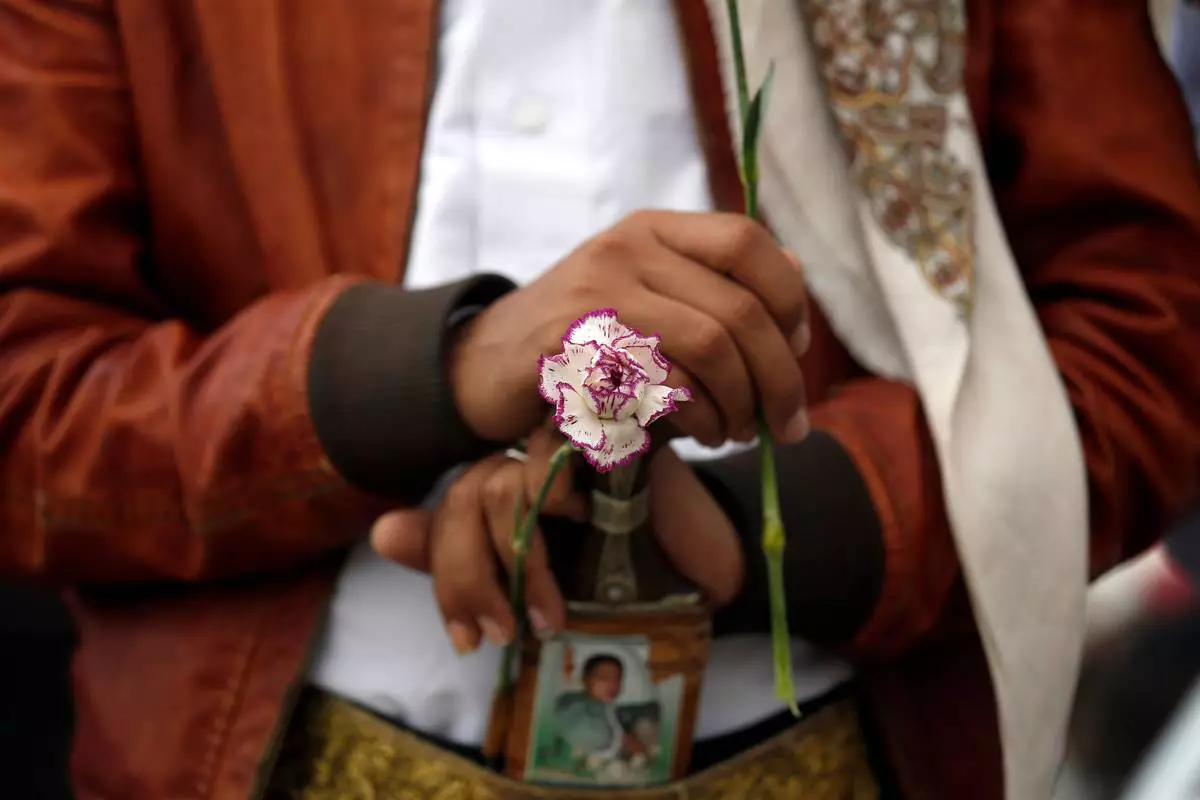
FILE - A member of the Baha'i faith holds a flower as he protests outside a state security court during a hearing in the case of a fellow Baha'i man charged with seeking to establish a base for the community in Yemen, in Sanaa, Yemen, Sunday, April 3, 2016. (AP Photo/Hani Mohammed, File)

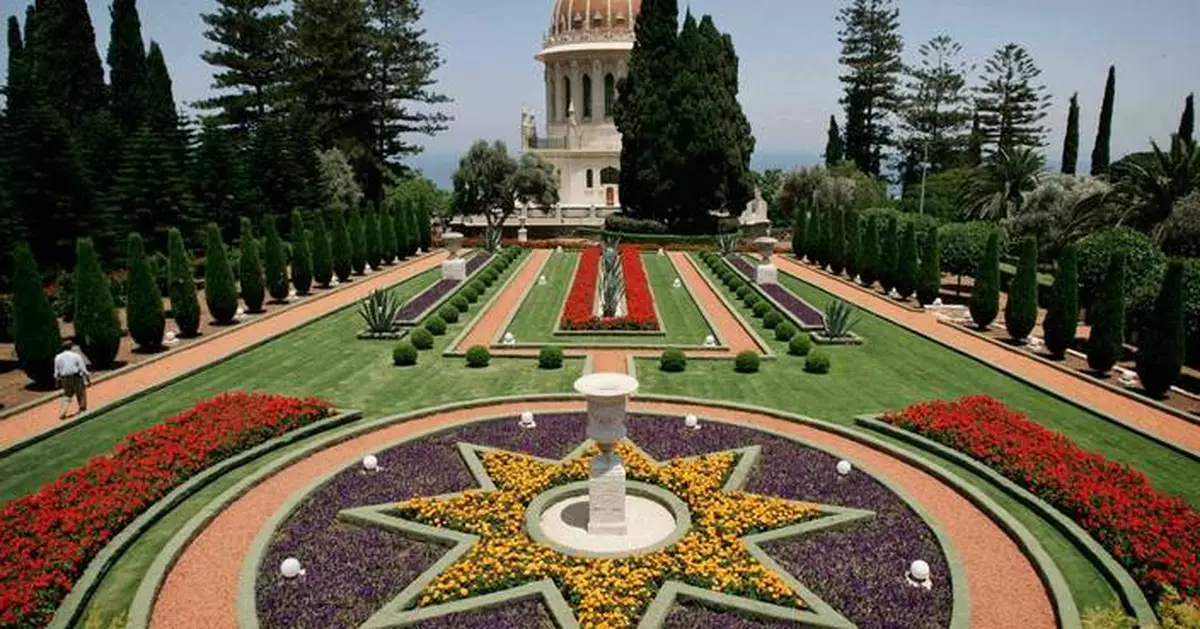
FILE - A Baha'i worshiper walks in the gardens of The Baha'i temple in the northern Israeli city of Haifa, July 14, 2008. (AP Photo/Sebastian Scheiner, File)