MIAMI (AP) — The last prisoner strapped to a table in Florida’s death chamber was 74 years old — the oldest the state has executed in modern times. The next two set to die are older still.
The series of executions, due to be carried out by the end of this month, highlights the nation’s aging death-row population. One of Florida's prisoners scheduled to die in July, a man convicted of killing his ex-girlfriend's parents in 1986, is 80 years old and would be only the second known octogenarian to be executed in the U.S.
For some, it renews questions about the humanity of administering capital punishment to inmates who might soon die from natural causes. For others, it illustrates how lengthy appeals designed to ensure constitutional protections and prevent innocent people from being executed can also delay justice.
“Is this intentional, as though to say, we’re not going to let a natural death help you escape executions?” asked the Rev. Dustin Feddon, a Catholic priest who has been ministering to Florida death row inmates since 2013. Noting the church's opposition to capital punishment, he added: "To execute those that are the most frail and elderly is even more cruel and unusual.”
Marilyn Gifford, whose sister's killer is set to die Tuesday, doesn't see it that way.
“I’m just happy it’s ever happening in our lifetime,” she said. “I wish my mother was alive to see it.”
On June 25, Dusty Ray Spencer, who was convicted of fatally stabbing his wife in 1992, became the oldest person executed in Florida in modern history. The U.S. Supreme Court rejected the 74-year-old's appeal that his liver disease rendered him susceptible to excruciating pain from lethal injection.
Dennis Sochor, convicted of killing 18-year-old Patricia Gifford just hours into 1982 after meeting her at a New Year’s Eve party, would be just a week older if his execution is carried out on Tuesday. Marilyn Gifford said she and her family plan to be there.
Dominick Anthony Occhicone, 80, has spent nearly four decades on death row after being sentenced in the murders of his ex-girlfriend's parents. He is scheduled to die July 28 and would become the second oldest prisoner known to be put to death in the U.S., after 83-year-old Walter Moody Jr. Moody was executed in Alabama in 2018 for killing a federal judge and a Black civil rights attorney.
There are three inmates older than Occhicone on Florida’s death row.
It's unclear why Florida set the executions for the three prisoners consecutively. Maria DeLiberato, legal director of Floridians for Alternatives to the Death Penalty, noted that in Florida, the governor has practically sole discretion when it comes to the scheduling of executions. In many other death penalty states, the scheduling is up to the courts.
About half of Florida’s 242 death row inmates have exhausted their appeals and could see their death warrant issued at any time. The family of Michael Sheridan spent a year calling and writing to Republican Gov. Ron DeSantis, requesting he sign a death warrant, before Sheridan's killer was executed earlier this year.
DeSantis' office did not respond to an Associated Press request for comment. He oversaw a record 19 executions in 2025, more in a single year than any other Florida governor since the death penalty was reinstated in 1976. The state has executed nine inmates so far this year.
DeSantis said last year his goal is to bring justice to victims’ families who have waited for decades.
“Some of these crimes were committed in the ’80s,” the governor said last year. “Justice delayed is justice denied."
The average age of inmates executed in the U.S. has crept up from the 30s to the 50s over the past half-century, according to the Death Penalty Information Center. While some inmates committed capital offenses later in life, lengthy appeals and mandatory reviews have resulted in many spending decades on death row, sometimes developing medical conditions that can complicate efforts to execute them.
Occhicone has several age-related ailments, including kidney and prostate problems, according to his attorneys. He needs help getting in and out of the shower, they noted.
Under Supreme Court precedent, those who were under 18 when they committed their crimes cannot be put to death. But advanced age alone doesn't provide a legal case for avoiding execution, said Gerod Hooper, an attorney with Florida’s Capital Collateral Regional Counsel, a state agency that provides post-conviction legal representation.
“You’d have to say it’s unconstitutional to execute this 80-year-old because he’s mentally deficient, he doesn’t have capacity to be executed," Hooper said. "Or because of some underlying medical condition, the drug cocktail they inject would cause undue pain and suffering.”
Death row inmates with dementia in Utah and Alabama have avoided execution and later died of apparent natural causes. An inmate in Idaho received at least one stay of execution because of cancer and other health problems, but state officials continue to push for his death.
At the time of Gifford’s disappearance, Sochor was free on probation from a 1980 rape conviction.
“I knew him as a child, and he was a bully,” said Frank Frandel, who grew up as a family friend in Portland, Michigan. “I could believe he could be violent like that.”
Frandel offered no sympathy for Sochor's advanced age, pointing out that Sochor’s father will turn 99 this year.
“He could live another 20 years,” Frandel said. “So no, I don’t feel sorry for him being at that age.”
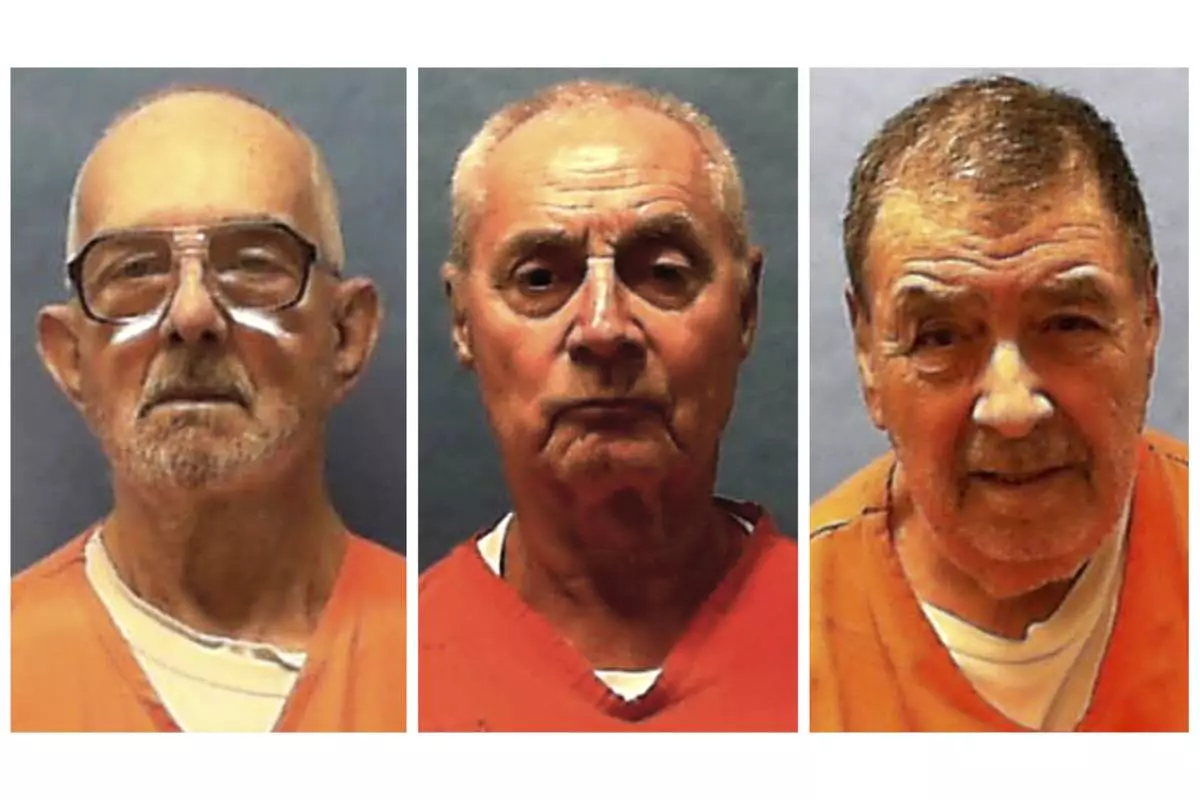
This combination of undated booking photos provided by the Florida Department of Corrections in July 2026 shows, from left, Dusty Ray Spencer, Dennis Sochor and Dominick Occhicone. (Florida Department of Corrections via AP)
DUBAI, United Arab Emirates (AP) — Sheikh Hamad bin Khalifa Al Thani, who as ruler of Qatar transformed the tiny Persian Gulf nation into a global player in diplomacy, media and investment, and then shattered tradition by voluntarily turning over power to his son, has died, state media reported. He was 74.
The state-run Qatar News Agency reported his death. It offered no cause.
Sheikh Hamad, who stepped down in June 2013 after 18 years as emir, was the architect of energy-rich Qatar’s stunning ambitions that turned it from a backwater into an international crossroads in less than a generation. Qatar owns the Harrod’s department store in London and founded the powerful Al Jazeera satellite news network.
Qatar’s political reach today stretches from North Africa to Afghanistan and it hosted the 2022 FIFA World Cup, the world’s most-watched soccer event. Sheikh Hamad, though long out of power, received thunderous applause from Qataris attending its opening match.
But Qatar’s rise under Sheikh Hamad also rankled regional and Western allies with its independent-minded policymaking, including its close ties to Shiite powerhouse Iran, the Palestinian militant Hamas group and Egypt’s outlawed Muslim Brotherhood.
Al Jazeera’s blunt reporting, though a much-praised departure from the traditionally deferential habits of Arab media, also was criticized and accused of slanting coverage to suit the views of Qatar’s rulers.
“The future lies ahead of you, the children of this homeland, as you usher into a new era where young leadership hoists the banner,” Sheikh Hamad said as he announced his abdication and the carefully crafted transition to his son, the British-educated crown prince Sheikh Tamim bin Hamad Al Thani, who was then 33.
The peaceful, voluntary transfer of power was rare in a region where such change usually results from death or overthrow. Sheikh Hamad himself seized control after deposing his father, Sheikh Khalifa, in a bloodless palace coup in 1995.
His abdication was seen as Qatar’s attempt to stay ahead of Arab Spring-inspired calls for reforms and leadership more attuned to the region’s large and powerful young population. Qatar, a peninsula half the size of New Jersey, is believed to have around 300,000 citizens.
At the time, Sheikh Hamad also was thought to have been in poor health for years. In December 2015, Qatari officials said he was flown to Switzerland for surgery after breaking a leg while on holiday.
Sheikh Hamad attended Britain’s military academy, Sandhurst, and became commander of Qatar’s armed forces and defense minister. He was named crown prince in the late 1970s and gradually broadened his duties to include planning for Qatar’s vast oil and gas reserves.
After seizing power from his father, who then lived in exile for nearly a decade, Sheikh Hamad quickly moved to open an inward-looking nation to outside influences, epitomized by Al Jazeera, which became a major force in global media.
Its reporting not only angered other Arab leaders, sometimes to the point of diplomatic rupture, it also riled Washington. Al Jazeera aired statements from the terror network al-Qaida, even as Qatar hosted one of the key Pentagon logistical hubs following the Sept. 11, 2001, attacks and the U.S.-led invasions of Afghanistan and Iraq.
Sheikh Hamad, meanwhile, aggressively sought international prestige through sports, an effort crowned by Qatar’s successful bid to host the World Cup, though marred by accusations that it used its huge wealth to woo poor countries’ support.
Qatar’s brand is also prominent across the sporting world from sponsorship deals with the Spanish football giant Barcelona to a majority stake in the football club Paris Saint-Germain.
Sheikh Hamad also pushed Qatar Airways to expand into a major international carrier, trying to rival neighboring carrier Emirates. The country’s international airport in Doha, Qatar’s capital, which cost at least $15 billion to construct, also bears his name.
Sheikh Hamad had wide-ranging visions for Qatar’s role as a diplomatic broker. Over the years, its mediation was brought to bear on the conflict in Sudan’s western Darfur region, Lebanese factional feuding and the rift between the Palestinians’ Hamas and Fatah factions.
In October 2012, Sheikh Hamad became the first head of state to visit the Gaza Strip since Hamas seized control five years previously, promising a total of $400 million in projects and investments. During the visit, Gaza radio stations played a song entitled “Thank you, Qatar.”
Qatar also reached out to Hamas’ main foe, Israel. Sheikh Hamad met in 2007 with Israel’s then-foreign minister, Tzipi Livni, at the United Nations General Assembly. Qatar allowed an Israeli trade office to operate in Doha until it was ordered closed in response to Israel’s attacks on Gaza in late 2008.
While neighboring Bahrain and the United Arab Emirates diplomatically recognized Israel in 2020, Qatar maintained its distance. Israelis at the World Cup also faced a multitude of Palestinian flags and anger over its occupation of lands Palestinians claim for their future state.
During the Arab Spring, Qatar sent warplanes to the NATO-led missions in Libya against Moammar Gadhafi’s forces and provided key military and financial aid to the successful Libyan rebels. In Syria, Qatar was a main political sponsor of the opposition to then-President Bashar Assad and led calls to increase the flow of weapons to the Syrian rebels.
However, its backing of Islamists like the Muslim Brotherhood has caused rifts with other nations in the region. Those tensions culminated under Sheikh Tamim, when Bahrain, Egypt, Saudi Arabia and the UAE launched a yearslong boycott of Qatar, in part over the policies of his father that continued during his rule.
In one of the last initiatives before Sheikh Hamad’s abdication, Qatar formally opened an office for Afghanistan’s Taliban, which set the stage for talks between the United States and the Taliban that ultimately led to NATO and America’s chaotic withdrawal from Afghanistan in 2021.
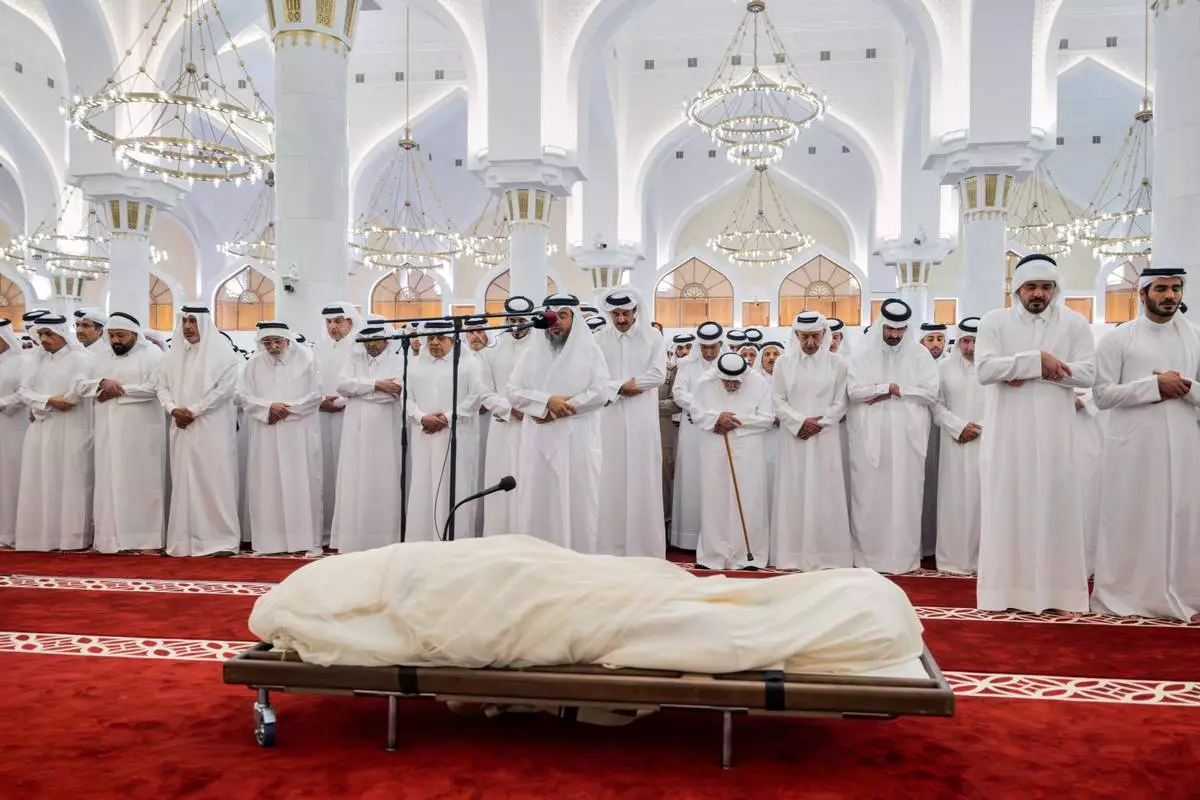
In this picture released by the Qatar Amiri Diwan media office, mourners pray over the body of Qatar's former ruler, Sheikh Hamad bin Khalifa Al Thani, at the Mohammed bin Abdulwahab Mosque in Doha, Qatar, Sunday, July 12, 2026. (Qatar Amiri Diwan via AP)
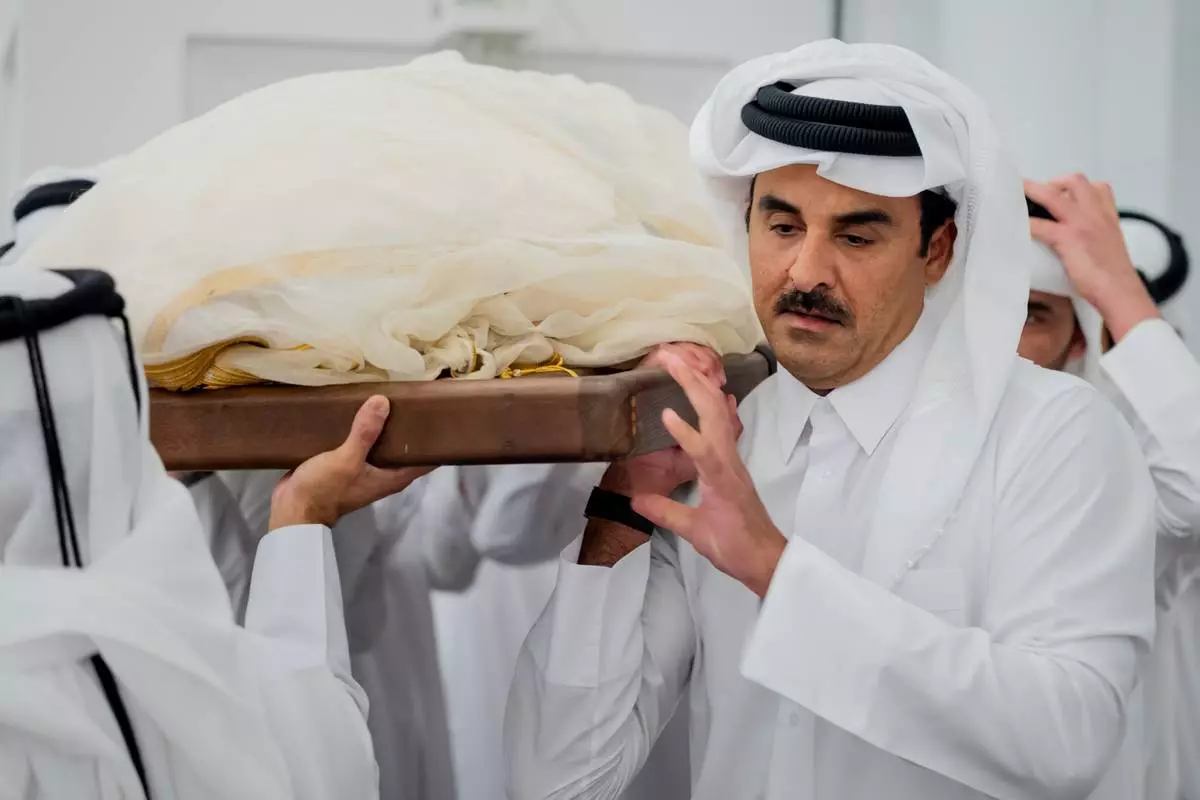
In this picture released by the Qatar Amiri Diwan media office, Qatari Emir Sheikh Tamim bin Hamad Al Thani helps carry the body of his father, Qatar's former ruler Sheikh Hamad bin Khalifa Al Thani, with other mourners for a funeral prayer at the Mohammed bin Abdulwahab Mosque in Doha, Qatar, Sunday, July 12, 2026. (Qatar Amiri Diwan via AP)
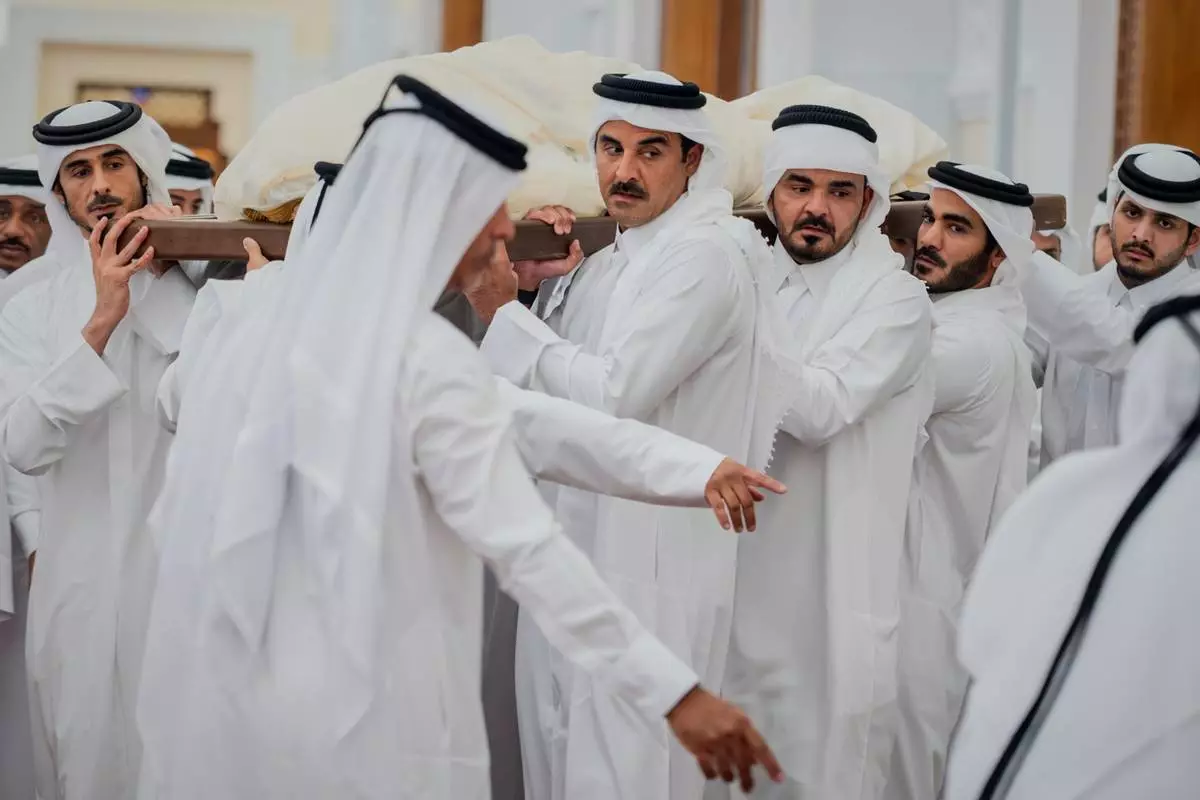
In this picture released by the Qatar Amiri Diwan media office, Qatari Emir Sheikh Tamim bin Hamad Al Thani helps carry the bier bearing the body of his father, Qatar's former ruler Sheikh Hamad bin Khalifa Al Thani, with other mourners for a funeral prayer at the Mohammed bin Abdulwahab Mosque in Doha, Qatar, Sunday, July 12, 2026. (Qatar Amiri Diwan via AP)
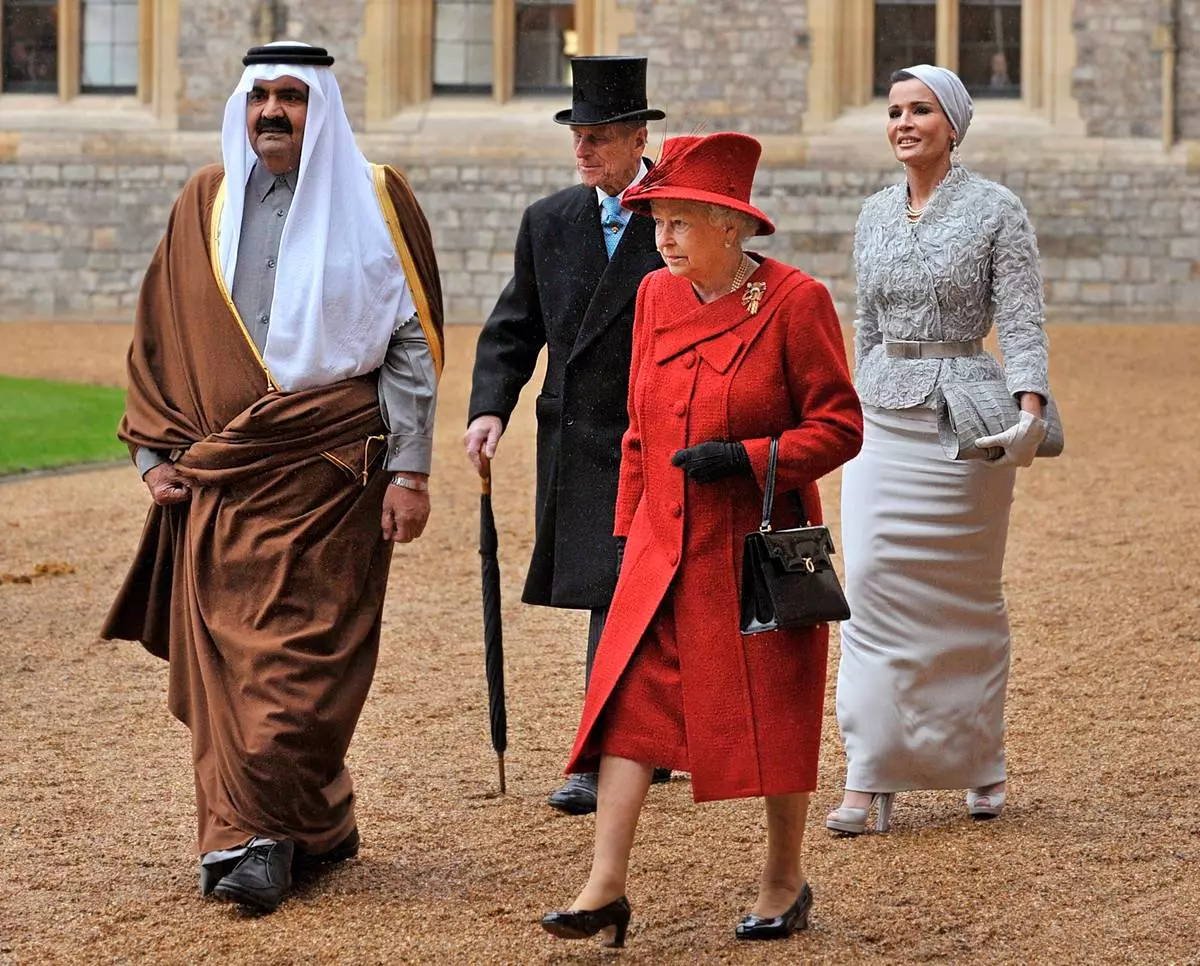
FILE - Emir of Qatar Sheikh Hamad bin Khalifa Al Thani, Britain's Prince Philip, Queen Elizabeth II and Sheika Mozah bint Nasser al-Missned walk during a welcoming ceremony at Windsor Castle, England, Oct. 26, 2010. (AP Photo/Stave Parsons, File)
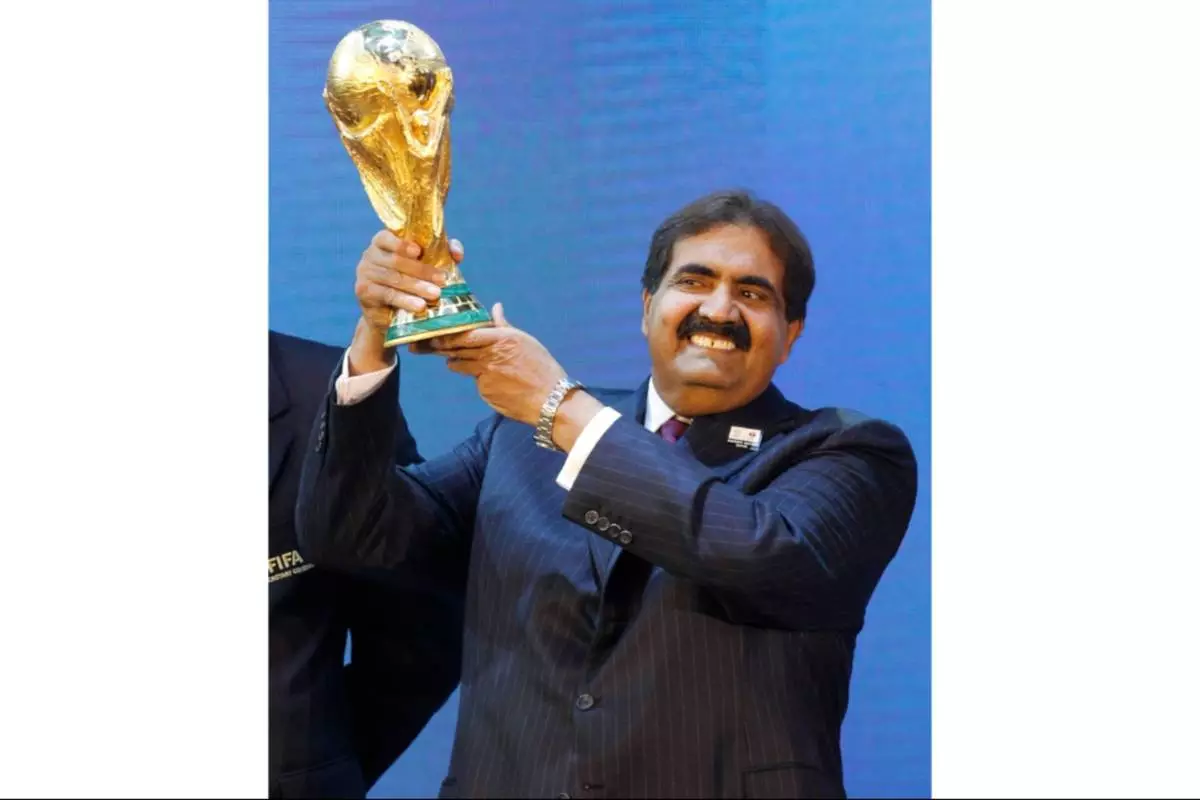
FILE - Sheikh Hamad bin Khalifa Al Thani, Emir of Qatar, holds the World Cup trophy after the announcement of Qatar hosting the 2022 soccer World Cup in Zurich, Switzerland, Dec. 2, 2010. (AP Photo/Anja Niedringhaus, File)
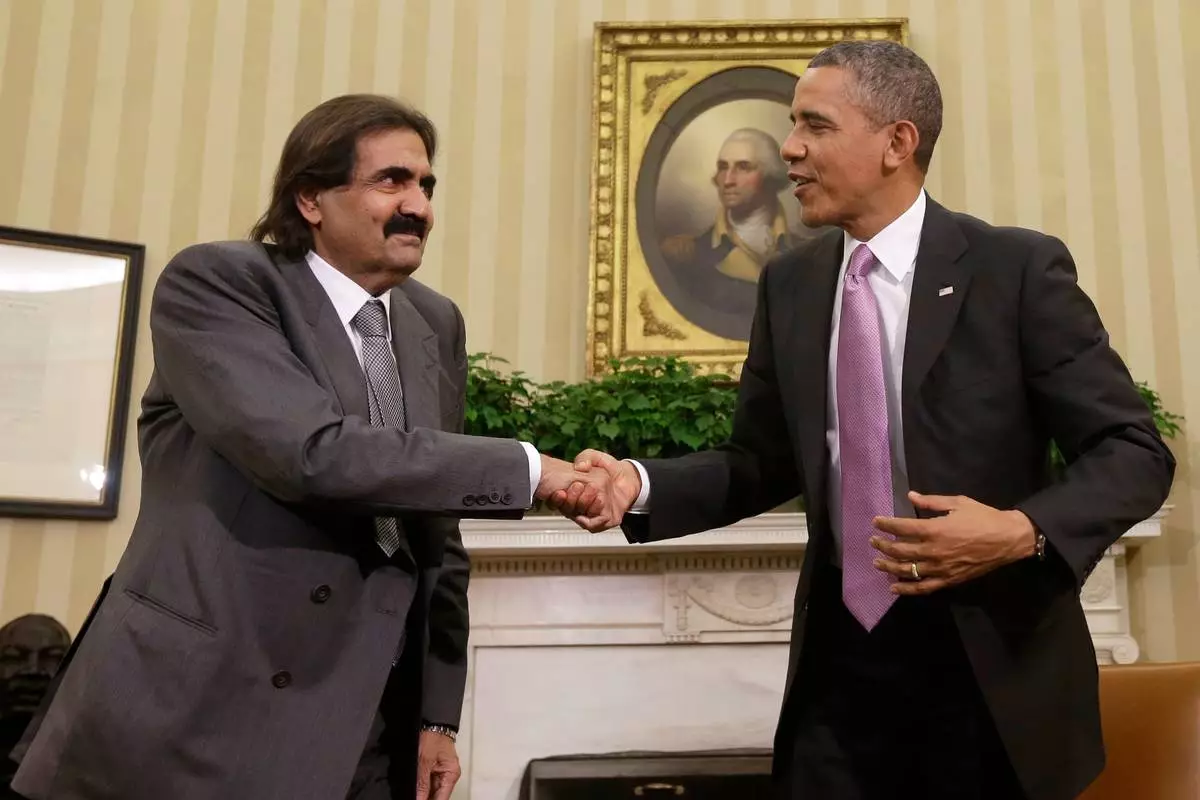
FILE - President Barack Obama shakes hands with Sheikh Hamad bin Khalifa Al Thani of Qatar during their meeting in the Oval Office of the White House in Washington, April 23, 2013. (AP Photo/Pablo Martinez Monsivais, File)
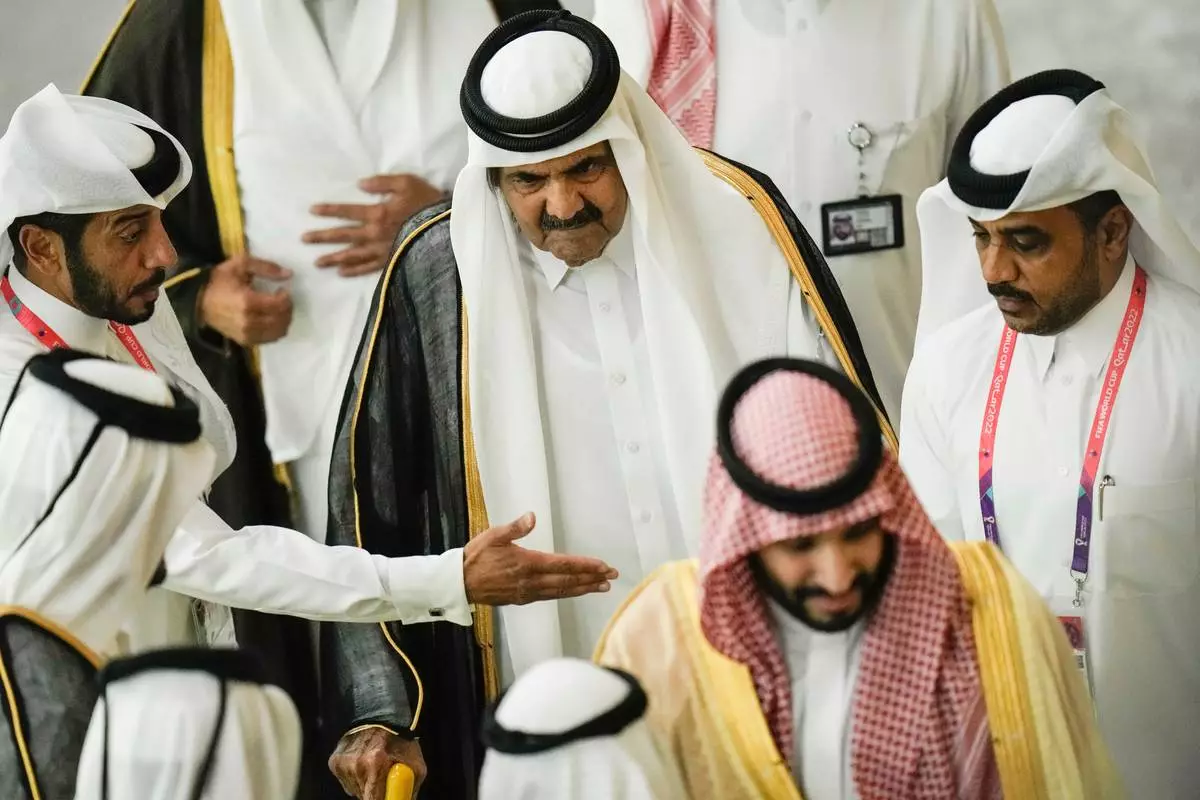
FILE - Former Emir of Qatar Sheikh Hamad bin Khalifa Al Thani, center, arrives before the start of the World Cup group A soccer match between Qatar and Ecuador at the Al Bayt Stadium in Al Khor, Qatar, Nov. 20, 2022. (AP Photo/Hassan Ammar, File)
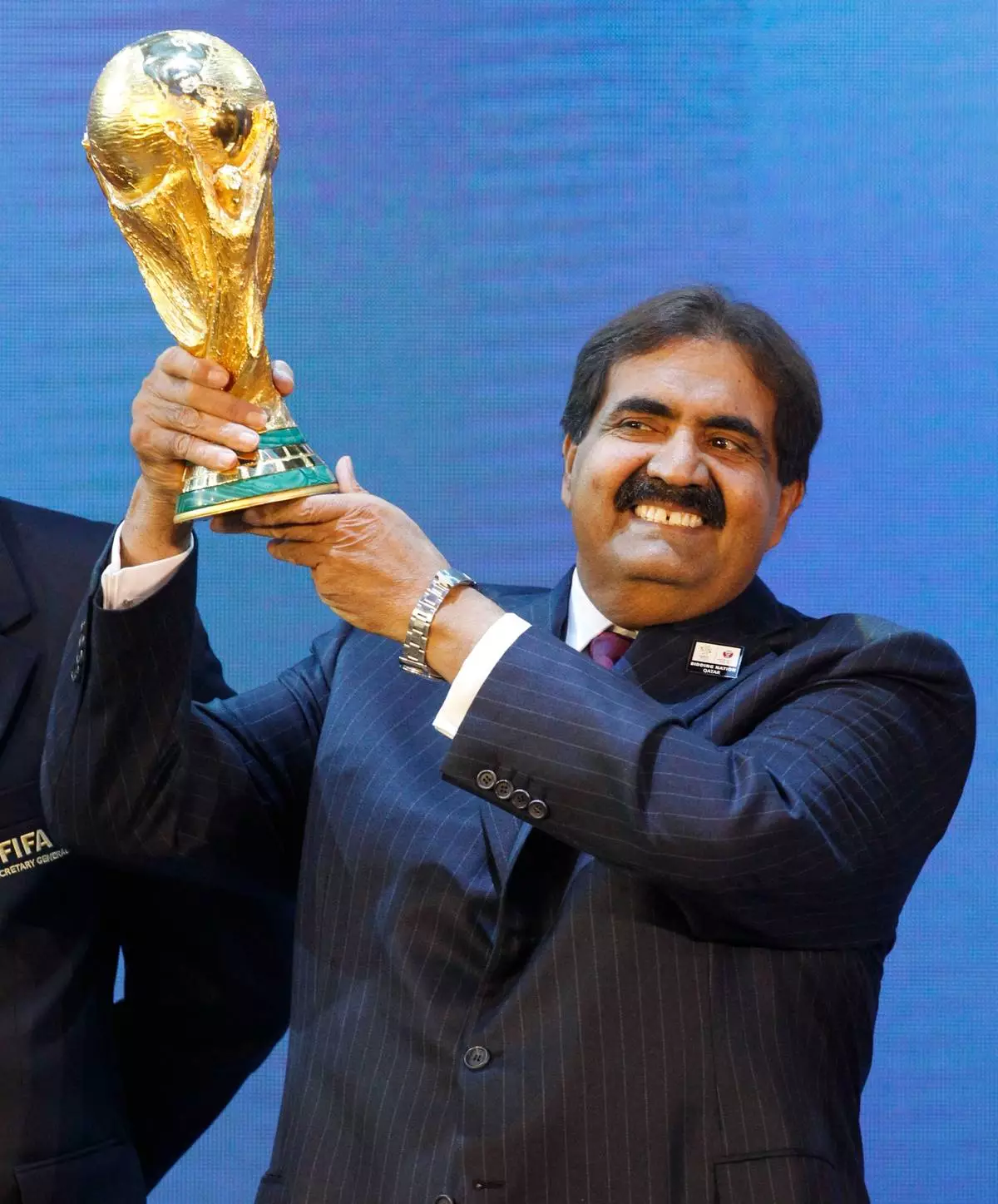
FILE - Sheikh Hamad bin Khalifa Al Thani, Emir of Qatar, holds the World Cup trophy after the announcement of Qatar hosting the 2022 soccer World Cup in Zurich, Switzerland, Dec. 2, 2010. (AP Photo/Anja Niedringhaus, File)