GRAND RAPIDS, Mich. (AP) — Outgoing Michigan Sen. Gary Peters is endorsing U.S. Rep. Haley Stevens as his successor, adding to a growing effort by the Democratic establishment to help her defeat progressive favorite Abdul El-Sayed in next month’s primary.
Peters, who is retiring after 12 years in the Senate, said Stevens “will be ready on day one to fight for Michigan.” The endorsement, which was announced Monday, marks a reversal for Peters, who told The Associated Press in late May that he intended to stay neutral in the race.
But since then, Democratic leaders have increasingly rallied behind Stevens as the Aug. 4 primary approaches and concerns grow that El-Sayed is too far left to succeed in November. Holding the Michigan seat is viewed as critical to Democrats’ hopes of reclaiming the Senate majority.
Stevens, a four-term House member, has campaigned as a more moderate Democrat focused on manufacturing issues in the critical battleground state. El-Sayed, who has never held elected office, is running on a more progressive platform that includes Medicare for All and campaign finance reform. He's also been outspoken about the war in Gaza, which has been a fault line within the party.
Concerns about Michigan have only intensified after Democrats’ attempt to flip a Senate seat in Maine was thrown into turmoil when nominee Graham Platner withdrew from the race following a sexual assault allegation last week. Democrats there must now choose a new nominee to face Republican Sen. Susan Collins.
Peters’ endorsement also comes after state Sen. Mallory McMorrow dropped out of Michigan’s Democratic primary earlier this month, transforming the race into a head-to-head contest between Stevens and El-Sayed.
“Senator Peters knows what it takes to win in Michigan, and he knows what Michigan needs from our next U.S. Senator: grit, effectiveness, hard work, and Michigan common sense,” Stevens said in a statement. “I am honored to have his support.”
Peters won two Senate races in Michigan and led Senate Democrats’ campaign arm during the 2022 and 2024 election cycles.
His endorsement adds to Stevens’ growing support from the Democratic establishment, with the race being viewed nationally as a broader fight over the party’s direction.
Senate Democratic leader Chuck Schumer of New York has also backed Stevens, along with Sen. Ruben Gallego of Arizona and Sen. Catherine Cortez Masto of Nevada. El-Sayed has support from Sen. Bernie Sanders of Vermont and, more recently, Sen. Chris Van Hollen of Maryland.
The campaign has grown increasingly contentious in recent weeks.
El-Sayed has attacked Stevens over tens of millions of dollars in outside spending supporting her campaign, including by the American Israel Public Affairs Committee. Stevens has criticized El-Sayed for not disclosing his personal financial records.
During a July 7 debate, each accused the other of running a negative campaign.
“Abdul has spent this entire campaign attacking me,” Stevens said.
The Democratic winner will likely face Republican Mike Rogers, a former member of the U.S. House running uncontested for his party's nomination, in what is expected to be one of the country’s most expensive and closely watched Senate races.
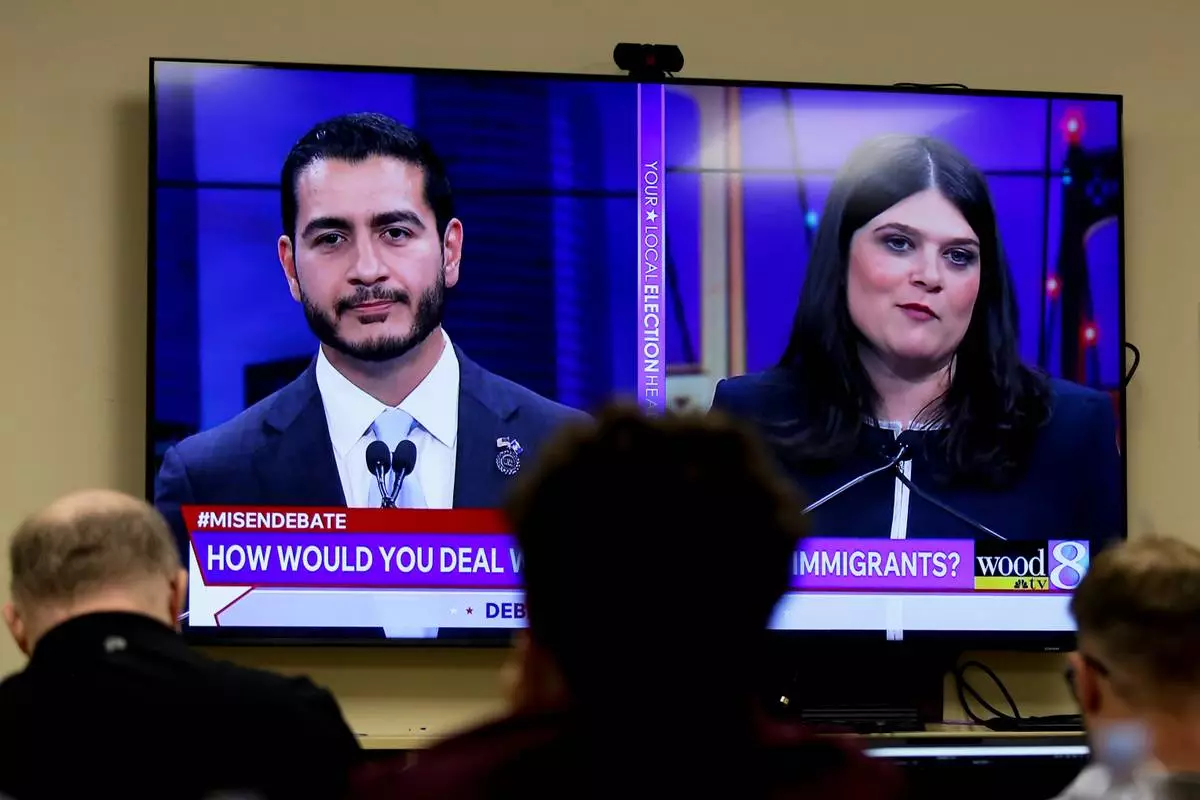
Michigan U.S. Senate candidates, Abdul El-Sayed, left, and Rep. Haley Stevens, D-Mich., are displayed on a television during a debate inside the spin room at WoodTV studios on Tuesday, July 7, 2026, in Grand Rapids, Mich. (AP Photo/Kristen Norman)

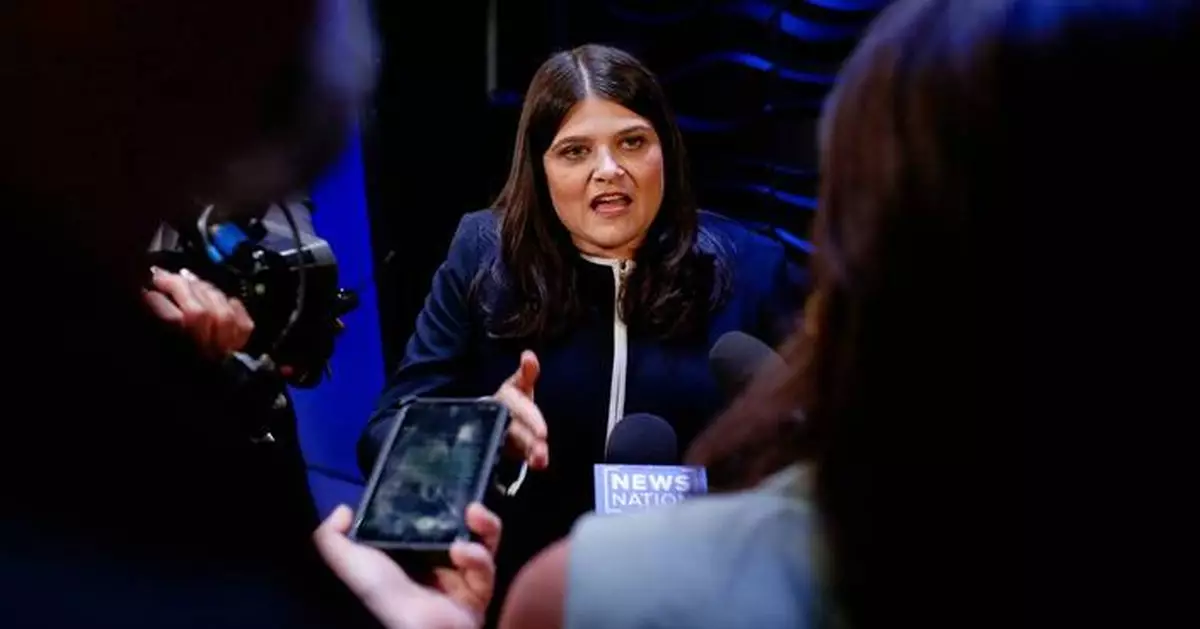
Michigan U.S. Sen. candidate, Rep. Haley Stevens, D-Mich., speaks with media after a debate at WoodTV studios on Tuesday, July 7, 2026, in Grand Rapids, Mich. (AP Photo/Kristen Norman)
DUBAI, United Arab Emirates (AP) — The United States and Iran each asserted Monday they controlled the Strait of Hormuz after a weekend of attacks stretching across the wider Middle East, further threatening any diplomacy to end the war.
The attacks, sparked by Iran striking a container ship Sunday in the strait off the coast of Oman, again underlined that the waterway that once saw a fifth of the world's traded crude oil and natural gas pass through it remained the key issue in negotiations. The narrow mouth of the Persian Gulf has seen shipping disrupted since the start of the war as Iran maintained a chokehold on it by attacking commercial vessels around it, intimidating shippers.
Iran and the U.S. are nearly at the midway point of the 60-day period of an interim deal that was supposed to set up talks for a permanent end to the war. Instead, it has devolved into a series of attacks over the strait and its future, worrying world leaders the Iran war fully could resume.
“A return to full-scale hostilities would have catastrophic consequences,” United Nations Secretary-General António Guterres said in a statement.
The U.S. military’s Central Command described its forces as hitting dozens of sites in the strikes Monday, including air defense systems, radar sites, missile and drone equipment and small boats.
“The Strait of Hormuz is a vital maritime corridor for global trade,” Central Command said. “Iran does not control it.”
The European Union’s top diplomat, Kaja Kallas, also called for the strait to be open as it was before the war.
“The Strait of Hormuz has to be opened, freedom of navigation has to be respected,” she said.
Iran's paramilitary Revolutionary Guard, a key power center in the country's theocracy that controls its ballistic missile arsenal, sharply rejected America's statement.
“The Strait of Hormuz is our territory, and we will not allow a rogue and child-killing army from the other side of the world to continue its illegal interference in it,” the Guard said.
Missile alert sirens sounded three times Monday in Bahrain, home to the U.S. Navy’s 5th Fleet, and Kuwait said it was intercepting hostile fire. There was no immediate word on damage in either country.
In Jordan, the kingdom's military said it shot down four Iranian missiles in an incident that "resulted in zero casualties or material damage.” Jordan also hosts U.S. military forces and aircraft.
In Iran, authorities reported attacks in Hormozgan, Khuzestan and Markazi provinces and at least two people were killed, according to state-run IRNA news agency. Semiofficial Iranian media also reported strikes on Sistan and Baluchestan province as well.
Iranian attacks on Sunday stretched Bahrain, Kuwait, Qatar, Jordan and even Oman — whose territorial waters with Iran make up the strait. Oman, which long has been an interlocutor between Tehran and the West, summoned an Iranian diplomat to criticize the attack.
Meanwhile Monday, a base belonging to the armed wing of the Kurdistan Freedom Party, an Iranian Kurdish opposition group based in Iraq’s semiautonomous northern Kurdistan region, came under drone attack. Rebaz Sharifi, commander of the Kurdistan Militia Corps, said the strikes targeted the group’s Chamshar base, without giving details on casualties or damage. No group immediately claimed responsibility.
The U.S. military early Sunday said it hit some 140 targets, including missile and drone launch sites, ammunition dumps, communication equipment and other sites — a far-heavier set of attacks than in two previous rounds of strikes in the last week.
“We bombed the hell out of them last night,” U.S. President Donald Trump told NBC’s “Meet the Press.”
Iran retaliated by attacking nations in the region hosting U.S. military forces, while insisting it alone must control the strait and potentially charge vessels for traveling through it.
Iran described the strait as being closed, while the U.S. military and Trump asserted that the strait remained open.
Iran’s chokehold on the strait, however, has loosened as the U.S. military provided support to vessels moving along a southern route hugging the coastline of Oman. That new route has angered Iran, which launched repeated attacks on ships using it.
Iran’s grip on the strait led to a global energy crisis, though oil prices have sharply dropped since wartime highs of $120 a barrel.
Iran’s Foreign Ministry spokesperson Esmail Baghaei blamed Washington for the chaos gripping the Mideast.
“Considering the memorandum of understanding’s fourteen clauses, the Americans have, in this brief period, in one way or another, slaughtered its various components,” Baghaei told journalists Monday.
Baghaei also said Iran wouldn't agree to visits by the International Atomic Energy Agency to Iranian nuclear sites bombed in 2025 by the U.S., where Tehran's stockpile of highly enriched uranium is believed still to be.
Trump suggested last week that the interim deal in the war was “over.” But mediators, including Pakistan, Qatar and Egypt, have continued efforts to reach a final agreement to end the war.
A regional official involved in mediation, speaking on condition of anonymity to discuss talks, said efforts to shore up the ceasefire continued Sunday. Pakistan said its foreign minister spoke by phone with Iran’s top diplomat and urged “de-escalation” on both sides.
Iran’s new supreme leader, Ayatollah Mojtaba Khamenei, unseen since the war began, on Saturday vowed in his first statement since the funeral of his father, Ayatollah Ali Khamenei, that Iranians would avenge his killing.
Associated Press writers Munir Ahmed in Islamabad and Stella Martany in Irbil, Iraq, contributed to this report.
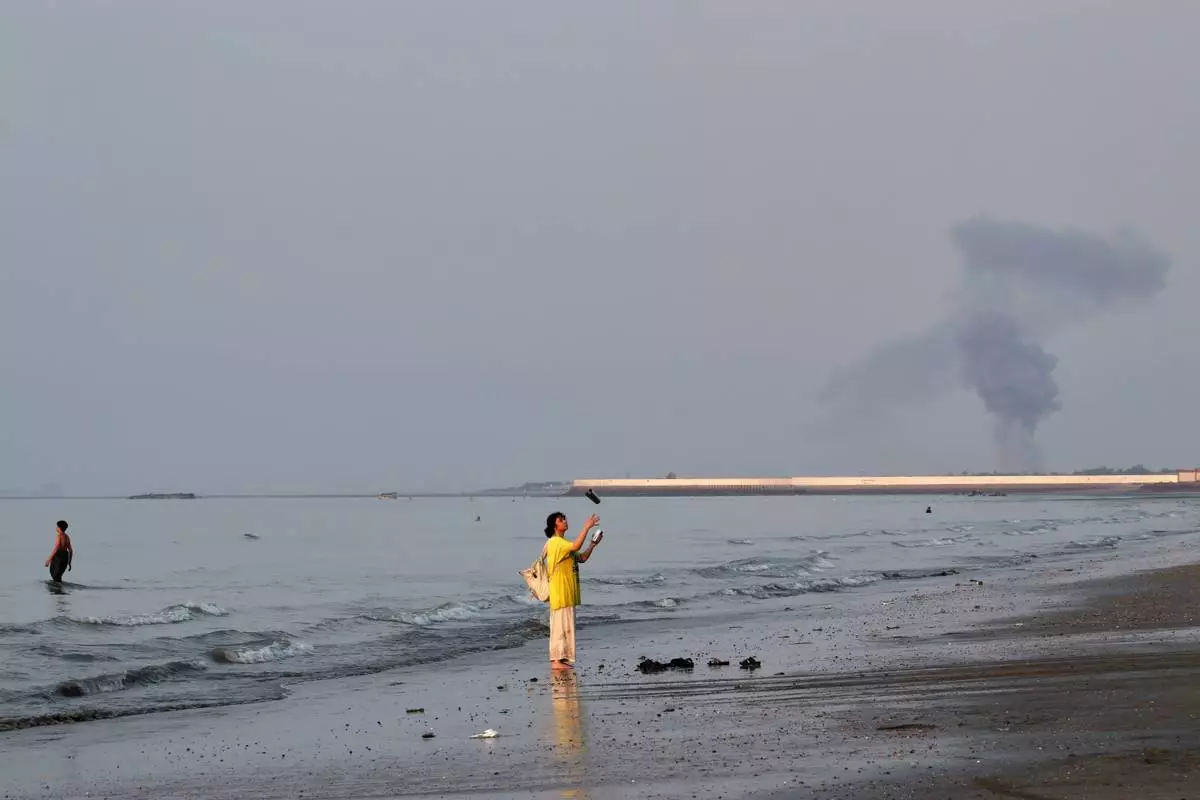
A woman stands at the water's edge along the Strait of Hormuz as a plume of smoke rises in the background following an explosion, off Bandar Abbas, Iran, Monday, July 13, 2026. (Razieh Poudat/ISNA via AP)
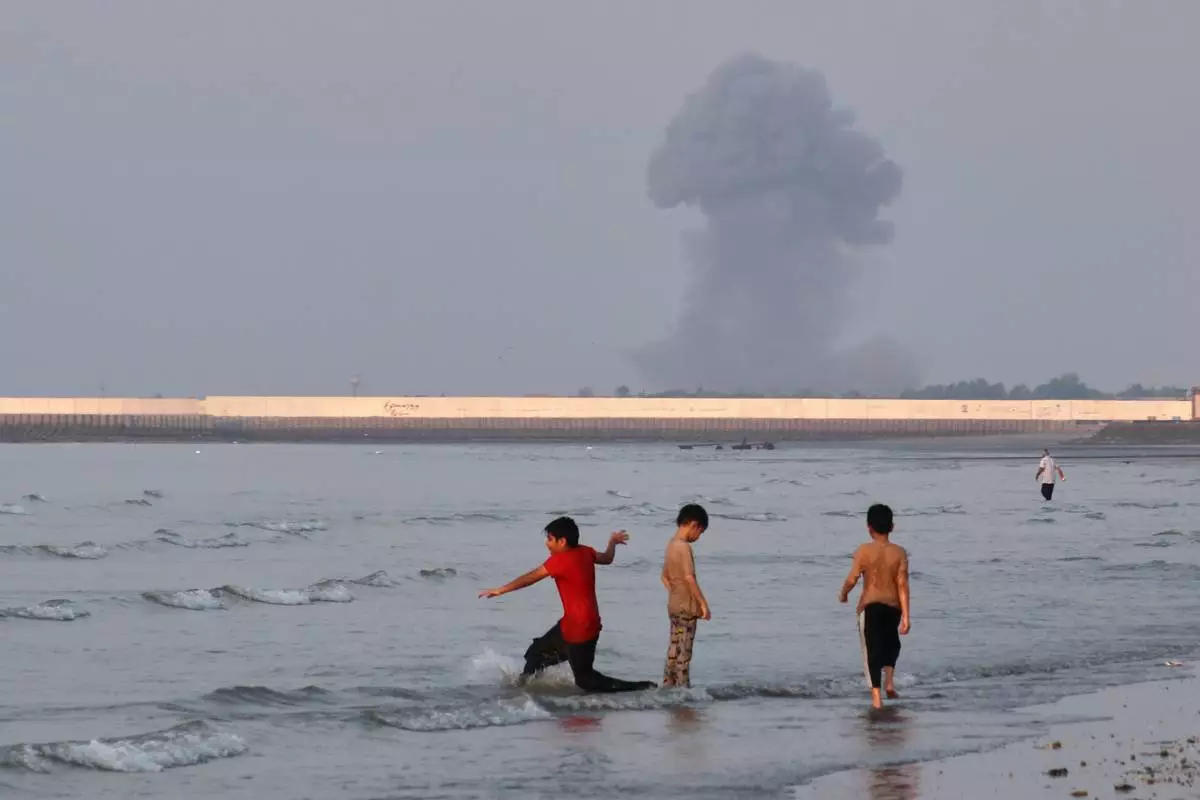
Three boys play in the shallow waters of the Strait of Hormuz, as a plume of smoke rises from an explosion in the background, off Bandar Abbas, Iran, Monday, July 13, 2026. (Razieh Poudat/ISNA via AP)
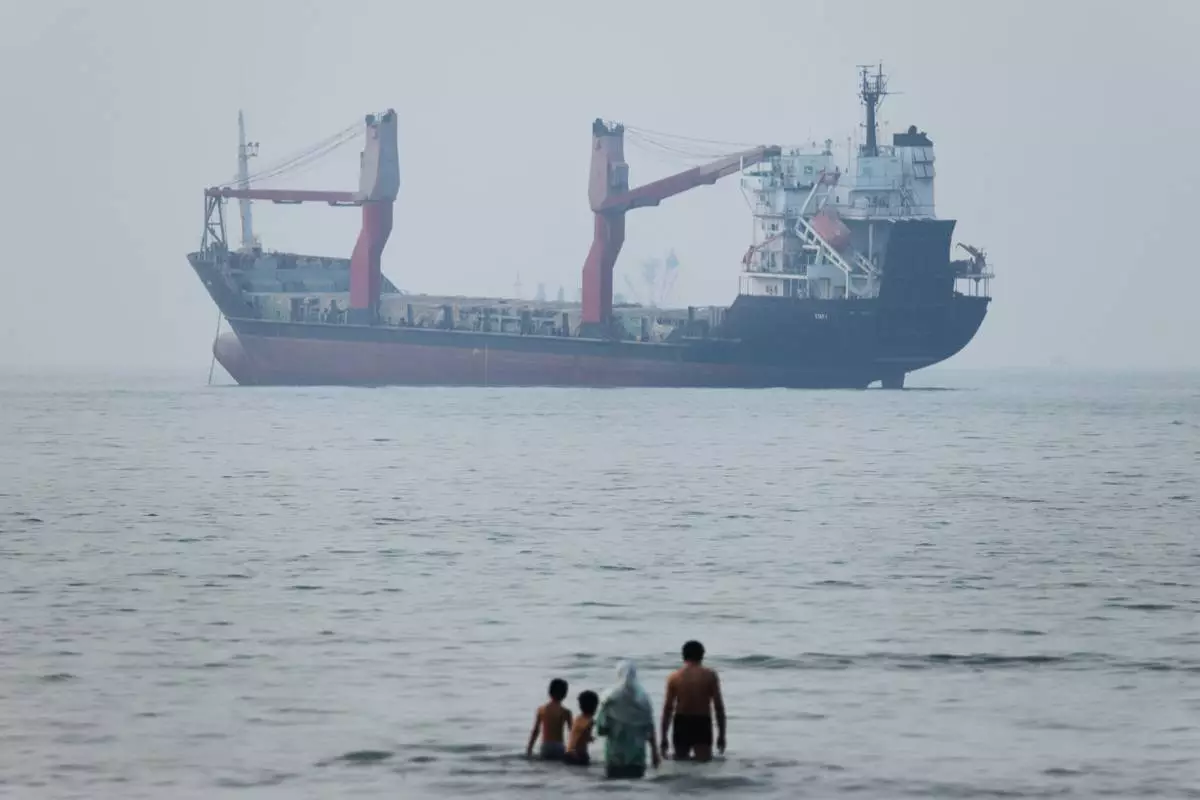
A group of people stands in shallow water as a cargo ship appears anchored in the Strait of Hormuz off Bandar Abbas, Iran, Tuesday, June 30, 2026. (Amirhosein Khorgooi/ISNA via AP)
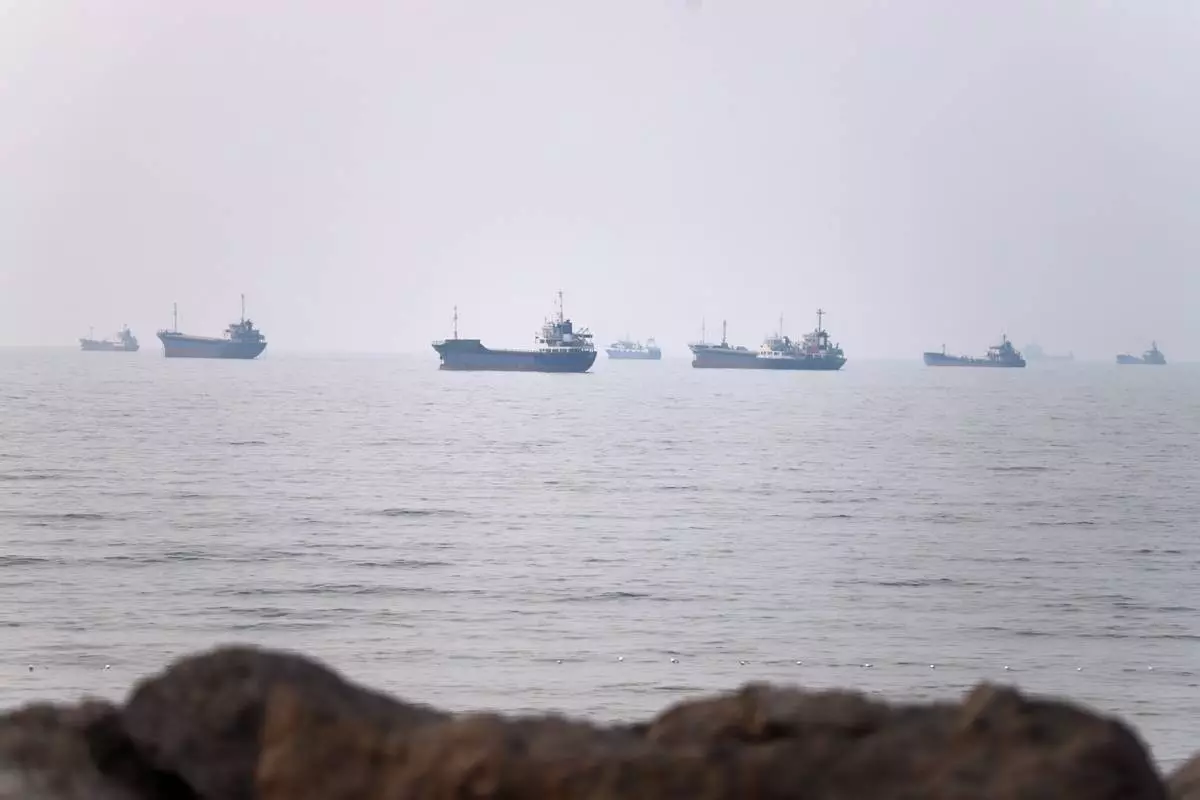
Commercial vessels are seen in the Strait of Hormuz off Bandar Abbas, Iran, Tuesday, June 30, 2026. (Amirhosein Khorgooi/ISNA via AP)