Skip to Content Facebook Feature Image

Former Spanish leader is criticized for comments about France's World Cup team

News

Former Spanish leader is criticized for comments about France's World Cup team
News

News

Former Spanish leader is criticized for comments about France's World Cup team

2026-07-14 06:13 Last Updated At:06:20

MADRID (AP) — A former Spanish prime minister is facing criticism for saying that France's World Cup team “does not have any French players," which French and Spanish leaders have called racist.

Mariano Rajoy, a member of Spain’s conservative Popular Party, made the comment in a column for Spanish outlet El Debate ahead of Tuesday’s World Cup semifinal match between the European neighbors.

“They’ve won every match they’ve played at this World Cup and are currently top of the FIFA rankings. They also have an exceptionally strong squad. That said, one thing they don’t have is any French players," Rajoy wrote on July 10.

On Monday, French Foreign Minister Jean-Noël Barrot told French broadcaster BFM TV that “France has no skin color. Any contrary claim stems from stupidity, racism or a combination of the two."

A day earlier, French Football Federation President Philippe Diallo wrote on X that “Mariano Rajoy’s remarks about the French team carry intolerable whiffs of racism,” adding that “they also raise questions about the deplorable climate that gives rise to such sentiments. Our players do not need a certificate of nationality from a former Spanish prime minister.”

A spokesperson from Rajoy's Popular Party on Monday said the remarks were sarcastic and made without malice.

“These columns are written without ill intent,” spokesperson Borja Sémper said. “This expression is used without ill intent.”

Spain's ruling Socialist government swiftly condemned the remarks by Rajoy, who was prime minister from 2011 to 2018.

On Sunday, Prime Minister Pedro Sánchez referenced the comments without naming his predecessor, writing on X: “There are those who still measure belonging by surname, place of birth, or skin color. Others measure it by our roots in a country and our will to contribute to it. Playing soccer. Caring for our elders. Or opening businesses. France, we’ll see you in the semifinals. May the best one win and may racism lose."

France will face Spain on Tuesday at the home of the NFL's Dallas Cowboys in Arlington, Texas. France midfielder Warren Zaire-Emery was asked about the comments the day before the game in a news conference at the venue and said he hadn't seen them.

“This French team has players from different backgrounds and origins,” Zaire-Emery said through a translator. “So does the country. We are a united group, a united team, and that’s all that matters.”

Spanish Foreign Minister José Manuel Albares also spoke out Monday, saying the Popular Party's leader, Alberto Núñez Feijóo, needed to disavow the remarks.

It's not the first time France's team has faced racism during this year's World Cup.

Earlier this month, France captain and star player Kylian Mbappécondemned a Paraguayan senator over remarks she made following Paraguay’s loss to France in the round of 16.

Celeste Amarilla, a senator from Paraguay’s Liberal Radical Party, posted a series of comments on X mocking the French player’s origins, upbringing, education and appearance after France won on July 4 with a penalty by Mbappé.
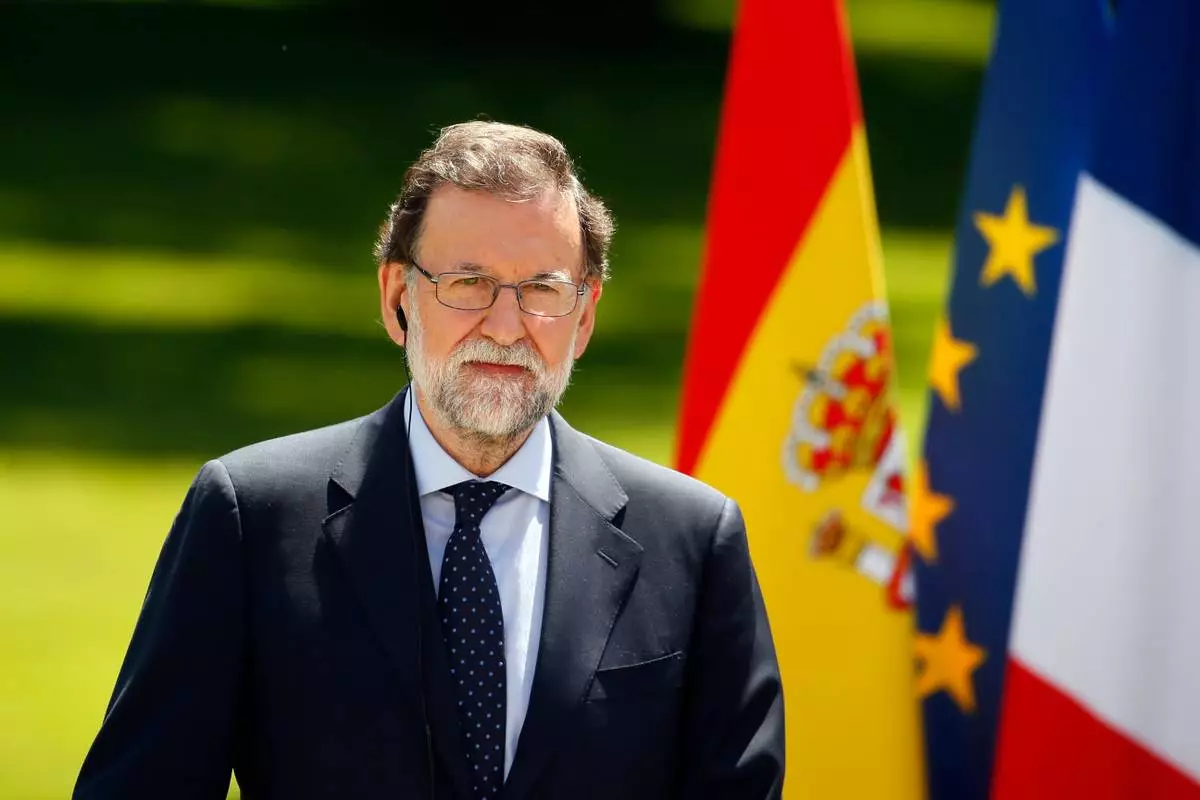
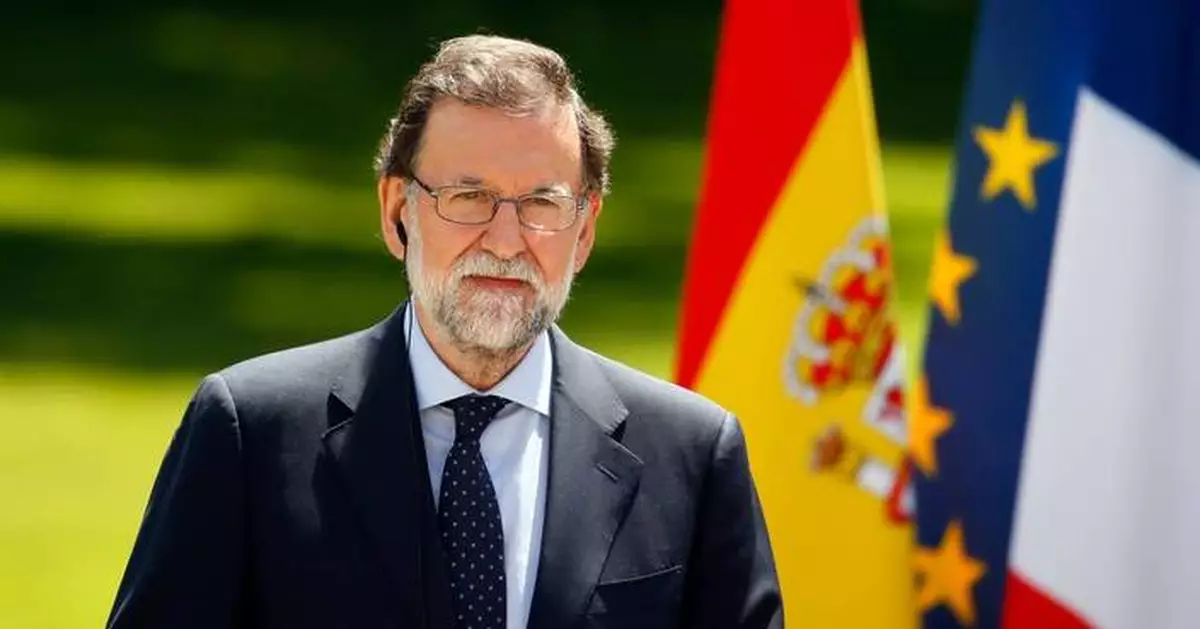
FILE - Spain's Prime Minister Mariano Rajoy attends a press conference at the Elysee Palace in Paris, France, Friday, June 16, 2017. (AP Photo/Francois Mori, File)

FILE - Spain's Prime Minister Mariano Rajoy attends a press conference at the Elysee Palace in Paris, France, Friday, June 16, 2017. (AP Photo/Francois Mori, File)
WASHINGTON (AP) — The U.S. military’s official tally of deaths in the Iran war has risen to 14 service members, with the death of a Navy pilot in a helicopter crash in early July in the Arabian Sea.

The number of wounded troops from the conflict also has grown to more than 400 as of Monday. Capt. Tim Hawkins, spokesman for U.S. Central Command, said the majority of them suffered traumatic brain injuries.

The Navy initially described the July 1 crash as an emergency landing and said there was “no indication the emergency was caused by hostile action.” The remaining three sailors aboard the helicopter were rescued shortly after the mishap.

The Pentagon’s war casualty count added one non-hostile death in July. It is the first death recorded since 13 service members were killed in separate incidents in March at the beginning of the war.

The first was an Iranian drone strike on a command center in Kuwait that killed six soldiers. Then one soldier died more than a week after initially being wounded in an attack on the Prince Sultan Air Base in Saudi Arabia. Six more service members were killed when a KC-135 refueling aircraft supporting U.S. military operations against Iran crashed in Iraq.

A total of 414 service members have been wounded, including a U.S. Air Force member added Monday. While Iran and the U.S. have resumed strikes, it is unclear if that is what led to the airman’s injury.

U.S. Central Command didn't offer any details on the specific airman. But traumatic brain injuries that have defined most of the injuries in the war are an increasingly persistent problem among combat forces, especially those subjected to missile strikes and explosions that hit nearby.

While the injury, along with post-traumatic stress disorder, has become one of the signature wounds among veterans of the post-9/11 era, the impact on troops, especially long-term, are still poorly understood.

When asked Monday for the latest figures of seriously wounded troops, Maj. Emma Thompson, a U.S. Central Command spokeswoman, said she had no update and reiterated that “almost all” of those injured have returned to duty. She also didn’t say how many service members have been wounded enough to need evacuation from the region.

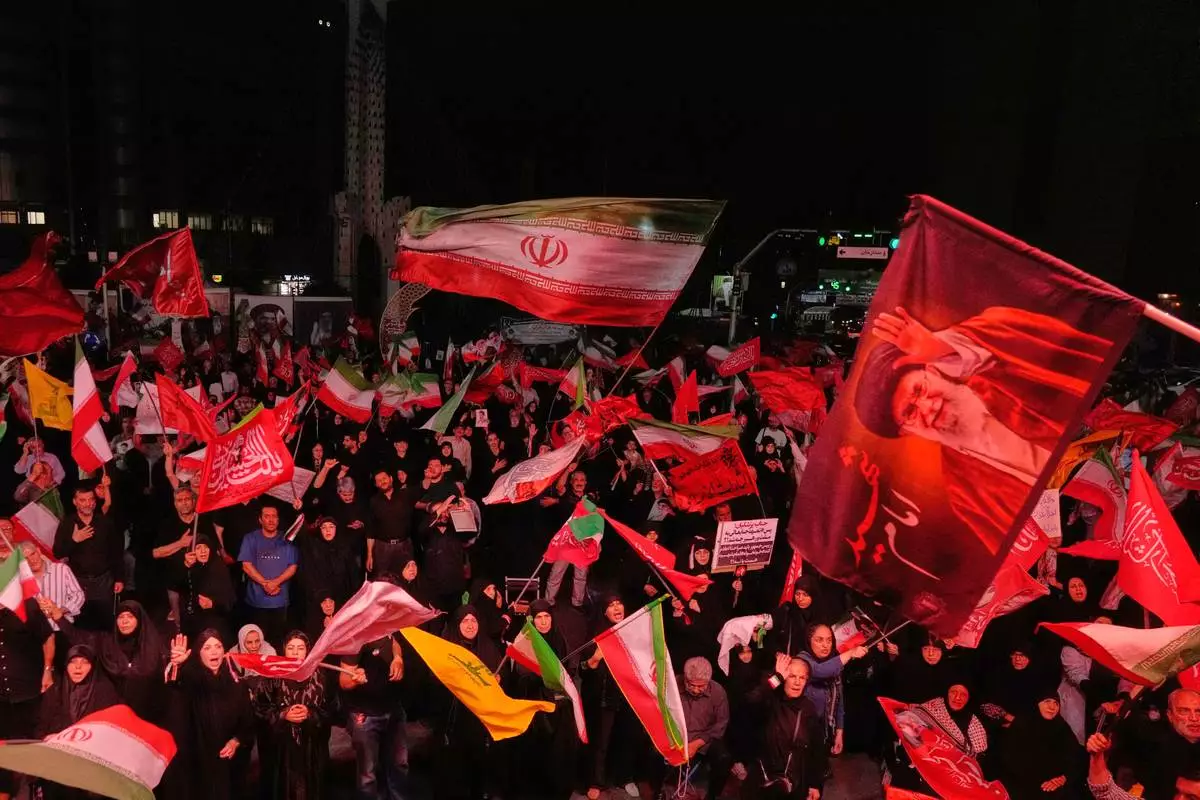
Pro-government demonstrators wave Iranian and religious flags in a gathering commemorating the late Iranian Supreme Leader Ayatollah Ali Khamenei, shown in a flag at right, at a square in Tehran, Saturday, July 11, 2026. (AP Photo/Vahid Salemi)

Pro-government demonstrators wave Iranian and religious flags in a gathering commemorating the late Iranian Supreme Leader Ayatollah Ali Khamenei, shown in a flag at right, at a square in Tehran, Saturday, July 11, 2026. (AP Photo/Vahid Salemi)

Recommended Articles