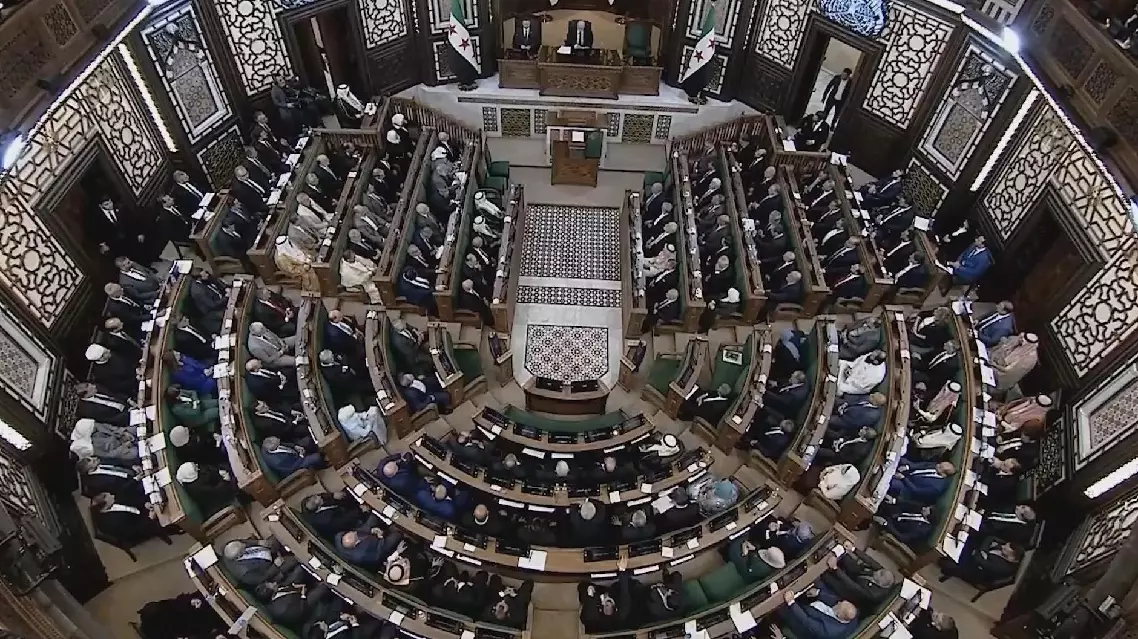
The first session of Syria's transitional People's Assembly took place on Sunday, marking the first parliamentary meeting since the fall of former President Bashar al-Assad in December 2024.
The step has been described as an early test of how Syria's political institutions will function.
The new parliament consists of 140 members selected through regional electoral colleges in recent months, along with 70 members directly appointed by Syria's interim leader Ahmad al-Sharaa. The inaugural session marks the beginning of the assembly's legislative work.
It is expected to serve a 30-month term, reviewing legislation, approving budgets, and helping shape Syria's constitutional and legal framework.
The new People's Assembly has drawn cautious optimism and significant criticism from Syrian political figures with regard to its representation, independence and inclusivity.
"The representation is not clear and there is a discrepancy in representation between the different parts of the country. The reason behind the mechanism of the election and appointment of the members is not clear either. The most important issue is the absence of Sweida province, which is a critical issue as the legitimacy of the assembly comes through representing all spectrums of the society," said Mazen Bilal, a political analyst.
Syria's new parliament establishes a formal mechanism for passing laws and overseeing the government's work. However, its credibility and effectiveness will ultimately depend on its performance rather than its formation.
First Syrian parliament begins legislative duties