An episode of "Genglubu: Charting the South China Sea," a China Global Television Network (CGTN) documentary series, explores how a single maritime route reshaped the lives and fortunes of fishermen in south China's Hainan Province.
The episode, titled "The Route That Made Fishermen Rich," centers on a cherished Genglubu manuscript. This family heirloom reveals how Hainan fishermen not only navigated the South China Sea, but also sailed to Singapore, and even Indonesia, trading marine products, especially top shells, a type of sea snail, long before modern shipping established regional connections.
"The top shell trade made many boat owners rich overnight," said Zhao Jueqi, a librarian at the China (Hainan) Museum of the South China Sea.
After studying the Liang Family Genglubu manuscript for over two years, Zhao discovered a route that extended well beyond traditional fishing grounds.
"Hainan fishermen mainly carried out fishing activities in Xisha and Nansha. But after their fishing trips, many of them would go on to trade overseas. Singapore was one of the places they went to frequently, and some fishermen also traveled to Indonesia," said Zhao.
The route described in the manuscript stretched from the South China Sea to major ports across Southeast Asia.
"They went to Singapore mainly for the top shell trade. Many fishermen would take the top shells they harvested from the South China Sea to Singapore," Zhao noted.
"Our ship set out from Singapore, passed through Palembang (in Indonesia), a well-known port on Sumatra and an important trading hub, and then arrived near Jakarta, the area referred to as West of Sanliyang in ancient South China Sea records. From there, it followed the coastline of Java. After passing Bali and continuing on for some distance, it reached the waters near the Lesser Sunda Islands. It formed a complete chain linking production and trade," she said.
"Hainan fishermen were more than just fishers. They also took part in overseas trade and helped build the Maritime Silk Road. After learning these stories, you’ll find the cold historical records begin to feel warm," said Zhao.
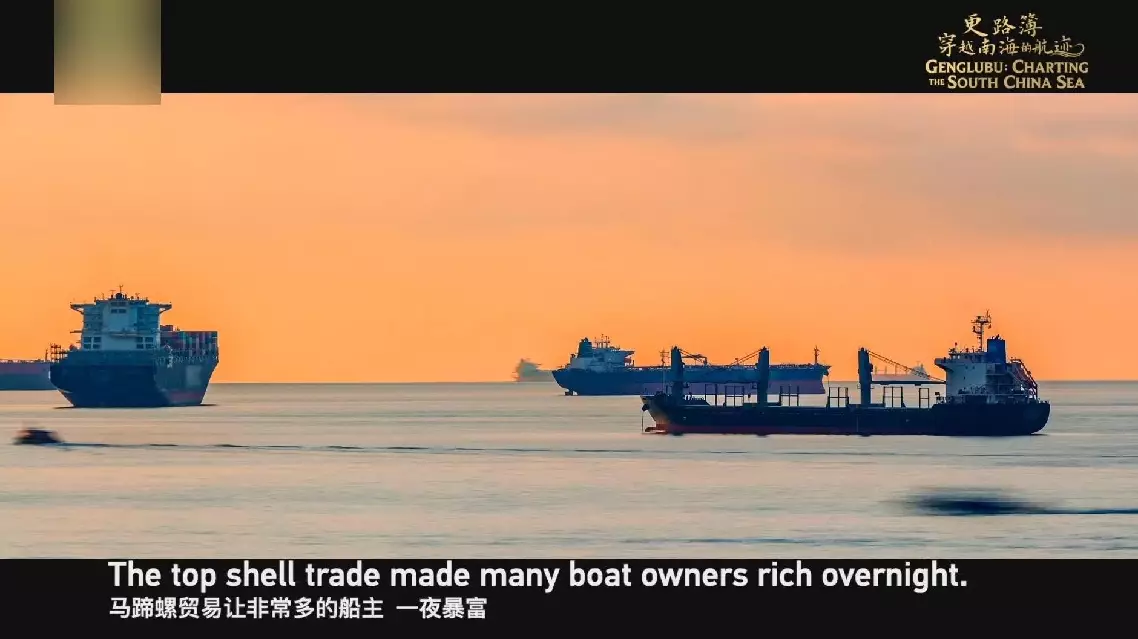
CGTN Documentary traces South China Sea fishermen’s trade route